Thinking about keeping your car looking its best in North Metro Atlanta? From Woodstock to Alpharetta, protecting your vehicle from Georgia's harsh sun and brutal road conditions is a constant battle. That’s where headlight film comes in. It’s a specialized material applied directly to your headlight lenses, and it’s one of the smartest investments you can make for both protection and style for your car, truck, or SUV.
Why Modern Headlights Need Protection Film
Remember the old days of simple, cheap glass headlights? Those are long gone. Today's cars and trucks are fitted with incredibly complex and expensive headlight assemblies made from polycarbonate plastic. While this material is tough, it’s also surprisingly vulnerable to damage, which makes a protective film an absolute must-have for modern car care.
Replacing a modern headlight isn't a minor expense—it can easily run anywhere from $200 to over $500 per unit. The biggest threat they face is constant UV radiation from the sun, which slowly eats away at the plastic's factory clear coat. If you want to see the science behind this common problem, it’s worth understanding why headlights turn yellow and get hazy. This oxidation doesn't just make your car look old; it can slash your light output by as much as 40%, creating a serious safety hazard when driving at night.
The Dual Threats to Your Automotive Headlights
Driving on roads like I-575 and GA-400 exposes your car to more than just sunlight. Your headlights are on the front lines, taking a constant beating from road debris.
- UV Degradation: That relentless Georgia sun is the main reason headlights turn cloudy and yellow. It breaks down the original protective coating, making your vehicle look aged while dimming your visibility.
- Impact Damage: Gravel, small rocks, and all sorts of debris get kicked up by traffic, causing pits, chips, and scratches that permanently scar your lenses.
Applying a high-quality film for your headlights is the single most effective way to fight back against both of these problems. The film acts as a sacrificial barrier, absorbing impacts and blocking over 99% of harmful UV rays before they ever reach the polycarbonate lens itself.
At The Tint Guy, we specialize in automotive protection. We exclusively focus on services for cars, trucks, and SUVs, ensuring our expertise is dedicated to perfecting your vehicle. We do not offer residential or commercial tinting services.
For vehicle owners in Canton, Marietta, and the surrounding areas, this simple, proactive step preserves your car's value and ensures your lights stay crystal clear and bright. It’s not just a cosmetic upgrade—it's a practical defense that keeps your vehicle looking newer for longer and makes your nighttime drives safer. Whether you want the invisible armor of Paint Protection Film (PPF) or a custom smoked look with tinted film, our professional automotive tint installation guarantees a flawless finish.
Choosing Your Shield: PPF vs. Tint Film
When it comes to protecting your headlights, you have two primary options: Paint Protection Film (PPF) and Headlight Tint Film. While they are both applied to your lenses, they’re designed for entirely different jobs. Understanding this difference is key to making the right choice for your car, whether you're navigating the daily commute in Acworth or cruising through Kennesaw.
Think of Paint Protection Film (PPF) as invisible body armor for your headlights. Its main goal is pure, rugged defense. We're talking about a thick, tough, and totally clear urethane film designed to take a beating from road debris—the kind of stuff that leaves chips and scratches on your lenses after just a few months on Georgia roads. It’s a sacrificial layer that keeps your expensive headlight assemblies looking pristine and fully intact.
On the other hand, Headlight Tint Film is all about achieving a custom look. These films are thinner than PPF and come in different shades and colors, from a subtle light smoke to a bold classic yellow, giving your vehicle a unique personality. A good quality tint will still provide that all-important UV protection auto tint offers to stop yellowing, but its main purpose is style. It offers some minor scratch resistance but cannot handle the heavy impacts that a true PPF shrugs off.
Material and Purpose: The Core Differences
The real distinction comes down to how they're made and what they're made for. PPF is a beefy protective shield, while tint film is a styling choice. To really get a handle on headlight PPF, it helps to see where it fits into the bigger world of car paint protection and the science behind it.
Here’s a quick rundown of what sets them apart:
- Impact Resistance: PPF is way thicker (usually 6-8 mils) and is built from the ground up to absorb the force of flying rocks and gravel. Headlight tint is much thinner and really only protects against light scuffs and UV damage.
- Self-Healing Tech: This is where premium PPF really shines. It has a special top coat that can heal itself. Minor scratches and swirls literally vanish with a little heat from the sun or your engine, keeping the film looking perfect. Most tint films don't have this feature.
- Clarity vs. Color: PPF is designed to be optically clear—you won't even know it's there. Tint films, by their very nature, are colored to change how your lights look.
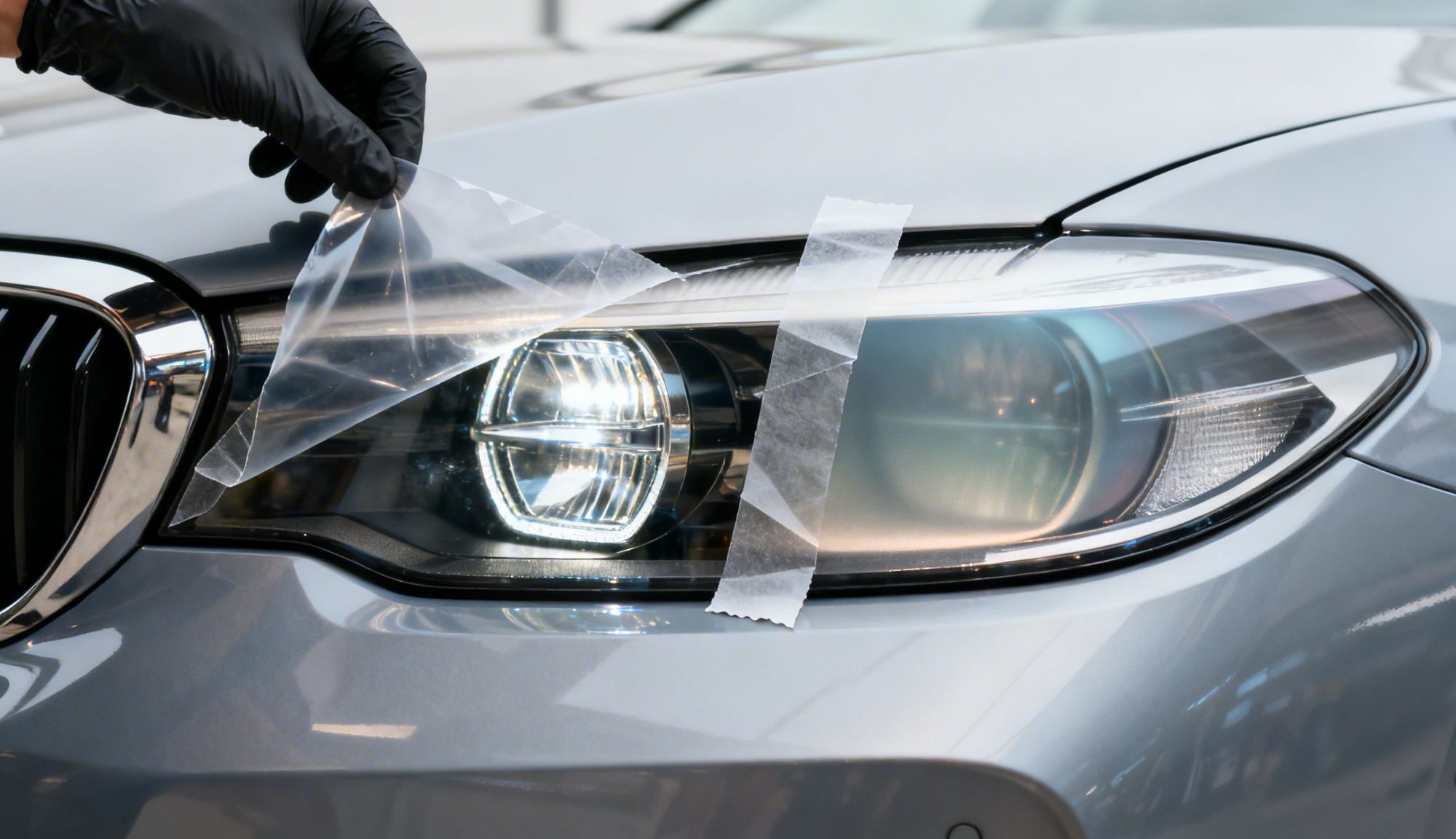
As you can see from the image below, your headlights are constantly under attack.

From the sun's harsh rays to rocks kicked up on the highway, a protective film is a no-brainer for any car owner who wants to keep their vehicle looking its best.
A Quick Head-to-Head
To make it even clearer, here’s a side-by-side look at how Paint Protection Film and Headlight Tint Film stack up.
Headlight Film Comparison PPF vs Tint
| Feature | Paint Protection Film (PPF) | Headlight Tint Film |
|---|---|---|
| Primary Goal | Impact & Scratch Protection | Styling & Aesthetics |
| Material Thickness | Thick (approx. 6-8 mils) | Thin (approx. 2-3 mils) |
| Impact Resistance | Excellent; absorbs rock chips | Minimal; protects from light scuffs |
| Self-Healing | Yes, premium films heal minor scratches | No |
| UV Protection | Excellent; prevents yellowing & fading | Good; prevents yellowing |
| Appearance | Optically clear and invisible | Colored (smoke, yellow, blue, etc.) |
| Cost | Higher initial investment | More affordable |
This table makes the choice pretty simple. If you need serious protection for your vehicle, PPF is the answer. If you're all about the look, tint is your go-to.
Which Film Is Right for Your Vehicle?
So, which one should you choose? It really just depends on what you want most for your car. It's the classic battle: protection versus personalization.
Your goal determines the best solution. If your top priority is preserving your investment and stopping costly damage from daily driving, PPF is the clear winner, no contest. If you're aiming for a specific custom look while getting a basic layer of UV defense, a high-quality tint film is the perfect fit.
A lot of our customers actually go for a hybrid approach. They'll have us install a durable, clear PPF on their main headlights for maximum protection, then add a light smoke or yellow tint to their fog lights for a custom flair. It's the best of both worlds—unbeatable protection where it counts, with a personalized touch.
While PPF is an amazing product for physical protection, it works differently than other coatings. If you're curious, check out our article that breaks down the differences between PPF and ceramic coatings.
At The Tin Guy, our automotive tinting specialists in both Woodstock and Kennesaw are here to walk you through all the car tint film options. We'll help you figure out the perfect solution and make sure you get a flawless installation that meets your exact needs.
The Real-World Benefits of Headlight Protection
Picking a top-tier headlight film is a great start, but it's the quality of the installation that truly unlocks its potential. A professional application from our team at The Tint Guy does more than just stick a film to your lenses; it turns them into a durable shield that delivers real, tangible benefits you'll notice every day.

Think of it as a smart, long-term investment in your vehicle’s safety, aesthetics, and overall value. The advantages are clear, from stopping costly damage in its tracks to making sure your car always looks its best.
Shield Against UV Rays and Yellowing
The number one enemy of modern polycarbonate headlights is ultraviolet radiation. The relentless Georgia sun beats down on your car, breaking down the factory protective coating. The result? That ugly, hazy, yellowed look we’ve all seen. This isn’t just a cosmetic problem—it's a major safety hazard.
A professionally installed film for headlights is a powerful solution, acting as a barrier that blocks over 99% of harmful UV rays. This one benefit stops the oxidation process cold, keeping your lenses crystal clear and ensuring you get maximum light output for years.
Key Insight: UV-induced yellowing can slash your headlight's light output by as much as 40%. A protective film is the single most effective way to maintain factory brightness and keep you safe on the road at night.
Defense Against Road Debris
For anyone commuting daily in Woodstock and Acworth, highways like I-575 and GA-400 are a constant barrage of road debris. Gravel, sand, and tiny rocks get kicked up by other cars, essentially sandblasting the front of your vehicle.
- Impact Absorption: Premium Paint Protection Film (PPF) is specifically engineered to soak up the energy from these impacts. It prevents the chips, pits, and deep scratches that can permanently scar your headlight lenses.
- Sacrificial Layer: The film takes the hits so your expensive headlight assembly doesn't have to. If the film gets beat up over time, we can simply remove and replace it for a fraction of the cost of a new headlight.
Preserve Your Vehicle's Resale Value
You'd be surprised how much the condition of your headlights affects your car's curb appeal and perceived value. Hazy, yellowed lights make a vehicle look old and poorly maintained, which can scare off potential buyers or lead to lower trade-in offers.
Getting a professional auto tint installation is a savvy financial move. It helps keep that "new car" shine and shows a future buyer that you've taken great care of the vehicle. This small upfront cost can easily pay for itself by preserving hundreds of dollars in resale value down the line.
Avoid Costly Headlight Replacements
Replacing a modern headlight assembly can be a real shock to the wallet. Depending on your car, a single unit might cost anywhere from $200 to over $500. And if you have high-end adaptive LED or laser headlights? You could be looking at thousands.
A professional installation of a premium headlight tint or PPF is an incredibly cost-effective shield against that expense. Here in North Atlanta areas like Roswell or Kennesaw, a pro application lasts for years. Considering Georgia's humid heat and UV rays can cause 70-80% of headlights to yellow within just 3-5 years, this protection is practically essential. You can learn more about the history of headlight technology at 1000bulbs.com.
The DIY Dilemma vs. Professional Application
In the world of car customization, the do-it-yourself route always looks tempting. A quick search online turns up dozens of headlight film kits, all promising a fast, cheap, and easy upgrade for your ride. But when it comes to applying film for headlights, is doing the job in your own garage really worth the risk?
While we admire the DIY spirit, the reality of applying these films is a lot more complex than a YouTube video makes it seem. A botched installation can turn a simple weekend project into a costly headache real fast.

The Treacherous Path of DIY Installation
On the surface, the steps look simple enough. Clean the lens, cut the film, spray some solution, lay the film down, and squeegee the water out. The problem is, every single one of those steps is a minefield for mistakes, especially when you're working with consumer-grade film for the first time.
Here are the most common ways a DIY job goes wrong, ruining both the look and the protective function of the film:
- Contamination: A single speck of dust, a stray hair, or any tiny piece of debris trapped under the film will stick out like a sore thumb—forever. A professional automotive tinting shop is a controlled, clean environment; your garage or driveway is not.
- Bubbling and Lifting: If your squeegee technique isn't perfect or the surface wasn't prepped just right, you'll get air or water bubbles. Not only do they look awful, but they also create weak spots where the film will eventually start to lift and peel away from the edges.
- Creasing and Wrinkling: Headlights have all sorts of complex curves. It takes real skill, the right tools, and a high-quality, pliable film to get a smooth finish. It's incredibly easy to create a permanent crease, which means you have to throw that piece of film away and start over.
- Misalignment and Poor Trimming: Cutting the film perfectly to the edge of the headlight is an art form. DIY attempts often end up with crooked alignment or ugly, jagged edges from a knife blade. This not only looks bad but also leaves parts of your lens unprotected and risks scratching the surrounding paint.
The Professional Auto Tint Service Advantage
When you bring your car, truck, or SUV to one of our shops in Woodstock, GA, or Kennesaw, GA, you're not just paying for a piece of film. You're investing in a perfect, long-lasting result that a DIY kit simply can't match. Our professional auto tint service is designed to eliminate every single risk that comes with a home installation.
Expert Insight: A DIY job gone wrong almost always costs more in the long run. We see cars all the time where we first have to remove a failed DIY film before we can do the job right, turning that "money-saving" project into a much more expensive correction.
Our technicians are true masters of their craft, with their skills sharpened by years of experience. We use specialized equipment and techniques that you just can't replicate at home.
What Our Professional Automotive Tint Installation Guarantees:
- Precision-Cut Patterns: We don't cut film by hand on your car. We use advanced software and a plotter to cut the film to the exact specifications of your vehicle's headlights. This guarantees 100% coverage and perfectly clean, factory-style edges.
- Controlled Clean Environment: Our automotive installation bays are kept spotlessly clean. This is critical for preventing any contaminants from getting trapped under the film.
- Specialized Tools and Technique: From professional-grade squeegees and heat guns to proprietary application solutions, we have the right tools. Our technicians use them to expertly mold the film to every curve, ensuring a flawless, bubble-free, and wrinkle-free finish.
A DIY kit might seem like a bargain, but the real value of a professional auto tint installation is in the quality, durability, and peace of mind you get. If you're interested in how these principles apply elsewhere, our guide on how to tint tail lights is a great read. Ultimately, choosing The Tint Guy means your headlight film gets done right the first time—saving you a ton of time, money, and frustration.
Cost, Legality, and Maintenance: The Practical Side of Headlight Film
Getting a high-quality film on your headlights is one of the smartest moves you can make for your vehicle. But before you dive in, it’s worth understanding the practical details: the cost, the local laws, and the long-term care.
Getting these things right from the start ensures you’ll be happy with your investment for years to come. For any car, truck, or SUV driver in Georgia, these are the key details you need to know.
Is Headlight Film Legal in Georgia?
This is the first question we get from almost everyone, and it’s a great one to ask. The answer really depends on what kind of film you're talking about.
Clear Paint Protection Film (PPF): Let's make this simple. A quality, optically clear PPF is 100% legal in Georgia and every other state. Since it doesn’t change the color or brightness of your headlights, it complies with all vehicle laws while giving you world-class protection.
Tinted Headlight Films: This is where things get a bit more specific. Georgia law is very clear: headlights must emit white light. That means any blackout or heavily colored films are off the table for road use. However, a light smoke tint is generally fine, as it doesn't dramatically alter the light color and has almost no impact on brightness.
At The Tint Guy, we only do automotive tinting. We know the vehicle lighting laws in Woodstock, GA, and Kennesaw, GA, like the back of our hand. We will only install films that keep your car, truck, or SUV looking great and completely street-legal. We do not offer residential or commercial tinting services.
The Cost of Professional Automotive Tint Installation
Think of professional headlight film installation not as a cost, but as an investment in preventing much bigger costs later. Have you ever priced out a new headlight assembly? Replacing a single modern unit can easily run from $150 to over $400, and high-end LED or adaptive headlights can cost thousands.
A professional headlight protection film installation usually costs between $150 and $400. The final price depends on your vehicle’s make and model, how complex the headlight shape is, and the film you choose. This one-time cost is basically an insurance policy against road debris, UV damage, and those painful replacement bills.
Long-Term Maintenance and Lifespan
When you get your film installed by a pro, you can expect it to last 5 to 10 years with just a little bit of care. Follow a few simple rules, and your film will keep looking and performing its best.
- Let It Cure: After installation, give the film about 48-72 hours to fully cure. This means no car washes or high-pressure sprayers on the headlights for a few days.
- Wash Gently: When you wash your car, stick to a pH-neutral car soap. You’ll want to avoid harsh chemicals, degreasers, and stiff brushes that could damage the film.
- No Wax Needed: Premium PPF already has a protective top coat built-in. There’s absolutely no need to apply wax or any other coatings to the film itself.
By following these easy steps, your headlight film will keep your lenses clear and protected from yellowing and chips for years. For some deeper tips, check out our guide on how to properly clean paint protection film to keep your whole car looking brand new.
How Headlight Protection Became Essential for Modern Cars
To really get why a modern film for headlights is such a big deal, you have to look at just how far car lighting has come. Those simple, tough glass headlights from back in the day? They’ve been replaced by complex, incredibly expensive, and surprisingly fragile polycarbonate assemblies. This whole journey from basic bulbs to high-tech systems is exactly why protecting them is now a vital part of owning a car.
The story of car headlights is one of massive leaps forward. It all started with acetylene-powered carbide lamps in the late 1880s. Things really got going in 1912 when Cadillac introduced a reliable electrical system. Then, in 1940, the U.S. government standardized sealed-beam headlights.
The biggest shift came in 1983 with the move to composite plastic housings and replaceable halogen bulbs, which slashed replacement costs by as much as 70%. But this innovation brought a new headache: vulnerability to UV damage. For anyone driving in North Metro Atlanta, this is a familiar problem. That harsh Georgia sun can cause yellowing on 80% of cars in just five years, which kills your nighttime visibility. You can even see how the FIA made car headlights obligatory to understand their importance in automotive history.
The Rise of High-Tech (and High-Cost) Lighting
The jump from halogen to High-Intensity Discharge (HID) lights in the 1990s was a huge improvement in brightness. But the real game-changers were the widespread adoption of LED technology in the 2000s and, more recently, advanced laser lighting systems.
These modern lights are incredible, offering huge benefits:
- Superior Brightness: LED and laser lights throw a cleaner, brighter, and more focused beam, making a world of difference for night driving.
- Longer Lifespan: They’re built to last way longer than any traditional halogen bulb.
- Energy Efficiency: They draw far less power, which is easier on your car’s whole electrical system.
There's a catch, though. All this amazing tech comes with a hefty price tag. A single modern LED or adaptive headlight assembly can cost hundreds, and sometimes thousands, of dollars to replace. These aren't just simple housings with a cheap bulb anymore; they are complex electronic modules tied directly into your vehicle’s computer.
The New Weakness: Polycarbonate Lenses
While the tech inside got more advanced, the outside material settled on polycarbonate plastic. It’s lightweight and won't shatter like old-school glass, making it much safer in a crash. But it has one critical weakness: its factory-applied UV-resistant clear coat is paper-thin and wears down easily.
Over time, this protective layer is broken down by two main culprits:
- UV Radiation: Constant sun exposure oxidizes the plastic, causing that familiar yellow, cloudy look that makes a car look old and tired.
- Physical Abrasion: Everyday road debris, gravel, and even the brushes at an automatic car wash create micro-scratches that ruin the lens's clarity.
This is exactly where the need for a high-quality film for headlights became obvious. As headlight assemblies got more expensive and sophisticated, the cost of letting them degrade became too high to ignore. A protective film acts as a tough, renewable shield, preserving these pricey components from the very things that try to destroy them.
For car owners in Roswell and Johns Creek, it's simply the smartest way to safeguard an essential and expensive part of your vehicle. At The Tint Guy, we only work on automotive services, so our expertise is laser-focused on protecting your car, truck, or SUV.
Your Automotive Headlight Film Questions Answered
Here at The Tint Guy, we talk to car owners from Woodstock, Acworth, and all over North Metro Atlanta every day about headlight film. It's a popular topic, and a lot of the same questions come up. To help you get the right info, we've put our most common questions—and our expert answers—all in one place.
How Long Does Automotive Headlight Protection Film Last?
This is always one of the first questions we get, and for good reason. You want to know your money is well-spent. When installed by a professional, a quality Paint Protection Film (PPF) on your headlights will easily last 5 to 10 years.
What makes it last? It really boils down to the film's quality, the skill of the installer, and how you take care of your car. We only use top-tier films built to handle Georgia's brutal sun and whatever the road throws at you without yellowing or cracking. We're so confident in our materials and our work that we back every automotive tint installation with a solid warranty.
Will Tinted Headlight Film Reduce My Light Output?
A critical safety question. The answer really depends on just how dark you want to go.
- Light Smoke Tints: A light smoke film, when applied by a pro, has a barely-there effect on brightness. You won't notice a difference when you're driving at night.
- Dark or "Blackout" Tints: On the other hand, really dark films can seriously cut down your light output. These are often not street-legal here in Georgia and can be a genuine safety hazard.
As vehicle-only specialists, we always help our clients in Canton and Marietta find that perfect balance—a sharp look that keeps things safe and legal.
Important Note: We are an exclusive automotive tinting business. We do not perform services for home or commercial buildings. Our expertise is focused solely on vehicles like yours, ensuring we understand the products and local laws inside and out.
Can Headlight Film Be Removed?
Absolutely. One of the best things about using a professional-grade film for headlights is that it's not permanent. It can be removed safely without any damage to the headlight lens underneath.
The process involves carefully heating the film to soften the adhesive, which allows our technicians to peel it off cleanly. This is a huge plus if a section gets damaged and needs replacing, or if you decide to sell your car and want to return it to stock. We always recommend having a pro handle removal to avoid leaving sticky residue or accidentally scratching the lens.
Is Headlight Film the Same as Automotive Window Tint?
No, and this is a common mix-up. They are totally different products made for very different jobs, and using the wrong one is a recipe for problems.
- Headlight Film (PPF): Think of this as armor. It’s a much thicker urethane film specifically designed to take hits from rocks, gravel, and other road debris.
- Car Window Tint: This is a thinner polyester film made to reject UV rays and heat, keeping the inside of your car cool and private.
Slapping regular car window tint on your headlights is a bad move. It offers zero impact protection and will likely bubble, burn, or peel from the intense heat modern headlights put out.
Ready to protect your vehicle with a flawless headlight film application? Trust the dedicated automotive specialists at The Tint Guy. We proudly serve car, truck, and SUV owners in Woodstock, Acworth, and the surrounding North Atlanta communities.