We’ve all been there. You open your car door on a summer afternoon in Marietta or Woodstock, and it’s like getting hit with a blast furnace. That wave of heat isn't just your imagination—it's a sign that your parked car has turned into an oven, and it’s a problem that needs a real solution.
Why Your Car Becomes an Oven in the Georgia Sun
The science behind why your car gets so dangerously hot is pretty straightforward. It’s a process known as the “greenhouse effect,” and it’s what turns your vehicle into a sauna on wheels, especially here in North Metro Atlanta.

Here's how it works: sunlight, which is shortwave energy, passes right through your car's windows. This light is then absorbed by every surface inside—the dashboard, the leather seats, the steering wheel—causing them to heat up fast.
As these interior surfaces get hotter, they radiate that energy back out as longwave infrared heat. The problem is, this type of heat can't escape back through the glass nearly as easily as the sunlight came in. It gets trapped, and the temperature inside starts to climb at an alarming rate.
The Real-World Impact on Your Vehicle
This trapped heat isn't just uncomfortable; it's actively destroying your car from the inside out. For drivers in Woodstock and Marietta, we see the results of this every day.
- Interior Degradation: That relentless heat, combined with damaging ultraviolet (UV) rays, is what causes dashboards to crack, leather to fade and turn brittle, and plastic trim to warp over time.
- Electronic Damage: Your car's expensive electronics—the infotainment screen, GPS, and various sensors—were never built to handle temperatures soaring above 140°F. Constant exposure can lead to glitches, malfunctions, and costly replacements.
- Personal Discomfort and Safety: Beyond the damage to your car, the intense cabin heat is a real risk. A sweltering car is just plain dangerous, especially for kids and pets who can't regulate their body temperature as effectively.
The numbers are stark: even on a relatively mild 80°F day, the temperature inside a parked car can reach 109°F in just 20 minutes. After an hour, it can climb to over 123°F. This illustrates just how quickly a vehicle can become a hazardous environment.
Fighting Back Against the Sun
Now that you know why your car gets so hot, you can start looking for a real solution. Cracking the windows open helps a little, but it does almost nothing to stop the core problem of radiant heat buildup. If you’re ever stuck without A/C, there’s a great guide to staying cool when your car air conditioning isn't working that offers some quick fixes.
Ultimately, though, the only way to truly beat the heat is to stop the sun’s energy from getting inside your car in the first place. The most effective way to do that is by investing in high-quality UV protection auto tint. It’s not just about staying comfortable—it's about protecting your investment and ensuring a safer ride in the relentless Georgia sun.
Quick Tactics for Immediate Relief from a Hot Car
That blast of superheated air when you open your car door in the middle of a Georgia summer is no joke. While professional automotive tinting is the undisputed champion for long-term heat rejection, sometimes you need relief right now. When you’re parked in Woodstock or running errands in Marietta, a few smart habits can make a massive difference.
Think of these as your daily moves for taming the heat before you even turn the key. They’re low-cost, easy to do, and incredibly effective at making your drive home much more comfortable.

Use a Reflective Sunshade
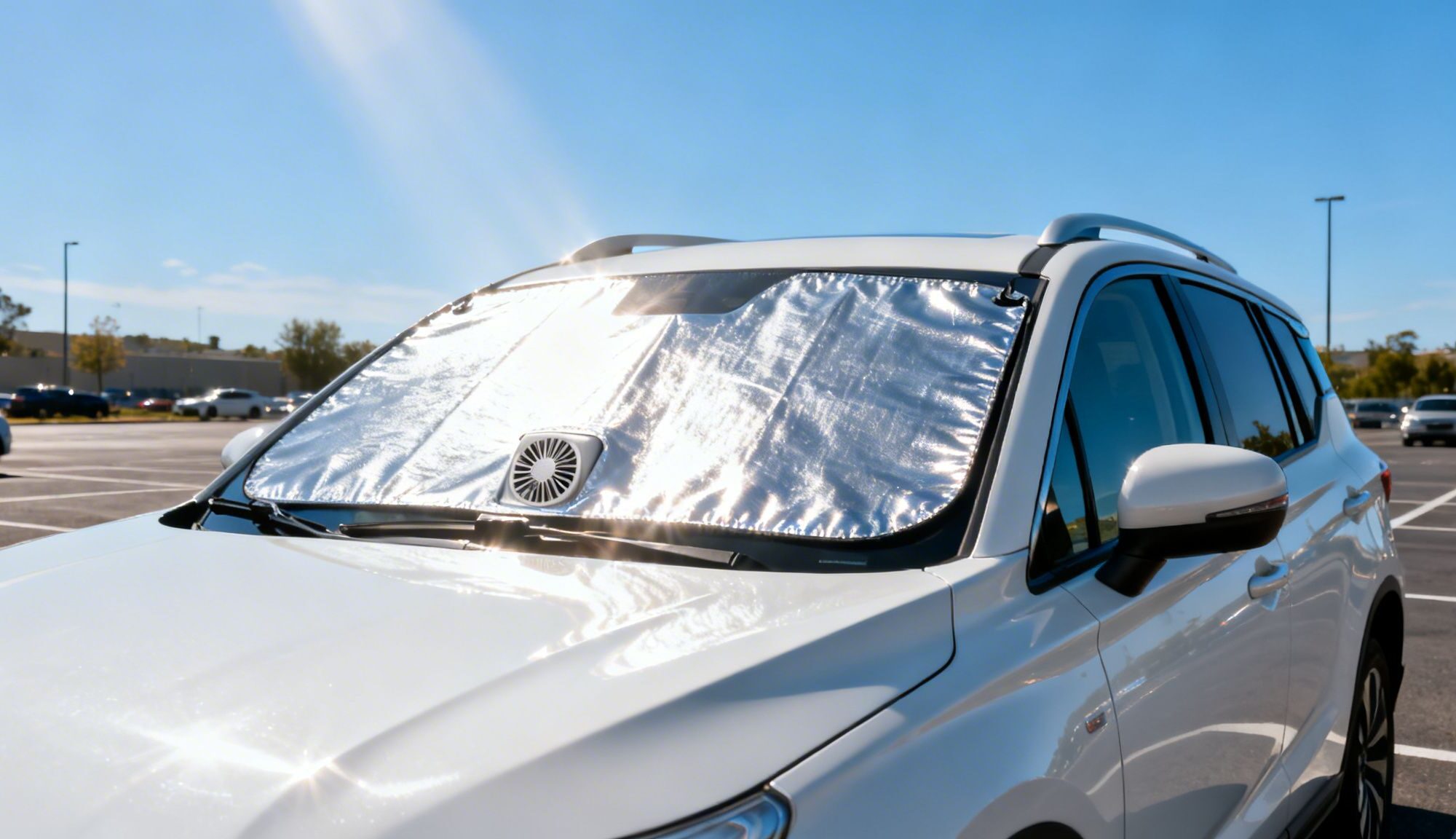
A good sunshade is easily the best bang-for-your-buck tool in your heat-fighting arsenal. It’s a physical barrier that reflects sunlight away from your windshield, preventing that intense greenhouse effect from baking your dashboard, steering wheel, and front seats.
Look for a shade with a reflective side to face outward. This simple piece of gear is your car’s first and most important line of defense against direct solar assault.
Pro Tip: Spend a few extra dollars on a custom-fit sunshade for your vehicle's make and model. The cheap, generic ones always leave gaps around the edges where the sun can sneak in. A custom-fit shade provides total coverage, which drastically improves how well it works.
Park Strategically to Minimize Sun Exposure
This one sounds like a no-brainer, but most people underestimate just how big of a difference it makes. Parking in direct sunlight is like leaving your car in an oven. Always try to find a shady spot, even if it means walking a little bit further.
Think about where the sun will be when you get back. A spot that’s shady in the morning might be getting blasted by the sun come afternoon. If you’re parking for a few hours, try to predict the sun's path and park accordingly.
If you can’t find any trees or buildings for cover, a parking garage is your best friend. The constant shade keeps your vehicle shielded from the sun's rays all day long.
Try the 'Air Flushing' Technique Before Driving
Before you even think about cranking up the A/C, you can drop the interior temperature significantly with this simple trick. It works by creating a powerful cross-breeze that forces all that stagnant, superheated air out of the cabin.
Here's how to do it:
- Roll down the front passenger-side window all the way.
- Make sure every other window and door is closed.
- Now, swing the driver's-side door open and closed five to ten times.
This pumping action pushes the hot air out of the open passenger window while pulling in the cooler outside air. It's surprisingly effective and means your A/C has a much easier job to do.
Use a Dash Cover to Reduce Radiant Heat
Your dashboard is a massive, dark surface that just soaks up sunlight and heat, turning into a radiator that cooks the rest of your car's interior. A simple fabric or carpeted dash cover is an inexpensive fix with two major benefits.
First, it stops UV rays from destroying your dashboard, preventing the fading and cracking we see all the time here in Georgia. Second, fabric absorbs far less heat than the vinyl or plastic underneath. That means the surface doesn't get scorching hot, cutting down on the radiant heat that makes your car feel like a sauna. It’s a small upgrade that protects your interior and keeps you cooler.
The Ultimate Solution for a Cooler Car: Professional Automotive Tint
Sunshades and parking in the shade are good first-aid for a hot car, but they're just band-aids. They only help after your car is already baking. If you're looking for a permanent and far more effective way to keep your car cool in the summer, the real answer is professional automotive window tinting. This isn't just about making your windows darker; it’s about installing advanced film that completely changes how your car handles the sun.
High-quality automotive film works by blocking the invisible solar energy that actually creates heat. It’s not just about dimming the light you can see. The real magic is in stopping the two biggest sources of heat: ultraviolet (UV) and infrared (IR) radiation.
More Than Just Dark Windows
A lot of people think the darker the tint, the cooler the car will be. But the truth is, the material used in the film is much more important than how dark it looks. A high-performance ceramic window tint, for example, can be almost clear and still outperform a dark, cheap dyed film by a huge margin.
That’s because ceramic films are engineered with nano-ceramic particles that are specifically designed to absorb and reject infrared heat. Think of it as a smart filter for sunlight. It lets in the visible light you need to see clearly but puts up a wall against the heat you can feel.
This technology is what truly transforms your driving experience in North Metro Atlanta. Instead of your car’s interior baking in the sun, professional tint actively rejects the heat before it ever gets trapped inside.
For anyone driving in the intense Georgia heat, this isn't some luxury add-on. It's a practical and powerful upgrade for any vehicle.
The Core Benefits for Georgia Drivers
Investing in professional automotive window tinting brings a whole suite of benefits that directly tackle the challenges of driving in places like Woodstock and Marietta. The advantages go way beyond just having a cooler car.
- Massive Heat Reduction: This is the number one reason people come to us. Our heat reduction window tint makes the cabin much more comfortable, which means your air conditioning doesn't have to fight nearly as hard to cool things down.
- Over 99% UV Protection: This is a huge benefit for your health and your car. Our UV protection auto tint blocks almost all harmful UV-A and UV-B rays, protecting your skin on your daily commute and stopping your car’s interior from fading, cracking, and wearing out.
- Reduced Glare for Safer Driving: Bright sun and the glare from other headlights aren't just annoying; they're dangerous. Tint significantly cuts down on this, reducing eye strain and making it easier to see the road ahead, day or night.
- Enhanced Privacy and Security: Tint adds a layer of privacy to your car, keeping your valuables out of sight. It’s a simple deterrent that gives you peace of mind whether you're parked in Woodstock or Marietta.
Why Professional Installation Is Essential
At The Tint Guy, we specialize exclusively in automotive tint installation for cars, trucks, and SUVs. We’ve learned over the years that the quality of the film is only half the equation; the installation itself is what makes or breaks the job. Our meticulous process guarantees a flawless, long-lasting result with no bubbles, peeling, or imperfections.
Think about cruising through a North Metro Atlanta summer, where temperatures in cities like Woodstock and Marietta can easily climb above 90°F (32°C). A professional ceramic window tint can reject up to 99% of harmful UV rays and block up to 80-90% of infrared heat. This can drastically reduce your car’s interior temperature by 20-40°F compared to an untinted car. For daily commuters, that means using your AC less and saving on fuel. You can explore the market research behind these powerful benefits to see why this is such a smart investment.
Our team is equipped with the local expertise to deliver the best car window tint solution for your specific needs, making every drive you take in Georgia cooler, safer, and much more comfortable.
Choosing Your Film: Ceramic vs. Carbon vs. Dyed Tint
When it comes to keeping your car from feeling like an oven during a Georgia summer, the single biggest factor is the type of window tint you choose. It’s not just about making the windows darker; the technology in the film itself does the heavy lifting. Understanding the differences between the main players—dyed, carbon, and ceramic films—is the key to picking the right one for your car and your budget.
This decision can feel complex, but it really boils down to a simple choice for a cooler ride.

As you can see, professional window tinting is the most direct path to a noticeably cooler car interior. Let’s break down your options.
Dyed Window Tint: The Entry-Level Option
Dyed window tint is the most basic and budget-friendly film you can buy. It's made of layers of polyester film that have been dyed to absorb sunlight. This absorption is what gives you privacy and cuts down on some glare.
The problem is, its low price comes with some serious trade-offs. Dyed films don't reject much heat; they just absorb it. That means the glass itself still gets incredibly hot and radiates that heat right back into your car.
Worse yet, the sun’s UV rays quickly break down the dye. Before you know it, your nice dark tint has faded to a blotchy purple, and it’s lost what little heat-blocking ability it had. It's a temporary fix that usually needs to be replaced in just a year or two.
Carbon Window Tint: The Smart Mid-Range Choice
Taking a big step up in quality, we have carbon window tint. This film has microscopic carbon particles mixed into its layers, and these particles are fantastic at blocking infrared light—the kind of light that carries heat.
What this means for you is much better heat rejection than a dyed film, without needing to be limo-dark. Plus, the carbon particles won't fade over time like dyes do, so the color and performance you get on day one is what you'll have for years.
Here’s why carbon is a popular choice:
- Superior Heat Rejection: It blocks a serious amount of infrared heat, making your car’s interior feel way cooler on a hot day.
- No Signal Interference: Unlike older metallic films, carbon is totally non-metallic, so it won’t mess with your cell phone, GPS, or radio signals.
- Durable and Long-Lasting: Carbon films hold their color and won't turn purple, giving you a much better return on your investment.
For a lot of drivers, carbon film hits that sweet spot between performance and price. It delivers real cooling benefits you can actually feel. If you're weighing your options, our detailed comparison of carbon vs ceramic tints is a great resource.
Ceramic Window Tint: The Ultimate Performance Film
At the very top of the tinting world is ceramic window tint. This is the most advanced film you can get and the one we always recommend for drivers here in North Metro Atlanta, especially in places like Woodstock and Marietta where the summer sun is just brutal.
Ceramic film uses non-metallic nano-ceramic particles that are absolute champions at blocking infrared heat—even more effectively than carbon. This gives you the highest level of heat rejection, UV protection, and glare reduction possible, all while maintaining crystal-clear visibility.
When you're dealing with a Georgia summer where the highs push 92°F, the difference is staggering. Ceramic window tint can block up to 94% of solar energy, which can drop your cabin temperature by a massive 30-50°F. It also slashes the UV damage that cracks and fades your dashboard by 80% over five years. And since premium ceramic films contain no metal, your electronics are safe. They can last 10-15 years, a huge jump from the one or two years you'd get from a dyed film.
To help you visualize the differences, here’s a quick comparison of the three main types of automotive window films. This table breaks down the features, performance, and lifespan to guide your decision.
Automotive Window Tint Comparison: Dyed vs. Carbon vs. Ceramic
| Feature | Dyed Film | Carbon Film | Ceramic Film (Recommended) |
|---|---|---|---|
| Heat Rejection | Low (absorbs heat) | Good (blocks infrared) | Excellent (blocks maximum infrared) |
| UV Protection | Good (99%) | Excellent (99%+) | Superior (99%+) |
| Glare Reduction | Good | Very Good | Excellent |
| Fading | Fades to purple | No fading | No fading |
| Signal Interference | No | No | No |
| Lifespan | 1-2 years | 5-10 years | 10-15+ years |
| Cost | $ | $$ | $$$ |
As the table shows, while dyed film is the cheapest entry point, ceramic film provides unparalleled performance and longevity, making it the best long-term investment for comfort and protection.
Why Ceramic Is Our Top Recommendation
For anyone serious about how to keep a car cool in summer, ceramic tint is the definitive answer. Its incredible ability to block infrared heat means your AC doesn't have to work nearly as hard, which saves fuel and reduces wear on the system. You get maximum cooling without needing a super-dark tint, so your visibility stays sharp for safe driving, day or night.
Yes, the upfront cost for a ceramic window tint is higher. But when you factor in the superior comfort, the protection for your car's interior, and its incredible durability, it easily becomes the most cost-effective choice you can make for your vehicle in the long run. For drivers looking for the absolute best performance, ceramic is the undisputed winner.
Understanding Georgia Tint Laws and Your Investment
Getting your car professionally tinted is hands-down one of the best upgrades you can make, especially here in North Metro Atlanta. But before you jump into picking a film, you’ve got to know the rules of the road. Understanding Georgia's legal requirements and what a quality installation truly gets you is key to making sure your investment is both smart and street-legal.
For those of us driving around Woodstock and Marietta, the law revolves around Visible Light Transmission (VLT). This is just a fancy way of saying how much light can pass through your windows. A lower VLT percentage means a darker tint. It’s not a one-size-fits-all rule, though, and staying compliant will save you the headache of a ticket.
Navigating Georgia's Tint Regulations
A lot of people think the tint laws are the same for every car, but that’s a common mix-up. In Georgia, the rules for sedans are different from those for SUVs, trucks, and vans. This is exactly why having an expert who knows the local laws is so important.
- Sedans: Your front side, back side, and rear windows all have to let more than 32% of light in.
- SUVs, Trucks, and Vans: Things are a little more flexible here. The front side windows must stick to that same 32% VLT limit, but you can go as dark as you want on the rear side and back windows.
- Windshield: For all vehicles, you can have a non-reflective tint strip on the top six inches of the windshield. It’s a fantastic way to cut down on sun glare without blocking your view of the road.
Following these rules isn't just about avoiding a fine. It’s about making sure you can see clearly, keeping you and everyone else safe. A professional installer guarantees your tint looks great and, more importantly, is completely legal.
If you want to dive deeper into the specifics or see if any medical exemptions might apply to you, be sure to check out our guide on Georgia's tinting laws.
The Real Cost and Benefit of Professional Tinting
When you're trying to figure out how to keep your car cool in summer, it's easy to get hung up on the initial price tag. But the true value of professional automotive window tinting comes from its long-term performance and durability, especially when you see how cheap DIY kits hold up. A pro-level job is an investment in your comfort, your safety, and your car's interior.
The summer heat in Georgia is no joke. After just 30 minutes in the sun, a car's interior can easily soar to 140°F. A basic tint job might run you $200 to $400, but from our experience, they often start bubbling or fading within a couple of years.
On the other hand, a professional ceramic window tint costs more upfront—typically between $500 and $900—but it's built to last for over 10 years. It rejects over 90% of the infrared heat that cooks your car and cuts sun glare by 80%, a lifesaver in Atlanta traffic. You can learn more about the growing demand for performance films and see why they’re such a smart play.
A flawless installation from an automotive tint specialist like The Tin Guy ensures you won't see any bubbles, dust, or peeling edges. That perfect application is what allows the film to perform at its best for its entire lifespan. When you add up the savings from running your AC less, preventing your dash and seats from cracking, and the peace of mind from a lifetime warranty, professional ceramic tint is clearly the most cost-effective way to beat the Georgia heat.
Still Have a Few Questions About Car Window Tint?
Deciding on the right window tint for your car is a big step. Even after you’ve explored the different films and understand the local laws, it's natural to have a few more questions pop up. We get it. Here are some straightforward answers to the questions we hear most often from drivers around Woodstock, Marietta, and the greater North Atlanta area.
We want you to feel completely confident about your decision to invest in a professional automotive window tint.
How Long Does a Professional Car Tint Installation Take?
For a standard car or SUV, a high-quality tint job at The Tin Guy usually takes between 2 to 4 hours. We never rush the work because getting it right the first time is what matters most. Our certified technicians follow a meticulous process, from using digital plotters for precise film cuts to ensuring a flawless, bubble-free application on every window.
We always recommend scheduling an appointment. This way, we can block out the dedicated time your vehicle deserves, guaranteeing a perfect result that will last for as long as you own your car.
Will Ceramic Tint Mess with My Phone or GPS Signal?
Nope, not at all. This is one of the biggest reasons modern ceramic window tint has become so popular. The old metallic-based tints were infamous for blocking electronic signals, but our premium ceramic films are completely metal-free.
They are engineered specifically to provide maximum heat rejection without any signal interference. You can be sure that your GPS, cell phone, satellite radio, and keyless entry system will all work just as flawlessly as they did before.
This non-metal construction is a key reason why ceramic window tint is the go-to choice for today's tech-heavy vehicles. It delivers the best performance without forcing you to compromise on the technology you use every day.
What Kind of Warranty Comes with Your Car Tint?
We stand behind our work and the premium materials we use, simple as that. That's why we provide a lifetime warranty on our premium ceramic automotive window tinting services.
This warranty has you covered for the most common issues that can arise from lesser-quality films or poor installation, including:
- Bubbling
- Peeling
- Delaminating
- Fading or changing color
Our warranty is our promise to you that your investment is protected for the life of your vehicle. When you choose a dedicated automotive tint specialist like The Tin Guy, you’re not just buying a product—you're getting lasting peace of mind.
Is Window Tint Only Good for the Summer?
While you'll definitely feel the cooling benefits most during a scorching Georgia summer, a professional automotive window tint is a valuable upgrade that works for you all year long. The sun doesn't stop shining in the fall and winter, and neither does your tint's protection.
Your tint consistently blocks over 99% of damaging UV rays every single day, no matter the season. This provides constant protection for your car's interior against fading and for your skin against sun exposure on your daily drive.
On top of that, tint is incredibly effective at cutting down sun glare. This becomes a huge safety advantage during the winter months when the sun sits lower in the sky. A professional tint job keeps you more comfortable and, more importantly, safer on the road, regardless of what the weather is doing.
Ready to experience the ultimate in comfort and protection for your vehicle? The expert installers at The Tin Guy are here to provide flawless, professional automotive window tinting services in Woodstock and Marietta.