Choosing the right window tint for your car is about more than just picking a shade; it's about understanding the numbers behind it. The different levels of window tinting for cars all come down to a measurement called Visible Light Transmission, or VLT.
Simply put, VLT tells you how much light a tint film allows to pass through your automotive glass. A lower percentage means a darker tint, which offers more privacy and a more dramatic look for your car, truck, or SUV.
Decoding Car Window Tint Percentages
When you see a professional auto tint service talking about 50%, 35%, or 20% tint, they're referring to its VLT rating. Think of it just like a pair of sunglasses—the lower the number, the darker the lenses, and the less light gets through. A 20% VLT tint is much darker than a 50% VLT film because it only lets 20% of visible light enter your car.
Understanding this concept is the first step to making a smart choice for your vehicle. The VLT percentage you land on will directly affect a few key things:
- Privacy Level: Lower VLT percentages make it much harder for people to see into your car, truck, or SUV.
- Glare Reduction: Darker tints are fantastic at cutting down on blinding sun glare during your daily commute.
- Aesthetic Appeal: The tint level is a huge part of your car's personality, whether you're going for a subtle, classy look or something more bold and private.
The right VLT balances your desire for style with practical needs like visibility and legal compliance. It’s the key to achieving the perfect look and feel for your daily drive.
The automotive window tinting industry is booming for a reason. Valued at USD 7.59 billion, the global market for car tint is projected to keep climbing as more drivers seek out these benefits for their own vehicles.
For drivers in Kennesaw and Marietta, choosing the right percentage is critical. You need superior heat reduction to stay comfortable in the Georgia sun, but you also have to follow state laws. We'll walk you through the most popular options to help you find that perfect balance of function and style.
If you want to dive even deeper, check out our complete guide on finding the best window tint percentage for your ride.
Visualizing Different Tint Levels on Your Vehicle
It’s one thing to understand the numbers and technical specs, but picturing how different tint levels will actually look on your car is what really matters. Let's walk through the most popular VLT options so you can get a real sense of the final result on your car, truck, or SUV.
This quick guide breaks down how Visible Light Transmission percentages translate to real-world appearance and privacy.
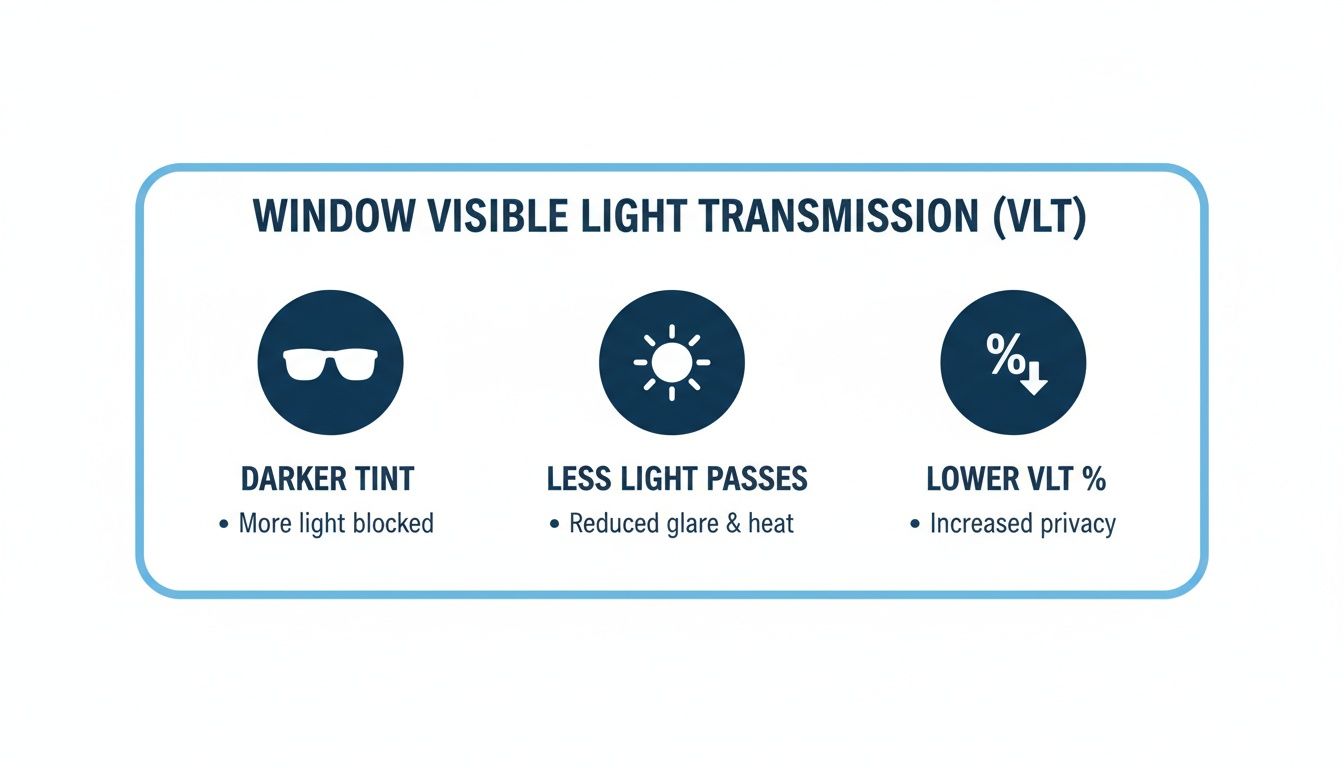
As you can see, the lower the VLT percentage, the darker the tint. This means less light gets into your vehicle and you gain a lot more privacy.
50 Percent VLT: A Subtle Upgrade
A 50% tint is the lightest, most understated choice you can make for your vehicle. From the outside, it adds a tasteful, light smoke effect that elevates your car’s factory glass without making a loud statement.
Once you’re inside, you’ll barely notice a change in visibility, day or night. This level is perfect for the driver who wants the serious benefits of UV protection and heat rejection from a quality ceramic tint but prefers to keep their car's appearance close to stock.
35 Percent VLT: The Popular Choice
There's a very good reason the 35% tint is one of the most popular levels out there. It delivers a sleek, custom look that's clearly darker than factory glass but still provides excellent visibility from the inside.
This is a fantastic middle ground. You get a real boost in privacy and a noticeable drop in daytime glare. For many drivers looking for professional auto tint services in Kennesaw and Marietta, this VLT hits that perfect sweet spot between style, comfort, and safety.
20 Percent VLT: Bold and Private
Stepping down to a 20% VLT brings a much darker, more aggressive look to your vehicle. During the day, it becomes very difficult for anyone to see inside, giving you a high degree of privacy for yourself and your passengers.
While it does an incredible job cutting down glare, it’s important to know that a 20% tint will reduce your visibility at night. It’s a common choice for the rear windows on SUVs and trucks, where privacy is often the number one goal.
Key Takeaway: Lighter tints like 50% VLT are all about maintaining a factory look while adding crucial UV protection. Darker tints like 20% VLT, on the other hand, go all-in on privacy and creating a bold, custom appearance for your vehicle.
5 Percent VLT: The Limo Tint
The darkest you can go is 5% VLT, famously known as "limo tint." This level provides the ultimate in privacy, making it nearly impossible to see inside the vehicle, even if you’re standing right next to it.
Because it blocks out so much light, this tint dramatically impacts nighttime visibility and is often not legal for front side windows in Georgia. It’s typically reserved for rear passenger windows on vehicles like family SUVs where keeping prying eyes out is the main objective. Picking the right car tint film is about more than just a shade; it’s about understanding how each choice will affect your daily drive.
How to Choose the Right Tint Level for Your Lifestyle
Figuring out the ideal window tint isn't a one-size-fits-all deal. The best choice really comes down to you—your driving habits, your daily grind, and what you value most in an auto tint. What works for a daily commuter fighting traffic in Kennesaw might be totally different from what a car enthusiast wants for their weekend ride.
When you match your lifestyle to the right tint level, you get a result that just makes driving better, every single day. Let's break down a few common scenarios to help you find that perfect fit.
For the Daily Commuter
If your car is basically your second office and you spend hours navigating traffic around Marietta and Kennesaw, your priorities are probably comfort and safety. You need a car window tint that can take the edge off the brutal Georgia sun and cut down on glare without making it tough to see at night or in a sudden downpour.
A 35% VLT ceramic tint is often the sweet spot here. This is an incredibly popular choice because it gives you a major boost in heat and UV protection, making your cabin way more comfortable on long drives. It also dials back the blinding glare from the sun and other cars' headlights, all while keeping your visibility clear and safe after dark.
Commuter Tip: Don't just focus on darkness. A top-tier ceramic window tint at a lighter shade will actually block more heat than a darker, basic dyed film. This means you stay cool and comfortable without sacrificing your ability to see clearly at night.
For the Style Enthusiast
For a lot of us, our car is an extension of our personality. If you're all about making a statement with a bold, custom look, you're probably leaning toward a darker tint. The goal is a sleek, uniform appearance that gives your car that "wow" factor and some serious privacy.
A 20% VLT is a go-to for enthusiasts chasing that aggressive, blacked-out aesthetic. It delivers exceptional privacy and a huge style upgrade. But—and this is a big but—you have to keep Georgia's tint laws in mind. A shade this dark will definitely reduce how well you can see at night. Many enthusiasts get around this by putting 20% on the rear windows while keeping the front windows legally compliant.
For the Family Vehicle
When you're shuttling the family around in your SUV or truck, comfort and privacy are king. You want to create a space that's safe, cool, and protected for your passengers—especially for kids, who are more sensitive to heat and UV rays.
A great, practical setup for SUVs, trucks, and minivans is to mix and match tint levels. A popular combination is a legal 35% VLT on the front windows (for the driver's visibility) and a darker 20% or 15% VLT on the rear passenger windows. This strategy gives you the best of both worlds:
- Front: You stay legal and maintain clear sightlines for safe driving.
- Rear: Passengers get maximum privacy, and the back seat stays much cooler with superior heat rejection.
Matching Tint Levels to Your Driving Priorities
Use this comparison to align your primary goals (like heat reduction or privacy) with the most suitable VLT range for your car.
| Your Main Goal | Recommended VLT Range | Ideal for This Driver |
|---|---|---|
| Maximum Comfort & Glare Reduction | 35% – 50% | The Daily Commuter who needs balanced heat rejection and clear night visibility. |
| Sleek Aesthetics & Privacy | 5% – 20% | The Style Enthusiast who wants a bold, custom look and doesn't mind reduced night visibility. |
| Passenger Safety & UV Protection | 15% – 35% | The Family Chauffeur who needs to keep rear passengers cool and protected from the sun. |
| Ultimate Heat & IR Rejection | 35% – 70% (Ceramic) | Anyone in a hot climate prioritizing a cool cabin over dark looks. |
This table is a great starting point, but remember that film quality plays a huge role. A premium ceramic film will always outperform a standard film, even at a lighter VLT.
No matter your driving style, our expert technicians at The Tin Guy can help you select the ideal levels of window tinting for cars that perfectly match your needs. We'll walk you through the options to make sure your automotive tint is a perfect fit for you, your car, and your lifestyle.
Navigating Georgia's Automotive Window Tint Laws
Picking out the perfect shade for your car, truck, or SUV is the fun part, but making sure it’s legal is just as important. An illegal tint job can mean fines, failing an inspection, or the headache of having to strip it all off and start over. At The Tin Guy, our installers in Kennesaw and Marietta live and breathe these regulations, so you can be confident every automotive tint installation we perform is 100% street-legal.
Georgia’s laws are pretty specific, and they change depending on what you drive. Getting a handle on these rules is the last piece of the puzzle in choosing the right levels of window tinting for cars.
Tint Laws for Passenger Cars
For your standard sedans, coupes, and hatchbacks, the state has clear VLT limits. This is all about making sure the driver can see clearly and law enforcement can see inside the vehicle.
- Front Side Windows: Must let more than 32% of light through.
- Rear Side Windows: Same rule here—must allow more than 32% of light in.
- Back Windshield: This window also has to meet the 32% VLT minimum.
Because of this, a 35% VLT film is an extremely popular and perfectly legal choice for cars in Georgia. It strikes a great balance between a sleek look, added privacy, and staying compliant.
Tint Laws for Trucks, SUVs, and Vans
If you drive what the state calls a "multi-purpose vehicle"—think trucks, SUVs, and passenger vans—you get a lot more leeway for the back half of your vehicle.
- Front Side Windows: These are the same as cars and must let in more than 32% of light.
- Rear Side Windows: Any VLT is fair game. You can go as dark as you want.
- Back Windshield: Same story here—any level of darkness is permitted.
This flexibility lets truck and SUV owners go for much darker shades like 20% or even a 5% "limo" tint on the back windows. It’s perfect for maximizing passenger privacy or keeping valuables out of sight.
Key Legal Point: Georgia law has a built-in 3% tolerance. This means a tint that meters at 29% VLT would still be considered legal (32% – 3%). Our team always operates well within these official parameters.
Rules on Reflectivity and Colors
It’s not just about how dark the tint is. Georgia also puts limits on how reflective your car windows can be, since a mirror-like finish can be a dangerous distraction for other drivers.
- Reflectivity: Tint on both the front and back side windows cannot be more than 20% reflective.
- Restricted Colors: You can’t use red or amber tints. They’re simply not allowed.
The easiest way to stay compliant is by sticking with high-quality, non-metallic car tint film options like ceramic or carbon. These films deliver incredible performance without running into reflectivity issues. For a complete rundown, you can dive into all the details in our guide to Georgia's specific auto window tinting laws.
Trying to sort through all these regulations can feel like a chore, but it doesn't have to be. The pros at The Tin Guy are experts on Georgia's laws and will help you find a car tint that looks incredible, performs perfectly, and keeps you on the right side of the law.
Why Tint Material Matters More Than Darkness
It's one of the biggest myths we hear in the shop: darker tint equals better performance. But when it comes to blocking that intense Georgia heat, the truth is that the technology inside the film is far more important than its shade. The real secret to a cool, comfortable ride lies in the material itself, not just the VLT percentage.
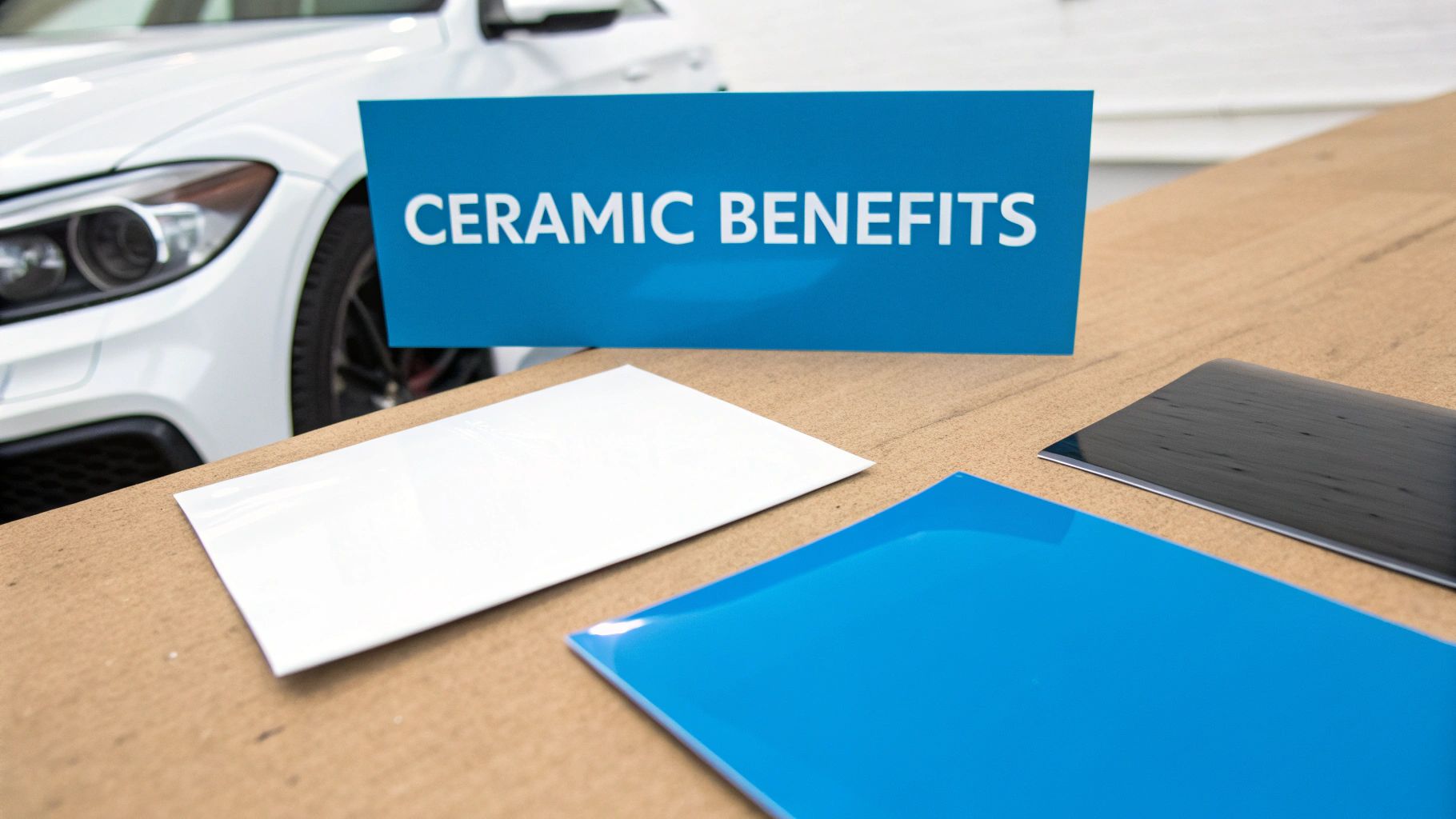
This is exactly where advanced materials like ceramic window tint completely change the game. A high-quality, lighter ceramic film can easily outperform a darker, standard dyed film in both heat and UV rejection. You really don't have to sacrifice visibility to get the comfort you're after.
The Power of Ceramic Technology
Older films simply use dye to darken the glass, which does little to block heat. Modern ceramic tints, however, are engineered with non-conductive, nano-ceramic particles. Think of these microscopic particles as tiny heat shields, exceptional at absorbing and reflecting the infrared heat that bakes your car's interior on a sunny day.
This advanced construction brings some serious advantages to your car, truck, or SUV:
- Superior Heat Rejection: Ceramic films can block over 90% of infrared heat. This keeps your cabin remarkably cooler without needing that dark "limo" look.
- Maximum UV Protection: They block over 99% of harmful UV rays, which is crucial for protecting your skin and stopping your vehicle’s interior from fading and cracking.
- Crystal-Clear Signal: Because they contain zero metal particles, ceramic tints will never interfere with your GPS, satellite radio, or cell phone signals. It's a common problem with older metallic films that you'll never have to worry about here.
Investing in a premium ceramic tint is a smart choice for any vehicle owner in the Marietta or Kennesaw area who values long-term performance and maximum comfort.
Making the Smart Investment for Your Vehicle
While a basic dyed film might give you the privacy you want, it falls short when it comes to blocking heat. A ceramic tint, on the other hand, delivers a complete solution for comfort, protection, and style. For drivers here in Kennesaw and Marietta, that means a cooler ride, a protected interior, and a high-end look that actually lasts.
Choosing a ceramic film is a true investment in your driving experience. Here at The Tin Guy, we specialize in high-performance automotive window tinting that provides real, tangible benefits beyond just looks. If you're ready to see just how different the materials perform, our guide comparing ceramic vs. regular tint offers a detailed breakdown.
The Importance of a Flawless Professional Installation
You can pick the perfect film and the right tint level for your car, but that’s really only half the battle. What truly makes or breaks your new car tint is the quality of the installation. A professional application is the only way to guarantee your tint will look incredible, perform as it should, and last for years to come.
At The Tin Guy, our expert technicians have perfected a meticulous automotive tint installation process that results in a flawless, bubble-free finish every single time. We work in a clean, controlled environment specifically to keep dust and debris—the number one enemy of a perfect tint job—from getting trapped under the film.
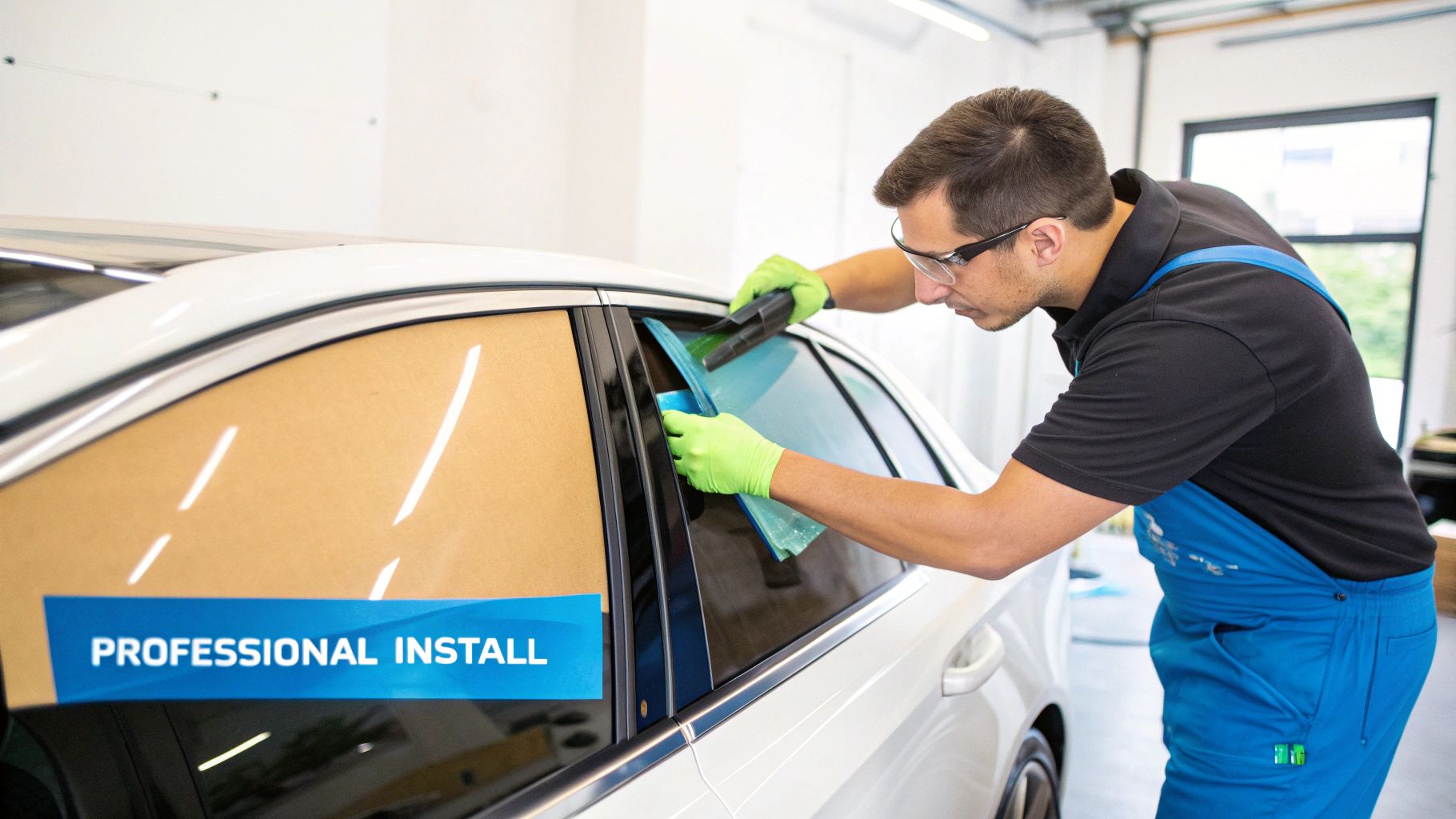
Why Professional Installation Is Essential
We've seen it all when it comes to DIY tinting, and it almost always ends in frustration. Our specialized tools and proven techniques ensure you get the results you paid for.
- No Contamination: We eliminate the dust, hair, and tiny particles that can completely ruin the look of your car windows.
- Seamless Edges: Every piece of film is cut with absolute precision to match your windows’ edges, giving you a clean, factory-like finish.
- No Bubbles or Peeling: Proper application is key to preventing those ugly bubbles and ensuring the film adheres strongly for the long haul.
It's interesting to see how the best shops get their name out there. Understanding the basics of SEO for automotive businesses can show you how top-tier service providers make sure they’re easy to find when you need them.
We proudly back all of our automotive tinting work with a comprehensive warranty. For drivers in Kennesaw and Marietta, this means you can have complete confidence that the job is done right—the first time.
Still Have Questions About Window Tint?
Even after digging into the details, you probably have a few specific questions bouncing around. That’s perfectly normal. Let's tackle some of the most common things we hear from car owners to help you feel confident in your decision.
What Is the Best Tint Percentage for Blocking Heat?
This is a big one, especially here in Georgia. You'd think the darkest tint blocks the most heat, but that’s not the whole story. The real hero in heat rejection is the film's technology, not just its shade.
A high-quality ceramic window tint at 35% VLT can actually block more heat than a basic 20% dyed film. Here at The Tin Guy, we almost always recommend ceramic films for anyone serious about heat reduction. They’re the perfect solution for beating the intense Georgia sun without making your car windows dangerously dark.
Will a Dark Tint Make It Hard to See at Night?
Absolutely, it can. Extremely dark tints, like 5% VLT (often called "limo tint"), can seriously reduce your visibility when driving at night. Plus, a tint that dark isn't legal on most car windows in Georgia anyway.
For most drivers, a 35% VLT film hits the sweet spot, offering a great mix of privacy during the day and safe visibility after sunset. When you come into our Kennesaw or Marietta locations, we’ll talk through your driving habits to make sure you get a tint level that's both legal and comfortable for you.
Can I Mix Different Tint Levels on My Car Windows?
Yes, and it’s actually a very common—and often legally required—practice. Georgia law specifies different VLT levels for front and back windows, depending on whether you drive a passenger car or a multi-purpose vehicle like an SUV or truck.
Many owners opt for a legal, lighter shade on the front side windows and go darker on the rear windows for passenger privacy and comfort. We’ll make sure whatever combination you choose is 100% compliant with state laws.
How Long Does a Professional Car Tint Installation Take?
A professional automotive window tinting job on a standard car, truck, or SUV usually takes between two to four hours.
This isn't just a slap-on-a-sticker job. The process includes deep cleaning the glass, using a plotter to precision-cut the film for your specific vehicle, and carefully applying it to get that perfect, bubble-free finish. Our experts at The Tin Guy have the process down to a science, getting you back on the road with minimal downtime.
Ready to upgrade your vehicle with the perfect window tint? The experts at The Tint Guy are here to help you choose the ideal film and shade for your car, truck, or SUV in Kennesaw or Marietta, GA.