When you boil it down, the benefits of paint protection film are simple: it’s an incredibly powerful, invisible shield for your car. This high-tech layer works overtime to preserve your factory paint by absorbing impacts from rock chips, stopping scratches in their tracks, and blocking out harmful UV rays.
At the end of the day, PPF is a smart investment that keeps your car looking brand new while protecting its future resale value.
Why PPF Is Your Car's Ultimate Defense System
Picture this: you're cruising down I-75 when a semi kicks up a spray of gravel right at your front end. Or you come back to your car after a quick grocery run only to find a fresh, frustrating scratch along the door. These everyday hazards are a constant threat to your car’s perfect finish.
Paint Protection Film (PPF) is the definitive answer, acting as an essential investment in your car’s long-term appearance and health.
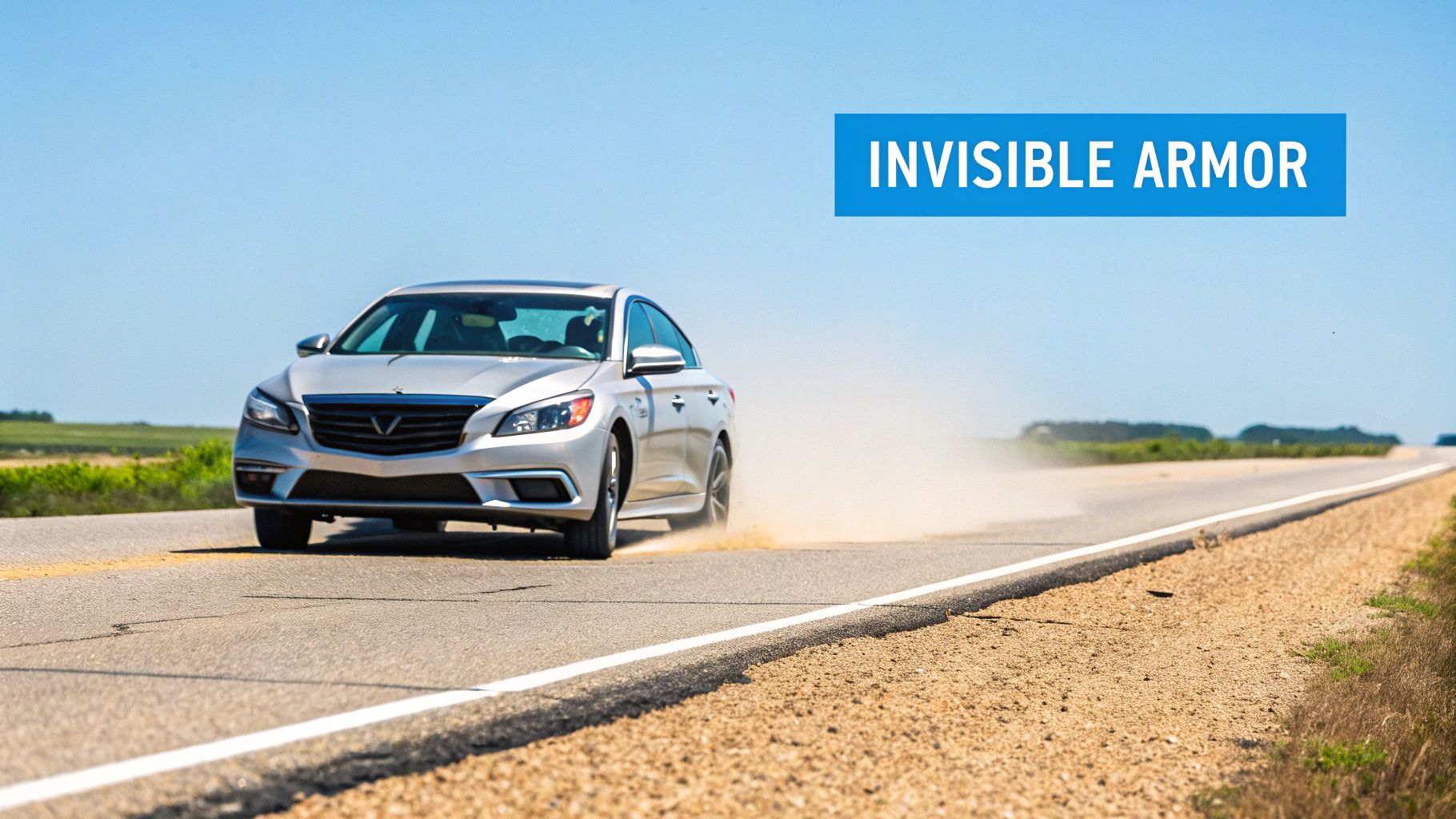
Think of it like invisible, high-tech body armor for your paint. This durable, transparent film is expertly applied to your vehicle’s exterior, creating a tough barrier that shields the factory paint from a whole range of damage. You can get a deeper look into how this amazing technology works by checking out our guide on paint protection film.
Key Advantages Of Paint Protection Film
PPF isn't just another wax or sealant—it goes miles beyond that. It provides a real, physical layer of defense that actively works to keep your car in showroom condition day in and day out.
For a quick overview of what PPF brings to the table, check out our summary below.
Paint Protection Film Benefits At A Glance
Here’s a quick summary of the primary advantages of installing PPF on your vehicle.
| Benefit | What It Does | Why It Matters For Your Car |
|---|---|---|
| Physical Protection | Creates a durable, self-healing barrier over your paint. | Shields against rock chips, minor scratches, and road debris that cause permanent damage. |
| Stain Resistance | Its non-porous surface repels contaminants. | Prevents bird droppings, bug guts, and tree sap from etching into your clear coat. |
| UV Defense | Contains UV inhibitors that block harmful solar rays. | Stops your paint from fading, oxidizing, and losing its vibrant color over time. |
| Enhanced Resale Value | Preserves the original factory paint in pristine condition. | A car with a flawless finish commands a higher price and attracts more buyers. |
These benefits come together to form a comprehensive defense system for your vehicle.
- Impact Resistance: The film is designed to absorb the force from flying rock chips, road salt, and other nasty debris that would otherwise leave a mark on your paint.
- Scratch Prevention: It provides a frontline defense against those annoying minor abrasions from keys, runaway shopping carts, or even automatic car washes.
- Chemical and Stain Guard: PPF forms a non-porous shield against bug splatter, bird droppings, and tree sap, all of which contain acids that can eat away at your clear coat.
- UV Protection: Built-in UV inhibitors are like sunscreen for your car, preventing the sun's harsh rays from oxidizing your paint and causing it to fade.
In the same way that PPF is your car's best defense against daily road hazards, following essential winter car prep tips is crucial for protecting your vehicle from the toughest seasonal conditions.
By preserving your vehicle’s factory finish, PPF not only maintains its aesthetic appeal but also plays a crucial role in maximizing its future resale value. A car with flawless paint is always more desirable to prospective buyers.
How Self-Healing Technology Keeps Your Car Flawless
One of the most impressive things about modern paint protection film is its almost magical ability to heal itself. This isn't science fiction; it’s a core feature that works day in and day out to keep your vehicle looking brand new. Think of a quality PPF as a flexible, self-repairing skin for your car, engineered to take the daily abuse and bounce right back to a smooth, perfect finish.
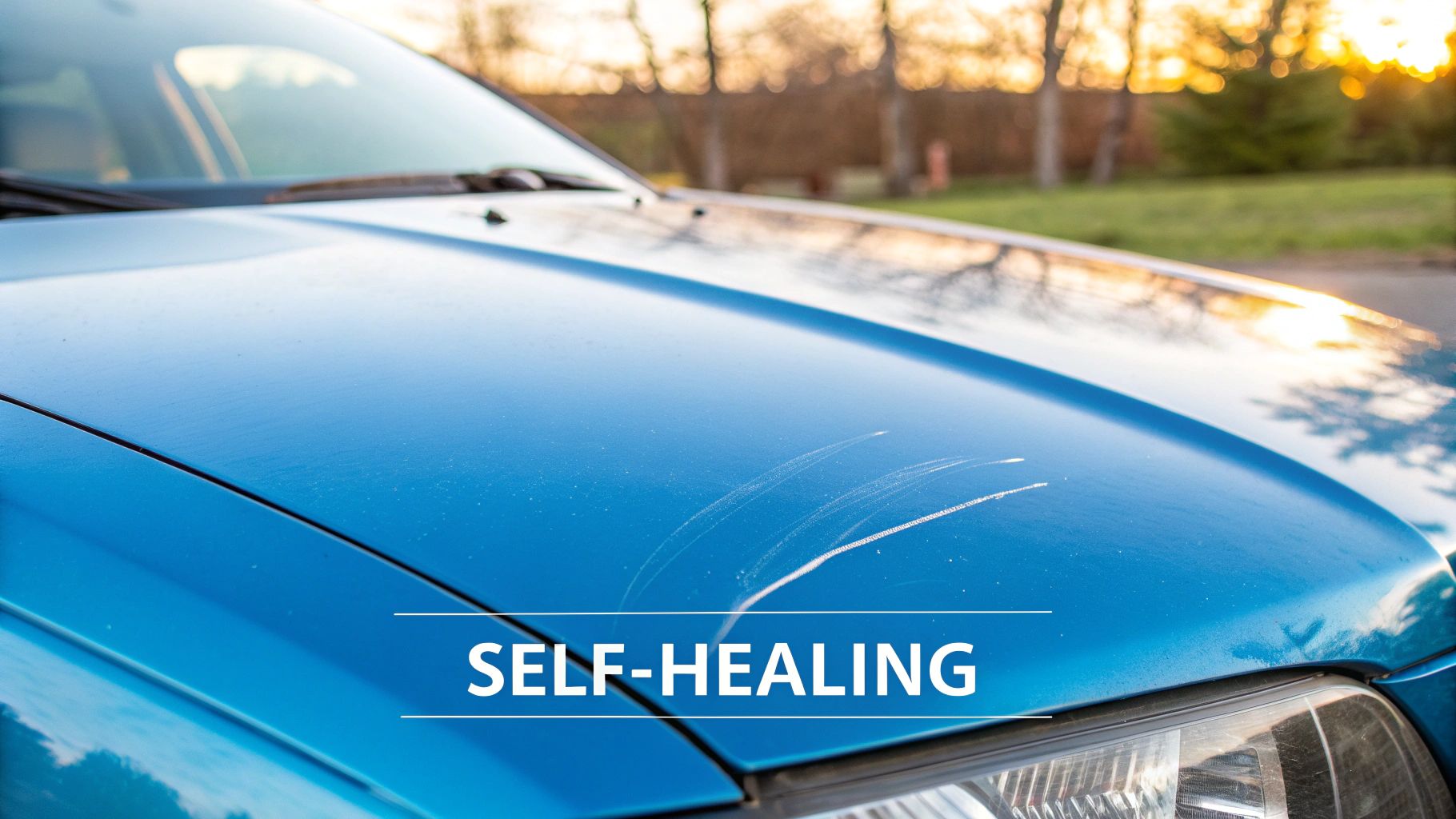
This incredible feature is all thanks to the film's advanced material makeup, specifically thermoplastic polyurethane (TPU). This special polymer is famous for its elasticity and toughness, which allows it to stretch and absorb impacts without breaking. When a light scratch or swirl mark happens, it only scuffs the top layer of the film—your actual paint remains untouched underneath.
So, how does it fix itself? The secret ingredient is simple: heat.
The Science Behind The Magic
The "magic" really comes down to the molecular structure of the TPU. The polymers in the film are linked together in a way that lets them shift and rearrange. When the film gets a minor scratch, this network of polymers is temporarily disrupted.
By applying just a bit of gentle heat—whether it’s from the sun on a warm Georgia day, a heat gun, or even just warm water poured over the spot—you give those polymers the energy they need to snap back to their original state. As they settle back into place, the scratch literally disappears, leaving the surface looking like new again.
This self-healing is most effective on the small stuff, which is exactly the kind of damage your car faces every single day.
- Swirl Marks: Usually caused by improper washing and drying techniques.
- Light Scratches: Minor scuffs from tree branches, keys, or automatic car washes.
- Surface Scuffs: Everyday bumps and brushes in crowded parking lots.
This active defense layer means you can stop worrying about the little cosmetic flaws that build up over time. Instead of needing constant and expensive paint correction, the film handles the minor repairs all by itself, effortlessly maintaining a flawless shine.
One of the top benefits of Paint Protection Film is its serious scratch and chip resistance, shielding your car from the battle scars of North Atlanta roads—especially the debris flying around on I-75. The global PPF market, valued at USD 537.4 million in 2023, is expected to hit USD 971.5 million by 2033, driven by people like you wanting durable protection. The automotive world makes up a huge 68.4% market share of that. Studies show PPF can reduce rock chip damage by up to 99%, and lab tests confirm it can withstand impacts that would demolish bare paint 10 times over. To see just how fast this market is growing, you can read the full market research.
Real-World Scenarios For Kennesaw And Woodstock Drivers
For anyone driving around Kennesaw, Woodstock, and the surrounding areas, this technology offers real, tangible value. Our road conditions can be brutal on a car's finish, from the constant shower of pebbles on the highway to the occasional road salt in winter.
Imagine a few common situations:
- Highway Debris: A small stone kicks up on I-575 and leaves a faint scuff on your hood. Instead of a permanent eyesore, the PPF takes the hit, and the mark vanishes after a day parked in the sun.
- Parking Lot Mishaps: Someone’s grocery bag or jacket lightly brushes against your door, leaving a hairline scratch. With self-healing PPF, that minor annoyance is no longer a big deal.
- Automatic Car Washes: Those spinning brushes are notorious for creating a spiderweb of fine swirl marks. Self-healing technology keeps your finish looking deep and glossy, wash after wash.
Ultimately, this self-repairing ability is what makes PPF such a smart investment. It’s not just a passive coating; it's a dynamic shield that actively works to undo minor damage, keeping your car’s paint looking flawless for years.
Preserving Your Car's Showroom Shine And Color
Beyond just stopping rocks and scratches, Paint Protection Film is your best defense against the slow, silent damage that makes a car look old before its time. Think of a high-quality film as a powerful, invisible sunscreen for your paint, locking in that "just drove it off the lot" shine for years to come. It’s an absolutely essential shield against the relentless Georgia sun and all the gunk the environment throws at your vehicle.
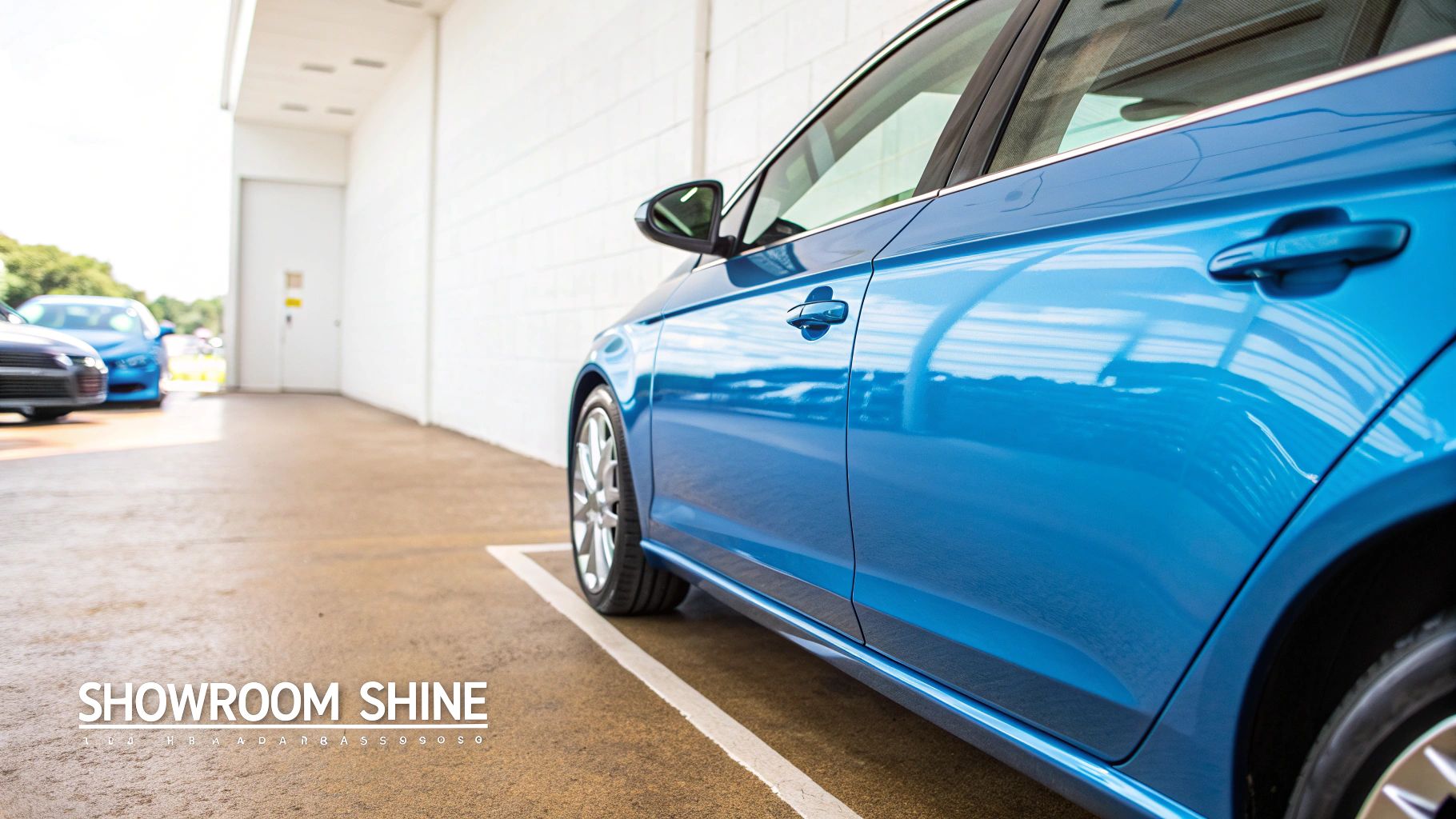
This protection is a huge part of keeping your car looking great and holding its value. Without it, your paint is completely exposed to the elements that chip away at its quality, leading to a faded, tired look.
Blocking Harmful UV Rays
Your car’s paint is under constant assault from the sun’s ultraviolet (UV) radiation—the number one cause of oxidation and fading. Over time, this constant exposure literally breaks down the chemical bonds in the paint. That’s why you see vibrant reds turn pinkish or deep blues look washed out and dull.
A top-tier PPF is made with advanced UV inhibitors that are specifically engineered to block these damaging rays. This invisible barrier is like SPF 100 for your car, stopping the sun from bleaching your paint and making sure its color stays as rich and deep as the day you bought it.
This is especially critical here in Georgia, where our cars bake in intense sunlight for a good part of the year. The film’s power to prevent fading keeps your vehicle looking newer for much, much longer, protecting your investment from the sun’s inevitable toll.
The data backs this up. The gloss levels on paint protected by PPF can stay between 90-95% even after three years, while untreated paint can drop to just 70%. That same protection cuts down oxidation by a massive 80%, which directly preserves resale value. For business owners with a fleet, that can mean 15-20% higher trade-in values and way less money spent on detailing. To get more info, you can check out insights on the North American paint protection film market.
Defending Against Chemical Damage And Stains
The world is full of nasty, corrosive stuff that can permanently scar your car's clear coat if you don't deal with it immediately. The non-porous top layer of a quality PPF creates an impenetrable wall against these chemical attacks, saving your paint from ugly etching and stains that just won't come out.
Just think about what your car gets hit with on a daily basis:
- Bird Droppings: These are incredibly acidic and can eat right through a clear coat in hours, leaving a permanent dull spot.
- Bug Splatter: The acidic guts from insects can be just as damaging, especially when they get baked on by the sun.
- Tree Sap: This sticky mess bonds to paint and can cause serious damage if you try to scrub it off without care.
- Road Tar and Oils: These can easily stain and discolor lighter-colored paints, leaving stubborn blemishes.
By putting a shield between these contaminants and your actual paint, PPF makes cleanup a breeze. Often, a simple wash is all it takes to get rid of stuff that would otherwise require harsh chemicals and a ton of elbow grease.
This tough defense keeps your car’s deep, glossy finish locked in, free from the stains and chemical burns that plague unprotected vehicles. It's the ultimate low-maintenance solution for keeping your car looking perfect.
Maximizing Your Car's Resale Value With PPF
Sure, the instant visual upgrade from paint protection film is a huge win, but the real knockout punch comes down the road, financially. PPF isn't just another line item on your car's expense sheet; it's a direct investment in what your vehicle will be worth years from now. How? By protecting the single most important factor in a car’s aesthetic value: its original factory paint.
When it’s time to sell or trade in, a pristine, damage-free exterior brings in a much higher price. It's just a fact. Buyers and dealership appraisers alike will slash their offers for a car covered in rock chips, swirl marks, and faded spots. Those little imperfections scream neglect and tank the perceived value right away.
By creating a barrier that stops this damage before it ever happens, PPF keeps your car looking like it just rolled off the showroom floor. That preservation pays you back, big time, when you hand over the keys.
How Flawless Paint Translates to Higher Value
Think of your car's paint as its first impression—it tells a story. A perfect, glossy finish speaks volumes about meticulous care and an owner who took pride in their vehicle. That perception is a powerful tool when you start talking numbers.
- Higher Trade-In Offers: Dealerships have to factor in reconditioning costs. A car with perfect paint needs zero paint correction, which means they can give you a better offer right out of the gate.
- Faster Private Sales: In a crowded used car market, a vehicle with an immaculate exterior is a beacon for serious buyers. It sells faster and almost always for more money.
- Increased Buyer Confidence: Buyers are naturally skeptical of what they can't see. When the paint is perfect, it gives them confidence that the mechanical parts have been just as well-maintained.
Diligently protecting your paint with PPF helps lock in a higher selling price. This is especially true when you consider the hit a car takes after any cosmetic damage, a key factor in understanding after-accident car value. Even what seems like minor damage can convince a buyer to dramatically lower their offer.
The Numbers Behind The Investment
The financial boost from paint protection film isn't just a theory; we see it play out every day. Protecting your car’s finish is one of the smartest moves you can make to fight off depreciation. Since 1986, we’ve had a front-row seat here in North Atlanta, watching owners cash in on their well-preserved cars.
Investing in PPF is a strategic move to lock in your vehicle's value. The cost of installation is often recouped—and even surpassed—by the increased resale or trade-in price you command down the line.
Market data consistently shows that a vehicle with protected paint can see its resale value jump by as much as 10-15%. For a luxury SUV or a performance car, that can easily translate to thousands of extra dollars in your pocket. Digging deeper, research shows that protected vehicles can hold onto 20-30% more of their value after five years compared to unprotected ones, all thanks to superior stain protection and UV resistance that stops fading in its tracks.
This isn't just about looking good; it's about making a sound financial choice. For a more detailed look at how long you can expect this protection to hold up, check out our guide on how long PPF lasts.
Choosing Between PPF And Ceramic Coating
One of the questions we get all the time is whether to choose Paint Protection Film (PPF) or a ceramic coating. While they both do a fantastic job of keeping your car looking its best, they play completely different roles. Figuring out that difference is the key to picking what's right for your car and your wallet.
Here’s a simple way to think about it: PPF is like a heavy-duty screen protector for your phone. Its whole purpose is to be a physical barrier that takes the hit and stops scratches. A ceramic coating, on the other hand, is more like the slick, fingerprint-resistant layer on that screen. It won't stop the glass from cracking, but it makes water fly off, repels smudges, and keeps the surface incredibly smooth and easy to clean.
The Defender Versus The Enhancer
The biggest difference comes down to what they're made of and what they're designed to do. PPF is a real, physical film you can touch, while a ceramic coating is a liquid polymer that bonds to your paint.
- Paint Protection Film (PPF): This is your car’s frontline defense. It's a thick, tough, self-healing urethane film built to physically stop rock chips, road grit, and scratches before they ever touch your paint. Its job is true impact resistance.
- Ceramic Coating: This is all about enhancing gloss and making your life easier. It's a liquid that creates a chemical bond with your paint, forming a super hydrophobic (water-repellent) layer. This is what causes water to bead up and roll right off, taking dirt with it, and giving your paint an incredible shine.
While a ceramic coating offers a bit of protection against very light swirling or chemical spots, it provides zero protection against rock chips or any real impact. For that, you absolutely need a physical film like PPF. To really get into the weeds on this, check out our in-depth comparison of paint protection film vs. ceramic coating.
This handy chart breaks down how PPF is a direct investment in your vehicle's future resale value.
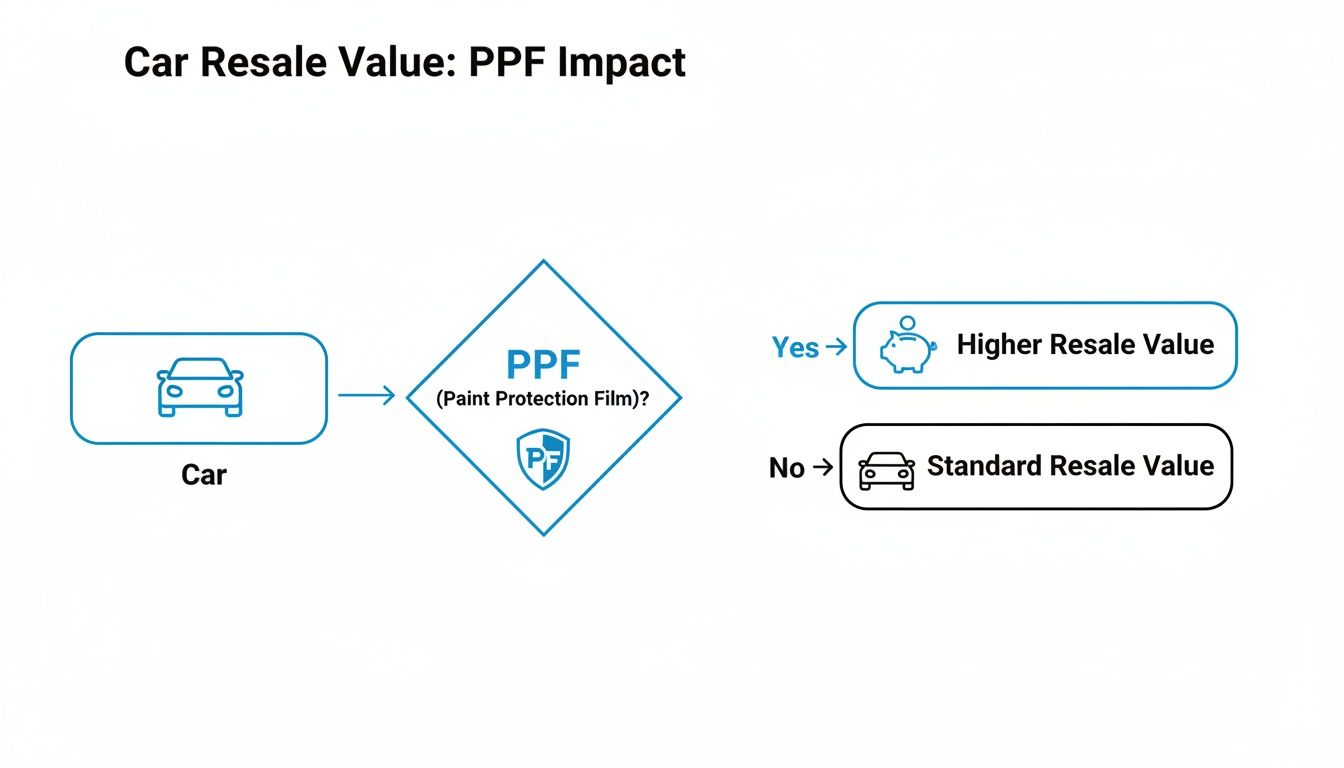
As you can see, installing PPF isn't just about preventing damage—it's a smart financial move that helps your car hold its value over the years.
The Ultimate Solution: The Best Of Both Worlds
So, which one is it? For the absolute best protection you can give your vehicle, the answer isn't "one or the other"—it's both. Taking a hybrid approach gives you a complete, multi-layered defense system that covers all the bases.
The most effective strategy combines the strengths of both technologies: the robust physical shield of PPF on high-impact areas and the slick, glossy, hydrophobic properties of a ceramic coating over the entire vehicle.
This combination is so effective because one product's strengths cover the other's weaknesses.
- Apply PPF First: Our installers apply PPF to the parts of your car that take the most abuse—think the front bumper, hood, side mirrors, and rocker panels. These are the zones that are constantly getting blasted by road debris.
- Layer Ceramic Coating on Top: After the film is on, a ceramic coating is applied over the entire car, including right on top of the PPF. This adds that super-slick, easy-to-clean layer that boosts the gloss and makes washing your car a breeze.
With this dual-layer setup, your car is shielded from physical damage while also getting that brilliant shine and ridiculously easy maintenance from the ceramic coating. It’s the most complete protection package out there, ensuring your vehicle stays looking like it just rolled off the showroom floor for years.
Why Professional Installation Is Non-Negotiable
All the incredible benefits of paint protection film we've covered hinge on one critical thing: a flawless, expert installation. The quality of the application is every single bit as important as the quality of the film itself. DIY kits might look tempting, but they're a fast track to disappointment—think air bubbles, peeling edges, and ugly seams that wreck your car's look and fail to protect it.
Here's a good way to think about it: you can buy the most expensive, highest-quality ingredients, but without a skilled chef, you aren't getting a gourmet meal. The same logic applies directly to PPF. An inexperienced installer can easily damage the film or, even worse, your car's paint, completely defeating the purpose of your investment.
The Meticulous Process Of A Certified Installer
Getting that seamless, "invisible armor" finish is a true craft that demands precision, patience, and the right professional tools. A certified pro follows a strict, multi-step process to make sure the film adheres perfectly and delivers the performance you expect for years to come.
This process is so much more than just sticking a film onto your car. It starts long before the PPF is even unrolled.
- Deep Surface Decontamination: Your vehicle's paint has to be surgically clean. This means a thorough wash to get rid of loose dirt, followed by chemical decontamination to pull out embedded iron particles and road tar.
- Clay Bar Treatment: Next, a clay bar is used to glide across the paint, grabbing any leftover microscopic contaminants. This step is absolutely crucial for creating a perfectly smooth surface for the film to bond with.
- Precision Cutting: We use advanced software and a plotter to computer-cut film patterns that are specific to your vehicle's exact make and model. This ensures every single edge lines up perfectly without ever needing to use a blade directly on your paint.
Trusting an expert installer is the only way to guarantee the film performs as designed, offering maximum durability and a truly invisible finish. A poor installation not only looks bad but can also fail prematurely, costing you more in the long run.
Why The Details Matter
Even the shop environment where the film is applied plays a huge role. Professional shops are clean, well-lit, and climate-controlled spaces designed to prevent dust or any other airborne particles from getting trapped under the film.
A skilled technician also has the touch needed to properly stretch and handle the film around complex curves, like bumpers and side mirrors, without leaving ugly stretch marks or distortions. They use a special slip solution to position the film perfectly before squeegeeing out every last bit of moisture for a rock-solid bond.
This is the level of detail that separates a professional job from an amateur attempt. The final result is a perfect application that's virtually undetectable, ensuring your vehicle gets all the paint protection film benefits without any of the headaches from a botched installation.
Answering Your Top Questions About Paint Protection Film
You've got questions, and we've got answers. Making an informed decision is key, so let's clear up some of the most common queries we hear about Paint Protection Film, from its lifespan to maintenance and safe removal.
How Long Does Professional PPF Last?
Think of a high-quality, professionally installed PPF as a long-term commitment to protecting your car's paint. With top-tier films from brands like 3M and Llumar, you can realistically expect it to last anywhere from 5 to 10 years. With the right care, some films can even go beyond that.
This impressive durability is thanks to the advanced thermoplastic polyurethane (TPU) material and the quality of the adhesive used. The film is engineered to handle years of abuse from UV rays, road debris, and nasty environmental contaminants without yellowing, cracking, or peeling off. But remember, a professional installation is absolutely critical to hitting that 10-year mark; it ensures a perfect, lasting bond to your vehicle's paint.
The lifespan of your PPF is directly tied to the quality of both the film and the installation. A professional job ensures the film adheres correctly and performs as designed for its full intended life.
How Do I Wash a Car with PPF?
Good news: maintaining a car with PPF is straightforward. You don't need a complicated new routine. You can wash your vehicle pretty much like you always have, but following a few best practices will go a long way in maximizing the film's life and looks.
- Let it Cure: This one is crucial. Hold off on that first wash for at least 48-72 hours after installation. This gives the adhesive the time it needs to fully cure and create a solid bond with the paint.
- Use the Two-Bucket Method: To keep swirl marks at bay, grab two buckets—one for your soapy water and a separate one for just rinsing your wash mitt.
- Stick to pH-Neutral Soap: You don't need harsh chemicals. A gentle, pH-neutral car soap is perfect for the job and won't harm the film.
- Be Smart with the Pressure Washer: While you can use a pressure washer, keep the nozzle at least 36 inches away from the car. Be especially careful around the film's edges to avoid any chance of lifting.
- Dry with a Soft Touch: Instead of wiping aggressively, gently pat or blot the surface dry with a clean, plush microfiber towel. This prevents water spots and any fine scratches.
Can PPF Be Safely Removed?
Absolutely. One of the best things about paint protection film is that it’s not permanent. When the time comes to sell your vehicle or replace the film, a trained professional can remove it safely without a single mark on your factory paint.
A technician will use a steamer or a heat gun to gently warm the film. This softens the adhesive, allowing them to slowly and carefully peel the film away. What's left behind? The pristine, perfect paint that was protected all those years. It’s the ultimate way to preserve your car's original finish while giving it years of tough-as-nails defense.
Ready to give your vehicle the ultimate defense against rock chips and scratches? The team at The Tint Guy offers expert paint protection film installation in Kennesaw and Woodstock. Schedule your appointment today!