
So, you're thinking about Paint Protection Film (PPF) and wondering, "How long does this stuff actually last?" It's a great question, and the short answer is that a quality film, properly installed, should give you anywhere from 5 to 10 years of solid protection.
Of course, that range depends on a few key things: the quality of the film you choose, how skilled the installer is, and the way you care for your car afterward.
Understanding Your PPF Lifespan
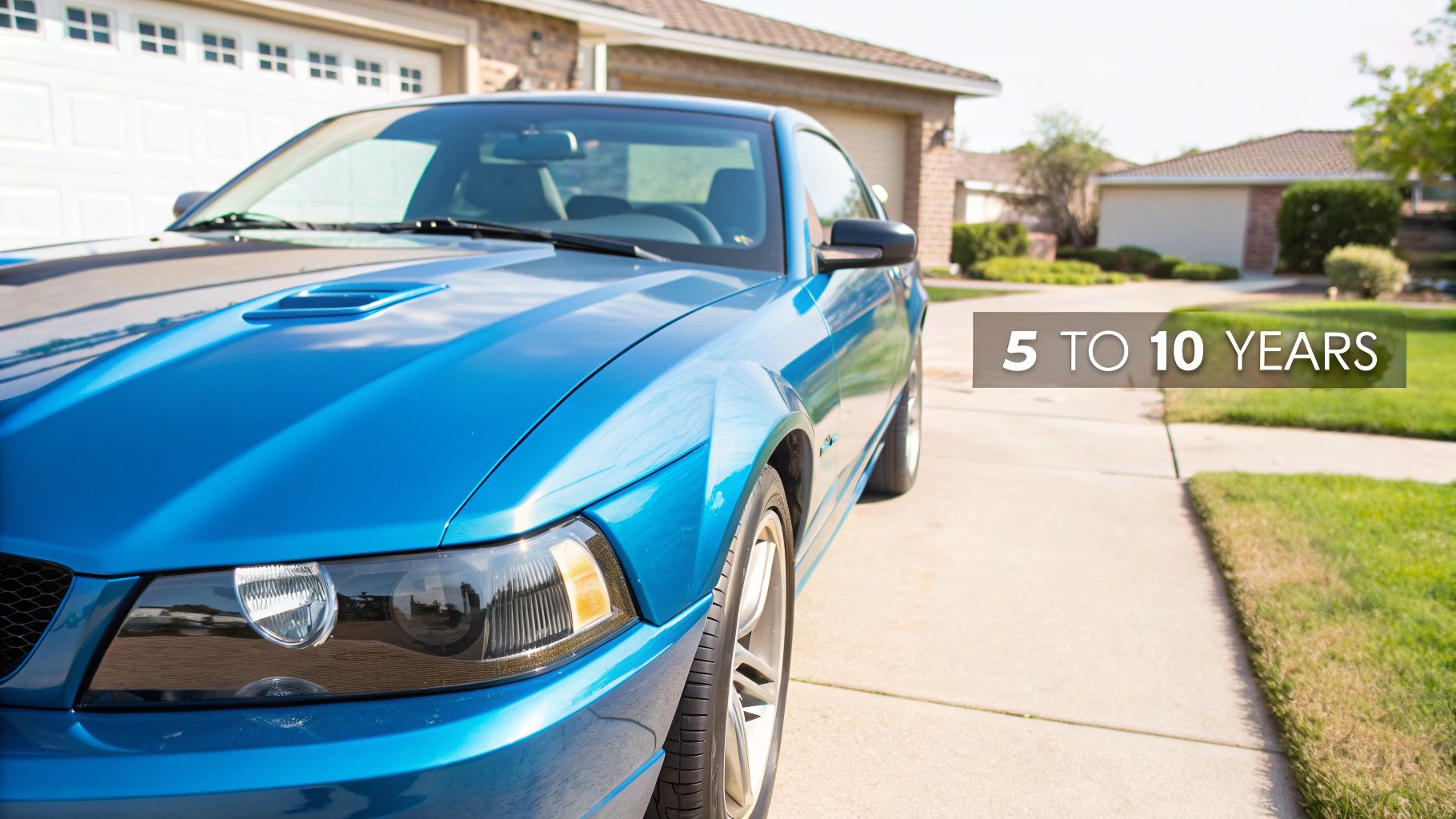
Think of PPF as invisible armor for your car. It's a tough, sacrificial layer that takes the hits from rocks, bugs, and scratches so your factory paint doesn't have to. But just like any armor, it isn't invincible and needs a little attention to go the distance.
A high-quality PPF from a top-tier brand is engineered to last. We're talking about advanced thermoplastic polyurethane designed specifically to fight off rock chips, minor scratches, and the brutal Georgia sun. That 5 to 10-year window is what leading manufacturers stand behind, and it's what makes PPF such a smart move for drivers in North Atlanta, whether you're dodging debris on I-75 or just trying to survive the summer heat in Woodstock and Kennesaw.
In our experience, premium films can retain up to 85% of their protective muscle after five years of real-world use—if they're maintained correctly. If you want to dive deeper, you can learn more about PPF's long-term performance and what the experts say about its incredible durability.
Factors That Define PPF Durability
How long your film holds up really comes down to a few critical elements. The quality of the film itself is number one; professional-grade materials have superior adhesives and top coats that are built to resist yellowing and cracking far better than any cheap alternative you'll find online.
Then there’s our local environment. Here in North Atlanta, your car is up against some unique challenges:
- Intense UV Exposure: That strong Georgia sun is relentless and can bake lower-quality films, making them brittle over time.
- Road Debris: If you commute on I-75 or GA-400, your car is in a constant battle with gravel, sand, and whatever else gets kicked up by traffic.
- Environmental Contaminants: Pollen, tree sap, and bird droppings are more than just annoying—they can actually etch into the film’s surface if you don't clean them off quickly.
A professional installation is the foundation for a long lifespan. A perfectly applied film, free of bubbles and lifted edges, ensures the adhesive bonds correctly and protects the film from premature failure.
PPF Lifespan Expectancy At A Glance
To make it simple, here’s a quick breakdown of what you can realistically expect from your paint protection film, depending on the quality and the care you give it.
| PPF Quality | Typical Lifespan (With Proper Care) | Key Influencing Factors |
|---|---|---|
| Premium Grade (e.g., 3M, Llumar) | 7 – 10 Years | Professional installation, regular hand washing, garage storage, and using PPF-safe sealants. |
| Standard Grade | 5 – 7 Years | Quality of installation, frequency of cleaning, and exposure to harsh sun or contaminants. |
| Entry-Level / Basic | 2 – 5 Years | DIY installation, infrequent washing, and constant outdoor parking can significantly shorten its life. |
Ultimately, investing in a premium film and having it installed by a pro is the best way to get the most out of your PPF and keep your car looking brand new for years to come.
The Science Behind Your Car's Invisible Armor

Modern Paint Protection Film isn’t just a simple sheet of plastic. It’s a highly engineered piece of material science, designed from the ground up to be an invisible, regenerating shield for your vehicle. The secret to its incredible durability and long life lies in its core material: thermoplastic polyurethane (TPU).
TPU is an amazing polymer known for being elastic, crystal-clear, and incredibly resistant to scrapes and impacts. Think of it like a high-tech, flexible armor. It's tough enough to stop a rock chip dead in its tracks but supple enough to stretch flawlessly over every curve of your car. This material is your paint's first line of defense, soaking up the force from road debris that would otherwise leave a nasty chip.
The Magic of Self-Healing Technology
What really elevates professional-grade PPF from good to great is its ability to heal itself. The film is topped with a special elastomeric polymer layer that, when lightly scratched, is engineered to snap right back to its original, smooth state.
It’s almost like a microscopic net of memory foam. When a minor scratch happens, it just temporarily pushes the polymers apart. Add a little heat—either from the Georgia sun on a warm afternoon or a quick pass with a technician’s heat gun—and the material’s memory kicks in. The molecules realign themselves, effectively making the scratch vanish.
This process works wonders on those annoying minor imperfections, like:
- Swirl marks from automatic car washes or using the wrong towel to dry your car.
- Fine scratches from brushing against a bush or everyday use.
- Light scuffs that haven’t broken through the film's top layer.
This self-healing property is a complete game-changer for keeping your car looking flawless. The film is actively working to repair itself, which is a huge reason why the paint protection film lifespan is so much longer than that of older, basic films.
Why This Tech Matters for Your Investment
This advanced science isn't just a cool party trick; it's fundamental to the film's value and longevity. By constantly mending minor damage, the self-healing layer keeps the PPF looking crystal clear and brand new for years. It prevents that hazy, scratched-up look you might see on lower-quality products and ensures the armor stays both effective and invisible.
Understanding what’s going on at a microscopic level makes it clear why investing in a professional-grade product is the right call. You can dive deeper into the specific films we use by checking out our guide to paint protection film services. Our commitment to using these top-tier materials is how we guarantee your vehicle gets the best possible defense against whatever the road throws at it.
What Really Affects Your PPF Lifespan
Even the best paint protection film on the market is in a constant fight against the elements. While a 10-year lifespan is totally possible, a few key things can either help your film go the distance or cut its life short. Understanding what your car's invisible armor is up against is the first step to making it last.
Think of your PPF's lifespan as being directly tied to its environment. Just like anything left outside, the film is constantly exposed to stuff that wants to break it down. Your daily driving habits, where you park, and our local North Atlanta climate all play a huge role in its overall health.
And this isn't a small thing—it's a major factor. Environmental exposure can chew away 20-30% of a PPF's integrity after just five years, even under the best conditions. In a sun-drenched area like ours, parking outside all the time just speeds up the process. Those powerful UV rays attack the film's structure, which can lead to yellowing and brittleness two or three years sooner than if the car was kept in a garage. A garage is truly your film's best friend.
The Unseen Threat of UV Radiation
That relentless Georgia sun is probably the biggest enemy your PPF will ever face. Ultraviolet radiation is no joke; it actively works to break down the chemical bonds in the film's topcoat and the thermoplastic polyurethane itself.
Over years of exposure, this leads to two main problems:
- Yellowing: Older or lower-quality films are infamous for getting a yellow tint as UV rays beat them down. Premium, modern films have advanced UV inhibitors to fight this, but even they can only take so much.
- Brittleness: As the film's polymers break down, it loses its flexibility. This makes it way more likely to crack, peel, or stop self-healing minor scratches like it's supposed to.
Environmental Contaminants in North Atlanta
Besides the sun, your vehicle is a magnet for all sorts of environmental gunk common in places like Woodstock and Marietta. This stuff isn't just messy; it's often acidic and can literally eat away at the film's protective top layer if you let it sit.
Here are the key culprits to watch out for:
- Bird Droppings: Super acidic and can cause permanent etching on the film’s surface.
- Bug Splatter: The guts from insects are also acidic and can damage the topcoat.
- Tree Sap and Pollen: Especially during Georgia's heavy pollen season, these sticky messes can bond to the film and be a real pain to remove without the right technique.
- Acid Rain: Pollutants in the air mix with rain, creating a mild acid that settles on your car and slowly degrades the film.
Cleaning these contaminants off fast is crucial. Letting them sit and bake in the sun is asking for permanent damage to your PPF.
The Physical Assault from Road Debris
Finally, there's the simple physical wear and tear from driving every day. The main job of PPF is to absorb these hits, but a constant barrage will inevitably shorten its life. If you commute on major highways like I-75, your vehicle is right in the line of fire.
Gravel, sand, and other junk kicked up by trucks and cars create a sandblasting effect, causing tiny abrasions all over the film's surface. While the film is built to handle this, its self-healing powers can only do so much against big or frequent impacts. Our in-depth guide explains more about how PPF prevents rock chips and why it’s such a critical defense for your paint.
Why Professional Installation Is The Key To Longevity
You can buy the most advanced, top-of-the-line paint protection film on the planet, but that advertised 10-year lifespan is just a number without a perfect installation. The installer's skill isn't just a small detail—it's the single most important factor that decides whether your PPF performs like it should or fails years ahead of schedule.
Think of it like building a high-performance engine. You can have the best parts in the world, but if the person assembling it doesn't know what they're doing, it's never going to run right. Badly installed PPF is the same way; it’s easy to spot and almost always a fast track to problems.
Common Signs of Improper Installation
A shoddy installation leaves behind tell-tale signs that will absolutely cut your film's life short. Keep an eye out for these red flags:
- Bubbles and Air Pockets: Air trapped between the film and your paint is a killer. It means the adhesive never made a proper bond in that spot.
- Lifted or Peeling Edges: When the edges aren't sealed down perfectly, it’s an open invitation for water, dirt, and road grime to creep underneath and destroy the adhesive.
- Misaligned Seams: On bigger panels that need more than one piece of film, ugly, crooked seams don't just look bad—they create weak points for contaminants to get in.
- Dirt or Debris Under the Film: A clean installation environment is non-negotiable. Even a single speck of dust trapped under the film is there forever, and it often creates a bubble around it.
These aren't just little cosmetic quirks; they're the starting point for total failure. An edge that starts to lift will always get worse, collecting grime and letting moisture ruin the bond across the whole panel.
A professional installation isn't just an expense—it's an insurance policy for your investment. It's the only way to guarantee the film adheres perfectly, stays invisible, and gives you the full protective lifespan you paid for.
The Meticulous Process of a Professional
At The Tint Guy, our certified installers treat every single job with surgical precision. We know from experience that a long-lasting PPF job starts way before the film even comes near the car. Our process is built around a rigorous, multi-stage prep routine to create a perfect, bulletproof bond.
First up, we do an intensive decontamination wash and clay bar treatment. This pulls every last trace of wax, oil, and microscopic grit from the paint's surface. Then, we use state-of-the-art software and a digital plotter to custom-cut the film patterns for your vehicle’s exact make and model. This precision gives us seamless coverage and perfectly wrapped edges without ever having to use a razor blade on your car's paint.
Finally, the application itself is where the art comes in. We use specialized slip solutions and proven squeegee techniques to get a flawless, glass-like finish. This careful, meticulous approach means no bubbles, no lifted edges, and zero imperfections—just invisible armor ready to shield your vehicle for the next decade.
Practical Ways To Extend Your PPF's Life
Once our team finishes installing your paint protection film, the keys to its longevity are officially in your hands. How you care for your car from that day forward will directly determine whether you get a full decade of protection or if the film starts to show its age prematurely.
The good news? Keeping your PPF in top condition is actually pretty simple.
It all boils down to consistent, gentle habits. Just like regular oil changes and tire rotations are part of a bigger strategy for how to make your car last longer, a simple PPF care routine is your best bet for maximizing its lifespan and keeping your car’s finish looking incredible.
Of course, it all starts with a great installation.

This meticulous process—from sanitizing the paint to the final squeegee—creates the flawless bond necessary for the film to perform its best for years to come.
Best Practices For Washing Your Vehicle
Your washing technique is the most critical piece of the maintenance puzzle. Get it right, and you'll keep the film's topcoat pristine and free from contaminants. Get it wrong, and you risk swirl marks and damage.
- Wait Before the First Wash: Give the film's adhesive at least 48-72 hours to fully cure. We know you'll be eager to wash it, but patience here is key.
- Use the Two-Bucket Method: This is a non-negotiable for protected paint. One bucket holds your soapy water, the other holds clean water for rinsing your wash mitt. This simple trick stops you from grinding dirt back into the film.
- Choose a pH-Neutral Soap: Harsh chemicals are the enemy. Aggressive detergents can degrade the film’s protective topcoat, so always stick with a gentle, pH-neutral car shampoo.
- Avoid High-Pressure Washing on Edges: You can use a pressure washer, but be smart about it. Keep the nozzle at least 36 inches away from the car, and never, ever spray directly at the edges of the film. That’s a surefire way to lift it.
Stay away from automatic car washes with those big, spinning brushes. They're far too abrasive for PPF. The bristles can easily create a web of fine scratches that overwhelm the self-healing layer, and worse, they can catch an edge and start peeling the film right off. If you must use an automated wash, stick to touchless options only.
A little bit of consistent effort goes a long way in preserving your investment. The table below illustrates just how much of a difference proper care makes compared to neglect.
PPF Maintenance Impact on Lifespan
| Maintenance Action | With Proper Care (Expected Outcome) | With Neglect (Expected Outcome) |
|---|---|---|
| Washing Technique | Uses two-bucket, pH-neutral soap. Film remains clear and glossy for 7-10+ years. | Uses abrasive brushes, harsh chemicals. Film develops swirls, yellows, and may fail in 3-5 years. |
| Contaminant Removal | Bird droppings, bugs, and sap are cleaned promptly. No staining or etching occurs. | Contaminants sit for days/weeks. Film becomes etched, stained, and clarity is lost. |
| UV Protection | Regular use of PPF-safe sealant. Film resists yellowing and stays flexible. | No extra protection. Film becomes brittle and discolored from sun exposure. |
| Professional Check-ups | Annual inspection catches potential issues like lifting edges early. Film integrity is maintained. | Small issues go unnoticed and worsen. A small lift becomes a major failure, requiring full replacement. |
As you can see, the path to a decade of protection isn't complicated—it's just about being consistent.
A Simple Maintenance Timeline
You don't need to spend every weekend detailing your car. A simple, repeatable schedule is all it takes to keep your film looking brand new, especially with the pollen and sun we get here in North Atlanta.
- Weekly: Give the car a gentle wash. This removes dust, bird droppings, and that lovely yellow layer of spring pollen before it has a chance to bake onto the film.
- Quarterly: Apply a quality PPF-safe sealant or a ceramic spray wax. Think of this as sunscreen for your film. It adds a slick, hydrophobic layer that makes washing easier and gives you an extra shield against UV rays.
- Annually: Swing by the shop for a professional inspection. We can do a deep decontamination to remove any embedded grime and give the entire installation a thorough once-over to ensure it’s performing perfectly for the year ahead.
How To Know When It Is Time For A Replacement
Even the best paint protection film on the market isn't a "forever" solution. Think of it like a high-performance tire—it's designed to take a beating so your car doesn't have to, but eventually, it will wear out. While a top-tier film installed by a pro can easily give you up to a decade of solid protection, it will absolutely show its age over time.
Learning to spot the warning signs is crucial. The goal is to replace the film before it stops doing its job, which would leave your original paint vulnerable all over again. It's all about being proactive and protecting your investment.
Visual Cues That Your Film Is Failing
Your PPF will give you some pretty clear visual signals when it's ready for retirement. If you start noticing any of these issues on your vehicle here in Woodstock or Kennesaw, it’s a sure sign the paint protection film lifespan is nearing its end.
Yellowing or Discoloration: This is probably the most common red flag. After years of baking in the Georgia sun, UV radiation starts breaking down the film's core components and the adhesive layer. The result is a dingy, yellowish tint that really dulls your car's finish.
Cracking or Brittleness: A healthy film is flexible and supple. As it ages and gets hammered by UV rays, it loses that elasticity. You might see tiny surface cracks or notice the film feels hard and dried out. That's a bad sign, as it means the self-healing and impact-absorbing properties are pretty much gone.
Peeling or Lifted Edges: When you see corners and edges starting to lift away from the paint, the adhesive has officially given up. This is a big problem because it creates a pocket for dirt, moisture, and road grime to creep underneath, which will make the rest of the panel fail even faster.
Cloudy or Hazy Appearance: Freshly installed PPF should be optically clear—basically invisible. Over the years, a combination of oxidation and embedded contaminants can make the film lose its clarity. It'll take on a hazy, cloudy appearance that makes your paint look flat and lifeless.
If you spot more than one of these issues, it's definitely time to act. Driving around with a failing film means your car no longer has the protection you paid for, leaving it wide open to new rock chips, scratches, and stains.
Common Questions About PPF Durability
We get a lot of the same questions from drivers here in North Atlanta, and they're all great ones. Getting into the details of your film's lifespan, warranty, and care is exactly what you should be doing to feel great about your investment. Let's tackle some of the most common questions we hear in the shop.
Does The Warranty Cover The Full Lifespan?
For the most part, yes. Most top-tier PPF brands offer warranties that match up with the film's expected 5 to 10-year lifespan. These warranties are designed to cover manufacturing defects—things like the film yellowing, bubbling, or cracking under normal use.
What they don't cover is damage from accidents, a truly massive rock impact, or neglect. When you come in, our team will walk you through the specific warranty details for the film you choose so there are no surprises.
Can I Use An Automatic Car Wash?
This is a big one. We strongly advise against using any automatic car wash that relies on those big, spinning brushes. They are just too aggressive and can cause the film's edges to lift over time or even leave fine scratches that are too deep for the self-healing layer to fix.
A touchless automatic wash is a much better choice if you're in a pinch. But honestly, the absolute best way to care for your PPF is a gentle hand wash using a pH-neutral soap and a stack of clean microfiber towels. It’s the single most effective thing you can do to get the most life out of your film.
Will Removing Old PPF Damage My Paint?
When it’s done by a professional, removing old PPF should not damage your factory paint. It’s a delicate process where experts use specialized steamers and adhesive removers to gently soften the film and lift it away without harming the clear coat underneath.
Trying to yank it off yourself without the right tools is a recipe for disaster—you can easily damage the paint or leave behind a nightmare of sticky residue. This is one of those jobs where professional hands make all the difference, similar to the specialized knowledge needed to understand the nuances between PPF and ceramic coatings.
Is PPF Worth It For A Daily Driver?
One hundred percent. If you're commuting on North Atlanta roads like I-75 or GA-400 every day, PPF is one of the smartest investments you can make for your vehicle. It’s your full-time shield against the rock chips, bug guts, and minor scuffs that are simply a part of daily driving around here.
By keeping your original paint in showroom condition, PPF doesn't just keep your car looking great—it significantly protects its resale value down the road.
Ready to give your vehicle the ultimate defense against road hazards? The experts at The Tint Guy are here to help. Schedule your professional PPF installation today!