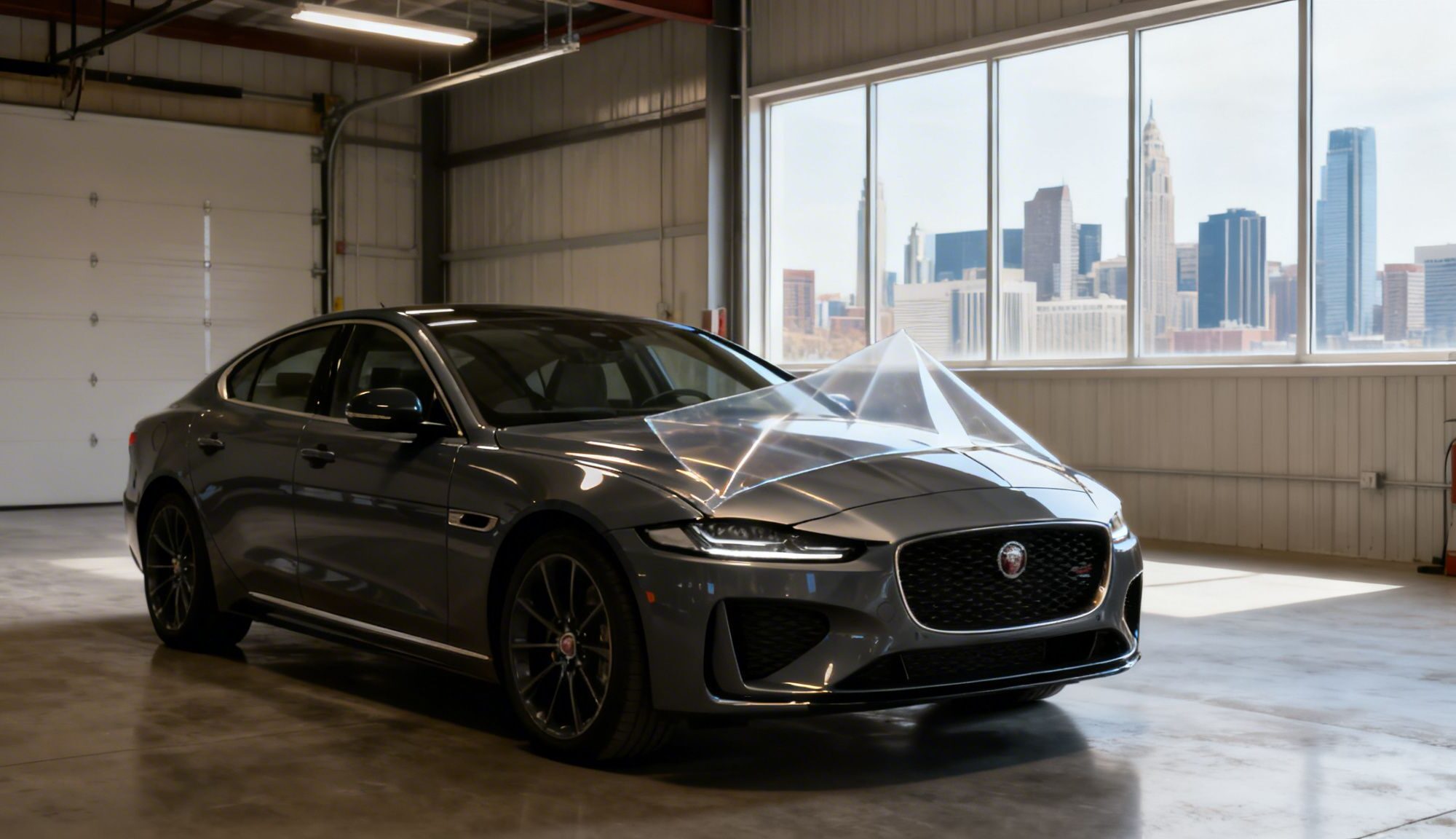
Ever wonder how some cars seem to stay in showroom condition for years, even while navigating the daily grind? The secret is often an invisible layer of armor. That's exactly what Paint Protection Film (PPF) is. Think of it like a heavy-duty, crystal-clear screen protector, but for your car's entire body. It’s engineered to take the hits so your paint doesn't have to.
An Invisible Shield For Your Car

Paint Protection Film, which you'll hear called PPF or "clear bra," is a transparent and incredibly tough thermoplastic urethane film. We apply it directly over your car's painted surfaces, where it acts as a sacrificial barrier. For anyone driving on busy roads, this isn't just a fancy add-on; it's a practical defense against the constant barrage of road debris.
But this isn't some flimsy plastic wrap. It’s an advanced material designed to be brutally tough while remaining optically clear, so it won’t change your car’s color or design. In fact, most high-quality PPF actually deepens the paint's gloss, making the color pop even more, all while keeping it perfectly safe underneath.
The Magic of Self-Healing Technology
What really sets modern PPF apart is its "self-healing" ability. The top layer of the film is a complex polymer that has a pretty amazing party trick: it can mend itself when exposed to heat.
It’s a bit like memory foam for your car. When a light scratch or swirl mark happens, the film's structure is just temporarily displaced. A little bit of heat—whether from the sun, your engine, or even just some warm water—is all it takes for those polymers to flow back to their original state. The scratch literally vanishes.
This self-healing power means your car can shrug off the minor abuse of daily driving. Small scuffs from automatic car washes, a run-in with a shopping cart, or branches on a narrow driveway can disappear, keeping your finish looking flawless year after year.
This regenerative quality is a total game-changer. It maintains that perfect finish without needing constant polishing or paint correction. It’s a huge reason why so many car lovers and daily commuters are choosing PPF to protect their automotive investment.
Preserving Value and Appearance
Ultimately, the reason PPF has become so popular is that it solves one of the biggest headaches for car owners: protecting the factory paint. A vehicle with its original, undamaged paint is always worth more when it's time to sell or trade it in. Just one rock chip repair can run you a few hundred dollars, and a full hood repaint can easily cost over $1,000.
When you invest in PPF, you're really investing in your car's future value. It stops those expensive repairs before they're ever needed and maintains that showroom look that's otherwise impossible to hold onto. This level of defense is what makes PPF one of the smartest upgrades you can make for your vehicle.
The Science Behind Self-Healing PPF Technology
Ever wondered how a light scratch on your car can just… vanish? It’s not magic, though it certainly looks like it. The secret is the advanced material science that makes modern paint protection film such a powerful shield for your vehicle’s paint.
The key is the film’s top layer, which is made from a special polymer called thermoplastic polyurethane (TPU). Think of it like a memory foam mattress, but for your car's finish. It’s incredibly flexible and engineered to always return to its original, smooth shape.
When a light scratch or swirl mark happens, the impact doesn't actually cut into the material. Instead, it just pushes the polymers out of their neat formation, which is what you see as a visible mark on the surface.
How Heat Kicks Off the Healing Process
This is where things get really interesting. Because the film is "thermoplastic," it reacts to heat. All it takes is a little bit of warmth to trigger the self-healing process.
This heat can come from a few common sources:
- The ambient warmth of the sun on a nice day.
- Warm water from rinsing your car or running it through a car wash.
- Residual heat coming off your engine after a drive.
Once heat is applied, the polymers in that top TPU layer are energized. They relax and flow right back into their original, interlinked positions. Just like that, the scratch is gone, and the surface is perfectly smooth and glossy again. This incredible feature is a major reason the automotive paint protection film market is projected to hit USD 443.53 million by 2030, especially as more luxury car owners demand a flawless finish.
Knowing the Limits of Self-Healing
It’s important to have realistic expectations. This amazing technology is designed to handle the kind of everyday wear and tear we see all the time on cars.
What it can fix:
- Light swirl marks from automatic car washes.
- Minor scratches from brushing against a bush or tree branch.
- Small scuffs from daily driving and use.
What it cannot fix:
- Deep gouges that cut all the way through the PPF’s top layer.
- Rock chips that completely puncture the film.
- Damage from a major collision.
Think of the self-healing function as your first line of defense against annoying, surface-level cosmetic damage. It’s what keeps your finish looking perfect without needing constant trips to a detailer. For a deeper look into this tech, check out our guide on self-healing paint protection film. Once you understand the science, you can truly appreciate how PPF for cars acts as a dynamic, active shield that’s always working to keep your vehicle looking brand new.
Choosing Your Level Of PPF Protection
So you're sold on the idea of paint protection film, but how much coverage do you really need? When it comes to PPF, there's no one-size-fits-all answer. Not every car needs the same level of defense, and the right choice for you comes down to your driving habits, your budget, and how you use your car.
Think of it as a strategic investment. While wrapping every square inch offers the ultimate shield, a more targeted approach can give you fantastic protection where it counts the most. Understanding your options is the key to making a smart decision that protects your car and your wallet.
This chart can help you get a better sense of what kind of damage PPF is designed to handle versus what it's meant to prevent.

As you can see, the film’s self-healing magic takes care of those annoying light surface swirls. The real job of PPF, though, is to take the hit from deeper impacts, sacrificing itself to keep your original paint flawless underneath.
Partial Front End Protection
The Partial Front End package is a fantastic entry point into paint protection. It's a strategic and budget-friendly way to shield the absolute highest-impact zones on your vehicle without covering the whole car.
This package zeroes in on the most vulnerable areas:
- The first 18-24 inches of the hood
- The matching front sections of the fenders
- The entire front bumper
- The backs of your side mirrors
This is a perfect setup for daily commuters and anyone wanting to get that crucial first line of defense against the most common threats—rock chips and bug guts—that bombard the leading edge of your car.
Full Front End Protection
If you spend a lot of time on highways, the Full Front End package is the undeniable gold standard. It provides seamless, comprehensive protection for the entire forward-facing portion of your vehicle, leaving no high-impact surface exposed.
A Full Front End package covers the entire hood, both full front fenders, the front bumper, and the side mirrors. This approach eliminates any visible film lines on the hood and fenders, creating a nearly invisible shield.
This is hands-down the most popular choice for PPF for cars because it offers robust defense against the constant barrage of debris kicked up at highway speeds. It’s the best way to prevent that "peppering" of tiny rock chips that can quickly ruin a car's finish. It's the package we recommend most often to our clients for this very reason.
Full Vehicle Wrap
For total paint preservation, nothing beats a Full Vehicle Wrap. This is the ultimate peace-of-mind solution, where we meticulously apply PPF to every single painted panel of the car, from the front bumper all the way to the rear trunk lid.
This top-tier option is ideal for:
- Owners of new luxury, exotic, or performance cars who want to maintain that perfect showroom shine.
- Enthusiasts looking to protect their entire investment from top to bottom.
- Anyone who simply wants to know that every inch of their factory paint is safe from the world.
A full wrap doesn't just stop rock chips. It also guards against dings from stray car doors in parking lots, scuffs from loading and unloading cargo, and harsh environmental threats like bird droppings and tree sap. For vehicle owners who want zero compromises, a full PPF wrap is the definitive answer.
To make the choice a bit easier, here’s a quick comparison of the most common PPF coverage options. This table should help you decide which level of protection fits your car, your budget, and your typical driving routes.
PPF Coverage Packages At A Glance
A comparison of the most common PPF coverage options to help you decide which level of protection is right for your car and driving habits.
| Coverage Level | Protected Areas | Ideal For | Protection Focus |
|---|---|---|---|
| Partial Front End | First 18-24” of hood & fenders, full front bumper, mirrors. | Daily commuters, budget-conscious owners. | Highest-impact zones against rock chips and bugs. |
| Full Front End | Full hood, full fenders, full front bumper, mirrors. | Highway drivers, new car owners, performance cars. | Comprehensive front-end protection with no visible lines. |
| Full Vehicle Wrap | Every painted exterior panel. | Luxury & exotic car owners, enthusiasts, maximum protection seekers. | Total preservation from all road and environmental hazards. |
Ultimately, whether you choose a targeted partial front or a complete wrap, you’re making a smart move to preserve your vehicle's value and appearance. The best package is the one that aligns with how and where you drive.
Understanding The Real Value Of PPF
Is Paint Protection Film just another expense, or is it a smart investment in your vehicle? It’s a question we get all the time from car owners, and the answer isn't just about looks—it's about protecting your car's long-term value. While there's an upfront cost, only seeing it as an expense misses the real financial benefits.
Think about the daily grind on local roads. A single rock kicked up on the highway can easily lead to a $400 or more bill to professionally repaint a chip on your bumper. If you get a more serious scratch or a spray of gravel across the hood, you could be looking at over $1,000 for a high-quality repair. PPF is your proactive shield, taking those hits so your wallet doesn’t have to.
Maximizing Resale and Trade-In Value
The biggest financial payoff often comes when it’s time to sell or trade in your car. A vehicle with pristine, original factory paint will always catch a buyer's eye and command a higher price. Flawless paint isn't just cosmetic; it signals that the car has been meticulously cared for, which builds buyer confidence and boosts its value.
For owners who see their vehicle as a major asset, this is a game-changer. Protecting that original paint with PPF can mean you get back the entire cost of the film—and sometimes even more—at resale. It's a direct investment in your car's equity.
It's not just a hunch; the numbers back it up. A professionally protected car can be worth up to 10-15% more than an identical, unprotected one after just five years. This makes PPF a wise financial move for anyone looking to get the best possible return on their vehicle.
This clear ROI is what's fueling the explosive growth of the global PPF market, which is on track to hit USD 1,086.07 million by 2034. The automotive world makes up the lion's share of this market, with an 82.56% share, as more and more drivers see the benefits. For car enthusiasts, a professional installation is the key to preventing issues like film yellowing and locking in that higher resale price.
The Difference Between Maintenance and Prevention
Thinking about PPF requires a slight shift in mindset. It’s not repair—it's prevention. Understanding the crucial difference between maintenance and repair helps clarify its value. Maintenance is routine work like oil changes. Prevention, like PPF, is about stopping damage before it ever happens.
By choosing PPF, you’re choosing to keep your factory paint perfect rather than paying to fix it later. You’re avoiding the time, cost, and potential imperfections of paint correction and resprays. This is the core principle behind the financial intelligence of choosing PPF for cars. It's not just about having a car that looks brand new; it's about making a sound financial choice that pays for itself over the life of your vehicle.
PPF vs Ceramic Coating vs Vinyl Wrap
When it comes to protecting and styling your car, the options can feel overwhelming. Paint Protection Film (PPF), ceramic coatings, and vinyl wraps are three of the most popular choices we see, but they all do very different jobs. Knowing what each one is actually for is the key to getting the result you really want for your vehicle.
The easiest way we explain it to customers at the shop is to think of it like different gear for your car:
- Paint Protection Film (PPF) is like body armor for your paint. Its one and only job is defense—to absorb the physical impact of rock chips, scratches, and whatever else the road throws at you.
- A Ceramic Coating is like a high-end GORE-TEX jacket. It makes your car incredibly slick and water-repellent (hydrophobic), so it's a breeze to clean, all while adding a serious, deep gloss.
- A Vinyl Wrap is a complete change of clothes. This is all about looks, letting you completely change your car’s color or finish to something like matte or satin, without a permanent trip to the paint booth.
Function Over Form: Protection vs. Aesthetics
The biggest difference comes down to their main purpose. PPF for cars is purely about physical protection. That thick, durable urethane film is engineered to take a hit. This is what sets it worlds apart from coatings or waxes; its ability to stop stones and gravel in their tracks is a massive benefit for any driver.
A ceramic coating, on the other hand, is a liquid that chemically bonds with your paint. It cures into a hard, glassy layer that gives you some minor scratch resistance but really shines when it comes to repelling water, dirt, and UV rays. It keeps your car looking incredible and makes washing it almost effortless, but it's not going to stop a rock chip.
And a vinyl wrap? That’s all about style. It’s a colored adhesive film laid over your factory paint, giving you the power to do a dramatic color change, add custom graphics, or get a unique finish. It does offer a very thin barrier against tiny scuffs, but that’s a side benefit, not its real job.
The Ultimate Combination: PPF and Ceramic Coating
For the car owner who truly wants it all, there's no better strategy than combining these two technologies. This is the ultimate setup for total vehicle preservation: applying a professional-grade ceramic coating right over top of the Paint Protection Film.
Here’s why this is the go-to for so many serious owners:
- Unmatched Protection: You get the industry's best impact resistance from the PPF, stopping physical damage before it starts.
- Extreme Gloss and Shine: The ceramic coating amps up the PPF's clarity and adds that deep, liquid gloss that makes paint pop.
- Effortless Maintenance: The super-slick, hydrophobic properties of the coating mean that mud, grime, and bird droppings wash away with shocking ease.
This one-two punch gives you the tough-as-nails armor of PPF with the easy-to-clean, show-car finish of a ceramic coating. While PPF used to be a pretty niche product, its market is blowing up as more drivers see the value, with some forecasts expecting it to reach USD 835 million by 2030. If you're interested in diving even deeper into how these two powerhouses work together, you might want to check out our detailed comparison of PPF vs. ceramic coatings. It really is the complete package for keeping your car looking brand new.
Comparing PPF, Ceramic Coating, And Vinyl Wraps
Understand the key differences in function, durability, and protection to choose the best option for your vehicle's needs.
| Feature | Paint Protection Film (PPF) | Ceramic Coating | Vinyl Wrap |
|---|---|---|---|
| Primary Purpose | Physical impact protection | Chemical resistance & easy cleaning | Aesthetic color/finish change |
| Protects Against | Rock chips, scratches, scuffs | UV rays, chemicals, dirt, water spots | Minor scuffs, light scratches |
| Durability | 5-12 years | 2-7 years | 3-7 years |
| Self-Healing | Yes (most modern films) | No | No (some high-end films have limited ability) |
| Visual Effect | Optically clear, enhances existing paint | Adds deep gloss and shine | Completely changes color/finish |
| Cost | High | Medium | Medium-High |
Ultimately, the best choice depends on your primary goal. If you're worried about physical damage from daily driving, PPF is the clear winner. If you want your car to stay cleaner longer and have a mirror-like shine, a ceramic coating is your answer. And if you're looking for a bold new look, a vinyl wrap is the way to go.
Why Your PPF Installer Matters More Than The Film

When you start looking into paint protection, it’s easy to get lost comparing film brands and their self-healing wizardry. While the quality of the film certainly matters, the single most critical factor in a successful PPF for cars job is the skill of the person putting it on your vehicle.
Let me put it this way: even the most advanced, expensive film on the market will look awful and fail quickly if the installation is botched. The difference between a flawless, invisible shield and a bubbly, peeling disaster comes down to one thing: craftsmanship.
A premier installer doesn’t just stick film on your car. They perform a meticulous, multi-stage process that requires incredible precision, patience, and an artist’s eye. This is why picking the right professional is a far more important decision than picking the brand of film itself.
The Hallmarks of a Professional Installation
So, what really separates a pro from a low-cost shop? It's all about an unwavering commitment to perfection at every single step. A budget installer might cut corners to save time, but a true expert knows the prep work and environment are non-negotiable for a result that lasts.
Here are the key signs of a top-tier installer:
- A Spotless Environment: A dedicated, climate-controlled, and dust-free installation bay is a must. Any airborne particle—a tiny speck of dust, a stray hair—that gets trapped under the film will create a permanent, glaring blemish.
- Precision Cutting Technology: Professionals use advanced plotting software with exact digital patterns for your specific vehicle. This ensures every piece of film is cut to the perfect size and shape, which eliminates the need for risky razor blade trimming directly on your car’s paint.
- Expert Edge Work: The true artistry of a PPF installation is in the edges. Skilled installers meticulously wrap the film around panel edges wherever possible, tucking it away to create a truly seamless look. This not only makes the film practically invisible but also prevents the edges from lifting or collecting dirt over time.
Questions to Ask Before You Commit
To protect your investment and guarantee a perfect outcome, you have to vet your installer carefully. Don't let a low price be the only thing that sways you; ask the right questions to really gauge their expertise and professionalism.
Before you hand over your keys, ask any potential installer this: "What is your process if you discover a paint imperfection before or during the installation?" A real professional will always stop work, document the issue with photos, and contact you immediately to discuss how you want to proceed. Plowing ahead without your consent is a huge red flag.
Here's a quick checklist of questions to help you find a true expert:
- What film brands do you carry and why? An expert can clearly explain the specific pros and cons of the brands they offer, not just push a single option.
- Can I see your portfolio of recent work? Ask for clear, close-up photos that show their edge work and overall finish, preferably on cars similar to yours.
- What does your warranty cover? A quality job should be backed by two warranties: one from the film manufacturer (covering defects like yellowing or cracking) and a separate labor warranty from the installer.
- Do you use pre-cut patterns or do you hand-trim on the vehicle? Pre-cut patterns are the gold standard for safety and precision. Heavy hand-trimming on the paint is a sign of an outdated or less careful process.
Choosing the right installer is the most important step in your PPF journey. A skilled professional delivers a result that not only protects your car but is so perfectly applied, you’ll forget it’s even there.
Your Questions About PPF Answered
When you're considering an investment like Paint Protection Film, you're bound to have questions. That's a good thing. We've been installing PPF for years, and we’ve heard just about every question in the book. Let's tackle some of the most common ones head-on.
How Long Does Quality PPF Last?
When you opt for a professional-grade PPF installation with a top-tier film, you’re looking at serious longevity. A quality film is engineered to last for 10 years or more.
Of course, this lifespan depends on a few things: the quality of the film itself, the skill of the installer, and how you care for it. That's why leading manufacturers back their products with a 10-year warranty that covers issues like yellowing, cracking, or peeling. It’s peace of mind that your investment is built for the long haul.
Can Paint Protection Film Be Safely Removed?
Yes, absolutely. High-quality PPF is designed from the ground up to be completely removable without damaging your car's factory paint.
When the time comes to replace the film—or if you decide to sell the vehicle—a professional can use a steamer or heat gun. This process gently softens the adhesive, allowing the film to be carefully peeled away. The result? The paint underneath looks just as pristine as the day the film was put on.
Is PPF A Good Investment For A Daily Driver?
Without a doubt. While you often see PPF on high-end exotics, it offers incredible protection and value for any vehicle you care about, especially a daily driver. Your car faces a constant assault from road hazards every day.
PPF acts as a durable shield, absorbing the damage from rock chips, bug splatter, and minor scuffs that are unavoidable on local roads. This not only maintains your car's appearance day-to-day but also significantly protects its future resale value, making it a very smart investment for any driver.
How Do You Care For A Car With PPF?
This is one of the best parts—caring for a car with PPF is surprisingly simple. You can wash it just like you normally would. The only catch is to wait about a week after installation for the film to fully cure before that first wash.
Here are a few quick tips for keeping it looking great:
- Hand washing with a pH-neutral soap is always the best way to go.
- Touchless car washes are a great, safe alternative if you're short on time.
- Avoid using abrasive polishes, harsh compounds, or waxes directly on the film itself.
- For the ultimate protection, many owners have us apply a ceramic coating right on top of the PPF. This adds incredible gloss, extra UV protection, and makes cleaning even easier. It’s the perfect one-two punch for paint defense.
Ready to give your vehicle the invisible armor it deserves? The experts at The Tin Guy are here to help you choose the perfect paint protection solution. Protect your investment with a flawless, professional installation that keeps your car looking brand new for years.