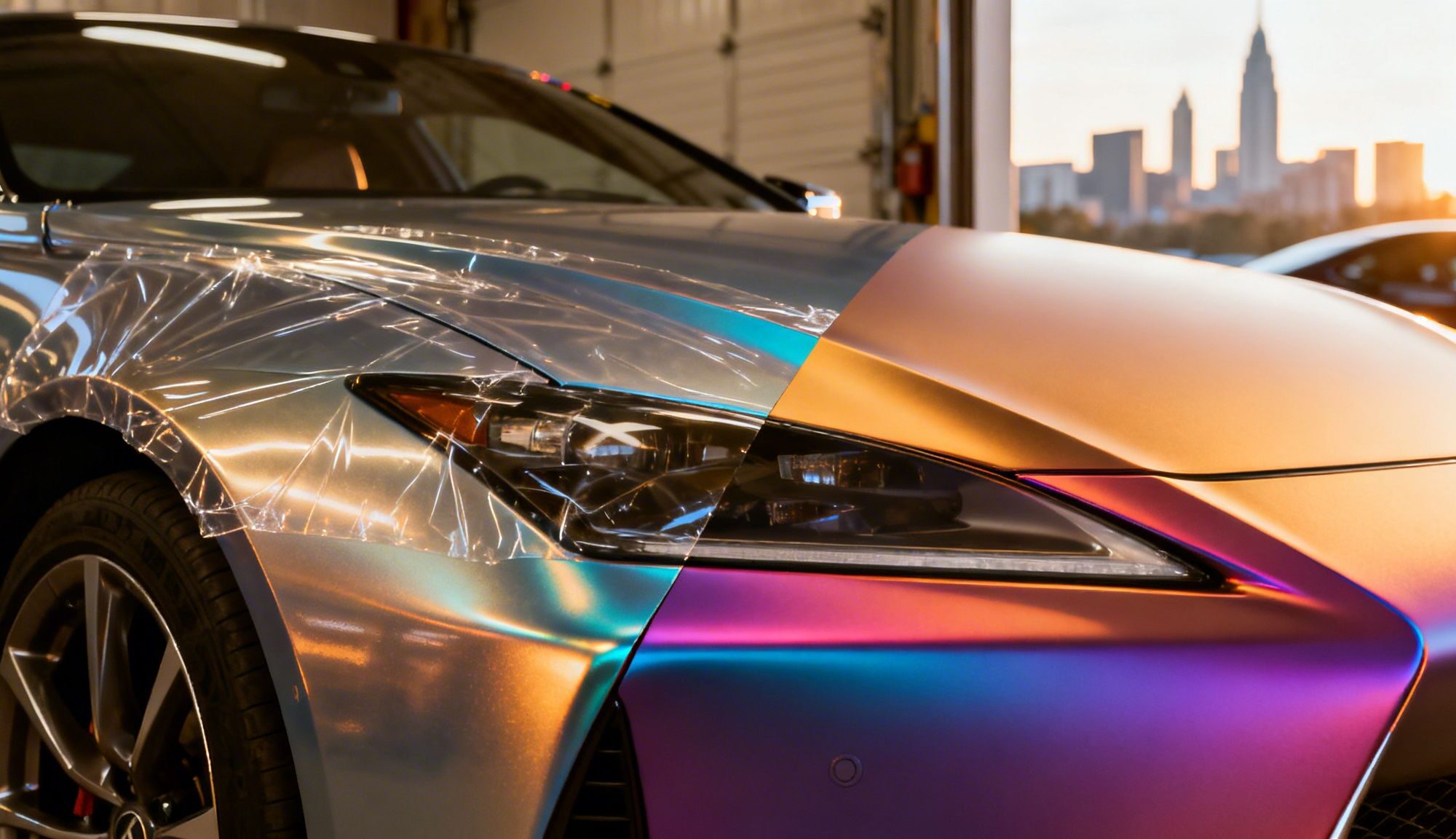
When you're looking to upgrade your car's exterior, the choice between Paint Protection Film (PPF) and a vinyl wrap really boils down to a single question: are you after protection or aesthetics? PPF is a thick, transparent shield made to keep your car’s factory paint safe from damage. A vinyl wrap, on the other hand, is a thinner, colored film used to completely change how your vehicle looks.
Understanding the Core Differences
Picking between PPF and a vinyl wrap means getting to the heart of what they’re designed to do. One is an invisible guardian for your paint, while the other is a canvas for cosmetic expression. For drivers in Kennesaw, GA and Marietta, GA, where daily commutes can kick up all sorts of road debris, this choice affects both your car's look and its long-term value.

A Quick Look: PPF vs Vinyl Wrap
To get a better sense of which film is right for you, it helps to see their core differences side-by-side. This quick overview breaks down what each one brings to the table.
| Feature | Paint Protection Film (PPF) | Vinyl Wrap |
|---|---|---|
| Primary Goal | Protection: Shields original paint from rock chips, scratches, and stains. | Aesthetics: Changes the vehicle's color, finish, and overall look. |
| Material | Thicker, durable Thermoplastic Polyurethane (TPU) built for impact resistance. | Thinner, flexible Polyvinyl Chloride (PVC) designed for customization. |
| Finish Options | Primarily optically clear (gloss or matte) to enhance factory paint. | Vast range of colors, textures, and finishes (gloss, satin, matte, chrome). |
| Durability & Lifespan | 7-10 years. Highly resistant to physical damage and environmental factors. | 3-5 years. More susceptible to damage from impacts and harsh sun. |
| Special Properties | Often includes self-healing technology that makes minor scratches disappear with heat. | Offers some UV protection and minor scratch resistance but lacks self-healing. |
| Cost | Higher initial investment due to advanced material and protective qualities. | More budget-friendly, making it ideal for temporary or frequent style changes. |
This table makes the distinction pretty clear: your choice is driven entirely by what you want to achieve for your vehicle.
Function Over Form or Vice Versa
Paint Protection Film is a true investment in preservation. Its primary job is to be a sacrificial layer, absorbing the kind of daily abuse that would otherwise lead to expensive paint correction or a full repaint down the road. Think of it as functional armor for your car's most vulnerable areas.
Key Insight: PPF is the definitive choice for new car owners or anyone focused on maintaining maximum resale value by keeping the factory paint in pristine condition.
Conversely, a vinyl wrap is all about transformation. It gives you the power to create a custom look that a factory paint job just can't match, from wild colors to unique textures. While it provides a basic shield against minor scuffs and UV rays, its durability isn't its main selling point.
Making the right choice means aligning the product’s strengths with your personal priorities for your vehicle. As we dig deeper into each option, you’ll get the clarity you need to make the best decision for your car here in the Kennesaw and Marietta area.
What Is Paint Protection Film?
At its core, Paint Protection Film (PPF) is all about one thing: defense. Think of it as a transparent, heavy-duty shield engineered from thermoplastic polyurethane (TPU) that’s applied directly over your car's paint. Its entire job is to safeguard your factory finish without changing the color. For owners who want to keep their vehicle’s paint in pristine, showroom-level condition, PPF is the answer.

This is a totally different ballgame from a vinyl wrap, which exists for cosmetic flair. PPF is built for pure, rugged protection. Its thickness and unique material are designed to absorb the physical abuse that comes with daily driving, making it the go-to choice for protecting a brand-new car or preserving the original paint on a classic.
Self-Healing Properties: The Real Game-Changer
What really sets modern PPF apart is its incredible durability and self-healing technology. The film’s top layer is engineered to literally mend itself. When minor scratches and swirl marks appear—say, from an automatic car wash or a light scuff—the film reforms when it's exposed to a little heat from the sun or a heat gun. Those fine abrasions simply vanish, keeping your car's surface looking flawless.
This self-healing capability is a massive differentiator when comparing PPF vs. vinyl wrap. While vinyl offers a thin barrier, it has no ability to repair itself. PPF, on the other hand, is built from the ground up for resilience.
Key Takeaway: PPF acts as a sacrificial layer that doesn't just take a hit—it actively repairs itself from minor damage. This is how it keeps your vehicle’s paint looking perfect for years, not just months.
This advanced tech is a big reason why the paint protection film market in North America is projected to surge from USD 287.56 million in 2026 to USD 479.50 million by 2033. More and more owners are demanding true surface protection that offers scratch resistance, stain blocking, and a lasting gloss.
Your Shield Against Everyday Road Hazards
For anyone driving around Kennesaw, GA or Marietta, GA, PPF offers serious protection against the kind of damage that can ruin a car's paint for good.
- Rock Chip Defense: The film’s elastic and thick nature lets it absorb the impact from small stones and debris kicked up on highways like I-75, preventing those ugly chips and pits in your paint.
- Chemical & Stain Resistance: PPF creates a non-porous barrier that blocks environmental messes. It effectively stops damage from bug guts, bird droppings, tree sap, and acid rain, all of which can etch into an unprotected clear coat.
- UV Ray Protection: Top-tier films, like those from premier brands such as 3M and Llumar, are packed with UV inhibitors. These prevent your factory paint from fading, yellowing, and oxidizing over time.
Getting a professional PPF installation isn't just adding a protective layer; it's a strategic move to secure your vehicle's future resale value. A car with impeccable, original paint is worth significantly more than one showing signs of wear and tear. To dive deeper into how this works, you can learn more about how PPF preserves your vehicle's value in our detailed guide. Ultimately, choosing PPF is about choosing long-term preservation and peace of mind on the road.
Exploring Vinyl Wraps: A World of Customization
While Paint Protection Film acts as an invisible shield, a vinyl wrap is the ultimate tool for automotive personalization. Its main job is aesthetics, letting you completely transform your car’s appearance without the permanent commitment of a new paint job. Think of it not as armor, but as a brand-new outfit for your vehicle.

Unlike the crystal-clear nature of PPF, vinyl wraps are all about creative potential. Made from a flexible Polyvinyl Chloride (PVC) material, they are designed specifically to change a car’s color and finish. For car owners, this opens up a nearly limitless palette.
The Spectrum of Finishes and Colors
The biggest draw of a vinyl wrap is the incredible variety. For drivers in Marietta, GA and Kennesaw, GA who want their vehicle to stand out, the options go far beyond what any factory can offer.
- Gloss: Delivers a bright, wet-look finish that convincingly mimics a high-quality paint job.
- Satin: Provides a smooth, low-sheen look that’s both elegant and modern.
- Matte: Creates a flat, non-reflective surface for a bold, custom appearance that’s impossible to get with paint.
- Chrome & Color-Shift: These are high-impact, dynamic finishes that change appearance depending on the light and how you look at them.
- Textured: Includes unique effects like carbon fiber, brushed metal, or even leather, adding a physical dimension to your vehicle's look.
This versatility makes vinyl the go-to choice for individual expression or for businesses that need to apply branding to their vehicle fleets. It’s a cost-effective alternative to a full repaint that offers far more creative freedom.
Protection as a Secondary Benefit
Although its main job is cosmetic, a vinyl wrap does provide a basic layer of defense for the paint underneath. The film acts as a sacrificial barrier, offering some protection against minor, surface-level threats.
It can help guard against:
- Light scratches and scuffs from daily driving.
- UV rays that cause paint to fade over time.
- Minor stains from bird droppings and other environmental contaminants.
Key Takeaway: While vinyl wrap offers some minor protection, it is not designed to withstand significant impacts. It will not stop rock chips or absorb hits the way a thicker, purpose-built Paint Protection Film can. It is a cosmetic enhancement first and foremost.
Lifespan and Durability in the Georgia Climate
The durability of a vinyl wrap is fundamentally different from that of PPF. Because it's made of a thinner PVC material, a quality vinyl wrap typically has a lifespan of 3 to 5 years. This duration can be influenced by several factors, especially the intense sun and heat common here in the Kennesaw and Marietta area.
Proper care is essential to getting the most out of your wrap. This means regular hand washing and steering clear of abrasive cleaners or automatic car washes that could damage the film. Unlike the more "set it and forget it" nature of PPF, a vinyl wrap requires more mindful maintenance to keep it looking its best.
Ultimately, a vinyl wrap is the perfect solution for drivers who prioritize customization and want the flexibility to change their car’s look every few years. It provides a stunning visual transformation, turning any car into a personalized statement on wheels.
Feature by Feature: How PPF and Vinyl Really Compare
Once you get past the surface-level definitions, the true differences between Paint Protection Film (PPF) and a vinyl wrap become crystal clear. Forget a simple pros and cons list. A real-world, situational comparison is what truly shows which film is the right choice for your car, your budget, and what you’re trying to accomplish.
The market itself tells you a lot about how these two products serve different needs. The global PPF market is on track to hit USD 838.1 million by 2032, with a whopping 42.4% of that share coming from the automotive sector. On the other hand, the vinyl wrap film market was already valued at a massive USD 3.54 billion in 2024, fueled by the huge demand for aesthetic customization. These numbers tell the story: PPF is the king of premium protection, while vinyl dominates the world of visual makeovers.
Durability Under Atlanta Conditions
The intense Georgia sun and our daily grind on highways like I-75 and GA-400 really put a vehicle’s exterior to the test. For drivers in Kennesaw, GA and Marietta, GA, this is where the lifespan difference between PPF and vinyl becomes a critical decision point.
Paint Protection Film (PPF): This stuff is built for the long haul. A professionally installed, high-quality PPF has a typical lifespan of 7 to 10 years. Its tough thermoplastic polyurethane (TPU) material is specifically engineered to resist yellowing from UV exposure and shrug off the daily abuse from road debris. If you plan on keeping your car for years, PPF is what gives you lasting peace of mind.
Vinyl Wrap: A quality vinyl wrap will generally look good for 3 to 5 years. Its thinner polyvinyl chloride (PVC) construction is just more susceptible to fading and breaking down from constant sun exposure. It’s perfect for short-term style changes or leased vehicles, but it isn’t a long-term protective solution.
Key Takeaway: For long-term ownership and maximum resilience against the Georgia climate, PPF's superior durability makes it the clear winner. For a temporary style change or a car you won't have for long, vinyl's shorter lifespan is a much more practical fit.
True Protective Capabilities
Both films cover your paint, but how well they protect it is worlds apart. One is designed to absorb impacts, while the other is purely cosmetic.
PPF offers true impact absorption. Its thickness (often 8 mil or more) and elastic, rubber-like properties allow it to literally absorb the energy from flying rocks and debris. This prevents them from chipping the paint underneath. On top of that, its self-healing top coat can magically erase light scratches and swirl marks with a bit of heat from the sun or a heat gun, keeping the finish looking flawless.
Vinyl wrap provides only surface-level scratch resistance. It will definitely shield the paint below from minor scuffs, car wash swirls, and light abrasions. However, it's far too thin to stop a rock chip and has zero self-healing properties. A decent impact will almost certainly puncture the vinyl and damage the paint.
Detailed Feature Analysis: PPF vs Vinyl Wrap
To really break it down, let's look at these two products side-by-side across the most important criteria. This table cuts through the noise and gives you a direct comparison for your specific needs.
| Criteria | Paint Protection Film (PPF) | Vinyl Wrap | Key Takeaway for Kennesaw & Marietta Drivers |
|---|---|---|---|
| Primary Purpose | Protection | Aesthetics | Choose PPF to preserve your car's value; choose vinyl to change its look. |
| Material | Thermoplastic Polyurethane (TPU) | Polyvinyl Chloride (PVC) | TPU is thicker, more durable, and self-healing. PVC is for color and finish. |
| Durability | 7-10+ years | 3-5 years | PPF is a long-term investment. Vinyl is a shorter-term style choice. |
| Impact Resistance | Excellent. Absorbs rock chips. | Poor. Will puncture from impacts. | For highway commuters, PPF is essential for preventing paint damage. |
| Self-Healing | Yes. Minor scratches disappear. | No. Scratches are permanent. | PPF keeps your car looking newer for longer, especially after a car wash. |
| Finish Options | Optically clear (gloss), satin/matte | Thousands of colors & textures | Vinyl offers unlimited creativity. PPF enhances the paint you already have. |
| Installation Cost | Higher ($2,000 – $7,000+) | Lower ($2,500 – $5,000) | PPF is a bigger upfront investment but protects your car's resale value. |
| Resale Value Impact | Increases by preserving paint | Neutral to Negative | A well-protected original paint job is always a plus for a future buyer. |
Ultimately, this isn't about which one is "better" overall, but which one is better for you. If you just bought a new car and want to keep that factory paint perfect for a decade, PPF is the only answer. If you're bored with your car's color and want a head-turning new look, vinyl wrap is your canvas.
Aesthetic Impact and Finish
What's your goal? Do you want to enhance the paint you already love, or create something completely new? Your answer points you to the right film.
PPF is all about enhancement. It's an optically clear film that makes your factory paint pop. A high-quality gloss PPF adds incredible depth and shine, often looking even better and wetter than the original clear coat. If you want that modern, frosted look, a matte or satin PPF can give your car a stunning new finish without a permanent and costly paint job.
Vinyl wrap is all about transformation. With thousands of colors, textures, and finishes—from carbon fiber and brushed aluminum to high-gloss metallics and color-shifting flakes—it offers limitless creative potential. If you want a color the factory would never dream of offering or need to apply custom branding to a vehicle, vinyl is the way to go. You can see how PPF stacks up against other protective options by reading our in-depth guide comparing paint protection film vs ceramic coating.
Upfront Cost vs. Long-Term Value
The financial breakdown between PPF and vinyl is a classic case of initial investment versus total cost of ownership over time.
A professional PPF installation is a significant upfront cost, often running more than a full vinyl wrap. That price reflects the advanced, multi-layer material and the extremely meticulous, time-consuming installation process required to do it right. The real value, however, is realized over many years by perfectly preserving your car's original paint, which is a huge factor in maintaining resale value.
A vinyl wrap is much more budget-friendly at the start, making a full cosmetic makeover accessible. Its lower cost allows for more frequent style changes if you like to keep things fresh. But, when you factor in its shorter lifespan and the need for a full replacement every few years, the long-term cost can easily approach or even surpass that of a single, long-lasting PPF application.
Making the Right Choice for Your Driving Needs
Choosing between Paint Protection Film and a vinyl wrap isn't just about comparing features. It's about matching the right solution to your real-world driving habits here in the Kennesaw and Marietta area. The best choice comes down to your goals, your car, and your lifestyle.
This decision guide breaks down the core choice: are you after pure, hardcore protection or a complete style transformation?

As you can see, your main goal is the single most important factor. Deciding between shielding your paint or totally changing its look will point you in the right direction.
For The Daily Highway Commuter
If your daily routine involves battling traffic on I-75, I-575, or the busy streets of Kennesaw, GA, your car is under constant assault from road debris. For you, the priority is undeniably protection.
A full-front PPF installation is the most practical and valuable investment you can make. This covers high-impact zones like the bumper, hood, fenders, and side mirrors, which take a beating from rock chips and bug guts. The film’s self-healing properties ensure your vehicle’s front end stays looking new, directly preserving its resale value against the harsh reality of a daily commute.
For The Automotive Enthusiast
Car enthusiasts in Marietta, GA and Kennesaw, GA often want it all: flawless protection for their pride and joy, plus a unique look that turns heads at car meets. This is where a hybrid solution really shines.
- Protection Where It Counts: Apply PPF to the most vulnerable areas, like the full front end and rocker panels. This is your insurance policy against damage during those spirited drives.
- Style Everywhere Else: Use a custom vinyl wrap on the rest of the car—the doors, roof, and trunk. This gives you total aesthetic freedom for a bold color change or a slick matte finish, without sacrificing protection where it matters most.
This approach delivers top-tier defense and complete personalization, creating a car that’s both durable and one-of-a-kind.
For The Small Business Owner
For a small business, a vehicle is much more than transportation; it's a mobile billboard. Here, the primary goal is brand visibility and marketing. A custom-branded vinyl wrap is the clear winner for any company vehicle.
Vinyl wraps offer an incredible return on investment by turning a car or truck into a 24/7 advertising machine. You can showcase your company logo, services, and contact info with vibrant, eye-catching graphics that are far more cost-effective than a custom paint job. While it offers a basic layer of protection, its main job is to get your brand noticed on the roads of Kennesaw and Marietta.
Key Insight: Market forecasts show a fascinating split. The global PPF market is projected to hit USD 525.17 million by 2026, prized for its longevity. Meanwhile, the vinyl wrap market is exploding at a 22.40% CAGR, driven by customization. Even though automotive applications own 67.85% of PPF demand, vinyl’s lower upfront cost and branding power make it an invaluable tool for businesses. You can explore the full market dynamics and see how these trends affect automotive choices.
Trust Atlanta's Automotive Styling Experts
Figuring out whether to go with paint protection film or a vinyl wrap really just comes down to what you want for your car. Here at The Tin Guy, we don't just slap products on your vehicle; our job is to act as your expert consultant, matching the right solution to what you actually need, whether you're driving around Marietta, GA or Kennesaw, GA. Our history in automotive excellence goes all the way back to 1986, giving us decades of hands-on experience perfecting both vehicle protection and style.
We've always believed that an educated customer makes the best choice. That’s why throughout this guide, we’ve laid out the core differences in the PPF vs. vinyl wrap debate. We aimed to go beyond a simple feature list and focus on the real-world value each option brings to drivers in Kennesaw and Marietta. Your decision hangs on one key question: are you looking for long-term preservation or an immediate cosmetic change?
A Legacy of Quality and Precision
Our technicians are true masters of the craft, trained for meticulous, flawless installations. We only work with premier materials from industry-leading brands like 3M and Llumar. This commitment to quality is non-negotiable and ensures every car, truck, or SUV that leaves our shop has a perfect finish—whether it’s with an invisible shield of PPF or a head-turning, color-changing wrap. We blend time-honored techniques with the best materials available today to give you results that truly last.
Our reputation across the area has been built on this foundation of trust and skill. That dedication has been recognized time and again, and we’re proud of the acknowledgments we've earned for our commitment to service. You can even check out some of our accolades, like the Angie's List Super Service Award, to see what our customers have to say about their experience.
Key Decision Point: Is your main goal to protect your investment and keep its resale value as high as possible? Choose Paint Protection Film. Is your goal to express your personal style with a temporary, high-impact new look? Choose a Vinyl Wrap.
No matter which path makes more sense for you, our team is here to guide you through the process. We’ll take a look at your vehicle, talk about your driving habits, and help you clearly understand the pros and cons of each option for your specific situation. We’re here to help you protect your investment and get the look you want with unmatched professionalism.
Ready to make a decision you feel great about? The experts at The Tint Guy are ready to provide a personalized assessment.
Call us today for a free consultation at our Marietta or Kennesaw locations!
Got Questions? We've Got Answers.
Choosing between PPF and a vinyl wrap usually sparks a few more specific questions. We get it. It's a big decision. To help you get all the facts straight, we’ve put together the questions we hear most often from our clients here in Kennesaw, GA and Marietta, GA.
Can You Put Vinyl Wrap Over PPF?
Absolutely. In fact, this is the ultimate way to get the best of both worlds. We can lay down a high-quality Paint Protection Film first, giving your paint job that incredible impact resistance and self-healing power. Then, we install the vinyl wrap right over it for the custom look you're after.
It’s the go-to solution for car enthusiasts who want head-turning style without sacrificing an ounce of protection.
Just remember, it doesn't work the other way around. You can't put the thicker, heavier PPF on top of a vinyl wrap. It can cause problems with the adhesive and might even ruin the wrap when it's time for a change. Protection always comes first.
How Long Does Installation Take?
The time it takes our team to complete a job really depends on what we're installing and how much of the vehicle we're covering.
- Vinyl Wrap: A full-body vinyl wrap is a detailed, meticulous job. You can expect it to take our installers 2 to 4 days to get it perfect. The vehicle's size and the complexity of its curves play a big role here.
- Paint Protection Film (PPF): For a full-front PPF package—that's the bumper, hood, and fenders—we can usually get it done in 1 to 2 days. If you're going for a full-body PPF installation, that's a more involved process and will likely take 3 to 5 days for that seamless, invisible finish.
Do I Need a Pro to Remove It?
Yes, we strongly recommend it for both PPF and vinyl wraps. These films are held on by some serious adhesives. If you try to rip them off yourself, you run a huge risk of pulling up your clear coat or even the paint itself.
Our technicians use special heat guns and tools to gently soften the adhesive. This lets the film lift off safely without a trace of damage.
Our Pro Tip: A DIY removal job can easily turn into a trip to the body shop for expensive paint repairs. That bill will be way higher than what you'd pay for professional removal. Protecting your investment means having the film taken off just as carefully as it was put on.
How Much Do PPF and Vinyl Wraps Cost?
Cost is a huge factor when comparing PPF vs vinyl wrap, but there's no simple, flat rate.
- Vinyl Wrap: A full wrap typically has a lower upfront cost. This makes it a really popular choice for anyone wanting a complete style change without breaking the bank.
- Paint Protection Film: PPF is a bigger initial investment. That's because the material itself is more advanced and engineered purely for protection.
Every vehicle is different, and every project has its own unique requirements. The only way to get a firm price is to get a custom quote. Things like the size of your car, the complexity of its body lines, and the specific film you choose all factor into the final cost.
At The Tin Guy, our job is to give you clear, honest advice so you can pick the perfect film for your car and your goals. Whether you need the invisible armor of PPF or want to make a bold statement with a vinyl wrap, we guarantee a flawless installation every time.