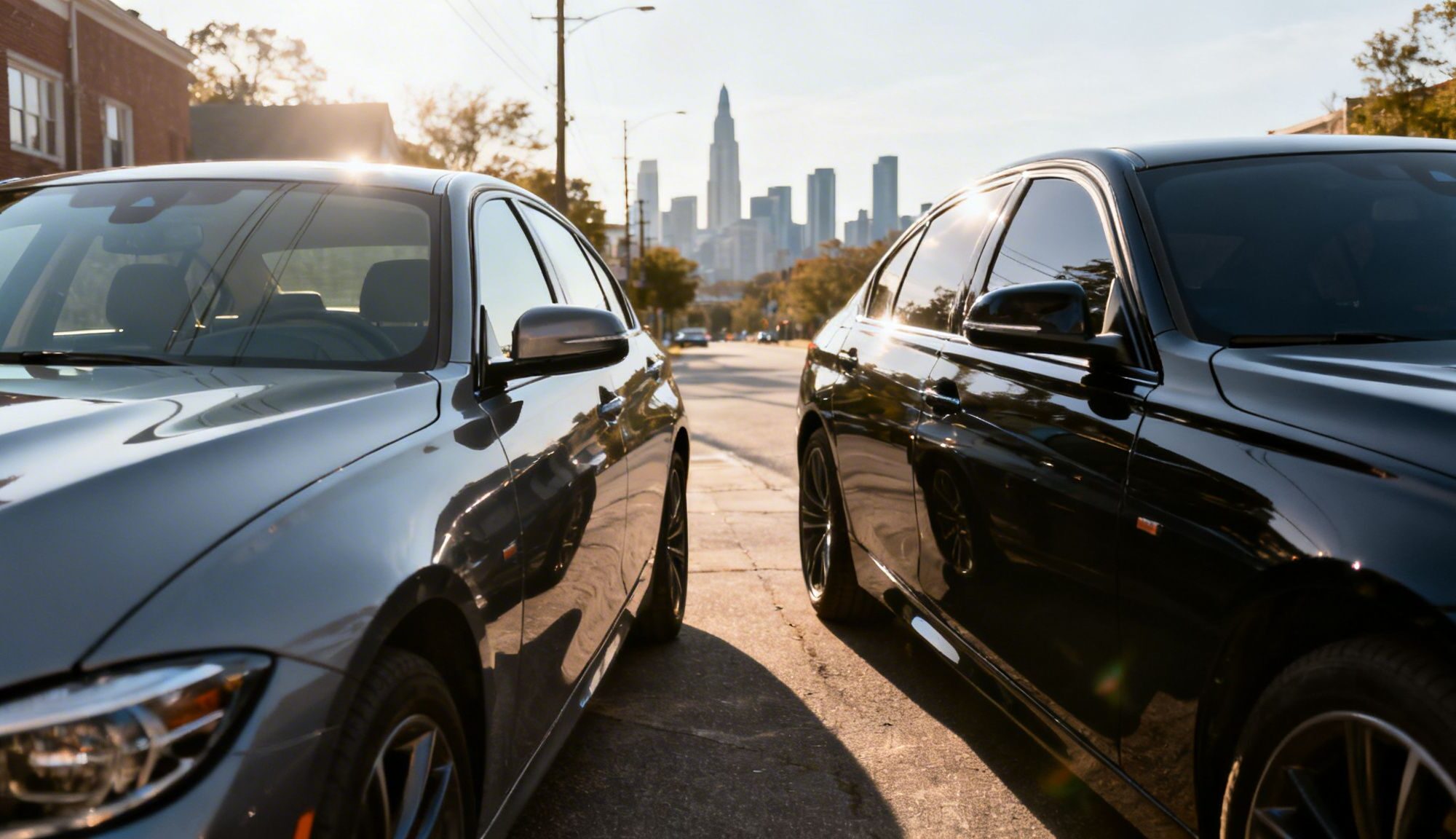
Choosing between a 20% and 5% automotive window tint is a common crossroads for drivers here in Marietta and Kennesaw. The core difference is pretty simple: a 20% tint strikes a great balance between privacy and visibility for your car, while a 5% "limo" tint goes all-in on maximum darkness and seclusion. Ultimately, your choice will come down to your personal style, how much privacy you're after for your vehicle, and what you’re comfortable with when driving at night.
Choosing Your Automotive Tint Shade

When you're picking out a tint for your car, truck, or SUV, that percentage number you see is all about its Visible Light Transmission (VLT). It's just a way of saying how much light the film lets through your auto glass. A lower VLT number means a darker tint. Simple as that.
But picking between 20% and 5% VLT for your vehicle is about more than just looks; it directly impacts your driving experience, your comfort on a hot day, and your car's overall appeal. The demand for top-tier automotive tinting that does more than just look good has exploded. In fact, the North American window film market is projected to grow from $1.485 billion in 2021 to an estimated $1.817 billion by 2025. This isn't surprising—drivers want premium films that deliver real-world UV protection and heat rejection for their cars.
Quick Comparison 20% Tint vs 5% Tint
To give you a quick snapshot, here’s a high-level comparison of what you can expect from a 20% versus a 5% car tint. Think of this as your starting point for your automotive tinting journey.
| Feature | 20% VLT Tint (Balanced Choice) | 5% VLT Tint (Limo Tint) |
|---|---|---|
| Primary Use Case | Daily driving, family cars, commuters | Maximum privacy, show cars, rear passenger windows |
| Daytime Visibility | Good, with significant glare reduction | Very dark, requires adjustment |
| Nighttime Visibility | Fair to good for most drivers | Poor, significantly reduced visibility |
| Privacy Level | High; obscures interior details | Maximum; almost impossible to see inside |
| Aesthetic Look | Sleek and dark, but not "blacked-out" | "Blacked-out," aggressive appearance |
This table helps lay out the trade-offs. The 20% is a fantastic all-arounder for any car, while the 5% is a specialist, excelling at privacy above all else.
Here at The Tint Guy, we live and breathe automotive window tinting. We focus exclusively on this craft, using advanced ceramic films to guarantee superior performance for vehicles. Whether a 20% or 5% shade catches your eye, our professional automotive tint installation ensures your car, truck, or SUV gets the absolute best in heat rejection, UV protection, and a style that lasts. If you're still weighing your options, our guide on the best window tint percentage can give you even more insights.
How Tint Affects Visibility and Driving Safety

When we talk about car window tint, looks are important, but nothing trumps your ability to see the road clearly. The film you pick for your car, truck, or SUV has a direct impact on your awareness behind the wheel, which makes the 20 tint vs 5 debate a conversation about safety first and foremost.
A 20% tint is what we see most daily drivers in Kennesaw and Marietta land on, and for good reason. It lets 20% of visible light through, which is dark enough to take the edge off the harsh Georgia sun but clear enough for confident driving. That reduction in glare means less squinting and eye strain on your commute, all without sacrificing your ability to see pedestrians, read signs, or keep an eye on other cars.
On the other hand, a 5% tint—what everyone calls "limo tint"—is a different beast entirely. It's incredibly dark. While it offers the ultimate in privacy for your vehicle, it comes at the cost of significantly reduced outward visibility. This can become a real safety issue, especially when the sun goes down.
Night Driving and Low-Light Conditions
This is where the difference between these two automotive films really shows. Driving at night with a 5% tint is a genuine challenge, even for the most experienced drivers we know. It can make spotting unlit objects, cyclists, or deer on the side of the road almost impossible until it's too late.
Trying to navigate a dark parking garage or just backing out of your own driveway becomes an exercise in extreme caution. A 20% car tint, while still dark, gives you a much safer and clearer view in these exact low-light situations.
For the average driver, a 20% VLT is the most responsible choice for their vehicle. It gives you great daytime glare reduction and privacy while still providing the visibility you need to drive safely at night. A 5% VLT should really only be considered for rear windows by those who put maximum privacy above all else and are completely comfortable with the major reduction in night visibility.
Driving in Adverse Weather
Bad weather only makes the visibility gap between 20% and 5% auto tint wider. During a heavy downpour or in thick morning fog, a 5% tint can make it incredibly difficult to make out road lines and other cars. That loss of clarity slows down your reaction time right when you need it most.
Here’s a quick breakdown of how they compare in different driving conditions:
- Bright, Sunny Day: Both tints do a great job, but the 5% offers a more intense level of glare reduction for your car.
- Overcast Day: A 20% tint feels comfortable and natural, whereas a 5% tint can make everything look overly dark and gloomy from inside your vehicle.
- Night Driving: Most drivers can handle a 20% tint without issue; a 5% tint is extremely difficult and can be hazardous.
- Rain or Fog: Your view will be noticeably clearer and safer with a 20% car tint compared to the restrictions of a 5% tint.
Here at The Tint Guy, your safety on the road is our number one priority. As experts in automotive tint installation in Kennesaw and Marietta, we always guide our clients to a choice that hits their style goals without compromising the practical needs of driving around North Atlanta.
Comparing Heat Rejection and UV Protection
One of the first things people assume about window tint is that darker always means cooler for your car. It seems to make sense, but it's one of the biggest myths in the automotive tinting industry. The truth is, a film's real performance has much more to do with its technology than how dark it looks. For anyone driving around Marietta and Kennesaw trying to escape that Georgia heat, knowing this difference is the key to making a smart choice for your car.
The real magic behind modern auto tint is ceramic window tint, which is our specialty here at The Tint Guy. Old-school dyed films simply absorb heat, which eventually radiates back into your car's cabin. Ceramic films are different; they're engineered with non-conductive nanoparticles that actively reflect and reject infrared radiation—the very thing that makes your car feel like an oven.
Debunking the Darker is Better Myth
This is where the 20 tint vs 5 debate gets really interesting. A high-quality 20% ceramic tint will blow a basic 5% dyed film out of the water when it comes to keeping your car cool. It’s not about the shade; it’s all about the science baked into the film itself.
The numbers that actually matter for heat reduction window tint are Total Solar Energy Rejection (TSER) and Infrared Rejection (IRR). A top-tier ceramic film with a higher TSER rating will always keep your car cooler, even if it’s a much lighter shade.
When you put a premium 20% VLT ceramic film up against a standard 5% dyed film, the difference is night and day. The advanced ceramic film has far superior TSER, meaning it blocks a much higher percentage of the sun's total heat from ever getting into your car. That translates to a cooler, more comfortable cabin, which is a huge win for any driver in North Atlanta.
Performance Metrics: The Numbers Behind the Comfort
Let’s look at the stats, because they show exactly why modern ceramic films are the only way to go for your vehicle. A premium 20% VLT ceramic tint—like the ones we install from the industry's best brands—can block 85-90% of infrared heat and 99% of damaging UV rays. This can drop your car's interior temperature by as much as 34°F compared to having no tint at all. A 5% ceramic film can offer similar IR rejection, but you sacrifice a lot of visibility.
More importantly, our 20% ceramic film easily outperforms a basic 5% dyed tint in Total Solar Energy Rejection (TSER), hitting 55-65% TSER while the dyed film struggles to reach 45-55%. You can see how the whole automotive film market is shifting this way in this in-depth industry analysis.
This incredible performance is done without any metal particles, which are known to interfere with GPS, satellite radio, and cell signals—a non-starter for today’s connected cars on Atlanta's highways. For a deeper look at the science, check out our guide on how window tint reduces heat. At the end of the day, choosing a modern ceramic tint means you get superior comfort and UV protection auto tint without having to give up your visibility.
Getting the Look and Privacy You Want

The window tint on your car, truck, or SUV is a huge part of its personality. When you're deciding between 20% tint vs 5%, you're making a choice that will completely change your vehicle's look and how much privacy you have on the road. It’s all about figuring out what’s right for your style and your daily drive.
A 20% car tint gives your vehicle a sharp, classy look that works with any color or model. It adds a noticeable darkness that really makes the car's lines pop without being too aggressive. This is one of our most popular shades because it delivers a premium, "better-than-factory" look that's just clean and impressive.
On the other hand, a 5% tint is all about that "blacked-out" style. This is the go-to for drivers who want the most dramatic visual statement, creating a bold and powerful presence. It creates an almost total separation between your car's interior and the outside world.
Privacy and Security On the Go
Let's be practical—privacy is one of the biggest reasons people get their windows tinted. The right film keeps your belongings hidden from anyone trying to get a quick look inside your car.
20% Tint Privacy: This shade does a great job of hiding your car's interior from a casual look. Someone would have to get right up to the glass and cup their hands to see inside, which makes it a fantastic deterrent for smash-and-grab thieves.
5% Tint Privacy: With this film, you get nearly complete privacy. During the day, it's almost impossible for anyone to see into your car, giving you a level of security and seclusion that's tough to beat.
For most of our customers driving around North Atlanta every day, a 20% tint hits that sweet spot between privacy and practicality. It blocks about 80% of what someone can see from ten feet away, a distance proven to discourage opportunistic theft.
This demand for practical, effective automotive tinting is a huge part of why the U.S. tint market is so strong, contributing to a projected $1.817 billion market size in North America by 2025. It just goes to show that drivers want films that look good and offer real-world security. You can dig into more of these trends in this comprehensive market report.
No matter which shade you land on, the final look comes down to the quality of the work. Here at The Tint Guy, our technicians in Marietta and Kennesaw are specialists in professional auto tint service. That focus ensures you get a perfect, bubble-free finish every single time, making your car look its best and ensuring the film performs flawlessly for years to come.
Navigating Georgia's Automotive Tint Laws
Before you even start thinking about the look you want for your car, you’ve got to know the law. Here in Georgia, choosing the wrong tint percentage can lead to a ticket, a fine, and the hassle of having to strip it all off and start over. As your local automotive window tinting experts in Marietta and Kennesaw, we make sure every car that leaves our shop is 100% compliant.
The rules are specific and change depending on what type of vehicle you drive. For most passenger cars, the state is pretty clear.
Tint Regulations for Passenger Cars
If you drive a sedan, coupe, or any standard passenger car, the front side windows (both driver and passenger) must allow at least 32% of light to pass through. This is the Visible Light Transmission, or VLT. That means both a 20% tint and a 5% tint are illegal on these front windows. Putting a film that dark on your front doors is just asking for a ticket.
But things open up for the back of the car.
Key Takeaway: For passenger cars in Georgia, both 20% and 5% tint films are perfectly legal on the rear side windows and the back windshield. There are no VLT restrictions for these windows.
Rules for Trucks, SUVs, and Multi-Purpose Vehicles
Now, if you drive a truck, SUV, van, or another multi-purpose vehicle, Georgia's laws give you a lot more flexibility. The front side windows still have to stick to that 32% VLT minimum, but you have complete freedom for all windows behind the driver.
This is why you often see trucks and SUVs rolling with a dark 20% or even a 5% "limo tint" on the back half, while the front windows are noticeably lighter. It’s a common and totally legal setup for these vehicles.
At The Tint Guy, we live and breathe these regulations every day. We’ll help you pick a shade that gives you the look and privacy you want for your vehicle while keeping you on the right side of the law. For a complete breakdown of the rules, you can read our detailed guide to Georgia's legal tint limits. Our professional automotive tint installation guarantees a compliant, high-quality result every time.
Which Tint Is Right for Your Vehicle?
So, after weighing all the differences, which one should you get? The 20% tint vs 5% decision really hinges on what you value most and how you use your car every day. Let's break down our recommendations for drivers here in North Atlanta based on our years of experience providing the best car tinting in Marietta and Kennesaw.
The Best Choice for Most Drivers
For the vast majority of people—the daily commuters, the family-car drivers, anyone who wants the best all-around performance—a 20% ceramic tint is the clear winner. It's the workhorse that strikes a perfect balance between style, safety, and comfort for any vehicle.
This film provides a serious defense against Georgia's brutal summer heat and UV rays, but it doesn't compromise your safety when driving at night. You get a noticeable level of privacy for your belongings and that sharp, clean look that elevates any car's appearance. It's truly the ideal tint for navigating I-75 during rush hour or heading out for the evening in Kennesaw.
When to Choose a 5% Tint
Now, a 5% "limo" tint is a different beast altogether. This is a much more specialized choice, and we typically only recommend it for the rear windows of a car, truck, or SUV. This is the film you choose when your absolute top priority is maximum privacy or achieving that aggressive, fully "blacked-out" look.
It’s a go-to for enthusiasts building a show car or for livery services wanting to create a completely private cabin for passengers. That said, we have to be upfront about the visibility. The reduction is significant, and we strongly caution against it unless you are completely confident in your ability to handle the challenges of night driving.
This chart helps put Georgia's car tint law into perspective for your front and rear windows.

As the infographic shows, while neither 20% nor 5% is legal on your front side windows in Georgia, both are perfectly legal options for all windows behind the driver.
Our Final Recommendation: Go with a 20% ceramic tint for the best balance of performance, looks, and safety for your vehicle. Only choose 5% tint for your rear windows if ultimate privacy and a "blacked-out" style are your main goals, and you're prepared for the visibility trade-off.
At The Tint Guy, we don't just install film; we provide expert guidance you can trust. Our team is here to help you make a decision that you'll be happy with for years to come. We invite you to stop by our shops in Marietta, GA, or Kennesaw, GA, for a personal consultation. We'll show you the films in person and help you find the perfect match for your car.
Ready to transform your ride? Schedule your automotive tint installation with our experts today and feel the difference that professional quality and experience make.
Your Top Questions About 20% and 5% Tint Answered
When you're trying to choose between these popular car tint shades, a lot of questions come up. Here at The Tint Guy, we've heard them all from folks right here in Marietta and Kennesaw looking for an "auto tint near me." Let's clear up some of the most common ones.
Can I Put 20% Tint on My Front Windows in Georgia?
That's a definite no. Georgia law is very specific: the front side windows on cars, trucks, and SUVs must let at least 32% of light through. A 20% tint is much darker than the legal limit, so it's not an option for your front doors.
Where you can put 20% tint is on any of the rear side windows and the back windshield of your vehicle. We're experts in Georgia's tint laws, and we make sure every automotive tint installation we do is fully compliant so you don't have to worry about it.
Does 5% Tint Actually Block More Heat Than 20%?
This is a huge misconception we see all the time in automotive tinting. The answer is not necessarily. A film’s ability to block heat comes from its material technology, not just how dark it is.
A top-tier 20% ceramic window tint will reject significantly more heat than a basic 5% dyed film. Here at The Tint Guy, we focus on premium ceramic films that deliver incredible heat and UV rejection for your vehicle, no matter the shade. You don't have to choose a super-dark tint just to stay cool.
Is It Hard to See at Night with 20% Tint?
Most people get used to driving with 20% car tint at night very quickly. It does a fantastic job of cutting down the blinding glare from other cars' headlights, but it doesn't typically compromise your ability to see the road and your surroundings.
On the other hand, 5% tint is a completely different story. It makes night driving much more difficult and can be a genuine safety issue. We almost never recommend it unless a driver is already experienced with that level of limited visibility after sundown.
How Much Is This Going to Cost Me?
The price for a professional car window tint job really comes down to two things: the type of film you select (like a premium ceramic) and the size and complexity of your vehicle. The VLT percentage you choose doesn't actually change the price.
That means getting a 20% ceramic tint costs the same as getting a 5% ceramic tint on the same car. The best way to get an exact number is to reach out. Contact our team at The Tint Guy in Marietta or Kennesaw, and we’ll give you a precise, free quote for your specific car, truck, or SUV. We're happy to walk you through all the car tint film options.
Ready to give your vehicle the perfect look and feel? At The Tint Guy, our experts have been providing flawless automotive tint installations with the best films on the market since 1986.