When you start looking into vehicle protection, you’ll hear two terms thrown around a lot: "Clear Bra" and "Paint Protection Film (PPF)." It’s easy to get confused, but the simple truth is they aren't different products at all. Clear Bra is just a well-known brand name for PPF, kind of like how everyone calls facial tissues "Kleenex."
So, the whole "clear bra vs. ppf" debate is really just a misunderstanding. It’s a brand name versus the actual product category. This guide will clear up the confusion and focus on what really matters: choosing a high-quality film and a skilled installer to protect your automotive investment.

Decoding The Terminology: What Is Paint Protection Film?
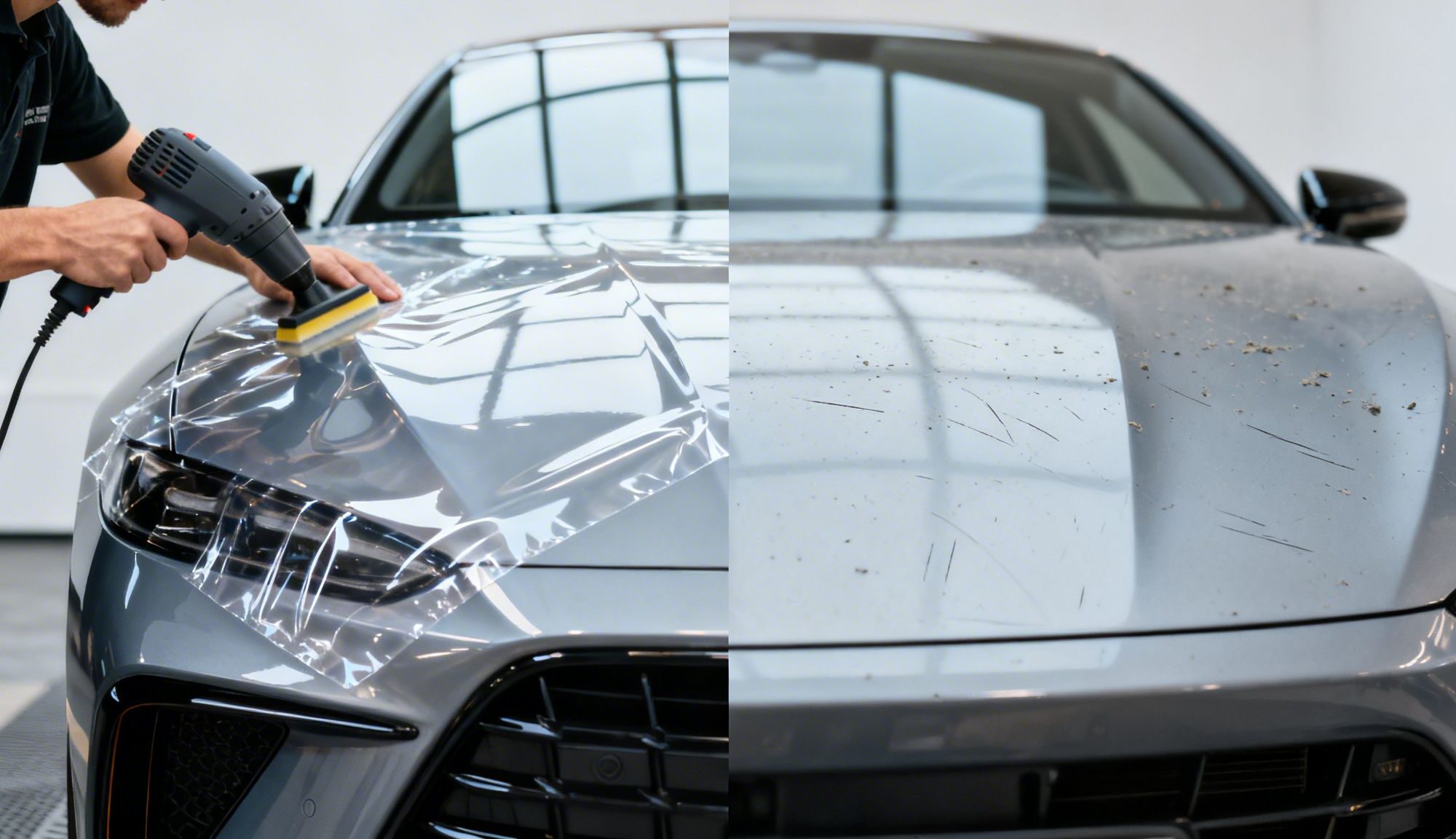
When a driver in Woodstock or Alpharetta walks into our shop and asks for a "clear bra," what they’re really looking for is Paint Protection Film. PPF is a tough, transparent, thermoplastic urethane film that we apply to your car’s painted surfaces. Its one and only job is to be a sacrificial shield, taking the hit from rock chips, scratches, and other road hazards so your paint doesn't have to.
The name "Clear Bra" stuck because it was one of the first brands to really set the standard for quality. Back then, the film was mostly applied to the front "bra" of a vehicle—the bumper, hood, and fenders—since that’s where most of the damage happens. These days, we can apply PPF to any part of your car, from just the front end to a complete, full-body wrap for ultimate protection.
Quick Guide Clarifying Automotive Protection Terms
To put the confusion to rest, here’s a simple breakdown of the terms. Think of it as knowing the difference between the ingredient and the final dish.
| Term | What It Is | Primary Role | Key Takeaway for Car Owners |
|---|---|---|---|
| Paint Protection Film (PPF) | The generic name for the product—a clear, protective urethane film. | To shield paint from physical damage like rock chips and scratches. | This is the actual technology you're investing in for your car. |
| Clear Bra | A specific, popular brand name for a high-quality PPF product. | Same as PPF; the brand name simply became synonymous with the product. | When you ask for a Clear Bra, what you’re really requesting is PPF. |
Ultimately, what you call it doesn't matter as much as the quality of the product and the skill of the person installing it.
The Bottom Line: You are not choosing between two different technologies. The important choice lies in the quality of the PPF brand and the expertise of the installation team.
At The Tin Guy, we focus exclusively on top-tier automotive protection. Whether you call it a clear bra or PPF, our goal is to give your vehicle the most durable and optically clear defense available. We’ve been serving car, truck, and SUV owners across North Metro Atlanta, from Kennesaw to Roswell, for years, ensuring their vehicle's finish stays flawless no matter what the road throws at it.
Understanding Modern Paint Protection Film Technology

Today’s paint protection film is a whole different beast compared to the simple plastic sheets of the past. It's an invisible, incredibly tough shield for your vehicle, engineered with multiple layers where every single one has a job to do. This is what truly separates a premium film from the basic stuff.
At the heart of it all is a layer of thermoplastic polyurethane (TPU). This material is an absolute champion when it comes to elasticity and impact resistance. You can think of it as a custom-fit shock absorber for your car's paint.
So, when a piece of gravel gets kicked up on GA-400 and heads straight for your hood, the TPU layer flexes to scatter that impact energy. Instead of leaving a nasty chip in your paint, the force is absorbed by the film, which then just bounces back to its original shape.
The Science Behind Its Multi-Layer Defense
A modern paint protection film isn't just one thing; it's a sophisticated system with several layers working together. This is how it gives your car, truck, or SUV such complete protection.
The anatomy of a top-tier PPF looks something like this:
- A Self-Healing Topcoat: This is the outermost layer, and it's where the magic happens. It's a clear coat loaded with elastomeric polymers that can actually fix minor scratches all by themselves when you add a little heat.
- A Thermoplastic Urethane (TPU) Core: The thickest and most important layer. This is the workhorse that provides the real muscle against rock chips, deep scratches, and other physical hits.
- An Advanced Adhesive Layer: This isn't your average glue. It’s a specialized adhesive that bonds the film tight to your paint, preventing any peeling, but it’s also designed to be removed cleanly years later without a hint of damage to the factory finish.
This layered design is crucial because it means the film can defend against a whole range of threats, not just a single type of impact.
Key Insight: The real value of premium PPF isn’t just one feature, but how all the layers work in concert. The topcoat handles stains and self-heals, the core absorbs impacts, and the adhesive provides a perfect, paint-safe bond.
How Self-Healing Technology Keeps Your Car Flawless
The feature everyone talks about with modern PPF is its self-healing capability. Honestly, this technology is a complete game-changer for keeping a car looking perfect. The topcoat is made from special polymers that can literally reform their original structure when they get scratched and are then exposed to heat.
Picture this: you pick up a light swirl mark from a drive-thru car wash or a branch lightly scrapes your door. With a self-healing film, there’s no need to panic or book a detailer. Just parking your car in the Georgia sun or even pouring some warm water over the spot is often enough to watch that blemish completely vanish.
For any car owner in busy areas like Alpharetta or Roswell, this feature is a lifesaver. Daily driving comes with unavoidable wear and tear, and this ensures your vehicle’s protected surfaces stay looking like glass for years. You can learn more about the specifics by checking out our detailed guide on how paint protection film works.
Here at The Tint Guy, we only work with premium films that have this advanced technology built-in. We're committed to giving our clients in Woodstock and the greater North Atlanta area a solution that doesn't just put a barrier on their paint—it actively helps maintain that flawless, showroom finish day in and day out.
How Premium Brands Redefined Paint Protection
The paint protection film you see today is a far cry from the early versions that showed up decades ago. Back then, the concept was simple, but the films themselves had some frustrating problems—they had a nasty habit of turning yellow, cracking, or peeling off over time. You can imagine why car owners were hesitant to stick a plastic film on their prized paint job.
That all changed when pioneering brands stepped in and completely re-engineered the technology. They introduced advanced films made from thermoplastic polyurethane (TPU), a material that was tougher, more flexible, and way more optically clear than anything before it. This shift kicked off a whole new era for protecting your vehicle's paint.
The Evolution From Basic Sheets To Smart Films
Early on, paint protection was more about just having a basic layer of coverage than providing any real, advanced defense. The films were often made of vinyl or other materials that just couldn't handle long-term exposure to the sun or harsh weather. The result? A "protective" layer that often ended up making the car look worse, not better.
The move to TPU-based films solved these core issues. Premium brands developed multi-layered films, each with a specific job to do, tackling the failures of the older products head-on. These advancements included:
- UV Inhibitors: To stop the film from yellowing or getting brittle under the strong Georgia sun.
- Enhanced Adhesives: To create a secure bond that won't lift but also won't damage the factory paint when it's time for removal.
- Self-Healing Topcoats: To make minor scratches and swirls literally disappear with a bit of heat, keeping the finish flawless.
These breakthroughs meant that, for the first time, car owners could get true, long-lasting protection that was practically invisible. The industry’s focus on quality has fueled a massive market. In fact, the North American automotive protection market was valued at USD 287.56 million in 2026, with top-tier brands dominating. Their brand recognition and high-quality films are exactly what discerning car enthusiasts in places like North Metro Atlanta are looking for. You can see for yourself in detailed research on the PPF market.
The Turning Point: The introduction of high-quality, TPU-based films with self-healing properties and UV resistance was the critical shift that made modern PPF a trustworthy and essential investment for vehicle preservation.
Why Modern Film Quality Matters For Your Car
Investing in a modern, premium-grade film is the only way to get real long-term protection and maintain your vehicle's value. The difference between a generic, cheap film and a professionally installed branded one is night and day, especially after a few years. Cheaper films can still suffer from the same old problems—discoloration, peeling, and a "self-healing" coat that doesn't really work. For a closer look at how the top brands perform, our guide comparing leading PPF brands like LLumar and XPEL is a great resource.
For car owners here in Woodstock, Marietta, and our surrounding communities, this evolution in technology gives your vehicle a level of defense that was once unimaginable. At The Tin Guy, we've built our reputation on offering only these proven, cutting-edge solutions, ensuring your car, truck, or SUV is shielded by the best products the industry has to offer.
Comparing Premium PPF And Generic Film Performance
When it comes to paint protection film, you absolutely get what you pay for. The choice between a premium, branded PPF and a generic, low-cost film is one of the biggest decisions you'll make for your vehicle. The difference in performance isn't small—it's a massive gap that affects everything from how your car looks day-to-day to how well it's actually protected long-term.
Picture this: you're driving down I-75 during rush hour, and a truck up ahead kicks a spray of gravel right at your hood. With a premium film, the multi-layer construction, especially its tough thermoplastic urethane (TPU) core, is built to absorb and spread out that impact. The gravel just bounces off, and your paint is perfectly fine underneath. A generic film, on the other hand, often doesn't have the density or flexibility to handle that kind of hit. It might tear right through, letting the rock chip your paint anyway.
Optical Clarity Under The Georgia Sun
Another huge difference you'll see is in long-term clarity. Premium PPF is made with advanced UV inhibitors that are specifically formulated to fight off the intense Georgia sun. This means the film stays crystal clear for years, without any yellowing or cloudiness. Your car’s original paint color shines through, just like it's supposed to.
Contrast that with generic films, which often use cheaper materials with little to no real UV protection. After just a few months of baking in the sun in places like Alpharetta or Roswell, these films can start to turn a sickly yellow. It gives your car a dingy, aged look, which completely defeats the purpose of an "invisible" protective layer.
The Self-Healing Showdown
The self-healing topcoat is a headline feature for quality PPF, but how well it works varies wildly between premium and economy options.
- Premium Film: The elastomeric polymers in a top-tier film are incredibly reactive to heat. Minor swirl marks from a car wash or a light scuff will genuinely vanish when the car sits in the sun, restoring that perfect, glass-like finish.
- Generic Film: A budget film might say it's "self-healing," but the technology is usually a cheap copy. The topcoat is often too thin or made from low-grade polymers that can't actually mend scratches, leaving your car's surface with permanent blemishes.
The industry's rapid growth shows just how much people want technology that works. The global Clear Bra paint protection film market was valued at around USD 360 million in 2023 and is expected to climb to USD 750 million by 2032. This boom is all thanks to real-world features like self-healing and hydrophobic properties that make a difference on busy highways in Marietta and Roswell. This is where premium brands prove their worth, offering incredible gloss and 99% protection against yellowing for more than a decade. You can see what's driving the market and what it means for you in this comprehensive market report from Dataintelo.
To make the differences even clearer, here’s a head-to-head comparison of what you can expect from each type of film. This table breaks down the real-world attributes so you can see where your money goes.
Performance Showdown: Premium vs. Economy PPF
A head-to-head comparison of key attributes to help you understand the real-world differences in film quality.
| Performance Attribute | Premium Branded PPF (e.g., Clear Bra) | Generic/Economy PPF |
|---|---|---|
| Impact Resistance | Multi-layer TPU absorbs rock chips & debris | Thin, low-density material; prone to tearing |
| Optical Clarity | Stays virtually invisible, no yellowing | Can yellow or haze within months of sun exposure |
| Self-Healing | Advanced polymers mend light scratches with heat | Limited or no real healing; scratches remain |
| Stain Resistance | Hydrophobic topcoat repels bug guts, bird droppings | Porous surface that stains easily |
| Durability & Lifespan | 8-12+ years with proper care | 1-3 years before degrading or failing |
| Adhesive Quality | Strong but clean removal, no paint damage | Weak or aggressive adhesive; can peel, bubble, or lift paint |
| Warranty | Comprehensive manufacturer warranty (e.g., 10-12 years) | Limited or no warranty |
As you can see, the initial savings on an economy film quickly disappear when you factor in its short lifespan, poor performance, and potential for damage.
The true value of paint protection is found in the combination of a superior, branded film and a precise, expert installation. The initial price tag of a generic film is often a poor indicator of its long-term cost and performance.
Practical Scenarios: Front End Protection
Think about a daily commute through Alpharetta. Your car’s front end is constantly getting hit with small road debris, bug splatter, and other nasty stuff.
A premium film doesn't just block chips; its hydrophobic topcoat makes cleaning effortless. Bug guts and road grime wash right off without any harsh scrubbing. A generic film, without that slick surface, will grab onto contaminants, leading to stains and making washing a constant chore. Before long, that cheaper film might even start to lift or peel at the edges, trapping dirt and moisture right against your paint—the very thing you were trying to prevent.
At the end of the day, choosing a premium, branded PPF is an investment in predictable, reliable performance. You're paying for advanced materials science that actually delivers on its promises of impact resistance, optical clarity, and self-healing, ensuring your vehicle looks its absolute best for years to come.
Choosing The Right PPF Coverage For Your Vehicle
So, how much paint protection does your car really need? There's no single right answer. It all comes down to your driving habits, the kind of car you drive, and what your goals are for keeping it in top shape. Choosing the right coverage is about hitting that sweet spot between total protection and your budget.
Luckily, you don't have to wrap the entire vehicle to get meaningful results. We offer a few standard packages that are designed to strategically protect the most vulnerable parts of your car, truck, or SUV.
Partial Front End Coverage
A Partial Front End package is the most common entry point for paint protection film, and for good reason. It’s a smart, effective way to shield the high-impact zones that take a beating from rocks and road debris every day.
This package typically protects:
- Front Bumper: This is the leading edge of your vehicle, and it takes the most direct hits.
- Partial Hood: We cover the first 18-24 inches of the hood, which is where most debris makes contact.
- Partial Fenders: The film on the front fenders is cut to match the line on the hood for a clean look.
- Side Mirrors: They’re small, but mirror caps are magnets for rock chips.
This is the perfect setup for a daily commuter in Kennesaw or Canton. It gives you that essential defense against day-to-day driving hazards without the investment of a full front end job. It's peace of mind where it counts the most.
This chart can help you figure out if a budget-focused or performance-focused approach is a better fit for you.

As you can see, your main goal—whether it's managing cost or getting maximum protection—points you toward the right coverage level.
Full Front End Coverage
For the real car enthusiast or anyone who puts in serious miles on highways like I-75, a Full Front End package is a significant step up. This option provides much more thorough protection and gets rid of any visible film lines for a totally seamless look.
This upgraded package includes:
- Full Hood: The entire hood panel is covered, so there are no partial lines and you get complete protection from edge to edge.
- Full Fenders: Both front fenders are completely wrapped.
- Front Bumper: The entire bumper assembly gets shielded.
- Side Mirrors: Full coverage for both mirror caps.
This is our go-to recommendation for owners of performance and luxury cars in Milton or Johns Creek. If you want to maintain that flawless factory finish and forget about rock chips on the front of your car, this is the package for you.
Full Vehicle Wrap
When it comes to ultimate preservation, nothing compares to a Full Vehicle Wrap. This is the top-tier service for owners of exotic, collectible, or high-value vehicles who want every painted surface shielded from harm.
A full wrap isn't just about stopping rock chips. It's about preserving the factory paint in pristine condition, protecting the vehicle's long-term value against just about every environmental and physical threat out there.
From the roof down to the rocker panels and door sills, we meticulously wrap every inch of your car in durable, self-healing film. This level of protection keeps your vehicle looking like it just left the showroom, guarding it against scratches, swirl marks, bird droppings, and all kinds of road hazards. It's the definitive choice for maximum asset protection.
Why Professional PPF Installation Is Critical

Even the best paint protection film on the market won't do its job if the installation is sloppy. A perfect, invisible finish doesn't just happen by chance; it’s the result of a painstaking process handled by an expert. That’s why professional installation isn’t just a good idea—it’s the only way to get the seamless look and rock-solid durability you’re paying for.
The whole process starts long before a single piece of film touches your car. First comes a deep paint decontamination. Our certified technicians go over every inch of the surface, stripping away any lingering contaminants, old waxes, or oils that could get in the way of a perfect bond. This step is absolutely crucial for making sure the film lays down flat and stays put for years.
The Precision of Computer-Cut Patterns
Once the paint is spotless, we get to cutting the film. We use advanced computer software and a plotter to cut the PPF patterns specifically for your vehicle's make and model. This gives us an incredible level of edge-to-edge accuracy that’s simply not possible to get by hand.
More importantly, this method removes the biggest risk that comes with amateur or bulk-film installations: knife cuts. An inexperienced installer trying to trim film directly on your car can easily slice right through and into your factory paint, causing permanent damage. Our computer-guided process means no blades ever come near your car’s finish.
Spotting The Risks Of A Poor Installation
A bad PPF job is painfully easy to spot, and it completely defeats the purpose of the investment. You're paying for an invisible shield, but a botched installation will just create a new set of visual flaws and can even harm your paint.
Common red flags of a poor installation include:
- Air Bubbles and Blisters: Trapped pockets of air or water that look awful and weaken the film's bond.
- Peeling Edges: When film isn’t properly wrapped and tucked, the edges will lift and start collecting dirt.
- Stretch Marks and Misalignment: Overstretching the film or putting it on crooked creates a distorted, wavy look.
- Visible Seams and Dirt Lines: Obvious lines where two pieces of film meet or where dirt has gotten under a poorly sealed edge.
A professional installation is an investment in an invisible result. The expertise of a certified technician ensures the film is perfectly aligned, flawlessly applied, and meticulously finished, justifying the cost and guaranteeing long-term performance.
Our team’s certified expertise is your best guarantee against these problems. We pride ourselves on delivering a finish so clean it's virtually undetectable, giving you total protection without changing your car's look. The quality of the install directly affects how well the film can do its job and how long it will last. You can read our guide on the lifespan of professionally installed paint protection film to learn more about what to expect.
At The Tin Guy, we bring this level of precision to every car, truck, and SUV we see from our clients across Woodstock and the greater North Atlanta area.
Answering Your Top Paint Protection Film Questions
Even after you’ve settled on the perfect PPF coverage for your car, a few questions usually pop up. We get it. This is an investment in your vehicle, and you want to know what to expect down the road. Here are the answers to some of the most common questions we hear from drivers here in Woodstock and across North Metro Atlanta.
How Long Does Professional Paint Protection Film Last?
Think of a professionally installed, top-shelf paint protection film as a long-term part of your vehicle's care. Most premium films, like the ones we trust and use at The Tin Guy, are backed by a manufacturer's warranty for 10 to 12 years. This warranty is your assurance against issues like yellowing, bubbling, cracking, or peeling.
With the right care, that film will be your paint's first line of defense against rock chips, light scratches, and all the environmental gunk on our roads for that entire warranty period—and often, even longer. It’s built to handle the tough driving conditions we see on Georgia's highways and protect your car's finish and value for years.
Can I Put a Ceramic Coating Over PPF?
Absolutely, and it’s something we highly recommend if you're looking for the ultimate level of protection. Laying a professional-grade ceramic coating over your PPF adds an incredibly slick, hydrophobic layer to the surface. Water beads up and flies right off, taking dirt and grime along for the ride.
This combination makes washing your car a breeze and seriously amps up the gloss and depth of your paint. Pairing our expert PPF install with a ceramic coating gives your vehicle a one-two punch of protection that’s second to none.
Expert Tip: Combining PPF for impact resistance with a ceramic coating for chemical resistance and easy cleaning creates the most complete paint protection system you can get for any car, truck, or SUV.
Is It Safe to Remove PPF From My Car's Original Paint?
Yes, but only when it’s handled by a trained professional. High-quality PPF is made with advanced adhesives that form a solid bond but are also designed to be removed cleanly without damaging the factory paint underneath.
A certified technician will use specific tools, often a steamer or heat gun, to gently soften the adhesive. This allows the film to be peeled away safely, revealing the perfectly preserved paint it was protecting. Trying to rip it off yourself without the right experience or equipment can leave a sticky mess or, in a worst-case scenario, pull up your clear coat.
Ready to give your vehicle the ultimate defense against rock chips and scratches? The team at The Tin Guy provides expert paint protection film installation services for car owners in Woodstock, Kennesaw, and across North Metro Atlanta. Schedule your appointment today to keep your paint looking flawless for years to come.