
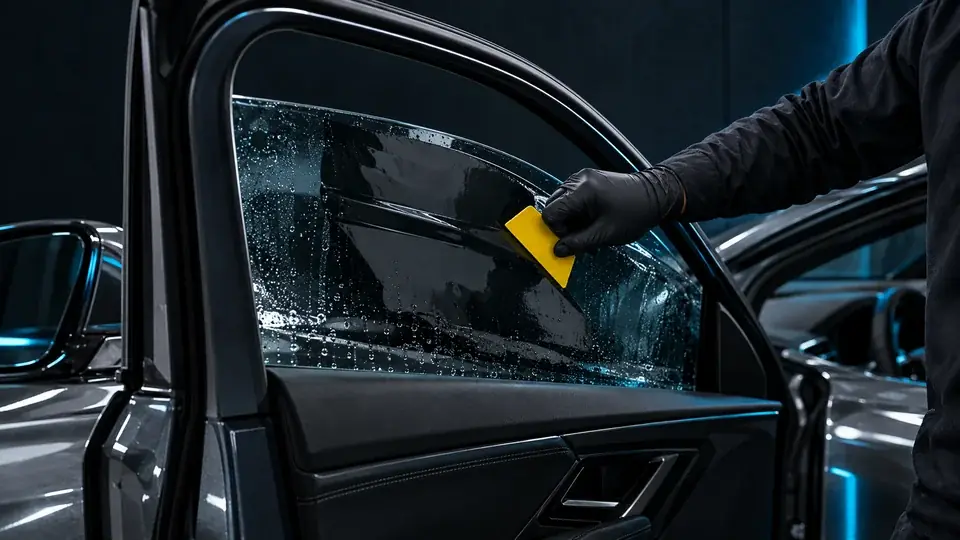
What Is The Darkest Legal Tint For Cars In Georgia

So, you’re looking for the darkest legal tint in Georgia and need a straight answer. We get this question all the time from car, truck, and SUV owners. For most standard cars, the magic number is 32% VLT (Visible Light Transmission) for your side and rear windows.

This means the film has to let at least 32% of light pass through, striking that perfect balance between a sleek, private look and the visibility needed for safe driving. At The Tin Guy, we specialize exclusively in professional automotive window tinting in City One, State and City Two, State, so you get the best look without the legal risk.

Your Guide to the Darkest Legal Automotive Tint in Georgia

Understanding Georgia's automotive window tinting laws is the first step toward upgrading your vehicle's comfort and style without worrying about a ticket. Everyone wants that dark, custom look for their car, but the state has specific rules in place to make sure you can see clearly and to ensure the safety of law enforcement officers.

The regulations are pretty straightforward, but they do change a bit depending on your vehicle type and which window you're tinting. If you're driving around our service areas in City One or City Two, knowing these limits is crucial for your automotive window tint.

Breaking Down Georgia's Auto Tint Laws

The whole system is built around a concept called Visible Light Transmission, or VLT. It’s simpler than it sounds. A lower VLT percentage means a darker tint. For instance, a 5% VLT film—what most people call "limo tint"—is incredibly dark because it blocks 95% of light. A 50% VLT film, on the other hand, is much lighter.

Georgia law, specifically O.C.G.A. § 40-8-73.1, sets the floor for how dark you can go on your vehicle.

The Bottom Line: For regular passenger cars, Georgia requires at least 32% VLT on all windows except the windshield. If you drive an SUV or truck, you get a lot more freedom for the windows behind the driver.

This flowchart makes it easy to see the legal limits for your specific car or SUV under Georgia law.

Flowchart outlining Georgia window tint laws, specifying VLT and reflectivity requirements for windshield, front, and rear windows.

As you can see, passenger cars are locked into that 32% VLT rule for all side and rear glass. But for SUVs, trucks, and vans, that rule only applies to the front two doors, giving you free rein for the back half of the vehicle.

What are the Legal Car Tint Percentages?

To make it even simpler, we've put together a quick-reference table summarizing Georgia's VLT laws for passenger vehicles.

Georgia Automotive Window Tint VLT Laws At A Glance

Vehicle Window Legal VLT % Allowable Darkness
Windshield Non-Reflective, Top 6" Only Not permitted on the main glass
Front Side Windows 32% Must allow over 32% of light in
Back Side Windows (Cars) 32% Must allow over 32% of light in
Back Side Windows (SUVs, Trucks, Vans) Any Darkness No VLT limit
Rear Window (Cars) 32% Must allow over 32% of light in
Rear Window (SUVs, Trucks, Vans) Any Darkness No VLT limit

This table is your cheat sheet for staying legal while getting the look you want.

There's one more piece to the puzzle: reflectivity. Your auto tint can't be more than 20% reflective. This is to avoid that dangerous "mirror effect" that can easily blind other drivers on the road.

At The Tin Guy, we specialize only in automotive window tinting. We live and breathe these rules. Every single installation we perform on a car, truck, or SUV in City One and City Two is guaranteed to meet these exact Georgia standards, so you can drive away with confidence and style, minus the legal headaches.

Understanding VLT: The Key to Your Perfect Car Tint

Before we even start looking at shades, it’s crucial to get a handle on the “why” behind tinting laws. The whole system really boils down to one simple concept: Visible Light Transmission, or VLT. That’s just the industry’s way of saying how much light a window film allows to pass through into your car.

Think of it just like a pair of sunglasses. A pair with 80% VLT is super light, maybe for a cloudy day or just for style. But a pair with 20% VLT? That’s much darker, built for those bright, sun-in-your-eyes kind of days. Car window tint works on the exact same principle. The lower the VLT number, the darker the film.

A light gray Audi sedan illustrating legal window tint percentages for front, rear, and windshield.

Why Car Tint Laws Are Even a Thing

Look, we get it. A super dark, private tint looks amazing and feels great. But the regulations aren't there to spoil the fun; they exist for some very real safety reasons. The laws are all about striking a balance between the awesome look and feel you want for your car and the safety of everyone on the road.

There are two big reasons for these rules:

  • Driver Visibility: This is the most important one. A tint that’s too dark can seriously impact your ability to see pedestrians, cyclists, or other cars, especially at night or in a storm. The laws set a minimum VLT to make sure you can always see what’s happening around you.
  • Law Enforcement Safety: For their own safety during a traffic stop, an officer needs to be able to see inside a vehicle. It's a standard safety procedure, and legal tint limits ensure a basic level of transparency for them to do their job safely.

Understanding this helps frame the conversation. It’s not about getting the absolute darkest film on the market; it’s about finding the darkest legal tint that works for you and keeps you compliant.

A Patchwork of Rules Across the Country

If you've ever driven cross-country, you know that laws can change the second you cross a state line. Automotive window tint is no different. Imagine cruising through City One, State, or City Two, State, with windows that keep out the brutal Georgia sun and prying eyes. That’s the dream, right?

But what’s legal here isn't legal everywhere. In the U.S., tint is measured by that VLT percentage. A 5% VLT, often called "limo tint," blocks a massive 95% of light. It's the ultimate in privacy.

However, many states put a stop to that on passenger windows. In fact, 20 states, including California and New York, require at least 70% VLT on front side windows, allowing for only a very light shade.

Here in Georgia, where The Tin Guy provides expert car window tinting in City One and City Two every day, the law is specific: front side windows must have a 32% VLT minimum. The great news? Rear side and back windows on SUVs and trucks can be as dark as you want. This gives you a fantastic balance—privacy and maximum UV protection where it counts, all while staying perfectly legal.

Key Takeaway: Tint laws aren't just random rules. They are well-thought-out safety measures to protect drivers, passengers, and law enforcement. Choosing a legal car tint is a sign of a responsible car owner.

Working with an automotive-exclusive specialist like The Tin Guy means you don't have to sweat the details. We guarantee your new car tint will not only look incredible but will be 100% compliant with Georgia's specific regulations. We live and breathe VLT, and we'll help you make the perfect choice.

To see what these percentages actually look like on a car, take a look at our guide on choosing the right tint percentage. It's the best way to get the heat reduction and privacy you're after without the headache of an illegal tint job.

Georgia's Automotive Tint Laws In Detail

Getting the perfect tint for your car is about more than just looks—it’s about staying compliant with Georgia law. The state has very specific rules, and understanding them is the first step to upgrading your vehicle without any legal headaches down the road.

As the go-to automotive tint specialists in City One and City Two, we make it our business to know these rules inside and out. Every car, truck, or SUV that rolls into our shops leaves with a flawless tint that strictly adheres to every state guideline.

The law you need to know is O.C.G.A. § 40-8-73.1, and it’s all about Visible Light Transmission (VLT). For most passenger cars, the darkest legal tint is 32% VLT on the front side, back side, and rear windows. This means the film has to let at least 32% of light in, though there is a small ±3% tolerance for enforcement.

But things change if you drive an SUV or a truck, which is great news for many of our clients seeking professional auto tint service in City One and City Two.

Passenger Cars Vs. SUVs And Trucks

The biggest point of confusion in Georgia's tint law is how it treats different types of vehicles. It's actually pretty simple once you break it down.

  • For Passenger Cars (Sedans, Coupes): The 32% VLT rule is straightforward and applies to all windows behind the windshield. Your front doors, rear doors, and back glass must all allow at least 32% of light to pass through.

  • For Multipurpose Vehicles (SUVs, Trucks, Vans): Here’s where you get more freedom. The front side windows still have to meet that 32% VLT limit. However, every window behind the driver is fair game. You can go as dark as you want with your auto tint, including the super-popular 5% "limo tint" for ultimate privacy.

This key difference is why SUV and truck owners in City One and City Two can get that dark, private look for their rear passengers and cargo while still being 100% legal.

Rules For Windshields And Reflectivity

Georgia is also very particular about windshields and mirror-like reflections to keep all drivers safe. You can’t put any tint on the main part of your windshield.

You can, however, add a non-reflective strip across the top. This visor strip is allowed to go down to the manufacturer's AS-1 line or cover the top 6 inches of the glass, whichever is shorter. It’s a fantastic way to cut down on sun glare without blocking your view.

Another important rule is that your automotive tint can't be more than 20% reflective. This law exists to prevent mirror-like tints that can flash a dangerous, blinding glare at other drivers on the road.

Understanding Medical Exemptions

For those with specific medical conditions that cause light sensitivity, Georgia law does offer a path for an exemption. If you have a documented medical need for darker tint on your vehicle, you can apply for a waiver with the Georgia Department of Public Safety.

To get a medical exemption, your doctor or optometrist needs to sign an official form detailing your condition. You then submit this to the state for approval. If you're approved, you must keep the waiver in your car at all times in case you're ever pulled over.

We always tell our clients to visit the Georgia DPS website for the official forms and instructions. While we can install tint to meet your exemption, only the state can give you the legal green light.

When you look at tint laws across the country, it's a complicated patchwork. Many states hover around a 35% VLT limit for front windows, but often relax the rules for rear windows, a pattern we see right here. For our clients in City One, the Georgia rule is a firm 32% VLT on the front, but the freedom to go as dark as you want on the back of an SUV makes that limo look possible. With over 250,000 tint tickets issued nationally each year—and Georgia accounting for more than 15,000 of them in 2025—it’s clear that getting it done right by a pro is crucial to avoid fines that can range from $100 to $1,000. To see how the rules stack up elsewhere, you can explore the full state-by-state breakdown on World Population Review.

Alright, once you know the legal limits for your tint, the next big question is what kind of film to put on your car, truck, or SUV. This decision is about more than just picking the darkest car tint you can get away with. It's about choosing the right technology for the job, especially for those of us battling Georgia's hot and sunny climate.

The two most common car tint film options you'll see are standard dyed films and the more advanced ceramic window tints. While both can give your car that sleek, tinted look, their real-world performance and how long they last are worlds apart. Understanding this difference is the key to making a smart investment in your vehicle.

Ceramic Window Tint Is A Game-Changer For Georgia Drivers

For any car owner in City One or City Two, ceramic window tint is easily the better choice. Its real advantage is baked right into how it’s made. While dyed films use dark particles that just absorb heat, ceramic tint is infused with microscopic, non-conductive ceramic particles.

This high-tech construction allows ceramic films to block a massive amount of infrared heat—that’s the heat you feel cooking your car’s interior—without having to be super dark.

This is a huge benefit: a lighter, totally legal ceramic tint can actually outperform a much darker, standard dyed film when it comes to heat rejection. For instance, a 35% VLT ceramic tint can block more heat than a 20% VLT dyed film, keeping your car way cooler while easily meeting Georgia’s 32% VLT law for front windows.

What this means for you is maximum comfort and UV protection without ever pushing the legal boundaries. It’s the perfect way to get all the benefits of the darkest legal tint without having to sacrifice performance or worry about legality. Our detailed guide goes deeper into the differences between carbon and ceramic tints.

Key Advantages Of Ceramic Auto Tint

Investing in a quality ceramic window tint from The Tin Guy brings you benefits that go way beyond just looking good. For drivers in City One and City Two, these advantages make every single drive better.

  • Superior Heat Rejection: Ceramic tints can block 60% or more of the total solar energy that hits your windows. This keeps your cabin noticeably cooler and gives your AC system a much-needed break.
  • Maximum UV Protection: Our UV protection auto tint films block over 99% of harmful UV rays. This is crucial for protecting you and your passengers from skin damage and preventing your car’s interior—the dashboard, seats, and trim—from fading and cracking over time.
  • Signal-Friendly Technology: Since ceramic films are completely metal-free, they will never interfere with your GPS, satellite radio, or your phone's cell signal.
  • Reduced Glare: The high-performance nature of ceramic tint slashes sun glare during the day and oncoming headlight glare at night, making your drive safer and much more comfortable.

As you look into different films, you might also run into newer technologies like Nano Carbon Tint, which is another step forward in film innovation.

A quick look around the world shows how different the rules are for the darkest legal tint. Europe has strict 70-75% VLT rules for front windows, but Georgia’s 32% VLT minimum is the darkest in the Southeast. This allows The Tin Guy to do ceramic auto tint installations that cut glare by up to 85% for safer drives in City One and City Two. These films also block up to 98% of UV rays, which protects interiors from fading over 40% faster than cars with no tint. For car lovers or fleet managers, a legal 35% VLT ceramic tint can deliver 60% heat rejection—a massive boost in comfort.

To help you see the differences clearly, this table breaks down how ceramic and standard dyed films stack up.

Ceramic Tint Vs Standard Dyed Tint Comparison

Feature Ceramic Tint Standard Dyed Tint
Heat Rejection Excellent (Blocks infrared heat) Fair (Absorbs heat, can make glass hot)
UV Protection Superior (Blocks 99%+) Good (Blocks up to 99%, but can degrade)
Clarity & Glare Exceptional clarity, high glare reduction Good clarity, moderate glare reduction
Signal Interference None (Metal-free) None (Metal-free)
Durability & Lifespan Long-lasting, color-stable Shorter lifespan, prone to fading/purpling
Cost Higher initial investment Lower initial cost

Ultimately, choosing a premium ceramic film is an investment in the long-term comfort, protection, and value of your vehicle. At The Tin Guy, we only install top-tier automotive films because we want to make sure our clients in City One and City Two receive the absolute best performance possible.

Risks Of Illegal Tint And How To Guarantee Compliance

Tempted to push the limits and go darker than Georgia's legal car tint? We get it. That super dark, sleek look is appealing, but as automotive tinting pros who have seen it all, we can tell you the real-world headaches aren't worth it. Going beyond the legal VLT can get you unwanted attention from law enforcement, hit you with some serious fines, and create a whole mess you'll have to pay to undo.

The most common way this plays out is a traffic stop. Police in City One, City Two, and all over the state carry digital tint meters. If an officer suspects your tint is too dark, they can get a precise reading on the spot. It's a simple, scientific way for them to see if you're under the legal 32% VLT required for passenger cars. If you are, you’re getting a ticket.

Two window tint samples, ceramic and dyed, showcasing superior heat rejection versus standard.

The True Cost Of An Illegal Tint Ticket

A ticket for illegal window tint in Georgia is no slap on the wrist; it's a misdemeanor offense. That means it’s more than just a small fine and you’re on your way.

  • Expensive Fines: The ticket itself can run you hundreds of dollars right off the bat.
  • "Fix-It" Orders: You’ll almost certainly get a "fix-it" ticket. This is a legal order requiring you to have the illegal film professionally removed from your vehicle.
  • Forced Removal Costs: Now you have to pay a professional shop to strip off the tint you just paid for. You’ve basically paid for the same job twice, but the second time is just to get back to zero.

An illegal tint ticket is generally considered a non-moving traffic violation, but the combined costs and hassle make it an expensive mistake that’s easily avoided.

How To Guarantee Your Automotive Tint Is Compliant

So, how do you make absolutely sure your car tint is legal? Easy. You work with an automotive tint specialist who stakes their reputation on getting it right. Here at The Tin Guy, our entire business is built on expertise and doing things by the book.

Our Compliance Guarantee: We don't just install tint; we guarantee it’s legal. Every single auto tint job at our City One and City Two shops is a two-step process: we help you choose a film that’s compliant for your vehicle type, and then we verify it's legal after the job is done.

We only use certified, high-quality films from brands we trust. Before you leave, we use our own digital tint meters to confirm the final VLT reading is well within Georgia’s legal limits. No guesswork, no hoping for the best. It's about giving you total peace of mind. For a deeper dive into the consequences, read also our guide on the dangers and costs of illegal window tint.

Choosing The Tin Guy isn't just about getting a great tint job that makes your car look and feel cooler. It's an investment in a worry-free experience, backed by pros who live and breathe automotive tinting. We know the laws, we have the right tools, and we guarantee our work every single time. Call for a free tint consultation today!

Your Next Step To The Perfect Legal Tint

Now that you've got the info, you're ready to move forward and get your vehicle looking and feeling its best. Choosing the darkest legal tint is about more than just a sleek appearance; it’s an investment in style, comfort, and protection that plays by Georgia's rules. And the best way to get that perfect combination is to work with a professional.

A hand uses a VLT meter to measure car window tint, displaying 32% with a clipboard in the background.

The first step is finding an installer you can trust. Here at The Tin Guy, we live and breathe automotive window tinting. It's all we do. We're the dedicated experts for cars, trucks, and SUVs, making sure every single job meets our tough standards and Georgia's precise regulations.

Partner With The Experts In Automotive Tinting

Why guess when it comes to legal compliance? Our experienced technicians in City One, GA and City Two, GA, know every little detail of the state’s tint laws. We don't just stick film on windows; we provide a guaranteed, professional car window tinting service that looks flawless and gives you total peace of mind.

We specialize in high-performance ceramic window tint. It's a superior film that delivers maximum heat reduction and 99% UV protection without having to be illegally dark. You get all the perks—a cooler ride, less glare, and protection for your interior—while staying completely legal.

At The Tin Guy, your satisfaction is our priority. We back every single automotive tint installation with a lifetime warranty, giving you confidence that your investment is protected for as long as you own your vehicle.

Our commitment to quality runs deep, from the films we use to the service we provide. We’re proud to serve drivers across City One, State and City Two, State. When you choose us, you're choosing a team that is obsessed with automotive excellence.

Your Path To A Perfect Auto Tint Installation

Ready to completely change your driving experience? The process couldn't be simpler, and we're here to walk you through it.

  1. Free Consultation: Give us a call to chat about what you're looking for. We’ll help you pick the perfect ceramic film for your car, truck, or SUV.
  2. Professional Installation: Our certified techs will meticulously apply the film, making sure the finish is perfect and bubble-free.
  3. Guaranteed Compliance: We double-check every installation with a meter to confirm it meets Georgia's legal VLT standards.
  4. Drive Away in Comfort: Hit the road and immediately enjoy the benefits of less heat, more privacy, and a killer new look, all backed by our lifetime warranty.

Don't settle for guesswork or risk the fines and hassle of an illegal tint job. Trust the specialists who get it right the first time, every time. The Tin Guy is your local source for the best car tinting in City One and City Two. Schedule your tint appointment today!

Common Questions About Georgia's Automotive Tint Laws

When you're thinking about getting your car windows tinted, a few questions always pop up. As the go-to shop for automotive tinting in City One, City Two, and across the area, we've heard them all. Here are the clear, no-nonsense answers to the questions we get asked most often.

Can I Get Colored Tints Like Red or Blue in Georgia?

That's a hard no. Georgia law is very clear about this: red and amber tints are illegal on any window of a car, truck, or SUV.

While the law doesn't specifically call out every other color of the rainbow, the number one thing that determines if your auto tint is legal is its Visible Light Transmission (VLT) percentage. To stay on the right side of the law and avoid any headaches, your best bet is always to stick with the high-quality, neutral charcoal and black shades that professional automotive installers use.

How Does My Factory Privacy Glass Affect New Tint?

This is a huge one, and it trips up a lot of people. If your truck or SUV came with darker "privacy glass" from the factory, any new tint you add goes on top of that. The final darkness isn't added together; it's multiplied.

Think of it like this: if you put a 50% VLT film over factory glass that's already at 70% VLT, the math looks like this: 0.50 x 0.70 = 0.35. The final, measurable VLT is actually 35%. A true professional will always measure your factory glass first to make sure the film they recommend will keep your auto tint 100% legal.

What Happens If I Get a Ticket for Illegal Tint?

Getting a ticket for tint that's too dark on your vehicle is a real pain. It's usually a "fix-it" ticket, which means you're required to have the illegal film professionally stripped off your windows.

Once the film is gone, you have to get a law enforcement officer to sign off on the ticket, proving you've fixed the problem. It’s an expensive and time-consuming hassle. This is exactly why we always stress doing it right—and legally—the first time with a professional auto tint service.


Ready to upgrade your vehicle with the perfect legal tint? The experts at The Tint Guy are here to help. We exclusively handle automotive window tinting, ensuring every installation in City One and City Two is flawless and fully compliant. Schedule your appointment today by visiting https://thetintguy.com.