
Yes, without a doubt. Paint Protection Film (PPF) is the single best way to prevent rock chips from destroying your car's paint. You can think of it as a tough, totally clear shield that takes the hit from gravel, pebbles, and all the other junk kicked up on Atlanta's busy highways. Your factory finish stays perfect underneath.
Your Definitive Answer to Rock Chip Prevention
Driving on roads like I-75 and I-285 means your car is in a constant firing line for small projectiles that can quickly ruin its appearance. One little rock chip might not seem like a big deal, but they add up fast, tanking your car’s pristine look and its resale value. This is the exact problem Paint Protection Film was created to solve.
PPF acts as a sacrificial layer, absorbing impacts so your original paint doesn't have to. The technology was born from rugged, military-grade materials and has since become the gold standard for drivers who want real, physical protection. Unlike a wax or a ceramic coating that provides chemical resistance, PPF is a tangible barrier against physical damage.
The Science of Protection
So, how does this invisible shield actually work? PPF is engineered with a flexible, energy-absorbent polymer. When a rock hits it, the film's structure allows it to flex and spread that kinetic energy across a wider surface area.
Instead of all that force concentrating on one tiny point and fracturing your clear coat, the film dissipates it safely. This is what stops a chip from ever forming.
The effectiveness is pretty incredible. Automotive protection experts have shown that unprotected vehicles are sitting ducks for rock chips. PPF, on the other hand, can slash this risk by up to 99%. It’s designed to absorb high-speed impacts from stones flying at up to 70 mph. You can learn more about the specifics of PPF technology on gwdmv.com. For drivers in Kennesaw and Marietta, that’s some serious peace of mind.
To really see the difference, let's look at a few common situations every car owner faces.
PPF vs No Protection Quick Comparison
The table below breaks down what you can expect your vehicle's paint to look like with and without PPF over time.
| Scenario | Vehicle Without PPF | Vehicle With PPF |
|---|---|---|
| Highway Driving | Prone to numerous small chips on the hood and bumper. | Paint remains pristine as the film absorbs impacts. |
| Resale Value | Lowered due to visible paint damage and touch-up spots. | Maintained or increased due to flawless factory paint. |
| Long-Term Care | Requires costly paint correction and repainting. | Requires simple washing; film is self-healing. |
As you can see, the outcome is night and day. One path leads to constant worry and eventual repair bills, while the other keeps your car looking brand new, year after year.
How PPF Technology Absorbs Impacts
So, how exactly does a thin, see-through film stop a rock hurtling down the highway? It's not magic, but it's close. The secret is in its advanced, multi-layered design. This isn't just a simple sheet of plastic; modern Paint Protection Film is a piece of engineering with one job: absorbing impacts.
The heart of PPF is a material called thermoplastic urethane, an incredibly tough and flexible polymer. This is what gives the film its amazing strength, letting it stretch and flex without tearing when something hits it. Think of it like a high-tech, invisible boxing glove for your car's paint. When a pebble makes contact, the film doesn't just put up a wall—it actively spreads out the kinetic energy across its surface. This softens the blow so it never focuses on one tiny spot of your paint.
The Role of Each Layer
The real power of PPF comes from how its layers work together. While the exact recipe can vary between top-tier brands, you'll find these key ingredients in any quality film:
- Top Coat (Clear Coat): This is the layer you touch. It’s often packed with self-healing tech and is your first line of defense against stains, UV rays, and those annoying minor scratches and swirl marks that seem to vanish in the sun.
- Polyurethane Film: This is the muscle of the operation. As the thickest and strongest layer, it's the workhorse that takes the physical hit from rock chips and road junk. Its elasticity is what keeps debris from puncturing through to your paint.
- Adhesive Layer: A specially formulated acrylic adhesive bonds the film to your car's paint. It’s strong enough to hold on for years without peeling or lifting, but it can also be safely removed by a pro without a trace of damage to your factory finish.
- Liner: This is just a protective backing that gets peeled off right before installation. It keeps the adhesive layer perfectly clean and ready to stick.
This diagram helps visualize how PPF acts as a shield, stopping rocks before they can ever touch your vehicle’s paint.
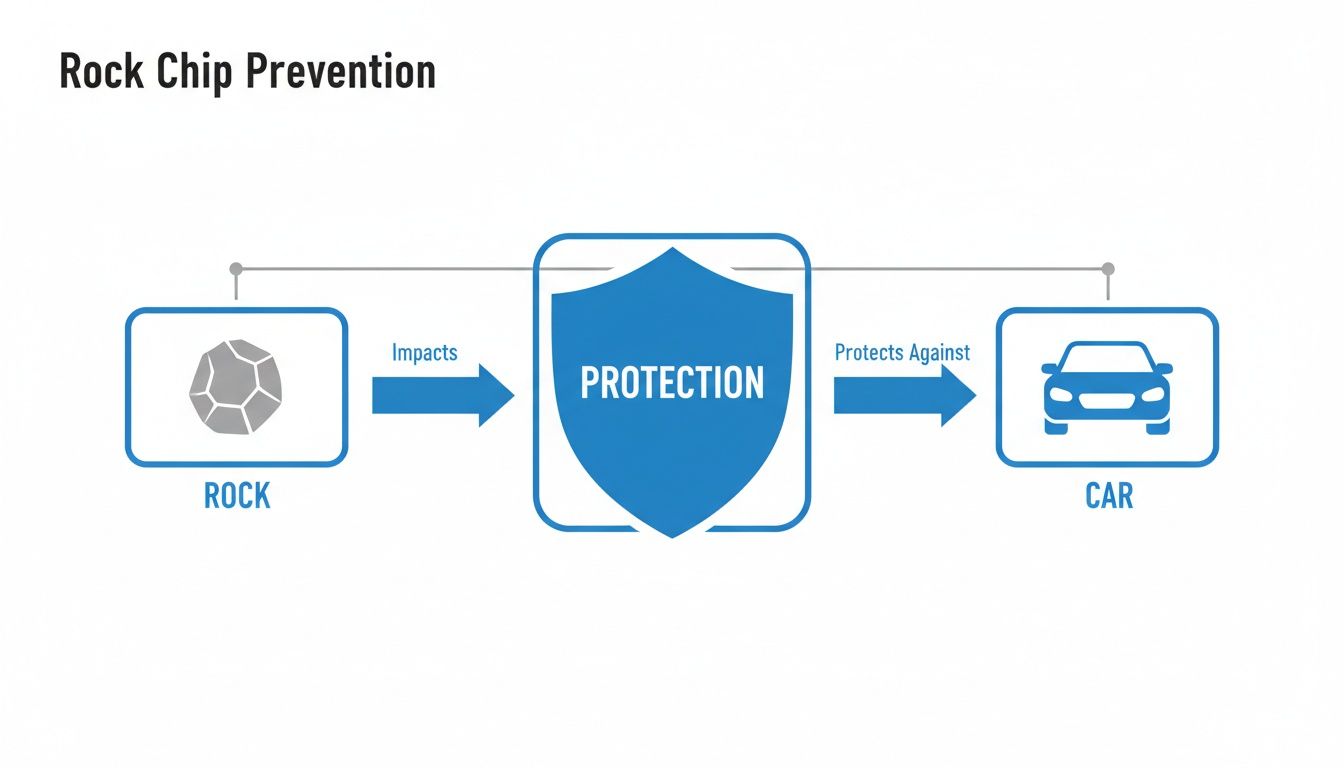
Simply put, the film creates a sacrificial barrier that takes the abuse, ensuring impacts are absorbed long before they can chip or scratch the paint underneath.
Key Takeaway: PPF stops rock chips by being flexible, not rigid. Its ability to stretch, deform, and spread out the force of an impact is what keeps your paint pristine.
Getting a handle on this technology is the first step to seeing its real-world value. If you want to dive deeper, you can read our detailed guide about paint protection film and its many benefits. This multi-layer system is precisely why PPF is the undisputed champ when it comes to physical paint protection.
What PPF Realistically Protects Against
Paint Protection Film is, without a doubt, the best defense out there for preventing rock chips. But to really appreciate its value, you need to understand the full scope of what it does—and just as importantly, what it doesn't do. Think of PPF as a versatile shield for the daily grind your car endures on the road. It offers incredible, real-world protection against a whole host of common threats that chip away at your car's finish.
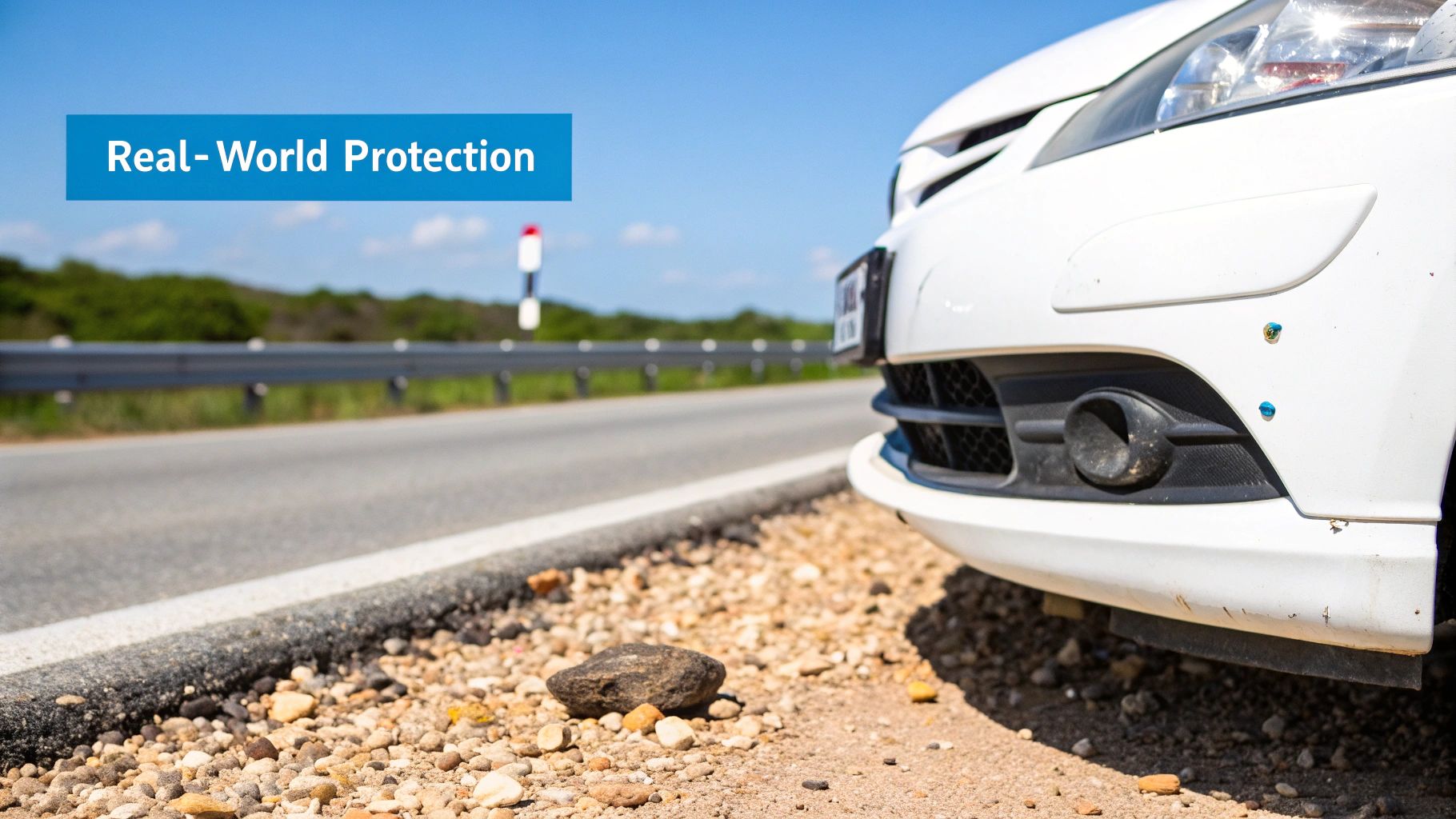
This invisible layer of armor is built to stop the most common types of paint damage in their tracks. Its main job is to absorb the kinetic energy from small stones, gravel, and other bits of debris that get kicked up on the highway.
Everyday Hazards PPF Handles With Ease
Beyond those bigger impacts, PPF is a fantastic guard against the environmental and accidental damage that slowly builds up over time.
- Small Stone Impacts: This is its bread and butter. The film’s tough but flexible urethane material absorbs the force from flying pebbles, stopping them from chipping your factory clear coat and paint.
- Insect Splatter: Anyone who's done a long road trip knows bugs can leave nasty acidic residue behind that etches right into your paint. PPF creates a barrier that you can simply wipe clean, no harm done.
- Bird Droppings: Just like bug guts, bird droppings are highly corrosive. PPF stops this acid from reaching your finish and causing permanent damage.
- Light Abrasions: Think about scuffs from grocery carts, leaning against the car with a jacket zipper, or brushing up against some bushes. The film’s self-healing properties often make these minor marks disappear completely.
Rock chips are a massive headache for car owners, causing over 40% of all vehicle paint damage every year. The data is clear: the front bumper, hood, and fenders take 80% of these hits. These are the exact high-impact zones that PPF is designed to cover perfectly. You can learn more about how PPF protects from paint damage at topline-autospa.com.
Understanding the Limits of PPF
It’s also crucial to have realistic expectations. While PPF is incredibly tough, it isn't indestructible. It's designed to be a sacrificial layer, taking the hit so your expensive factory paint doesn't have to.
Key Insight: PPF is made for high-frequency, low-to-moderate-intensity impacts. It is not engineered to withstand a major collision or deliberate vandalism.
For instance, PPF isn't going to stop a dent if someone swings their car door open into yours with force, nor will it prevent damage from a serious accident. It also won't stop a deep, intentional key scratch that slices all the way through the film itself.
However, when it comes to the daily assault of road hazards, PPF is the single most effective defense you can get for your vehicle.
Comparing PPF to Other Protection Options
When you start looking into protecting your car's paint, it's easy to get lost in all the different options. You've got waxes, sealants, ceramic coatings, and of course, Paint Protection Film.
While they all promise "protection," they do completely different jobs. If your main enemy is rock chips, understanding these differences is crucial to making an investment that actually solves your problem.
Waxes and Sealants: The Old Standbys
Traditional waxes and sealants are the most basic form of paint care. Think of them as a temporary, cosmetic layer. They add a nice shine and give you some minimal defense against water spots and UV rays.
But here’s the reality: they offer zero impact resistance. A wax layer is microscopic and will do absolutely nothing to stop a rock chip. They also wear off in a matter of weeks or months, meaning you're constantly reapplying them just to keep up that basic shine.
Ceramic Coatings: A Different Kind of Shield
Ceramic coatings are a huge leap forward from old-school waxes. A professional-grade coating is a liquid polymer that chemically bonds to your car's paint, creating a super durable, glass-like shell.
This slick, hydrophobic layer makes your car incredibly glossy and ridiculously easy to clean. It's fantastic at resisting chemical stains, bird droppings, UV damage, and even light swirl marks from washing.
But—and this is a big but—a ceramic coating is still a hard, thin shell. It's not a flexible, impact-absorbing barrier. It excels at chemical and environmental protection but lacks the physical thickness and squishiness to stop a rock chip. A pebble flying at highway speeds will crack right through that thin ceramic layer and chip the paint underneath.
Key Difference: PPF is built for impact protection, acting like a shock absorber for physical hits. A ceramic coating is built for surface protection, repelling contaminants and creating a slick, glossy finish.
PPF: The Unrivaled Champion of Impact Resistance
This is where Paint Protection Film truly enters a league of its own. PPF is a thick, self-healing urethane film specifically engineered to absorb and spread out the force from physical impacts.
Its flexible, rubbery nature allows it to take a direct hit from a piece of road debris and prevent that kinetic energy from ever touching your paint. It’s the only product on the market designed from the ground up to stop chips and scratches.
To get a deeper look at how these two modern solutions stack up, check out our detailed guide comparing PPF vs ceramic coatings. It really clarifies why one is for shine and the other is for shielding your paint from physical damage.
Paint Protection Options At a Glance
To make the choice even clearer, let's break down how each option performs across the board. This table gives you a quick, at-a-glance comparison of what you can realistically expect from each type of protection.
| Feature | Paint Protection Film (PPF) | Ceramic Coating | Wax / Sealant |
|---|---|---|---|
| Primary Benefit | Impact resistance | Chemical resistance & gloss | Temporary shine |
| Rock Chip Protection | Excellent | None | None |
| Scratch Protection | Excellent (Self-Healing) | Minor swirl resistance | None |
| UV Protection | Excellent | Excellent | Fair |
| Chemical Resistance | Good | Excellent | Poor |
| Ease of Cleaning | Good (Excellent with coating) | Excellent | Fair |
| Longevity | 5-10+ years | 2-7 years | 1-6 months |
| Cost | High | Medium | Low |
As you can see, if preventing physical damage is your top priority, there's really no substitute for PPF.
The Best of Both Worlds: PPF and Ceramic Coating Together
So, what's the ultimate solution? For many car enthusiasts, it's not an either/or choice. The best approach is often to combine them.
You install PPF on the high-impact zones of your vehicle—think the full front bumper, hood, fenders, and mirror caps. This gives you that unbeatable rock chip defense exactly where you need it most.
Then, you can apply a ceramic coating over the entire car, including right on top of the PPF. This adds that slick, easy-to-clean finish, enhances the gloss, and provides top-tier chemical protection everywhere. It’s the perfect combination of physical armor and an environmental shield.
Understanding the Value and Cost of PPF
It’s easy to look at the upfront cost of Paint Protection Film and see it as just another expense. But that's missing the forest for the trees. A better way to think about PPF is as a strategic investment in your car's future—both its appearance and its financial worth. Sure, the price for a professional install depends on your vehicle's size and how much you want to cover, but the return you get is what really matters.
Let’s play out the alternative. A single rock chip might not seem like a big deal, but fixing it the right way usually means a trip to the body shop. Getting a hood or front bumper repainted can easily run you hundreds, if not thousands, of dollars. Even then, those repairs almost never match the perfection of a factory finish and can actually hurt your car’s resale value. PPF stops that damage before it ever happens.
Calculating the Return on Investment
The real financial sense of PPF clicks into place when you stack its cost against potential repair bills and what it does for your car's resale value. A car with pristine, original paint will always fetch a better price than one dotted with rock chips and sloppy touch-up jobs. That's not just an opinion; it's how the market works.
Studies show that PPF can cut down rock chip damage by 50% or more, which is a huge reduction in everyday wear and tear. This translates directly into savings, with some drivers saving between $500-$1,000 a year on minor cosmetic fixes. The effect on resale value is even stronger. Protected vehicles, like Teslas, have been shown to sell for premiums of 3-7%.
Key Takeaway: The cost of a quality PPF installation is often less than what you'd pay for a single, high-quality repaint of a major panel like a hood or bumper. By preventing the damage in the first place, you're preserving your car's factory finish and its overall value.
Professional Installation Maximizes Value
To actually see that financial benefit, the quality of the installation is everything. A professional job means the film sticks perfectly, with edges that are wrapped and practically invisible. This flawless application is what makes the film perform and last. When you invest in an expert installation, you’re ensuring your PPF does its job for years, protecting your vehicle's value with every mile you drive. To get a better feel for its lifespan, take a look at our guide on how long PPF lasts. This longevity is what truly makes PPF a smart financial move for any car owner.
Choosing the Right PPF Installer in North Atlanta
The quality of the Paint Protection Film itself is only half the battle. The real magic—or disaster—happens during the installation. The skill of the person applying the film is the other, more critical half of the equation. Picking the right professional ensures your investment not only stops rock chips but also looks absolutely flawless for years to come.
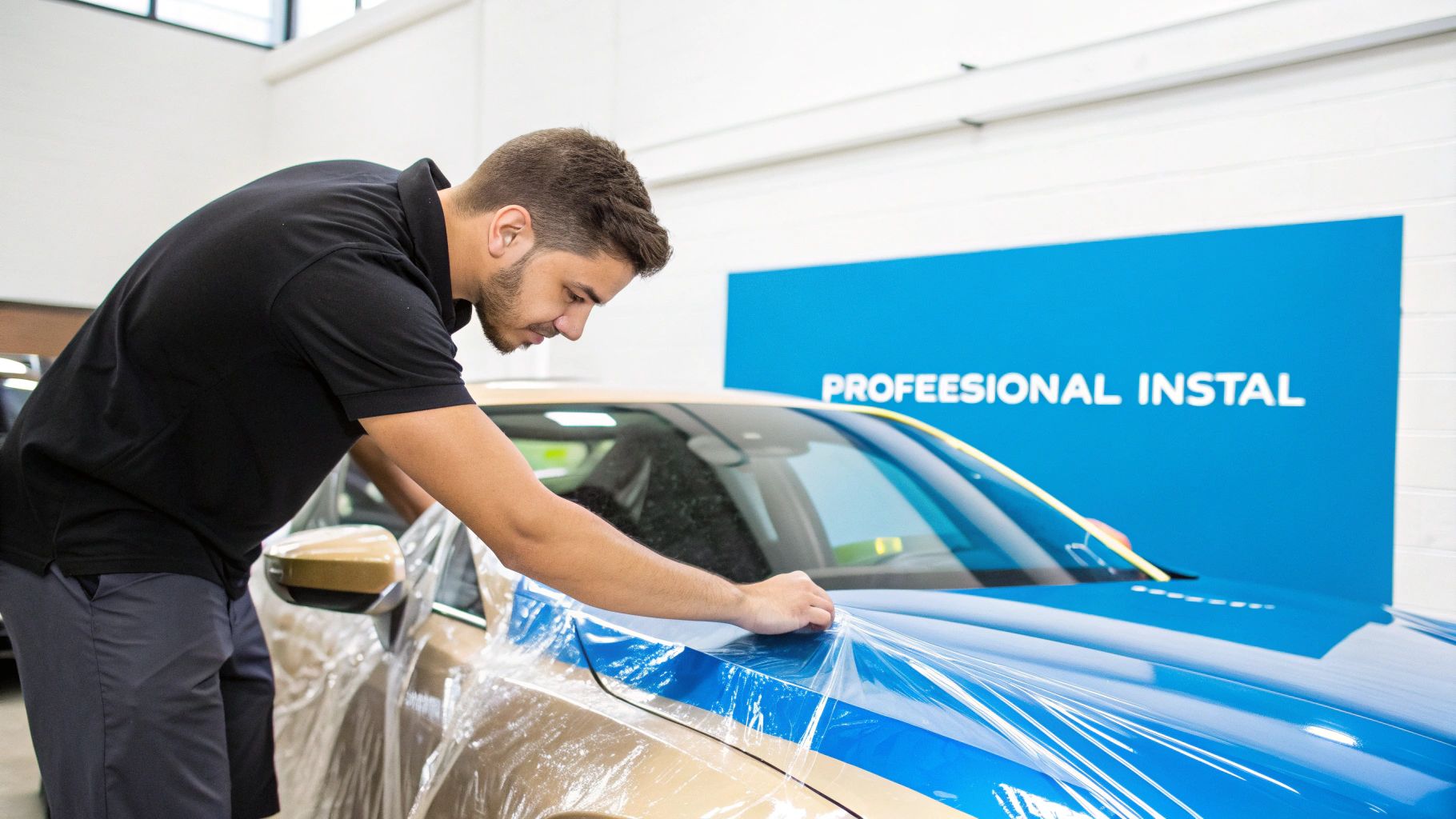
You can spot true expertise in the small details. A seasoned technician will meticulously wrap the film around panel edges, creating a seamless barrier that’s practically invisible. This edge-wrapping technique is crucial; it prevents the film from lifting or collecting dirt over time, which is a common sign of a rushed or subpar installation.
The Risks of a Poor Installation
Here's the hard truth: a bad PPF installation can be worse than having no protection at all. Rushed, inexperienced work doesn't just look bad; it actively compromises the film’s ability to do its job and can ruin your car’s aesthetic.
You'll know you've got a bad PPF job if you see any of these tell-tale signs:
- Bubbles and Air Pockets: Trapped air looks terrible and creates weak spots where an impact can still easily damage your paint.
- Peeling Edges: If the film isn't properly anchored around the edges, it will start to lift. Once dirt and moisture get underneath, the adhesive is toast.
- Visible Seams and Stretch Marks: An unskilled hand can easily overstretch the film, leaving distorted marks. Poorly cut patterns also result in ugly, obvious seams that scream "aftermarket."
This is why entrusting your vehicle to a proven expert is non-negotiable. With a legacy serving the Marietta and Kennesaw communities since 1986, The Tint Guy has built a reputation on meticulous craftsmanship and lasting results.
When you're looking for a PPF installer in North Atlanta, it's a good sign when a business has a strong, established presence. It usually means they have a long history of satisfied customers and a serious commitment to quality. If you're curious about how reputable shops build that kind of customer base, it's interesting to look into effective SEO strategies for auto detailing businesses.
At the end of the day, your car deserves nothing less than an expert touch.
Got Questions About PPF? We've Got Answers.
When you're considering something like Paint Protection Film, you're bound to have a few questions. Here are the most common ones we hear from drivers around North Atlanta, along with some straight-up, no-nonsense answers from our team.
How Long Does PPF Last On a Car?
You can expect a professional installation using a top-tier film to last anywhere from 7 to 10 years. The two biggest factors are the quality of the film itself and how you take care of the car afterward.
Here at The Tint Guy, we only work with premium, durable films designed to handle everything Georgia roads throw at them. A little bit of regular maintenance, like routine washing and staying away from harsh chemicals, will go a long way in pushing that lifespan closer to the 10-year mark.
Can You Put PPF Over a Ceramic Coating?
That's a definite no, and for a very important reason. PPF is designed to form a powerful, semi-permanent bond directly with your car's clear coat. That's what keeps it secure and looking seamless for years.
A ceramic coating does its job by creating an incredibly slick, hydrophobic surface. While that's great for making water and dirt slide right off, it's terrible for adhesives. Trying to stick PPF on top of a coating is a recipe for failure—you'll likely see bubbling, peeling, or a complete lack of adhesion down the road.
The right way to do it is always PPF first, then the ceramic coating. This way, you get the best of both worlds: the physical armor of the film protecting against impacts, plus the glossy, easy-to-clean finish of the coating on top.
Will PPF Damage My Car's Original Paint?
Absolutely not—as long as it's done right. When a high-quality film is installed by a trained professional, it acts as a sacrificial layer that protects your factory paint without harming it in any way. When it's time to remove it years later, a pro can peel it back safely to reveal the perfectly preserved paint underneath.
Where do problems come from? Cheap, low-quality films or improper removal techniques. A bad film can leave behind a sticky mess, and yanking it off incorrectly can risk pulling up the clear coat. This is exactly why choosing a shop with a proven track record, like The Tint Guy, is so critical for protecting your vehicle's value.
Is the Self-Healing Feature Really Permanent?
For the most part, yes. The self-healing ability is an incredible property built right into the film's top layer, and it stays effective for many, many years. Think of it like a memory foam for your car's paint—when it gets a light scratch or swirl mark, a little heat from the sun or even warm water causes the polymers to relax and flow back to their original, smooth state.
Now, it's not magic. It can’t fix a deep gouge that slices all the way through the film. But for the countless minor scuffs and swirls that come from daily driving and washing, it works remarkably well to keep your car's finish looking flawless.
Ready to stop worrying about rock chips for good? At The Tint Guy, we provide expert Paint Protection Film installations in Marietta and Kennesaw to keep your vehicle looking factory-fresh.