Yes, automotive window tint absolutely reduces the heat inside your car. Think of an untinted vehicle as a greenhouse on wheels—it traps the sun’s energy, causing the interior to heat up to dangerous, uncomfortable levels. A quality car window tint acts as a high-tech shield, rejecting the sun’s worst heat before it ever gets a chance to bake your cabin.
The Science of a Cooler Car
To really get how automotive window tint works its magic, you need to know what you’re fighting. The sun throws a whole spectrum of energy at your car, but three main culprits are responsible for turning it into an oven:
- Infrared Rays (IR): This is the invisible energy you feel as heat. It’s the heavy hitter, making up about 53% of the sun’s total solar energy.
- Visible Light: This is the light we can see, and it also carries a good bit of heat. It accounts for another 44% of the solar energy spectrum.
- Ultraviolet Rays (UV): You can’t see or feel them, but these are the rays that damage and fade your car’s interior and are harmful to your skin.
Your car’s windows naturally let all this energy pour right in. It gets absorbed by your dashboard, seats, and every other surface, which then radiate heat back into the cabin. This is how the inside of your car gets so much hotter than the air outside. And that’s exactly where professional automotive window tinting steps in.
How Quality Tint Fights the Heat
High-performance car window film, especially the ceramic window tint we specialize in here at The Tin Guy, is engineered to tackle this solar onslaught in three distinct ways:
- Reflection: The film acts like a mirror for a portion of the sun’s energy, bouncing it right off the glass before it can get inside.
- Absorption: The tint also absorbs some of that energy into the glass itself. As you drive, the air flowing over the windows helps whisk this absorbed heat away from your car.
- Rejection: This is where the real advanced technology comes into play. Premium films are designed to be selective, blocking the most heat-intensive wavelengths—primarily infrared—while still letting plenty of visible light through.
Key Takeaway: The best automotive window tints don’t just darken your windows. They are sophisticated filters engineered to reject the specific types of solar energy that generate the most heat, creating a genuinely more comfortable drive.
This multi-layered defense is what makes modern automotive window tint so incredibly effective. It’s been a game-changer for drivers battling scorching summers, and real-world tests have proven it can slash interior car temperatures by a massive margin.
On a blazing North Atlanta day, an untinted car’s cabin can easily soar past 140°F. With a professional automotive tint installation, that heat buildup is dramatically reduced. Just check out the results from controlled automotive experiments that show this significant drop in temperature.
Quick Look At Tint vs No Tint Heat Performance
To put it in simple terms, here’s a snapshot of what a professional auto tint service can do for your car during a typical Atlanta summer.
| Metric | Untinted Car Window | Professionally Tinted Car Window |
|---|---|---|
| Interior Temperature | Can exceed 140°F | Up to 50% cooler |
| UV Ray Blockage | Minimal protection | Blocks 99%+ of harmful UV |
| Glare Reduction | No reduction | Significantly reduced |
The difference isn’t just something you can measure with a thermometer; it’s something you can feel the moment you get into your car.
While we focus on cars, the science behind heat rejection is universal. You can see similar principles of reflection and absorption at play in all sorts of window coverings designed to keep heat out.
Comparing The Different Types of Automotive Window Tint
Not all window films are created equal, and picking the right one makes a huge difference for drivers navigating the Georgia sun in Marietta and Kennesaw. The technology behind how window tint reduces heat has come a long way, evolving from simple dyes to highly sophisticated films packed with nano-particles. Understanding these differences is the key to choosing the best option for your car, truck, or SUV.
To see how these films work, check out this diagram. It shows the three main ways tint manages the sun’s energy: by absorbing it, reflecting it, or selectively blocking the infrared rays that produce all that heat.
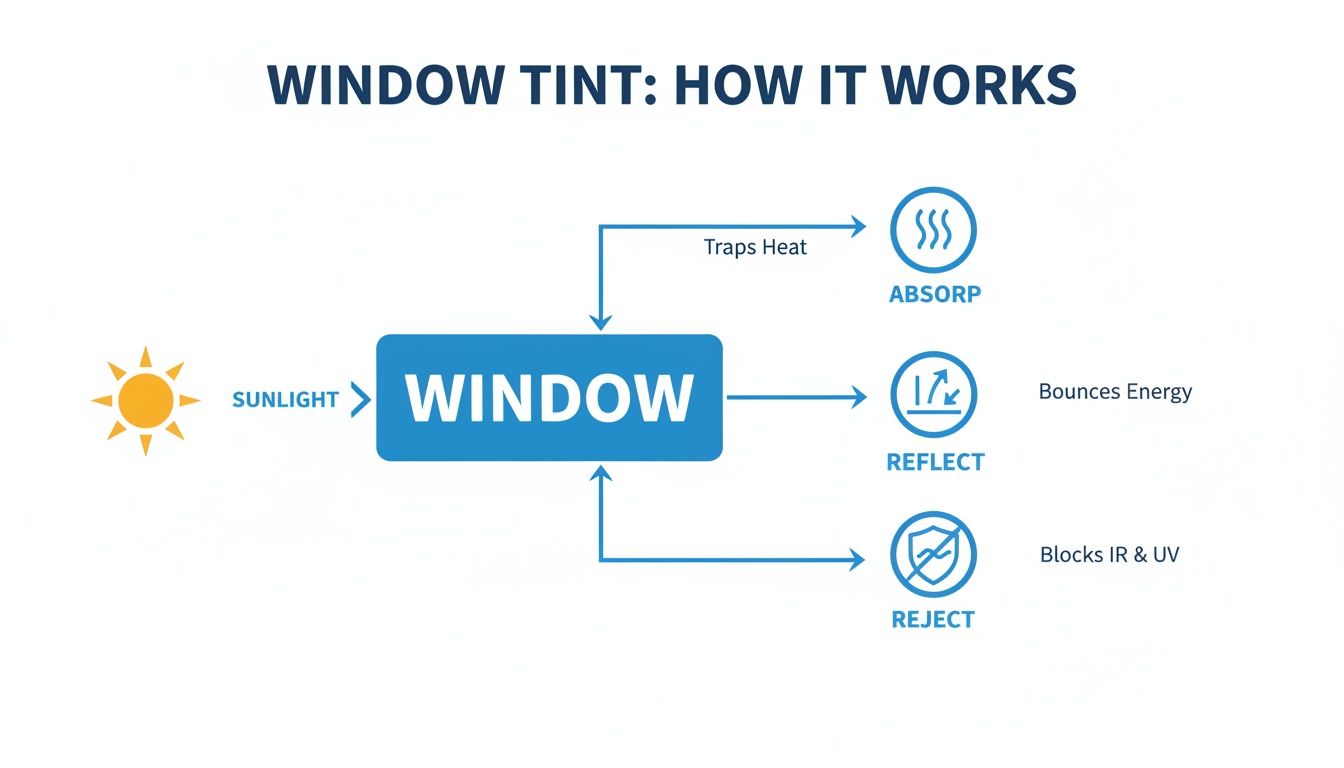
The biggest takeaway here is that modern films do more than just make your windows darker. They are engineered to manage the invisible parts of the solar spectrum, which is where most of the heat comes from.
Dyed Window Film: The Entry-Level Option
Dyed window tint is the old-school, most budget-friendly choice you’ll find. It’s made of multiple layers of polyester that have been dyed to absorb solar energy. Think of it like wearing a dark t-shirt on a sunny day—it soaks up the heat, stopping some of it from getting into your car.
While it’s decent for adding privacy and cutting down glare, its heat reduction is pretty modest. The real problem is that the dyes break down over time from sun exposure, causing the film to fade and eventually turn that dreaded shade of purple. Its main selling point is its low cost, making it an accessible first step into the world of car tinting.
Carbon Window Film: A Step Up In Performance
Carbon film is a major upgrade from dyed films. Instead of using dye, this type of film is infused with microscopic carbon particles that are fantastic at blocking infrared light—the main source of solar heat.
This technology brings several solid advantages:
- Superior Heat Rejection: Carbon films are much more effective at keeping your car cool compared to their dyed counterparts.
- No Fading: Those carbon particles are incredibly stable. They won’t fade or change color on you.
- Signal-Friendly: Unlike metallic films, carbon tint is completely non-metallic, so it won’t interfere with your GPS, satellite radio, or cell phone signals.
Carbon film gives you a durable, matte finish that looks sharp on any vehicle and delivers reliable performance for drivers here in North Atlanta.
Ceramic Window Tint: The Ultimate in Heat Reduction
For vehicle owners who want the absolute best performance, ceramic window tint is the undisputed champion. This premium film uses advanced nano-ceramic particles that are specifically engineered to target and block infrared radiation without having to be dark.
It’s like the difference between cheap gas station sunglasses and a pair of high-end polarized lenses. Ceramic tint selectively filters out the worst of the sun’s heat-producing rays while maintaining incredible clarity.
Why is Ceramic Tint Superior? Ceramic films can block over 90% of infrared heat, a feat older technologies just can’t touch. This means you can get a lighter, legally compliant tint that still provides maximum heat rejection, keeping your car significantly cooler and more comfortable.
The benefits are impossible to ignore:
- Unmatched Heat Rejection: It offers the highest level of Total Solar Energy Rejected (TSER) among all non-metallic films.
- Crystal Clear Views: You won’t get the haze or low-angle glare that often comes with lower-quality films.
- Maximum UV Protection: Just like other quality films, it blocks over 99% of harmful UV rays, protecting you and your car’s interior from damage.
For anyone wanting to dive deeper into the technical side, we put together a guide that breaks down ceramic tint vs regular tint.
Comparing Automotive Window Tint Technologies
To make it even clearer, here’s a quick side-by-side look at how these different car tint films stack up.
| Film Type | Primary Benefit | Heat Rejection Level | Signal Interference | Ideal For |
|---|---|---|---|---|
| Dyed | Affordability & Privacy | Low | None | Budget-conscious drivers looking for basic glare reduction and privacy. |
| Carbon | Durability & Performance | Good | None | Drivers wanting a great balance of heat rejection and value without fading. |
| Ceramic | Maximum Heat Rejection | Best | None | Vehicle owners who demand the highest level of comfort and UV protection. |
Ultimately, choosing the right film comes down to your budget and what you expect from your auto tint. But if pure, unadulterated heat-blocking power is what you’re after, ceramic technology is truly in a class of its own—especially for beating those hot Georgia summers.
Understanding Window Tint Specifications and What They Mean
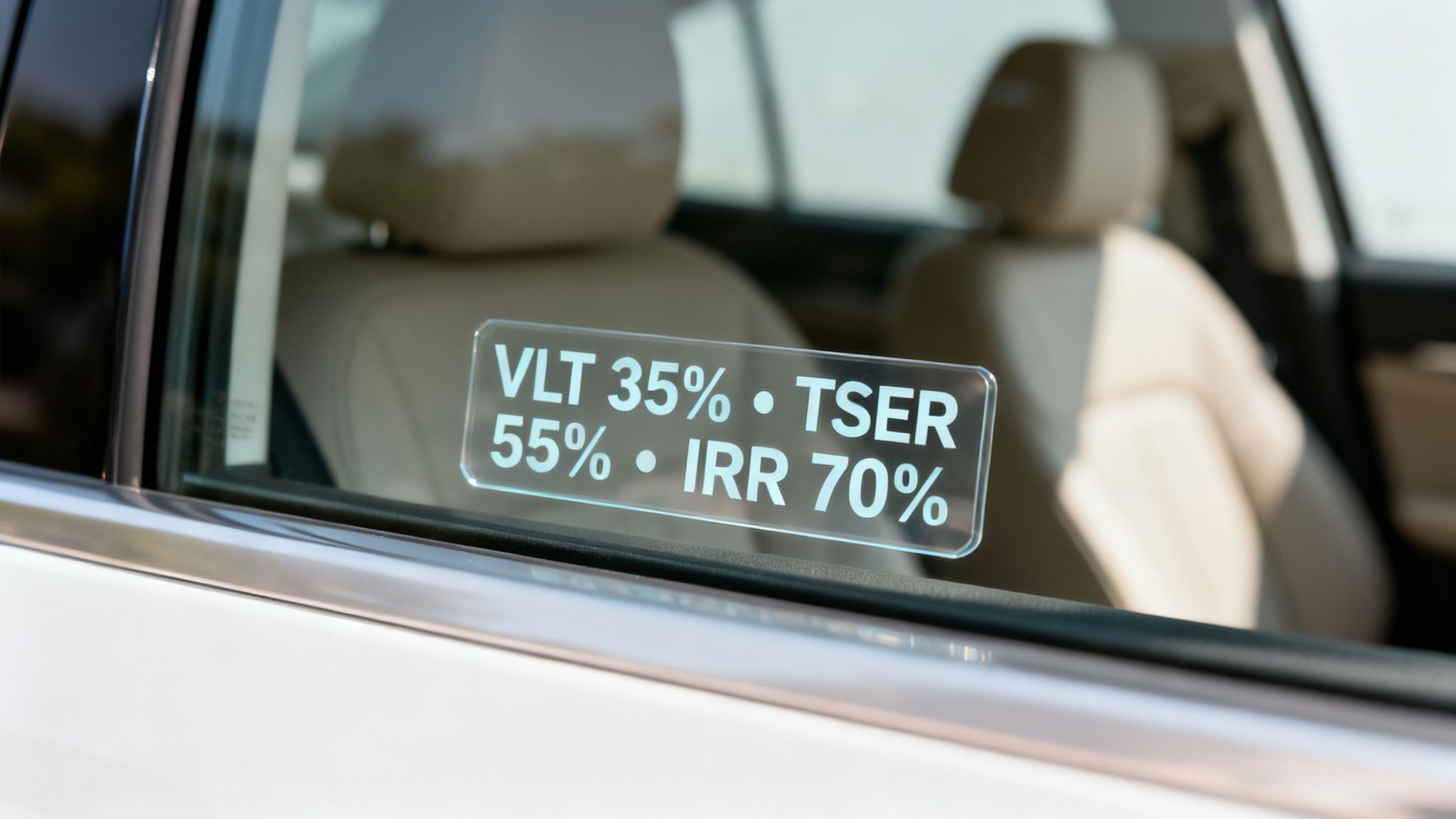
Looking at a window tint’s spec sheet can feel like trying to read a foreign language. But once you know a few key terms, you’ll know exactly how a film is going to perform. Think of it as a nutrition label for your car’s windows—it tells you exactly what you’re getting for heat rejection and visibility.
Learning to read these specs ensures you get the performance you pay for, especially when you’re investing in a high-quality automotive window tinting service.
Visible Light Transmission (VLT)
The first spec you’ll almost always see is Visible Light Transmission (VLT). This one is pretty straightforward: it’s a percentage that tells you how much visible light can pass through the tinted window.
A lower VLT percentage means a darker tint. For instance, a 5% VLT is what most people call “limo tint” because it’s nearly blacked out, while a 50% VLT is much lighter and easier to see through. This metric is mostly about looks and privacy, not direct heat reduction.
It’s also the number that matters most when it comes to the law. Georgia is pretty strict about VLT percentages, especially on front side windows. For passenger cars, your front windows have to let more than 32% of light in. Here at The Tin Guy, we guarantee every car window tint we install in our City One and City Two shops is fully compliant with state law.
Total Solar Energy Rejected (TSER)
If there’s one number you should care about for heat reduction, it’s Total Solar Energy Rejected (TSER). This is the most complete metric out there because it measures how the film handles all three types of solar energy: UV rays, visible light, and infrared (IR) heat.
A higher TSER percentage means better heat rejection and a much cooler car. A basic dyed film might get you a TSER of around 30-35%, but a high-performance ceramic window tint can push that number to 60% or more.
TSER gives you the full picture of a film’s performance. It’s the real measure of how much cooler your car will actually feel, combining all sources of solar heat into one simple number.
When you’re comparing tint options for your truck or SUV, a higher TSER value directly translates to more comfort and less work for your A/C during those brutal Atlanta summers. It’s the best indicator of a tint’s true heat-blocking power.
Infrared Rejection (IRR)
Finally, there’s Infrared Rejection (IRR), which is a massive factor in a modern film’s quality. Infrared rays are invisible, but they’re responsible for over half of the sun’s heat. This is the energy you feel on your skin and what bakes your car’s dashboard.
IRR tells you how well a film blocks these specific heat-generating rays. This is where premium films, especially ceramic tints, really earn their stripes. They’re engineered with tiny nano-ceramic particles that are incredibly good at targeting and rejecting IR energy.
- Standard Films: Might only block 15-20% of infrared rays.
- High-Performance Ceramic Films: Can reject over 90% of infrared heat.
A high IRR is the secret sauce that allows a lighter ceramic film to blow a darker, cheap dyed film out of the water. By zeroing in on the main source of heat, it keeps your car comfortable without having to be limo-dark. For any driver in City One, State or City Two, State, a high IRR is an absolute game-changer.
Beyond The Specs: Real-World Factors In Heat Reduction
Even the most advanced ceramic film doesn’t operate in a vacuum. While specifications like TSER and IRR are crucial for understanding a tint’s potential, the actual temperature you feel inside your car is influenced by a whole range of real-world factors.
Think of it like a high-performance engine—its true output depends on the quality of fuel, the road conditions, and how well it’s maintained. Similarly, how well your car window tint reduces heat is just one part of a larger system.
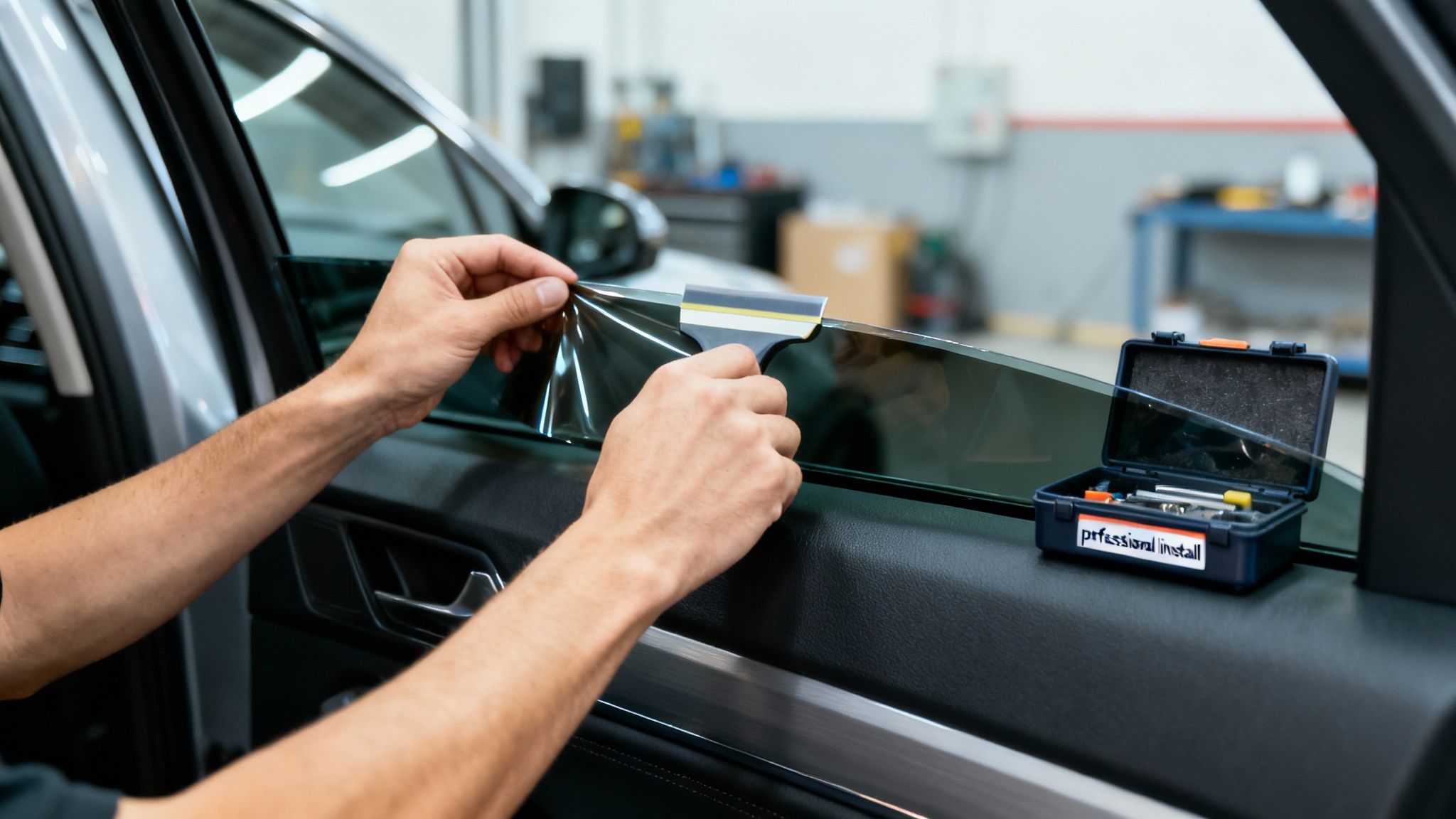
Several external variables can affect how cool your car’s interior stays, even with the best automotive window tinting. Understanding these helps set realistic expectations for what a quality tint job can achieve in the intense Georgia sun.
Environmental and Vehicle-Specific Influences
The environment your car is in plays a huge role. Parking directly under the summer sun in City One will be a bigger challenge for your tint than parking in a shaded garage in City Two. The angle of the sun also changes throughout the day, altering the intensity of the solar energy hitting your windows.
Other factors related to your vehicle also come into play:
- Vehicle Color: Darker cars naturally absorb more heat through their body panels, which then radiates into the cabin. A black SUV will almost always feel warmer inside than a white sedan, regardless of the tint.
- Interior Materials: Dark leather or vinyl interiors absorb and hold onto far more heat than lighter fabric seats.
- Glass Size and Angle: Vehicles with large, steeply raked windshields and panoramic sunroofs have much more surface area for the sun to penetrate, placing a greater demand on the window film.
These elements all work together, meaning the same high-performance ceramic tint might yield slightly different results in a dark-colored truck versus a light-colored coupe.
Why Professional Installation Is Non-Negotiable
This is arguably the single most important factor in whether your heat reduction window tint performs as advertised. A flawless installation creates a complete, unbroken barrier against solar energy. A poor one completely undermines the entire investment.
A premium ceramic film is only as good as its installation. Gaps, bubbles, and peeling edges aren’t just cosmetic flaws; they are weak points where heat can and will penetrate, compromising the film’s effectiveness.
A subpar application leads to several problems that directly impact heat rejection:
- Bubbles and Air Pockets: These create pockets of air that don’t have the film’s heat-rejecting properties, allowing solar energy to pass through unimpeded.
- Peeling or Lifting Edges: Gaps along the window’s edge create entry points for heat and can lead to the entire film failing over time.
- Contamination: Any dirt or dust trapped under the film can cause imperfections that disrupt the film’s smooth surface and its performance.
Trusting an expert installer for your automotive tint installation is the only way to guarantee the film adheres perfectly to the glass, creating the seamless shield you paid for. At The Tin Guy, our meticulous process ensures every inch of your tint performs at its peak potential, delivering the maximum heat reduction possible for your vehicle in City One and City Two.
More Than Just A Cooler Ride: The Added Benefits Of Window Tint
Sure, the incredible heat reduction is what gets most drivers in the door for automotive window tinting. But a professional installation delivers a whole lot more than just a cooler car. These benefits work together to seriously upgrade your driving experience, protect your investment, and boost the comfort of your car, truck, or SUV.
Getting a quality car tint isn’t just about escaping the heat; it’s about giving yourself and your vehicle complete protection.
Ultimate UV Ray Protection
One of the biggest health and safety wins is the almost total knockout of harmful ultraviolet (UV) radiation. The sun’s UV rays are a primary driver of skin cancer, and they’re also the culprit behind the fading, cracking, and general breakdown of your car’s interior.
Top-tier films, especially the ceramic window tint options we install for drivers across City One and City Two, block over 99% of damaging UV rays. This makes every drive safer for you and your passengers. It also acts like a powerful sunscreen for your dashboard, leather, and upholstery, keeping everything looking new for years to come.
Enhanced Privacy and Security
Car window tint adds a very real layer of privacy, keeping wandering eyes out of your vehicle. This is a huge plus when you’ve got a laptop, shopping bags, or other valuables sitting on the seat. A darker tint makes it tough to see what’s inside, making your car a much less attractive target for a smash-and-grab.
That extra concealment brings peace of mind, whether you’re parked at the mall, in the office parking lot, or right in your own driveway. It’s a simple, effective deterrent that adds to your vehicle’s security.
By making it hard to see inside, window tint doesn’t just hide your belongings—it can prevent a break-in from happening in the first place, adding a crucial layer of security to your vehicle.
Superior Glare Reduction and Driving Safety
That blinding glare from the sun or from another car’s high beams at night isn’t just annoying—it’s a real safety hazard. It can temporarily blind you, leading to serious eye strain and slowing down your reaction time when it matters most.
Window tint cuts that harsh light way down, making your drive safer and much more comfortable. By filtering out the brightest light, tint lets your eyes relax so you can focus on the road ahead. For daily commuters and anyone spending a lot of time behind the wheel in the Atlanta area, this reduction in eye fatigue is a game-changer.
On top of all this, window tint also takes some of the strain off your car’s AC system. This can lead to slightly better fuel efficiency and helps your AC unit last longer. Of course, to keep your cooling system running strong, it’s always smart to know how to fix car AC problems if they pop up. It’s also a total myth that you need a dark tint for great heat rejection. Even light films, like a 70% VLT, can provide massive heat relief when they’re built with advanced ceramic technology. You can learn more about that in this great guide on how lighter tints perform on heatcure.com.
Making The Right Choice For Your Car In North Atlanta
Now that we’ve pulled back the curtain on how window tint really works, it’s time to put that knowledge to use for your own car. The takeaway is pretty clear: if you want serious relief from the Georgia heat, ceramic window tint is the undisputed champion. It gives you incredible heat rejection without forcing you into that super-dark, limo-style look.
But here’s something we’ve learned over the decades: the film itself is only half the story. A top-tier film is only as good as its automotive tint installation. A perfect, seamless application creates a true barrier against solar energy. A sloppy job, on the other hand, leaves tiny gaps and imperfections that let heat sneak right through, completely defeating the purpose of your investment. This is why trusting an experienced pro isn’t just a good idea—it’s essential.
Your Local Automotive Tinting Experts
Since 1986, The Tint Guy has been the go-to name for professional automotive window tinting in the North Atlanta area. We live here, so we get it. We know exactly what drivers in City One, State and City Two, State are up against during our brutal summer months. Our entire focus is on providing meticulous installations that not only look factory-perfect but perform flawlessly for years and years.
We are specialists. We only work on vehicles—cars, trucks, and SUVs—and that singular focus means our expertise is second to none. We make sure every job stands the test of time while keeping you 100% compliant with all Georgia tint laws.
Choosing the right tint is an investment in your daily comfort and the long-term health of your vehicle’s interior. A professional ceramic tint job from The Tin Guy is simply the most effective way to keep your car cool, private, and shielded from destructive UV damage.
Ready to completely change how your car feels in the summer? Whether you’re aiming for a noticeable drop in temperature or the maximum cooling power of ceramic film, we have a solution that fits your needs and budget. We can also walk you through how our films deliver some of the best UV protection for your car available today. Let our team help you find the perfect heat reduction window tint.
Contact The Tin Guy today for a free, no-pressure consultation. We’ll show you the options, answer all your questions, and put together a personalized quote for your vehicle.
Common Questions About Window Tint And Heat Reduction
Even after digging into the science, most drivers around the Atlanta area still have a few practical questions before they’re ready to tint their car. We get it. Below, we’ve answered some of the most common things we hear at our City One and City Two shops to give you that final bit of confidence.
How Much Cooler Will My Car Actually Be With Ceramic Tint?
This is the big one, right? While it always depends on factors like how intense the sun is or your car’s color, real-world tests consistently show a vehicle with quality ceramic window tint can feel up to 50% cooler inside.
Think about it this way: on a blistering 95°F day, your car’s interior can easily hit a brutal 140°F. The right tint can keep that down to a much more bearable 100-110°F. That’s a huge difference that drastically cuts down how long your AC has to blast on high just to make the car drivable.
Does A Darker Tint Mean Better Heat Rejection?
Not anymore. That used to be true with older, basic dyed films—the darker the film, the better it was at absorbing heat. But modern technology has completely changed the game.
Today’s advanced ceramic window tint is engineered on a molecular level to specifically target and block infrared (IR) light, which is the part of the solar spectrum that actually carries the heat.
This means a lighter, legally compliant ceramic film can often reject more heat than a very dark, low-quality dyed film. You can get incredible cooling performance without sacrificing visibility or running into trouble with Georgia’s tint laws.
Is Automotive Window Tinting Legal In Georgia?
Absolutely. Car window tinting is perfectly legal in Georgia, but you have to follow the rules. The state has specific regulations on how dark your tint can be, measured in Visible Light Transmission (VLT).
For most passenger cars, the front side windows must let more than 32% of light pass through. The rear side windows and back windshield, however, can be as dark as you want. As pros who live and work here, we make sure every single car that leaves our shops in City One and City Two is fully compliant with state law while getting you the best possible heat and UV protection.
How Long Does Professional Automotive Window Tint Last?
A professionally installed, high-quality film from a top-tier brand is designed to go the distance. We’ve all seen those cheap DIY films that start bubbling, peeling, or turning a weird shade of purple within a year or two.
That’s not what we do. The films we use are backed by a lifetime manufacturer’s warranty that covers all those defects. With just a little bit of proper care, you can expect the automotive window tint from The Tin Guy to look great and keep rejecting heat for the entire life of your vehicle.
Ready to transform your drive and beat the North Atlanta heat for good? The team at The Tint Guy is here to help you find the perfect heat reduction window tint for your car, truck, or SUV in City One and City Two.