Protecting your new car’s paint is a race against the clock that starts the second you get the keys. The best game plan is a two-part approach: being extra careful while the paint cures and then locking in that shine with long-term protection like paint protection film (PPF) or a ceramic coating.
Right from the get-go, you need to steer clear of automatic car washes and commit to proper hand-washing.
Protecting Your New Car From Day One
That perfect, mirror-like finish on your brand-new car is more delicate than you’d think. Factory paint actually needs several weeks—sometimes up to 90 days—to fully cure and harden.
During this crucial break-in period, solvents in the paint are still evaporating, a process called "outgassing." If you rush to wash or wax it, you can trap those solvents, which can seriously mess with the paint's strength and longevity down the road.
Your Initial Paint Care Checklist
Getting this initial phase right is make-or-break for your car's finish. To make it simple, here’s a quick guide on what to do—and what not to do—during those first 90 days.
| Action | Best Practice (Do) | Common Mistake (Don't) |
|---|---|---|
| Initial Waiting Period | Let the car sit for 1-2 weeks before its first wash. This allows the fresh paint to properly harden. | Rushing to wash off light dust, which can cause micro-scratches on the soft clear coat. |
| First Wash Method | Use the two-bucket hand wash method with pH-neutral soap and a clean microfiber mitt. | Using a single bucket, a dirty sponge, or household detergents like dish soap. |
| Washing Frequency | Wash the car as needed to remove harmful contaminants like bird droppings, bugs, or tree sap. | Letting contaminants sit on the paint, where they can etch into the soft finish. |
| Drying Technique | Gently pat the car dry with a plush microfiber drying towel or use a leaf blower for a touchless dry. | Wiping aggressively or using an old bath towel, which can drag grit across the surface and cause swirls. |
| Automatic Washes | Avoid them completely. The harsh chemicals and abrasive brushes will ruin a new finish. | Thinking a "touchless" or "soft-cloth" wash is a safe alternative. It's not. |
Sticking to these simple rules during the curing window sets you up for a flawless finish that lasts for years.
The Patience of the "No-Wash" Period
It feels wrong, I know, but the smartest first move is to just be patient. Giving your car a one-to-two-week "no-wash" window is absolutely essential. This lets the paint settle and harden without you interfering with water, chemicals, or even the friction of a wash mitt.
Resisting that temptation to wash off a little bit of dust is key. You'll be saving the soft, fresh paint from getting covered in tiny scratches. The clear coat is your car's main line of defense, and keeping it pristine starts here. For those who want to get a bit more technical, understanding clear coat on finishes is a great read that breaks down how this top layer works.
Mastering the All-Important First Wash
Once that initial curing time is up, the very first wash is your chance to set the standard for how your car will be treated. This is where so many new car owners accidentally do the most damage. The only method trusted by professionals is the two-bucket wash method.
It’s not complicated, but it makes all the difference.
- Bucket One (Soap): Fill this with water and a quality, pH-neutral car shampoo.
- Bucket Two (Rinse): This one is just for clean water.
Here’s the process: Dip your high-quality microfiber wash mitt into the soap bucket, gently wash one panel of the car, and then dunk and scrub the dirty mitt in the clean rinse bucket. Then you can go back to the soap. This simple step keeps the dirt and grit you just removed from going back into your soap bucket and getting dragged all over your car, which is exactly how swirl marks are born.
Pro Tip: Never, ever use dish soap or other household cleaners. They're designed to cut through grease and will strip off any protective wax or sealant, leaving your paint totally exposed.
Why Automatic Car Washes Are Your Enemy
When it comes to a new car, both touchless and soft-cloth automatic car washes are bad news. The high-pressure jets use harsh, recycled water, and the giant spinning brushes are caked with abrasive grit from every dirty car that went before you.
Simply put, they are the fastest way to destroy a new paint job, leaving behind a spiderweb of swirl marks and scratches that will cost a fortune in paint correction to remove.
This early diligence is even more important for us here in North Metro Atlanta. Between the road grime from highways like I-575 and the thick, sticky pollen we get every spring, an unprotected finish can look dull in a matter of weeks. The data backs this up; in North America, where the global paint protection film market saw its highest revenue in 2024, drivers in places like City One, State and City Two, State face a unique storm of threats. It's not uncommon to see noticeable pitting in the paint of 25% of new cars within just two years due to highway debris alone.
Choosing Your Armor: Paint Protection Film Vs. Ceramic Coating
So, your new car’s paint is finally cured and ready for the real world. Now comes the big decision: how do you protect that perfect, factory-fresh finish for the long haul? This is where you choose the armor that will guard your paint against the daily grind of rock chips, bug guts, and punishing UV rays.
In the world of professional paint protection, two heavy hitters dominate the conversation: Paint Protection Film (PPF) and Ceramic Coatings. They both do an incredible job of keeping your car looking new, but they go about it in completely different ways.
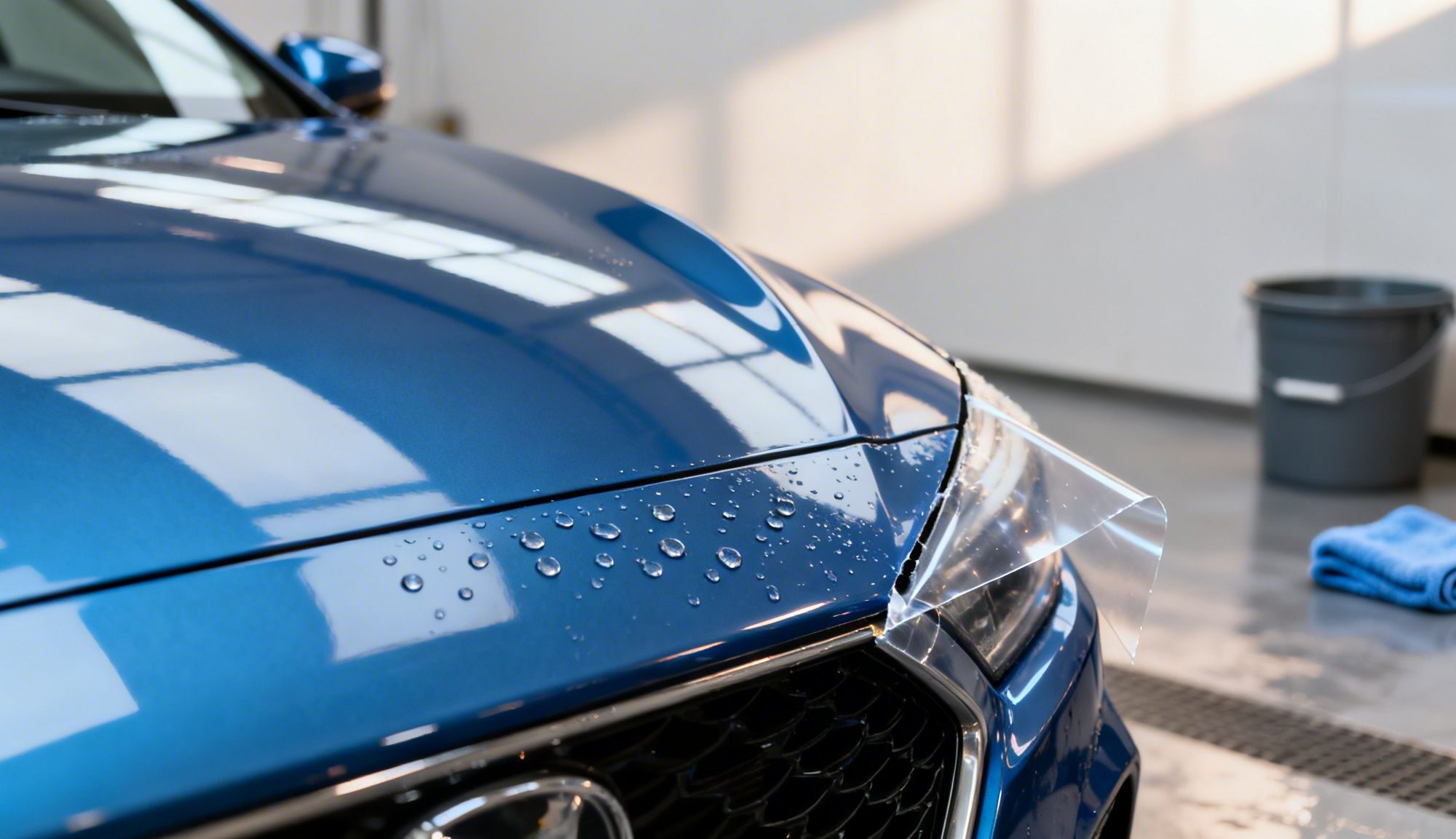
Think of Paint Protection Film as a tough, invisible shield for your car. It’s a physical barrier designed to absorb impacts and stop damage before it happens. A ceramic coating, on the other hand, is more like a high-tech, semi-permanent layer of glass that bonds to your paint, making it slick, glossy, and incredibly easy to clean.
Before you can apply either one, though, you have to start with a clean slate. The very first wash is a critical step that sets the foundation for everything else.

As you can see, no matter what long-term protection you choose, it all begins with a proper, safe wash. It's the non-negotiable first move toward a flawless finish.
To help you decide which long-term solution is right for you, let's put these two technologies head-to-head. The table below breaks down how PPF and ceramic coatings stack up against each other and against traditional waxes you might buy at an auto parts store.
PPF vs. Ceramic Coating Head-to-Head
| Feature | Paint Protection Film (PPF) | Ceramic Coating | Traditional Wax/Sealant |
|---|---|---|---|
| Primary Function | Impact & Scratch Protection | Chemical Resistance & Gloss | Basic Gloss & Minor Protection |
| Rock Chip Defense | Excellent (absorbs impact) | Poor (can still chip) | None |
| Scratch Resistance | Excellent (self-healing) | Good (resists light swirls) | Minimal |
| UV Protection | Excellent | Excellent | Fair (lasts weeks) |
| Hydrophobic | Good (repels water) | Excellent (extreme water beading) | Good (but short-lived) |
| Durability | 5-12 years | 2-7 years | 1-3 months |
| Cost | High | Medium | Low |
This table gives you a quick snapshot, but let's dive into what these differences mean for you as a driver.
Paint Protection Film: The Ultimate Physical Shield
PPF is your frontline defense against physical damage. Plain and simple. It’s an incredibly tough urethane film engineered to stop the things that make car owners cringe: rock chips on the highway, scratches from stray shopping carts, and scuffs from tight parking spots.
If you spend a lot of time on I-575 or GA-400 around North Metro Atlanta, you know exactly what we’re talking about. The front end of your car is a magnet for gravel and road debris. For those drivers, PPF isn’t a luxury; it’s practically a necessity.
Modern films even have a "self-healing" top coat. Minor swirl marks and light scratches that appear on the film's surface literally disappear with a little heat from the sun.
Key Takeaway: If your number one goal is to prevent physical damage like rock chips and scratches, Paint Protection Film is the undisputed champion. Nothing else comes close to its ability to absorb impacts.
Without protection, it's shocking how fast a new car's finish can degrade. Unprotected paint can lose up to 50% of its gloss in the first year alone from UV damage and contaminants. It’s why so many owners are now investing in PPF, which can prevent the kind of rock chips that damage 1 in every 5 vehicles on highways each year and protect against scratches that can slash a car's resale value by 15-20%.
Ceramic Coatings: The Gloss and Hydrophobic Powerhouse
If PPF is the armor, a ceramic coating is the force field. Its main job isn't to stop a rock, but to create a super slick, non-stick surface that’s harder and more durable than your car's clear coat.
This creates an intense hydrophobic effect—the "beading" you see when water hits a protected surface. Water, dirt, and grime slide right off, which means your car stays cleaner for much longer and is way easier to wash when it finally does get dirty.
Ceramic coatings also provide fantastic chemical resistance, shielding your paint from acidic bird droppings and bug splatter that can permanently etch the finish. On top of all that, they add a deep, candy-like gloss that makes your paint pop and provide powerful UV protection to stop fading and oxidation in their tracks.
The Best of Both Worlds: A Hybrid Approach
Here's a pro tip: you don't actually have to choose. For the absolute best protection money can buy, you can combine both. This hybrid strategy is what we recommend for new car owners in City One, State, City Two, State, and the surrounding areas who want total peace of mind.
Here’s how it works:
- We install Paint Protection Film on the most vulnerable, high-impact areas of the car. Think the full front bumper, the entire hood, front fenders, and side mirrors.
- Then, we apply a professional-grade ceramic coating over the entire vehicle—including on top of the PPF.
This approach gives you the ultimate one-two punch. You get the unbeatable impact resistance of PPF where you need it most, plus the incredible gloss, easy maintenance, and hydrophobic properties of a ceramic coating everywhere else. The coating even protects the PPF itself, making it easier to clean and adding another layer of defense against the elements.
You can learn more about what makes this film so effective in our complete guide on the benefits of paint protection film.
Why Professional Installation Is Non-Negotiable
You can invest in the best paint protection products on the market, but here’s the honest truth: the product itself is only half the equation. The final result, and how well your new car is actually protected, comes down to the skill of the person applying it.
This is exactly why we tell our customers that a DIY approach is a high-stakes gamble. When it comes to your car's finish, professional installation isn't just a luxury—it's a guarantee that you're getting the performance you paid for.

Whether you’ve decided on Paint Protection Film or a ceramic coating, the expertise of the installer is what makes or breaks the outcome. A flawed application doesn't just look sloppy; it can fail years ahead of schedule, leaving your paint exposed and forcing you to pay to have it fixed.
The Art of Flawless PPF Application
We’ve seen it all over the years, and we can tell you that applying Paint Protection Film is an art form. It demands incredible precision, patience, and a sterile, controlled environment. This isn't just sticking a big, clear decal onto your car.
The process is meticulous. Our certified technicians in City One and City Two start with a multi-stage decontamination wash and a clay bar treatment to lift every single bonded contaminant from the paint. The surface has to be surgically clean for the film to adhere properly.
From there, we use special slip solutions to float the film into position, giving us the ability to get the alignment absolutely perfect. The real skill is tackling complex curves on bumpers, mirrors, and body lines without creating any distortion. Our team is trained to stretch the film with precision and wrap every possible edge, making the final result seamless and practically invisible. This expertise is what prevents the common DIY nightmares:
- Bubbles and Air Pockets: Trapped air that becomes a permanent eyesore once the adhesive cures.
- Stretch Marks: Distortions in the film from improper handling that look like smudges you can't wipe away.
- Lifting Seams and Edges: Poorly applied edges that quickly collect dirt and will eventually start to peel back.
A professional job ensures the film is virtually undetectable while giving you maximum protection. It’s a result that’s nearly impossible to replicate in a home garage.
The Critical Role of Paint Correction for Coatings
With ceramic coatings, the most important part of the job happens long before the coating ever touches your car’s paint. That crucial step is paint correction.
A ceramic coating is a semi-permanent, super-hard layer that magnifies whatever is underneath it—both the good and the bad. If you apply a coating over swirl marks, light scratches, or dealership-installed holograms, you're just locking those imperfections in for years. It's like putting a beautiful glass frame on a smudged picture.
Our process involves spending hours with a machine polisher to bring the paint to a flawless, mirror-like finish. Only then do we have the perfect canvas for a coating. If you're curious about how long these solutions last, check out our guide on the lifespan of paint protection film.
Installer Insight: One of the most common DIY mistakes we fix is "high spots." This happens when the ceramic coating isn't leveled correctly during application, creating dark, oily-looking streaks. Fixing these spots is incredibly difficult and time-consuming, often costing more than a professional application would have in the first place.
The Value of a Warranty-Backed Investment
When you hire a professional installer, you’re not just paying for their time and skill; you’re investing in peace of mind. Both our PPF and ceramic coating services are backed by a manufacturer's warranty that covers defects like yellowing, cracking, or bubbling.
That warranty, however, is only valid when the product is installed by a certified professional. It's your safety net, ensuring the product will perform as advertised for years. A professional, warranty-backed installation from our experts in the North Metro Atlanta area guarantees a flawless result, protects your vehicle's resale value, and lets you enjoy your investment without any of the risks.
Maintaining Your Protected Vehicle for the Long Haul
Getting paint protection film or a ceramic coating isn't the finish line. Think of it more like a partnership—a team effort between the advanced product you chose and your own commitment to smart, simple care. Investing in protection is a fantastic first step, but it's a consistent maintenance routine that really makes it last and keeps your car looking incredible for years, not just a few months.

We've put together a simple, real-world schedule that will protect your investment and lock in that showroom shine long after you’ve driven away from the shop.
Your Weekly and Bi-Weekly Routine
The foundation of great-looking, long-lasting protection is how you wash it. You’ll want to stick with the two-bucket wash method you used when the car was brand new. This is your best defense against putting new swirl marks and fine scratches into the finish.
What you wash with now matters even more. It’s absolutely essential to use a pH-neutral car shampoo that’s made for protected vehicles. Harsh detergents, dish soaps, or all-purpose cleaners can actually strip away your ceramic coating or degrade the top layer of your PPF, killing their water-beading properties and shortening their lifespan.
Monthly Upkeep and Contaminant Removal
About once a month, it’s a good idea to give your protection a little boost. If your car has a ceramic coating, this is the perfect time to apply an SiO2-infused detail spray or sealant. These products act like a “topper,” essentially recharging the coating’s hydrophobic surface and bringing back that slick, water-beading magic.
This is also when you should tackle any spot treatments. Here in Georgia, especially during those humid summers, bug splatter and bird droppings are public enemy number one. Their acidic makeup can eat into a coating or PPF surprisingly fast if left to bake in the sun.
Crucial Tip: To get fresh contaminants off safely, grab a dedicated bug and tar remover and a soft microfiber towel. Lightly spray the spot, let the product sit for a moment to do its work, and then gently wipe it away. Whatever you do, don't scrub.
For a deeper dive into keeping your film looking perfect, our guide on how to clean paint protection film like a pro has you covered. It walks you through removing stubborn grime without causing any damage.
The Annual Decontamination Wash
Once a year, set aside time for a full decontamination wash. While regular washing handles the surface dirt, it can't get everything. Over time, microscopic iron particles from brake dust and industrial fallout get stuck in your car's protective layer.
You’ll notice them as tiny, rust-colored specks that make the surface feel gritty and prevent your PPF or coating from performing its best. A proper "decon" wash has two key parts:
- Iron Remover: This is a chemical spray you apply that dissolves those iron particles. You'll know it's working when it turns a dramatic purple color.
- Clay Bar Treatment: After the iron remover, using a detailing clay bar will gently pull out any remaining embedded grit, leaving the surface perfectly smooth to the touch again.
By following this straightforward schedule—safe washing every week or two, a quick boost monthly, and a deep clean annually—you'll ensure your paint protection works as advertised. This proactive care is the real secret to keeping your vehicle looking brand new for the long haul.
The Real Cost and ROI of Paint Protection
When you're looking at Paint Protection Film or a ceramic coating, it’s easy to get sticker shock from the upfront price. But let's flip the script. This isn't an expense—it's a smart investment in your car's value, its looks, and your own sanity.
The real return on investment (ROI) snaps into focus when you pit the one-time cost of protection against the repeated, and often staggering, costs of paint repair down the road.
A Financial Breakdown You Can See
Here in the North Metro Atlanta area, the price for professional paint protection depends on your vehicle's size and how much coverage you want. A top-tier, full front-end PPF package that wraps the bumper, hood, fenders, and mirrors is going to have a different price tag than a multi-year ceramic coating on the whole car.
While these are significant investments, think of them as an insurance policy against some seriously expensive headaches.
- A Single Rock Chip: Getting a deep chip on just one panel professionally repainted can easily set you back $500 or more.
- A Front-End Respray: If your daily commute chews up your front end, a full respray could cost you upwards of $2,000.
- A Full Repaint: A complete, factory-quality repaint? You could be looking at $10,000+, a truly jaw-dropping number.
A single professional PPF installation can save you thousands in future body shop visits. It often pays for itself the very first time it stops a nasty rock chip from ruining your paint on GA-400.
The Hidden Cost: Your Car's Resale Value
Beyond just avoiding repair bills, the biggest financial gut punch comes when you decide to sell or trade in your car. To really get the ROI of paint protection, you need to know all the factors that determine how much your car is worth.
Pristine, factory-original paint is one of the most critical factors in a car’s resale value. A vehicle plastered with swirl marks, rock chips, and faded clear coat can be worth thousands less than an identical car with perfect paint.
The market doesn't lie. Global demand for paint protection is expected to jump from USD 670.09 million in 2026 to a massive USD 1,086.07 million by 2034. Here in the U.S., especially in spots like City One and City Two where summer UV indexes can hit 10, unprotected paint can lose up to 40% of its gloss in just one year.
Modern PPF is a game-changer, engineered to absorb impacts from road debris at speeds up to 150 mph.
The Emotional ROI You Can't Put a Price On
Finally, there's a return that’s harder to measure but every bit as real: the satisfaction of driving a car that always looks incredible.
It's the confidence you feel knowing your investment is shielded from the daily grind. It’s that simple joy of washing your car and watching water bead up and fly off a perfectly slick, glossy surface.
For anyone who genuinely loves their car, that feeling alone makes professional paint protection one of the best upgrades you can possibly make.
You've done the research, you've picked the perfect protection plan, but a few nagging questions are probably still bouncing around in your head. That's completely normal. Making the right choice for your new car's paint is a big deal, and you want to get it right the first time.
We get these kinds of questions all the time in our shops. To help you feel totally confident in your decision—whether you're leaning toward Paint Protection Film, a ceramic coating, or a combination of both—we've put together some straight-talking answers to the most common concerns.
Will Aftermarket Protection Void My Factory Paint Warranty?
This is easily one of the biggest worries for new car owners, and we're happy to clear it up: No, applying a high-quality PPF or ceramic coating from a reputable installer will not void your vehicle’s factory paint warranty.
Think of it this way: your manufacturer's warranty is there to cover defects in their own product, like paint suddenly peeling or fading because of a mistake at the factory. Professional-grade protection products are specifically designed to be 100% safe for automotive paint. In fact, their entire job is to preserve that factory finish, helping ensure you never need to make a warranty claim in the first place.
Can You Put a Ceramic Coating on Top of PPF?
Yes, you absolutely can. In fact, this is the "best of both worlds" strategy that we recommend for the ultimate in vehicle protection. Applying a professional-grade ceramic coating over your PPF takes the film's performance to the next level.
Here’s why this combination is so powerful:
- Insane Water Beading: The coating adds a super-slick, hydrophobic layer, forcing water to bead up and roll right off the film.
- Effortless Cleaning: With the slickness of the coating, dirt, road grime, and bug guts have a tough time sticking, making your car washes quicker and easier.
- Extra UV Defense: You get another layer of protection against the sun's damaging rays, which protects both the PPF itself and the paint underneath.
This one-two punch gives you the rock chip and scratch resistance of PPF paired with the easy maintenance, chemical resistance, and deep gloss of a ceramic coating. It’s the ultimate defense package.
What Is the Best Protection for a Daily Driver vs. a Garage Queen?
How you use your car is the single biggest factor in choosing the right protection. A daily commuter has vastly different needs than a show car that only comes out on sunny weekends.
For a daily driver, especially one navigating the heavy traffic and road debris around North Metro Atlanta, Paint Protection Film on high-impact areas is essential. We're talking about the front bumper, hood, fenders, and side mirrors. These spots are a magnet for rock chips. Pairing this targeted PPF with a full-vehicle ceramic coating gives you the perfect balance of physical defense and easy upkeep.
For a "garage queen," the priorities shift. Here, the focus is more on flawless aesthetic perfection and protection from environmental hazards. A top-tier ceramic coating is usually the perfect solution. It provides an unbelievable level of gloss, depth, and protection from dust, bird droppings, and UV rays while the car is parked or out for a cruise. Since its exposure to road debris is minimal, the risk of rock chips is much lower.
Key Insight: The more miles you put on your car, the more you need the physical shield of PPF. If your car spends more time looking good in the garage, a ceramic coating provides the gloss and environmental protection you need.
While you're focused on protecting your paint, don't let your car's interior get overlooked. Those same UV rays that fade your paint are also doing a number on your dashboard, leather, and upholstery.
At The Tin Guy, we specialize exclusively in automotive window tinting services. Our films block up to 99% of harmful UV rays, drastically reduce interior heat, and cut down on annoying glare. Give us a call to see how a professional ceramic window tint can be the final piece in your new car's complete protection plan.