That flawless, glossy finish on your new paint protection film is an investment, and believe it or not, the first 48 to 72 hours are the most critical for its long-term performance. Proper paint protection film maintenance starts the second you pull out of our bay, and it begins with a little patience.
Critical Care For Newly Installed Paint Protection Film
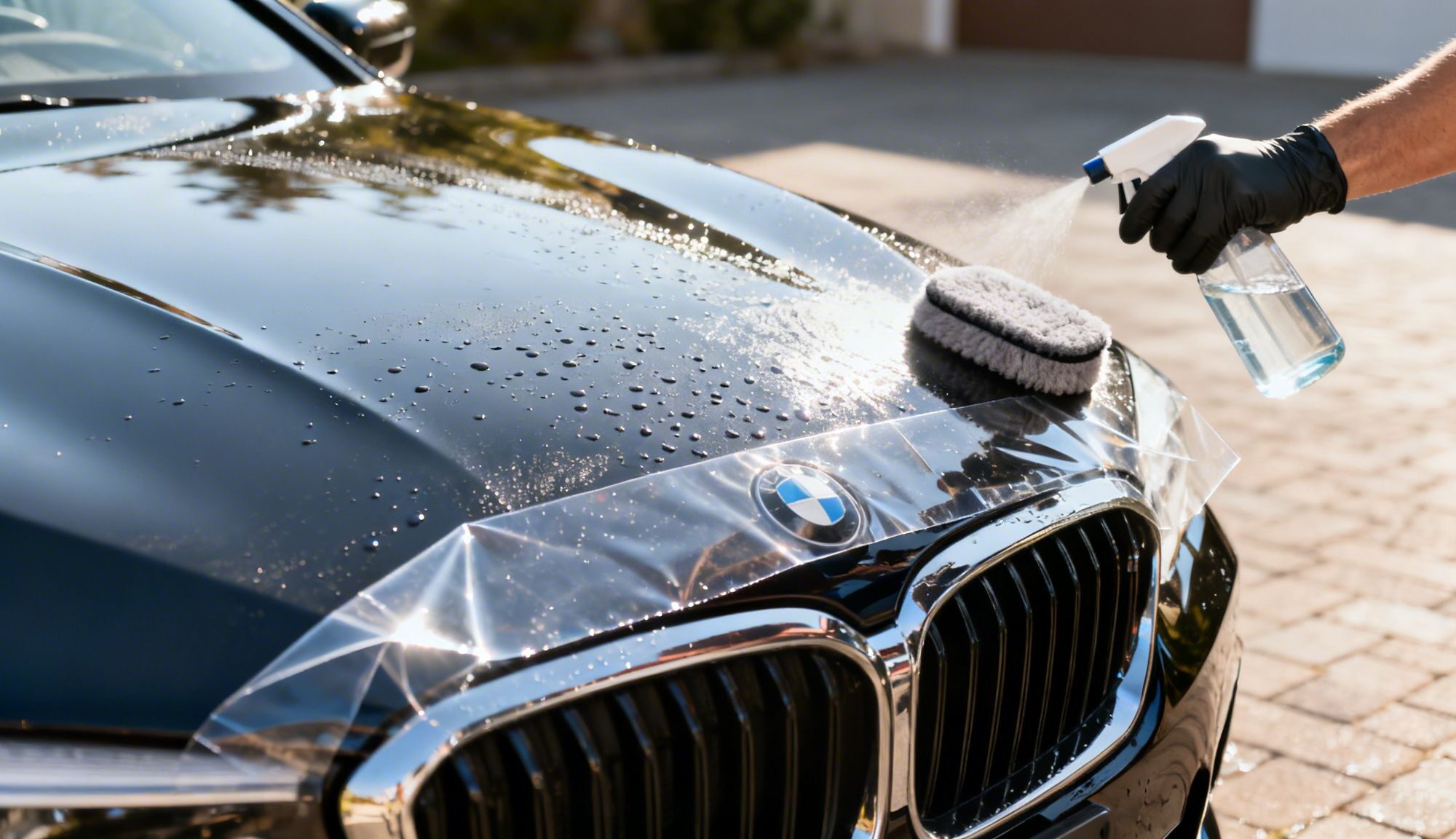
When we apply paint protection film (PPF), we use a special liquid solution that lets our technicians slide the film into the perfect position. That solution needs to fully evaporate, a process called curing. It can be tempting to run your hand over the smooth surface, but touching, poking, or pushing on the film right now can undo all that careful work.
You’ll probably notice a few things right after we're done. Don't worry, they're completely normal parts of the curing process.
- A Slight Haze or Fogginess: This is just moisture trapped between the film and your paint. It will clear up on its own in a few days as it evaporates.
- Tiny Water Bubbles: You might see some small pockets of our slip solution. Whatever you do, don't try to pop them. They'll disappear naturally as the film settles and cures.
Your number one job is to resist the urge to mess with the film. Pushing on those hazy spots or bubbles can trap air permanently or, even worse, cause the edges to start lifting. That's the last thing you want for a seamless, protective barrier.
The First Week Timeline
Here in Georgia, the weather—whether it's the humidity in Acworth or the strong sun over in Woodstock—definitely affects how quickly your PPF cures. Our best advice is to take a "hands-off" approach for at least 48 to 72 hours. That means no washing, no wiping, and if you can help it, no high-speed highway runs. The idea is to avoid putting any extra stress on the film's edges while the adhesive bonds to your paint.
Once you’re past the initial 72-hour mark, you can get back to your normal driving routine. But hold off on that first wash for at least one full week. When it is time for a wash, steer clear of high-pressure car washes. A gentle, touchless hand wash is the absolute best way to clean your vehicle without disturbing the film as it finishes settling. If you're curious about the nitty-gritty of how PPF works, you can dive into our in-depth article about paint protection film to learn more about the technology.
Key Takeaway: The initial curing phase is non-negotiable for the longevity of your PPF. Patience during the first week prevents common issues like lifted edges and ensures the adhesive bonds correctly, giving you the flawless, durable protection you paid for.
Nailing these initial care steps is the foundation of effective paint protection film maintenance. It sets your vehicle up for years of solid defense against rock chips and scratches. By letting the film cure properly, you're making sure it performs exactly as it should, keeping your car’s finish pristine whether you're cruising through the streets of Acworth or Woodstock, GA.
Your Routine PPF Washing Method
Once your paint protection film has fully cured, keeping it clean is the single most important part of paint protection film maintenance. A consistent, gentle washing routine is what makes the difference between a film that looks factory-fresh for a decade and one that starts to show its age way too soon. The whole point is to get the dirt and grime off without causing tiny scratches or messing with the film's edges.
This is exactly where many car owners, with the best intentions, make a crucial mistake. They head to the automated car wash. Those spinning brushes and harsh, often recycled, cleaning chemicals are your PPF’s worst enemy. They can easily dull the finish, create swirl marks, and even catch the edge of the film, causing it to start lifting.
The Two-Bucket Hand Wash: The Pro's Secret
The safest and most effective way to wash your car is the two-bucket hand wash. There's a reason this is the gold standard for professional detailers everywhere—it dramatically cuts down the risk of dragging grit and dirt across your paint and film.
Here’s the simple setup:
- Bucket One (Rinse Bucket): Fill this with plain, clean water and pop a grit guard in the bottom. This is strictly for rinsing your wash mitt after you clean each section of the car.
- Bucket Two (Wash Bucket): This bucket gets your car wash soap—always a pH-neutral automotive soap—mixed with water. It needs a grit guard, too. This is your "clean" soap supply.
After washing a panel, you dunk and scrub your mitt in the rinse bucket. This dislodges all the dirt you just picked up. Only then do you dip it back into the soapy wash bucket. It's a small extra step that prevents you from grinding that same dirt into the next panel.
The right washing technique prevents the very damage you installed PPF to avoid in the first place. A gentle hand wash protects your investment, while an automated wash can ruin it in a single visit.
Choosing the Right Tools for the Job
What you wash with is just as important as how you wash. Never reach for dish soap, aggressive detergents, or all-purpose cleaners. These can strip the film’s protective top coat, causing it to age and fail prematurely.
Always stick to a high-quality, pH-neutral automotive shampoo. These are engineered to clean thoroughly without being harsh or caustic. For your wash mitt, go with an ultra-soft microfiber or lambswool mitt. These materials are designed to lift dirt particles up and away from the surface, unlike old-school sponges or cloths that just trap grit and drag it around.
To help you choose the right supplies, here’s a quick-reference table.
Safe PPF Washing Products vs. Products to Avoid
This table breaks down what's safe to use on your film and what you should absolutely keep away from your car. Sticking to the "Recommended" column is key to long-term clarity and protection.
| Product Category | Recommended (Safe for PPF) | Avoid (Harmful to PPF) |
|---|---|---|
| Soaps/Shampoos | pH-neutral car wash soaps; PPF-specific shampoos. | Dish soap, all-purpose cleaners, degreasers with harsh solvents. |
| Wash Media | High-quality microfiber or lambswool wash mitts. | Sponges, rough cloths, stiff-bristled brushes, dirty towels. |
| Drying Towels | Large, plush microfiber drying towels; air blower/leaf blower. | Chamois (can be too grabby), bath towels, squeegees (can catch edges). |
| Waxes/Sealants | Non-abrasive synthetic waxes or sealants; PPF-specific ceramic coatings. | Carnauba waxes (can cause yellowing), polishes with abrasives, cheap spray waxes. |
Ultimately, using products designed for automotive finishes is the only way to guarantee you aren't accidentally damaging the very film you paid to protect your car.
Here’s a great visual that shows the first few steps of caring for a brand-new PPF installation, which leads right into the safe washing routine we're talking about.

As you can see, the initial hands-off period is critical. It sets the stage for a lifetime of gentle maintenance like the two-bucket wash.
Pressure Washing: Handle With Care
A pressure washer can be your best friend for quickly rinsing off loose dirt before you wash, but you have to be smart about it. Used incorrectly, a high-pressure jet of water can easily get under the edge of your PPF and cause it to lift or peel.
Just follow these simple rules:
- Keep Your Distance: Always hold the nozzle at least 24-36 inches away from the car's surface.
- Use a Wide-Angle Tip: A 40-degree tip is perfect. It spreads the pressure out over a wider, gentler fan of water.
- Stay Away From Edges: This is the big one. Never aim the spray directly at a seam or edge of the film. Angle the water so it sprays away from the edge, not into it.
Adopting these habits is more than just good practice; it's a smart financial decision. The global paint protection film market, valued at $349.04 million in 2024, is booming for a reason. A simple bi-weekly hand wash can extend your film’s life by up to 80%. It's the best way to prevent the yellowing and oxidation that can affect 25% of poorly maintained films within the first year.
For our customers in Acworth and Woodstock, a regular wash is your best defense against the road grime and environmental fallout common to our area. It’s what will keep that deep, wet gloss on your vehicle and ensure your PPF does its job for years. For an even more detailed breakdown, check out our guide on how to clean paint protection film.
Removing Tough Contaminants Without Damaging Your Film
Driving around Georgia means your car will inevitably run into bug splatter, bird droppings, tree sap, and road tar. These aren't just ugly marks; they’re acidic and can cause permanent etching and stains if left to bake on your paint protection film. The real key to effective paint protection film maintenance is acting fast, but also acting smart.

Grabbing the wrong chemical or scrubbing too hard can be just as bad as leaving the contaminant on there. Harsh solvents or abrasive cleaning can chew through the film’s self-healing top coat, dull the finish, and might even void your warranty. The goal is always to be firm with the grime but gentle on the film.
Tackling Bug Splatter and Bird Droppings
Bug guts and bird droppings are extremely acidic. The longer they sit in the Georgia sun, the more they eat into the film. In this fight, speed is your best friend.
As soon as you spot them, try to get them off. A simple but effective method is to saturate a clean microfiber towel with water or a dedicated bug remover and just let it rest on the spot for a few minutes. This softens everything up, letting you wipe it away without any real scrubbing.
For those more stubborn spots, a quality, PPF-safe bug and tar remover is the right tool for the job. Spray it on, let it dwell for the time recommended on the bottle (usually 30-60 seconds), and then gently wipe it away with a fresh microfiber. Never let these products dry on the surface.
Expert Tip: Keep a small spray bottle of waterless wash and a microfiber towel in your trunk. This lets you deal with bird droppings or a big bug impact right away, long before they have a chance to cause real damage.
Defeating Stubborn Tree Sap and Road Tar
Tree sap and road tar are a different animal—they're incredibly sticky. Trying to rub them off when they're dry will only smear the mess and scratch your film. For these, you need a solvent-based approach, but it has to be the right kind of solvent.
A dedicated bug and tar remover should be your first line of defense. These products are specifically formulated to dissolve sticky residues without harming automotive surfaces. Apply the product to a microfiber towel first, not directly onto the car, and gently blot the area. This lets the solvent do its work on the gunk without oversaturating the film.
If a standard bug and tar remover isn't cutting it, you can carefully escalate to isopropyl alcohol (IPA). But you have to be cautious.
- Dilute It: Always use a solution of 50% IPA and 50% distilled water. Never use it straight.
- Apply Sparingly: Dampen a microfiber towel with the solution and gently wipe just the spot.
- Neutralize After: Immediately follow up by rinsing the area with water or a quick detailer spray to get rid of any alcohol residue.
This careful approach is what keeps your PPF looking its best. While these challenges might seem daunting, they are completely manageable with the right know-how. Diligent care is what helps a quality film reach its typical 5-7 year lifespan. Something as simple as using pH-neutral products (under 8.0 pH) can prevent the kind of etching that damages an estimated 20% of unprotected surfaces from common contaminants. You can explore more about PPF durability and market trends by reviewing key industry findings on custommarketinsights.com.
Common Removal Mistakes to Avoid
Your first instinct might be to grab whatever cleaner is under the sink, but many common products can absolutely destroy your PPF. To make sure you’re protecting your investment, here are the things you must avoid using on your film.
- Aggressive Solvents: Acetone, lacquer thinner, and generic degreasers are far too harsh. They will melt the film's top coat.
- Abrasive Tools: Never, ever use rough sponges, paper towels, or stiff brushes. Stick exclusively to clean, high-quality microfiber towels.
- Scrubbing Dry: Always lubricate the surface before you wipe. A dry wipe is a surefire way to create swirl marks and fine scratches.
- Picking at Edges: If a contaminant is near the edge of a film panel, always wipe away from the edge, never into it. Wiping into an edge can cause it to lift over time.
Handling these issues confidently is just part of smart PPF ownership. By using the right products and techniques, you can easily manage the toughest grime your car sees on the roads of Acworth and Woodstock, keeping your film looking flawless for years.
Activating Your PPF's Self-Healing Properties
One of the most impressive features of modern paint protection film maintenance is the film's ability to heal itself. This isn't some futuristic concept; it's a real, engineered feature built directly into the top layer of today's high-quality PPF. This technology means minor scratches and swirl marks can quite literally disappear, keeping your car's finish looking pristine long after we've installed the film.

The magic is all in the film’s top coat, which is made from a special material called an elastomeric polymer. The easiest way to think of it is like a memory foam mattress for your car's paint. When this material is gently warmed, its molecules automatically realign, forcing the surface back to its original, perfectly smooth state. This process effectively erases those light abrasions from things like automatic car wash brushes, fingernail scratches around door handles, or minor scuffs from daily driving.
How to Safely Trigger the Healing Process
Activating this feature is surprisingly straightforward and doesn't require any special tools. The only thing you need is a little bit of gentle, controlled heat. There are a couple of methods you can safely use right at home to refresh your film’s surface.
The simplest way is to just let nature handle it. On a warm, sunny day in Woodstock or Acworth, find a safe spot to park your car outside. The sun's ambient heat is often more than enough to raise the film's surface temperature to the right point. Over a few hours, you'll see those minor swirl marks start to fade away.
If you need more immediate results or want to target a specific spot, warm water is your best friend. Just pour warm water (never boiling—around 120°F is perfect) over the affected area. You can literally watch as the fine scratches seem to melt away right before your eyes. A hairdryer on a low setting, held several inches away from the surface, can also do the trick, but you have to be extremely careful not to apply too much heat to one spot.
Important Note: This self-healing ability is designed for light surface abrasions. It won't fix deep gouges, tears in the film, or rock chips that have actually penetrated the PPF. It’s a tool for maintaining that flawless finish, not for repairing significant damage.
Setting Realistic Expectations
It’s crucial to understand the limits of self-healing technology for proper paint protection film maintenance. While the elastomeric top coat is incredibly resilient, it does have its boundaries.
What it CAN fix:
- Fine scratches from automated car washes
- Swirl marks from using the wrong drying towel
- Light scuffs from everyday contact
What it CANNOT fix:
- Deep scratches that have cut into the film itself
- Punctures or tears from sharp objects or vandalism
- Impact marks from large stones or heavy road debris
This feature is one of the single biggest advantages of modern PPF, giving your vehicle a level of resilience that paint alone just can't offer. By knowing how to safely use heat to your advantage, you can keep your car looking like it just left our shop. For a deeper dive into the science, feel free to learn more about self-healing paint protection film in our detailed guide. It's a true game-changer for car owners in the Acworth and Woodstock area who demand the absolute best in protection and appearance for their vehicles.
Long-Term Protection And Professional Care
If you really want to get a decade or more of flawless performance from your paint protection film, your paint protection film maintenance has to go beyond the occasional wash. A real long-term strategy combines smart DIY care with knowing exactly when to call in a professional. It's this proactive approach that truly protects your car's appearance and its value.
One of the best upgrades you can give your PPF is a dedicated sealant or a professional-grade ceramic coating. These products add an incredibly slick, hydrophobic layer right on top of the film. Not only does this deepen the gloss, but it also makes your routine washes worlds easier because dirt and water just bead up and slide away.
Even more importantly, this extra layer acts as another shield against UV rays and chemical contaminants. That’s a huge plus for anyone driving around Acworth and Woodstock and dealing with our unpredictable weather. By taking the brunt of the abuse, the coating extends the life of your film's top coat and keeps its self-healing abilities in top shape.
DIY Enhancements vs Professional Services
While a dedicated car enthusiast can absolutely apply a quality PPF sealant at home, some jobs are just better left to trained technicians. Knowing the difference between what you can do yourself and what requires a professional touch is crucial for protecting your investment without causing accidental damage. Keeping your paint perfect is one thing; maintaining the film that protects it is a whole other skill set.
Take decontamination, for example. Properly prepping a vehicle's surface for a long-term coating is a detailed, multi-step process. Professionals use specific chemicals and tools to pull out embedded iron particles, tar, and other gunk that a normal wash simply can't touch. If you try this without the right know-how, you risk marring the film.
The same goes for applying a professional ceramic coating. That job demands a controlled environment and a precise technique to get that perfect, even bond. That’s why for services like a deep decontamination or applying a durable sealant, trusting an expert installer like The Tin Guy is always the smartest move.
Investing in your vehicle's appearance through proper paint protection film maintenance has a measurable financial return. Studies show that well-cared-for PPF can increase a car's resale value by as much as 10-15% in luxury and enthusiast segments. You can explore more about the growing importance of PPF in the automotive market on grandviewresearch.com.
The Importance Of Professional Inspections
Even the most carefully maintained PPF can use a periodic check-up from a pro. We recommend getting a professional inspection at least once a year—or twice a year if your vehicle gets a lot of use or is constantly exposed to harsh conditions. These inspections let a trained eye spot subtle issues you might not notice.
During an inspection, we'll meticulously check every edge of the film for the slightest hint of lifting. We also look for any evidence of contamination getting underneath the surface and assess the overall health of the top coat. For our clients in Acworth and Woodstock, GA, we've found that bi-annual professional inspections are incredibly effective, catching 90% of potential issues early on. This is especially true for problems like contaminant infiltration, which affects roughly 1 in 5 installations in humid regions like Georgia if not perfectly maintained.
Catching a tiny lifted edge or a minor stain early can save you from a much bigger headache down the line, ensuring your warranty stays valid and your car stays protected.
To help you get organized, we've put together a practical guide that breaks down which tasks you can handle and when it's time to bring in the pros.
DIY vs Professional PPF Maintenance Schedule
This schedule gives you a clear timeline for both the routine maintenance you can do yourself and the essential professional services needed to guarantee your PPF's longevity and performance.
| Frequency | DIY Maintenance Task | Professional Service Task |
|---|---|---|
| Weekly/Bi-Weekly | Perform a two-bucket hand wash with pH-neutral soap. Spot-clean contaminants like bugs and bird droppings. | N/A |
| Every 3-6 Months | Apply a quality PPF-specific sealant or spray detailer to boost hydrophobicity and UV protection. | N/A |
| Annually/Bi-Annually | N/A | Schedule a professional inspection to check for edge integrity, deep contaminants, and overall film health. |
| As Needed | Safely activate self-healing properties with warm water for minor swirls. | Professional decontamination, polishing (if necessary), or application of a durable ceramic coating. |
This balanced approach—combining consistent care on your part with periodic expert oversight—is the ultimate strategy for paint protection film maintenance. It makes sure your vehicle not only looks its best day in and day out but also holds its value for years to come. If you're in the Woodstock or Acworth area and want to schedule a professional inspection or sealant application, The Tin Guy has the expertise to keep your PPF in peak condition.
Your Top PPF Maintenance Questions, Answered
Even with a perfect care routine, you're bound to have questions about your paint protection film. We get it. Drawing from years of hands-on work at our shops in Woodstock and Acworth, we've put together straightforward answers to the questions we hear most often from fellow car enthusiasts.
Our goal is to cut through the noise, debunk a few myths, and give you the confidence to keep your film looking flawless. When you know the "why" behind the care, maintaining that showroom finish becomes second nature.
How Long Does It Take for the Film to Fully Cure?
This is a big one. The initial cure is all about the adhesive forming a solid bond with your car's paint. While you can drive off right after we're done, the film needs more time to fully set. How long? It really comes down to the weather.
- In sunny, warm conditions: You can expect a much faster cure, usually within 3-5 days. That Georgia sun helps the moisture used during installation evaporate quickly.
- In cool, cloudy, or humid weather: The process can stretch out a bit, sometimes taking up to 2 weeks.
You might notice a slight haze or a few small water pockets under the film during this time. Don't worry—this is completely normal. These will vanish on their own as the film finishes curing. The most critical rule: hold off on washing the vehicle for at least one full week after installation.
Can I Still Wax My Car with PPF Installed?
Yes, and you absolutely should apply some form of protection over your PPF. But you have to be smart about the products you use. Steer clear of traditional carnauba-based waxes. Over time, they can build up along the film's edges and even contribute to yellowing.
Instead, your best bet is a synthetic polymer sealant or, even better, a liquid sealant specifically formulated for paint protection film. These products add an incredibly slick, hydrophobic layer that boosts gloss and makes washing a breeze, all without damaging the film's self-healing top coat. We recommend applying a quality sealant every 3-6 months as part of a solid long-term maintenance plan.
Think of it this way: Your PPF protects the paint, and a good sealant protects the PPF. It’s an essential extra layer of defense against UV rays and environmental grit.
What Should I Do If an Edge Starts to Lift?
If you ever spot an edge of the film starting to lift, the number one rule is don't touch it. Resist the temptation to pick at it or try pressing it back down. All it takes is a tiny bit of dust or dirt to get trapped underneath, which will kill the adhesive's ability to re-bond and just make the problem worse.
This is a job for a professional. As soon as you see an issue, bring your vehicle back to us. In most cases, we can carefully clean the area, reactivate the adhesive, and lock that edge back down before it turns into a bigger headache. Catching it early is the key to a quick, simple fix.
Can Paint Protection Film Be Removed?
Absolutely. Any high-quality PPF is engineered to be fully removable without a trace, leaving your factory paint in pristine condition underneath. People have film removed for all sorts of reasons: it's reached the end of its 8-10 year lifespan, it's taken a major impact, or it's time to sell the car.
But—and this is a big but—removal is a delicate process that should always be left to a professional. We use specialized steamers and proven techniques to gently soften the adhesive, allowing the film to be peeled away slowly and safely. Trying to rip it off yourself, especially if the film is old, can leave a mess of adhesive residue or, in a worst-case scenario, even damage your car's clear coat.
For any and all of your automotive tinting or paint protection film needs in the Woodstock and Acworth areas, trust the experts. The Tin Guy provides professional installation and maintenance advice to keep your vehicle looking its best.