Deciding between paint protection film and a ceramic coating really boils down to one question: what are you trying to protect your car from? Are you shielding it from physical hits, or are you looking to boost its shine and guard against the elements?
Think of it this way: Paint Protection Film (PPF) is like a physical suit of armor. It’s a tough, transparent layer that literally absorbs the impact from rock chips and stops scratches in their tracks. On the other hand, a Ceramic Coating is a high-tech chemical shield. It bonds with your paint to create an intensely glossy, slick surface that repels water, dirt, and grime.
Ultimately, the best choice depends entirely on what you're trying to accomplish.
Understanding the Core Differences
Choosing the right protection for your vehicle's paint is a big deal. While both PPF and ceramic coatings are designed to keep your car’s finish looking brand new, they go about it in completely different ways. One is brute force protection, while the other is sophisticated chemical defense. Understanding these key distinctions is the first step toward making a smart investment in your car's future value and daily appearance.
Of course, true protection is part of a bigger picture. Taking a well-rounded approach to vehicle care is always a good idea. You can learn more about essential car maintenance tips that go hand-in-hand with advanced paint protection solutions, ensuring every part of your car stays in top shape.
At a Glance Comparison
Before we get into the nitty-gritty, let's start with a quick overview. This table breaks down the fundamental differences between PPF and ceramic coatings to help drivers in the Kennesaw, GA and Woodstock, GA areas quickly see what each one does best.
Quick Comparison Paint Protection Film Vs Ceramic Coating
| Feature | Paint Protection Film (PPF) | Ceramic Coating |
|---|---|---|
| Primary Function | Physical impact protection | Chemical resistance & gloss enhancement |
| Protection Against | Rock chips, scratches, road debris, scuffs | UV rays, acid rain, bird droppings, water spots |
| Typical Durability | 5-10 years | 2-5 years |
| Appearance | Optically clear, virtually invisible film | Deep, glossy, "wet" look |
| Key Feature | Self-healing properties for minor swirls | Extreme hydrophobicity (water beading) |
| Ideal Use Case | Daily commuters, new cars, high-impact areas | Show cars, ease of maintenance, aesthetic focus |
This table makes it clear that this isn't about which option is "better" overall, but which one is better for you.
For defending against the physical damage that’s all too common on Georgia highways, PPF is the undisputed champion. But if your goal is to keep your car looking impossibly glossy and make wash days a breeze, a ceramic coating is the way to go. For many car owners, the ultimate answer is actually using both to get the best of both worlds.
What Is Paint Protection Film? A Physical Shield for Your Vehicle
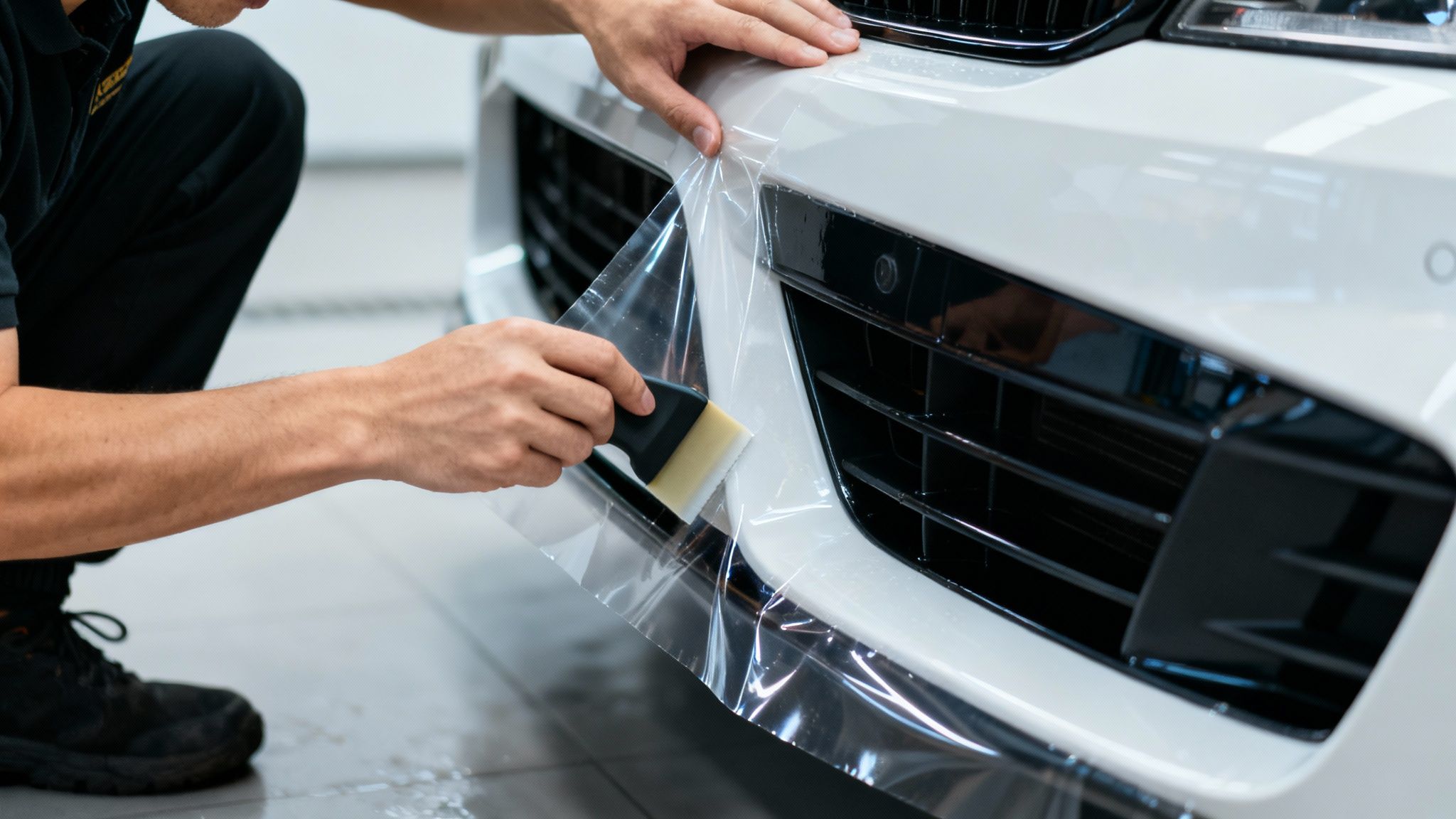
When it comes to physical paint defense, Paint Protection Film (PPF) is the undisputed heavyweight champion. It's a transparent, impressively tough layer of thermoplastic polyurethane that serves as a sacrificial shield for your vehicle's paint. Think of it as an invisible suit of armor, engineered to take the hits that make car owners cringe.
Unlike waxes or coatings that offer protection on a chemical level, PPF provides a substantial physical barrier against the harsh realities of the road. It’s designed to stop threats in their tracks before they can chip, scratch, or mar your factory finish.
Unmatched Defense Against Road Hazards
Driving on Georgia highways means your vehicle is under constant assault from kicked-up stones, gravel, and other debris. This is where PPF truly shines. Its main job is to provide robust impact resistance that other products just can't deliver.
The film's specialized construction allows it to absorb and disperse the force of small impacts, keeping the sharp edges of rocks from gouging your paint. This makes it an essential investment for daily drivers and anyone who wants to keep their car looking brand new.
PPF is the definitive solution for preventing damage from:
- Rock Chips: It stops small stones and pebbles from leaving permanent pockmarks on your bumper, hood, and mirrors.
- Scratches and Scuffs: The film takes the brunt of stray shopping carts, careless door dings, or low-hanging branches.
- Road Debris: It shields your paint from sand, salt, and other abrasive materials that can wear down the clear coat over time.
The Magic of Self-Healing Technology
One of the most incredible features of modern PPF is its self-healing capability. The top layer of the film is made from an advanced elastomeric polymer that can actually reform itself after being lightly scratched or scuffed.
When minor abrasions happen—like the kind you might get from an automatic car wash—a little heat from the sun or a heat gun causes the film to return to its original, smooth state. This property is a game-changer, ensuring your vehicle maintains a flawless, swirl-free look for years by effectively erasing the minor wear and tear of daily driving. You can dive deeper into this innovative tech in our guide to the benefits of paint protection film.
The demand for this kind of tangible defense isn't just something we're seeing in our shop; it's a rapidly growing global trend. The paint protection film market, valued at USD 502.55 million, is projected to climb to USD 726.63 million by 2030. This growth is overwhelmingly driven by the automotive sector, which holds a massive 73.64% market share as drivers prioritize protecting high-impact zones. You can find more insights on the rise of PPF in the automotive market on GrandViewResearch.com.
Customizable Coverage for Every Driver
PPF installation isn't an all-or-nothing deal. We can tailor the coverage to fit your specific needs, driving habits, and budget. This flexibility means every vehicle owner can protect their investment effectively.
Popular PPF Coverage Options Include:
- Partial Front End: This is our most common package, protecting the highest-impact areas like the front bumper, headlights, and the first 18-24 inches of the hood and fenders.
- Full Front End: Offering more extensive protection, this option covers the entire hood, full fenders, front bumper, and side mirrors.
- Full Vehicle Wrap: For the ultimate peace of mind, a full wrap covers every single painted surface, safeguarding it from damage from all angles.
Key Takeaway: Paint Protection Film is the top choice for drivers whose main priority is preventing physical damage. Its self-healing, impact-resistant shield provides a level of protection that chemical coatings simply can't match, making it a smart investment for preserving your vehicle's value and appearance.
What Is Ceramic Coating? A Chemical Guardian for Your Paint
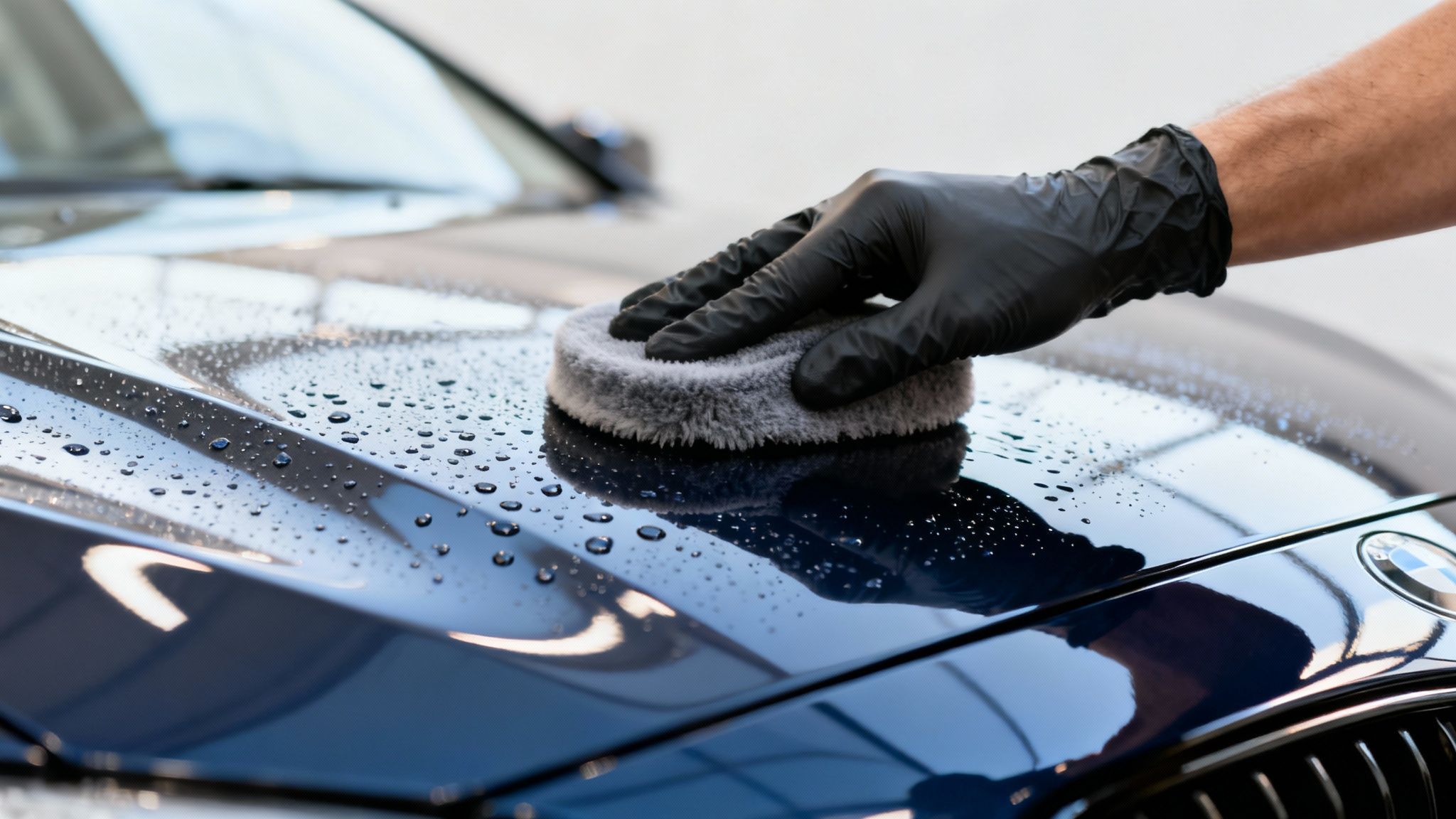
While Paint Protection Film acts like a physical shield, a ceramic coating is more like a sophisticated chemical guardian. Think of it as a liquid polymer, often based on silica dioxide (SiO2), that our technicians meticulously apply to your vehicle's exterior. Once on the surface, it cures and chemically bonds with the factory paint, creating a semi-permanent, hardened glass-like layer.
This chemical bond is what really separates a ceramic coating from traditional waxes or sealants, which just sit on top of the paint for a short time. The coating effectively becomes a functional part of your vehicle's clear coat, offering a durable, long-lasting barrier that boosts both protection and appearance. It's the go-to solution for owners who want a pristine finish and much, much simpler maintenance.
The Power of Hydrophobic Properties
One of the most talked-about benefits of a ceramic coating is its incredible hydrophobicity—a fancy word for its ability to repel water. The bonded layer creates an exceptionally smooth and slick surface, and as a result, water beads up into tight, perfect droplets and slides right off the vehicle, taking dirt and grime along for the ride.
This "self-cleaning" effect makes washing your car dramatically easier and less frequent. Contaminants that would normally cling to paint—like mud, road grime, and pollen—have a tough time sticking to the slick surface.
Defense Against Chemical and Environmental Threats
A professionally installed ceramic coating offers serious protection against the common environmental hazards that can permanently damage a car's finish. This chemical shield is your paint's first line of defense against the slow, steady degradation from the elements.
Key Protective Benefits:
- Chemical Stain Resistance: It forms a barrier that is highly resistant to acidic contaminants like bird droppings, bug splatter, and tree sap, stopping them from etching into your clear coat.
- UV Protection: The coating has powerful UV inhibitors that act like sunscreen for your car, helping prevent paint oxidation, fading, and the dullness caused by constant sun exposure.
- Enhanced Gloss and Depth: A quality coating amplifies your paint's natural color and clarity. It delivers a deep, candy-like gloss that old-school waxes just can't match.
Crucial Clarification: A ceramic coating is a rock star at defending against chemical and environmental threats. However, it does not provide meaningful protection against physical impacts like rock chips, gravel strikes, or deep scratches. Its hardness helps resist minor swirl marks from washing, but it's no substitute for the impact-absorbing power of Paint Protection Film.
Setting Realistic Expectations for Vehicle Owners
Understanding a ceramic coating's limitations is just as important as knowing its benefits. We want vehicle owners in Kennesaw, GA, and Woodstock, GA, to see it for what it is: a powerful tool for aesthetic enhancement and elemental protection, not invincible armor.
The main job of a ceramic coating is to keep your vehicle looking cleaner for longer, make washing almost effortless, and protect the paint from fading and staining. It delivers a stunning, glossy finish that’s easy to maintain. But for drivers worried about the physical damage common on I-75 or local roads, a ceramic coating alone won't stop chips and scratches. Setting these realistic expectations ensures you choose the right product for your specific goals.
Comparing Key Decision Factors For Your Vehicle
Deciding between the physical armor of PPF and the liquid shield of a ceramic coating really comes down to what you want to protect your car from. They solve very different problems, so understanding where each one shines is the key to making the right call for your ride.
Let's break down the comparison into the factors that matter most to our customers here in Georgia: core protection, how long it lasts, how it looks, what it takes to maintain it, and the cost.
Impact Armor vs. Chemical Shield
The biggest difference between these two is how they protect your paint. It’s a classic offense vs. defense scenario. Paint Protection Film is all about defense—it’s a true sacrificial barrier designed to absorb physical impacts. Think of it as body armor that stops rock chips, deep scratches, and annoying scuffs from ever reaching your paint.
A ceramic coating, on the other hand, is pure offense. It offers zero meaningful protection against rock chips or scratches. Instead, it’s a hardened chemical layer that’s incredibly good at repelling environmental threats. Its job is to shield your paint from damaging UV rays, acid rain, bird droppings, and chemical stains while making the surface ridiculously slick and easy to clean.
Key Differentiator: PPF provides tough physical protection against impacts like rock chips and scratches. A ceramic coating offers superior chemical and environmental protection.
PPF Vs Ceramic Coating Feature Breakdown
To make things even clearer, let's put these two head-to-head on the features that matter most. This table breaks down what you can realistically expect from each solution.
| Criterion | Paint Protection Film (PPF) | Ceramic Coating | Key Takeaway |
|---|---|---|---|
| Primary Protection | Physical impacts (rock chips, scratches, scuffs) | Chemical & environmental contaminants (UV, acid rain) | PPF is armor; Ceramic Coating is a force field. |
| Longevity | 5 to 10 years with professional installation | 2 to 5 years depending on product and maintenance | PPF is a longer-term, single-application investment. |
| Appearance | Optically clear, preserves factory finish | Adds significant gloss, depth, and a "wet look" | PPF is invisible protection; Ceramic is visible enhancement. |
| Maintenance | Self-healing for light swirls; easy to clean | Extremely hydrophobic, repels dirt and water | Both simplify cleaning, but PPF's self-healing is a unique advantage. |
| Cost | Higher initial investment ($6,500 – $8,000+ for full car) | More accessible price point ($1,000 – $3,500) | Cost reflects the difference in material and labor intensity. |
As you can see, they aren't really competitors. They're specialists. Your choice depends entirely on whether your priority is preventing physical damage or enhancing gloss and simplifying cleaning.
Durability And Lifespan
When you're investing in protection, you want it to last. A high-quality PPF, installed by experienced technicians like ours, is a serious long-term solution. Most of the premium films we use are warrantied for 5 to 10 years and are engineered to take a beating without yellowing, cracking, or peeling.
Ceramic coatings have a shorter but still impressive lifespan. Depending on the product quality and how well you maintain it, a professional coating will typically last between 2 to 5 years. It slowly wears down over time, and you'll notice its water-beading magic starts to fade, signaling it's time for a reapplication to get back to peak performance. You can learn more about what impacts longevity in our guide on how long PPF lasts.
Finish And Aesthetics
Here's where your personal preference really comes into play. Each option changes your car's look in a completely different way.
PPF is designed to be totally invisible. It's an optically clear film whose entire purpose is to preserve your factory finish without changing it. The goal is protection that you see the benefits of, but not the product itself.
A ceramic coating, however, is all about the visual pop. It adds a stunning depth and gloss to the paint, creating that signature "wet" look that makes colors look richer and deeper. The shine it delivers is something traditional waxes and sealants just can't touch.
Maintenance And Upkeep
Both options make washing your car way easier, but for different reasons.
The main draw for a ceramic coating is its incredibly slick, hydrophobic surface. Dirt, mud, and grime just don't want to stick to it. That means your car stays cleaner for longer and washing it is a breeze—often, a simple rinse is all you need.
PPF also gives you a smooth surface that's easy to wipe down, but its real maintenance superpower is its self-healing technology. Minor swirl marks and light scratches that can happen during a wash will often vanish when the film is exposed to a little heat from the sun. This keeps the finish looking perfect without needing constant polishing.
The science here is pretty cool. The thermoplastic polyurethane (TPU) in PPF is what gives it that elasticity and self-healing ability, which is why it holds an estimated 72.15% of the market share for physical protection. In contrast, ceramic coatings are liquid glass polymers that are masters at repelling water but offer no real defense against scratches deeper than 1 micron. You can find more market insights at MordorIntelligence.com.
Cost And Investment Value
For many drivers, the final decision comes down to the budget. Paint Protection Film is the more significant upfront investment, no question. The price is driven by the quality of the film, the complexity of your vehicle's curves, and how much of the car you want to cover.
- Partial PPF Coverage (e.g., front bumper, hood, mirrors): This typically runs from $500 to $2,000.
- Full Vehicle PPF Coverage: For bumper-to-bumper protection, you can expect to invest $6,500 to $8,000 or more.
Ceramic coatings are generally more affordable, though a professional application is still a highly skilled service that requires significant prep work.
- Professional Ceramic Coating Application: This usually falls between $1,000 to $3,500, based on the coating's durability and the vehicle's size.
The "value" depends entirely on your goals. PPF provides its value by saving you from expensive paint repairs from rock chips and key scratches. A ceramic coating delivers its value by preserving the car's aesthetic beauty and saving you countless hours of washing and waxing.
Which Protection Is Right For You: Practical Scenarios
Technical specs are one thing, but the real test is how these products perform in the real world. The best way to choose between paint protection film and a ceramic coating is to think about your actual driving habits, where you park, and what you want for your car long-term.
To make it easier, we've broken it down into a few common profiles we see all the time from customers around Kennesaw, GA and Woodstock, GA. See which one sounds most like you—it’ll point you in the right direction.
The Daily Highway Commuter
If you’re on I-75 or I-575 every morning, you know the sound. It's the constant pinging of sand, gravel, and whatever else is flying off the truck in front of you. Your car's front end is in a constant battle with road debris.
- Your Biggest Threat: Rock chips, gravel spray, and bug guts at high speed.
- Ideal Solution: Paint Protection Film (PPF) on the high-impact areas is a must. A partial front kit covering the bumper, headlights, and the first part of the hood and fenders creates a physical barrier against the daily onslaught.
- Why It Works: PPF is the only thing that truly absorbs the kinetic energy of small impacts. It stops the chips and pitting that can absolutely ruin a car's finish before they even start.
The Show Car Enthusiast
For you, it's all about that flawless, mirror-like shine. Your car might not see the road every day, but when it does, it has to be perfect. Your main goal isn't stopping road rash; it's achieving that jaw-dropping gloss that turns heads.
- Your Biggest Threat: Swirl marks from washing, environmental fallout like pollen, and a finish that looks dull under the lights.
- Ideal Solution: A professional-grade Ceramic Coating.
- Why It Works: A quality ceramic coating creates an incredible, candy-like gloss that adds depth and richness to your paint. Its super-slick surface means dust and grime wash off effortlessly, keeping your car ready for that weekend cruise or the next Cars and Coffee.
This decision tree gives you a quick visual on choosing between physical armor (PPF) and a chemical shield (ceramic coating).
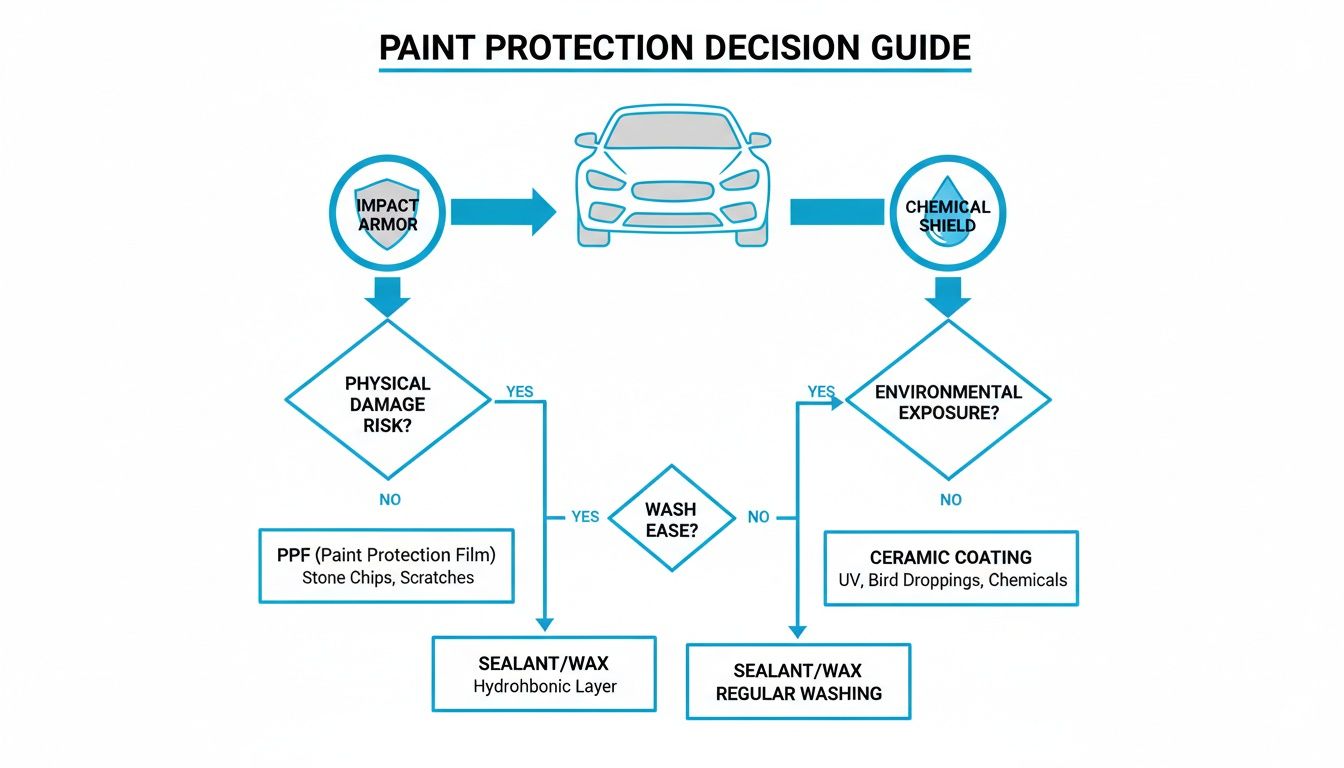
As you can see, if physical damage is your number one worry, PPF is the direct answer. If you're chasing aesthetic perfection and easy maintenance, a ceramic coating is the way to go.
The New Car Owner
You just dropped a significant amount of money on a new vehicle and you want to keep it looking new for as long as possible. You’re not just worried about one thing; you want to protect your investment from everything.
- Your Biggest Threat: Both physical and environmental damage that chips away at your car's value.
- Ideal Solution: The best of both worlds. We apply PPF to the high-impact front end, then install a ceramic coating over the entire vehicle, including on top of the film itself.
- Why It Works: This hybrid approach delivers the ultimate protection. You get unbeatable impact resistance where it matters most, plus the insane gloss, UV protection, and hydrophobic cleaning power of a ceramic coating everywhere else.
The Leased Vehicle Driver
For you, it all comes down to the turn-in inspection. Lease agreements are notoriously strict about the car's condition, and every little chip and scratch can translate into hefty penalties. Your goal is to avoid those unexpected, costly fees.
- Your Biggest Threat: Getting hit with expensive end-of-lease wear-and-tear charges.
- Ideal Solution: A partial front PPF application.
- Why It Works: A relatively small investment to protect the bumper and hood from the inevitable rock chips is the smartest, most cost-effective strategy. It's a simple financial move that ensures you hand back the keys without getting a surprise bill for paint repair.
The Ultimate Solution: Combining PPF And Ceramic Coating
For car owners who simply refuse to compromise, the whole "paint protection film vs. ceramic coating" debate has a clear winner: use both. This isn't an either/or situation. Think of it as creating a multi-layered defense system where each product plays to its unique strengths, giving you truly comprehensive protection.
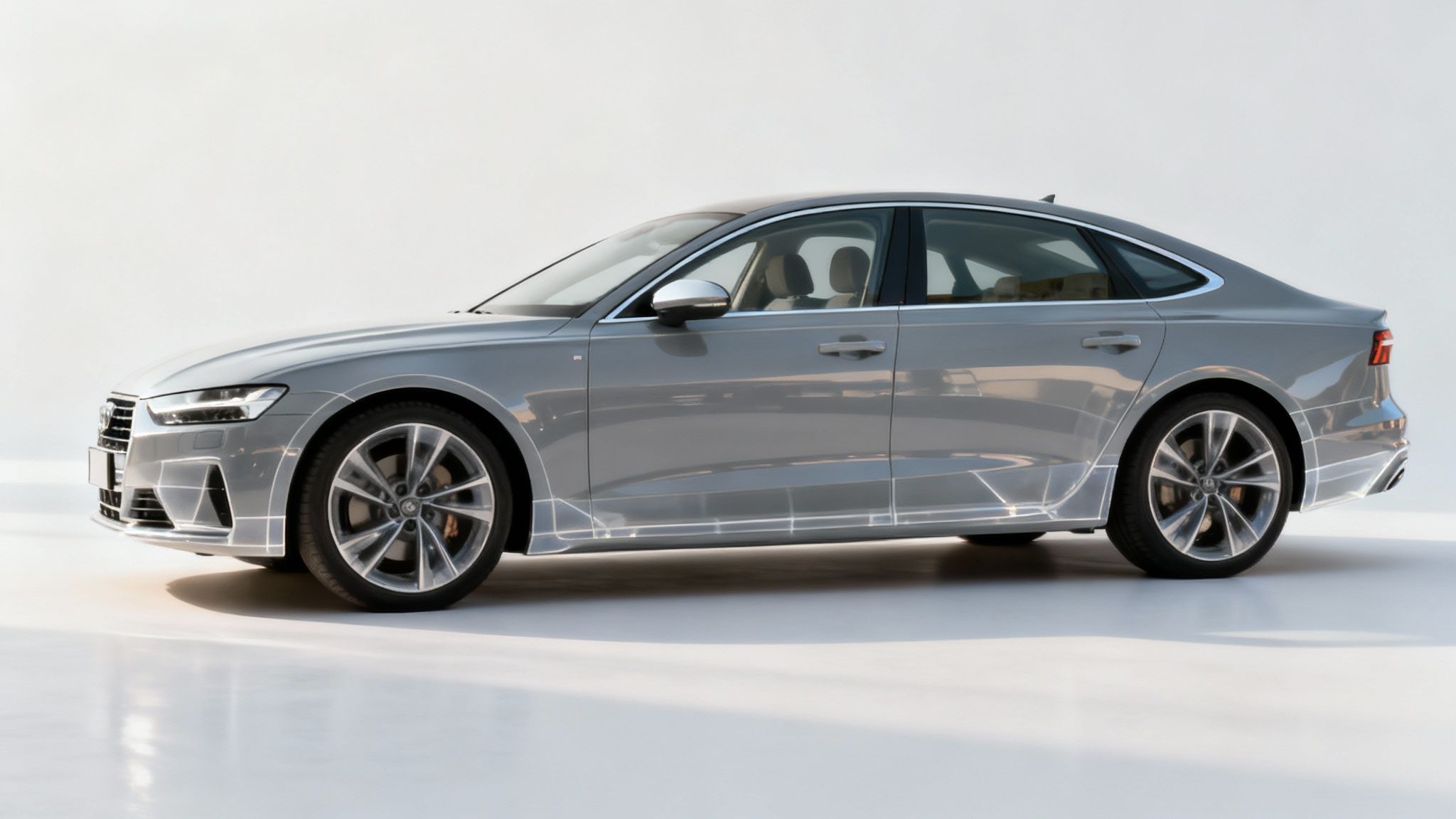
The strategy is straightforward. First, we apply a rugged Paint Protection Film to the most vulnerable, high-impact areas of your vehicle. This initial layer is the physical armor, ready to take the hit from rock chips, road debris, and minor scratches that would otherwise scar your paint. It's the frontline defense against real-world physical damage.
Creating The Perfect Synergy
Once the PPF is in place and properly cured, a professional-grade ceramic coating is applied over the entire vehicle—including right on top of the film. This top layer adds a powerful chemical shield and enhances your car's appearance in ways that PPF alone just can't. The synergy you get is simply unmatched.
Here’s what the ceramic coating brings to the table:
- Extreme Hydrophobicity: Water, mud, and grime slide right off. This makes washing your car, and especially the PPF, incredibly simple.
- Enhanced Gloss and Shine: The coating adds a deep, candy-like gloss to every surface, boosting the visual appeal of your factory paint and the invisible film.
- Chemical and UV Resistance: This final layer protects both the underlying paint and the PPF itself from bird droppings, acid rain, and harmful UV rays that degrade surfaces over time.
This combination is exploding in popularity, and for good reason—it addresses the limitations of each individual product. We've seen automotive PPF sales come to dominate over 60% of the market share, with the industry projected to hit USD 697 million by 2025. When you add a ceramic coating over PPF's typical 10-year lifespan, you not only enhance its gloss but also add a 9H hardness layer that can slash your wash times by up to 50% thanks to its super-hydrophobic properties.
By layering a ceramic coating over PPF, you get the best of both worlds: unbeatable impact resistance from the film and the brilliant gloss, chemical defense, and easy maintenance of the coating.
The Definitive Investment
This hybrid method is, without a doubt, the ultimate investment for vehicle owners who demand peak performance in both protection and appearance. It ensures your car is shielded from practically every threat it will encounter, from flying gravel on I-285 to environmental contaminants in a parking lot.
Of course, while focusing on paint is crucial, a holistic approach to vehicle care always yields the best results. Our other services, like our advanced automotive paint protection options, perfectly complement a comprehensive preservation strategy. For the owner who wants their vehicle to remain in pristine, showroom condition for years to come, combining PPF and a ceramic coating is the only way to go.
Frequently Asked Questions About Paint Protection
Even after breaking down the details, you probably still have a few questions about how all this works in the real world. Let's tackle some of the most common things we hear from drivers around Kennesaw, GA and Woodstock, GA to help you feel confident in your decision.
Can I Apply A Ceramic Coating Over Existing Rock Chips Or Scratches?
That's a definite no, and for a good reason. A ceramic coating is engineered to bond directly to your car's clear coat, creating a super slick, glossy, protective layer. It doesn't have the thickness or the right properties to fill in physical damage like chips, swirls, or scratches.
If you apply a coating over existing damage, you're essentially just locking those flaws in place. The high gloss of the coating can actually make them stand out even more. This is why professional paint correction is a non-negotiable first step before any ceramic coating goes on—we have to create a perfectly smooth surface for the coating to bond to.
How Long Does Installation Take For PPF Vs. Ceramic Coating?
Both jobs are meticulous and require a skilled hand and plenty of time to get right. The exact time always depends on the size of the vehicle, the complexity of its body panels, and how much coverage you're getting.
- Paint Protection Film: A partial front-end kit, which usually covers the bumper, part of the hood, and mirrors, can often be done in a few hours. A full-body PPF wrap is a whole different ballgame, typically taking 1-2 full days of careful, precise work.
- Ceramic Coating: A professional ceramic coating application is also a 1-2 day process. That time isn't just for applying the coating; it includes the critical prep work like decontamination and paint correction, plus the necessary curing time before the car is ready to face the elements.
Will PPF Or A Ceramic Coating Void My Car's Factory Warranty?
Not when it's done correctly by a certified, reputable installer. High-quality paint protection films and ceramic coatings from leading manufacturers are specifically designed to be completely safe for automotive paint.
In fact, it's quite the opposite. These professional-grade products are almost always backed by their own manufacturer warranties, giving you another layer of protection and peace of mind on top of your factory coverage.
Which Option Offers Better Value For The Money?
This is the big question, and the answer is: "value" depends entirely on what you're trying to protect your car from. One isn't automatically a better deal than the other; their value comes from how well they solve your specific problem.
Value Is All About Your Priority: If your biggest worry is preventing costly paint repairs from physical impacts like rock chips and key scratches, then PPF delivers superior value. If you're more focused on incredible gloss, ridiculously easy cleaning, and protection from the environment, a ceramic coating offers fantastic value. The best value is always the product that perfectly matches your needs.
Here at The Tint Guy, our goal is to match you with the right solution for your vehicle and your lifestyle. While we specialize exclusively in professional automotive window tinting, we believe an informed customer is a happy customer. We hope this guide has given you the clarity you need to protect your car's paint for the roads of Kennesaw, GA, and Woodstock, GA.