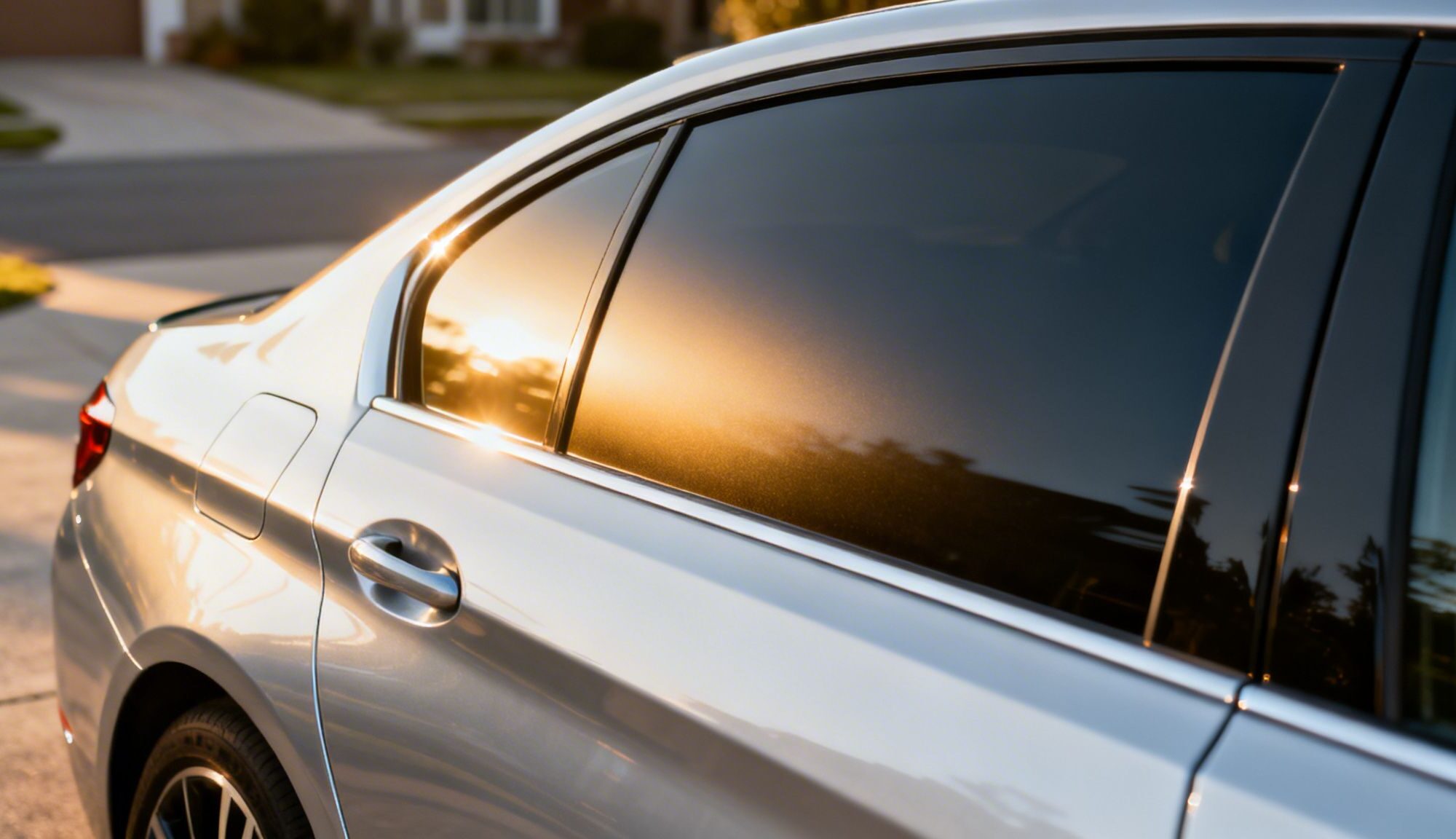
Thinking about getting an automotive window tint? It’s one of the best upgrades you can make for your vehicle, especially here in Georgia. This isn’t just about giving your car a sleek, new look—it’s about adding a layer of high-performance technology that enhances comfort, safety, and the lifespan of your car’s interior. A quality tint for car windows blocks over 99% of damaging UV rays and can make a massive difference in how hot your vehicle gets during our intense summers.

What Is Automotive Window Tint and Why It Matters
Think of your car’s factory windows like a basic pair of sunglasses—they might cut down a little bit of brightness, but that’s about it. Now, imagine swapping them for a top-tier set of polarized lenses that don’t just dim the light, but actively shield you from harsh glare, block dangerous UV radiation, and keep you significantly cooler. That’s the real difference a professional automotive window tint makes.
This isn’t a simple cosmetic add-on. For every car, truck, and SUV owner in the North Atlanta area, from Kennesaw to Marietta, a quality tint delivers real, everyday benefits that go way beyond just looking good.
Enhancing Your Driving Experience
The advantages become obvious the moment you get behind the wheel. A professionally installed tint for car windows makes every drive safer and more comfortable.
- Serious Heat Reduction: Modern films, especially ceramic window tint, are engineered to reject a huge amount of solar energy. This means a cooler cabin, less work for your AC, and even better fuel efficiency.
- Powerful UV Protection: A good tint acts like a powerful sunscreen, blocking over 99% of harmful UV rays. This is huge. It protects your skin during your daily commute and stops your car’s interior—the dashboard, leather seats, and door panels—from fading, drying out, and cracking over time.
- Less Glare and Eye Strain: Whether it’s the afternoon sun or the blinding headlights from an oncoming truck at night, glare is a real safety problem. Tint cuts that glare down, helping you see the road more clearly and reducing eye fatigue on longer trips.
Automotive window tint is not just about looks; it’s a functional upgrade that protects your health, preserves your vehicle’s interior, and enhances overall driving safety.
A Smart Investment for Any Vehicle
At the end of the day, picking the right auto tint near me is about making your vehicle better. The added privacy helps secure your car, making it harder for potential thieves to see valuables you might have left inside. It also adds that clean, customized look that can actually boost your car’s resale value. For total glass protection, understanding the benefits of a ceramic coating for windshield can also provide great insight into maintaining perfect visibility and durability.
Here at The Tint Guy, we live and breathe automotive window tinting for drivers across Marietta and Kennesaw. We don’t just see tint as an option; we see it as an essential upgrade for any vehicle braving the Georgia climate. It’s an investment that pays you back in comfort, protection, and peace of mind every single time you drive.
Choosing Your Ideal Car Tint Film Options
Not all automotive tint films are created equal. Choosing the right one is key to getting the balance of style, privacy, and performance you’re after. Think of it like upgrading your sunglasses—each level offers distinct benefits, and understanding them will help you make a confident decision for your vehicle.
Making the right choice means looking beyond just how dark the film is. The technology behind the tint dictates everything from how much heat it blocks and how well it protects you from UV rays to its clarity and how long it will last. Let’s break down the main options available to drivers here in Marietta and Kennesaw.
Dyed Window Tint Film
Dyed window tint is the most traditional and budget-friendly choice. It’s essentially a layer of dye mixed into an adhesive that gets applied to your car’s window. Its main job is to provide privacy by absorbing a small amount of heat and making the glass darker.
- Pros: It’s the most affordable option and gives you that dark, private look.
- Cons: It offers the lowest heat and UV protection. The dye is also notorious for fading over time, often turning that dreaded purple color and bubbling up. Eventually, it will need to be replaced.
You can think of dyed film as a basic, non-prescription pair of sunglasses. They cut down on bright light, but they do very little to block the sun’s heat-causing infrared rays. It’s really just an aesthetic choice for those on a tight budget.
Carbon Window Tint Film
Moving up the ladder, we get to carbon window tint. This film is infused with microscopic carbon particles, which are incredibly effective at blocking infrared light—the main source of solar heat. The best part? It doesn’t need to be super dark to do its job.
Carbon film is a huge step up from dyed film in both performance and durability. It provides excellent UV protection and won’t fade or change color over time like a dyed film will.
One of the biggest draws of carbon film is its true black, matte finish. It’s a sleek look that many car owners want. It delivers strong performance without the premium price tag of ceramic, making it a very popular middle-of-the-road choice.
This type of automotive tint offers a fantastic sweet spot. You get reliable heat rejection and much better longevity than dyed film, making it a durable and effective solution.
Ceramic Window Tint Film
At the very top of the market, you’ll find ceramic window tint. This is the undisputed champion of modern film technology. This premium film contains no dyes, no carbon, and no metal. Instead, it uses non-metallic, non-conductive ceramic nanoparticles that are “spectrally selective.”
That’s a fancy way of saying they are engineered to target and block the specific wavelengths of light that cause heat (infrared) and skin damage (ultraviolet), all while letting plenty of visible light pass through. The result is superior heat rejection and crystal-clear views that other films simply can’t match. You can dive deeper into how different films work by checking out our complete guide to window film types and benefits.
Some of the key benefits of ceramic tint include:
- Maximum Heat Rejection: A quality ceramic tint can block over 50% of total solar energy. This keeps your car significantly cooler and takes a huge strain off your AC system.
- Superior UV Protection: It blocks over 99% of harmful UV rays, giving you the best possible protection for your skin and preventing your car’s interior from fading and cracking.
- No Signal Interference: Because it has zero metal in it, ceramic film will never interfere with your cell phone, GPS, satellite radio, or keyless entry signals. This is a critical feature in today’s connected vehicles.
- Exceptional Durability: Ceramic tint is incredibly durable. It will never fade or change color and offers outstanding scratch resistance.
If dyed film is basic sunglasses and carbon is a good pair of polarized shades, then ceramic window tint is like a pair of high-tech photochromic lenses that adapt to give you the best protection and clarity in any situation. For drivers in Marietta and Kennesaw who want the absolute best performance, ceramic tint is the ultimate investment in comfort and protection.
Comparing Automotive Window Tint Film Types
To make the decision even clearer, it helps to see how these films stack up against each other in the areas that matter most. We’ve put together a simple table to compare the key performance metrics of each film type.
| Film Type | Heat Rejection | UV Protection | Clarity & Signal Interference | Durability & Lifespan | Typical Cost |
|---|---|---|---|---|---|
| Dyed | Low | Low-Moderate | Good; No signal issues | Low; Prone to fading, purpling, and bubbling | $ |
| Carbon | Good-High | Excellent (99%) | Good; No signal issues | High; Fade-resistant and very durable | $$ |
| Ceramic | Highest | Excellent (99%) | Best; Crystal clear with no signal interference | Highest; Will not fade, excellent scratch resistance | $$$ |
As you can see, while dyed film is the most affordable, you get what you pay for in terms of performance and longevity. Carbon offers a significant upgrade across the board, but for those seeking the ultimate in performance, clarity, and protection, ceramic film is in a class of its own.
Making Sense of Window Tint Performance Numbers
When you start looking into the best tint for car windows, you’re going to hit a wall of acronyms and percentages. All that technical jargon can feel a bit overwhelming, but those numbers are the secret to understanding how a film will actually perform on your car. Instead of just picking a tint because it looks cool, learning what these numbers mean empowers you to choose a film that delivers real-world comfort and protection.
Let’s break down the three most important performance metrics you’ll come across.
Visible Light Transmission (VLT)
Visible Light Transmission, or VLT, is the most straightforward of the bunch. It simply measures the percentage of visible light that can pass through the tinted window.
- A lower VLT percentage means a darker tint. For instance, a 5% VLT film is what most people call “limo tint”—it’s very dark.
- A higher VLT percentage means a lighter tint. A 70% VLT film, on the other hand, is almost perfectly clear.
Here’s the key takeaway: VLT only tells you about darkness and privacy. It is not a reliable indicator of heat rejection. It’s entirely possible for a dark, low-quality film to block less heat than a much lighter, high-performance ceramic window tint. To see how these percentages line up with local regulations, check out our guide on the best window tint percentage.
UV Rejection
This one is simple and incredibly important. It measures the percentage of harmful ultraviolet (UV) rays that the film blocks. UV radiation is the invisible culprit responsible for skin damage and for fading and cracking your car’s interior—the dashboard, seats, and door panels.
A quality automotive window tinting film should always block over 99% of UV rays. This is a non-negotiable standard for any reputable film, whether it’s a carbon or ceramic product. Think of it as your first line of defense for protecting both your car’s interior and your skin.
Total Solar Energy Rejected (TSER)
For anyone driving around Marietta and Kennesaw during our sweltering summers, TSER is arguably the most important number to know. Total Solar Energy Rejected measures a film’s ability to block heat from all sources: UV light, visible light, and infrared (IR) light.
A higher TSER value means more total heat is blocked, and your car’s cabin will stay significantly cooler. It gives you the complete picture of a film’s heat-blocking power, which VLT alone can’t do. A high TSER is what makes a premium ceramic window tint so effective at taming that brutal Georgia heat.
This decision-tree graphic can help you visualize how to weigh these factors based on what matters most to you.

As the guide shows, while your budget is a natural starting point, the best tint for you really comes down to your performance goals.
For car owners in hot climates like North Atlanta, focusing on TSER for maximum heat reduction window tint is the smartest move. This translates to real, tangible benefits. High-performance films can slash cabin temperatures by up to 60%, which means you’ll run your A/C less and can even improve fuel efficiency by 5-10% on longer drives.
So, when you’re choosing a tint for your car windows, remember to look past the darkness (VLT) and zero in on the numbers that deliver real protection. Prioritizing a film with over 99% UV rejection and the highest TSER you can afford is the key to unlocking true, lasting comfort for you and your vehicle.
Navigating Georgia Car Window Tint Laws
Choosing the perfect tint for your car windows is about more than just looks and performance—it’s also about staying on the right side of the law. Here in Georgia, the state has regulations in place to ensure driver visibility and public safety. Getting a handle on these rules is crucial for any vehicle owner in Kennesaw and Marietta looking to avoid fines or other legal hassles.
Georgia’s tint laws all come down to a measurement called Visible Light Transmission, or VLT. This is simply the percentage of visible light the film allows to pass through your window. A lower VLT number means a darker tint. The rules also change a bit depending on your vehicle type, so it’s important to know which category your ride falls into.
Georgia Automotive Window Tint Laws At a Glance
To make it simple, we’ve broken down the legal tint limits for passenger cars versus multi-purpose vehicles like trucks and SUVs. Remember, these percentages refer to the minimum amount of light that must be able to pass through the window.
| Window | Passenger Cars (VLT %) | SUVs, Trucks & Vans (VLT %) |
|---|---|---|
| Front Side Windows | Must be 32% or higher | Must be 32% or higher |
| Rear Side Windows | Must be 32% or higher | Any darkness allowed |
| Rear Windshield | Must be 32% or higher | Any darkness allowed |
| Front Windshield | Non-reflective tint on top 6 inches only | Non-reflective tint on top 6 inches only |
These are the core rules, but there’s a bit more to it, especially concerning reflectivity.
Legal VLT for Passenger Cars
If you drive a sedan, coupe, or any other standard passenger car, the state has set clear limits to maintain safety. The goal is to make sure law enforcement can see into the vehicle while ensuring you have a clear view out, especially at night.
The rules are straightforward:
- Front Side Windows: Must allow more than 32% of light to pass through.
- Rear Side Windows: Must also allow more than 32% of light through.
- Rear Windshield: The same 32% rule applies here.
- Front Windshield: You can only have a non-reflective tint on the top six inches. This is often called a “brow” or “visor strip.”
It’s also critical to know that your window film can’t be too shiny. For both the front and rear side windows, the film cannot be more than 20% reflective.
Legal VLT for Trucks, SUVs, and Vans
Georgia law gives a little more freedom to owners of multi-purpose vehicles like trucks, SUVs, and vans. The rules for the front windows stay the same to keep the driver’s view clear, but the regulations for the back half of the vehicle are much more relaxed.
For these larger vehicles, here’s the breakdown:
- Front Side Windows: Must allow more than 32% of light in.
- Rear Side Windows: Any darkness (VLT percentage) can be used.
- Rear Windshield: Any darkness (VLT percentage) can be used, too.
This flexibility for the rear windows is great for adding privacy and security, especially if you’re carrying tools, gear, or other valuables. Just like with passenger cars, the films still can’t be more than 20% reflective. For a deeper dive into the specifics, you can read more about the legal limit for tint in our comprehensive guide.
The most reliable way to ensure your automotive window tinting is compliant is to have it installed by a professional. An experienced shop like The Tint Guy guarantees that every film we install at our Kennesaw and Marietta locations adheres strictly to Georgia’s legal standards.
Choosing a legal tint doesn’t mean you have to compromise on performance. High-quality films, especially modern ceramic window tint, can deliver incredible heat rejection and UV protection even in lighter shades. When you work with experts, you get the comfort and style you want while staying completely within the law.
Finding a Professional Auto Tint Service

Even the best tint for car windows in the world is only as good as the person putting it on. A bad install can lead to bubbles, peeling, and trapped dust, quickly turning a premium upgrade into a frustrating eyesore. Honestly, choosing a skilled, professional installer is the single most important step to make sure your tint looks perfect and performs for years to come.
This one decision is what separates a long-lasting, valuable addition to your car from a short-term headache. An expert shop doesn’t just deliver a flawless finish; they stand behind their work. That’s a level of peace of mind you simply won’t get from a DIY kit or a cut-rate installer. For car owners in Kennesaw and Marietta, finding the right professional auto tint service is everything.
Questions to Ask Before You Commit
Before you book an appointment, you’ve got to do a little homework on the shop. Asking a few key questions can tell you everything you need to know about their expertise, their commitment to quality, and how they treat their customers. A truly reputable installer will welcome these questions and have clear, confident answers ready.
Here’s a quick checklist of what you should be asking any auto tint shop:
- What premium film brands do you offer? Top-tier installers partner with industry-leading brands known for performance and durability. This shows they’re invested in quality materials, not just the cheapest film they can find.
- Can you walk me through your installation process? A pro should be able to describe their methods clearly. Do they use computer-cut patterns for a perfect fit, or do they hand-cut the film? Computer cutting, for example, is a great sign—it means a precise fit for your exact vehicle model and no risk of a blade ever touching your glass.
- What does your warranty cover? A strong, comprehensive warranty is a huge sign of confidence. It should cover both the film itself (against things like fading, bubbling, or turning purple) and the installation labor.
By asking these direct questions, you establish a clear benchmark for quality. An expert installer’s answers will demonstrate their experience and separate them from amateurs who might cut corners.
Why Choose The Tin Guy for Automotive Tinting
An experienced technician brings so much more to the table than just basic skills. They have a deep, practical understanding of how different films behave on different types of automotive glass. They know the secrets to prepping the windows just right, how to maintain a spotless environment to avoid contamination, and how to masterfully squeegee the film for that perfect, bubble-free finish.
At The Tint Guy, our reputation has been built on that foundation of expertise since 1986. We focus exclusively on automotive window tinting, which has allowed us to master the specific challenges of ceramic window tint and other modern films. Our long history serving the Kennesaw and Marietta communities is a direct result of our consistent, high-quality work. We proudly offer comprehensive warranties on both the film and our workmanship because we stand by every single vehicle that leaves our shop.
This dedication to quality provides real, tangible returns. For car enthusiasts, a professionally installed ceramic window tint can even boost resale value by 7-12%. Plus, the glare reduction from a quality tint has been shown to prevent a significant percentage of sun-related driving incidents, making your daily commute safer. As tint laws and technology evolve, choosing a professional who guarantees legal, durable, and high-performing results is more important than ever. You can learn more about how a professional tint job can improve fuel efficiency and safety by reading the full research on these automotive trends.
Your Top Questions About Car Window Tint Answered
Jumping into a vehicle upgrade always brings up a few questions. It’s a natural part of the process. To help you feel totally confident about your choice, we’ve put together the questions we hear most often from our customers in Kennesaw and Marietta. Our team is here to give you clear, straightforward answers.
How Long Does It Take to Tint Car Windows?
You might be surprised how efficient a professional automotive window tinting job is. For a standard four-door sedan, the entire process usually lands somewhere between 2 to 4 hours. If you have a larger truck or an SUV with more glass, it might take a little extra time.
Here at The Tint Guy, our technicians in Marietta and Kennesaw use advanced computer-cutting technology to create patterns that perfectly match your vehicle’s make and model. This precision, combined with our time-tested installation methods, guarantees a flawless, bubble-free fit and gets you back on the road the same day.
How Do I Care for My New Car Window Tint?
Taking care of your new tint for car windows is easy, but it’s crucial for making sure it lasts. Just follow a few simple rules, and you’ll protect your investment and keep your tint looking brand new for years.
- Give It Time to Cure: This is the big one. You need to keep your windows rolled up for 3 to 5 days after installation. This allows the adhesive to fully bond with the glass without any interruptions.
- Use the Right Cleaning Supplies: After it’s cured, you can clean the inside of your windows with a soft microfiber cloth and a cleaner that’s ammonia-free. Ammonia-based products will break down the film’s adhesive and cause it to fail over time.
- Avoid Abrasives: Never use anything like a rough sponge, scouring pad, or any sharp objects on the film. They can easily leave permanent scratches.
Will Ceramic Tint Interfere with My Phone or GPS Signal?
Nope, not at all! This is actually one of the biggest reasons people love modern ceramic window tint. It’s a common worry that comes from older, metallic-based tints, which were notorious for blocking radio, GPS, and cell signals.
Ceramic films were specifically engineered to be completely metal-free. They’re built with non-conductive nanoparticles that are amazing at blocking heat and UV rays without causing any signal interference. All your electronic devices will work just as they should.
This modern tech means you get the highest level of heat rejection and UV protection while staying fully connected on your drive.
Is Expensive Ceramic Tint Really Worth It?
For most drivers here in Georgia, the answer is a resounding yes. Ceramic window tint is an investment that pays you back in comfort, protection, and long-term value. While the upfront cost is higher than other films, the performance benefits are on another level.
Its incredible Total Solar Energy Rejection (TSER) keeps your car significantly cooler, meaning you can run your A/C less, which can even help with fuel economy. It also delivers the best UV protection auto tint can offer, blocking over 99% of the rays that damage your skin and fade your car’s interior. And finally, its durability is top-notch—it will never fade or turn purple, ensuring your vehicle looks great for years to come.
Ready to upgrade your drive with the best tint for car windows in North Atlanta? The experts at The Tint Guy have been delivering flawless automotive tint installations in Kennesaw and Marietta since 1986. Schedule your appointment today!