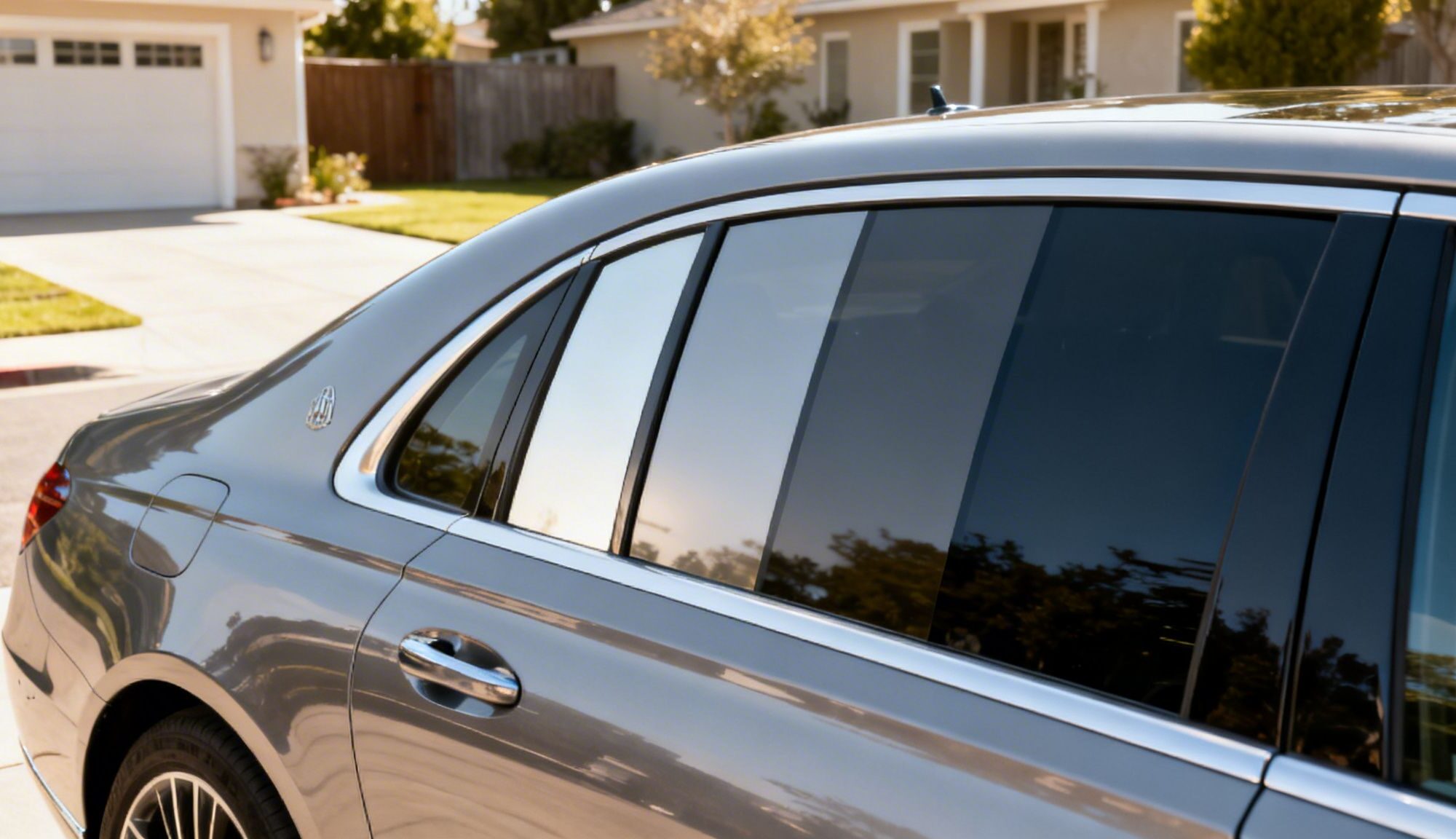
Picking the right window tint for your car is about way more than just choosing a dark shade. It's a performance upgrade. The main types of tint for cars—from basic dyed films to advanced carbon and premium ceramic options—all offer different levels of heat rejection, UV protection, and durability. These factors directly impact your comfort, your car's interior, and of course, the price.
Quickly Compare Your Car Tinting Options
Let's be honest, the world of automotive window tinting can feel a little overwhelming. You've got all these different films, technical terms, and brands to sort through. At its heart, though, window tint is a specialized film we apply to your car's glass, and it does a lot more than just look good.
Especially here in North Georgia, it’s a game-changer for your driving experience.
Professional auto tinting is all about solving real-world problems for drivers. Whether you're stuck in traffic commuting through Acworth or just running errands in Ball Ground, the right film makes every trip better. It's a smart investment that stops your car's interior from fading and cracking while protecting your skin from 99% of those damaging UV rays.
The A-B-Cs of Tinting Terms
Before we get into the different types of film, let's talk about the most important term you'll hear: VLT, or Visible Light Transmission.
It sounds technical, but it’s simple. VLT is just the percentage of visible light that can pass through your tinted window. A lower VLT number means a darker tint. So, a 5% VLT is what most people call "limo tint"—it's very dark. A 50% VLT, on the other hand, is much lighter and easier to see through.
Getting the VLT right is key to making sure your tint is both effective and legal here in Georgia. Our team in Acworth and Ball Ground knows the local laws inside and out, and we'll make sure your car, truck, or SUV is 100% compliant.
Why the Right Automotive Tint Matters So Much
Choosing the best film really comes down to matching the technology to what you need most. Is your top priority blocking that intense summer heat? Or are you more concerned with privacy? Each type of car tint film delivers a unique blend of benefits.
Here’s a quick look at what you get with a professional car tint job:
- Serious Heat Reduction: Quality films block a huge amount of solar energy, keeping your car's cabin noticeably cooler.
- Total UV Protection: Every professional-grade tint we install blocks over 99% of harmful UV rays. This protects you and your vehicle’s upholstery.
- Less Glare, Safer Driving: Tint cuts down on that blinding glare from the sun and from other cars' headlights, making your drive safer and much less stressful on your eyes.
- Better Privacy & Security: Darker tints give you and your passengers privacy, and they also help keep valuables out of sight from prying eyes.
To give you a fast, scannable summary, we put together this table comparing the main automotive tint technologies. Use it to see the fundamental differences in heat rejection, durability, and cost between each option.
Automotive Window Tint At a Glance
| Tint Type | Heat Rejection | UV Protection | Clarity & Glare Reduction | Signal Interference | Average Cost |
|---|---|---|---|---|---|
| Dyed | Low | Good (99%+) | Good | None | $ |
| Metalized | Good | Excellent (99%+) | Good | High (Can block GPS/radio) | $$ |
| Hybrid | Good | Excellent (99%+) | Good | Low | $$ |
| Carbon | Better | Excellent (99%+) | Very Good | None | $$$ |
| Ceramic | Best | Excellent (99%+) | Excellent | None | $$$$ |
This table shows how each film stacks up on the most important metrics. As you can see, you often get what you pay for, with options like ceramic providing the best all-around performance without any of the drawbacks of older technologies.
From foundational films to premium ceramic window tint, our goal is to give you a clear path to the perfect solution for your ride. This guide will walk you through each one so you can make a choice you'll be happy with for years to come.
Exploring Foundational Automotive Tint Films
Before we dive into the latest and greatest in window film, it’s worth looking back at the classics. To really understand today's advanced tints, you have to know where it all started. These foundational films—dyed, metalized, and hybrid—were the staples of the auto tinting industry for years and paved the way for the technology we use now.

Dyed Window Tint: The Original Aesthetic Enhancer
Dyed window tint is the original and most budget-friendly way to tint your car or truck. The best way to think about it is like a simple pair of sunglasses for your windows. It’s created by infusing a layer of dye into the film, which is what absorbs sunlight and gives your glass that dark, sleek appearance.
The main job of a dyed film is providing privacy and cutting down on that annoying glare. While it does block a little heat by absorbing solar energy, it's pretty modest compared to newer technologies. It’ll definitely be cooler than having no tint at all, but it can’t compete with films designed specifically for heat rejection.
Key characteristics of dyed film include:
- Affordable Cost: It's the most economical entry point for professional automotive window tinting.
- Privacy and Style: Gives you that classic dark, non-reflective finish that looks great on any vehicle.
- No Signal Interference: Since there are no metals in the film, it won’t mess with your cell phone, GPS, or radio reception.
- Good UV Protection: Just like all the professional films we install, it blocks over 99% of damaging UV rays.
The biggest downside to dyed tint is its lifespan. After a few years in the sun, the dye starts to break down. You've probably seen it before—that telltale purple, bubbly look on older cars. It’s a great starting option, but for long-term color stability and performance, most drivers eventually move on.
Metalized Window Tint: A Reflective Barrier
Metalized tint was the next big step up in performance. This film gets its power from microscopic metallic particles—think aluminum, nickel, or copper—that are embedded right into the film’s layers. These particles turn your car windows into a reflective shield against the sun.
Instead of just absorbing heat like a dyed film, metalized tint bounces solar energy away from your car. This makes a huge difference in heat rejection, keeping your interior much more comfortable on those scorching Georgia days. It also gives the windows a slightly shiny or reflective look, which some people like.
But there’s one major catch that makes metalized film a tough sell for most modern cars.
Critical Drawback: Signal Interference
The same metal particles that reflect heat so well can also block electronic signals from getting in or out of your car. This can cause major headaches with your cell service, GPS navigation, and even the tire pressure monitoring system (TPMS) in many vehicles.
Because of this, while metalized film is a good performer, we almost always steer our Acworth and Ball Ground customers toward newer, non-metallic films that offer the same—or better—performance without the frustrating signal issues.
Hybrid Window Tint: The Best of Both Worlds
So, how do you get better performance than a dyed film without the signal problems of a metalized one? Manufacturers came up with a clever solution: hybrid window tint. Just like the name implies, it’s a combination of both technologies.
This film is built with two key layers: a dyed layer for that dark, private look, and a metalized layer for powerful heat and glare rejection. By using a much smaller amount of metal particles, it found a sweet spot, delivering strong performance with far less risk of signal interference.
Benefits of Hybrid Automotive Film:
- Balanced Performance: Offers a big upgrade in heat rejection and durability over a standard dyed film.
- Reduced Signal Issues: Drastically cuts down on the signal-blocking problems common with fully metalized tints.
- Lasting Color: The combination of layers makes the film much more stable, so it holds its color over time without fading.
For a long time, hybrid tint was the go-to choice for drivers who wanted a high-performing product without compromising their car’s connectivity. You can read more about how these different technologies stack up in our guide on window film types and their unique benefits. While it was a fantastic middle-ground solution, it has since been largely outclassed by the carbon and ceramic films we'll cover next.
Understanding Advanced Carbon and Ceramic Tints
Alright, now that we’ve covered the basics, let’s get into the good stuff. When you’re ready to move into the world of premium tint, carbon and ceramic films are where you want to be. These represent the top tier of tint technology, offering serious performance upgrades for drivers who want more than just a different look.
For anyone driving around Acworth and Ball Ground, these are the films that truly conquer the Georgia sun, delivering a cooler cabin and better protection.

Carbon Film: The Signal-Friendly Powerhouse
Carbon window tint was a huge leap forward in the industry. It solved the annoying signal interference problems that came with older metalized films while leaving dyed tints in the dust when it came to performance. The secret is the microscopic carbon particles infused directly into the film.
These particles are amazing at absorbing and blocking infrared light—that’s the wavelength that makes your car feel like an oven on a summer afternoon.
Because carbon isn’t metallic, it's completely non-conductive. This means you get fantastic heat rejection without any interference with your GPS, cell phone, or satellite radio. It’s a win-win. The result is a film with a deep, true-black matte finish that not only looks incredible but also works tirelessly to keep you comfortable. It's also built to last, resisting the fading and purpling that you see on so many older cars.
Ceramic Film: The Pinnacle of Tint Technology
When it comes to the absolute best performance money can buy, nothing touches ceramic window tint. This is the gold standard, the top of the line. It delivers maximum heat rejection, unmatched clarity, and a lifetime of durability.
So, what makes it so special?
Ceramic tint is engineered with non-conductive, non-metallic ceramic nanoparticles. These incredibly fine particles are designed to target and block specific wavelengths of light, primarily infrared (heat) and ultraviolet (UV) rays, while allowing visible light to pass through with crystal clarity.
This smart technology is what separates it from all other types of tint for cars. A ceramic film can block a massive amount of heat without having to be limo-dark, giving you the perfect balance of comfort and visibility. It’s the ideal choice for any driver, but it’s a game-changer for us here in North Georgia who need serious relief from the heat without sacrificing a clear view.
Since its debut, premium nano-ceramic tint has completely transformed the automotive market. It blocks 60% more heat and 99.9% of UV rays compared to older dyed films. In hot climates like Georgia, its market share is projected to jump by 35% by 2026 as more people discover the benefits.
Plus, with 65% of premium auto tint installations in North Georgia now being ceramic (according to 2025 reports), it's clear people love it. This film rejects up to 94% of infrared heat, which can drop your car's interior temperature by a staggering 25-35°F. That means less strain on your AC and more money in your pocket.
Comparing Carbon and Ceramic Performance
While both are fantastic, high-end car tint film options, ceramic does have a clear edge. Think of carbon tint as an incredible all-around performer. It gives you great heat rejection and a sleek, modern look. Ceramic tint just takes everything a step further, especially when it comes to blocking heat.
Here’s a simple breakdown:
- Heat Rejection: Both are great, but ceramic is the undisputed champion. It blocks more infrared heat, keeping your car significantly cooler.
- Clarity: Ceramic films offer the absolute best optical clarity available. No haze, no distortion, just a perfectly clear view.
- UV Protection: It’s a tie here. Both films block over 99% of damaging UV rays, protecting your skin and preventing your car's interior from fading and cracking.
- Durability: Both are engineered to last. They won't fade, bubble, or turn purple for the entire life of your vehicle.
- Signal Friendliness: Another tie. Both are 100% metal-free, guaranteeing zero interference with your electronics.
For a deeper dive to help you make the final call, be sure to check out our detailed guide on carbon vs. ceramic tints.
Ultimately, the choice comes down to your personal priorities and budget. But if you’re looking for the absolute best protection and comfort available, a professional ceramic tint installation is the answer.
Picking a Shade: Understanding Tint Percentages and Georgia Laws
Once you’ve landed on the right type of window film, the next question is always the same: "How dark should I go?" This is where you'll hear us talk about numbers like 5%, 20%, or 35%.
These percentages refer to the film's Visible Light Transmission (or VLT). Simply put, it’s the amount of visible light the film allows to pass through your window. A lower number means a darker tint. Getting this right is key to nailing the look you want while staying on the right side of Georgia law.
What Do Different Tint Percentages Look Like?
Every shade offers a unique mix of privacy, style, and outward visibility. Choosing the right one really comes down to what you're trying to accomplish with your tint.
- 5% VLT (Limo Tint): This is as dark as it gets, offering total privacy. During the day, it's virtually impossible to see inside the car. The trade-off is significantly reduced visibility at night, which is why it's illegal for front side windows here in Georgia.
- 20% VLT: A very popular choice, especially for the back windows of SUVs and trucks. It provides excellent privacy and gives the vehicle a sleek, uniform appearance when you pair it with a lighter shade on the front windows.
- 35% VLT: This is the go-to shade for countless drivers across the country. It delivers a sharp, classy tint and a noticeable boost in privacy without being so dark that it compromises visibility, day or night.
In the North Georgia area, 35% VLT film is one of our most requested shades. It strikes that perfect balance between privacy, style, and heat reduction, which is a huge deal for daily drivers in Georgia's 90°F+ summers. A quality film at this level can cut down interior temps by a whopping 30-40% compared to untreated glass, giving your AC a much-needed break. It's no surprise that a 2025 survey of tint professionals found 35% was the single most installed shade, accounting for 45% of all auto tint jobs in the Southeast.
Staying Legal: A Guide to Georgia’s Automotive Tint Laws
Navigating window tint laws can feel a little tricky, but it's crucial for avoiding a ticket. Here at The Tint Guy, our installers are experts in Georgia’s specific regulations, so we guarantee every single car we tint is 100% compliant.
The rules aren't one-size-fits-all; they change slightly depending on whether you drive a sedan or a larger vehicle.
An Important Note from the Pros: Georgia law actually allows for a 3% variance on VLT readings. That means if the legal limit is 32%, an officer's meter can read as low as 29% and you'll still be in the clear. We know our films inside and out and install them to account for this tolerance.
For our customers in Cherokee County, Cobb County, and beyond, here’s exactly what you need to know to stay legal.
Georgia Automotive Window Tint Laws At a Glance for 2026
We put together this simple table to give you a clear breakdown of the current legal VLT limits for different vehicles in Georgia. Use this as your guide to make sure your car, truck, or SUV stays compliant.
| Window Location | Legal VLT for Sedans | Legal VLT for SUVs/Trucks/Vans | Reflectivity Limit |
|---|---|---|---|
| Front Side Windows | 32% VLT | 32% VLT | 20% |
| Rear Side Windows | 32% VLT | Any Darkness | 20% |
| Rear Windshield | 32% VLT | Any Darkness | 20% |
| Front Windshield | Non-reflective tint allowed above the AS-1 line | Non-reflective tint allowed above the AS-1 line | N/A |
As you can see, if you drive an SUV, truck, or van, you have a lot more freedom with the back half of your vehicle. Sedans, on the other hand, need to stick to 32% VLT or lighter on all side and rear windows. Our team is ready to help you find a film that looks fantastic while keeping you perfectly within these legal lines.
How to Choose the Right Tint for Your Car
Instead of getting bogged down in technical specs, the easiest way to pick the right tint is to think about how you actually use your car every day. Your daily drive, your passengers, and what you value most will point you directly to the perfect film.
Here in North Georgia, we see a few common types of drivers. See which one sounds like you.
The Daily Commuter
Are you one of the thousands battling traffic on I-575 or Highway 92 every morning? For commuters in places like Acworth, the biggest headaches are blinding sun glare and climbing into a scorching hot car after it’s baked in a parking lot all day. Your goal is simple: make the drive more comfortable and a lot less squinty.
- Top Recommendation: Carbon or Ceramic Tint (35% VLT)
- Why It Works: Both types of tint for cars are fantastic at rejecting heat without messing with your phone or radio signals. A 35% VLT is the sweet spot for cutting that harsh glare while keeping your view of the road crystal clear. Best of all, it's perfectly legal for all windows on any car, truck, or SUV in Georgia.
The Family Guardian
If your vehicle is the family taxi for school drop-offs or weekend trips around Ball Ground, your priorities are totally different. You’re thinking about protecting your passengers, especially the little ones in the back, from nasty UV rays and keeping the cabin cool and private.
- Top Recommendation: Ceramic Tint (20%–35% VLT)
- Why It Works: Ceramic film is the undisputed champ for infrared heat rejection, which means the back seat stays comfortable even on long, sunny drives. More importantly, it blocks 99.9% of UV rays, protecting your family’s skin and stopping your interior from fading and cracking. A darker 20% VLT on the rear windows of an SUV adds excellent privacy for your passengers and keeps valuables out of sight.
This is an incredibly popular and smart setup. In fact, we've seen a huge rise in customers choosing 20% VLT tint for the back half of their SUVs and trucks. It offers maximum privacy while staying compliant with the law in 80% of states, Georgia included. By letting just 20% of light in, it can block up to 60% more heat than lighter films and provides that critical 99% UV protection. We even see statistics showing it helps lower vehicle break-ins by 35% just by hiding what's inside—a major plus for drivers in Acworth and Ball Ground. You can find some valuable insights on tint statistics that break down how different shades impact privacy and heat.
The Vehicle Enthusiast
For the true car enthusiast in North Georgia, a car is way more than just A-to-B transport—it’s a passion project. You're not willing to compromise; you want elite performance and a flawless, custom look that completes your vehicle's style.
- Top Recommendation: Premium Ceramic Tint (Any Legal VLT)
- Why It Works: Nothing beats a top-tier ceramic tint. It delivers the absolute best heat rejection, unparalleled optical clarity, and a deep, rich color that will never fade. It's an investment that will look perfect for the entire life of your car.
If you're still weighing your options, checking out a guide on the best window tint for cars can really help break down the differences between films like ceramic, carbon, and dyed.
This infographic gives you a quick visual guide to navigating Georgia's specific tint laws.

As you can see, the rules change depending on your vehicle. Sedans are capped at a 32% VLT on all windows, but if you drive an SUV or truck, you have the freedom to go much darker on all the windows behind the driver.
Why Professional Automotive Tint Installation Is Essential
You can pick the absolute best film on the market—whether it’s a high-performance ceramic or a premium carbon—but that film is only as good as its installation. The actual application is what brings out your tint’s true performance and ensures it looks incredible for years to come. While DIY kits might look like a tempting way to save a few bucks, we've seen firsthand that a professional touch is non-negotiable for a flawless, long-lasting finish.

Time and time again, we have customers come to us to fix a DIY job gone wrong. Saving a little money upfront almost always leads to a ton of frustration and a look that instantly cheapens a vehicle's appearance.
The Pitfalls of DIY Car Tinting
Without the right tools, a controlled environment, and years of practice, even the most expensive film is destined to fail. The issues we see from DIY attempts are always the same, and they’re impossible to ignore.
- Ugly Bubbling and Peeling: This is the classic sign of a bad tint job. Trapped air and water create ugly pockets under the film, which bubble up in the Georgia sun and cause the edges to lift and peel away.
- Contamination: Our shops are kept meticulously clean for a reason. Even the tiniest specks of dust, lint, or hair can get caught between the tint and the glass, creating permanent, noticeable imperfections.
- Creases and Wrinkles: Window tint film is a large, delicate, and incredibly sticky sheet. One wrong move and you get a crease or wrinkle that’s impossible to smooth out.
- Improper Fit: Cutting film by hand to match the exact curves of a modern car window is a recipe for disaster. This almost always results in sloppy, uneven gaps along the edges.
A professional installation isn't just about looks; it’s about performance. A flawless application ensures your ceramic or carbon tint delivers the maximum heat rejection and UV protection it was designed for.
The Tin Guy’s Meticulous Installation Process
Here at The Tint Guy, we treat window tinting like a craft. We’ve spent years perfecting our process to deliver a factory-quality finish for every single one of our clients in Acworth and Ball Ground.
Our method guarantees perfection:
- Precision Computer Cutting: We don’t use razor blades on your glass. Instead, we use advanced software and a plotter to cut the film to the exact digital template of your vehicle’s make and model, ensuring a perfect, micro-edge fit.
- Controlled Environment: All of our work happens inside our clean, brightly lit tint bays. This dust-free zone is absolutely critical for preventing the contamination that ruins so many DIY jobs.
- Expert Application: Our highly trained technicians use specialized tools and proven techniques to lay the film smoothly, squeegeeing out every last drop of moisture to create a seamless bond with the glass.
- Lifetime Warranty: We stand behind our work, period. Our professional automotive tint installation is backed by a lifetime warranty that covers any bubbling, peeling, or fading.
Don’t risk your vehicle’s appearance and your own sanity on a weekend DIY project. Protect your investment and make sure you get every ounce of performance you paid for. Contact The Tint Guy for a free consultation at our Acworth or Ball Ground locations today.
Frequently Asked Questions About Car Tinting
When you're looking at all the different types of tint for cars, it’s natural for a few questions to pop up. We get it. Over the years, we've heard just about everything from our customers across North Georgia.
To help you feel confident in your choice, we’ve put together answers to some of the most common questions we hear every day in our shop.
How Long Does Automotive Window Tint Last?
The honest answer? It really comes down to the quality of the film you choose and who installs it. Basic, entry-level dyed tints might look good for a while, but you can expect them to start fading or turning that dreaded purple in about 5 years.
Higher-quality carbon films, on the other hand, are a big step up. They’re built to last well over 10 years without losing their color or heat-blocking abilities. But if you're looking for the best, premium ceramic tints are in a league of their own. They're designed to outlast your vehicle without ever fading, bubbling, or peeling. It's why we have no problem backing our ceramic tint jobs in Acworth and Ball Ground with a lifetime warranty.
How Much Does It Cost to Tint a Car in Georgia?
The cost of automotive window tinting really hinges on three things: the type of vehicle you have (a coupe is different from an SUV), how many windows you’re tinting, and—most importantly—the kind of film you select.
A standard dyed film will always be the most budget-friendly way to get that tinted look and some privacy. A high-performance ceramic film, however, is more of an investment in long-term comfort, UV protection for your interior, and serious heat rejection. The best way to get a solid number is to reach out for a quick, no-pressure quote tailored specifically to your car and what you're looking for.
Will Ceramic Tint Block My Phone or GPS Signal?
Nope, not at all! This is actually one of the biggest reasons modern ceramic tints have become so popular. Older metallic films were infamous for causing spotty reception and messing with navigation because they contained metal particles.
Ceramic tint is completely different. It’s made with non-conductive nanoparticles that are amazing at rejecting heat and UV rays but are completely invisible to electronic signals. You get all the performance without ever having to worry about a dropped call or a confused GPS. It’s the perfect, hassle-free choice for today’s connected driver.
Is It a Good Idea to Install Car Tint Myself?
We see DIY tint kits on the shelves, and while it might seem like a good way to save a few bucks, we truly advise against it. Getting that flawless, bubble-free finish isn't as easy as it looks on video. It takes a super clean, dust-free space, a specific set of tools, and a ton of practice to avoid the classic DIY pitfalls like bubbling, peeling, and trapping little specks of dirt under the film.
When you have a professional handle the installation for your car or truck, you’re not just paying for a factory-perfect finish. You're also getting a comprehensive warranty that protects your investment. It saves you the headache and the extra cost of having to pay someone to remove a bad DIY job and do it all over again.
Ready to upgrade your vehicle with the perfect tint? The team at The Tint Guy is here to help you choose the ideal film and provide a flawless, professional automotive tint installation backed by a lifetime warranty.