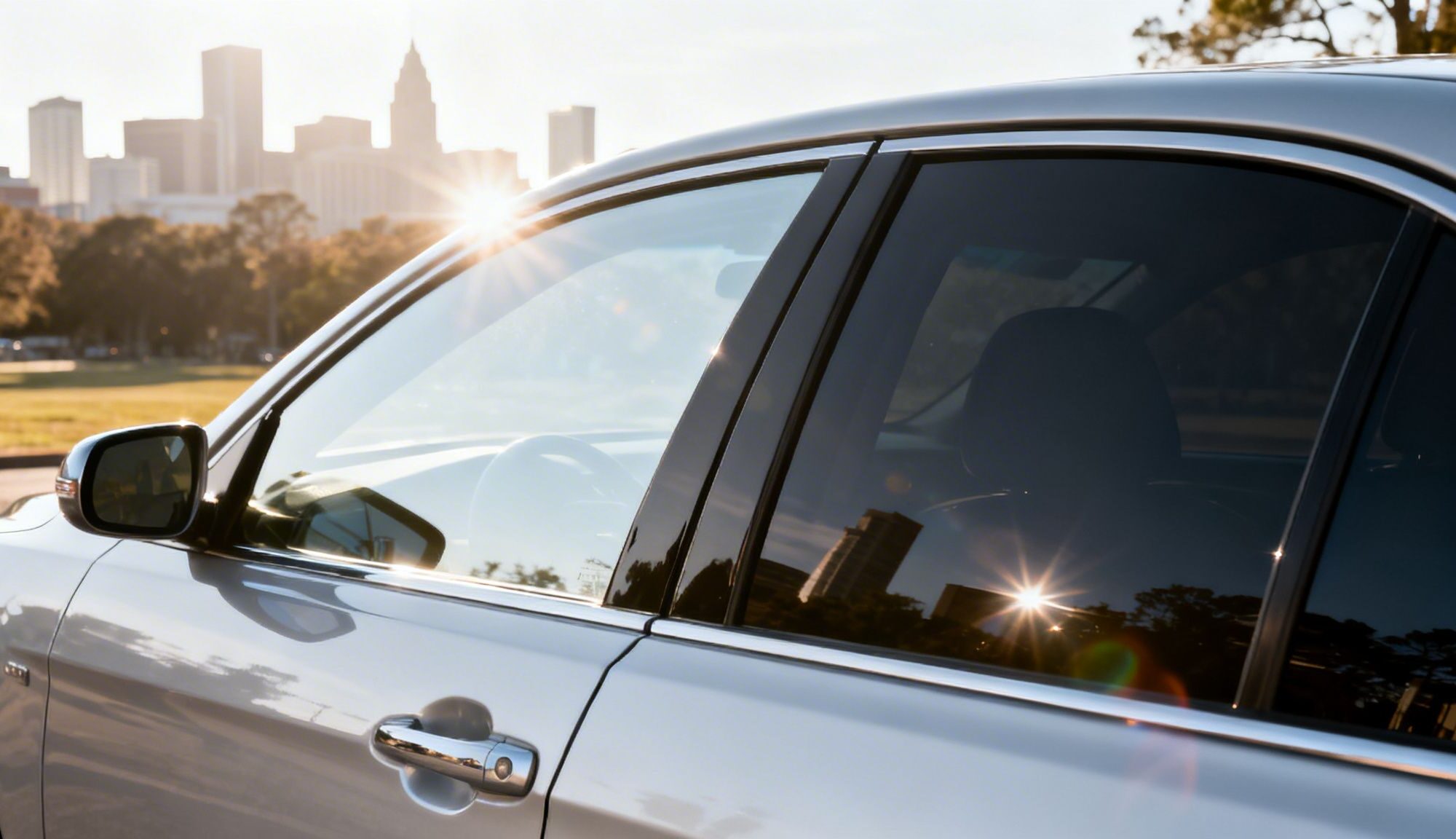
The afternoon drive home in North Metro Atlanta can make any windshield feel bigger than it is. Sun coming across the dash, glare bouncing off traffic, and a cabin that holds heat long after the A/C starts working all push the same question to the front of your mind. What tint level makes sense for your car in Georgia?
For most drivers, the answer is not just “go darker.” It is about window tint levels, how those levels affect what you see from inside the car, what other people can see from outside, and where Georgia law draws the line. If you drive through Woodstock, Alpharetta, Roswell, Canton, or Marietta every week, the right tint choice changes daily comfort in a very real way.
A lot of customers walk into the shop already knowing they want automotive window tinting, but not knowing what the numbers mean. That is normal. The useful part is learning which tint level fits your driving habits, your vehicle type, and your tolerance for glare, heat, and privacy.
Choosing the Right Tint for Your Car in Georgia
A common situation goes like this. Someone drives a sedan to work from Canton into Roswell or Alpharetta, parks outside all day, then gets back into a cabin that feels baked. Another driver has an SUV in Woodstock and wants more privacy for the rear seats without making night driving harder up front. Both need car window tint. They just do not need the same setup.

The right choice starts with two practical questions:
- How do you use the vehicle? A daily commuter, a family SUV, and a weekend truck all benefit from tint differently.
- What bothers you most? Some drivers care most about heat. Others want glare control, interior protection, or added privacy.
What most Georgia drivers are really deciding
Tint decisions usually come down to four trade-offs:
- Visibility: Lighter films keep the cabin brighter and feel easier at night.
- Privacy: Darker films make it harder to see inside the vehicle.
- Comfort: Film performance matters as much as shade, especially in summer.
- Legal compliance: A tint that looks good is still the wrong tint if it creates a problem during a traffic stop.
Practical takeaway: If you want tint that still feels easy to live with every day, start by thinking about front window visibility first. Then build the rest of the setup around that.
Why the numbers matter
When customers say “I want medium tint” or “I want dark but not too dark,” they are really talking about Visible Light Transmission, or VLT. That number is what separates a film that feels subtle from one that changes the look of the whole vehicle.
Once you understand VLT, the rest gets easier. You can compare tint options clearly, ask better questions at the shop, and choose something that fits both your car and Georgia roads.
What Is VLT and How Is It Measured
You see this come up all the time in the shop. A driver in Woodstock or Alpharetta asks for “medium” tint, but what they really need is a number they can judge against Georgia law and their daily commute. That number is VLT.
VLT means Visible Light Transmission. It is the percentage of visible light that passes through the completed window. Higher VLT looks lighter. Lower VLT looks darker.

A few common examples make it clear:
- 70% VLT: Very light, close to clear
- 50% VLT: Light tint
- 35% VLT: Moderate shade
- 20% VLT: Dark
- 5% VLT: Extremely dark, often called limo tint
The part that confuses drivers is simple. Lower number equals darker film.
How tint is measured on a vehicle
Installers and law enforcement do not judge tint by appearance alone. They use a VLT meter that reads how much visible light passes through the glass and film together.
That combined reading matters in Georgia. Your car already has factory glass, and that glass is rarely perfectly clear. Once film goes on, the final VLT is based on the whole window, not just the film box you picked at the counter.
Factory glass changes the final result
Factory glass changes the final result. Many DIY choices go sideways because of this effect. A film that sounds light can still finish darker than expected once it is installed on your vehicle.
For example, if the factory glass reads around 80% VLT and the film is 50% VLT, the finished number ends up lower than 50% because both layers affect light transmission. That is why experienced installers meter the glass first, especially on vehicles where the rear glass already has factory shading.
Shop advice: Rear windows on trucks and SUVs cause the most confusion. Judge the finished reading on the glass, not the label on the film roll.
Why drivers in North Metro Atlanta need to understand this
In Georgia, the legal limit on front side windows is tight enough that small differences matter. A setup that looks perfectly reasonable in a parking lot can still meter darker than expected during a traffic stop.
It also affects how the car feels every day. A legal, lighter ceramic film can cut heat and glare far better than older dyed film without making night driving in Roswell, Canton, or Milton feel harder than it needs to. For many commuters, that is the smarter setup.
If you want a clearer side-by-side breakdown before choosing a shade, this guide on percent window tint options is a useful reference.
A Practical Guide to Common Car Tint Percentages
Pull out of a shaded subdivision in Woodstock at 7:00 a.m., head toward Alpharetta, and tint choice starts to matter fast. The same shade that looks perfect at noon can feel too dark on a rainy evening or completely fine once you choose a higher-performance ceramic film. That is why percent alone never tells the whole story. The right shade has to fit Georgia law, your vehicle, and the hours you drive.
How common tint levels feel in real driving
| Automotive Window Tint Level Comparison | Appearance | Primary Benefit | Best For |
|---|---|---|---|
| 70% VLT | Nearly clear | Heat and glare reduction with very little visual change | Drivers who want a legal, subtle result on front windows |
| 50% VLT | Light tint | Good everyday comfort and easy outward visibility | Commuters, night drivers, conservative setups |
| 35% VLT | Moderate shade | Noticeable style, glare control, and some privacy | Drivers who want a darker look without going very dark |
| 20% VLT | Dark | Privacy and stronger sun shading | Rear windows on many cars, trucks, and SUVs |
| 5% VLT | Very dark | Maximum privacy and the darkest appearance | Show vehicles or drivers focused on appearance over night visibility |
70 percent VLT
70% is the lightest option that still gives many drivers a noticeable improvement in comfort. From outside, it looks close to stock. From inside, the cabin feels less harsh in full sun, especially on long afternoon drives across North Metro Atlanta.
For Georgia drivers trying to stay close to the legal line on front windows, this is often a smart place to start. Pair it with a quality ceramic film and you can get meaningful heat rejection without making the glass look obviously dark.
50 percent VLT
50% is one of the safest daily-driver choices if you want tint you rarely have to think about. It softens glare, keeps the interior more comfortable, and still feels open at night.
I recommend this range a lot for drivers who leave early, get home after sunset, or spend time on darker roads outside the busier parts of Roswell, Canton, or Milton. It gives the car a cleaner finished look without creating the visibility complaints that come with darker film.
35 percent VLT
35% is the shade many drivers ask for first because it looks tinted in a way people can see. On the road, it gives a stronger appearance than 50% and does a better job cutting glare during bright Georgia afternoons.
It is also where trade-offs start to become more personal. Some drivers love 35% right away. Others, especially those with longer night commutes or weaker factory headlights, decide it is darker than they want on the front doors. On many vehicles, it works best as part of a balanced setup rather than a one-shade-for-every-window approach. A general overview from CarParts’ legal window tint percentage guide can help if you want to compare how these percentages are commonly described.
20 percent VLT
20% moves firmly into privacy-first territory. In daylight, it is much harder to see through from the outside, which is why it is a common choice for rear glass on family SUVs, trucks, and vehicles carrying tools or gear.
From the driver’s seat, daytime use is usually fine. At night, the difference is obvious. Backing into a dim driveway, checking side visibility in heavy rain, or driving on unlit roads takes more attention with 20% than it does with 35% or 50%.
Shop advice: If you want the rear of the vehicle to feel private and cooler without making the front doors harder to live with, a lighter front and darker rear is usually the cleanest setup.
5 percent VLT
5% is limo tint. It gives the darkest look and the most privacy, but it also creates the biggest visibility penalty.
This is the shade people notice first on social media and regret first in real use. If your vehicle spends time in parking decks, rural roads, or neighborhoods with limited street lighting, 5% can become a daily annoyance instead of an upgrade.
What usually works best for daily drivers
Around Woodstock, Alpharetta, and the rest of North Metro Atlanta, the setups that age well are usually the ones that balance appearance, comfort, and legal reality.
- 70% or 50% on front windows: Better for drivers who want a legal-looking, easy-to-see-through result
- 35% for a darker appearance: Popular with drivers who want more style and glare control, but it needs careful planning on front glass in Georgia
- 20% on rear windows: A common choice for added privacy behind the driver
- Ceramic film at lighter shades: Often the better value for Georgia heat because performance does not have to depend on going very dark
The best tint percentage is the one that still feels right in six months, during a summer commute, a winter rainstorm, and a late drive home. In Georgia, that usually means choosing shade with a meter and your real driving habits in mind, not just the darkest sample on the wall.
Georgia Window Tint Laws A Must-Know for Drivers
A lot of North Metro Atlanta drivers find out Georgia tint law the hard way. The car looks clean in the shop or driveway, then a traffic stop, a meter check, or a second look from an officer turns that style choice into a fix-it problem.

Georgia sets a 32% VLT limit for passenger cars, and that number shapes almost every smart tint decision on a daily driver. In real shop terms, the front side windows are where people get into trouble, especially if they want a darker look for commutes through Woodstock, Alpharetta, Roswell, or Marietta. The goal is not just choosing a film with the right label. The finished glass has to meter legally once the film and factory glass are working together.
That last part matters more than many drivers expect. Factory glass already blocks some light, so the final reading can come in darker than the film box suggests. A setup that sounds safe on paper can still miss the mark once it is installed.
What Georgia drivers need to keep in mind
For most passenger vehicles, the front doors need the closest attention because they are the windows officers notice first and meter first. Rear glass can follow different rules depending on the vehicle, but that does not mean every darker setup is automatically a good idea for visibility or everyday use.
A legal plan usually includes all of these checks:
- Front side windows: Need to finish within Georgia's legal VLT range
- Rear side and back glass: Rules can vary by vehicle type, so the same shade does not fit every car, truck, or SUV
- Windshield: Limited to a legal strip at the top, not a full dark windshield
- Final meter reading: The installed glass matters more than the film label alone
The windshield rule is a separate decision
Georgia allows a 6-inch windshield strip. That can help with overhead sun on roads like Highway 92 or GA-400, especially during early morning and late afternoon commutes. It does not give you room to darken the full windshield and stay within the law.
Drivers often group windshield tint into the same decision as side glass. In practice, it needs its own conversation because the visibility trade-off is different, especially in rain, at night, and on poorly lit roads.
The following video overview helps visualize how tint enforcement and visibility concerns come into play:
Why professional measurement matters
I see this in the shop all the time. A vehicle can look legal and still fail a meter check.
That is why the process should start with testing the existing glass, then matching the film to the result you need. For drivers who want the rules laid out clearly before they book, this guide to Georgia window tinting law is a useful reference.
Key point: A clean installation still creates a problem if the finished windows fall outside Georgia law.
Setups that cause repeat problems
Some choices create the same headaches over and over:
- Going too dark on the front doors: This is the fastest way to turn a good-looking install into a compliance issue
- Using one shade on every piece of glass: It ignores how front visibility, rear privacy, and vehicle type differ
- Skipping the final meter check: This leaves the finished VLT to chance
- Picking darkness instead of performance: In Georgia heat, a lighter ceramic film often makes more sense than a darker basic film
For drivers around Woodstock, Kennesaw, Canton, and Alpharetta, the best result usually comes from building the setup around the law first, then improving comfort and privacy with the right film type. That is how you end up with tint that still works on a hot July commute, a rainy winter evening, and a routine traffic stop.
Beyond Darkness Performance Differences in Auto Tint Films
Darker does not automatically mean cooler. That idea stays around because it sounds logical. In practice, film technology matters more.
A standard dark film may change the look of the car, but a lighter high-performance film can do a better job where drivers feel its effects, such as heat load, glare management, and cabin comfort.

Why ceramic changes the conversation
Ceramic window tint uses nano-ceramic particles to reject heat-producing infrared energy. According to Rapid Window Tinting’s VLT shade guide, ceramic films can deliver 90% to 98% IR rejection, and a 35% VLT ceramic tint can reject up to 83% to 98% of IR heat while reducing cabin temperatures by up to 20°F.
That matters because many Georgia drivers assume they need a much darker shade to feel a real difference. Often they do not. They need a better film.
Where standard films fall short
A basic dyed film can improve appearance and add some shading. It does not always hold up the same way in heat-heavy conditions, and it does not separate darkness from performance the way ceramic does.
That is the practical difference customers notice:
- Standard film: More about appearance and visible shade
- Ceramic film: More about heat control without relying only on darkness
For a side-by-side look at film types, this comparison of carbon vs ceramic tints is useful when you are choosing between price point and performance.
Installer perspective: If a driver says, “I want it cooler, but I do not want the front windows too dark,” ceramic is usually the conversation worth having.
Performance matters more than the parking-lot look
The best tint setup is the one that still feels right after a long drive on a bright day. That is where ceramic earns its place. You can stay in a lighter, more comfortable shade range and still get serious heat rejection.
For drivers thinking about sun protection more broadly, UV protection window treatments offer a helpful overview of how UV-blocking materials reduce fading and exposure. The context is broader than cars, but the core idea carries over. Blocking sunlight is not only about darkness.
That is why modern ceramic window tint has become such a practical answer for Georgia vehicles. It lets drivers focus on daily use, not just appearance.
How to Choose the Right Tint for Your Car Truck or SUV
Once you narrow the legal range and decide whether performance matters more than just looks, the decision gets simpler. The right setup usually shows up quickly when you match the tint to the vehicle and the driver.
The daily commuter
This driver spends a lot of time on GA-400, I-575, or surface roads through Alpharetta and Roswell. Visibility matters every morning and every evening.
A lighter ceramic setup usually makes the most sense here. The goal is less glare and a cooler cabin without making the front side windows feel too shaded after dark. A moderate film level keeps the car comfortable without becoming a chore to live with.
The family SUV
Rear-seat comfort matters more here. Kids, passengers, bags, and long sunny drives all push privacy and cabin comfort higher on the list.
A mixed setup is often the practical answer. Keep the front glass lighter for visibility. Go darker on the rear for privacy. On SUVs and trucks, that usually creates the best balance between driver confidence and passenger comfort.
The vehicle enthusiast
This driver cares about the finished look. They notice details. They also tend to care about film quality, optical clarity, and how the shade works with the paint color and interior.
For that customer, a moderate ceramic tint is usually the cleanest answer. It gives the vehicle a sharper look, adds real performance, and avoids the common mistake of choosing an overly dark front setup that looks good in photos but feels limiting on the road.
A simple way to decide
Ask yourself these three questions:
Do you drive a lot at night?
If yes, stay more conservative on the front side windows.Do you want privacy mainly for rear passengers or cargo?
If yes, a mixed VLT approach usually works better than one shade all around.Are you buying tint mostly for heat reduction?
If yes, prioritize film type, especially ceramic, over choosing a darker percentage.
For drivers comparing options in Woodstock, Canton, or Johns Creek, the best automotive window tinting choice is usually the one that fits your routine so naturally you stop noticing it after a week.
Your Professional Auto Tint Installation in North Atlanta
A good tint job should look like it belongs on the car. Clean edges, no debris trapped in the film, no peeling corners, no distracting haze. That is what separates professional automotive tint installation from work that starts failing early.
For cars, trucks, and SUVs in North Metro Atlanta, the process should be straightforward:
- Vehicle evaluation: Check the glass, the factory tint level, and the customer’s goals
- Film selection: Match the shade and film type to legal limits and daily use
- Precision installation: Cut and fit the film correctly for each piece of glass
- Final review: Inspect for finish quality and explain aftercare
The Tint Guy provides automotive window tinting for vehicles in North Atlanta, including options such as ceramic window tint and other auto tint film choices, along with guidance on selecting tint darkness based on the vehicle and the driver’s goals.
What customers should expect from a real install
Professional work should include a controlled install environment and a clear explanation of what was applied. Customers should leave knowing what tint level they chose, how to care for it, and what to expect during curing.
If you are shopping for professional auto tint service in Woodstock, Acworth, Marietta, or nearby areas, ask direct questions. What film types are available? How is legal compliance checked? What warranty applies to the film and workmanship? Clear answers usually tell you a lot.
Schedule your tint appointment, call for a free tint consultation, or visit the shop to compare shades on actual glass before making a decision.
Frequently Asked Questions About Car Window Tint
Does darker tint always block more heat
No. Film technology matters more than most drivers expect. A lighter ceramic film can outperform a darker standard film when the goal is heat rejection and comfort. That is why many drivers end up happier with a legal, lighter ceramic option than with a much darker basic film.
What tint level do most drivers choose
The most common choices are usually the middle range, not the extremes. Many drivers prefer a setup that improves comfort and appearance without making night driving harder. In practice, that usually means lighter to moderate front glass and, depending on the vehicle, a darker rear section.
Can I put the same tint on every window
You can, but that does not mean you should. Cars, trucks, and SUVs often work better with a mixed setup. Front windows need to support visibility and legal compliance. Rear windows often carry the privacy role. Treating the whole vehicle the same can create compromises you did not need.
How long does new tint take to settle
New tint usually goes through a curing period. During that time, the film can look slightly hazy or show minor moisture pockets before it fully settles. That is normal. The key is following the care instructions from the installer and giving the film time to cure.
How should I care for fresh tint
Keep it simple:
- Leave the windows up: Do not start testing them right away.
- Use gentle cleaning tools: A soft microfiber cloth is the safe choice.
- Avoid harsh cleaners: Stick with products that are safe for automotive film.
- Give it time: Some visual changes right after installation are part of the normal curing process.
Is ceramic worth it for daily driving in Georgia
For many drivers, yes. If your main complaints are heat, glare, and sun exposure during long commutes, ceramic makes sense because it targets performance without forcing you into an overly dark shade.
Bottom line: The best tint is the one that fits Georgia law, matches your driving habits, and gives you comfort you notice every day.
If you are ready to compare window tint levels for your car, truck, or SUV, contact The Tint Guy for an automotive tint consultation, shade guidance, and professional installation in North Metro Atlanta.