A lot of drivers around Marietta and Kennesaw end up looking into paint protection film installation after the first painful chip. It usually happens fast. A new truck gets hit on I-75, a commuter SUV picks up bug acid on the front bumper, or a sedan that still smells new comes home with peppered paint after a week of highway miles.
North Atlanta roads are hard on paint. Daily driving means loose gravel, construction debris, sand, road rash behind dump trucks, and the kind of bug buildup that starts etching if it sits. If you care about keeping a vehicle clean, sharp, and close to factory condition, that damage gets old quickly.
For most owners, this is not just cosmetic. The finish on the hood, bumper, fenders, mirror caps, rocker panels, and door edges affects how the vehicle looks every day and how it presents when it is time to trade or sell. Once the paint is chipped, touched up, or repainted, that original finish is gone.
That is why paint protection film installation earns its value. Done properly, it creates a sacrificial barrier between the road and the painted surface. Done poorly, it becomes its own problem with lift lines, trapped debris, fingers, silvering, and edges that fail too early.
A discerning owner in Cobb County or Cherokee County usually wants the same thing. Protection that is hard to notice, coverage that makes sense for how the vehicle is driven, and workmanship that holds up through Georgia heat, humidity, and routine washing.
Protecting Your Car on North Atlanta Roads
A common scenario looks like this. A driver buys a new vehicle, keeps it detailed, parks carefully, and avoids obvious abuse. Then a month later the front bumper already shows tiny impact marks, the hood has a couple of sharp chips, and the lower doors are collecting wear from daily use.
That happens because the front of the vehicle takes abuse every single drive. Highway commuting between Kennesaw, Marietta, Acworth, Woodstock, and the rest of North Metro Atlanta exposes the paint to constant contact from road grit and organic debris. A careful owner cannot control what flies off the tire of the vehicle ahead.
The damage starts in the same places
These areas usually show wear first:
- Front bumper: It catches direct impact from debris and bug splatter.
- Leading edge of the hood: On dark paint, chips stand out most in this area.
- Front fenders and mirror caps: Curved surfaces take repeated hits.
- Rocker panels: Lower body sections collect sand, grit, and splash.
- Door cups and edges: Everyday use wears these spots faster than most owners expect.
For someone driving a luxury sedan, a performance coupe, a new EV, or a family SUV, the frustration is the same. The paint can look older than the vehicle long before the mechanicals show any age.
Why owners choose film instead of waiting for damage
Most paint repairs solve one problem by creating another. Touch-up paint is visible. Repainting changes originality. Spot repair can improve appearance, but it does not stop the next chip.
Paint protection film installation is the better answer when the goal is prevention. It protects the paint before damage happens, especially on impact zones that get punished every day.
Tip: The best time to install PPF is before the damage starts, not after the hood and bumper already need cosmetic correction.
In practical terms, PPF makes the most sense for owners who plan to keep the vehicle looking right, avoid repeated paint repair, and preserve the factory finish as long as possible.
What Is Paint Protection Film and What Are The Types
Paint Protection Film, often shortened to PPF, is a transparent urethane-based film applied over painted vehicle surfaces. Many people still call it a clear bra, but modern film is far more advanced than the early versions that made that nickname popular.
Think of it as a clear armor layer. It takes the abuse that would otherwise hit the paint directly.

What the film is designed to do
A quality film is meant to absorb or deflect the routine abuse that ruins front-end paint:
- Rock chips and light impact damage
- Surface scratching from normal use
- Bug splatter and road film
- UV exposure that can age exposed finishes
- Staining from contaminants left on the surface
That is why demand has grown. The global Paint Protection Film installation services market reached USD 1.62 billion in 2024, and thermoplastic polyurethane films hold over 82% share in the U.S. because of their self-healing properties, according to this Paint Protection Film installation services market report.
The main material types
Not all film is equal. The two categories most owners will hear about are TPU and PVC.
TPU film
Thermoplastic polyurethane, or TPU, is the standard for premium automotive PPF today. It is more flexible, clearer, and more durable than older film types. It also offers the self-healing behavior customers usually want. Light surface marks can relax out when heat is applied from the sun or warm water, depending on the film system.
For owners comparing options, this is the material worth focusing on. If you want a deeper look at how this material works, thermoplastic polyurethane film is worth reviewing before you choose a package.
PVC film
PVC film exists in the market, but it is not the premium choice for most painted passenger vehicles. It can be useful in some applications, yet it does not offer the same level of flexibility and refinement that modern TPU does on complex automotive panels.
When installers talk about film quality, they are usually talking about how the material behaves on curves, how clear it stays, how it resists staining, and how it handles long-term exposure. TPU performs better where customers notice it most.
The visible finish options
PPF is not always just “clear.”
A few finish directions are common:
| Finish | What it looks like | Good fit for |
|---|---|---|
| Gloss clear | Preserves the factory shine | Most daily drivers and luxury vehicles |
| Matte or stealth | Flattens the finish for a satin look | Matte paint vehicles or style-focused builds |
| Targeted panel coverage | Protection only where damage is most common | Owners who want focused protection without full coverage |
What matters more than the brochure
The material itself is only part of the equation. Film quality matters. Pattern design matters. Panel prep matters. Install technique matters even more.
A premium film can still fail if it is stretched badly, contaminated during install, or left with weak edge work. That is why customers should judge paint protection film installation by both the product and the hands applying it.
Key takeaway: The right film should stay clear, sit flat, resist staining, and protect without making the vehicle look wrapped.
The Professional PPF Installation Process Step by Step
A clean-looking PPF job starts long before the liner comes off the film. Essential tasks involve surface prep, controlled handling, and disciplined installation. Most failures trace back to shortcuts in one of those areas.
A proper workflow is easier to understand visually:

Step one starts with cleaning, not cutting
The vehicle has to be washed and decontaminated thoroughly. Any grit, wax, adhesive residue, bug remains, or bonded fallout left on the paint can show through the film or interfere with adhesion.
If the paint has swirls, scratches, or marring, those defects remain visible under clear film. On a vehicle where appearance matters, paint correction is often part of the conversation before coverage begins.
Precision comes from templating and planning
Professional installers do not freehand every panel. Digital patterns are used to match the panel shape, reduce waste, and keep the cut path controlled.
Coverage is also planned panel by panel. Some owners want the front bumper, hood edge, mirror caps, and fenders. Others want a full front package or full body wrap. The installation strategy changes based on the design of the vehicle and where the owner wants seams and wraps hidden.
A controlled installation environment matters too. Professional PPF installation requires an application environment between 60°F and 85°F (16°C to 30°C) because temperature affects both film malleability and adhesive curing, as outlined in 3M’s paint protection film installation guideline.
Application is where skill shows up
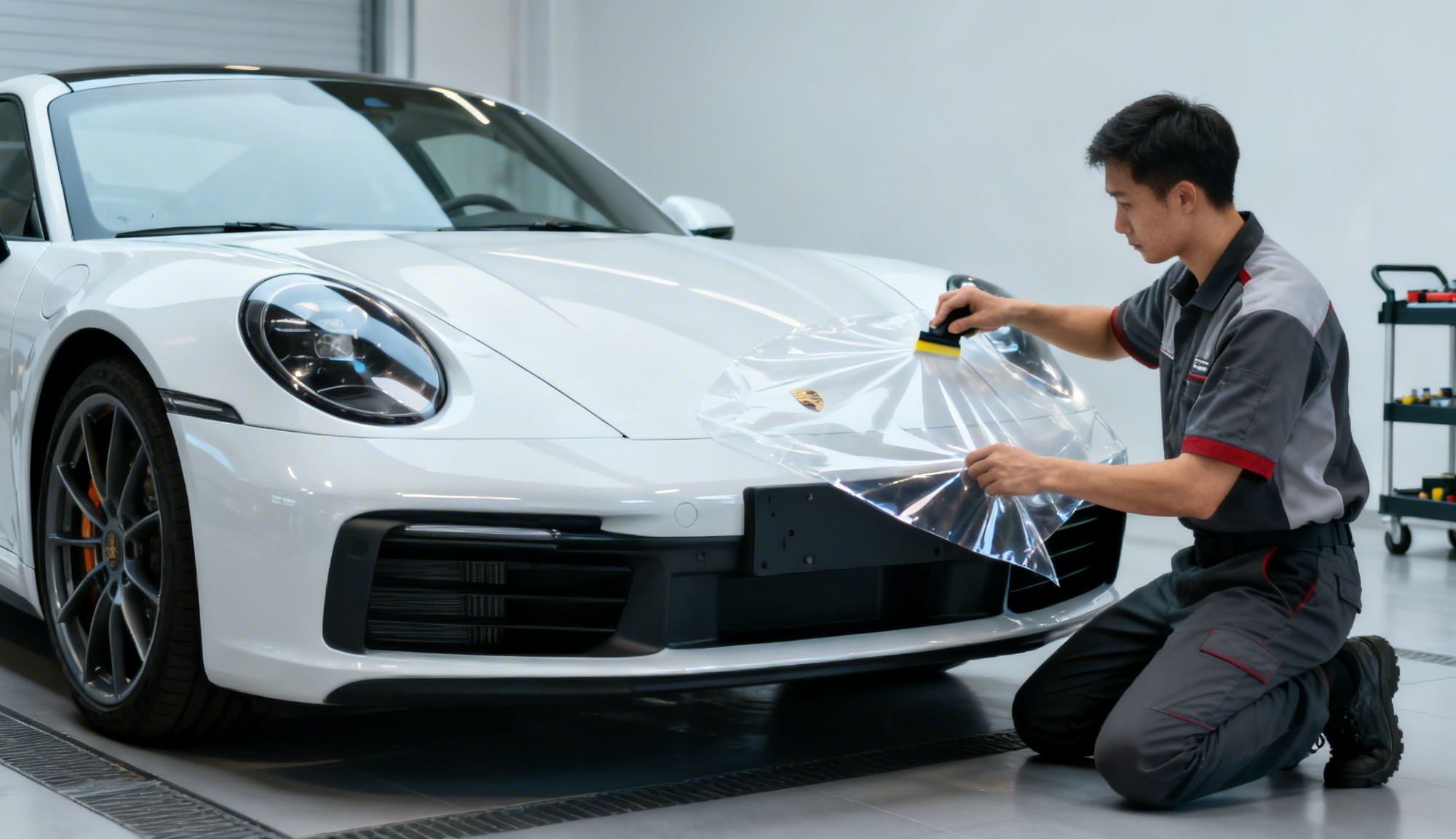
The film is positioned with a slip solution so it can be moved and aligned before final set. Then the installer works the moisture and air out with the right squeegee pressure and direction.
The difference between a clean install and a weak one usually shows up in a few places:
- Center-out squeegeeing: This pushes liquid and air toward the edges in a controlled way.
- Low, controlled heat: Needed on curves and recesses without cooking the adhesive.
- Edge management: Wrapped or finished edges need to sit flat and stay secure.
- Minimal unnecessary stretch: Film has to conform, not be forced.
Here is a close-up view of that kind of work in motion:
The final stage is curing and inspection
Once the film is set, the vehicle still needs time. Moisture has to leave. Adhesive has to stabilize. Edges need to be checked again after the panel settles.
A disciplined final inspection looks for trapped contamination, lift risk on edge wraps, alignment around badges and sensors, and any visual distortion on curves. Good paint protection film installation is quiet work. The film should not call attention to itself.
Tip: If an installer talks only about the film brand and not about prep, temperature, edge work, and cure time, ask more questions before booking.
Professional Installation vs DIY Kits The Hidden Risks
DIY kits look appealing because the film itself appears simple. It is clear, flexible, and sold as a peel-and-stick product. In practice, that simplicity is misleading.
Many individuals quickly discover that paint protection film installation is less about sticking something on a panel and more about controlling tension, moisture, alignment, surface cleanliness, and edge finishing all at once.

What usually goes wrong with DIY attempts
These are the failures that show up most often:
- Trapped debris: A single speck under clear film stands out permanently.
- Bubbles and silvering: Poor squeegee work leaves visible air and distortion.
- Misalignment: Handles, edges, sensors, and body lines expose bad fit quickly.
- Lifting edges: Weak wrap technique allows wash water and dirt to work under the film.
- Finger formation: Tension on curves creates raised stress lines that do not settle flat.
A novice usually blames the material. Most of the time, the issue is technique.
Stretch control is where amateurs lose the film
The biggest hidden risk is overstretching. On a bumper corner or tight mirror cap, a DIY installer often pulls too hard trying to force the material to lie flat. That creates tension that the adhesive cannot hold long term.
According to this guide on how expert PPF installers handle sharp edges and curves, professional installers limit film stretching to 10 to 15% of its original size. Beyond that threshold, the bond weakens and the film is more likely to yellow, distort, or peel.
That number matters because it captures the difference between professional judgment and guesswork. A skilled installer reads the panel, chooses where to anchor the film, where to warm it, where to relieve tension, and where not to stretch at all.
DIY usually costs more than it seems
A failed DIY attempt often creates more than wasted material. It can leave adhesive contamination, edge damage, and a surface that now needs extra cleanup before a proper install can begin.
There is also the appearance problem. Most owners trying to protect a nice vehicle are not looking for “good enough.” They want the film to disappear. That level of finish is hard to achieve without a controlled environment, professional tools, quality patterns, and repetition.
Key takeaway: DIY kits fail where the panel shape gets difficult. Bumpers, headlights surrounds, mirror caps, and wrapped edges separate professional work from hobby work.
For owners in Marietta or Kennesaw who care about preserving the factory finish, paying for experience is usually the less expensive decision in the long run.
PPF vs Ceramic Coating A Head-to-Head Comparison
This is one of the most common points of confusion. People often compare PPF and ceramic coating as if they do the same job. They do not.
Paint protection film is a physical layer. It is designed to absorb impact and prevent direct contact with the paint. Ceramic coating is a surface treatment. It improves slickness, gloss, washability, and resistance to certain contaminants, but it is not built to stop a rock strike the way film can.
The simplest way to think about it
If the threat is impact, use PPF.
If the goal is easier maintenance and a slick, water-repelling surface, ceramic coating helps.
If you want both, the strongest setup is often film on vulnerable painted areas and ceramic coating as a finishing layer over the protected exterior.
| Feature | Paint Protection Film (PPF) | Ceramic Coating |
|---|---|---|
| Primary role | Physical barrier over painted surfaces | Surface treatment bonded to the exterior |
| Best against | Rock chips, light abrasion, road rash | Water spotting, grime buildup, chemical exposure |
| Thickness | Noticeable protective layer | Very thin coating layer |
| Self-healing behavior | Common on premium TPU films | Not the same function |
| Impact resistance | Strong advantage | Limited |
| Visual effect | Can preserve gloss or create a matte look | Enhances slickness and shine |
| Maintenance benefit | Helps preserve paint, still needs care | Makes washing and drying easier |
| Can they work together | Yes | Yes |
Which one should a customer choose
That depends on what bothers you most.
Choose PPF if your concern is front-end damage, chips, or preserving pristine paint on a newer vehicle.
Choose ceramic coating if your concern is easier maintenance and a cleaner-looking finish between washes.
Choose both if you want a more complete protection strategy.
For a deeper side-by-side breakdown, this comparison of paint protection film vs ceramic coating is useful when you are deciding how to protect a vehicle that sees regular North Atlanta miles.
Understanding PPF Costs and Long-Term Value
Price matters, and serious customers usually want a direct answer. Professional PPF installation can range from $500 for partial coverage to over $2,000 for a full vehicle, depending on the complexity of the vehicle and the extent of coverage, according to the earlier cited market reporting on PPF installation services.
That spread exists because “PPF” is not one fixed job. A partial front package and a full-body wrap are very different in time, material use, and installation difficulty.
What drives the price up or down
The biggest cost factors are straightforward:
- Coverage area: A bumper or hood section costs less than wrapping the whole vehicle.
- Vehicle shape: Sharp curves, deep recesses, and complex bumper designs take more labor.
- Film quality: Better film behaves better and generally costs more.
- Paint condition: If the surface needs correction before install, labor increases.
- Finish expectations: Customers who want a near-invisible result are paying for more precision.
Significant value comes from what you avoid
The reason many owners justify the investment is simple. Paint damage is expensive to correct properly, and refinished panels are still not the same as preserved original paint.
PPF helps in a few ways that matter over time:
| Value area | Why it matters |
|---|---|
| Factory finish preservation | Original paint usually presents better than repaired paint |
| Reduced cosmetic repair frequency | Fewer chips and scuffs mean fewer touch-up decisions |
| Cleaner resale presentation | Buyers notice front-end condition quickly |
| Ownership satisfaction | The vehicle keeps its sharp look longer |
For owners who drive often, keep vehicles clean, or trade on appearance, the value proposition is less about the film itself and more about protecting the condition underneath.
A practical approach is to match coverage to risk. A daily commuter may only need the front impact zones. A higher-end vehicle or enthusiast car may justify broader protection.
Caring For Your PPF and Answering Common Questions
The first few days after paint protection film installation matter. Film that is applied correctly still needs time to settle, cure, and finish bonding.
That is why aftercare is part of the job, not an afterthought.

Basic aftercare that helps the film last
Use a simple checklist:
- Let it cure: Avoid unnecessary moisture exposure right after installation. As covered earlier, film needs time to stabilize after application.
- Wash gently: Hand washing is the safest approach, especially early on.
- Be careful around edges: Do not aim aggressive high-pressure water directly into wrapped or exposed edges.
- Remove contaminants promptly: Bugs, bird droppings, and sap should not sit on the surface.
- Use clean towels and mitts: Dragging grit across the surface defeats the point of protecting the paint.
What not to do
A few habits shorten the life of a nice install:
- Picking at edges
- Using harsh abrasive tools
- Letting bug remains bake onto the front bumper
- Treating fresh film like fully settled film on day one
For owners who want a more detailed upkeep routine, this guide to paint protection film maintenance is a useful reference.
Tip: If you ever notice an edge concern, address it early. Small issues are easier to correct before dirt and repeated washing make them worse.
Common questions from careful owners
Can PPF be removed?
Yes. Quality film is removable when handled correctly. The condition of the paint underneath depends on the condition of the paint before installation and whether the surface was previously repaired or repainted.
Will the film turn yellow?
Modern premium film performs far better than early generations, but material quality and installation quality both matter. Excessive stretch, contamination, and poor care can all hurt long-term appearance.
Can you wax over PPF?
Many owners do use compatible finishing products over film. The main point is to avoid harsh or abrasive products that can dull the surface or load residue at the edges.
How long does PPF last?
That depends on the film, the install quality, exposure, washing habits, and storage conditions. In real-world terms, a careful owner gets the best result by treating film as a protective surface that still deserves routine maintenance.
Will every flaw disappear after installation?
No. Film protects paint. It does not hide every defect. If the paint has chips, scratches, or texture issues beforehand, those can still show. That is why prep and, when needed, correction matter.
Get a Flawless Finish at The Tint Guy in Marietta and Kennesaw
A clean PPF job should look restrained. No distracting lift lines. No obvious silvering. No rough edges around the high-visibility panels. That result comes from prep, temperature control, measured stretch, disciplined squeegee work, and patience during finishing.
For owners comparing options in Marietta and Kennesaw, the right installer should be able to explain coverage choices clearly, show how edge work is handled, and speak candidly about what your paint condition allows. That matters just as much as the film brand.
The Tint Guy offers paint protection film installation for vehicles in North Metro Atlanta, alongside its core automotive window tinting services for cars, trucks, and SUVs. For many owners, PPF and ceramic window tint make sense together. One protects the exterior paint from road damage, and the other helps with heat reduction, glare control, UV protection, and interior preservation during everyday driving.
If you are shopping based on long-term results, ask practical questions:
- Which panels should be protected for how I drive?
- Will the edges be wrapped where possible?
- What prep is included before film touches the paint?
- How should I care for the vehicle after installation?
Customers in Marietta and Kennesaw usually do not need a sales pitch. They need honest guidance and precise workmanship.
If your hood, bumper, mirror caps, rocker panels, or full front end are taking abuse on North Atlanta roads, now is the right time to protect them before the damage stacks up. If you also want automotive window tinting for better cabin comfort and UV protection, ask about handling both while the vehicle is in the shop.
If you want straight answers about paint protection film installation or automotive window tinting for your car, truck, or SUV, contact The Tint Guy to discuss coverage options, film choices, and the right plan for how you drive in Marietta, Kennesaw, and the rest of North Metro Atlanta.