A lot of North Atlanta drivers are dealing with the same two problems every week. The front of the car takes a beating from road debris, and the cabin turns into an oven when the car sits in the sun.
That shows up fast around Kennesaw, Woodstock, Acworth, Marietta, and Canton. One commute on I-75 or a few trips behind a dump truck can leave chips on the bumper and hood. At the same time, long Georgia afternoons put constant stress on dashboards, leather, trim, and your own comfort behind the wheel.
The smartest way to handle it is not to think of these as separate upgrades. Car protective wrap and window tint solve different parts of the same problem. Paint Protection Film shields the outside where impacts happen. Window film protects the inside from heat, glare, and UV exposure. Together, they preserve how the vehicle looks, how it feels to drive, and how well it holds up over time.
Protecting Your Drive Through North Atlanta
A daily driver in North Metro Atlanta does not live an easy life. The roads around Kennesaw and Woodstock can be rough on paint, especially if you spend time on highways, around construction zones, or behind lifted trucks throwing gravel and road grit.
Then the sun does its part. Park in an open lot in Marietta or Canton for part of the day, and the steering wheel gets hot, the seats heat up, and the interior starts aging long before the mechanical parts do.
Two threats hit your vehicle at once
The outside gets attacked by impact and abrasion. The inside gets worn down by heat, UV exposure, and glare.
That combination is exactly why more owners are treating protection as part of normal vehicle ownership, not an afterthought. The global Paint Protection Films market was valued at USD 532.3 million in 2025 and is projected to reach USD 890.2 million by 2034 according to Custom Market Insights' paint protection films market report. That growth lines up with observations from shops and drivers. People want to keep factory paint cleaner, cabins cooler, and vehicles looking newer longer.
What North Atlanta drivers usually need
Some owners need protection for a new SUV that just came off the lot. Others are driving an older car with bubbling tint, light paint damage, or a front end that already shows highway miles.
The right package depends on how you use the vehicle:
- Daily commuters: Heat reduction tint matters more because you feel it every single day.
- Highway drivers: Front-end PPF usually gives the biggest payoff because the hood, bumper, mirrors, and fenders take the hits.
- Luxury and enthusiast owners: Full-body preservation often makes sense because they care about finish quality, resale, and keeping the factory paint untouched.
- Families with long errands and school runs: Glare reduction, UV protection tint, and cooler cabin temperatures usually move to the top of the list.
A vehicle protection plan works best when you match the product to the threat. PPF handles impact. Window tint handles heat, UV, and glare.
A lot of people search for car tint near me, window tinting Kennesaw, or car window tinting Woodstock because they start with comfort. That makes sense. But if the goal is long-term protection, comfort and paint preservation belong in the same conversation.
The Armor Your Paint Needs Car Protective Wrap (PPF)
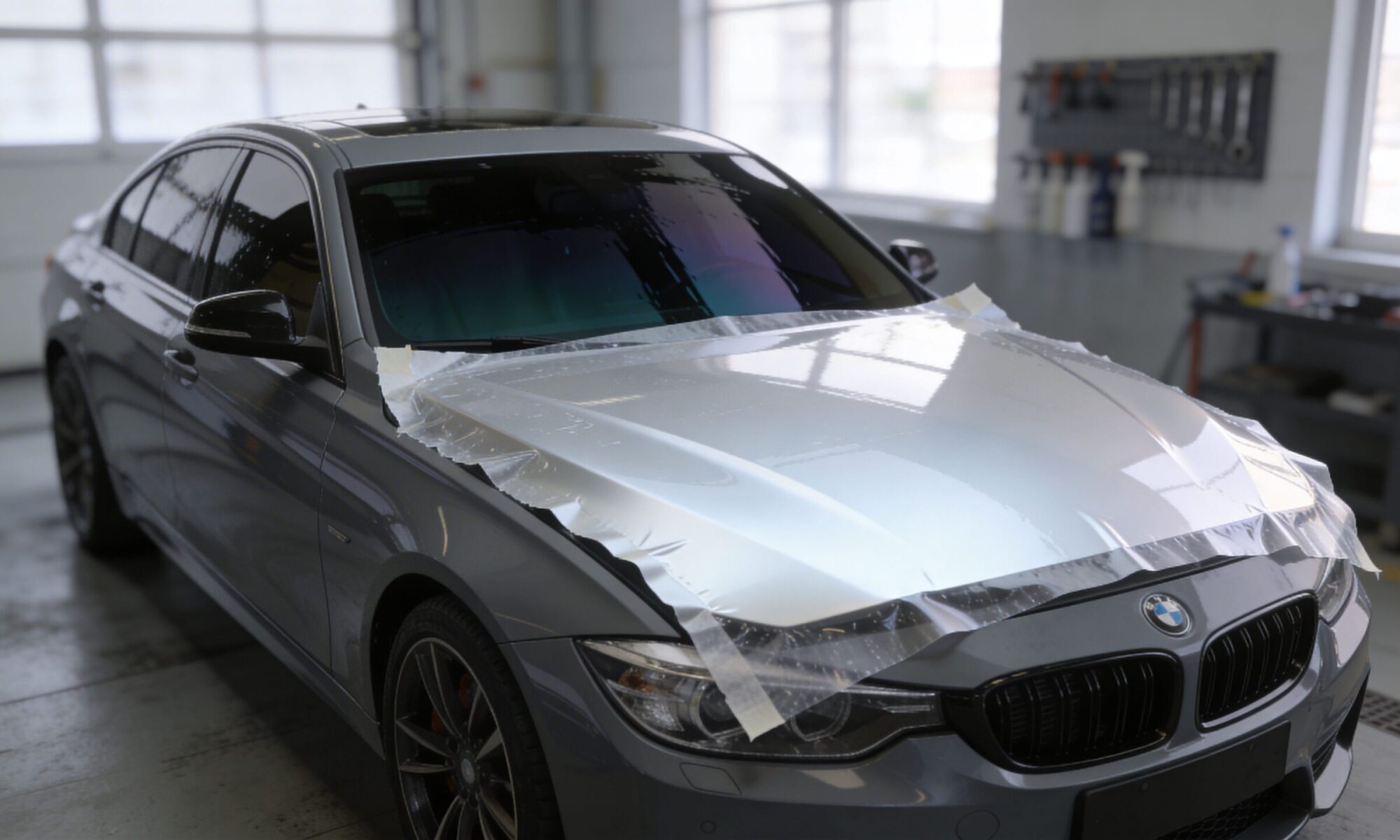
Car protective wrap is the everyday term many drivers use. In the trade, the product is Paint Protection Film, or PPF. It is a clear urethane-based film installed over painted surfaces to absorb abuse that would otherwise hit your factory finish.
That matters because paint damage is cumulative. One rock chip does not seem like much. Then you add bug acids, light scratches, tar, road grit, and repeated washing marks. Over time, the front of the car starts looking older than the rest of it.

What PPF does
Think of PPF as a sacrificial layer. The film takes the hit so the paint does not.
It is very different from a cosmetic vinyl wrap. Vinyl is mainly for color change or style. PPF is built first for protection, even when it also improves gloss or comes in specialty finishes.
The technical build is a big reason it performs differently. Optimal PPF thickness is 8 mils (0.2 mm), with a top hydrophobic clearcoat for self-cleaning, a 6-mil elastomeric polyurethane layer that dissipates impact energy, and an adhesive with micro air-release channels for a bubble-free application, according to Lintec Auto's guide to ideal automotive PPF specs.
Why thickness and structure matter
That multilayer build is not just marketing language. In practice, each layer has a job.
- Top clearcoat: Helps the surface stay slicker and easier to wash.
- Polyurethane core: Absorbs impact better than thin cosmetic films.
- Adhesive layer: Lets the installer position the film correctly and lay it down cleanly.
The best modern PPF also has self-healing behavior. Minor swirls and surface marks can relax out with heat, which is especially useful on darker paint that shows every little wash mark.
The panels that deserve protection first
If a customer wants the most practical starting point, the front of the car usually gets priority. These areas get hit first and hardest:
| Area | Why it matters |
|---|---|
| Hood leading edge | Takes direct impact from road debris |
| Front bumper | Catches chips, bug splatter, and grime |
| Fenders | Often pick up thrown debris from traffic |
| Mirrors | Small target, high exposure |
| Rocker panels | Vulnerable to road spray and kick-up |
For a lot of North Atlanta drivers, a partial or full front-end package makes the most sense. It covers the high-impact zones without committing to every painted panel on the vehicle.
What works and what does not
Good PPF starts with film quality, but the install makes or breaks it. Stretching film too hard around edges, rushing contaminated panels, or trying to hide poor prep under the film usually leads to visible defects or edge failure later.
What works is clean paint, proper slip and tack control, and patterning that respects the body shape instead of forcing the material into places it does not want to sit.
For a practical overview of applications, coverage choices, and product purpose, this page on paint protection film is a useful starting point.
If you care about keeping factory paint original, PPF is the closest thing to armor that still lets the vehicle look like itself.
Shielding Your Interior with Professional Window Tint
Paint protection handles the outside. Professional window tint handles what the sun is doing inside the car every day.
That matters more in Georgia than many drivers realize. A vehicle can look clean on the outside and still be getting cooked inside. Dashboards dry out. Leather ages faster. Plastic trim fades. You get blasted with glare on the drive home, and the cabin stays uncomfortable long after the A/C starts running.

Why tint is functional, not cosmetic
A lot of people still think car window tinting is mainly about making the car look better. It does improve appearance, but that is not the main reason North Atlanta drivers end up loving it.
The main reason is day-to-day usability.
You feel the difference when you open the door after the car has been sitting in a lot in Woodstock. You see the difference when the low sun is not washing out your view on the way through Cobb County. You notice the interior stays in better shape over time.
The biggest benefits for local drivers
For daily commuting around Kennesaw, Marietta, and Acworth, the practical gains are straightforward:
- Heat reduction tint: High-performance film helps slow down how much solar heat pushes into the cabin.
- UV protection tint: Good film protects interior surfaces and helps reduce sun exposure for passengers.
- Glare reduction tint: This matters during morning and late afternoon driving, especially on wide roads and highways.
- Privacy: Tint limits how easily people can see into the cabin.
- Cleaner appearance: A properly tinted vehicle usually looks more finished and more intentional.
Ceramic tint is where serious buyers end up
If someone asks for the best window tint for cars in Georgia heat, the answer usually points toward ceramic film. Not because it is trendy, but because the performance is better in areas that matter most to drivers.
Ceramic window tint is built for drivers who want a cooler cabin, strong UV protection, and better comfort without relying on a very dark look to get results. That matters if you want a clean appearance and legal compliance without giving up heat reduction.
It also avoids the old complaints associated with metallic products. Drivers do not want film that creates issues with electronics, signal reception, or modern vehicle tech.
Tint also reduces fatigue
This part gets overlooked. A bright, hot cabin wears people down.
Less glare and a more stable cabin temperature can make long commutes easier on your eyes and less irritating overall. For drivers who spend a lot of time going between Cherokee County, Cobb County, and the rest of Metro Atlanta, that comfort is not minor. It changes how the car feels every single day.
Windshield tint questions come up for a reason
A lot of drivers ask about windshield tint because that glass lets in a lot of heat and light. The right answer depends on legal compliance and film choice. A professional installer should explain what is allowed, what is not, and what gives useful performance without creating problems.
Good tint should make the vehicle easier to live with, not harder to see out of. Clarity matters just as much as shade.
If your current film is turning purple, bubbling, or peeling, that is not a reason to give up on tint. It is usually a sign that you need proper tint removal and a better tint replacement with a higher-grade film.
Choosing Your Film Ceramic vs Standard Window Tints
The most common mistake in auto tint installation is choosing by darkness alone. Shade matters for privacy and appearance, but film type matters more for comfort, durability, and how well the tint performs in Georgia heat.

Standard films still have a place
Standard films are often the entry point for drivers who want a cleaner look, some privacy, and glare control without moving into a premium product tier.
That can be the right decision in some cases. If the car is older, the budget is tighter, or the owner mainly wants appearance improvement, standard film may be enough.
Typical reasons drivers choose standard tint:
- Lower upfront cost: It usually fits a tighter budget better.
- Solid privacy upgrade: It changes the look of the car right away.
- Useful glare control: Even basic film can make daytime driving easier.
Where ceramic pulls ahead
Ceramic film is the better answer for people searching for ceramic window tint Kennesaw, heat reduction tint Woodstock, or window tint near me with a comfort-first mindset.
It is designed for high performance, not just appearance. The major advantage is that it can reject more heat without forcing the glass to be extremely dark. For a lot of drivers, that is the difference between “the car looks tinted” and “the cabin feels manageable.”
It also avoids the old complaints associated with metallic products. Drivers do not want film that creates issues with electronics, signal reception, or modern vehicle tech.
Side-by-side decision factors
| Decision point | Ceramic film | Standard film |
|---|---|---|
| Heat management | Stronger choice for hot climates | More limited |
| UV protection | Excellent | Excellent |
| Signal interference concerns | Better choice | Depends on film type |
| Optical clarity | Usually better in premium lines | Varies |
| Budget fit | Higher investment | Lower investment |
One simple way to think about it is this. Standard film handles the basics. Ceramic handles the basics plus the part Georgia drivers care about most, which is heat.
What I tell drivers in North Atlanta
If the car is parked outside often, driven every day, or used for long commutes, ceramic usually makes the most sense. The benefits show up fast because you feel them every afternoon.
If the vehicle is more of a secondary car, or the main goal is privacy and a visual upgrade, standard film can still be a reasonable option.
For a more detailed product comparison, this breakdown of ceramic tint vs regular tint covers the difference in plain terms.
Match the film to how you use the car
The right choice is not always the most expensive one. It is the one that solves your problem.
Ask yourself:
- Do you park outside most days? Ceramic becomes more attractive fast.
- Do you hate getting into a hot car after work? That points strongly toward ceramic.
- Is the car older and mainly needs privacy? Standard may be enough.
- Do you plan to keep the vehicle a long time? Premium film usually pays off better over time.
In North Atlanta, ceramic is usually the right answer for comfort-focused drivers. Standard film still works when the goal is simpler and the budget matters more.
What does not work
What does not work is buying cheap film based only on a dark appearance and expecting premium performance. That is how people end up searching for tint replacement Marietta or bubbling car tint removal Woodstock later.
A poor product can look fine at first. The problems show up with age, heat, and exposure. That is when fading, peeling, haze, and adhesive failure start separating bargain tint from professional-grade film.
Georgia Window Tint Laws What You Need to Know
Legal compliance matters just as much as product choice. A tint job should improve the vehicle without creating problems the next time you get stopped or inspected.
Drivers in Kennesaw, Woodstock, Acworth, and Canton ask the same question in different ways. How dark can I legally go in Georgia, and what can I do on the windshield?

The law is not a guess
Georgia tint law is specific, and the details matter. The legal answer depends on the type of vehicle and which windows you are talking about.
That is why a professional shop should ask what you drive before recommending a shade. A sedan, coupe, truck, and SUV are not always treated the same way under state rules.
For a direct reference, this page covering Georgia window tinting law is worth reviewing before you book an installation.
The practical way to approach legal tint limits in Georgia
The safest approach is simple. Choose a film and shade that gives you the performance you want while staying within Georgia rules for your vehicle type.
That means paying attention to:
- Front side windows
- Rear side windows
- Rear windshield
- Windshield strip or full windshield questions
- Reflectivity and visibility concerns
A lot of confusion comes from mixing internet advice from other states with Georgia requirements. What is legal in one place may not be legal here.
Windshield tint needs extra caution
Installers need to be direct. Drivers often ask for windshield tint because they want glare and heat relief from the largest piece of front-facing glass.
Some windshield applications are restricted by law, and the top strip is handled differently than a full windshield. The right move is to discuss your goals with the shop and make sure the chosen setup is compliant for Georgia use.
Here is a helpful visual explainer on the subject:
What a good installer should do
A good installer does not just ask what looks good. They ask what you drive, how you use it, whether you want privacy or heat reduction first, and whether you are trying to stay conservative with legality.
That conversation matters because legal tint should still perform well. You do not need to chase an aggressive look to get a meaningful upgrade in comfort, glare control, and UV protection.
If a shop cannot explain Georgia tint rules clearly, do not let them choose your film.
The Installation Process Cost and Long-Term Care
Most customers care about three practical things. How the install works, what affects cost, and how to make the result last.
The good news is that both tint and PPF are straightforward when the shop follows a disciplined process. The bad outcomes usually come from shortcuts, not from the products themselves.
What the install process should look like
A clean installation starts before any film touches the vehicle. The glass or paint has to be properly cleaned, decontaminated, and inspected. Existing damage, old adhesive, or poor-condition surfaces need to be addressed first.
For tint, a professional shop patterns and heat-shrinks the film to fit the glass correctly. For PPF, the installer needs accurate alignment, careful tack control, and clean edge work.
The adhesive technology matters here. Professional-grade films like 3M™ Protection Wrap Film use Controltac™ and Comply™ adhesive technologies, which enable positionable, bubble-free installations that reduce lift lines by 80% and achieve less than 1% bubble incidence on high-contour surfaces, according to 3M's Protection Wrap Film product bulletin.
What affects cost
Pricing depends on the vehicle and the scope of work. There is no honest one-size-fits-all number.
The main cost drivers are:
- Vehicle size: Larger glass areas and larger body panels require more material and more labor.
- Film type: Ceramic window tint costs more than standard film. Higher-end PPF costs more than entry-level material.
- Coverage area: Front two windows, full car tint, partial front PPF, and full-body PPF are very different jobs.
- Vehicle shape: Tight curves, recessed areas, and complex edges add labor.
- Condition of the car: Old tint removal, adhesive cleanup, and paint correction needs can change the quote.
That is why one sedan and one SUV can get very different estimates even when the owner asks for “the same tint.”
Same-day service and realistic expectations
Window tinting is often a same-day service, depending on scheduling and the vehicle. PPF can take longer because prep, alignment, and edge finishing are more involved.
The mistake some owners make is chasing speed over quality. Fast is good when the process is controlled. Fast is bad when it means dirty edges, trapped contamination, or rushed curing.
Caring for the finish after installation
Aftercare is simple, but it matters.
For window tint:
- Let the film cure: Follow the shop’s instructions before rolling windows down.
- Use safe cleaners: Ammonia-free products are the standard choice.
- Use soft towels only: Abrasive cleaning tools create avoidable scratches.
For PPF:
- Wash gently at first: Let the install settle properly.
- Do not attack edges with pressure: Poor washing habits cause edge problems.
- Remove bug residue early: Letting acidic contamination sit is always a mistake.
Tint removal and replacement
A lot of local drivers are not shopping for a first-time install. They are dealing with old tint that has turned purple, become hazy, or started bubbling.
That work needs to be handled carefully. The film has to come off, the old adhesive has to be cleaned, and the defroster lines on rear glass have to be treated with respect. Bad removal work can do more damage than the original failing tint.
If you are comparing shops for tint or PPF service in North Atlanta, The Tint Guy is one local option that handles both film installation categories, which is useful if you want one shop to look at the full vehicle protection plan instead of treating tint and paint protection as unrelated jobs.
FAQ Your Top Tint and PPF Questions Answered
Is ceramic tint worth it in Georgia
For many drivers, yes. If your car sits outside, you commute daily, or you care more about comfort than just appearance, ceramic tint is usually the stronger long-term choice. If your goal is mostly privacy and visual style on a tighter budget, standard film can still work.
What is the best window tint for cars in Kennesaw or Woodstock
The best choice depends on how you use the vehicle. For a daily driver dealing with Georgia heat, ceramic is usually the most practical answer. For an older vehicle where cost matters more, a quality standard film may be enough.
Does car protective wrap do the same thing as ceramic coating
No. They solve different problems. Car protective wrap, meaning PPF, is built to absorb impact and protect against chips and abrasion. Ceramic coating helps with surface slickness and washability, but it is not a substitute for the physical protection PPF provides.
Should I do PPF or tint first
If the budget allows, do both as part of one protection plan. If you need to prioritize, choose based on your pain point. Drivers bothered by heat and glare should start with tint. Drivers worried about chips on a newer vehicle should start with front-end PPF.
How long does a tint job last
That depends on the film quality, installation quality, and how the vehicle lives. Better film lasts longer and usually looks better over time. Cheap film often fails in the ways people already know, fading, peeling, bubbling, or turning purple.
Can old tint be replaced cleanly
Yes, if the old film is removed correctly. Proper tint removal and tint replacement can restore the glass cleanly, but the process needs patience and the right tools, especially on rear windows with defroster lines.
What parts of the car should get PPF first
For most North Atlanta drivers, start with the front bumper, the hood area that sees direct impact, the mirrors, and other high-hit sections. Those panels usually show damage first.
Is legal tint still effective for heat reduction
Yes. A film does not have to be extremely dark to improve comfort. The film type matters more than many people think, especially with ceramic products designed around heat management and UV protection.
If you are comparing car window tinting in Kennesaw, window tinting in Woodstock, ceramic tint near me, or a full protection plan that includes car protective wrap, The Tint Guy is a practical place to start. Reach out for a quote based on your vehicle, the coverage you want, and whether you need new installation, tint removal, or tint replacement.