

Your car is turning into an oven by lunch, the glare on Highway 92 is wearing you out, and every tint quote you find online seems too broad to trust. That’s usually where people start looking for a car window tint cost calculator.
The problem is that most calculators give you a national range and stop there. If you drive in Woodstock, Kennesaw, Acworth, Marietta, or Canton, that isn’t enough. Georgia heat changes what film makes sense. Georgia law changes how dark you can go. And the vehicle you drive changes the labor, material, and final number more than generally anticipated.
A good estimate should feel like the same conversation you’d have at a professional tint shop. What are you driving, which windows do you want covered, what performance do you expect, and do you want a budget tint or a film that helps in North Metro Atlanta heat? Those are the questions that matter.
How Our Tint Calculator Estimates Your Price
A useful car window tint cost calculator doesn’t guess. It starts with the same three variables that professional calculator tools use: which windows are being tinted, film quality selection, and geographic location, with advanced versions also checking legal compliance by window type and using the layered tint formula for final VLT calculations, as outlined by this window tint calculator guide.
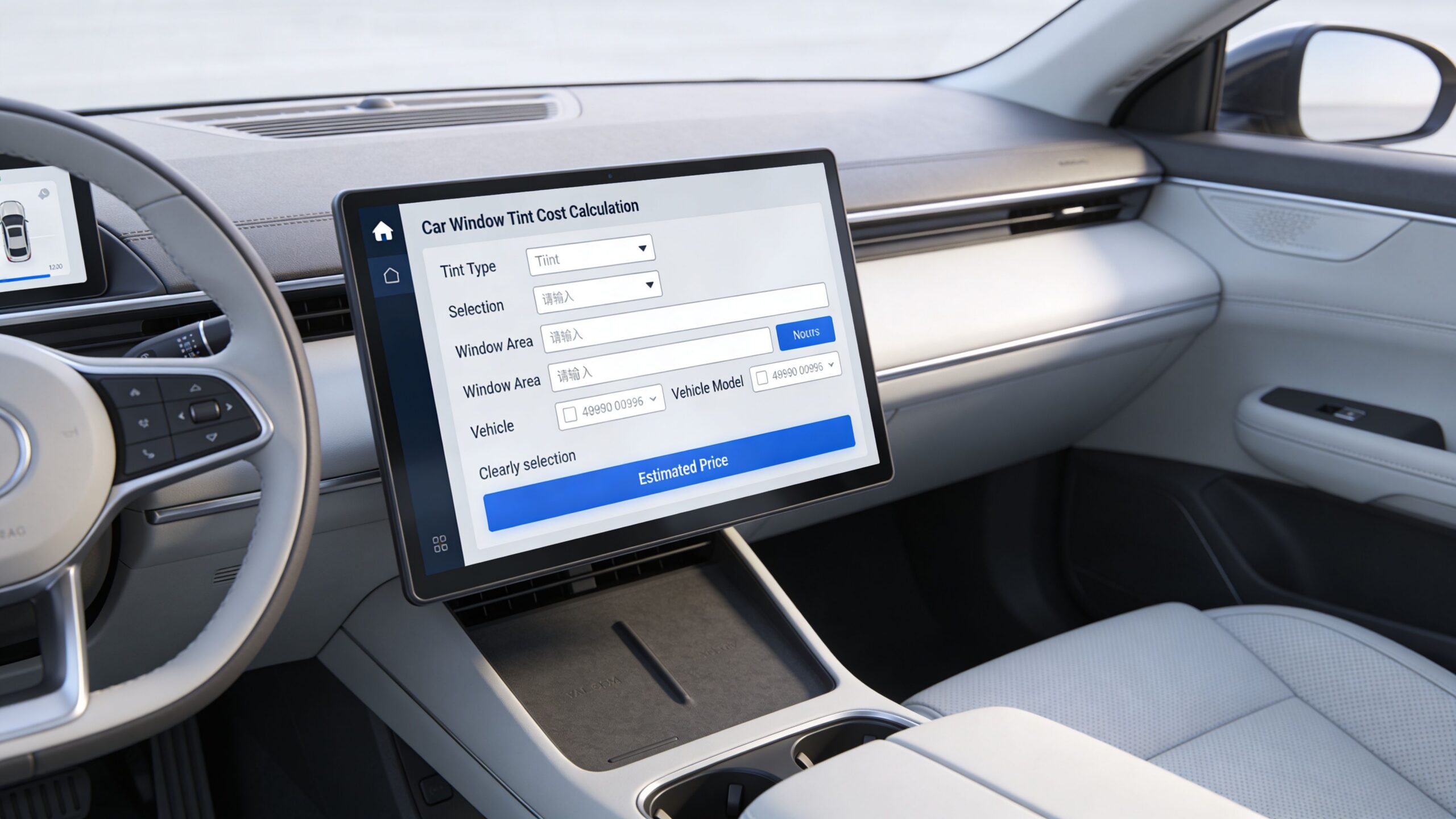
That matters because window tint isn’t one flat product. A two-door coupe with simple side glass doesn’t estimate the same way as an SUV with extra rear glass, or a truck with a large back window. If you don’t start with the right vehicle profile, the quote is off before you even pick the film.
Start with the vehicle, not the shade
When someone asks for a quick tint number, the first thing to pin down is the vehicle type. Calculators that let you choose make and model usually give the best first-pass estimate because they can match the window count and likely glass size more accurately.
Here’s the practical order that works:
Choose the vehicle category
Sedan, SUV, crossover, truck, or van changes both material use and labor time.Select the window coverage
Full vehicle, front two windows, side windows only, rear glass only, or a windshield strip.Pick the film type
The film type accounts for most of the price movement.Check legal compatibility
The calculator should flag whether the setup is likely to fit state rules.
Practical rule: If a tint calculator asks only for “dark” or “light” and nothing else, it’s too simple to trust for budgeting.
Film choice changes the estimate fast
It's a common misconception that the darkness determines the price. It doesn’t. Film technology is the bigger driver.
A dyed film estimate will sit in one tier. Carbon lands above that. Ceramic sits at the premium end because you’re paying for better heat rejection, clearer visibility, and longer life. The shade you choose affects appearance and legality, but the film type is what changes the actual performance in a Georgia summer.
That’s why a serious calculator should separate film quality from tint percentage. They are not the same decision.
If you want a deeper breakdown of how shops typically structure these quotes, this guide on car tint cost is the kind of reference worth checking before you compare estimates. Or skip the math and see our actual prices by vehicle in our price guide.
Window-by-window pricing is more accurate
The better calculators don’t just spit out a total. They build from the glass itself. That means pricing each pane, adding the installation base, and then applying the film tier you selected.
This is also why individual services can be estimated separately. If you only want the front doors tinted to match factory rear glass, or you just want a windshield strip, the calculator should reflect that instead of forcing a full-package price.
A transparent estimate usually accounts for:
- Front doors only for drivers upgrading privacy or matching rear glass
- Full side and rear coverage for complete heat and glare control
- Windshield strip for basic sun control at the top edge
- Single window replacement when old tint is bubbling on one pane
The VLT formula matters more than most drivers realize
Georgia legality isn’t based on what the film box says. It’s based on the final visible light transmission through the glass and film together. Advanced calculator tools use this formula:
Final VLT (%) = (Tint Film VLT / 100) × (Original Glass VLT / 100) × 100
That formula is what keeps installers from making the common mistake of choosing a film that looks legal on paper but ends up too dark once it’s applied over factory glass.
If you want a rough online estimate, use a calculator. If you want the right tint on the car, match the estimate with a legal VLT check.
There’s a similar lesson in other service industries too. Good estimate tools work when they’re built around actual cost drivers, which is why marketers often rely on a customer acquisition cost calculator instead of broad averages.
What Drives Your Car Window Tint Cost
A Woodstock driver with a black interior SUV parked outside all day will price very differently from a Marietta commuter who only wants the front doors tinted to match factory rear glass. That is why generic national calculators miss the mark. Around North Metro Atlanta, the key variables are film performance, vehicle glass layout, labor time, and how much heat rejection you truly need in Georgia.
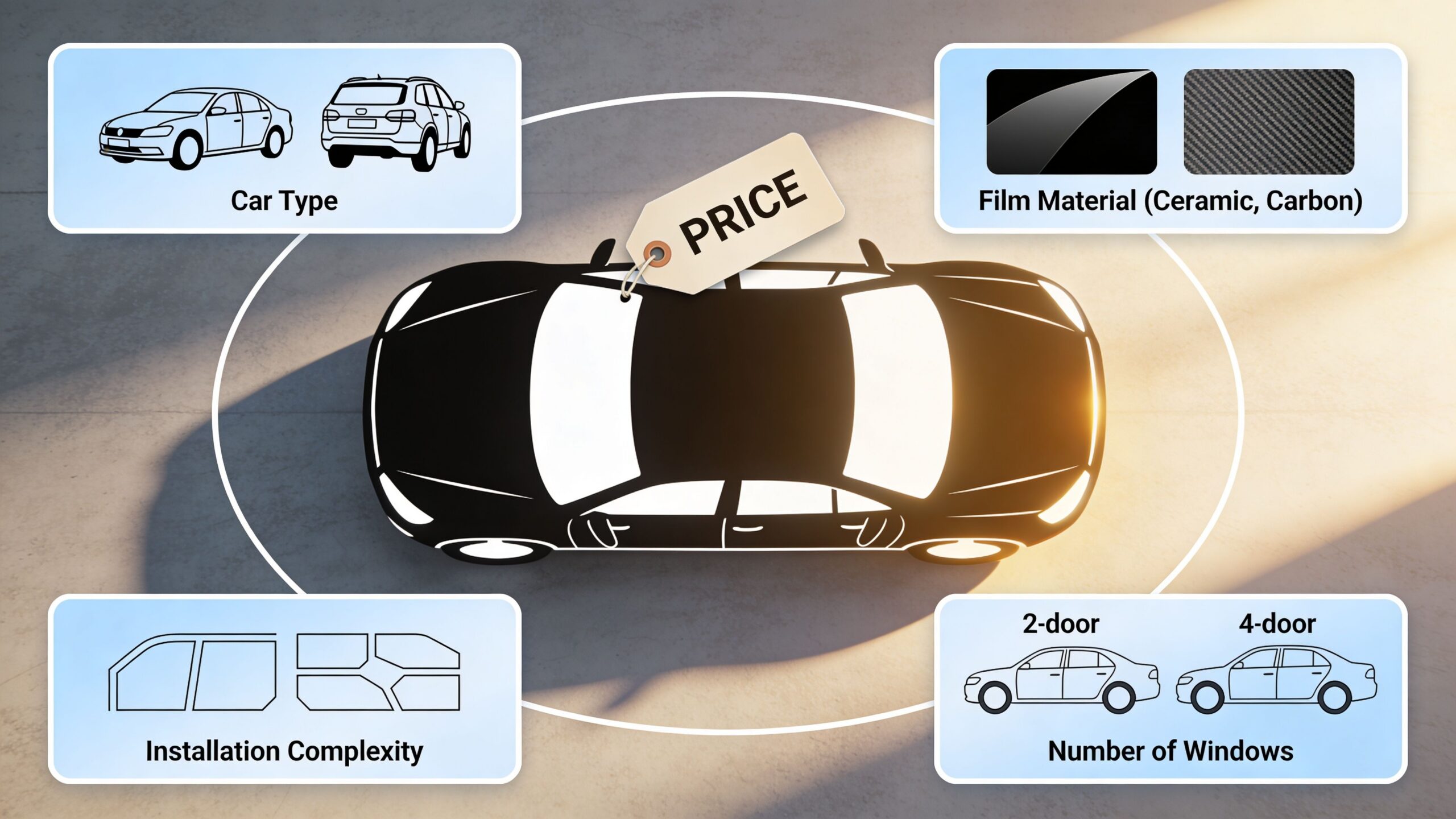
Tint price is rarely about darkness alone. A common misconception is that tint price is based on darkness. In the shop, the invoice is driven by the film you choose, the amount and shape of the glass, and how long that product is expected to hold up under Georgia sun.
Film type is usually the biggest price swing
Film technology changes the price faster than any other choice. Dyed film sits at the entry level. Carbon costs more because it holds color better and performs better over time. Ceramic is the premium option because it cuts heat far more effectively without forcing the darkest legal look.
That matters in this market. In Kennesaw, Woodstock, and Marietta, many drivers are not buying tint for appearance first. They want a cooler cabin, less glare on Highway 92 or I-575, and better protection for leather, dashboards, and child seats.
Here is the practical trade-off:
| Film type | Typical full vehicle range | What you’re really buying |
|---|---|---|
| Dyed | $150 to $300 | Lower upfront cost and a basic appearance upgrade |
| Carbon | $250 to $500 | Better color stability, better durability, and stronger everyday performance |
| Ceramic | $400 to $900 | Top-tier heat rejection, clear visibility, and long service life |
For cars that live outside, ceramic usually earns its price. For an older vehicle or a budget-driven job where appearance matters more than cabin temperature, dyed or carbon can make sense.
Vehicle size changes both labor and material
Bigger vehicles use more film, but size alone does not set the final number. Glass shape matters just as much.
A sedan is usually straightforward. An SUV often adds quarter windows, larger rear glass, and more trimming time. Trucks and vans can take longer because the rear glass is large, the windows are more upright, or the layout is awkward to reach cleanly and install cleanly.
Two vehicles can land in the same class and still price differently. A curved back window with a tight defroster pattern can add more labor than several flat side windows.
Coverage level affects price fast
Full-car tint costs more because it uses more material and more install time. Partial jobs stay lower because there is less film to cut, shrink, and finish.
Common requests around here include:
- Front doors only to match factory-tinted rear glass
- Full side and rear coverage for better heat and glare control
- A windshield strip for top-angle sun glare
- Single-window replacement when one panel starts bubbling or peeling
Those smaller jobs are common after a bad previous install, or when a customer wants a cleaner match without paying for every piece of glass.
Installation difficulty is a real cost factor
This is the part online calculators usually leave out. Some vehicles are fast and predictable. Others fight you the whole job.
Older cars may have dried-out seals or leftover adhesive from old film. Frameless windows can be more finicky. Defroster lines on rear glass need careful handling during removal and replacement. Large panoramic glass and steep rear windows often take more shrinking and more cleanup. Labor time follows the vehicle, not just the category.
That is one reason local pricing in North Metro Atlanta stays more accurate than broad national averages. Shops here also see steady demand for premium heat-control films, which changes what customers purchase and what installers keep in stock. The same kind of local service market differences show up in Local Services Ads (LSA), where pricing and competition shift by area instead of following one flat national pattern.
Here’s a quick visual overview before going deeper into value and performance.
Long-term value matters as much as the starting price
Cheap tint gets expensive when it fades purple, bubbles in the rear window, or peels at the edges after a few Georgia summers. Then you pay for removal, cleanup, and a second install.
A better film usually lasts longer and looks better doing it. That does not mean every car needs top-shelf ceramic. It means the right choice depends on how long you plan to keep the vehicle, where it is parked, and how much heat control you expect every day.
Georgia heat changes the value equation
Georgia drivers feel the difference between entry-level film and premium film faster than drivers in milder climates. A car sitting in an open lot in July builds heat fast, especially with dark interiors and large glass areas.
For local drivers, the benefits show up in practical ways:
- Less heat soak after parking outside
- Reduced glare during late-afternoon driving
- More comfort without going darker than needed
- Better protection for interior materials
The right way to price tint is to match the product to the vehicle and the way it is used. A daily commuter in Woodstock with full sun exposure should be quoted differently from a second vehicle in Canton that mostly stays local and covered. That is the difference between a rough calculator number and a useful estimate.
Real Tint Prices in Kennesaw Woodstock and Marietta
National calculators are useful for a starting point, but they often stop at a broad $150 to $900 range and don’t explain why local pricing can vary so much. That gap is especially obvious in North Metro Atlanta, where labor rates, film availability, and demand for high-heat-performance tint can shift pricing by market, as noted in this discussion of regional window tint pricing variation.
That’s why local estimates need context. A driver in Kennesaw asking for a front-two-window match on a sedan isn’t shopping for the same job as a Marietta driver putting premium ceramic on a full-size SUV that sits in the sun all day. Same product category. Different labor, different material use, different final invoice.
Estimated 2026 Window Tinting Costs in North Metro Atlanta
The table below uses the verified market ranges and applies them to the vehicle classes local drivers ask about most often.
| Vehicle Type | Standard Film (Dyed/Carbon) | Premium Ceramic Film |
|---|---|---|
| Sedan | $150 to $500 | $400 to $900 |
| SUV or crossover | $250 to $650 | $400 to $900 |
| Truck or van | $250 to $900 | $400 to $900 |
This is the kind of range that’s useful around Woodstock, Kennesaw, Acworth, Canton, and Marietta. It doesn’t pretend every vehicle in a class prices the same, and it doesn’t flatten local demand into one national average.
Why the same vehicle can price differently nearby
Two identical vehicles can still land at different totals depending on the shop and the job details. The big reasons are usually practical:
Local labor environment
Shops in different North Metro Atlanta pockets don’t all carry the same overhead or staffing structure.Film supply and brand availability
Some shops stock only entry-level film. Others focus on premium ceramic lines and quote accordingly.Seasonal booking pressure
Heat spikes push more drivers to upgrade, which changes demand and scheduling.Coverage differences inside the quote
One estimate may include the full rear glass. Another may only include side windows.
A “cheap” quote often turns out to be a smaller package, a lower film tier, or both.
How to read local estimates the right way
When you compare pricing in Woodstock, Kennesaw, or Marietta, don’t ask only “What’s your full tint price?” Ask what film is being installed, what windows are included, and whether the quote is built around legal Georgia specs.
A solid local estimate should tell you:
- The vehicle category being priced
- Whether the quote is dyed, carbon, or ceramic
- Which windows are included
- Whether old tint removal or replacement is separate
- Whether the setup is intended to stay legal in Georgia
This is the same reason local service companies rely on channels built for nearby, ready-to-book customers. If you’re curious how service businesses show up for that kind of high-intent local search, Local Services Ads (LSA) are worth understanding because they’re built around people searching for providers in a specific area.
A practical local read on value
In North Metro Atlanta, ceramic gets more attention for a reason. The heat here pushes a lot of drivers away from the cheapest film once they understand the trade-off. The premium isn’t just for looks. It’s for better comfort in traffic, less glare on long commutes, and less punishment on the interior when the car spends the day outside.
If your goal is simple privacy on a budget, standard film can still do the job. If your goal is heat reduction tint, UV protection tint, and a longer-lasting install, local buyers usually lean premium.
Staying Legal with Georgia Window Tint Laws
A legal tint job in Georgia starts with the finished glass, not the number printed on the film box. That matters in Woodstock, Kennesaw, and Marietta because plenty of drivers ask for a shade that sounds right online, then find out their factory glass already changes the final result.
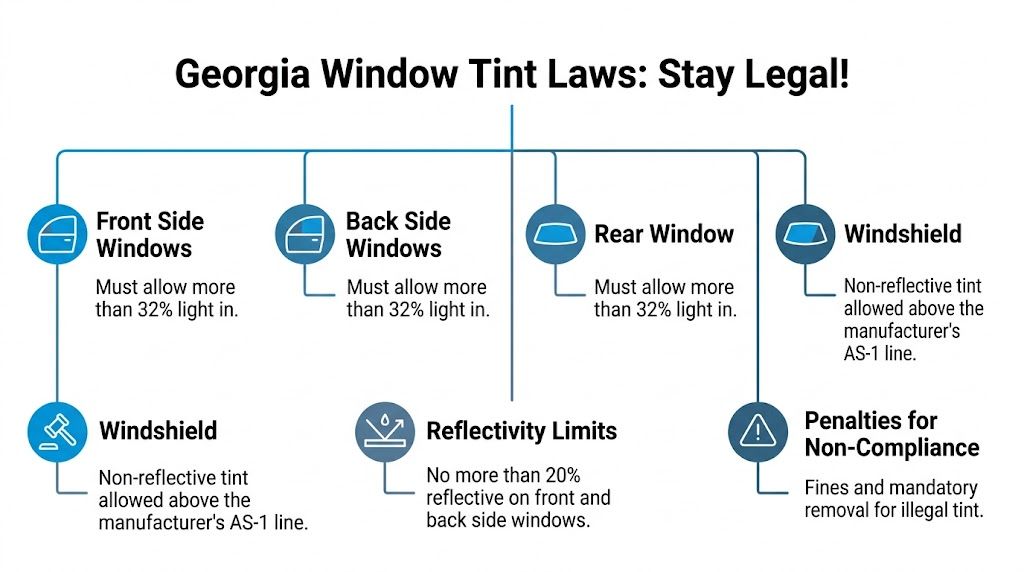
For passenger vehicles in Georgia, the working target is 32% VLT on the side and rear windows, with a non-reflective strip above the AS-1 line on the windshield. If you want the full state-by-state breakdown in plain English, this guide to legal window tint in Georgia covers the details drivers usually ask about before they book.
The film shade and the final reading are not the same thing
Many bad tint decisions occur when a customer buys a film labeled 35%, assumes that means the car will measure legal, and never accounts for the glass that is already on the vehicle. Once that film goes on factory glass, the final VLT can end up lower than expected.
In the shop, we check the actual setup before treating a shade as safe. That is the practical difference between choosing tint from a chart and choosing tint that will hold up if the glass gets checked.
What Georgia drivers need to know before they tint
The rules customers ask about most often are straightforward:
- Front side windows must allow more than 32% light in.
- Back side windows must allow more than 32% light in.
- Rear window must allow more than 32% light in.
- Windshield can have a non-reflective strip above the manufacturer’s AS-1 line.
- Front and back side windows cannot be more than 20% reflective.
SUV and truck owners get tripped up here all the time. Rear glass can look dark from the factory, but that does not mean any added film is automatically legal. The only safe way to know is to check the glass and measure the final result.
Why measurement matters more than guesswork
Georgia heat pushes a lot of people toward darker-looking setups because they want relief from glare and cabin heat. I get that. But darker is not the same as better, especially if the car becomes harder to see out of at night or the tint has to be stripped later because it measures too low.
A clean install should solve the heat problem and stay inside the law. That usually means matching the right film type to the right shade, then verifying the finished VLT instead of relying on the film box alone.
The best setup for Georgia usually balances heat rejection, visibility, and legal VLT. It is the one you can live with every day in traffic, in summer sun, and after dark.
Windshield tint needs a clear conversation
Windshield requests are common in North Metro Atlanta because late-afternoon glare can be brutal on I-575 and I-75. The legal allowance is the non-reflective strip above the AS-1 line. That is very different from tinting the full windshield.
If you are comparing quotes, ask the shop to spell out exactly what windshield coverage means. A visor strip, a full windshield, and a heat-reduction add-on are not the same job. They do not carry the same price, and they do not carry the same legal risk either.
Choosing the Best Tint for Heat Reduction and UV Protection
You feel this choice in August, not on quote day. A car parked outside in Woodstock or Marietta all afternoon can turn into an oven fast, and the film you choose decides how much of that heat stays out.
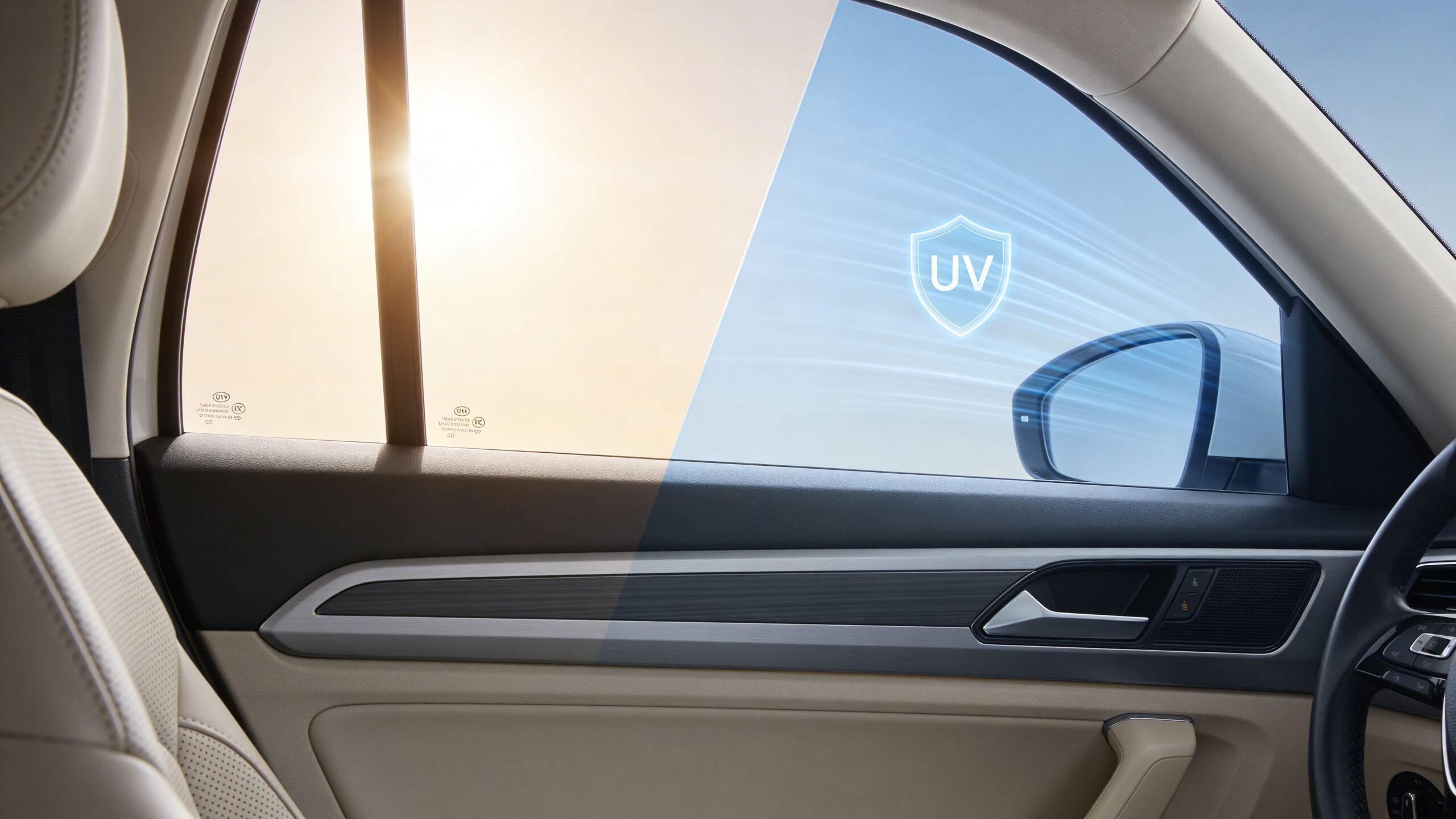
For Georgia drivers, the best-performing tint is usually the film that cuts heat load, reduces harsh glare, protects the interior, and still looks clean on the car. That is why ceramic comes up so often in our shop with customers from Woodstock, Kennesaw, Acworth, Marietta, and Canton. If you want a closer breakdown of performance by film type, our guide to the best window tint for heat reduction covers that in more detail.
Why ceramic gets recommended so often here
North Metro Atlanta drivers ask for relief from heat first. Privacy and looks matter, but the primary complaint is usually the same. The steering wheel is hot, the seat backs are hot, and the sun coming through the side glass wears you out on the drive home.
Ceramic film is usually the best answer for that problem because it is built for heat rejection without the signal issues that can come with older metallic products. It also gives you more flexibility. You can choose a shade that stays comfortable to see out of and still get strong heat control, which matters in Georgia where darker does not automatically mean better performance.
That trade-off is what online tint calculators miss. National guides often sort film by price only. In this area, a lot of drivers end up paying more for ceramic because the extra heat rejection is noticeable during a long summer, especially on vehicles parked outside at work or in school lots all day.
What drivers actually notice after installation
The difference shows up in daily use, not just on a spec sheet.
Lower cabin heat
The interior still gets warm, but it does not build heat as aggressively while parked.Better UV protection
Seats, trim, and dash surfaces get more protection from sun exposure over time.Less glare
Afternoon sun and bright pavement are easier on your eyes.No electronics headaches
Phones, GPS, toll tags, and other signals stay consistent with ceramic film.
Customers usually describe it in simple terms. The car is easier to live with. The AC does not have to fight as hard, and the cabin feels more manageable during Georgia summer traffic.
Ceramic is the upgrade customers appreciate later, on the commute home, in school pickup lines, and every time the car has been sitting in open sun.
When standard film is still a smart buy
Ceramic is not the right answer for every vehicle. If the goal is basic privacy, a cleaner look, or a lower upfront cost on an older car, standard dyed or carbon film can still make sense.
I usually tell customers to be honest about how they use the vehicle. A weekend car, a short-commute car, or a vehicle that stays in a garage has different needs than a daily driver parked outside in a Georgia summer. If you are trying to control cost, standard film can be a reasonable choice. If you spend an hour a day on the road and the car bakes in a lot, cheaper film often turns into a compromise you feel every afternoon.
Replacement jobs need a different decision
A lot of upgrade jobs start with bad old tint. If the film is purple, bubbling, hazy, or peeling, the right fix is removal first, then new installation on clean glass.
That matters for both appearance and longevity. New film laid over leftover adhesive, contamination, or damaged edges will not look right and will not hold up the way it should. For customers switching from older entry-level tint to ceramic, full removal and replacement usually gives the best result and the best value over time.
Best fit by driver type
| Driver need | Better fit |
|---|---|
| Lowest upfront cost | Standard dyed or carbon |
| Better daily comfort | Carbon or ceramic |
| Strongest heat control | Ceramic |
| Old bubbling film | Removal and replacement |
| Signal-safe performance | Ceramic |
For daily drivers in Kennesaw, Woodstock, and Marietta, ceramic usually earns its higher price. It costs more at install, but in Georgia heat, it solves more of the problem you were trying to fix in the first place.
Your Top Car Window Tinting Questions Answered
The pricing and film choices make more sense once you know what affects the estimate. The last questions are usually the practical ones. How long will it take, what happens after installation, and is ceramic really worth it for a Georgia driver?
How long does a professional tint job take
It depends on the vehicle and coverage. A full sedan is usually simpler than a large SUV, truck, or van with extra glass and a more difficult rear window. If old film needs to come off first, that adds time because removal has to be done cleanly before new film goes on.
The smart move is to ask whether the time quoted is for installation only or for removal plus installation. Those are different appointments in real shop scheduling.
Can you get same-day tint service
Sometimes, yes. It depends on the film you want, the vehicle, and the shop’s schedule that day. Same-day service is most realistic when the vehicle is straightforward, the requested film is in stock, and there’s no old tint removal slowing the job down.
If you need the car back quickly, have your year, make, model, and the windows you want tinted ready when you ask for a quote. That gets you a real answer faster.
When can you roll the windows down
Follow the installer’s aftercare instructions exactly. Fresh tint needs time to settle and cure, and rolling windows down too early is one of the easiest ways to create edge lift on a new install.
You may also see a little haziness or moisture pockets right after installation. That’s normal while the film cures. The key is to leave it alone and let it finish settling.
New tint doesn’t need tinkering. It needs time.
What if the car already has old tint
If the existing film is bubbling, fading, discolored, or peeling, plan on tint removal before replacement. Trying to work around failing film usually creates a worse result and wastes money.
Professional removal also matters on rear glass with defroster lines. That’s the window most likely to be damaged by rushed scraping or bad removal methods.
Is ceramic tint worth the extra money
For a lot of Georgia drivers, yes. If your car sits in the sun, if you commute through Cobb or Cherokee County traffic every day, or if heat reduction matters more than just the look, ceramic usually gives the most usable benefit.
Where ceramic earns its keep is daily comfort. A car that’s easier to enter after significant sun exposure, less glare while driving, and better protection for the interior over time. If those things matter to you, the premium makes sense.
If you only want the look of tinted glass and you’re trying to spend as little as possible, standard film can still do the job. The right answer depends on whether you’re buying for appearance first or performance first.
What’s the best window tint for cars in North Metro Atlanta
For most local drivers, the answer is the best legal heat-rejecting film that fits the way the vehicle is used. That usually points toward ceramic for commuters, family vehicles, black interiors, and cars parked outside. It may point toward carbon or a standard film for lower-mileage vehicles where budget matters more.
The wrong approach is picking by darkness alone. The better approach is matching the film to the problem you’re trying to solve.
Does a tint quote usually include removal and replacement
Not always. Some quotes are for clean glass only. Others include removal. If you’re replacing bad film, ask that question up front so you’re comparing apples to apples.
A clean estimate should spell out:
- Whether old tint removal is included
- Which windows are covered
- What film tier is being installed
- Whether the setup is intended to meet Georgia law
- Whether the job is a fresh install or a replacement
What should you ask before booking
Keep it simple and direct:
- What film am I getting?
- Which windows are included in this price?
- Is this legal for Georgia?
- If I already have tint, is removal separate?
- What should I do after installation?
That short list catches most of the confusion before it turns into a problem.
If you’re ready for a real quote instead of a generic range, The Tint Guy can help you price the right film for your vehicle, your budget, and Georgia’s heat. Whether you need ceramic window tint, tint removal and replacement, a windshield strip, or full car window tinting in Woodstock, Kennesaw, Acworth, Marietta, or Canton, reach out with your vehicle details and get a clear next step.