
If you're driving through Kennesaw, Woodstock, Marietta, or Canton every day, you already know what pushes people to search for a car window tint percentage chart. The sun feels harsh on the morning commute. Afternoon glare hits at the wrong angle. Your cabin heats up fast, and the seats, dash, and steering wheel all pay for it.
Drivers often start by asking one simple question. How dark should my tint be?
That question matters, but it isn't the whole decision. The right tint has to fit how you drive, what you want the car to look like, how much privacy you want, and what Georgia law allows on each window. If you skip any one of those, you can end up with tint that looks good for a week and annoys you for years.
Your Guide to Choosing the Perfect Car Window Tint in Georgia
The term you need to understand first is Visible Light Transmission, or VLT. VLT is the percentage of visible light that passes through the glass and film. Lower numbers mean darker tint. Higher numbers mean lighter tint.
That single number controls a lot:
- Appearance: How dark the vehicle looks from outside
- Privacy: How easy it is to see inside
- Comfort: How much glare and brightness you deal with
- Legality: Whether the setup works for Georgia roads
- Usability: How well you can still see at night
For Georgia drivers, that balance matters more than people think. A tint that feels perfect on the rear glass can be too dark for the front doors. A film that looks light can still be the right choice if your main goal is comfort, windshield clarity, and daily-driver visibility.
We see the same pattern all over North Metro Atlanta. Drivers in Cobb County and Cherokee County usually want one of three outcomes. They want a cleaner look, a cooler cabin, or more privacy for passengers and belongings. Good tint can do all three, but only if the percentage matches the window and the vehicle.
Practical rule: Choose tint by window location and driving habits, not by looks alone.
If you're comparing ceramic window tint, standard film, windshield tint, tint replacement, or legal tint limits in Georgia, the chart below gives you the fast answer first. Then the rest of this guide helps you choose the setup that works on your car.
The Car Window Tint Percentage Chart Quick Reference
When customers ask for a quick answer, we begin here. A car window tint percentage chart gives you the fastest way to understand what each VLT level means in real life.
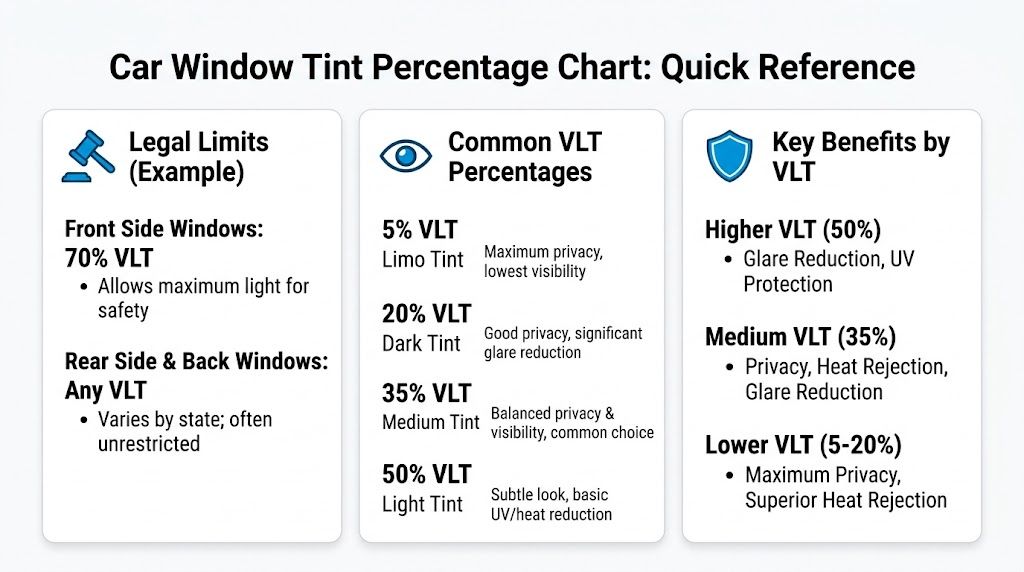
Window tint percentage means Visible Light Transmission, or how much visible light gets through the glass and film. A 5% VLT lets only 5% of light through and blocks 95%, while a 70% VLT lets in 70% of light. A common setup is 35% VLT on front doors and 20% VLT on rear windows, which balances legality, privacy, and up to 99% UV blocking with premium ceramic films according to this tint percentage guide.
Car Window Tint Percentage VLT Chart
| VLT % | Appearance | Primary Use Case |
|---|---|---|
| 70% | Very light, close to clear glass | Windshield applications where a light film is preferred for comfort without a dark look |
| 50% | Light shade | Front windows for drivers who want visibility first and only mild darkening |
| 35% | Medium shade | Daily-driver front door tint where you want a balanced look and practical privacy |
| 20% | Dark | Rear windows for stronger privacy, glare reduction, and a darker factory-style finish |
| 5% | Very dark, limo tint | Rear-only privacy setups where maximum concealment matters more than night visibility |
For a more visual breakdown of shades and how they compare on actual vehicles, this percent window tint guide is useful.
What each percentage feels like on the road
70% VLT
This is the lightest option most drivers seriously consider. It doesn't create a dark appearance, but it can still make the cabin feel more comfortable when used in a premium film.
50% VLT
This works well for drivers who don't want the car to look heavily tinted. Visibility stays strong, especially in rain and at night.
35% VLT
This is one of the most practical shades for front side windows. It looks tinted, gives a cleaner profile, and doesn't push visibility too far.
20% VLT
At this level, privacy becomes much more noticeable. It's a strong rear-window choice for SUVs, family vehicles, and trucks.
5% VLT
Use this carefully. It delivers maximum privacy, but night visibility drops hard. On street vehicles, it makes the most sense as a rear-only choice.
The lower the VLT, the darker the glass looks. The darker the glass, the more important visibility and legal placement become.
Georgia's Legal Window Tint Limits A Deep Dive for 2026
Georgia drivers usually ask the same thing after they pick a shade. Is it legal?
The short answer is that Georgia follows the same basic pattern seen across North America. Front glass is more restricted. Rear glass allows more flexibility. That difference is why mixed-percentage setups are so common on the same vehicle.
Window tint laws in North America, including Georgia, use a tiered framework by window location. Front windshields are highly restricted and usually limited to a top shade band or 70%+ VLT, front side windows are commonly restricted to 35% to 70% VLT, and rear windows often allow 20% to 35% VLT or lower, as explained in this legal overview of window tint percentages.
What matters most on Georgia vehicles
For practical decision-making, think about your vehicle in sections.
Front windshield
This is the most limited area. Full dark windshield tint isn't the place to experiment if you want to stay road-legal and keep night visibility.
Front side windows
Most Georgia compliance issues typically occur here. Drivers want privacy here, but these windows still need to preserve safe outward visibility and fit the state's legal threshold.
Rear side windows and back glass
Installers can usually apply darker tint here. That's why many SUVs and trucks get a lighter front-window setup with a darker rear half.
If you want a direct Georgia-specific breakdown, this page on legal tint percentage covers the issue in more detail.
Why mixed setups are so common
The most practical Georgia setup usually isn't one percentage on every piece of glass.
A uniform shade can look clean, but it often creates a problem. If you tint the whole vehicle to satisfy the front windows, the rear may not be private enough. If you tint the whole vehicle for the rear, the front may end up too dark.
That is why many North Metro Atlanta installations split the vehicle into zones:
- Lighter film on the front
- Darker film on the rear
- A light windshield option or legal shade band depending on the job
What doesn't work well
Some choices look good on a sample card and disappoint on the road.
- Very dark front doors: These often become frustrating in rain, on unlit roads, and in parking lots at night.
- Ignoring factory glass: Customers sometimes choose a film percentage without realizing the glass already affects the final darkness.
- Treating every vehicle the same: A sedan, SUV, and truck don't wear tint the same way.
If your main concern is "how dark can tint be legally," the answer depends on which window you're talking about, not just the film you like.
For drivers in Woodstock, Acworth, Kennesaw, and nearby Metro Atlanta suburbs, legality shouldn't be an afterthought. It needs to be part of the decision before the film goes on.
How Tint Percentage Affects Your Driving Experience
A tint chart tells you how dark a film is. It doesn't tell you how that tint will feel on a hot Georgia day, during sunset glare on I-75, or while backing into a dim parking lot at night. That's where the key decision gets made.
Heat reduction and cabin comfort
Drivers often assume darker always means cooler. In practice, darkness is only part of the story.
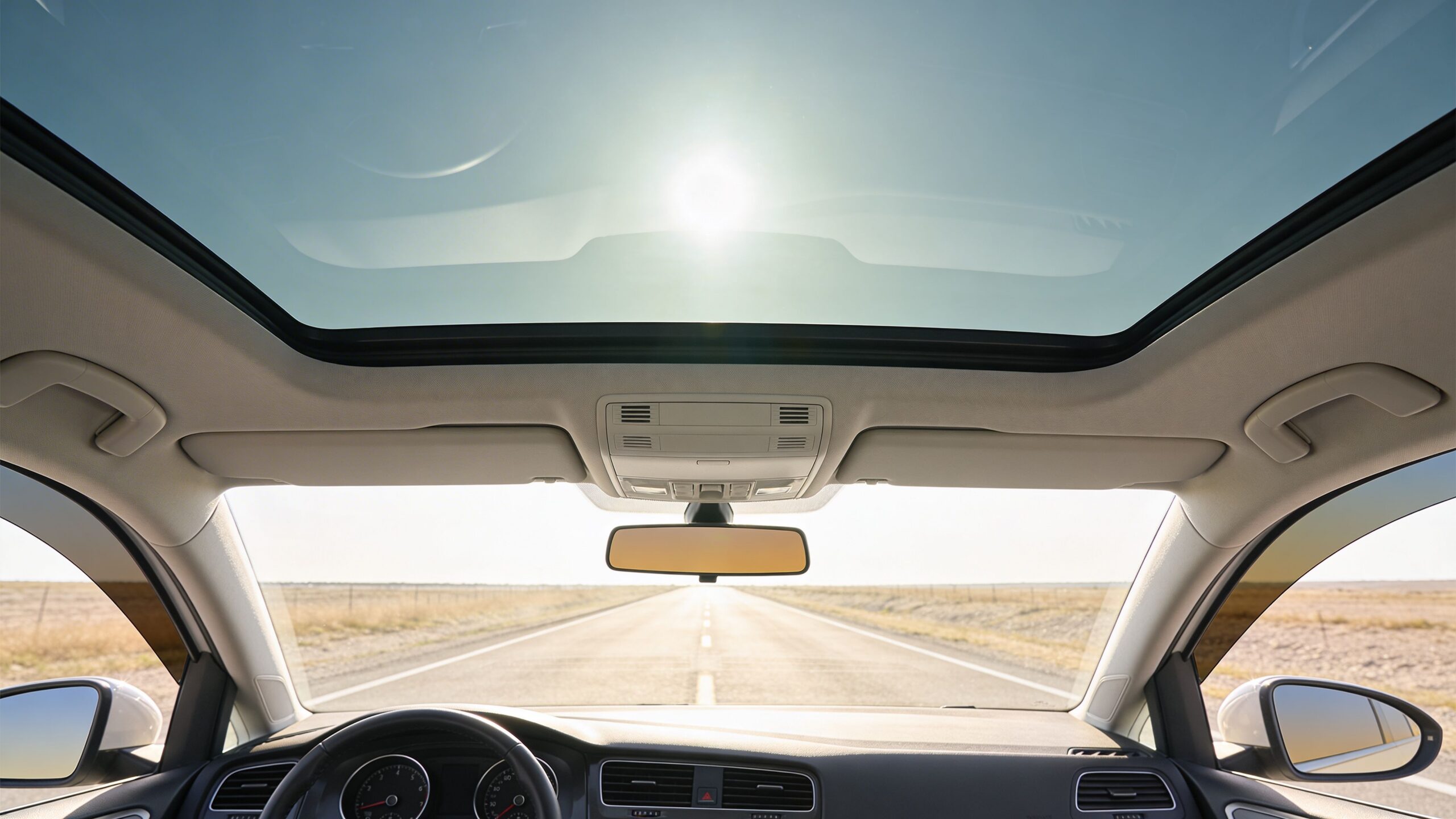
A darker tint usually cuts more visible light, which can make the cabin feel less harsh and reduce direct sun intensity. That's useful. But if your goal is serious heat reduction tint for Georgia, film technology matters just as much as the shade.
A lighter ceramic film can outperform a darker basic film in day-to-day comfort. That matters for commuters who want relief from heat without making the car look overly dark.
UV protection and interior preservation
People usually notice tint first for the appearance. The longer-term value is often protection.
A quality film helps protect the interior from constant sun exposure. That matters for dashboards, leather, plastics, screens, and trim that spend all day under Metro Atlanta sun. It also matters for drivers and passengers who spend a lot of time in the vehicle.
If your priority is UV protection tint, you don't need to choose the darkest possible shade to get a meaningful benefit. That's one reason many customers end up choosing lighter ceramic windshield or front-window film.
Glare reduction and eye fatigue
Glare is where even lighter tint can make a car much more comfortable.
Morning and late-afternoon driving around Kennesaw and Woodstock can be rough when the sun sits low. The right VLT helps cut the brightness that causes squinting and eye fatigue. It also helps with reflected glare off other vehicles, wet pavement, and pale concrete.
Lower VLT usually gives stronger glare reduction.
Moderate VLT often gives the best compromise for people who still drive a lot after dark.
Privacy and security
Privacy is the easiest benefit to understand because you can see it immediately.
- Lighter tint: Minimal privacy, cleaner look
- Mid-range tint: Better concealment without making the cabin too dark
- Darker rear tint: Stronger privacy for passengers, cargo, and valuables
That said, chasing privacy too aggressively on the front windows usually creates trade-offs people regret later. You gain concealment, but you may lose comfort at night when visibility matters more.
The best tint setup isn't the darkest one. It's the one that solves the problem you actually have.
A parent driving kids around Marietta may value rear-seat privacy. A commuter may care more about glare. Someone replacing old film may want a cleaner look with less cabin heat. The right percentage should match that use, not just the photo in someone else's parking lot.
Recommended Tint Percentages for Your Vehicle and Windows
The right setup depends on both the vehicle and the driver. A sedan used for commuting has different needs than a family SUV or a work truck. If you're trying to choose the best window tint for cars in North Metro Atlanta, start with how the vehicle gets used most days.
For sedans and coupes
Sedans usually look best with a balanced setup that doesn't make the front feel too closed in.
A practical choice is:
- Front doors in the moderate range
- Rear glass darker than the front
- A light windshield option if comfort is the priority
This works well because sedans have less cabin volume and more exposed glass. If the front goes too dark, drivers usually notice it quickly at night.
For SUVs and crossovers
SUVs and crossovers are where darker rear tint makes the most sense. Families, rideshare drivers, and anyone carrying gear usually want more privacy in the back.
A common approach is:
| Vehicle area | Practical direction |
|---|---|
| Front doors | Keep them on the lighter legal side for visibility |
| Rear doors | Go darker for privacy and comfort |
| Back glass | Match the rear doors for a cleaner look |
This is also where that popular split setup tends to work well. 35% VLT on front doors and 20% VLT on rear windows is a well-known combination because it stays practical while improving privacy and comfort, as noted earlier in the chart section.
For trucks and work vehicles
Trucks often benefit from a purpose-driven setup instead of a cosmetic one.
Some owners want rear privacy for tools or gear. Others want glare reduction on long drives. Some mainly want better comfort on the front side glass without making the truck hard to use early in the morning or after sunset.
For trucks, the most successful installs usually follow three rules:
- Keep the front usable at night
- Use the rear for privacy
- Match the film to the owner's actual driving pattern
What we usually steer people away from
Not every request is a good one, even if it sounds good at the counter.
Ultra-dark all around often creates avoidable visibility problems.
One-percentage-for-every-window can ignore how Georgia law treats front and rear glass differently.
Picking by appearance only usually leads to a second round of adjustments later.
If you're unsure, choose the front windows based on visibility and legality. Choose the rear based on privacy and comfort.
That approach works on most cars in Kennesaw, Woodstock, Acworth, and Marietta because it reflects how people drive here.
Ceramic vs Standard Tint Performance at Every Percentage
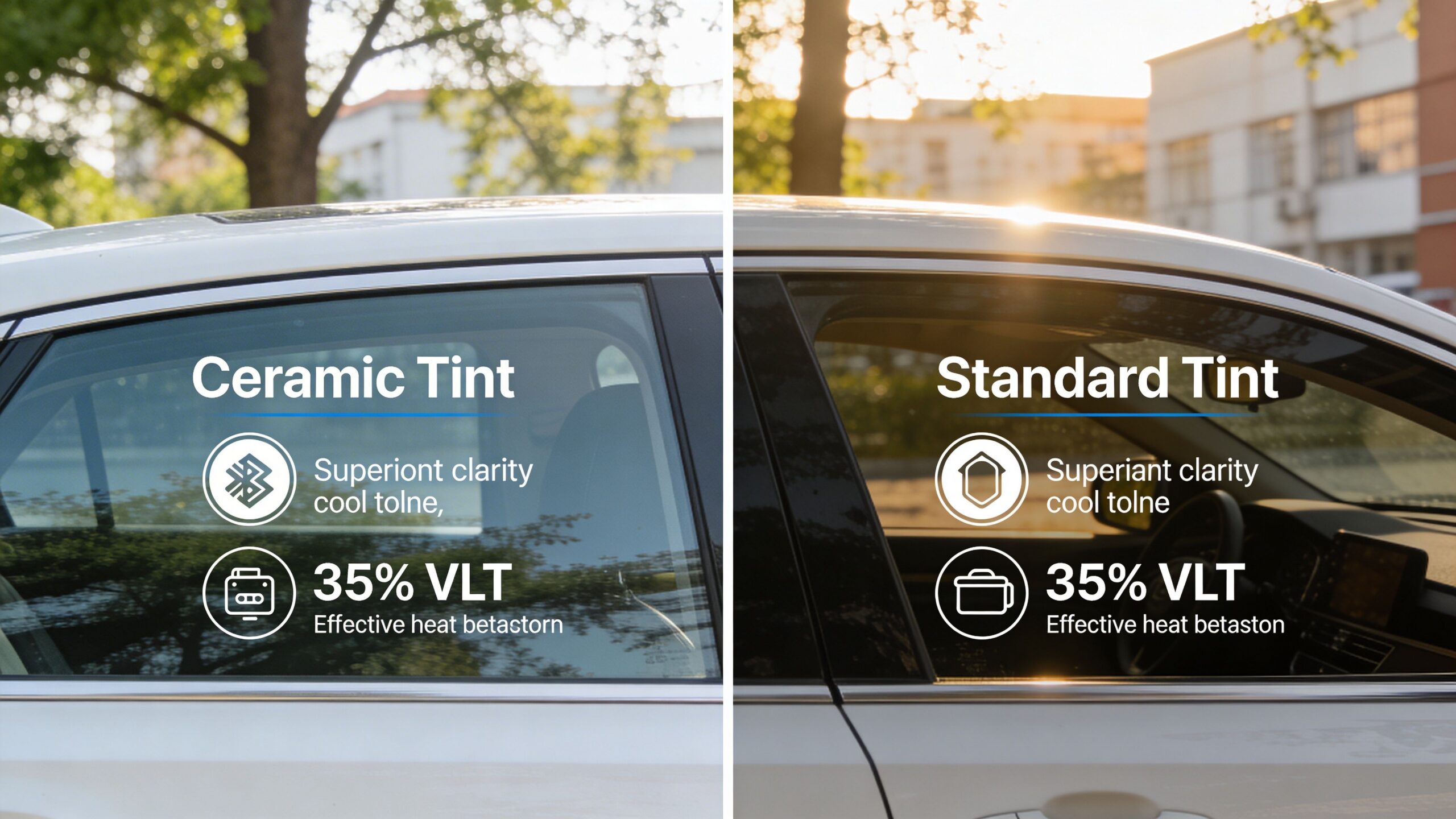
Two films can carry the same VLT and behave very differently. That's why percentage alone doesn't tell the whole story.
A 35% standard film and a 35% ceramic film may look similar from outside. Inside the car, especially in Georgia heat, they can feel very different.
What standard film does well
Standard tint still has a place. For some drivers, it handles the basics just fine.
It can improve appearance, reduce brightness, add privacy, and give the car a cleaner profile. If someone wants a straightforward shade upgrade without focusing heavily on thermal performance, standard film may fit the job.
Where it usually falls short is in the areas that matter most to many North Atlanta drivers. Heat management, long-term clarity, and premium feel are where customers tend to notice the gap.
Why ceramic changes the result
Ceramic film is usually the better answer when the customer says any of these:
- "My car gets too hot."
- "I want windshield tint without making it dark."
- "I want the look, but I care more about performance."
- "I'm replacing old film and don't want to do this again."
Premium ceramic films can provide up to 99% UV blocking, which is one reason they remain a popular choice for comfort-focused installs, as noted in the earlier source-backed chart reference.
For a direct side-by-side discussion, this comparison of ceramic tint vs regular tint lays out the differences in plain terms.
Same shade, different outcome
Here's the part many customers miss. VLT only tells you how much visible light gets through. It doesn't fully describe how the film handles solar load, glare character, or the overall feel of the cabin.
A lighter ceramic tint can be the smarter buy than a darker standard film if you want:
- A cooler cabin without a dark look
- Better front-window comfort
- A cleaner windshield option
- Less compromise in nighttime visibility
This short video helps visualize the difference in how film choices affect the final result.
Where ceramic usually makes the most sense
Windshields and front doors are the strongest use case. That's where people want comfort but can't afford to lose usable visibility.
Daily commuter cars also benefit because the car spends more time parked in the sun and more time on the road during bright hours.
Tint replacement jobs are another good fit. When old film has already failed once, most owners don't want to repeat the cheapest possible approach.
A darker film doesn't automatically mean a better film. In many installs, the better move is a smarter material at a usable shade.
Professional Tint Installation What to Expect in Kennesaw and Woodstock
You park in Kennesaw or Woodstock for one summer afternoon, come back to a hot cabin, and decide it is time to tint the car. The shade you pick matters, but the install matters just as much. We see the same failures over and over. Dirt trapped under the film, fingers near the edges, poor heat shrinking on the rear glass, and rushed curing that leaves the finish looking worse a few weeks later.
A proper shop starts by looking at the glass, not by pushing a film percentage.
Existing tint, old adhesive, edge chips, rear defroster lines, and factory privacy glass all change how the job should be handled. That matters in North Metro Atlanta because a lot of drivers want more heat control without crossing Georgia's legal limits on the front windows.
Why factory tint changes the plan
Factory-tinted glass can throw off the final result if the installer treats the film percentage as the whole story.
If a vehicle has 70% VLT factory glass and a 50% film goes on top, the final result is about 35% VLT, as explained in Madico's guide to mastering tint percentage. On a Georgia vehicle, that can put the front side windows too close to the legal line or over it, depending on the glass and the meter reading.
That is why we measure and account for the glass that is already there. The number printed on the film box is only part of the job.
What a proper install should include
Good tint work is controlled, clean, and specific to the vehicle.
- Glass inspection before cutting or shrinking. Existing damage and old film residue need to be identified first.
- Detailed prep. Clean glass is what keeps contamination and trapped debris out of the finished job.
- Accurate patterns and clean edges. The film should fit the glass correctly and sit clean at the borders.
- Correct heat shrinking on curved glass. Rear windows show installer skill fast.
- Clear curing instructions. You should know what haze, moisture pockets, and dry time are normal after installation.
- Legal guidance for Georgia. The installer should be able to explain practical front-window options for local drivers without guessing.
- Safe removal if old tint is failing. Purple film, bubbling adhesive, and damaged rear windows need a different approach than a fresh install.
If you want a broader benchmark for shop professionalism, this article on what to expect at a professional auto detail shop is a useful comparison. Many of the same standards apply. Clean workflow, clear communication, and attention to surfaces.
What customers in Kennesaw and Woodstock should ask before booking
Ask direct questions before the car ever goes into the bay.
Do you account for existing factory glass tint before recommending a film?
Do you remove failing film in-house?
What should I expect during curing in Georgia heat?
Will the rear defroster lines be protected during removal and installation?
Can you explain the difference between a legal front-door setup and a darker rear-glass setup?
Those answers tell you a lot.
Clean installs come from prep, measurements, and experience with the kind of heat, UV exposure, and daily driving conditions North Atlanta vehicles deal with every year.
Understanding the Cost of Car Window Tinting in North Metro Atlanta
People searching for car tint near me usually want the same thing after shade and legality. They want to know what drives the price.
The honest answer is that car window tinting cost depends on the vehicle, the film, and the condition of the glass. Flat online pricing often leaves out the part that changes the job. You can see our starting prices by vehicle and film in our 2026 price guide.
What affects the quote
Vehicle size and glass layout
A sedan, SUV, and truck don't take the same amount of work. More glass, more complex shapes, and larger rear windows all affect labor and material use.
Film type
Standard film and ceramic window tint don't deliver the same result. Ceramic is usually a higher investment because the performance level is different, especially for drivers focused on heat reduction tint and UV protection tint.
How much of the vehicle you're tinting
Some customers only want the front doors to match factory rear glass. Others want the full vehicle, including a windshield strip or light windshield film. Scope changes the quote.
Removal and replacement changes everything
If the car already has old tint, the condition of that film matters.
Bubbling film, peeling corners, and degraded adhesive add labor before the new install even begins. Rear windows are often the most delicate part of tint removal because defroster lines need to be protected.
How to compare quotes the smart way
Don't compare price alone. Compare what the quote includes.
- Film type and performance level
- Whether old tint removal is included
- Edge quality and install standards
- Warranty coverage
- Whether the shade being quoted is legal and usable
A lower quote can still become the more expensive job if the film doesn't perform, the edges fail, or the install has to be redone.
Tint Removal and Replacement for Old or Damaged Film
Old tint fails in ways that are easy to spot and hard to ignore. The most common signs are bubbling, peeling edges, haze, and that purple look that makes the whole car seem dated.
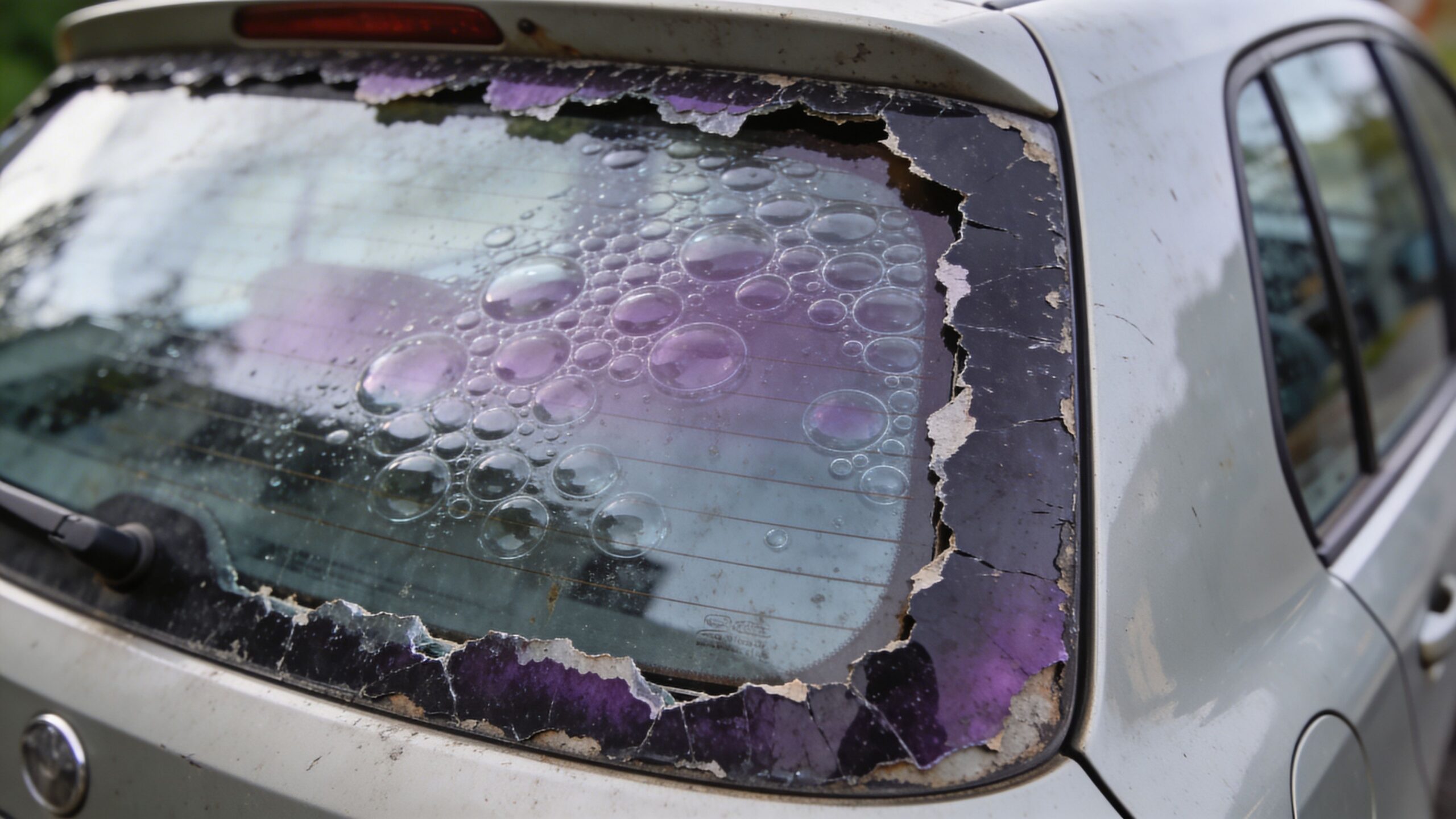
Once film reaches that stage, patching it isn't worth it. Removal and replacement are usually the right move.
Why bad tint goes bad
Most failing film comes down to two things.
The adhesive starts breaking down, or the film itself degrades from age and sun exposure. When that happens, the tint stops looking clean and stops performing the way it should. Visibility can get worse too, especially through hazy rear glass.
Why removal should be done professionally
Tint removal sounds simple until the adhesive starts fighting back.
Rear glass is the biggest risk area because of defroster lines. Aggressive scraping or the wrong removal method can damage those lines and create a bigger repair problem than the original tint. Side windows can also end up with leftover glue, edge damage, or a mess that makes the new install harder.
Replacement is the time to upgrade
Most customers replacing old film don't want the exact same outcome. They want a cleaner install, better appearance, and improved performance.
This is the right time to rethink the setup:
- Go lighter on the front if night visibility has been a problem
- Go ceramic if heat is the primary issue
- Match the rear better if the vehicle looks uneven now
If your tint is bubbling, peeling, or turning purple, replacement isn't just cosmetic. It's a reset that lets the glass work for you again.
Frequently Asked Questions About Window Tinting
How long does car window tint last
That depends mostly on film quality, installation quality, and how the vehicle is used. Lower-grade film usually shows its age sooner. Better film and cleaner installation tend to hold up better over time.
If you want tint that stays clear and stable, material choice matters as much as the shade.
Can you tint a leased vehicle
Yes, in many cases you can. The practical question isn't whether the glass can be tinted. It's whether you'll remove it before turn-in or leave it if the lease terms allow it.
Many leased-vehicle drivers still tint because they want comfort during the years they drive the car.
What's the best tint for heat reduction in Georgia
For most drivers, ceramic window tint is the strongest option when heat is the main complaint.
It makes the most sense for commuters, families, and anyone parking outside for long stretches. It also works well for customers who want a lighter, more refined look instead of a very dark cabin.
Can I tint the windshield
A full windshield needs careful legal and practical judgment. In Georgia, windshield tint is more restricted than side and rear glass, so the right solution is usually a legal shade band or a very light approach where appropriate.
This is one area where guessing is a bad idea. Visibility and compliance both matter too much.
Is darker tint always better
No. Darker tint gives more privacy, but it can also reduce nighttime usability.
For many drivers, the best result comes from a moderate front-window shade and a darker rear setup. That gives you privacy where you want it without making the vehicle frustrating to drive after dark.
Should I remove old tint before installing new film
Yes, if the old film is failing. Installing over bad film doesn't fix the problem. It locks the problem underneath the new layer.
Clean glass gives the new tint the best chance to look right and last.
If you're comparing ceramic window tint, legal front-window options, tint removal, or full car window tinting in Kennesaw, Woodstock, Marietta, Acworth, or Canton, contact The Tint Guy for a vehicle-specific recommendation. The right setup depends on your glass, your vehicle, and how you drive.