By the time you leave work in Kennesaw, sit through traffic in Marietta, and head back toward Woodstock, your car has been baking for hours. The steering wheel is hot, the seats feel worse, and the AC has to fight from the moment you start the engine.
That’s usually when people start looking up ceramic window tint, car window tinting near me, or best window tint for cars in Georgia. They’re not shopping for looks alone. They want real heat reduction, strong UV protection, less glare, and a tint that won’t bubble, purple, or quit after a couple of summers.
For North Metro Atlanta drivers, window film ceramic isn’t a trend item. It’s a practical upgrade. If you drive I-75, I-575, Highway 92, or commute between Acworth, Canton, Kennesaw, and Woodstock, the difference between standard tint and ceramic tint shows up every afternoon.
Why Your Car in Georgia Needs More Than Just Standard Tint
Pull onto I-75 after your car has been sitting in a parking lot in Kennesaw for a few hours, and standard tint gets exposed fast. The glass may look darker, but the cabin still holds heat, the sun still beats on the dash, and late-day glare coming through the side windows still wears you out on the drive home.
That gap matters in North Metro Atlanta. Georgia heat, long commutes, and bright afternoon sun are harder on window film than many drivers expect, especially in Cobb and Cherokee County where a lot of vehicles spend their day outside.
The daily problem local drivers deal with
I see it all the time with cars that already have tint installed. The owner assumes the film is doing its job because the windows look smoked. Then summer hits, and the AC runs hard, the seats stay hot, and the interior keeps taking sun exposure.
Older dyed film is usually the culprit. It darkens the glass, but it does not always block enough heat to make the car noticeably more comfortable in real traffic.
Practical rule: If your car still feels like an oven after it’s been tinted, the problem is usually the film type, not the shade.
That is also why drivers start comparing window film types and their real benefits instead of shopping by darkness alone. A film can be legal, look good, and still fall short where Georgia drivers feel the difference.
Why ceramic has become the upgrade people actually want
In shops around Woodstock, Acworth, and Marietta, the same concerns come up over and over:
- Will it reduce cabin heat on daily drives
- Will it help protect leather, plastic, and trim
- Will it hold up after years of Georgia sun
- Will it stay within Georgia tint laws
- Will it avoid interference with phones, GPS, and electronics
Ceramic film answers those questions better than standard dyed tint because the goal is performance, not just a darker appearance.
Price is the primary trade-off. Ceramic costs more up front, and that matters if you are tinting an older vehicle or trying to stay on a tight budget. But cheap film often turns into a second bill later when it fades, bubbles, or needs to be stripped off and replaced. That is usually the point where drivers realize the first install did not save money.
What this means in real use
For a North Atlanta commuter, the choice is less about style and more about whether the car feels manageable at 5 p.m. after sitting in the sun all day. Standard tint can improve privacy. Ceramic tint is the upgrade people choose when they want better heat control, less glare, and fewer problems a couple of summers from now.
That difference shows up every day on roads like I-575, Highway 92, and the stop-and-go stretches between Woodstock and Kennesaw.
What Exactly Is Ceramic Window Film
Ceramic film is easiest to understand if you think of it as smart shade. It’s not trying to make the glass as dark as possible. It’s trying to filter the parts of sunlight that make your car miserable to sit in.

How it works without the usual trade-offs
Ceramic window films use nano-ceramic particles to scatter and reflect infrared radiation. That lets a lighter film, such as 70% VLT, block over 95% of infrared heat, a level that much darker traditional tint would struggle to approach while still keeping better outward visibility, as explained by Prestige Protection’s ceramic film overview.
That matters because a lot of drivers still assume darker always means cooler. With ceramic, that assumption breaks down fast.
A lighter ceramic windshield tint or front window setup can still deliver serious heat control, which is why ceramic is often the answer when someone wants comfort without turning the car into a cave.
What ceramic is not
Ceramic film is not the same as the two older categories commonly encountered.
Dyed film
Dyed film mainly darkens the glass and absorbs heat. It’s the budget option in many shops. It can look fine at first, but it’s more likely to fade and lose its appearance over time.
Metallized film
Metallized film reflects heat better than dyed tint, but it uses metal layers. That can create signal interference with electronics like GPS, radio, and mobile devices.
Ceramic avoids that issue because it doesn’t rely on metal.
If you use navigation constantly, stream audio, or rely on a clean phone signal during long North Atlanta commutes, non-metallic film is the safer choice.
Why drivers comparing films should focus on performance first
The most useful way to shop tint is not by asking how dark it looks. It’s by asking what kind of heat, glare, and UV control it gives you at a legal shade.
That’s where people usually start understanding the difference between regular tint and window film ceramic. The technology changes what the film can do.
If you want a plain-language breakdown of the main film categories before choosing a setup for your vehicle, The Tint Guy’s window film guide is a useful starting point.
The Top 5 Benefits of Upgrading to Ceramic Tint
The true test for ceramic tint isn’t the spec sheet. It’s whether your car feels better to drive in July, whether your interior holds up longer, and whether your visibility stays clean when the sun is low.

Better heat reduction when the car is parked and when it’s moving
This is the main reason most drivers upgrade. Advanced ceramic films can achieve up to 68% TSER and block 80% of infrared rays, which can lead to a 20 to 36% reduction in solar heat gain inside the vehicle, according to ARCAT’s ceramic film specifications.
That’s the difference between your AC trying to catch up and your AC maintaining comfort.
For local drivers, this matters most in two situations:
- Parked in open sun: The car starts cooler and recovers faster.
- Driving west in late afternoon: The cabin doesn’t load up with heat as aggressively through the glass.
Strong UV protection for people and interiors
Georgia sun doesn’t just heat up the cabin. It also wears on everything inside the vehicle.
Ceramic tint helps protect dashboards, trim, leather, vinyl, and other surfaces from constant exposure. It also gives drivers and passengers meaningful UV protection during daily commutes, school pickup, and long drives across Metro Atlanta.
This is one reason ceramic tint is a smart replacement when old film starts to fail. If you’re already paying for tint removal and tint replacement, upgrading to a film that protects more than privacy makes more sense.
Glare reduction that actually improves driving comfort
A lot of drivers think glare is just an annoyance. It’s more than that.
Sun glare on Highway 92, I-575, or local roads near Canton can force your eyes to work harder, especially during sunrise and sunset. Ceramic film helps reduce harsh brightness while preserving a clearer outward view than darker low-end films often do.
That balance matters. A film can be dark and still not be comfortable to drive with. A good ceramic setup cuts glare without making night driving unpleasant.
Here’s a quick look at ceramic performance in action:
No signal interference
This benefit gets overlooked until someone has problems with it.
Metallized films can interfere with electronics. Ceramic film doesn’t use metal, so it won’t create the same issue with:
- GPS navigation
- Phone signal
- Bluetooth-heavy driving habits
- Radio reception
- Modern connected vehicle features
If you drive for work, depend on maps all day, or spend a lot of time on calls in traffic, this matters more than people think.
A cleaner long-term upgrade path
Ceramic makes sense for people who want fewer headaches later. That includes drivers dealing with old bubbling tint in Marietta, faded purple film on an older truck in Acworth, or a newer vehicle in Woodstock that they plan to keep.
The cheapest tint is often the one that gets removed first.
Ceramic tint costs more up front, but it usually fits buyers who are trying to solve the problem once instead of revisiting it after another hot season.
Ceramic Tint vs Regular Tint What Is the Real Difference
The easiest way to make the right tint decision is to stop asking which film sounds premium and start asking where each option falls short.
Ceramic, metallized, and dyed films all change the look of the glass. They do not perform the same, age the same, or create the same trade-offs.

The short version
Dyed film is usually chosen for price. Metallized film is chosen for reflective performance. Ceramic is chosen when the driver wants strong heat rejection, clean appearance, and no signal issues in one package.
For anyone also comparing car tint to home shading options, this explanation of solar screens vs window tint is useful because it shows how different solar-control products solve different problems.
Ceramic vs Metallized vs Dyed Tint Comparison
| Feature | Ceramic Tint | Metallized Tint | Dyed Tint |
|---|---|---|---|
| Heat control | Strong heat rejection without relying only on darkness | Good heat reflection, but with trade-offs | Limited compared with premium films |
| UV protection | Strong UV blocking in premium films | Strong UV blocking in many products | More basic protection |
| Signal interference | None from metal layers, because there aren’t any | Possible interference with electronics | No metal interference |
| Appearance over time | Stable, premium look | Can look more reflective | More likely to fade or discolor |
| Best use case | Drivers who want comfort, clarity, and long-term value | Drivers who prioritize reflectivity | Budget-first tint jobs |
| Main drawback | Higher upfront cost | Electronics concerns, reflectivity preferences | Lower performance and shorter useful life |
Where ceramic wins
Ceramic is the film I’d point to for someone asking about best window tint for cars in Kennesaw, Woodstock, or Canton if heat reduction is the actual goal.
It performs especially well for:
- Daily commuters who spend real time in afternoon traffic
- Drivers replacing failing film and wanting to upgrade once
- Owners of newer vehicles where interior protection matters
- People who hate dark, murky visibility from cheap tint
- Anyone using GPS and mobile devices constantly
If you want a direct side-by-side local buying comparison, this ceramic tint vs regular tint guide is the kind of resource worth reviewing before you book an install.
Where ceramic is not perfect
Good installers should be honest about the downside. High-performance ceramic film can show low-angle haze, which is a slight cloudiness visible at shallow viewing angles because the ceramic particles scatter light. Tint Academy notes that 99% of users are not bothered by it, but customers who are sensitive to optical clarity should be told about it before the install.
That matters most for people who notice visual details immediately, especially on side glass during sunrise and sunset.
Ask to see the actual film on glass if you’re particular about optical clarity. Product category alone won’t tell you enough.
What regular tint still does well
Regular tint isn’t pointless. Dyed film still has a place when someone needs a lower-cost option for appearance and privacy and understands the trade-offs.
Metallized film can still appeal to drivers who want reflective performance and don’t mind the look or the electronics risk.
But if the question is which option solves more North Georgia driving problems at once, ceramic usually has the strongest argument.
Georgia Window Tint Laws What You Must Know in Cobb and Cherokee County
A tint job can look perfect and still create a problem if it isn’t legal. That’s why legal tint limits Georgia should be part of the conversation before the film ever goes on the glass.

The number most drivers ask about
Georgia commonly gets discussed around 35% VLT for legal auto tint, and that’s a familiar target for drivers who want a practical balance of privacy, UV protection, and comfort. The exact application still needs to match the vehicle and window location.
That’s why a legal install isn’t just about choosing a film name. It’s about choosing the correct shade for the specific glass on your specific vehicle.
Why VLT matters more than marketing language
VLT means Visible Light Transmission. It tells you how much light passes through the glass and film combined.
A film can be marketed as high-performance, premium, or ceramic and still be the wrong choice if the final setup lands outside what’s allowed. That’s one reason experienced shops measure and verify instead of guessing from the roll label.
Ceramic selection also involves a performance trade-off
The legal side overlaps with film selection more than most buyers realize. The choice of ceramic film involves a trade-off. Higher ceramic particle loading improves infrared rejection for better heat reduction, but it can also increase the chance of low-angle haze. Lower loading improves optical clarity but gives up some performance, as explained by Flexfilm’s discussion of ceramic film trade-offs.
That matters in Georgia because the ideal film isn’t just the one with the strongest heat numbers. It’s the one that works well, looks right, and stays within legal limits for your vehicle.
The practical way to stay compliant
For drivers in Kennesaw, Marietta, Acworth, Woodstock, and Canton, the safest approach is straightforward:
- Match the film to the vehicle type: Sedans, SUVs, and trucks can differ in what makes sense.
- Think about front windows first: That’s where legal mistakes get noticed fastest.
- Don’t assume darker means better: Ceramic changes that equation.
- Replace illegal old tint carefully: Old film plus factory glass can create confusion if nobody checks the final reading.
If you want the current state-specific rules in one place before booking auto tint installation, The Tint Guy’s Georgia auto window tinting laws page is a useful reference.
Your Professional Ceramic Tint Installation in Kennesaw and Woodstock
A ceramic tint job in North Metro Atlanta has to hold up to real use. That means July heat in a parking lot at Town Center, glare on I-75, and daily wear from rolling the windows up and down. Good film helps, but the finish you live with every day comes from the installation.
What a proper install involves
From the outside, tinting looks simple. On the glass, it is a detail-heavy job where small mistakes show up fast.
A professional install usually includes:
- A full glass inspection: Check for scratches, chips, old adhesive, seal issues, and dot matrix trouble spots before any film is cut.
- Old tint removal when needed: Bubbling, purple film, peeling edges, and failed adhesive all need to come off cleanly before new ceramic goes on.
- Careful glass prep: Dust, pet hair, lint, and leftover glue are what cause the defects customers notice later.
- Precise patterning and heat shrinking: Curved rear glass and tight modern window shapes require controlled shaping for a clean fit.
- Post-install care instructions: Fresh film needs curing time, and customers should know what to expect during those first days.
For readers who want a broad overview, this guide on general techniques for installing window film covers the basics. Automotive glass requires tighter tolerances than most DIY flat-glass projects.
Removal work changes the whole job
A lot of vehicles in Kennesaw, Woodstock, Acworth, and Canton come in with old tint already on them. That matters.
Removing failed film can take as much care as installing the new ceramic, especially on a rear window with defroster lines. If the old adhesive is baked on from Georgia sun, cleanup becomes the part that determines whether the new tint looks clean or starts with problems underneath.
This is why one quote can be much lower than another. Sometimes it is not the same job.
What you are paying for with ceramic installation
Part of the price is the ceramic film. The other part is the labor needed to make that film sit flat, stay clean, and cure without edge lift or visible contamination.
That labor matters most on vehicles with tighter glass, older tint history, or rear windows that need careful shrinking. A cheap install can leave you with trapped debris, bad edges, or haze that has nothing to do with ceramic film quality.
A clean install should disappear into the glass.
Fast service only works if the process stays controlled
Same-day appointments are useful, especially if you rely on your vehicle for work or commuting around Cobb and Cherokee County. But speed should never come before prep, fitment, or final verification.
The right result is simple. The film looks even, the edges are clean, the vehicle stays legal for Georgia roads, and the cabin feels better the next time the car has been sitting in the sun.
Frequently Asked Questions About Ceramic Window Tint
Is ceramic tint worth it for Georgia drivers
For many North Metro Atlanta drivers, yes.
If your car sits outside in Kennesaw, Woodstock, Acworth, or Canton, ceramic tint does a better job cutting the heat load that builds up in the cabin. That matters on long commutes down I-75, school pickup lines, and summer parking lots where the interior gets punished for hours.
If your priority is only getting a darker look for the lowest price, dyed film can still make sense. Ceramic costs more up front, so the better choice depends on whether you care more about comfort, long-term durability, and heat control or just appearance.
How much does ceramic window tint cost
As noted earlier, premium nano-ceramic tint usually falls in the $200 to $600 per vehicle range. Final pricing depends on the vehicle, how much glass you are covering, and whether old film has to come off first.
A truck, SUV, or vehicle with existing failed tint often takes more labor than a basic sedan with clean glass. The only accurate way to price it is with a vehicle-specific quote.
Does darker tint reject more heat
Darkness and heat rejection are not the same thing.
A lighter ceramic film can outperform a darker basic film in real summer conditions. Shade choice affects appearance, glare, and visible light coming through the glass. Heat performance depends on the film technology, not just how dark it looks. That is why Georgia drivers trying to stay legal on front windows should pay attention to film specs, not just shade.
Does ceramic tint interfere with electronics
Ceramic film is non-metallic, so it does not carry the same signal interference concerns associated with older metallized products.
That is a practical advantage in newer vehicles with GPS, phones, toll tags, Bluetooth, and connected dash electronics. For Atlanta-area drivers who spend a lot of time on navigation and streaming, that matters.
How long does ceramic tint last
Good ceramic film is built to hold up. Good installation is what lets it do that.
In practice, lifespan depends on both. A premium film installed cleanly on properly prepped glass will usually outlast cheap dyed tint by a wide margin. Many ceramic films are also sold with lifetime warranty coverage, but warranty terms still depend on the brand and the installer.
What if I already have old bubbling tint
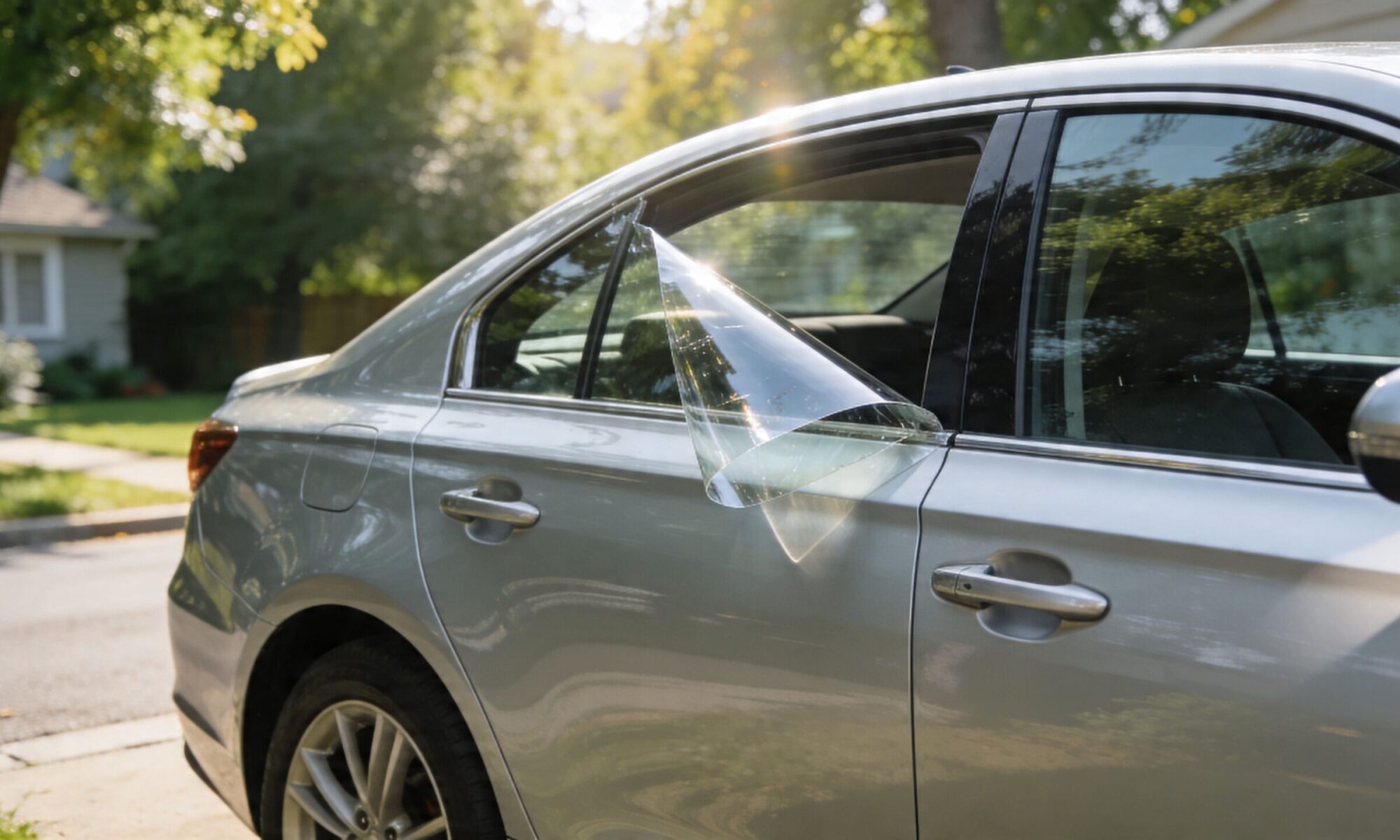
Bubbling, purple discoloration, and peeling mean the old film has failed. It should be removed before new tint goes on.
Installing over bad tint creates another layer of problems instead of fixing the first one. On many Georgia vehicles, especially ones that have spent years in direct sun, removal is the step that determines whether the new ceramic job looks clean or starts with defects trapped underneath.
Can ceramic tint have any downside
It can.
The main trade-off I point out to customers is low-angle haze on some high-performance films. Some drivers never notice it. Others notice it right away, especially in certain early morning or late afternoon light. Ceramic is still the better product for many vehicles, but a good shop should explain that trade-off clearly instead of pretending every film looks identical.
If you’re comparing ceramic window tint, replacing old film, or trying to stay within Georgia tint laws for a vehicle in Kennesaw, Woodstock, Acworth, Marietta, or Canton, get a vehicle-specific quote from The Tint Guy. The right film depends on your glass, your daily drive, and whether you care most about heat reduction, glare control, appearance, or long-term durability.