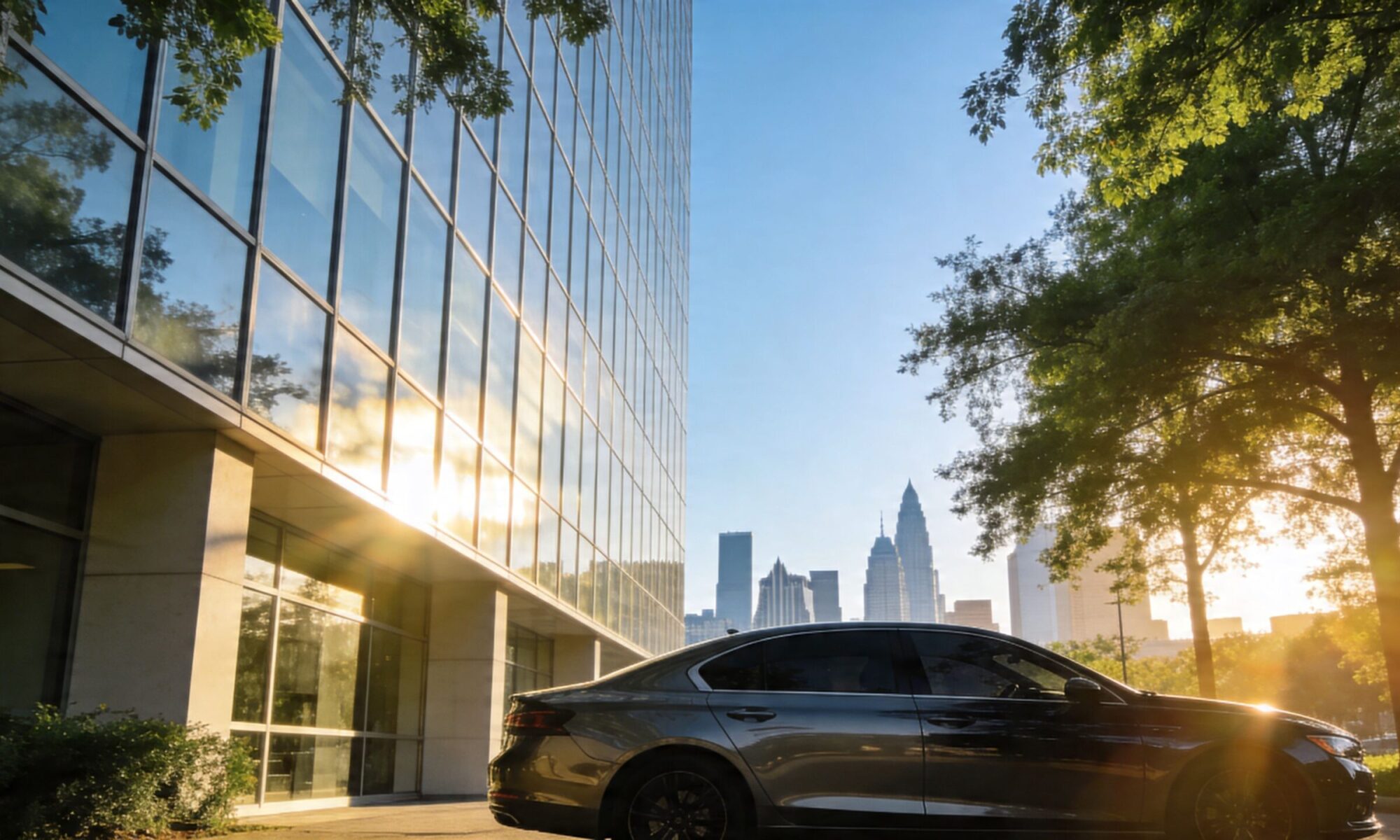
By July in North Atlanta, the same thing happens everywhere. You open your car in a Kennesaw parking lot and get hit with trapped heat off the seats, steering wheel, and dash. Then you walk into a sun-facing office or living room in Woodstock or Marietta and find one side of the space noticeably hotter than the rest.
That’s a glass problem more than a HVAC problem.
Untreated glass lets in heat, glare, and the UV that slowly beats up interiors. In cars, that means a hotter cabin, faded trim, and a harder drive during rush hour. In homes and commercial spaces, it means hot spots, screen glare, overworked air conditioning, and rooms people avoid during the afternoon.
Window film solves both situations. The film you apply to a storefront or office isn’t identical to what goes on a car, but the core job is the same. Control solar energy before it takes over the space.
In North Metro Atlanta, that matters because customers usually aren’t shopping for tint because they want darker glass. They’re trying to fix a daily comfort problem. Some want ceramic window tint in Kennesaw because their commute is miserable. Others need window tint for buildings because west-facing glass is turning a conference room or front room into a heat pocket every afternoon. A lot of people need both.
Beat the Georgia Heat in Your Car and Home
The most common call starts with a simple complaint. “My AC runs nonstop, and it still feels hot by the windows.” Or, “My truck sits in the sun at work and is brutal to get into.” Those are different properties, but the cause is familiar.
What Georgia sun does to glass
Glass doesn’t just let in light. It also lets in solar heat and the UV that fades interiors over time. In a car, you feel it fast because the cabin is small and sealed. In a house or office, it shows up as uneven temperatures, glare on screens, and furniture or flooring taking a beating near the glass.
That’s why tint works so well here. It deals with the heat load at the window instead of asking your air conditioner to chase the problem after the fact.
Why building film and auto tint belong in the same conversation
A lot of people think of these as separate services. They aren’t, at least not from a practical standpoint. The person searching for car tint near me in Woodstock is usually dealing with the same Georgia sun as the person searching for commercial window film in Marietta.
Both are trying to solve some version of this list:
- Heat buildup: The space gets uncomfortable fast once the sun shifts.
- Harsh glare: Driving east in the morning or working beside glass becomes tiring.
- Interior wear: Leather, dashboards, flooring, and furniture all take direct exposure.
- Privacy concerns: You may want visibility out without feeling exposed from outside.
Most customers don’t need the darkest film. They need the right film for the job.
What actually matters when choosing tint
In North Atlanta, the decision usually comes down to three things:
- Performance in heat: Not all films reject heat the same way.
- Longevity: Cheap film often looks fine at first and then starts failing.
- Legal or practical fit: Cars have Georgia compliance issues. Buildings have visibility, appearance, and tenant comfort concerns.
If your goal is pure appearance, almost any tint can change the look of the glass. If your goal is comfort, glare control, and long-term value, film choice and installation quality matter a lot more. That’s where most bad tint decisions happen. People buy on darkness alone and ignore performance, warranty support, or whether the film fits Georgia conditions in the first place.
Understanding Window Film Technology for Buildings and Vehicles
Window film is a thin polyester-based laminate designed to change how glass handles sunlight. Some films focus on solar control. Some add privacy. Some are tuned for year-round efficiency. On vehicles, the priorities usually lean toward cabin comfort, UV protection, glare reduction, and appearance. On buildings, the focus is often heat control, occupant comfort, and reducing strain on cooling systems.

How film changes what comes through the glass
Think of untreated glass like a screen door. It separates inside from outside, but a lot still gets through. Window film adds layers that absorb, reflect, or selectively reject parts of the sun’s energy before that energy turns into indoor heat.
For building owners looking at window tint for buildings, this is why film often makes more sense than doing nothing and hoping the HVAC system catches up. The global architectural window tint film market is projected to reach USD 15 billion by 2033, and solar control films can reduce HVAC loads by up to 60% in commercial buildings and cut residential energy costs by 30%, according to Strategic Revenue Insights.
If you’re comparing commercial options locally, this overview of commercial window film services is useful for seeing the main categories without replacing the glass itself.
The terms that matter without the jargon overload
Two specs come up often when people start comparing films.
Solar Heat Gain Coefficient (SHGC) tells you how much solar heat gets through the window system. Lower means less heat entering the space.
U-value deals with how much heat transfers through the glass more broadly. That matters more when year-round efficiency is part of the goal, especially on older glass.
You don’t need to memorize those terms to choose film well. You just need to know what they affect.
- Lower SHGC: Better at cutting solar heat from direct sun.
- Lower U-value: Better at reducing heat transfer overall.
- Visible light transmission: How much light still comes through.
- Glare control: How comfortable the space feels when sunlight is intense.
Why buildings and cars use similar logic
The same basic solar principles apply in a sedan on I-75 and a west-facing office in Acworth. The difference is the use case.
A vehicle needs film that performs well in a compact glass-heavy environment while staying within Georgia law. A building may need one room left bright, another more private, and a storefront that still looks clean from the outside.
That’s why “darker” doesn’t automatically mean “better.” A high-performance film can reject heat effectively without making the glass look heavily blacked out.
Practical rule: Judge film by what it rejects, not just how dark it looks.
What customers usually notice first after installation
The first thing noticed isn’t the appearance. It’s that the glass feels less aggressive.
On the automotive side, the cabin is easier to get into after sitting in the sun, and harsh glare drops. On the building side, the room near the windows becomes more usable, screen visibility improves, and the HVAC system doesn’t have to fight the same afternoon heat spike.
That practical shift is why film has become a serious retrofit option instead of just an appearance upgrade.
Choosing Your Film Ceramic vs Carbon and Other Tint Types
Most tint problems start with the wrong product choice, not the install itself. If someone asks for “the darkest film you’ve got,” that usually means they’re shopping by appearance first. In Georgia, especially around Kennesaw, Woodstock, and Marietta, that’s not the smartest way to buy tint.
The better question is this. What do you want the film to do every day?

The quick comparison
| Film type | Where it fits | Main trade-off |
|---|---|---|
| Dyed film | Basic appearance and privacy | Lower long-term performance |
| Metallized film | Strong heat rejection in some applications | Can interfere with signals |
| Carbon film | Solid all-around upgrade | Not the top performer for heat |
| Ceramic film | Premium heat rejection and clarity | Higher upfront cost |
| Hybrid film | Middle ground between categories | Depends heavily on brand and construction |
Dyed film works for looks first
Dyed film is usually the entry-level choice. It gives the glass a darker appearance and can help with privacy. For some drivers, that’s enough.
The downside is longevity and performance. If your real goal is heat reduction tint for Georgia summers, dyed film often disappoints over time. It’s the option people replace when they say, “My old tint looked okay at first, then started feeling weak and tired.”
Metallized film still has a place, but know the catch
Metallized products can reject a lot of heat, and some building applications still use reflective or metallic constructions effectively. But for cars, signal interference can be a real issue. That matters more now than it used to because modern vehicles rely on phones, GPS, Bluetooth, and connected systems constantly.
If someone wants strong performance with no concern about signal disruption, metallic film usually isn’t my first recommendation.
Carbon is the practical middle ground
Carbon film is a good fit for customers who want better performance than dyed film without stepping into the premium ceramic tier. It has a cleaner, matte look than some lower-end products and doesn’t carry the same signal issues as metallic films.
For many cars in Cherokee and Cobb County, carbon is a reasonable value choice. It gives you a real functional upgrade. It just isn’t the top answer if your priority is maximum heat rejection.
Ceramic is the film most Georgia drivers and many building owners actually want
Ceramic film costs more up front, but it solves the common problem that drives the initial search. Heat.
Advanced ceramic window films can reach SHGC values as low as 0.29, which represents a 69% reduction in solar heat gain compared to untreated glass. They can also reject up to 78% of total solar energy and lower interior temperatures by 10 to 15°F, according to Sun Tint’s building heat reduction analysis.
For drivers, that can mean a cabin that doesn’t punish you at every stoplight. For buildings, it can mean a room that stays usable in late afternoon sun without covering the glass with blinds all day.
Ceramic also gives you a few practical advantages people care about:
- No metal layer: Better for electronics and signals.
- High clarity: The view out stays cleaner than many people expect.
- Stronger heat performance: That’s the big one in Georgia.
- Better long-term value: Especially for customers planning to keep the car or property.
If your main complaint is heat, ceramic is usually the shortest path to fixing it.
What works for buildings isn’t always what works for cars
For window tint for buildings, there are times when a reflective or specialty film makes sense. Large commercial glass, privacy needs, and glare-heavy interiors can change the recommendation.
For cars, the buying pattern is simpler. Most daily commuters asking about the best window tint for cars are deciding between a standard film and a ceramic upgrade. If they spend a lot of time on the road, park outside, or care about cabin comfort, ceramic usually wins that comparison.
A practical way to choose
Use this if you’re narrowing it down:
- Choose dyed film if appearance is the priority and budget is tight.
- Choose carbon film if you want a better all-around product without going premium.
- Choose ceramic film if heat rejection, clarity, and long-term satisfaction matter most.
- Choose specialty building film if the problem is specific, like glare-heavy offices, privacy, or older glass needing seasonal performance help.
The mistake isn’t buying a cheaper film. The mistake is buying a cheaper film for a premium problem.
The Top 5 Benefits of Tinting Your Windows in Georgia
Georgia drivers and property owners don’t buy tint because they’re bored. They buy it because sun through glass gets old fast. The benefits are easy to feel when the film matches the problem.
Better heat control on daily drives and sun-facing rooms
If your car sits outside in Acworth or your office has afternoon exposure in Marietta, heat control is usually the first reason to tint. Good film cuts the harshness before the interior absorbs it.
That means a more manageable cabin, less strain on your air conditioning, and rooms that stop feeling like they belong to a different thermostat zone.
Strong UV protection for interiors
Modern window films can block over 99% of harmful UV rays and up to 97% of infrared light, according to Total Protection Films’ window tint statistics. That matters because UV isn’t just a skin issue. It’s also one of the reasons interiors fade and break down.
On vehicles, that means dashboards, trim, leather, and plastics age slower. In homes and offices, floors, furniture, and fabrics hold up better near the glass.
Less glare and less eye fatigue
Glare is a quality-of-life problem people underestimate until it’s gone. It shows up on the morning commute, on a laptop beside a big window, and on a television in a bright living room.
If glare is your main issue in an office setting, it also helps to look at other solutions that work alongside film, such as these commercial window coverings that reduce glare for workspace-heavy interiors.
More privacy without closing everything off
Tint can give you a cleaner layer of privacy during the day without making a vehicle or room feel shut in. That matters for storefronts, offices, street-facing homes, and commuters who don’t want every item in the back seat on display.
Privacy film works best when it’s selected for the actual lighting conditions. Some customers expect a full one-way mirror effect all day. Real-world performance depends on light balance inside and outside.
Daytime privacy is easier to achieve than round-the-clock privacy. That’s where expectations need to be honest.
Better protection for resale and long-term condition
Vehicle interiors don’t fail all at once. They slowly dry out, fade, discolor, and crack. Window film helps slow that process. The same source notes that this combined protection can prevent up to 60% of fading on vehicle interiors, which is tied to UV light, solar heat, and visible light exposure.
For people who keep their vehicles clean and plan to trade or sell later, that matters. The same goes for property owners trying to protect flooring, displays, furniture, and finishes.
The benefit stack matters more than any single feature
The strongest argument for tint in Georgia isn’t one isolated spec. It’s the combination:
- Cooler cabins and rooms
- Less glare
- Reduced UV exposure
- More privacy
- Slower interior wear
Each benefit helps on its own. Together, they change how the space feels every day.
A Simple Guide to Georgia's Car Window Tint Laws for 2026
People ask about legal tint limits in Georgia almost as often as they ask about ceramic. That makes sense. Nobody wants to pay for auto tint installation in Canton or Kennesaw and then find out the setup isn’t compliant.

Start with VLT
Visible Light Transmission, usually shortened to VLT, is the amount of visible light that passes through the glass and film together. Lower VLT means darker tint.
Customers often find this aspect confusing. The film alone isn’t the only factor. The factory glass also affects the final number.
The practical legal check
For current guidance specific to Georgia vehicles, this page on Georgia auto window tinting laws is a useful reference before scheduling installation or tint replacement.
When you’re deciding what to install, keep these practical rules in mind:
- Front windows matter most: This is usually where compliance questions come up first.
- Windshield tint is limited: A strip at the top is treated differently than full windshield coverage.
- SUVs and trucks can differ from sedans: Vehicle type changes what’s allowed on some rear glass.
Why legal planning matters before installation
A lot of removal jobs come from one of two mistakes. Either the owner bought based on appearance alone, or the previous installer didn’t clearly explain what the final result would be on that specific vehicle glass.
That’s why a meter check and product discussion matter. “Looks legal” isn’t the same as legal.
Here’s a visual walkthrough many drivers find helpful before making a decision:
A few Georgia-specific judgment calls
Some shade choices look aggressive but still work if the measured result stays compliant. Others look moderate and still miss the mark because the factory glass was already darker than expected.
If you want the safest route:
- Ask for the final target, not just the film shade
- Treat windshield tint separately from side and rear glass
- Don’t assume your friend’s setup fits your vehicle
- If you bought a used car, verify what’s already installed before adding anything
Tint laws are easier to follow when the installer plans around the glass you actually have, not the look you saw online.
Your Tint Installation What to Expect for Cost and Process
Good tint should look clean on day one and still look clean years later. That comes from process, not luck.
On both vehicles and buildings, most failures trace back to one of three things. Poor prep, poor film choice, or poor installation conditions.

What a professional install actually includes
The process usually starts with inspection. Existing damage, old film, defroster lines, seal condition, and glass type all matter. After that comes thorough cleaning, careful film cutting or plotting, application, and final inspection.
For cars, computer-cut patterns help reduce handling and improve fit. For buildings, film selection and glass assessment matter just as much as the application itself, especially on larger panes and older windows. If you’re looking at residential or architectural work, this overview of home window film installation covers the kinds of building applications people usually compare.
A proper install should account for:
- Glass prep: Dust, adhesive residue, oils, and contamination have to go.
- Accurate shaping: Film should fit the glass, not be forced onto it.
- Controlled application: Clean conditions reduce debris and edge issues.
- Curing time: Fresh tint needs time before it settles fully.
What affects cost without guessing at fake numbers
Customers ask what tinting costs per vehicle, and that’s a fair question. The honest answer is that pricing depends on film type, number of windows, vehicle shape, and whether old tint needs to be removed first.
Ceramic costs more than standard film. Large vehicles typically cost more than smaller ones. Removal and replacement usually add labor because old adhesive and failed film can turn a simple job into a cleanup job first.
What matters more than a generic quote is whether you’re comparing equal products. A low number tied to low-grade film isn’t the same buy as a premium film with stronger long-term performance.
Why cheap film often becomes expensive later
Consequently, many people in North Metro Atlanta end up paying twice. A lower-end product may look acceptable early on, then start to purple, bubble, peel, or lose performance.
According to Campbell Window Film’s discussion of heat-reduction films, standard dyed films can lose 50% of their effectiveness in under 5 years, while premium ceramic films with professional installation and lifetime warranties can maintain performance for over a decade. That’s a real trade-off. Lower initial spend, or fewer replacement headaches later.
Tint removal and replacement aren’t side jobs
Removing bad tint the right way matters almost as much as installing new film. Rear windows need extra care because of defroster lines. Old adhesive needs to be cleared cleanly or the new film won’t bond correctly.
If your current tint is bubbling, turning purple, or hazy, replacement is usually smarter than trying to live with it longer. That’s especially true if you’re upgrading from an old dyed product to ceramic.
The cleanest installs usually start with the cleanest removals.
Same-day service and warranty questions
For straightforward vehicles, same-day scheduling can make sense if the shop has the right workflow and film in stock. For more complex jobs, quality should win over speed.
Warranty matters too, but the useful question isn’t “Do you offer one?” It’s “What does it cover?” You want clarity on film failure, fading, bubbling, peeling, and workmanship.
One practical local option people compare for auto, residential, and commercial film work is The Tint Guy, which offers those service categories across North Metro Atlanta.
Frequently Asked Questions About Window Tint in North Atlanta
How long does ceramic window tint last
Ceramic film is usually the long-game option. With professional installation and quality materials, it’s built to hold up far better than bargain film in Georgia heat and humidity.
That doesn’t mean every ceramic product is equal. Film construction, adhesive quality, and install conditions still matter. The reason many people upgrade to ceramic isn’t just heat performance. It’s avoiding another replacement cycle too soon.
Is ceramic tint worth the extra cost in Georgia
For a lot of North Atlanta drivers, yes. If your vehicle sits outside, you commute daily, or your main complaint is heat, ceramic usually makes more sense than chasing the cheapest quote.
For buildings, the answer depends on the glass and the problem you’re solving. If the issue is serious sun exposure, glare, and comfort on large windows, premium film often justifies itself better than low-end material.
Can you install tint over existing film
Usually, no. Installing new film over old failing tint is a shortcut that causes more problems than it solves.
If the old film is bubbling, peeling, hazy, or contaminated, it needs to come off first. Clean glass gives the new film the best chance to perform and last.
What’s the best window tint for cars in Woodstock, Kennesaw, or Canton
For most buyers focused on heat reduction, UV protection, and daily comfort, ceramic is the strongest choice. Carbon can make sense if you want a solid mid-range option. Dyed film is usually the budget entry point.
The right answer still depends on how you use the vehicle. A garage-kept weekend car has different needs than a commuter parked outside every day.
What about windshield tint
Legal compliance and product choice require extra care. Some customers want a windshield tint strip for glare. Others ask about adding heat-reducing film to more glass area.
The right approach is to separate appearance from legality and comfort goals. Windshield glass is not a place to guess.
Will building window film make my home or office too dark
Not necessarily. A good film selection can reduce heat and glare without making the room feel closed in. That’s one of the biggest misconceptions around window tint for buildings.
If natural light matters, there are films designed to keep the space brighter while still improving comfort.
Do bubbling and peeling always mean bad installation
Not always, but they usually point to either poor install conditions, poor prep, or failing low-grade film. Age also matters. Older film can reach the point where replacement is the right answer.
When people ask about tint replacement in Marietta or Acworth, they’re often dealing with old material that has already run its course.
Is darker tint always better for heat reduction
No. This is one of the biggest mistakes buyers make.
A darker low-grade film can still underperform a lighter high-performance ceramic film. If heat reduction is the goal, you want to compare actual film performance, not just appearance from outside the vehicle or building.
What should I ask before booking
Keep it simple:
- What film line are you installing
- Is it dyed, carbon, ceramic, or specialty architectural film
- What does the warranty cover
- Will you remove old film if needed
- How long is the curing period
- Will the final setup stay within Georgia law for my vehicle
Those questions filter out a lot of bad decisions quickly.
If you're comparing ceramic tint, replacing old bubbling film, or looking for window tint for buildings or vehicles in Woodstock, Kennesaw, Acworth, Marietta, or Canton, The Tint Guy is one local option to review. Check the service pages, compare film types, and make sure the product matches the heat, glare, and legal needs you have.