You know the feeling. Your car has been sitting outside in a Georgia parking lot, you open the door in Woodstock or Kennesaw, and the cabin hits you with trapped heat off the seats, steering wheel, dash, and glass. Most drivers start out wanting tint for the look. After one North Georgia summer, they usually want it for comfort.
That's where a lot of Charleston SC window tinting style searches overlap with what drivers need in Woodstock, Kennesaw, and Canton, Georgia. People aren't just comparing shades. They're trying to stay legal, cut glare on the drive home, protect interiors, and avoid wasting money on film that looks fine at first but underperforms once the heat sets in.
The biggest mistake I see is simple. Drivers focus on darkness first and performance second. In Georgia, that's backwards. Since the legal limit on front side glass matters so much, the key decision is which film gives you the best heat rejection at the legal limit, not which film looks darkest in the parking lot.
Why Window Tinting Is a Smart Investment for Georgia Drivers
A daily commuter in Canton and a parent running errands through Kennesaw usually describe the same problem in different ways. One says the car feels like an oven after work. The other says the back seat is too hot for the kids after just a short stop. Both are dealing with the same thing. Sunload through untreated glass builds cabin heat fast, and the discomfort doesn't stop once the A/C kicks on.
Professional automotive tint fixes more than appearance. It helps control how much solar energy gets through the glass, cuts harsh glare, and protects the surfaces you touch every day. Seats, trim, dash panels, and screens all take the hit when a vehicle sits in the Georgia sun week after week.
What drivers in Woodstock, Kennesaw, and Canton usually want
Most buyers come in asking one of these questions:
- How do I keep the car cooler: They want less heat soaking into the cabin during work, school pickups, and shopping stops.
- What's legal in Georgia: They don't want a film that looks good for a month and gets them stopped later.
- What film lasts: They've seen cheap tint bubble, discolor, or turn purple.
- Will it affect electronics: Tesla owners and drivers with heavy phone, GPS, and connected-vehicle use want performance without signal issues.
That last point matters more now than it used to. Modern vehicles rely on clean electronic connectivity, and film choice matters.
Practical rule: If your main goal is comfort, choose film by heat control at a legal shade, not by the darkest sample on the wall.
A lot of online advice around Charleston SC window tinting and Georgia tinting in general stops at “here's the legal percentage.” That's not enough to make a good buying decision. The useful question is this: what performs best at Georgia's legal front-window limit? That's where premium ceramic film starts separating itself from basic dyed options.
Key Benefits of Professional Car Window Tinting
A good tint job should do work you can feel every day. The visual upgrade is real, but the practical value is what makes drivers glad they did it.

Better protection from sun exposure
Premium nano-ceramic film can block up to 99.9% of UV rays according to this ceramic tint guide. That matters for two reasons. First, the people inside the car get better protection from daily sun exposure through the side glass. Second, the interior materials take less abuse over time.
Think about what fades first in a vehicle parked outside all year. The top of the door panels, the leather or vinyl seating surfaces, the dash, and plastic trim all show it. Professional tint helps slow that wear.
A cooler cabin instead of just a darker look
Heat rejection is where quality film earns its price. In Charleston market data, some film packages advertise up to 59% solar rejection and 7% light reflection according to local window tinting pricing and product details. Even if you never use those exact packages, that kind of product positioning points to what buyers care about most in hot climates: less heat getting through the glass.
A cooler cabin also changes how the car feels to drive. The A/C doesn't have to fight as hard after every stop, and the seats, console, and steering wheel recover faster.
Safer visibility in bright conditions
Glare is one of the most underrated benefits of tint. Morning and late-day sun in North Metro Atlanta can wash out your view through the windshield and side glass. Headlights at night create a different kind of eye strain. A properly selected film reduces that harshness without making the car too dark to drive comfortably.
Less glare doesn't just make the drive nicer. It lowers fatigue on long commutes and helps you stay more relaxed behind the wheel.
More privacy for daily use
Tint adds a layer of privacy that makes everyday driving more comfortable. You're less exposed at intersections and in parking lots, and casual visibility into the cabin drops. That matters when bags, tools, gym gear, or electronics are sitting inside.
For homeowners thinking about privacy in a broader sense, the design tradeoffs in this curtains vs blinds decision are a useful reminder that visibility control is never just about appearance. Function matters.
Why professional installation matters
A strong film still needs a clean install. Contamination, poor edge handling, bad shrinking, or low-grade adhesive can ruin the result. Professional installation gives you a cleaner finish, better fitment, and a film that performs the way it was designed to.
Choosing Your Film Ceramic vs Carbon and Regular Tints
Not all tint is built for the same job. If you compare films the right way, the decision gets easier fast. Don't start with “what's cheapest.” Start with what you expect from the car every day. If your priority is comfort, clean appearance, and long-term value in Woodstock, Kennesaw, or Canton, the film type matters more than commonly understood.
Dyed film does the basic job
Dyed film is the entry-level option. It improves the look of the vehicle, adds some privacy, and can reduce glare. For a buyer on a tight budget, it covers the basics.
The downside is long-term performance. A cited ceramic industry guide notes that dyed films can fade to purple within 2–4 years in contrast to higher-grade ceramic options in this premium ceramic tint overview. That's one reason dyed film often ends up costing more than it seemed to at the start. You save on day one, then deal with aging film sooner.
Carbon film is a solid middle ground
Carbon film sits between budget tint and premium ceramic. It usually gives a richer appearance than basic dyed film and offers better durability and better heat handling than low-end film. For many drivers, carbon is where tint starts feeling like a real upgrade rather than just a cosmetic add-on.
If you want a broader read on performance traits, this breakdown of nano carbon tint benefits is useful for understanding why many buyers step up from dyed film. It helps explain why carbon remains a common choice for drivers who want better heat control without jumping straight to top-tier ceramic.
For a direct side-by-side on premium options, this guide on carbon vs ceramic tints is worth reviewing before you choose.
Ceramic film is built for legal-performance tinting
This is the category I point serious heat-conscious drivers toward most often. Premium nano-ceramic film uses non-metallic particles in a multi-layer polyester matrix to selectively absorb and reflect infrared wavelengths. According to the cited guide above, it rejects 90–96% of infrared radiation where peak heat energy occurs, blocks up to 99.9% of UV rays, and can reject up to 95% of infrared heat without interfering with radio frequencies, GPS, or cellular signals in that same ceramic tint guide.
That last part matters. Older metallic-style approaches could create signal problems. Ceramic doesn't carry that tradeoff in the same way.
For Georgia drivers, the most important point isn't that ceramic is “fancier.” It's that ceramic gives you a better chance of staying comfortable without trying to go illegally dark.
Window Tint Film Comparison
| Feature | Dyed Tint | Carbon Tint | Ceramic Tint |
|---|---|---|---|
| Appearance | Darkens glass and improves looks | Richer, more premium finish | Clean, high-end finish |
| Heat control | Basic | Better than dyed | Strongest performance |
| UV protection | Present but lower-tier overall | Stronger than entry film | Up to 99.9% UV blocking in cited premium products |
| Signal interference | Typically not the main issue | Typically not the main issue | Designed to avoid interference with GPS, cellular, and radio signals |
| Long-term durability | More likely to discolor over time | Better durability | Best choice for long-term performance focus |
| Best fit | Budget-minded drivers | Mid-range value buyers | Drivers prioritizing heat rejection at legal VLT |
Shop-floor advice: If you're trying to maximize comfort at Georgia's front-window legal limit, ceramic is usually the smartest place to spend the extra money.
Understanding Georgias Legal Window Tint Limits
Georgia tint law isn't complicated once you strip away the jargon. The problem is that most drivers only hear a number and not what it applies to. That's where mistakes happen.

What VLT actually means
Visible Light Transmission, or VLT, is the amount of visible light that passes through the glass and the film together. A lower number means a darker result. A higher number means more light gets through.
That's why legal advice has to be exact. A film that sounds close on paper can still push the finished window out of compliance once it's installed over factory glass.
Georgia rules for cars, SUVs, and trucks
Georgia mandates a minimum 32% VLT for front side windows on all vehicles. For sedans, that 32% VLT requirement applies to all windows except the windshield, while SUVs, trucks, and vans can have any darkness on rear side and rear windows as long as the front doors stay at 32% VLT. Georgia also limits reflectivity to 20% according to this summary of Georgia window tint laws.
That creates a real-world distinction:
- Sedans: Front side, rear side, and rear glass all have to stay within the same basic VLT rule.
- SUVs and trucks: Front doors matter most for compliance, while the rear half gives you more flexibility.
- All regulated windows: Reflective, mirrored-looking installs can create legal problems even if the shade seems acceptable.
For a practical breakdown written for local drivers, this guide to the legal limit for tint in Georgia is a helpful reference.
Why legal ceramic tint matters more than illegal dark tint
Many Charleston SC window tinting style searches miss the point for Georgia buyers. The goal isn't the darkest look. The goal is the best-performing legal setup.
A legal front window with premium ceramic film can feel very different from a legal front window with cheap dyed film because heat rejection and visible darkness aren't the same thing. Buyers who understand that usually make better decisions and avoid expensive redo jobs.
If you drive a sedan in Kennesaw or Canton, don't assume your rear glass gets the same freedom an SUV owner has. Vehicle type changes what's legal.
The Professional Tint Installation Process
A clean install starts before the film ever touches the glass. Good shops don't rush prep, because prep is where most bad jobs are born.

What happens on installation day
First, the installer inspects the glass, seals, and any existing film. Old adhesive, contamination, felt shedding from window channels, and prior damage all matter. If there's existing tint in poor condition, it should be removed before new film goes on. Stacking new film over old problems never ends well.
Then the glass gets cleaned thoroughly. Not a quick wipe-down. A proper prep removes dust, oil, haze, and debris that would otherwise show up as trapped contamination under the film.
Cutting, shrinking, and applying the film
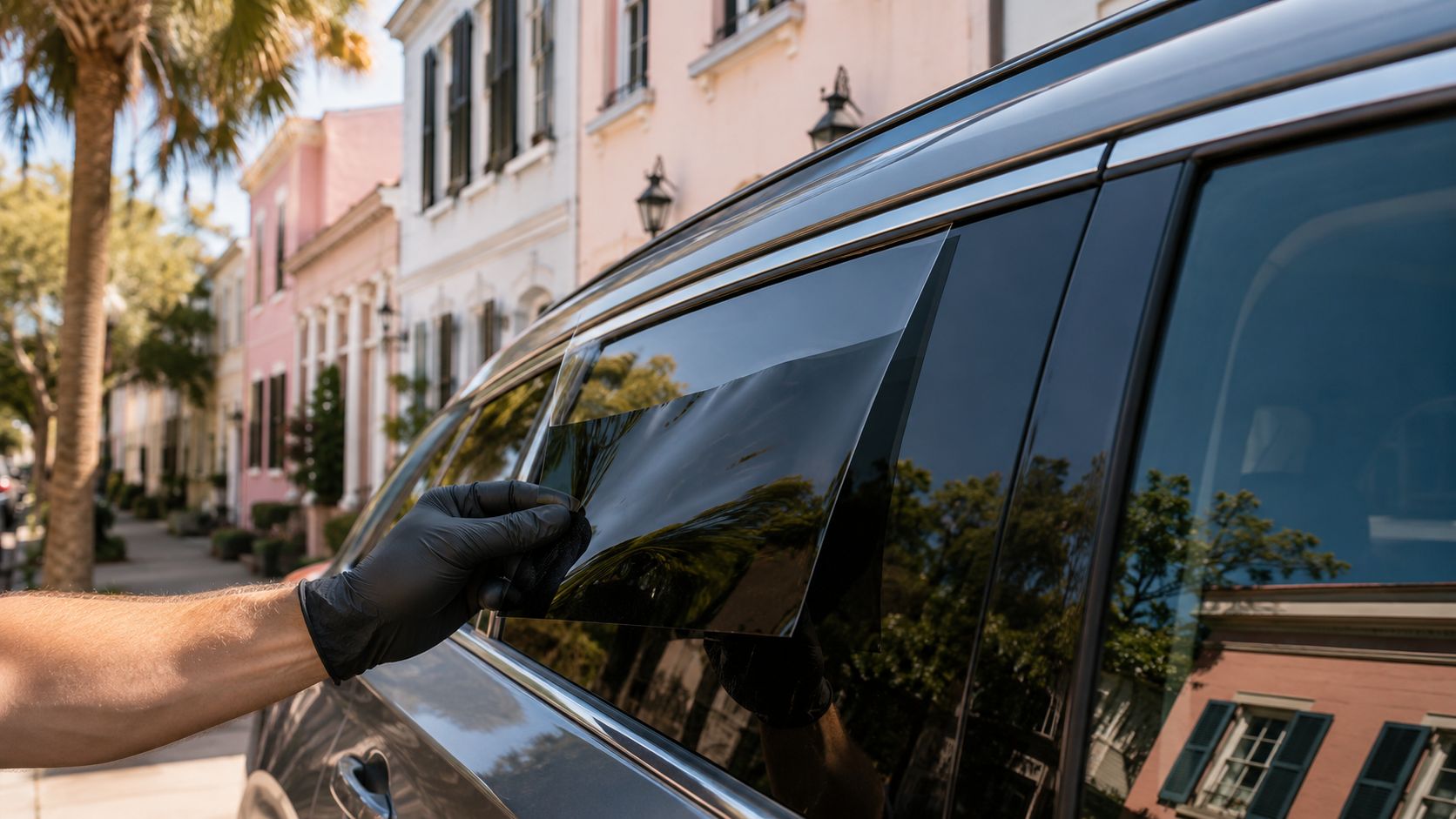
Most quality automotive work uses pattern-cut film for precise fitment. The film is shaped to the glass, heat-shrunk where necessary, then installed with careful squeegee work to push out solution and seat the adhesive properly.
For drivers curious why DIY attempts often go sideways, these tips for DIY window film help show how much precision goes into even a basic glass-film application. Automotive glass adds more complexity because of curves, seals, and tighter finish expectations.
A more detailed look at the automobile window tinting process and how long it takes to tint windows helps set expectations for timing and workflow.
What to expect after pickup
Fresh tint doesn't always look fully settled the moment you leave. A little haze or small water pockets can be normal while the film cures. That doesn't automatically mean something went wrong.
This video gives a useful visual sense of what the process looks like in practice.
What matters is how the film was installed, how clean the edges are, and whether the shop gives clear aftercare instructions. The fastest way to ruin a fresh install is rolling windows down too soon or assuming every temporary visual change is a defect.
Car Window Tinting Costs in Woodstock and Kennesaw
Price matters, but tint pricing only makes sense when you connect it to film type and vehicle coverage. A low quote for two front windows isn't the same as a quote for a full vehicle, and a ceramic package isn't competing with entry-level dyed film on the same terms.
As a general guide in the industry, professional car window tinting services often begin around $99 for two front windows and $249 for a full vehicle with standard film. Premium ceramic tinting costs more, with full installations on sides and rear windows typically falling between $225 and $625 depending on the film grade and vehicle, based on this window tint pricing guide.
What usually changes the price
A quote typically moves based on a few practical factors:
- Vehicle size: Larger SUVs, trucks, and vans usually require more film and more labor.
- Window count and shape: More glass, tighter curves, and complex rear windows affect install time.
- Film category: Standard film costs less up front. Ceramic commands more because the material itself performs better.
- Old tint removal: If the vehicle has failing film or adhesive residue, that extra labor affects final cost.
Cheap tint often costs more later
The most expensive tint job is often the one you pay for twice. A bargain install can look acceptable at first and then age badly, discolor, peel, or force a full removal and replacement. That's especially common when the original choice was made on price alone.
For drivers in Woodstock and Kennesaw who spend a lot of time on the road, ceramic usually makes the strongest long-term case. You pay more at the start, but you get better comfort where it counts most, at the legal front-window limit.
Cost filter: Ask what film is being installed, what area of the vehicle is included, and whether removal of old film is part of the quote. If those answers are vague, the number alone doesn't mean much.
Your Auto Tinting Questions Answered
A lot of buyers narrow the decision down to one final set of practical questions. These are the ones that usually decide whether someone books now or keeps shopping.
Does ceramic tint really make a noticeable difference
Yes, especially if your goal is comfort rather than just appearance. At the same legal VLT, premium ceramic film can outperform basic film in heat control because its technology is designed to target infrared energy instead of only darkening the glass. That's the key difference many drivers feel within the first few hot afternoons.
Should old tint be removed first
If the existing film is bubbling, turning purple, peeling, or showing adhesive failure, removal is the right move. New film needs a stable, clean surface. Covering bad tint with new tint just hides problems temporarily and usually creates worse ones.
Is ceramic a good fit for Teslas and other EVs
It usually is, because premium nano-ceramic film is designed to avoid the signal interference problems associated with older metalized products. That matters for drivers who rely heavily on phone connectivity, navigation, and modern vehicle electronics.

What happens if the tint is too dark
That's not a minor issue. In Georgia, violating tint laws is a misdemeanor punishable by fines up to $1,000 and imprisonment of up to 12 months, and tint that appears darker than the legal 32% VLT can provide probable cause for a traffic stop according to this summary of Georgia tint law penalties.
Quick answers drivers ask all the time
- How long does tint last: Film life depends heavily on product quality and installation quality. Better film holds up better.
- Will fresh tint look hazy at first: It can during curing. That's often normal.
- Can tint fix heat if I go very dark: Darkness alone isn't the answer. Film technology matters more.
- Should I choose based on looks only: Not in Georgia. Legal compliance and heat rejection should drive the decision.
If you're comparing Charleston SC window tinting searches with local Georgia options, keep the main goal simple. Choose the film that gives you the best comfort, best longevity, and best compliance for the vehicle you drive in Woodstock, Kennesaw, or Canton.
If you want help choosing the right automotive tint for your vehicle in North Metro Atlanta, The Tint Guy is a strong place to start. They work with drivers across Woodstock, Kennesaw, Canton, and nearby areas who want professional installation, legal Georgia tint guidance, and premium film options that prioritize heat rejection, UV protection, glare control, and clean long-term results.