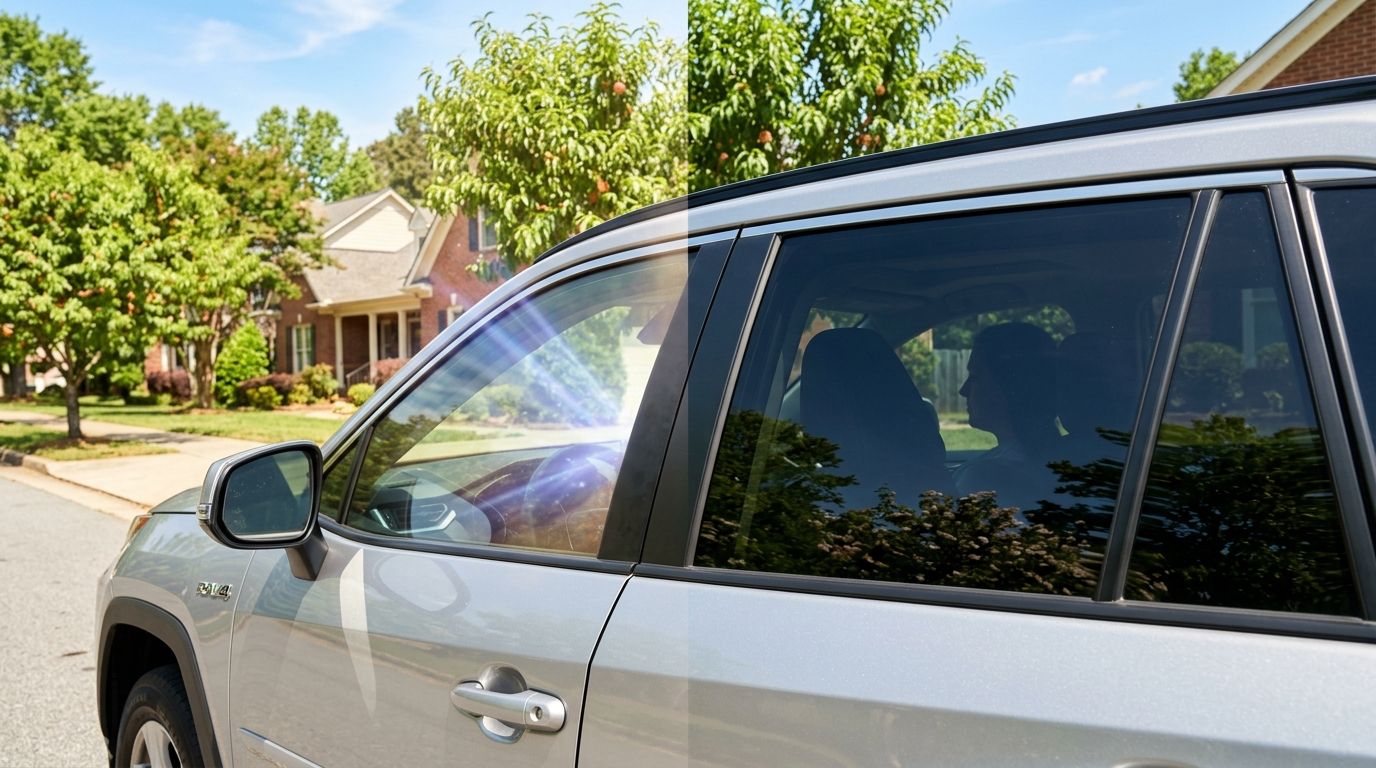
You're probably reading this after another drive through North Metro Atlanta with the sun hitting your left arm through the glass. By the time you get from Woodstock to Kennesaw or make a run through Canton in afternoon traffic, the cabin feels hotter, your steering wheel feels baked, and the side of your body nearest the window has taken the brunt of it.
Most drivers notice the heat first. What they don't always notice is the exposure that comes with it. Your car can feel sealed up and protected while harmful ultraviolet light still gets through the side glass. That's why people end up with faded interiors, dried-out trim, and uneven sun exposure from regular commuting.
In a place like North Georgia, where driving is part of daily life, UV ray protection car windows isn't just about looks or privacy. It's about reducing what gets through the glass every day, every errand, every school pickup, and every long stretch on the road.
The Hidden Danger in Your Daily Georgia Commute
A lot of drivers in Woodstock, Kennesaw, and Canton have the same experience. You leave in the morning feeling fine, then halfway through the drive your left arm feels warmer than the rest of you. On the way home, the light cuts across the side window again, and the seat, console, and door panel all hold more heat than they should.
That daily exposure adds up in ways people don't always connect to their car windows. Skin takes the hit. So does your interior. Leather dries out faster. Dark plastics lose depth. Trim starts looking tired long before the rest of the vehicle should.
What Georgia drivers feel first
The first complaint is usually comfort. The second is glare. The third is often surprise when someone learns the window next to them may not be protecting them nearly as well as they assumed.
The sun coming through the driver's side glass doesn't have to feel dramatic to be a real problem. Daily commuting is enough.
There's also the eye strain piece. If you spend a lot of time behind the wheel, this guide to protecting your sight is worth reading because UV exposure isn't only about skin. Your visual comfort matters too, especially during bright Georgia afternoons.
The false sense of protection
Factory glass looks substantial, so people assume it's handling the problem. That assumption is where most mistakes start. A vehicle can have dark rear privacy glass, a newer cabin, and all the right features, and still leave the driver exposed through the side windows.
If you want a closer look at the health side of that issue, The Tint Guy has a practical article on reducing skin cancer risks with window films. It gets to the point most drivers miss. The glass you already have may not be the shield you think it is.
Why Your Car's Factory Glass Is Not Enough Protection
Factory glass and factory privacy tint get confused all the time. They aren't the same thing as a high-performance UV-blocking film, and they don't solve the same problem.

The biggest gap is between the windshield and the side windows. Standard factory automotive glass provides highly inconsistent UV protection depending on the window location, with front windshields blocking 94–99% of UVA rays due to laminated construction, while side windows average only 71% UVA blockage, with some blocking as little as 44%, according to this UV protection breakdown for automotive glass.
Why the windshield performs differently
Your windshield is built differently from the glass beside you. That matters more than commonly understood. The windshield's laminated construction gives it a much stronger built-in advantage against UVA. Side glass typically doesn't give you that same level of defense.
That's why drivers often feel the sun more aggressively from the side than from straight ahead. The discomfort has a physical reason behind it, not just a seasonal one.
Dark glass is not the same as protective glass
A common point of confusion is that a darker rear window or factory privacy glass may reduce visible light and make the cabin look more private, but that doesn't automatically mean it's doing serious work against the ultraviolet wavelengths that matter most for skin and interior protection.
A few common assumptions cause trouble:
- “My back windows are dark, so I'm covered.” Privacy glass changes appearance, not necessarily medical-grade UV performance.
- “If it came from the factory, it must already be protecting me.” Factory setups vary a lot by window location.
- “I don't burn in the car, so I'm fine.” UVA exposure can still get through even when you don't feel an immediate burn.
Practical rule: Judge window protection by film performance, not by how dark the glass looks from the outside.
What this means in real driving
If you commute around Canton, shuttle kids across Woodstock, or spend weekends running between Cobb and Cherokee County, your exposure pattern is repetitive. The same side of the body gets hit over and over. The same surfaces inside the vehicle absorb that light and heat again and again.
I also tell drivers to separate two issues that often happen together. UV protection is one problem. Glass clarity and maintenance are another. If your windows have hard-water marks or mineral damage, this guide on how to remove stubborn car window etching is useful because etched glass can make glare and visibility feel worse even before tint enters the conversation.
How Aftermarket Window Film Creates a UV Shield
Aftermarket window film works like high-tech sunscreen for your car windows. The difference is that instead of putting protection on your skin every day, you place a dedicated layer on the glass itself.

What the film actually does
A quality film changes the performance of tempered side glass. Instead of relying on whatever protection the factory glass happens to provide, the film becomes the working barrier that cuts ultraviolet transmission down to a far more protective level.
High-quality aftermarket window films, particularly clear UV-blocking or ceramic tints, can reduce the total UV radiation penetrating tempered glass by over 99%, effectively providing an SPF equivalent of more than 1,000 and offering near-complete protection against both UVA and UVB rays, as outlined in this Cancer Council resource on tinted windows.
That's the part many Georgia drivers need to hear. Protection does not depend on going dark. You can use a clear or lighter-performance film and still target UV in a serious way.
Why ceramic film stands out
Ceramic film is built for performance, not just appearance. It's the option people choose when they want UV protection, better comfort, and a cleaner long-term result without leaning on old-school dark dye to do the work.
The practical benefits usually show up in a few places:
- For your skin: Less ultraviolet transmission through the side glass.
- For your cabin: Better protection for leather, vinyl, trim, and screens.
- For daily comfort: Less harsh sunlight beating on one side of the body.
- For visibility: Strong protection without needing an overly dark look.
If you want the basics on how different film categories work, this overview of window film types and benefits is a helpful starting point.
A quick visual explanation helps if you've never seen how the layers interact:
What works and what doesn't
What works is performance film designed to block ultraviolet light at the material level. What doesn't work is assuming any dark-looking glass is protective just because it changes the look of the vehicle.
Good UV protection is measured by what the film blocks, not by how much it darkens the cabin.
Choosing Your Shield Ceramic vs Other Tint Films
Not all tint films solve the same problem. Some are built mostly for appearance. Some help with glare. Some reflect heat well but create trade-offs. If your main goal is UV ray protection car windows for a vehicle in Woodstock, Kennesaw, or Canton, the film type matters more than the shade.
The myth I correct most often is simple. Darker isn't automatically safer. The critical misconception is that darker tint or factory privacy tint equals UV protection; data shows factory tints block only 40–70% of UVA rays, while quality clear or tinted ceramic films achieve 99% UVA/UVB rejection regardless of shade, making material type the decisive factor, based on this Prevent Cancer Foundation article on sunscreen and driving.
The real differences between film types
Dyed film is usually where budget installs start. It changes the look of the vehicle and can soften glare, but it's not the film I'd point to when someone wants the strongest long-term performance.
Metalized film has a different personality. It can improve performance, but some drivers don't like the reflective look, and signal interference can become part of the conversation depending on the vehicle and electronics.
Carbon film sits in a middle ground that some owners like. It avoids some of the appearance issues of metalized film and generally holds color better than entry-level dyed film.
Ceramic film is the premium choice when the goal is broad protection with fewer compromises. It's the film category people usually end up choosing when they care about UV defense, cabin comfort, stable appearance, and not interfering with daily tech use.
Window Tint Technology Comparison
| Feature | Dyed Film | Metalized Film | Carbon Film | Ceramic Film |
|---|---|---|---|---|
| UV protection approach | Basic film option, appearance-led | Reflective performance approach | Balanced mid-tier option | Performance-focused protection |
| Heat handling | Limited compared with higher-end films | Better than dyed in many applications | Stronger overall balance | Strong high-end performance |
| Glare reduction | Good | Good | Good | Good |
| Color stability | More likely to fade over time | Better than dyed | Strong color stability | Strong color stability |
| Signal interference | No major concern | Can be a concern with electronics | No major concern | No major concern |
| Cabin appearance | Traditional dark-tint look | More reflective finish | Matte, cleaner look | Clean look in clear or tinted versions |
| Best fit | Style on a tighter budget | Drivers okay with reflectivity trade-offs | Value-conscious upgrade | Drivers prioritizing UV protection and comfort |
How I'd choose in the real world
For a work truck in Kennesaw, a family SUV in Canton, or a daily commuter sedan in Woodstock, I'd base the decision on priorities:
- Choose dyed film if appearance matters most and budget is the main driver.
- Choose metalized film if you want a more reflective performance style and accept the trade-offs.
- Choose carbon film if you want a solid upgrade without stepping fully into premium pricing.
- Choose ceramic film if UV protection, interior preservation, and a higher-end ownership experience matter most.
If you care about skin exposure and not just darker glass, ceramic is usually the film that lines up with that goal.
Staying Legal Georgia's Car Window Tint Laws
A lot of Georgia drivers assume darker glass means better protection. That is not how the law reads, and it is not how UV protection works in practice.

If you drive around Woodstock, Kennesaw, or Canton every day, the goal is simple. Get the UV protection and heat control you want without ending up with a ticket or a failed inspection. For most customers, that starts with understanding one common mistake. Factory glass and factory privacy glass do not automatically put you in the clear on UV protection or on legal aftermarket tint choices.
The front side window rule
Georgia sets a 32% visible light transmission minimum for front side windows, based on the Georgia Department of Public Safety window tint law page. That rule applies across vehicle types, so the front doors are usually where legal planning matters most.
In the shop, product choice is more important than chasing a darker shade. A high-quality ceramic film can give Georgia drivers strong UV rejection and better day-to-day comfort while staying within the legal limit on the front windows.
Rear glass rules by vehicle type
The back half of the vehicle follows different rules depending on the body style.
- Sedans: rear side windows and the rear windshield follow the same 32% VLT standard.
- SUVs, trucks, and vans: the rear side windows and rear glass have far more flexibility on darkness under Georgia law.
That difference matters for families driving three-row SUVs and for truck owners who want more privacy in the cargo area. It also matters if you are comparing your vehicle to someone else's and assuming the same setup is legal on both.
Windshield and reflectivity limits
Georgia does not allow tint across the full front windshield. The permitted exception is a non-reflective strip across the top. State law also limits reflectivity, so the film cannot create a mirrored look that falls outside the legal standard, as summarized earlier in the article.
For drivers who want the rules explained in plain English before they book, this guide to Georgia auto window tinting laws lays out what is allowed on each section of the vehicle.
The practical takeaway is straightforward. Legal tint is not about making the glass as dark as possible. It is about choosing a film that gives you real UV protection for Georgia sun exposure, fits your vehicle type, and stays inside the state limits.
Our Professional Installation and Lifetime Warranty
Good film can still fail early if the install is rushed.
I see the same avoidable problems on redo jobs across North Atlanta. Contamination under the film, fingers on curved glass, sloppy edges near the seals, and corners that start lifting after one hot Georgia summer. Those issues usually come from prep and technique, not from the idea of window tint itself.
A proper install starts long before the squeegee work. The glass needs to be cleaned beyond what looks clean to the eye. The patterns need to fit the vehicle correctly. Curved rear glass has to be heat-formed with care so the film lays down flat instead of fighting the shape of the window. Clean edges matter too, because that is where poor work shows up first.
Legal setup is part of professional installation. The rules were covered earlier in the article. What matters here is making those choices before the film goes on the car, especially for front doors, windshield strips, and vehicles where factory glass already changes the final appearance. A good installer does not guess at shade, stack film blindly over dyed glass, or leave the customer to sort out problems later.
Why install quality changes the result
Customers usually notice two things right away. How the car looks, and how clearly they can see out of it.
The long-term differences show up later. Better installs hold their edges, stay cleaner around the borders, and cure more evenly. You are less likely to deal with peeling, adhesive failure, or the kind of dust specks that catch your eye every time the sun hits the glass. On ceramic film, careful installation also protects the reason many drivers buy it in the first place. Reliable UV protection and heat rejection across the full window, not a film job that starts failing at the edges.
What customers usually want from the process
Drivers in Woodstock, Kennesaw, Canton, and the rest of North Atlanta usually ask for the same practical outcomes:
- Clean finish: tight edges, no obvious gaps, and no rough cuts
- Film that lasts: no purple fade, bubbling, or peeling after a few seasons
- Work done efficiently: same-day service when possible for a daily driver
- Warranty support: a clear fix if there is a film defect or install issue
The Tint Guy is one local option for drivers who want ceramic film installed with those standards in mind, along with a lifetime warranty against common long-term film problems. That matters more than people expect. A warranty has real value only when the shop doing the work is still there to stand behind the install.
Get Your Free Tint Quote in Woodstock Kennesaw and Canton
Factory glass does some things well. Full UV protection through the side windows usually isn't one of them. That's the part that surprises people most after they learn how much the side glass can still let through and how much difference a quality ceramic film can make.
For Georgia drivers, the value is practical. Better comfort on long afternoon drives. Less direct sun beating on your arm and face. Better protection for seats, trim, and interior surfaces that would otherwise take that exposure every day. A cleaner way to stay legal while still improving how the vehicle feels.
The right fit depends on the vehicle
A commuter car in Woodstock doesn't have the same priorities as a family SUV in Canton or a pickup in Kennesaw.
Some people want a lighter ceramic setup focused on clarity and UV protection. Others want privacy on the rear glass, strong glare control, and a more finished look. Tesla owners often care about protecting large glass areas and preserving the interior. Families usually care about keeping the cabin more comfortable for passengers and protecting the back seat from harsh direct sun.
What to ask before you book
If you're comparing shops or film options, keep the conversation focused on outcomes that matter:
- Ask what film type is being installed. “Ceramic” matters more than “dark.”
- Ask how the setup will stay legal in Georgia. Especially on front doors and windshield areas.
- Ask about the warranty in plain language. You should know what's covered if film fails.
- Ask how the installer handles your exact vehicle. Frameless glass, large rear windows, and tight seals all change the work.
For drivers in Woodstock, Kennesaw, and Canton, the goal isn't just darker windows. It's a vehicle that feels better to drive, protects better in daily sun, and stays within Georgia law.
If you want a straightforward recommendation and a no-pressure estimate, contact The Tint Guy for a free tint quote on your car, truck, SUV, or Tesla in Woodstock, Kennesaw, or Canton.