When you get your vehicle’s windows professionally tinted with a quality film, you can expect it to last anywhere from 5 to over 15 years. But that’s a pretty big range, right? The actual lifespan of your automotive window tint really boils down to a few key things: the specific type of film you choose, the skill of the person installing it, and how you take care of it over time.
It’s a lot like paint protection. You could get a quick wax job that looks good for a month, or you could invest in a professional ceramic coating that protects your car for years. Automotive window tint is no different.
What Determines Your Car Tint’s Lifespan
When you decide to tint the windows on your car, truck, or SUV, you’re doing more than just giving it a sleek new look. You’re making an investment in your comfort, privacy, and the protection of your vehicle’s interior. But not all window films are created equal, and a few critical factors will determine whether that investment pays off for years or starts to fail way too soon.
Understanding these variables helps you make a smart choice that you’ll be happy with down the road. Here at The Tin Guy, we make it a priority to walk our clients in Marietta and Kennesaw through their options so they get the absolute best performance and value for their money.
Key Factors Influencing Longevity
The durability of your auto tint really comes down to three main components working together.
- Type of Tint Film: The material itself is the single biggest predictor of how long your tint will last. Basic, entry-level dyed films are known to fade and fail pretty quickly, while advanced ceramic window tint is engineered from the ground up for maximum durability against intense heat and UV rays.
- Quality of Installation: A professional installation isn’t just a nice-to-have; it’s essential for longevity. An experienced technician ensures a perfectly clean, flawless application, which prevents the common issues like bubbling, peeling, and dirt contamination that will absolutely shorten a tint’s life.
- Environmental Exposure: This one’s simple: constant, direct sun exposure beats up on any film and accelerates the aging process. For those of us driving around North Atlanta, the intense Georgia sun makes choosing a high-quality, UV-resistant film more of a necessity than a luxury.
Generally speaking, the lifespan of window tint can vary dramatically based on the film type. A basic dyed film might only last 3 to 5 years before you start to see noticeable fading and discoloration. In a hot climate like ours, that process happens even faster as the tint is constantly baked by the sun, causing it to lose its UV-blocking power.
To get a better sense of how different automotive protection products stack up, it can be helpful to see how long ceramic coatings last. This gives you a great perspective on what to expect from different long-term vehicle care investments.
Why the Film Itself Is Your First Line of Defense
When you’re thinking about how long a window tint will last, the single most important thing to consider is the film itself. The material it’s made from is everything. Not all automotive window films are created equal, and the technology baked into them directly impacts their lifespan, performance, and how they look years down the road.
Think of it like buying tires. Sure, a budget set will get you from A to B, but a premium set delivers better safety, a smoother ride, and lasts a whole lot longer. It’s the same story with window tint.
The most common entry-level choice you’ll see is dyed window tint. It’s easy on the wallet and looks sharp when it’s first installed. The problem is, the color comes from simple dyes that get absolutely hammered by UV rays. After just a few years under the Georgia sun, that film will start to fade, often turning that dreaded purple color while losing most of its ability to block heat.
The Problem with Older Technologies
Climb the ladder a bit and you’ll find metalized films. These films have tiny metallic particles woven in to reflect heat, and they definitely perform better than basic dyed options. But this technology comes with a big catch: those metal particles can mess with your vehicle’s electronic signals. That means your GPS, satellite radio, and even your cell phone reception can take a hit. For any modern car that relies on constant connectivity, this is a deal-breaker.
The choice of film is more than just about looks—it’s a decision about long-term performance. A cheap film might save you a few bucks today but will cost you more later in premature failure and replacement, all while giving you subpar protection.
Why Ceramic and Carbon Films Dominate
Here at The Tin Guy, we specialize in modern, high-performance solutions for our clients in Kennesaw, GA and Marietta, GA. We’ve seen what works and what doesn’t, which is why we focus on two far superior types of automotive tint: carbon and ceramic.
- Carbon Window Tint: This film uses durable carbon particles instead of dye. This gives it a true black, matte finish that is incredibly color-stable. It simply will not fade or turn purple over time, and it provides fantastic UV protection and heat rejection without interfering with your electronics.
- Ceramic Window Tint: This is the absolute top of the line in film technology. Ceramic tint uses advanced nano-ceramic particles that are non-conductive and non-metallic. The result? The highest levels of heat rejection and UV protection you can get, with zero signal interference.
For drivers in our hot climate, the difference is night and day. In places like North Atlanta, high-quality ceramic window tints can last 10-15 years or even more, easily doubling the lifespan of standard films. They reject up to 99% of UV rays and can block over 60% of solar heat, keeping your car’s interior significantly cooler and protecting it from sun damage.
These advanced films keep their clarity and sleek look for the long haul, making them the smartest investment for any car, truck, or SUV. To get a full breakdown, check out our guide on the different types and benefits of window film. You’ll see exactly how much film technology impacts longevity and performance.
The Difference Between a DIY Job and Professional Craftsmanship
Let’s be honest: even the absolute best ceramic film on the market will look terrible and fail quickly if it’s not installed correctly. It’s like buying a high-performance engine for your car but letting a total amateur drop it in. The same exact principle applies to automotive window tinting. The skill of the technician is every bit as important as the quality of the film itself.
You can almost always spot a cheap or DIY tint job from a mile away. Those tell-tale signs—ugly bubbles, trapped dust, and peeling edges—have a habit of showing up right after the first brutal Georgia summer. These aren’t just cosmetic flaws; they’re failure points where the film is literally losing its bond with the glass, leading to a much, much shorter lifespan.
How a Professional Process Guarantees Longevity
At The Tin Guy, our entire process is built around creating a seamless, rock-solid bond between the film and your glass. We use computer-cut patterns for a perfect, edge-to-edge fit, whether it’s for a car, truck, or SUV. This precision means no uneven gaps and, more importantly, no risk of a technician taking a knife to your glass.
Our clean, controlled application environment in both our Marietta, GA and Kennesaw, GA shops is non-negotiable. It’s how we prevent contaminants like dust and tiny debris from getting trapped under the film—the number one cause of bubbling and premature peeling.
This chart gives you a clear picture of what to expect from different tint types when they’re installed the right way.
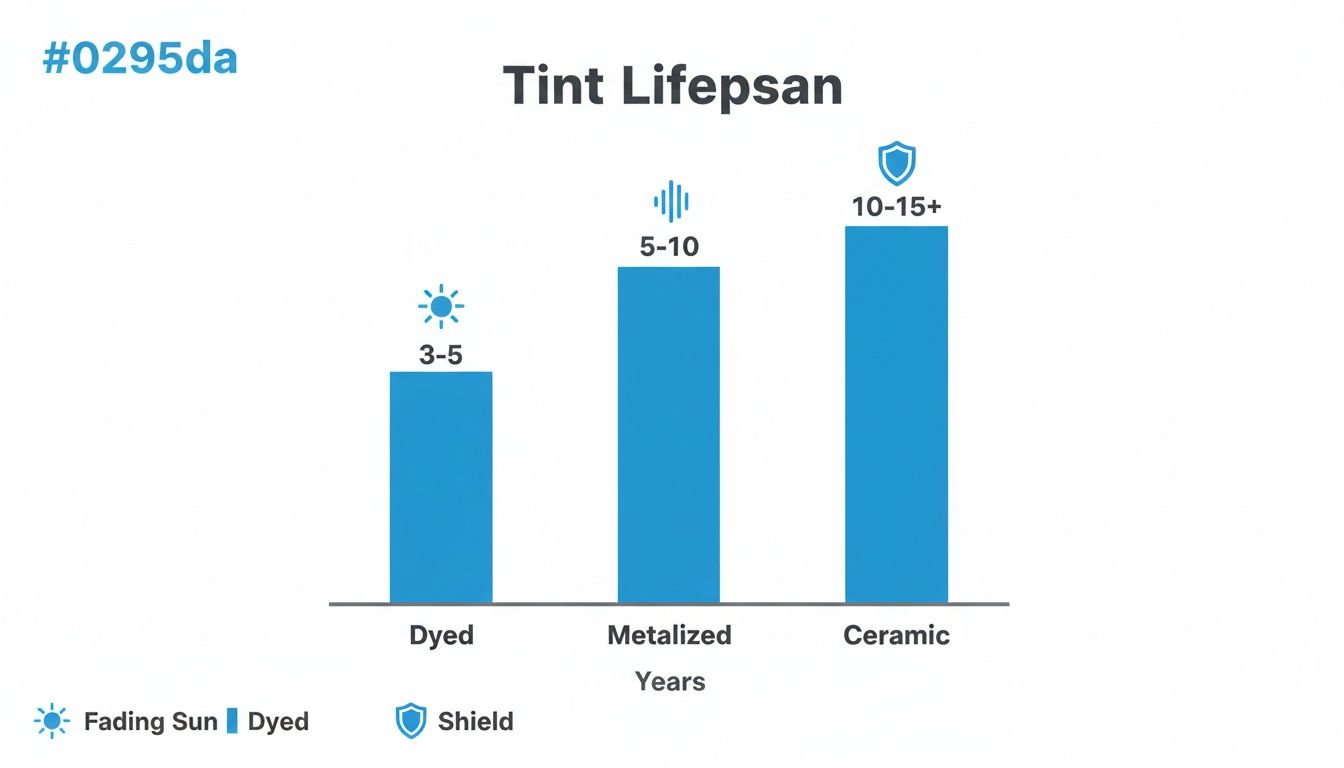
As you can see, a pro installation is what allows premium materials like ceramic tint to actually deliver on their 10+ year potential.
Why Expert Installation is Everything for Durability
A professional installation is proven to extend a tint’s life by 30% to 50%. That can turn a standard 5-year film into a reliable performer that lasts 7 to 10 years. On the flip side, poorly applied films that trap moisture or air can start peeling in just a year or two—this happens in a shocking 85% of subpar jobs. Our techniques ensure a flawless bond that holds up to the humid summers and occasional freezes we get here in North Atlanta.
The quality of the installation directly dictates the longevity of the tint. A professional job isn’t just about making the tint look good on day one; it’s about ensuring it performs flawlessly for thousands of days to come.
Getting a feel for the steps involved really drives home why craftsmanship is so crucial. While it’s not for curved auto glass, guides on how to install window privacy film like a pro show the incredible precision needed for a clean, bubble-free application. It’s a perfect illustration of why you want an expert handling the job on your vehicle.
How to Spot the Signs of Failing Window Tint
Even the best window tint won’t last forever. Over time, the sun, heat, and daily use take their toll. Knowing what to look for helps you catch a failing tint job early, so you can get it replaced before it becomes a bigger headache.
Think of it this way: these symptoms are more than just ugly blemishes. They’re clear signals that the film’s adhesive and protective layers are giving up the ghost. When that happens, your tint is no longer doing its job of blocking UV rays or rejecting heat.
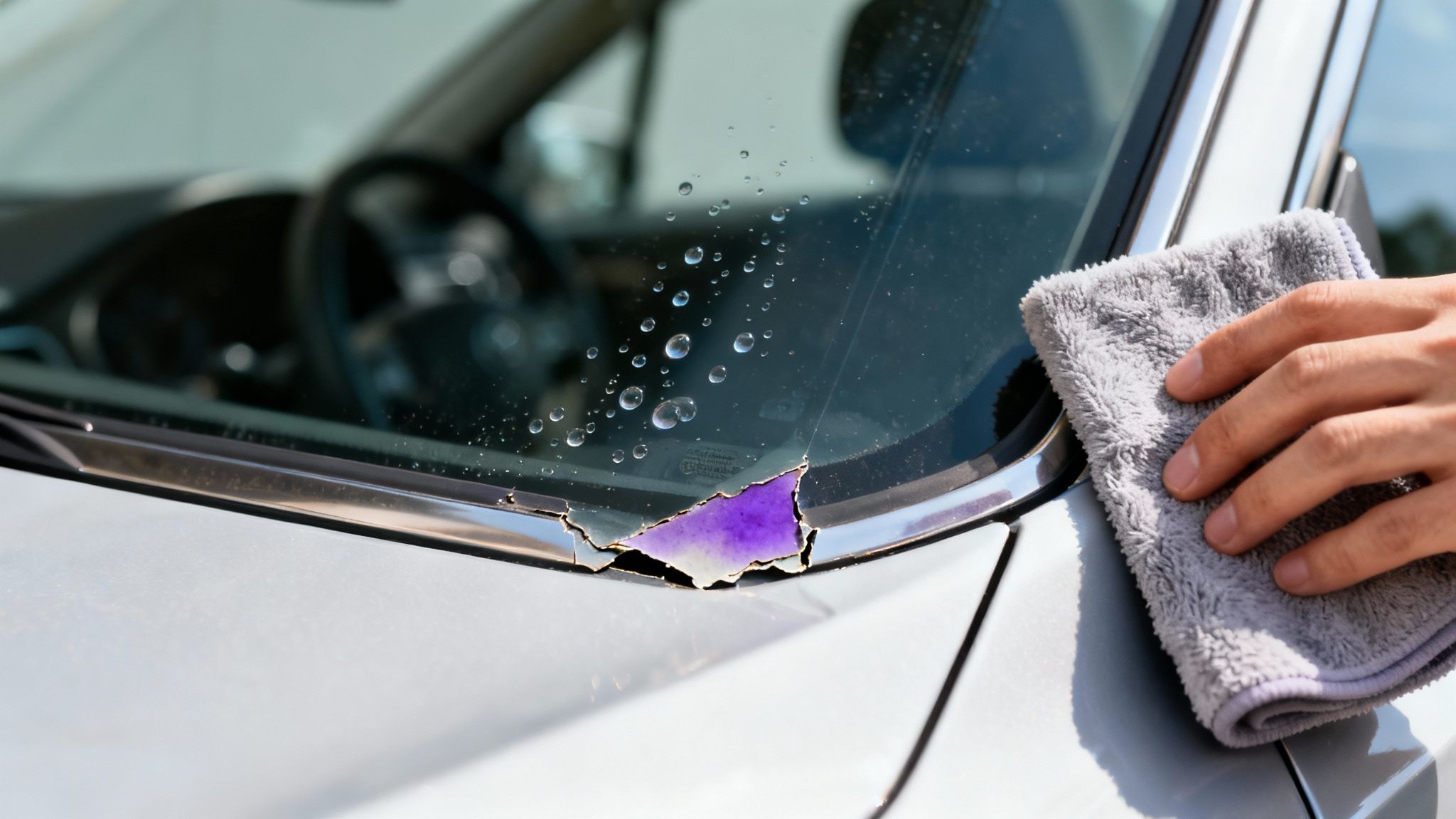
Visual Cues Your Tint Is on its Way Out
The most obvious signs of a dying tint job are pretty easy to spot once you know what you’re looking for. It’s a good idea to give your windows a quick once-over every now and then.
Here are the big red flags that tell you your automotive tint is past its prime:
- Bubbling or Blistering: This is the classic, number-one sign of tint failure. Those ugly bubbles pop up when the adhesive lets go, trapping air and moisture between the film and the glass. This is almost always a dead giveaway of a cheap film, a botched installation, or both.
- Peeling Edges: If you notice the corners or edges of the tint lifting away from the glass, the adhesive has officially failed in that spot. It might start small, but it will get worse fast, creating a perfect entry point for dirt and grime to sneak underneath the film. We dive deeper into this issue in our post about why window tint starts peeling.
- Fading or Turning Purple: This is the tell-tale sign of a low-quality dyed film. The sun’s brutal UV rays literally break down the dyes, causing the color to fade out and often turn that dreaded purple shade. When you see purple, you can be sure its UV-blocking power is long gone.
- A Hazy or Distorted View: Your tint should never get in the way of a crystal-clear view. If looking through your windows seems blurry, hazy, or just plain weird, the film is probably delaminating (the layers are separating) or the adhesive is failing. This isn’t just ugly; it’s a serious safety hazard.
These warning signs are your car’s way of saying its protective shield is down. A faded, bubbling film isn’t just an eyesore—it’s a performance failure that leaves your car’s interior and your skin exposed to damaging UV rays.
To make things even clearer, we put together a quick diagnostic table. If you spot something odd with your tint, check here to see what might be going on and what your next step should be.
Troubleshooting Your Automotive Window Tint
| Symptom | Probable Cause | Recommended Action |
|---|---|---|
| Bubbles or Blisters | Adhesive failure, often from low-quality film or excessive heat exposure. | The tint cannot be repaired. It needs to be professionally stripped and replaced. |
| Purple Discoloration | The dyes in a low-grade film have broken down due to UV exposure. | This is a clear sign the film is no longer protecting you. Full replacement is necessary. |
| Peeling Along Edges | The adhesive bond has weakened, often starting at the corners where it’s most vulnerable. | While a small peel might be temporarily ignored, it will worsen. Plan for a replacement. |
| Hazy or Distorted View | Delamination of the film’s layers or a breakdown of the adhesive. | This is a safety issue that impairs visibility. The film should be removed immediately. |
| Scratches or Nicks | Damage from sharp objects, abrasive cleaning, or contact with the window seals. | Minor scratches can’t be fixed, but if they obstruct your view, replacement is the only option. |
Seeing any of these symptoms means it’s time to think about a replacement. Don’t let a failing tint compromise your comfort, safety, and the look of your vehicle.
Simple Habits to Make Your New Tint Last Longer
Getting your car professionally tinted is a smart move for protecting your ride and making your drives more comfortable. Once our team finishes the installation, a few simple habits can make a huge difference in how long that tint lasts, making sure you get every penny’s worth out of your investment for years to come.
Proper care really begins the second you pull out of our shop. The most important thing you can do right away is give the film a chance to cure properly.
Allow Proper Curing Time
After we apply your new tint, the adhesive needs a few days to fully set and bond with the glass. Think of it like letting paint dry. This curing process pushes out any leftover moisture and creates the rock-solid, seamless seal that keeps your tint from peeling.
- Don’t Roll Down Your Windows: You’ll need to wait at least 3 to 5 days before rolling down your freshly tinted windows. If you lower them too soon, the edge of the film can catch and peel right up, which can ruin an otherwise perfect installation.
- Be Patient with Haze: You might notice a bit of a cloudy look or even some small water pockets under the film for a few days. This is completely normal! It’s just part of the curing process and will vanish on its own as the moisture evaporates.
Use the Right Cleaning Techniques
Once the tint has fully cured, keeping it clean is a breeze—but using the wrong stuff can cause damage that you can’t undo. The name of the game is to be gentle and stay away from harsh chemicals that can eat away at the film’s protective layers.
The biggest mistake we see car owners make is grabbing a bottle of Windex or any other standard glass cleaner. Most of those products have ammonia in them, which is the absolute number one enemy of window tint. It slowly breaks down the adhesive, causing that ugly bubbling and discoloration you see on older tint jobs.
Instead, always reach for an ammonia-free cleaner and a soft microfiber cloth. That simple combo is all you need to wipe away smudges and fingerprints without scratching or harming the film.
For a deeper dive into the best practices, you can learn more about how to clean tinted windows safely in our detailed guide. And one last pro tip: parking your car, truck, or SUV in the shade whenever you can will cut down on direct UV exposure, which goes a long way in preserving the film’s color and performance.
Our Commitment to Lasting Quality in North Atlanta
So, when people ask, “How long does window tint really last?” my honest answer is always the same: it comes down to two things—top-shelf materials and a world-class installation. Here at The Tint Guy, we’ve been mastering that combination for every car, truck, and SUV that rolls into our shop since 1986.
We made a decision a long time ago to only work with the best, which is why we exclusively install top-tier ceramic and carbon automotive films. These aren’t your average, off-the-shelf tints; they’re engineered to go head-to-head with the brutal Georgia sun and win, year after year, without fading or failing. But even the best film is useless without a flawless installation, and that’s where our decades of experience really shine.
A Warranty That Speaks for Itself
For our clients looking for automotive window tinting in Marietta, GA and Kennesaw, GA, we put our money where our mouth is by backing our premium films with a lifetime warranty. This isn’t some flimsy piece of paper with a bunch of exceptions. It’s comprehensive coverage that protects your investment against the kind of problems that plague cheap, amateur tint jobs:
- Ugly bubbling that messes with your view
- Annoying peeling edges that ruin your car’s look
- Fading or color-shifting that kills the tint’s effectiveness
This is our promise to you. A professional tint job should be a one-time investment that adds lasting value, comfort, and style to your vehicle. We make sure of it.
When a tint job is done right with the best materials, it becomes a permanent upgrade to your driving experience. Our lifetime warranty guarantees that the work we do today will continue performing for you tomorrow and beyond.
When you’re ready for a car window tint that’s truly built to last, our expert team in North Atlanta is here to deliver. We hold every installation to the highest possible standard, giving you total peace of mind every time you get behind the wheel.
Common Questions About Window Tint Longevity
Once you’ve picked the perfect film and scheduled your professional installation, a few questions usually pop up. We hear them all the time at our shops, and getting these details straight helps you feel confident in your investment and know exactly how to care for your new tint.
Let’s clear up some of the most common questions about what to expect right after installation and down the road.
How Long Should I Wait to Roll Down My Windows?
This is probably the most critical post-installation rule we have. You absolutely need to wait 3 to 5 days before rolling down your freshly tinted windows. No exceptions.
This waiting period is non-negotiable because it gives the specialized adhesive the time it needs to fully cure and form a permanent bond with the glass. If you jump the gun and lower the windows too soon, the top edge of the film can easily catch on the window seal. That can cause it to lift, peel, or get damaged right away. A little patience for a few days ensures a perfect, long-lasting finish.
Does a Lifetime Warranty Cover All Damage?
Our lifetime warranty offers incredible peace of mind, but it’s important to know what it’s for. The warranty is there to protect your automotive tint against any defects from the manufacturing process that might impact its performance or look.
This covers things like:
- Bubbling or blistering
- Peeling or delamination
- Fading or changing color
What it doesn’t cover is accidental damage from, well, life. Things like a scratch from your keys, a chip from a seatbelt buckle hitting the glass, or other mishaps aren’t manufacturing defects. We always make sure to explain this difference clearly so you know exactly what your warranty protects you against.
Is Ceramic Tint Really Worth It for Georgia Drivers?
For anyone driving around Marietta, GA, and Kennesaw, GA, the answer is a definite yes. The sun here is no joke, and the intense heat can make driving a chore while slowly destroying your car’s interior. Basic tints just can’t keep up with the constant solar beating we get.
Ceramic window tint is a long-term investment in both your comfort and your vehicle’s preservation. Its superior heat rejection and 99% UV protection are engineered to perform without fading, making it the most durable and effective solution for our climate.
While the initial cost is higher, the day-in, day-out performance of a quality ceramic tint installation makes it a smart upgrade for any car, truck, or SUV in the North Atlanta area.
Ready for a window tint that’s built to last and backed by a lifetime warranty? Contact The Tint Guy for a free consultation and discover the difference professional craftsmanship makes.