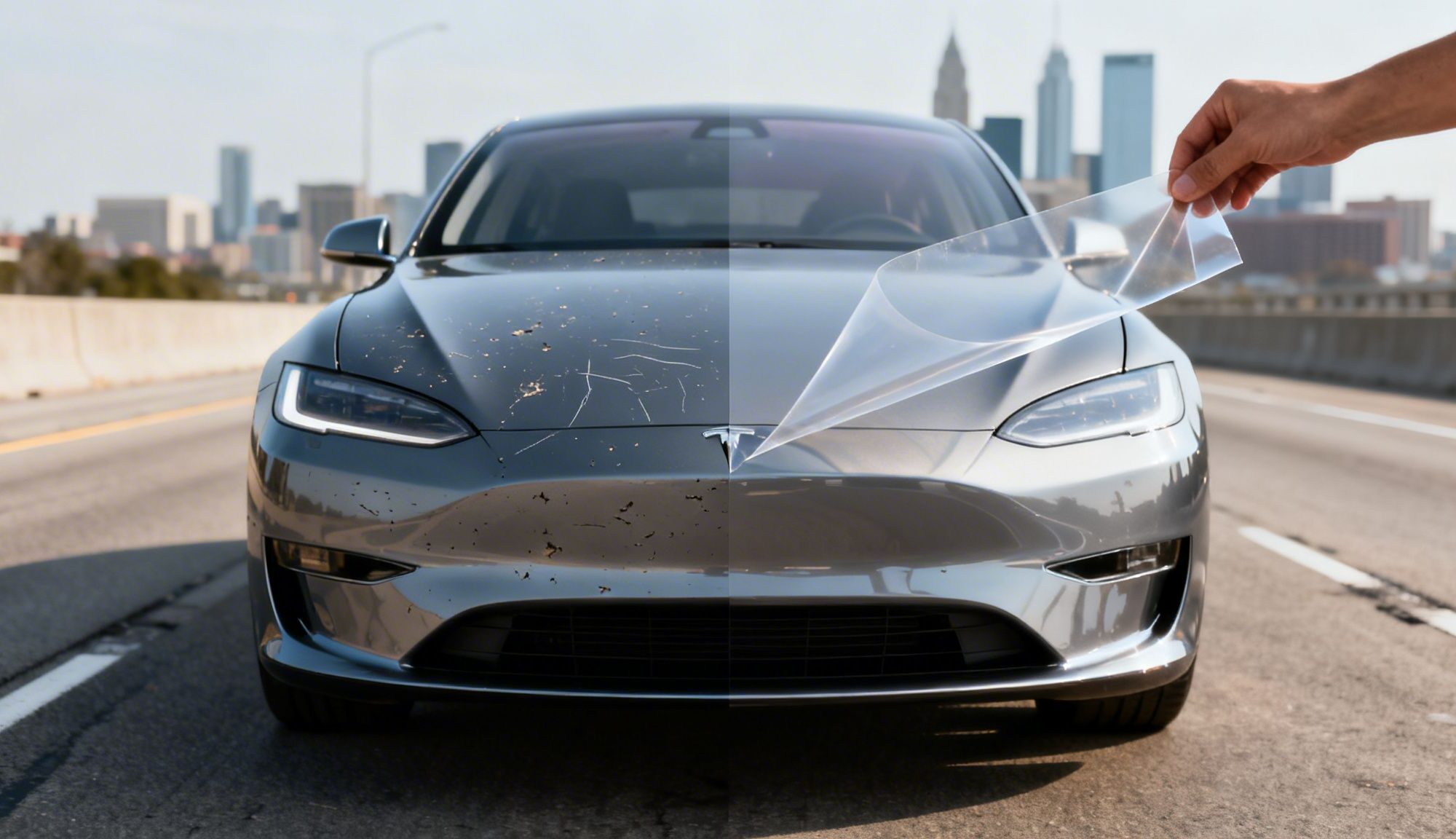
Deciding on paint protection film involves weighing its impressive physical defense against a pretty significant upfront cost. While the price tag gives some drivers pause, for many, the peace of mind and protected resale value make PPF a no-brainer, especially for a new car or a high-value automobile.
Is Paint Protection Film a Smart Investment for Your Car?

For car owners in Kennesaw and Marietta, this isn't just a cosmetic question—it's about protecting a major asset. Think of paint protection film (PPF) as an invisible, heavy-duty shield for your car's paint job. It's built to defend against the daily abuse from our local roads.
Anyone who drives on highways like I-75 knows what we're talking about. You're constantly bombarded with small rocks, bug guts, and all sorts of road debris that can tear up a factory finish in no time.
PPF is specifically engineered to absorb those impacts. It stops the chips and scratches that not only look bad but can open the door to rust down the line. We find it’s an especially smart move for:
- New Vehicles: Keep that perfect factory paint looking brand new from the day you drive it off the lot.
- Luxury & Sports Cars: Maintain the flawless condition that’s expected from a high-end automobile.
- Daily Commuters: Protect your car from the accelerated wear and tear that comes with high-mileage driving.
The market itself shows how many people see it as a wise financial move. The global PPF market, valued at USD 532.3 million in 2025, is on track to hit USD 838.1 million by 2032. This growth is fueled by a clear return on investment. In fact, many industry experts agree that a quality PPF installation can increase a vehicle’s resale value by 10-15%. You can dig deeper into these market trends on OpenPR.com.
Yes, the initial cost is a factor. But you have to balance it against the long-term value of keeping your vehicle in pristine condition. To make it simple, let's break down the main points.
Paint Protection Film Quick Comparison
This table gives you a quick summary of the key arguments for and against installing PPF. It’s a great starting point to see if the benefits line up with what you're looking for.
| Key Pros (The Upside) | Key Cons (The Downside) |
|---|---|
| Superior Impact Resistance: Absorbs rock chips and scratches. | Significant Initial Cost: A premium, professional investment. |
| Self-Healing Properties: Minor swirls and scratches disappear. | Installation Quality is Critical: Poor application leads to failure. |
| Preserves Resale Value: Keeps factory paint in pristine condition. | Potential for Yellowing: A risk with lower-quality films. |
| UV Ray Protection: Prevents paint from fading and oxidizing. | Repair Complexity: Damaged film requires professional replacement. |
Ultimately, weighing these pros and cons will help you decide if the long-term protection is worth the upfront investment for your specific car and driving habits.
The Protective Benefits of Paint Protection Film

Paint protection film, or PPF, is a lot more than just a clear plastic sheet. Think of it as advanced, invisible armor designed specifically to protect your vehicle’s factory paint job. Its biggest advantage is the incredible ability to absorb physical hits that would normally leave behind permanent chips and scratches.
Essentially, it’s body armor for your car. The film is made from a tough thermoplastic polyurethane (TPU), a material prized for its resistance to scrapes, impacts, and everyday wear and tear. When a rock or other road debris kicks up and hits your car, the film’s flexible nature disperses the force, stopping it from damaging the paint underneath.
The Science of Self-Healing
One of the most impressive features of any modern, high-quality PPF is its self-healing ability. This isn’t just a marketing gimmick; it's a real property built into the film’s top layer. When the film gets light scratches or swirl marks—the kind you often see after a trip through an automatic car wash—the damage is only on the surface.
With a little heat from the sun, a heat gun, or even just the warmth of your engine, the film’s polymer topcoat works its magic. The material has a "memory" that allows it to return to its original smooth, flat state. Those annoying blemishes simply disappear, keeping your vehicle looking like it just left the detailer.
Key Takeaway: High-quality PPF's self-healing means you spend less time worrying about small cosmetic flaws and more time enjoying a car that always looks its best. It actively erases the minor imperfections of daily driving.
Unmatched Durability and Protective Strength
The toughness of thermoplastic polyurethane is what makes PPF so effective. A quality TPU film can resist scratches up to 10 times better than your car's factory clear coat. On top of that, the self-healing technology can make about 95% of minor marks vanish, keeping the finish looking perfect.
This level of protection is a huge reason why the PPF market is booming, with projections showing it will become a USD 905.2 million industry by 2025. On the highway, PPF can cut down rock chip incidents by as much as 70%, a massive improvement for any daily driver.
Preserving Your Investment with UV Protection
For any car owner here in Georgia, the sun is a constant enemy of your paint. UV radiation breaks down the chemical bonds in paint, causing it to oxidize, fade, and get that dull, chalky look over time. This kind of damage doesn't just look bad; it can seriously hurt your car's resale value.
Another huge pro of paint protection film is its built-in defense against UV rays. The premium films we install at The Tint Guy block 99% of harmful UV radiation, acting like a powerful, invisible sunscreen for your car. This keeps your paint color looking deep and vibrant for years.
This UV-blocking benefit is a direct line to a higher resale value. A car with faded, sun-damaged paint looks older and less cared for, which can cost you thousands when it's time to sell or trade in. PPF ensures your paint stays as brilliant as the day you bought it. For an even deeper look into what makes PPF a smart choice, you can learn more about its specific advantages in our guide.
Understanding the Drawbacks of Paint Protection Film
Paint protection film is hands-down the best defense for your vehicle's finish, but it’s a serious investment. Like any big decision, it pays to have an honest look at the potential downsides. Knowing what to watch out for, especially when it comes to cost and the quality of the installation, is the key to making a choice you'll be happy with for years to come.
For many car owners, the biggest sticking point is the initial cost. Let's be clear: PPF is a premium service, and it has a price tag that reflects that. This isn't just an off-the-shelf accessory; it’s a meticulous, professional-grade installation that demands highly skilled technicians, a spotless work environment, and a lot of time to get just right.
Breaking Down the Investment
The price for PPF really depends on one thing: how much of your car you want to protect. Each level of coverage uses a different amount of material and, more importantly, a different amount of skilled labor, which is what really shapes the final cost.
- Partial Front End: This is the most budget-friendly starting point, usually covering the front edge of the hood and fenders.
- Full Front End: This is by far our most popular package. It protects the entire hood, the full front bumper, both front fenders, and the side mirrors—all the high-impact areas that take a beating from road debris.
- Full Vehicle Wrap: For the ultimate peace of mind, this covers every single painted panel on the car. It's a comprehensive shield against everything from rock chips and scratches to bird droppings and swirl marks.
When you look at the cons, they almost always circle back to either the cost or the quality of the job. A full front-end PPF package typically runs between $2,500 and $5,000. If you're looking at a complete vehicle wrap, the price can range from $6,000 to $10,000 or more, depending on your vehicle’s complexity and the specific film you choose. You can see more on industry pricing trends from Grand View Research.
The Critical Role of Professional Installation
This can't be stressed enough: PPF is not a do-it-yourself project. The quality of the installation is every bit as important as the quality of the film itself. A cheap or rushed application won't just look bad; it completely defeats the purpose of your investment.
Trying to cut corners with an inexperienced installer is a huge gamble. In fact, a bad installation is the cause of 15-20% of all film failures within the first two years. These failures are frustrating to look at and can ruin your car's appearance.
Common signs of a botched job include:
- Bubbling: Ugly air pockets trapped under the film.
- Peeling: The film's edges start to lift and collect dirt.
- Stretch Marks: Visible lines or distortions where the film was improperly stretched.
- Contamination: Tiny specks of dust, hair, or dirt sealed under the film forever.
Choosing a certified installer is your best defense against these cons. At The Tint Guy, our automotive technicians in Marietta and Kennesaw are factory-trained to execute flawless, computer-cut applications, ensuring a seamless and durable result.
The Risk of Yellowing and Removal Issues
Another concern we hear about is the film turning yellow over time. This is a real issue, but it’s almost exclusively tied to older, cheaper PVC (polyvinyl chloride) films. These materials can break down and discolor under constant UV exposure.
Thankfully, modern, high-quality TPU (thermoplastic polyurethane) films—the only kind we use—are engineered with powerful UV inhibitors to prevent yellowing. They are warrantied against it for up to 10 years, so you don't have to worry about your car's clear bra losing its clarity.
Finally, while top-tier PPF is made to be removed safely, the process itself can be tricky and expensive if done wrong. An amateur trying to rip the film off can leave behind a mess of adhesive residue or, in a true worst-case scenario, pull up the clear coat it was supposed to protect. That's why we always recommend having it professionally removed to ensure your car's original paint looks just as good as the day the film was applied.
Comparing PPF, Ceramic Coatings, and Vinyl Wraps
When you start looking into protecting or styling your car, you’ll hear the terms paint protection film (PPF), ceramic coating, and vinyl wrap thrown around a lot. It’s easy to get them mixed up, but they are three completely different products designed for very different jobs. Picking the right one means understanding exactly what each does for your vehicle.Paint protection film is the undisputed champion of physical protection. Think of it as a heavy-duty, invisible shield engineered to take a beating from rock chips, road debris, and scratches. Its entire purpose is to absorb impacts and keep your factory paint pristine.
A ceramic coating is something else entirely. It’s a liquid polymer that forms a chemical bond with your car’s paint, creating a super hard, slick, and water-repellent surface. This adds an insane amount of gloss and makes washing your car a breeze. It's fantastic against chemicals, UV rays, and grime, but it offers virtually no defense against a rock chip.
Then you have vinyl wrap, which is all about looks. It’s a colored or textured film that goes over your paint to completely change its appearance. While it does provide a thin buffer against light scuffs and UV rays, its real job is customization, not serious protection.
Primary Purpose and Function
The main difference between these three really comes down to their one core mission. Each was created to solve a specific problem for car owners.
- Paint Protection Film (PPF): Its single-minded goal is impact resistance. PPF is made to absorb the force of a rock flying at your bumper on the highway so the paint underneath doesn't have to. It’s a purely defensive measure.
- Ceramic Coating: This is all about surface enhancement and easy maintenance. It makes your paint pop with gloss and so slick that dirt and water just slide right off. Its protection is geared toward environmental fallout, not physical hits.
- Vinyl Wrap: This is a tool for total aesthetic change. If you want to transform your car's color from black to matte green without a permanent and expensive paint job, a vinyl wrap is your answer.
Key Insight: Think of it this way: PPF is your car's body armor, a ceramic coating is its high-tech, self-cleaning raincoat, and a vinyl wrap is a brand-new outfit. They aren’t competitors; they’re different tools for different goals.
Head-to-Head Comparison
To help you decide, let's put these three options side-by-side and see how they really stack up on the factors that matter most. This will show you exactly where each one shines and where it falls short.
The image below breaks down the key drawbacks you need to consider with paint protection film, focusing on its high cost, the skill required for installation, and the challenges of removal.

What this really drives home is that PPF is a professional-grade product. The high cost and technical nature mean you need a top-tier installer to get the results you're paying for.
To make it even clearer, here’s a direct comparison of the three leading automotive protection and styling options. This table gives you a quick snapshot of what to expect from each.
PPF vs. Ceramic Coating vs. Vinyl Wrap
| Feature | Paint Protection Film (PPF) | Ceramic Coating | Vinyl Wrap |
|---|---|---|---|
| Primary Purpose | Impact & Scratch Protection | Gloss & Easy Cleaning | Aesthetic Customization |
| Impact Resistance | Excellent | Minimal to None | Low |
| Self-Healing | Yes (with premium films) | No | No |
| Longevity | 7-10+ Years | 2-7 Years | 3-5 Years |
| Finish | Optically Clear & Glossy | Deep Gloss & Slickness | Any Color/Texture |
| Cost | High | Moderate | Moderate to High |
As you can see, there’s no single "best" option—it all depends on your priorities.
In our experience, many car owners in Marietta and Kennesaw land on a hybrid solution. They'll apply PPF to high-impact zones like the front bumper, hood, and mirrors, then protect the entire car with a ceramic coating for that deep gloss and easy cleaning. This approach truly offers the best of both worlds: rugged physical defense where it's needed most and slick, chemical protection everywhere else.
Who Benefits Most from Paint Protection Film?
Sure, paint protection film offers an incredible defense for just about any vehicle, but it really shines for a few specific types of owners. Figuring out if you fall into one of these groups can help you know if the investment is truly worth it for your car, your daily drive, and what you want for it long-term.
This isn't just about a list of pros and cons. It's about putting yourself in the driver's seat and seeing the real, everyday problems that PPF solves on the roads in Kennesaw and Marietta.
The New Car Purist
You just drove that brand-new car, truck, or SUV off the lot. The paint is flawless, the gloss is mesmerizing, and you're determined to keep it that way. For you, the first rock chip isn't just a tiny blemish; it’s a gut punch that shatters the whole "new car" experience.
You want to protect that perfect factory finish from day one, stopping the inevitable nicks and scuffs from daily driving before they even happen. Applying PPF right away is like putting your car's paint in a time capsule. It acts as an invisible, sacrificial shield, preserving that showroom shine and protecting your investment from the second you hit the road.
The Daily Commuter
Your car is your workhorse. You spend hours every week on highways like I-75 and I-575, where the front of your car is basically being sandblasted by gravel, sand, and all sorts of debris kicked up by trucks. You can almost see the damage adding up, knowing it's just a matter of time before your bumper and hood are peppered with rock chips.
For the daily commuter, PPF isn't a luxury—it's practical armor. It turns the front of your car into a fortress, absorbing all those impacts that would otherwise chew up your paint and sink your car's resale value.
The Luxury and Sports Car Owner
You own a high-performance or luxury car where a pristine finish isn't just nice to have—it's everything. The value, the appeal, and the very essence of your investment are tied directly to its cosmetic perfection. A single rock chip on the sculpted bumper of a Porsche or the elegant hood of a Mercedes isn't just a flaw; it's a significant hit to its worth.
For you, the goal is to protect a high-value asset from any damage that could seriously impact its financial and aesthetic value. PPF provides the ultimate peace of mind. Its self-healing surface erases minor swirl marks to keep the finish looking wet, while its tough impact resistance ensures the factory paint underneath stays untouched. This directly maintains the car's condition and protects its considerable resale value.
Whether you’re trying to keep your new Toyota looking factory-fresh, defending your Honda from the brutal commute, or preserving the immaculate finish on your dream car, PPF offers a specific solution. It’s all about identifying your biggest frustration and investing in a shield that solves it head-on. If you see yourself in one of these profiles, the value of paint protection film becomes undeniably clear.
Your Guide to Professional PPF Installation and Care

A top-tier product like paint protection film is only as good as its installation. The line between a flawless, invisible shield and a peeling, bubbly disaster is drawn by the installer's skill and the cleanliness of their shop. At The Tint Guy, we don't just apply film; we practice a craft.
The real work starts long before the PPF ever touches your car. You can't get a perfect finish on a dirty or flawed surface. That's why every vehicle that rolls into our Marietta and Kennesaw locations goes through a strict, multi-stage prep process.
The Professional Installation Process
A proper installation is the only way to guarantee the film lays down correctly, looks completely invisible, and lasts for its full intended lifespan. There are no shortcuts here.
Step 1: The Decontamination Wash
First, your vehicle gets a meticulous hand wash and a clay bar treatment. This isn't just about getting the dirt off; it's about pulling out all the bonded contaminants—the tar, industrial fallout, and mineral deposits—that would otherwise get trapped under the film and look like tiny bumps.
Step 2: Paint Correction
Next, we pull your car under our specialized lighting to inspect every inch of the paint. We then perform any paint correction needed to get rid of swirl marks, light scratches, and other blemishes. Putting PPF over imperfect paint just locks in those flaws and makes them even more noticeable.
Step 3: Computer-Cut Application
We use advanced software and a plotter to precision-cut the film patterns for your specific make and model. This means we never have to take a razor blade to your factory paint. The film is then carefully laid down in our ultra-clean installation bay, preventing any stray dust from getting trapped underneath.
Expert Insight: The switch to computer-cut patterns is a game-changer. It takes the risk of a hand-slip and a knife cut on your paint completely off the table, giving you perfectly wrapped edges that are tough to achieve by hand.
Maintaining Your Paint Protection Film
Once your PPF is installed, keeping it looking great is surprisingly simple. A little bit of proper care goes a long way in making sure the film stays clear and performs for years to come.
Safe Washing Techniques
- Give the film at least 48-72 hours to fully cure before you wash the car. This lets the adhesive set properly.
- Always hand-wash using a pH-neutral soap and a soft microfiber mitt.
- Be careful with pressure washers. Keep the nozzle away from the film's edges to prevent it from lifting.
- Pat the car dry with a clean microfiber towel to avoid leaving water spots.
Products to Avoid
Steer clear of abrasive polishes, rubbing compounds, or any waxes that contain harsh solvents or dyes. These can wear down the film's top coat, making it look dull and damaging its self-healing capabilities. Always stick to products made specifically for PPF.
Activating Self-Healing Properties
If you happen to see any fine scratches or swirls on the film, don't panic. The film’s self-healing technology is designed to take care of them. Just park your car in the sun for a bit on a warm day. The heat will cause the top layer to smooth itself out, and those marks will literally disappear.
Frequently Asked Questions About Paint Protection Film
Even after looking at the benefits and drawbacks of paint protection film, you probably still have a few questions. We get it. Here are some direct answers to the most common things we hear from car owners in Marietta and Kennesaw. Our goal is to give you all the info you need to feel confident in your decision.
How Long Does Quality Paint Protection Film Last?
A professionally installed, high-quality thermoplastic polyurethane (TPU) PPF, like the films we use at The Tint Guy, is engineered to last 7 to 10 years. Its actual lifespan really comes down to the quality of the film itself, the skill of the installer, and how well you maintain it over the years.
Cheaper, PVC-based films are a different story. You might only get 2-3 years out of them before they start to yellow, crack, or peel at the edges. This is exactly why we stick to premium TPU films and stand behind our work with a full warranty covering both the material and our installation.
Can PPF Be Applied Over Existing Scratches or Chips?
No, and we strongly advise against it. PPF is designed to protect perfect paint, not to hide damage that’s already there. If you apply film over scratches or chips, you’re just trapping them underneath. Worse, it can actually make them more noticeable by creating tiny air pockets or an uneven look.
For that invisible, glass-like finish, we always recommend professional paint correction to clear up any swirls, scratches, or blemishes before the PPF goes on. It's a critical prep step that ensures the film bonds to a perfect surface, locking in that showroom shine for years to come.
Key Reminder: The final appearance of your PPF is directly tied to the condition of the paint beneath it. A flawless installation starts with a flawless surface.
Will Removing PPF Damage My Car's Original Paint?
When it’s time for the film to come off, a trained professional can remove premium PPF without harming your vehicle’s factory paint. The adhesives are specifically designed to be removed cleanly after years of service, leaving the paint underneath just as it was on day one.
Trying to peel it off yourself or going to an inexperienced shop, however, can cause real problems. You could be left with a sticky mess of adhesive residue or, in the worst-case scenario, the film could pull up the paint. This risk is much higher on panels that have been repainted, since aftermarket paint jobs often don't have the same bond strength as the factory finish.
Can I Combine PPF with an Automotive Window Tint?
Absolutely, and it’s a strategy we see many customers choose for complete vehicle protection. The two services complement each other perfectly. PPF defends your car's exterior paint from physical nicks and dings, while our automotive ceramic window tints protect the interior from harsh UV rays, cut down on heat, and add a layer of privacy.
Think of it as total vehicle preservation, inside and out. We can easily coordinate both services for your car, truck, or SUV right here at our Marietta or Kennesaw shops.
Protecting your vehicle from the daily grind of the road is a smart investment in its value and appearance. Whether you're looking to stop rock chips with PPF or beat the Georgia heat with automotive ceramic window tinting, The Tint Guy has the expertise to get it done right.