You finish a wash, pull the car into good light, and the paint finally looks clean enough to tell the truth. A tiny chip on the bumper shows up first. Then a faint scratch near the hood edge. On roads around Woodstock, Georgia, Kennesaw, Georgia, and Canton, Georgia, those marks start early and keep coming.
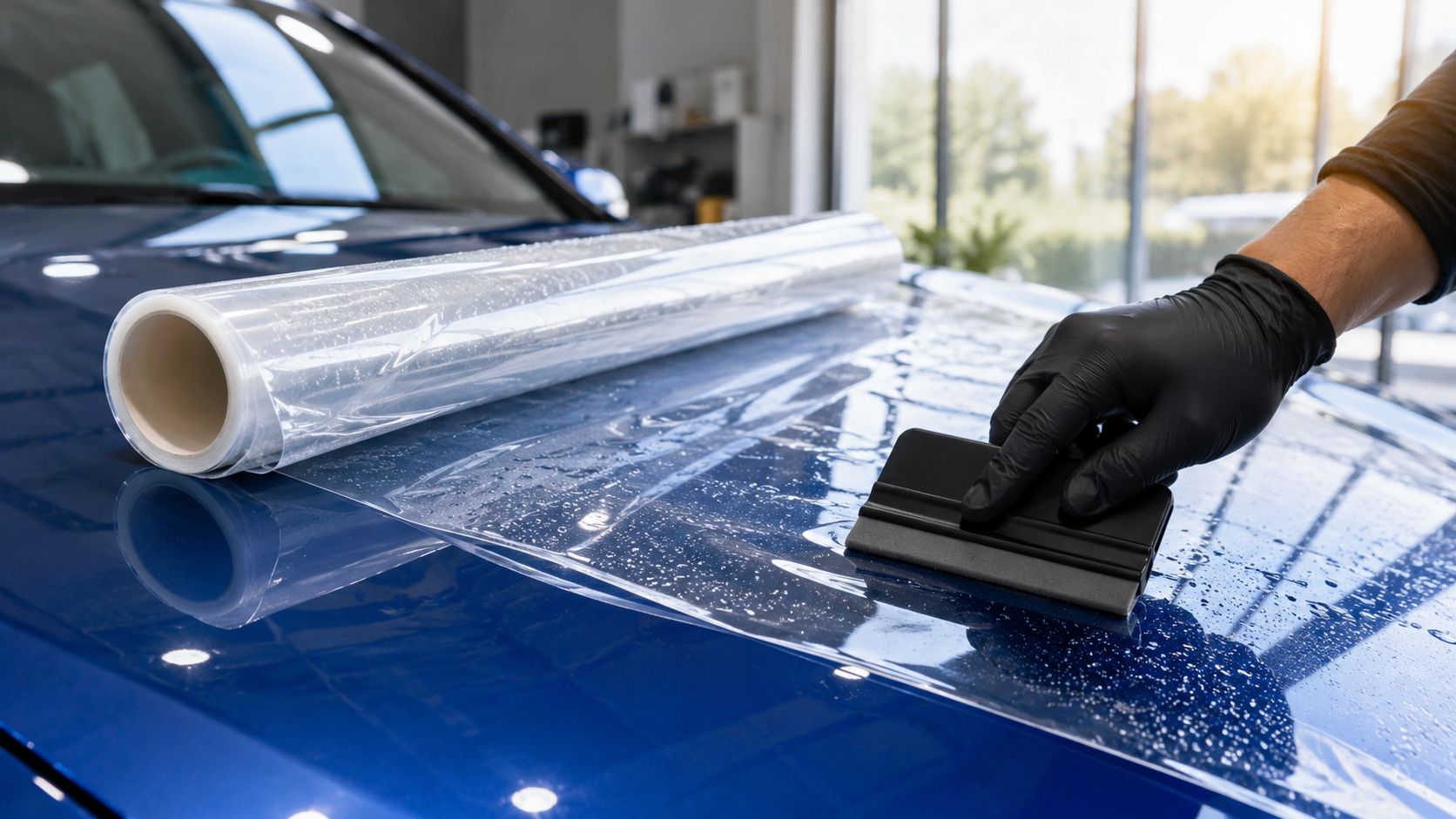
A Paint Protection Film roll gives an installer more control than a generic patch or a one-piece universal kit. Film can be laid out for the actual panel shape, trimmed for cleaner coverage, and wrapped where the body lines allow it. That matters if you care about visible seams, edge lift, and protecting the spots that take the first hit from road debris.
There is another part buyers miss. PPF does not hide bad paint. It magnifies it. Swirl marks, buffer trails, etched water spots, touch-up blobs, and leftover contamination can show more clearly once film is installed, especially on dark colors and under shop lighting or direct sun.
That is why paint correction before PPF is not optional if the goal is a clean result. If the surface is flawed, the film can lock those defects in place and make them easier to see, not harder. Good installers account for that upfront and tell you the truth before a roll ever gets opened.
Why Your Car's Finish Needs Next-Level Protection
You wash the car, dry it properly, and pull it into direct sun. The paint looks sharp for about ten seconds. Then the front bumper starts showing tiny pits, the hood edge picks up a new chip, and the mirror caps remind you how much abuse a daily-driven car takes.

That happens fast in North Georgia. Highway miles between Canton and Kennesaw throw road grit, loose gravel, tire rubber, and bug acids at the same few panels over and over. Sun adds its own wear, especially on cars that stay outside part of the day. If you own a dark-colored vehicle, every mark reads louder.
The hard truth is that paint is thin, and modern finishes do not forgive repeated impact. A ceramic coating helps with washing and chemical resistance, but it does not stop a stone from chipping the leading edge of a hood. Touch-up paint rarely disappears into the panel cleanly. Repainted panels can miss the factory texture or color by enough to bother anyone who pays attention.
A Paint Protection Film roll solves a different problem. It gives the installer bulk material to lay out around the actual panel, body line, and edge condition of the car, instead of forcing coverage around the limitations of a generic universal piece. That usually means better edge wrap, fewer unnecessary seams, and better protection on impact zones such as bumper corners, rocker panels, hood tips, and rear arch flare areas.
Film also exposes bad prep work. PPF is clear, glossy, and close to the paint surface, so it can make swirl marks, etched water spots, sanding haze, and touch-up blobs easier to see after installation. I tell clients this before we schedule the job. If the paint needs correction, correction comes first. Otherwise the film can preserve the defect and put it under a clean, shiny lens.
That point gets missed in a lot of buying guides. Good film over bad paint still looks bad.
Owners who care about long-term finish quality usually arrive at the same conclusion. The paint needs a sacrificial layer if the goal is to keep original panels looking original. If you want a clearer picture of how modern self-healing paint protection film fits into that, the next step is understanding what the material itself can and cannot repair.
The Science Behind Self-Healing Film
PPF works because the material isn't just clear plastic. It's thermoplastic urethane, built to absorb abuse that would otherwise reach the paint. The easiest analogy is a high-end phone case, except it's transparent, flexible, and shaped across painted body panels.

According to TEWIPACK's technical overview of PPF material properties, PPF is a thermoplastic urethane film, often self-healing, engineered to protect painted surfaces from stone chips and minor abrasions. Its self-healing property enables minor scratches to disappear when heat is applied to the film surface, restoring optical clarity and gloss without manual intervention.
What self-healing actually means
Self-healing sounds like marketing until you see it in person. Light wash marring and fine surface scratches in the top layer can relax out when heat hits the film. That heat can come from the sun, warm water, or controlled shop heat.
It's like memory foam for your car's paint. Press into memory foam and it deforms. Give it time and warmth, and it returns toward its original shape. PPF behaves in a similar way at the surface level. It doesn't mean deep cuts vanish, and it doesn't mean damaged paint underneath magically repairs itself. It means the film can recover from minor surface disruption.
What the film can and can't do
A lot of owners misunderstand this part, so it helps to keep the boundaries clear.
- What it does well: absorbs impact, resists minor abrasion, and helps maintain gloss.
- What it doesn't do: fix chips already in the paint, hide bad prep, or replace polishing on neglected paint.
- What triggers healing: heat applied to the film surface, either naturally or in a controlled setting.
For a closer consumer-friendly breakdown of that behavior, this self-healing paint protection film guide is a helpful reference.
The material also has handling requirements. Manufacturers specify storage conditions because temperature and humidity affect how the polymer behaves over time. That's one reason pro shops pay attention to inventory care instead of leaving rolls in uncontrolled spaces.
A quick visual makes the process easier to understand in real time:
The best way to think about self-healing PPF is simple. It sacrifices itself first, then recovers from the kind of light surface damage that would make unprotected paint look tired.
Rolls vs Pre-Cut Kits vs Ceramic Coatings
If you're shopping seriously, you're usually comparing three options. A Paint Protection Film roll for custom installation, a pre-cut PPF kit, or a ceramic coating. They're not interchangeable, even though people often shop them side by side.
Paint Protection Options Compared
| Attribute | PPF Roll (Bulk) | PPF Pre-Cut Kit | Ceramic Coating |
|---|---|---|---|
| Protection type | Physical impact barrier | Physical impact barrier | Surface coating |
| Fit approach | Custom-trimmed by installer | Pattern-based | Liquid-applied |
| Edge coverage | Often better when installed well | Depends on pattern | No film edge coverage |
| Best use | Custom wraps, cleaner panel strategy | Simpler panel-specific installs | Gloss, washability, water behavior |
| Skill required | High | Moderate to high | Moderate |
| Stone chip resistance | Strong | Strong where covered | Limited |
| Paint defect hiding | Won't hide defects underneath | Won't hide defects underneath | Won't correct defects underneath |
| Ideal buyer | Owner prioritizing fit and finish | DIYer or budget-conscious buyer | Owner focused on shine and maintenance |
Where a PPF roll wins
Bulk film is the professional choice because it gives the installer room to make decisions panel by panel. On a hood, that can mean cleaner alignment. On a bumper, it can mean more intelligent relief cuts and less compromise around curves. On complex vehicles, that freedom is often the difference between “good enough” and “that looks factory.”
Bulk also gives you options when a pre-cut pattern leaves exposed edges in obvious places. Enthusiasts notice those things fast.
Where pre-cut kits make sense
Pre-cut kits have one big advantage. They reduce the chance of cutting near the paint during installation because the shapes are already plotted. For experienced DIYers, that's appealing.
The downside is fit tolerance. A kit can only follow the digital pattern it was designed around. If the panel shape, body line, or install conditions demand a little more film in one area, the installer can't invent extra material that isn't there. That's why some pre-cut installs look tidy from ten feet away and unfinished up close.
Ceramic coating is useful, but it's not the same tool
Ceramic coating helps with gloss, slickness, and routine maintenance. It doesn't replace a sacrificial urethane layer. If your concern is physical chip resistance on the front end, coating alone isn't the answer.
If you want a plain-English comparison of those two approaches, this paint protection film vs ceramic coating guide lays out the distinction well. For broader context on coating types, the Northern Lights Carwash coating guide is also useful for understanding where ceramic products fit and where they don't.
Ceramic coating changes how the surface behaves. PPF changes what reaches the paint.
For owners in Woodstock, Canton, and Kennesaw, the right answer often comes down to how the car is used. Highway commuter, weekend canyon carver, garage-kept collectible, and family SUV all deserve different protection strategies.
Understanding PPF Roll Specifications
Most buyers get lost in spec sheets because the terms sound technical but aren't explained in practical language. The two specs that matter first are thickness and material composition. Then you look at roll size and warranty.

Thickness in mils
In PPF, a mil means one-thousandth of an inch. That measurement tells you how substantial the film is. According to UPPF's thickness guide, standard automotive films range from 6.0 to 7.0 mils, premium films measure 7.5 to 8.0 mils, and heavy-duty films can exceed 8.5 to 10.0 mils, delivering up to 30%+ better protection against stone chips and abrasions.
That doesn't mean thicker is always smarter.
Practical thickness choices
- Standard film: good for daily drivers that need balanced protection and easier conformability.
- Premium film: often the sweet spot for enthusiasts who want more impact resistance without making installation difficult on complex shapes.
- Heavy-duty film: best reserved for aggressive use cases where chip resistance matters more than maximum flexibility.
A thicker film can take more abuse, but it can also be harder to install cleanly on tight contours, deep recesses, and sharp compound curves. Film choice should match the vehicle and the panel.
Roll widths and why they matter
Width affects seam strategy. A wider roll gives the installer a better chance to cover a large panel in one piece. That can be a major advantage on hoods, roofs, and other high-visibility surfaces.
A narrower roll still has value. It's useful for mirrors, pillars, door cups, and trim areas where a full-width sheet would just create waste. The right shop doesn't just ask what brand the roll is. They ask whether the width and handling characteristics fit the job.
Material and top coat
The best rolls use thermoplastic urethane as the core protective layer. On top of that sits the surface layer that affects clarity, stain behavior, and how the film handles everyday washing. If the top coat is weak, the install can look tired long before the film itself fails structurally.
Warranty reading without getting fooled
Warranty language matters less than most buyers think unless you also know what's excluded. Ask what defects are covered, who handles claims, and whether labor is part of the remedy. A long warranty sounds impressive, but a responsive installer matters more when something needs attention.
Common Uses for a Paint Protection Film Roll
The nice thing about a roll is that it isn't tied to one coverage template. It can be cut and installed around how the vehicle gets used.
Full-panel coverage for daily drivers
For the owner commuting between Woodstock, Georgia and Kennesaw, Georgia, full hood and fender coverage usually makes the most visual sense. Those panels take constant abuse, and they're also easy to inspect every time the car is washed. A single cleanly installed sheet on a major panel looks far better than pieced-together protection in obvious sightlines.
On darker vehicles, this matters even more. Seams and exposed transitions show up faster when the paint reflects everything.
Track-pack style protection for targeted impact zones
Some owners don't need a full-body wrap. They need defense where the car gets hammered first.
That usually means:
- Front bumper and leading hood edge: the main strike zone for road debris.
- Mirror caps: small parts that catch surprising abuse.
- Rocker panels: vulnerable on performance cars and wider-body vehicles.
- Rear wheel arch areas: useful where tires throw debris back into the paint.
This approach makes sense for spirited drivers around Canton who want practical protection without covering every painted inch.
Smaller custom jobs that save paint in the long run
A roll also works well for detail-oriented protection that is not typically considered until damage appears.
- Headlights: film helps protect lenses from pitting and wear.
- Door edges: useful on vehicles parked in tighter garages or crowded lots.
- Trunk ledges: a smart choice if cargo regularly slides across the loading edge.
- Door cups: one of the easiest areas to scratch with rings and fingernails.
A lot of the best PPF work is almost invisible. You notice it later, when the high-contact areas still look untouched.
DIY vs Professional Installation The Real Trade-Offs
You finish a careful garage install, step back, and the film is down. Then the sun hits the hood. The swirls you thought were minor look sharper, a few old rock chips stand out more than before, and the trapped speck near the edge is all you can see. That is the part buyers underestimate.
The single biggest detail many guides miss is simple. PPF works like a magnifying layer over the paint. It does not hide defects. It highlights them. Swirls, sanding haze, oxidation, water spot etching, touch-up marks, and old chips usually look more obvious once they are locked under clear film. Paint correction is required whenever the finish is not already near-perfect. Skipping that step is one of the main reasons people end up unhappy with a perfectly good film.

The mistake buyers pay for later
A wash and clay bar are not enough. Clean paint is not corrected paint.
I see the same pattern over and over. An owner removes surface contamination, the panel feels smooth, and the film goes on over defects that polishing should have fixed first. After that, the film gets blamed for problems that were already in the clear coat. A significant share of PPF complaints come back to prep quality, not the urethane itself.
Where DIY usually breaks down
DIY can work on small, flat, low-visibility pieces if you accept a learning curve and a few redos. Large visible panels are different.
- Defect removal gets skipped: washing, claying, and panel wipe do not remove swirls, haze, or deeper wash marring.
- Edges stay dirty: wax residue, compound dust, and hidden contamination around trim and panel gaps show up later.
- Film tension gets misread: too much stretch can create lift lines, edge tension, or distortion on curves.
- The room fights you: dust, weak lighting, and inconsistent temperature make clean installs much harder.
- Cutting and edge work take judgment: a clean bulk install around a bumper or fender is part skill, part restraint.
The expensive mistake is not just a crooked piece of film. It is installing clear film over paint that should have been corrected first, then paying again to remove and replace it.
What a professional install actually buys you
A good installer is selling prep discipline as much as film. That means inspection lights, paint thickness awareness, polishing skill, controlled slip and tack use, edge management, and the judgment to reset a panel instead of forcing it. It also means knowing when a pre-cut pattern is safer and when bulk film will produce a cleaner wrapped edge.
That is why a proper paint protection film installation service starts before the liner comes off the film. The paint has to be evaluated first. If the surface needs correction, the correction needs to happen before any film touches the panel.
DIY saves labor on paper. Professional installation reduces the chance of trapped defects, visible contamination, silvering, tension marks, and a finish that looks worse after protection than it did before. On a bumper, hood, or full front clip, that trade-off is usually pretty clear.
Finding a PPF Expert in North Georgia
A black truck rolls into the shop looking clean in the shade. Under inspection lights, the story changes. Wash marring across the hood, a few etched water spots on the fenders, and light scratches near the door cups. Put film over that without correcting the paint first, and the film can make those defects stand out even more.
That is the standard to use when you vet a shop in Woodstock, Canton, or Kennesaw. The first question is not what brand of film they stock. Ask how they inspect paint, what level of correction they recommend before install, and whether they are willing to tell you a panel is not ready for film yet.
A good conversation with a local installer should cover a few specific points:
- Paint correction process: Is correction part of the plan when the paint needs it, or are they willing to install over swirls and etching?
- Edge treatment: Do they wrap edges where the panel allows it, or leave more exposed edges to save time?
- Film strategy: Do they use pre-cut patterns, bulk film, or both depending on the panel shape and finish goals?
- Warranty scope: Does the warranty cover only the film, or the installation work too?
- Proof of work: Can they show close-up photos in direct light, not just glossy delivery shots?
Price matters, but the quote only means something if you know what is included. In the North Metro Atlanta area, expect professional PPF installation costs to vary based on coverage, film quality, and the paint preparation required. Be careful with quotes that come in unusually low. They often leave out correction, edge work, or both.
If you want a reference point for what a proper service scope looks like, review this paint protection film installation service. The right shop will be clear about prep, clear about coverage limits, and clear about what the paint will look like under film before they start.
The best PPF work in North Georgia starts with honest inspection, proper lighting, and paint correction when the finish calls for it. Film protects paint. It does not hide bad prep.