A lot of Tesla owners in North Atlanta hit the same moment fast. The car is home, the finish looks perfect under the garage lights, and then the first highway run leaves you staring at the front bumper, hood edge, and mirrors a lot more closely than you expected.
That reaction is justified. Paint protection for Tesla isn't a cosmetic upsell. It's one of the first practical decisions that affects how the car looks after daily driving in Kennesaw, Woodstock, Acworth, Marietta, and Canton, especially with highway miles, summer heat, bug residue, tree sap, and year-round grime. For most owners, the key question isn't whether to protect the paint. It's which system makes sense: PPF, ceramic coating, or both.
Why Your New Tesla Needs Immediate Paint Protection
You pick up the car, drive home on GA-400 or I-75, and it still looks flawless in the garage. A few days later, the front bumper has its first tiny chip, bug residue is baked onto the nose, and the lower doors already show the start of road rash. That timeline is common with Teslas in North Atlanta.

Tesla paint gets tested early
Tesla owners usually notice the same problem areas first. Front bumpers, hood edges, mirror caps, rocker panels, and rear doors behind the front wheels take abuse fast. The paint can mark up sooner than many new owners expect, especially if the car sees highway miles, automatic washes, or construction traffic.
I see this every week at The Tint Guy. Owners come in with a car that is still practically new, but the front end already has light peppering, bug etching, or wash marring that could have been avoided with earlier protection.
Waiting usually makes the job more expensive
Protection is cleanest and most cost-effective before the damage starts. Once the paint has chips, scratches, hard water spotting, or embedded contamination, prep gets longer and correction may be needed before any film or coating goes on.
That changes the scope of the job. Instead of protecting fresh paint, you're paying to improve damaged paint first, then protect what is left. For a new Tesla, that is usually the wrong order.
If you want a clear look at what film does on impact-prone panels, this explanation of how paint protection film works on real-world driving surfaces helps.
North Atlanta conditions speed up the damage
North Atlanta is hard on a daily-driven Tesla. Heat, humidity, pollen, tree sap, lovebugs and other insect residue, and regular interstate driving all work against the finish. Summer sun bakes contamination onto horizontal panels. Humid conditions make grime cling longer. Highway debris from I-575, I-75, and GA-400 hits the same front-facing surfaces over and over.
That is why generic advice falls short here. A Tesla in a mild climate with short city trips has one set of risks. A Model Y commuting through Cobb or Cherokee County has another.
Protect the car based on how you use it
Most Tesla owners are deciding between three practical options:
- PPF for the areas that take direct impact, usually the front end, rocker panels, and other chip-prone surfaces
- Ceramic coating for easier washing, better resistance to contamination, and a slicker finish
- A hybrid PPF plus ceramic coating setup for owners who want physical chip protection where it counts and easier maintenance across the rest of the vehicle
A full-body wrap is not the default answer for every owner. A garage-kept Model S that sees limited mileage may only need targeted film and a coating. A daily-driven Model 3 or Model Y with regular highway use often benefits from front-end PPF at minimum, and many North Atlanta owners are happiest with the hybrid approach because it matches the way these cars get used.
Understanding Paint Protection Film or PPF
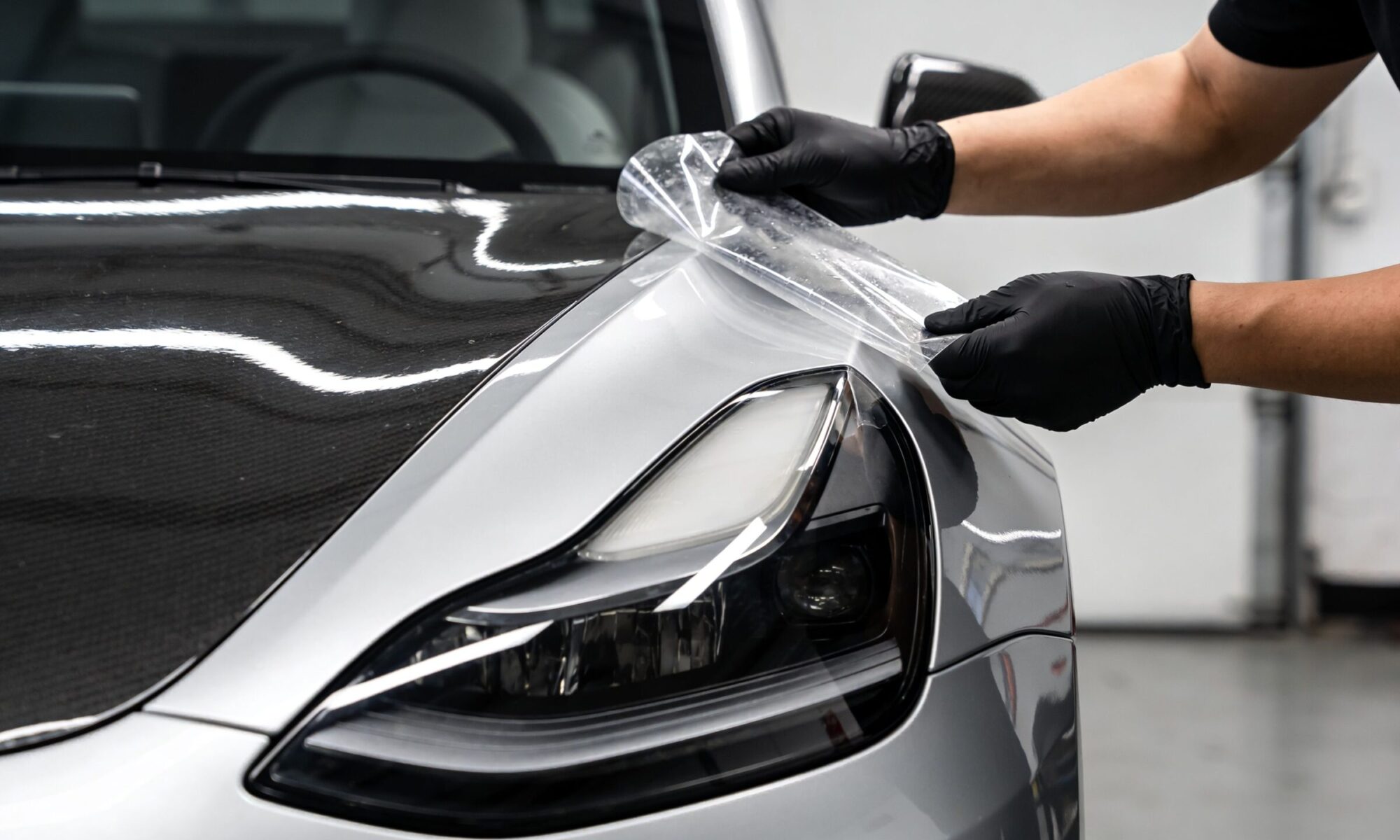
PPF is the part of a Tesla protection plan that stops actual impact damage. It is a clear urethane film installed over painted panels so rocks, sand, road grit, and light abrasion hit the film first instead of the clear coat.
For Tesla owners, that distinction is important. Ceramic coating helps with cleanup and surface behavior. PPF is what stands between soft factory paint and the debris you pick up on GA-400, I-75, or I-575 during a normal week of driving.
What PPF is made of
For Tesla applications, TSportline describes PPF as a multi-layer thermoplastic urethane film with a clear topcoat, a polyurethane body, adhesive underneath, and a liner that is removed during installation. That structure is why quality film can stay visually clear while still taking abuse that would chip or scuff exposed paint.
If you want a more detailed explanation of the material and what it does on the car, this guide on how paint protection film works breaks down the installation and protection side clearly.
How it protects a Tesla
PPF works by absorbing the first contact. A pebble skips off the bumper. Sand abrades the lower doors. Road grime rubs against the rocker panels during washing. The film takes that wear so the paint below does not.
This is particularly relevant for Teslas because the weak points are usually the same from car to car:
- Front bumper and lower valance where debris hits first
- Leading edge of the hood where chips start early
- Mirror caps that catch sand and small stones
- Rocker panels and lower doors that take spray from the front tires
- Door edges and handle cups that pick up daily contact marks
On Model 3 and Model Y vehicles in North Atlanta, the rocker panels deserve extra attention. Those cars see a lot of splash, grit, and road film along the lower sides, especially in humid weather when contamination stays stuck longer.
The self-healing part
Modern PPF also recovers from light surface marring. Fine wash marks and small scuffs in the film can relax with heat from the sun or warm water, which helps the surface stay cleaner-looking over time.
That does not mean every scratch disappears. A deep cut can still damage the film, and a hard enough impact can still get through. Good film reduces the frequency and visibility of normal wear. It does not make the car immune to abuse.
PPF makes routine road damage cheaper to deal with because you are replacing film, not repainting Tesla panels.
What a proper install actually involves
Installation quality decides whether PPF looks factory or looks obvious. A clean result starts long before the film touches the paint.
A professional install usually includes:
Wash and chemical decontamination
Dirt, waxes, and residues have to be removed so the adhesive can bond correctly.Clay or mechanical decontamination
Embedded contamination is pulled out of the paint so it does not show through the film.Paint correction where needed
Swirls, haze, and isolated defects should be corrected first. Film locks in what is underneath it.Precise pattern alignment and edge finishing
Good installers pay attention to wrapped edges, sensor areas, and panel fit so the film stays discreet and holds up over time.
On Teslas, this part matters even more because panel shapes, tight edges, and trim alignment can make rushed work obvious. At The Tint Guy, a lot of the difference comes down to prep and edge work. Cheap installs usually fail there first.
Coverage choices matter more than owners expect
The right package depends on how the car is used. A garage-kept Model S with low mileage may only need a focused package on the front impact areas. A daily-driven Model Y that sees highway commuting around North Atlanta usually benefits from at least full front coverage, and many owners add rocker panels because those areas get punished.
Full-body PPF is the top level option, but it is not automatically the right buy. It costs more, takes more labor, and makes the most sense for owners who want maximum preservation, plan to keep the car long term, or do not want to watch soft Tesla paint get chipped panel by panel.
The main trade-off is simple. More film means more protection and higher cost. Less film lowers the invoice, but it leaves exposed paint in the areas that tend to show damage first.
Exploring Ceramic Coatings and Hybrid Solutions
Ceramic coating solves a different problem than PPF. It doesn't exist to absorb rock strikes. It exists to make the surface slicker, glossier, easier to clean, and more resistant to contaminants that want to stick and etch.

What ceramic coating actually does
On a Tesla, ceramic coating helps with the stuff owners deal with every week. Water spots. Pollen. Dust. Bug residue. Bird droppings. Soap drying too fast in summer. It creates a protective surface layer that changes how the paint behaves when dirt and water hit it.
That gives you a few practical benefits:
- The car washes easier
- The finish stays glossier between washes
- Water beads and sheds more cleanly
- Contaminants are easier to remove before they stain
What it doesn't do is replace film on chip-prone areas. If a rock hits hard enough, ceramic coating won't stop that impact from reaching the paint.
Why many Tesla owners combine both
The hybrid strategy is where paint protection for Tesla gets serious. You put PPF where impact damage happens, then apply ceramic coating over the film and any remaining exposed painted surfaces. That gives you the physical shield of film plus the easier maintenance and slickness of ceramic.
Recent hybrid-protection reporting states that layering ceramic coating over PPF can reduce swirl marks by 40% on Tesla's factory paint, and it also notes new 2025+ film formulations offering 50% better self-healing properties. That combination is the reason many Tesla owners don't see PPF and ceramic as competing products. They solve different problems.
Where hybrid protection makes the most sense
Hybrid setups fit drivers who care about both appearance and long-term ownership. Common examples include:
- Daily commuters who rack up highway miles and want the front end protected
- Black Tesla owners who hate visible wash marring and want easier maintenance
- Long-term owners trying to preserve condition for years, not just this season
- Enthusiasts who want the cleanest finish possible without treating the car as untouchable
A quick visual can help if you're comparing how each layer behaves in practice.
What works and what doesn't
Ceramic coating works well when the owner wants lower-maintenance washing and a sharper finish. It doesn't work as a substitute for impact protection. PPF works well when the owner cares most about chip prevention. It doesn't add the same slickness and wash behavior ceramic brings unless you top it.
The strongest setup for a Tesla isn't choosing one product out of loyalty. It's matching each product to the kind of damage it actually prevents.
The best hybrid installs also respect local conditions. In North Atlanta, that means thinking about humidity, strong UV exposure, and the fact that many Tesla owners drive their cars every day, not just on weekends. Protection has to survive regular use, regular washing, and real road grime.
PPF vs Ceramic Coating Which is Best for Your Tesla
You pick up a new Tesla in North Atlanta, drive 400 or 500 miles, and then see the first tiny marks on the front bumper and behind the wheels. That is usually the moment the question stops being theoretical. The right protection depends on what kind of damage will bother you first, how you use the car around Atlanta, and how long you plan to keep it.

Tesla paint protection comparison
| Feature | Paint Protection Film (PPF) | Ceramic Coating | Hybrid (PPF + Ceramic) |
|---|---|---|---|
| Primary job | Physical barrier against chips and abrasion | Surface slickness, gloss, easier cleaning | Impact defense plus easier maintenance |
| Rock chip resistance | Strong | Limited | Strong |
| Self-healing | Yes, with modern self-healing films | No physical self-healing layer | Yes on filmed areas |
| Wash ease | Good | Excellent | Excellent |
| Gloss and slickness | Very good | Excellent | Excellent |
| Best use areas | Front end, mirrors, rockers, high-impact zones | Whole vehicle surface behavior and finish | Full protection strategy |
| Who it's for | Highway commuters and owners focused on chip prevention | Owners focused on shine and easier cleaning | Owners keeping the car long-term or wanting the most complete setup |
| Typical cost range | Higher upfront, especially as coverage expands | Lower upfront than film in most cases | Highest upfront because it combines both systems |
Choose PPF if chips are your real concern
PPF is the better answer if you spend time on GA-400, I-75, I-285, or any route with steady truck traffic, loose gravel, and construction debris. It protects against the kind of damage ceramic cannot stop. Front bumpers, hood edges, mirror caps, rocker panels, and the lower rear doors are the spots that usually show it first on a Tesla.
This route fits owners who know one chip on the nose will annoy them every time they wash the car.
It also fits drivers who use the car the way Teslas usually get used here. Daily commuting, weekend errands, road trips, and parking outside in a hot, humid Georgia summer all add wear fast. Film gives those high-impact areas a sacrificial layer, which is why it tends to be the first recommendation for Model 3 and Model Y owners.
Choose ceramic coating if maintenance is the bigger pain point
Ceramic coating makes more sense if your main complaint is upkeep. The car stays easier to wash, water releases better, and the finish is less stubborn when pollen, road film, bug residue, and summer grime build up. In North Atlanta, that matters more than many generic guides admit. Humidity, tree sap, and long pollen seasons make a dark Tesla look dirty fast.
Ceramic does not stop rock chips. It does help the paint look better between washes and makes careful maintenance less frustrating.
For a garage-kept Tesla with lighter highway use, ceramic can be enough. That is especially true for owners who care more about gloss, easier drying, and cleaner paint behavior than impact resistance.
Choose hybrid if you want the smartest long-term setup
For many Tesla owners, hybrid is the best balance. Film goes on the areas that get hit. Ceramic goes over the rest of the painted surfaces, and often over the film too, to improve wash behavior and keep the finish easier to manage.
That setup works well for North Atlanta because the threats are mixed. Road debris damages the front end. Heat, UV, pollen, rain, and humidity beat up the rest of the car. A hybrid package addresses both without paying to wrap every square inch in film if you do not need full-body coverage.
At The Tint Guy, this is the setup we recommend most often for owners who plan to keep the car for years and want it to stay close to new without making maintenance a project every weekend.
A practical way to decide
Use the pain point that matters most:
Front-end chips bother you more than anything else.
Start with PPF.You want easier washing, better gloss, and less cleanup frustration.
Start with ceramic coating.You want both impact protection and easier maintenance.
Go hybrid.You care about long-term condition and resale.
Put more of the budget into film first, then add coating where it makes sense.
If you want a more detailed side-by-side breakdown, this guide to paint protection film vs ceramic coating explains where each system helps and where it does not.
Where the trade-offs are real
PPF costs more up front, especially if you move from partial front coverage to a full-body wrap. The payoff is physical protection where Teslas tend to get marked up first. Ceramic is easier to justify if the car sees lighter mileage and the owner is mainly trying to cut down on wash effort and keep the finish looking cleaner.
Hybrid costs the most because prep work matters, film installation takes time, and coating is a separate process. For the right Tesla owner, it is still the cleanest answer because it avoids a common regret. Owners coat the car first, then come back after the first round of chips wishing they had filmed the front end from day one.
If your driving habits already tell you the front bumper is going to take abuse, film usually makes more sense sooner than later.
One other pattern shows up with Tesla buyers here. Paint protection decisions often happen alongside heat-management upgrades. Ceramic window tint, windshield tint, and UV-focused film are not random add-ons in Georgia. They solve a different problem, but it comes from the same reality. North Atlanta heat is hard on the cabin, just like road debris and weather are hard on the paint.
Tesla-Specific Protection Cameras Sensors and Soft Paint
A Tesla isn't just another painted car with a lot of glass. The body design, camera placement, and paint behavior all change how protection should be installed.
Soft paint changes the coverage strategy
Tesla-specific PPF guidance from Atlantic Custom Wraps notes that Tesla's soft paint composition has increased susceptibility to rock chips, and that modern 8-mil self-healing PPF is engineered as a sacrificial barrier to absorb impact energy, with installers prioritizing the front bumper, hood, and mirrors.
That matches what experienced installers see in the bay. Teslas don't usually need gimmicks. They need smart coverage on the areas that take punishment first.

Cameras and sensors change how the film is laid
A clean Tesla install depends on precision around side cameras, parking sensors, trim edges, badges, handle pockets, and tight body curves. If the film is cut carelessly or stretched poorly in those areas, the result looks wrong fast.
A good installer pays attention to:
- Edge placement so film lines don't sit in obvious sight lines
- Pattern accuracy around camera housings and sensor areas
- Relief and tension control on curved panels so the film stays stable
- Surface prep because any defect under clear film stays visible
Why DIY gets risky on Teslas
Teslas expose installation flaws quickly. Large smooth panels make contamination obvious. Tight corners can lift if tension isn't managed well. Camera and trim areas punish sloppy cuts.
That's why owners who try DIY kits often run into the same problems: trapped fingers, stretch distortion, silvering, edge lift, and misalignment around complex shapes. The material itself may be good, but the install quality decides whether the protection looks factory-clean or looks like an afterthought.
A Tesla is one of the worst cars to learn PPF on. The finish is unforgiving, and the bad edges are easy to spot.
The local factor most generic guides miss
North Atlanta roads add a specific mix of abuse. Fast commuter traffic throws debris. Summer heat bakes contamination onto horizontal panels. Humidity can expose weak prep and weak edge work over time.
That's why paint protection for Tesla can't just be discussed in generic national terms. Coverage selection should reflect how the car is used in Woodstock, Kennesaw, Marietta, Acworth, or Canton. A highway-driven Model 3 doesn't need the same package as a garage-kept weekend car, but it does need protection placed where the car gets hit in real life.
Your Questions Answered Tesla PPF and Ceramic Coating FAQ
Does PPF void the Tesla factory warranty
In normal use, properly installed paint protection film doesn't void a vehicle's factory warranty. PPF is an aftermarket surface protection product. The important part is proper installation and proper removal if the film is ever replaced later.
Can ceramic coating stop rock chips
No. Ceramic coating helps with gloss, washability, and resistance to contamination. It isn't a physical impact barrier. If chip prevention is the concern, film is the product that addresses that.
Should I protect the whole Tesla or just the front
It depends on how you drive and what level of perfection you expect. Most daily drivers benefit first from high-impact zones such as the bumper, hood edge, fenders, mirrors, and lower rocker areas. Full-body coverage makes the most sense for owners who want broad protection, keep the car long term, or don't want exposed painted sections aging differently than protected ones.
Is DIY PPF worth trying
Usually not on a Tesla unless you've already installed film successfully on other vehicles. Surface prep, slip management, alignment, and edge finishing all matter. If any of those are off, the film can look cloudy, crooked, or unstable.
DIY also creates a hidden problem. If you trap contamination or lock in swirls under the film, you don't just have a bad install. You have defects sealed beneath clear material that now need removal and redo work.
How do you maintain a protected Tesla
Keep it simple:
- Wash regularly so bug residue, sap, and bird droppings don't sit
- Use clean wash media to avoid unnecessary marring
- Remove contamination quickly instead of letting it bake into the surface
- Inspect edges and high-impact zones so any issue gets handled early
Can PPF be removed later
Yes, when it's quality film and removed correctly. Removal should be done carefully to avoid adhesive residue or unnecessary stress on the painted surface. That's another reason material quality and install quality matter on day one.
What about window tint if I'm already protecting the car
A lot of Tesla owners pair paint protection with ceramic window tint at the same appointment window because the goals overlap. Exterior protection preserves the finish. Tint improves cabin comfort, glare control, UV protection, and heat reduction. For daily drivers in Georgia, that combination makes sense.
If you're shopping locally, many owners are really making a broader vehicle-protection decision that includes auto tint installation, tint replacement, old bubbling tint removal, windshield tint strip options, and questions about legal tint limits in Georgia. Those upgrades aren't the same service, but they serve the same owner priorities: preserving the car and making it easier to live with every day.
Get Professional Tesla Paint Protection in North Atlanta
Most Tesla owners don't regret protecting the car. They regret waiting until the first damage is already there.
The practical move is to decide how you drive, identify the areas that take abuse, and install a system that matches that reality. For some owners, that's front-end PPF. For others, it's a full wrap. For the owners who want the most complete result, it's a hybrid package with film plus ceramic on top.
What a professional process should look like
A proper shop should walk you through coverage, prep, installation, and aftercare without overselling. You should be able to discuss the difference between partial-front coverage, fuller high-impact protection, and whole-vehicle film based on your use case, not on generic package names.
You also want proven film quality. Recharged's review of modern Tesla PPF notes that premium PPF products from leading brands come with warranties of 10 years or more, and cites independent testing showing a yellowing index of less than 1.0 after 5,000 hours of UVB aging, equivalent to 7 to 8 years of outdoor exposure. That kind of performance matters in Georgia sun.
What local Tesla owners should ask before booking
Ask direct questions:
What film brands do you install?
Tesla owners often look for products like XPEL, SunTek, STEK, or LLumar because material quality matters.How do you handle prep and correction?
A rushed prep job creates visible defects under clear film.How are edges wrapped and finished?
That's where clean installs separate themselves from average ones.Do you regularly work on Teslas?
Camera areas, handles, and panel shapes matter.Can I bundle protection services?
Many owners want PPF and window tinting done while the car is still new.
One local option for owners researching Tesla PPF services in North Atlanta is The Tint Guy, which offers Tesla paint protection film as part of its vehicle protection lineup. For local buyers, the practical benefit is being able to discuss PPF alongside related services like ceramic window tint, tint removal, tint replacement, and heat-reducing window film in one place.
Where this matters for North Atlanta drivers
Drivers in Woodstock, Kennesaw, Marietta, Acworth, and Canton aren't dealing with abstract wear. They're dealing with interstate debris, construction traffic, bug-heavy seasons, and strong summer exposure. That's why paint protection for Tesla should be treated like an ownership decision, not a cosmetic impulse buy.
If the goal is to keep the car cleaner, sharper, and less vulnerable to daily damage, professional installation is the route that makes the most sense. The film has to be right. The prep has to be right. The coverage has to match the car's actual use.
If you're ready to protect your Tesla's paint and want clear guidance on PPF, ceramic coating, or a hybrid setup, contact The Tint Guy. North Atlanta owners can reach out for a consultation, compare coverage options, and schedule protection work that fits how the car is really driven.