
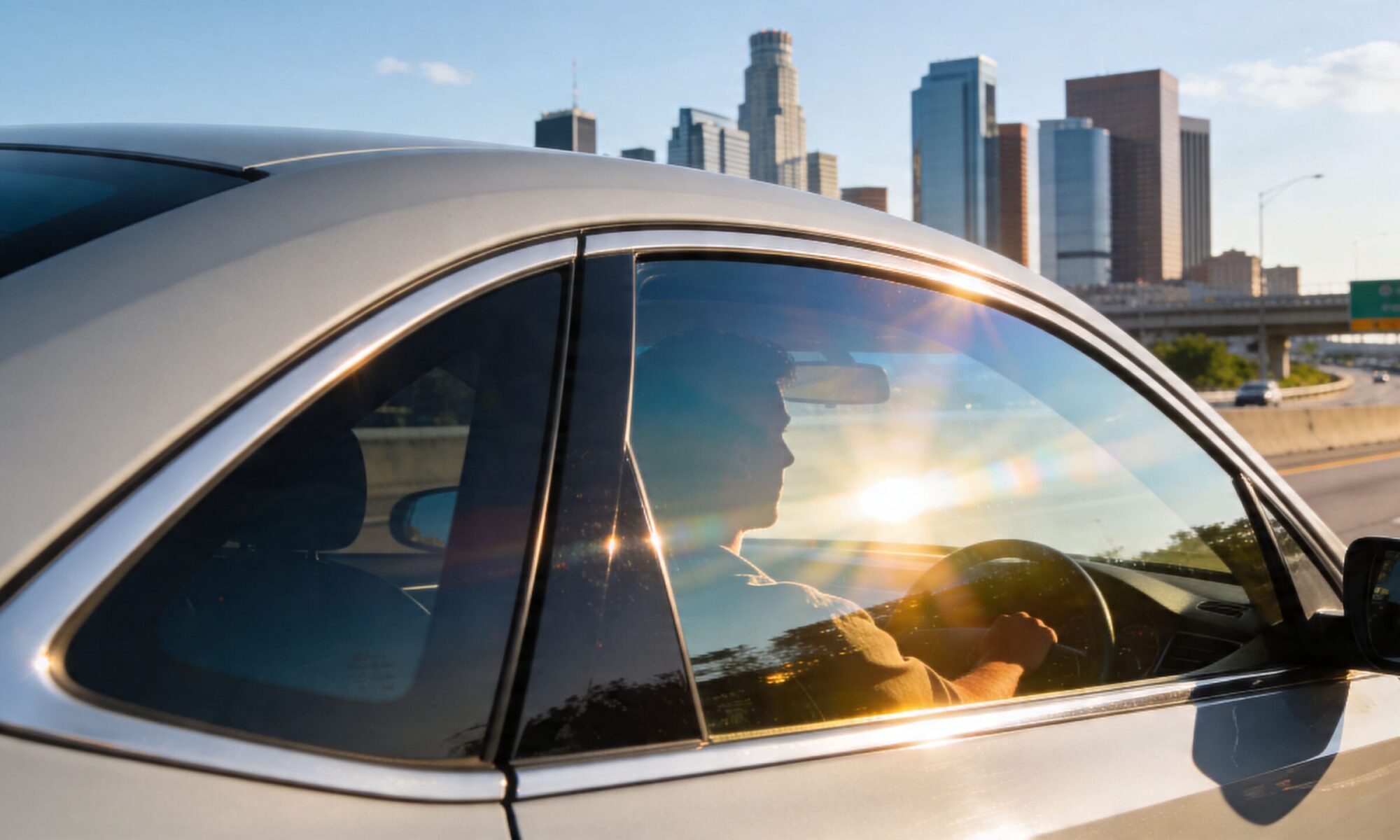
You feel it fast in a Georgia summer. You get into the car in Woodstock, Kennesaw, or Marietta after it’s been sitting in the sun, touch the steering wheel, and pull your hand back. Then the drive starts. Sun on your left arm, glare off the side glass, AC working hard, and the cabin still feels loaded with heat.
That’s usually the point where drivers stop asking about the darkest tint and start asking about the right tint.
For most daily commuters around Cobb County and Cherokee County, reflective ceramic tint is the upgrade that changes how the car feels on the road. It’s built for heat reduction, UV protection, glare control, and long-term durability. It also solves a problem a lot of older films never solved very well. They made the car look darker, but they didn’t do enough against the invisible heat coming through the glass.
If you’re comparing ceramic window tint, replacing old bubbling film, checking legal tint limits in Georgia, or just trying to find the best window tint for cars in North Metro Atlanta, the details matter. Film type matters. Installation quality matters. And the trade-offs matter too, especially if you drive east in the morning or west in the evening and care about visibility.
Beat the Georgia Heat with Advanced Window Tint
A lot of North Metro Atlanta drivers deal with the same pattern every summer. The car sits outside at work in Acworth or Canton. You leave in the afternoon, and the cabin feels like it stored every bit of the day’s heat. The dashboard is hot, the seats are hot, and the side glass throws glare right into your eyes.

That’s where reflective ceramic tint earns its place. It isn’t just about appearance or privacy. It’s a practical heat reduction tint for Georgia drivers who spend real time on I-75, I-575, or GA-400 and want the car to cool down faster and stay more comfortable.
What drivers usually notice first
The first widely appreciated benefit is simple. The car feels less punishing when it’s been parked in the sun.
Then they notice the other things:
- Less harsh glare: Bright afternoon light gets easier to manage.
- Better comfort on long commutes: The cabin feels more stable instead of constantly heating up through the glass.
- More interior protection: Sun exposure is rough on leather, plastics, trim, and dash surfaces.
- A cleaner upgrade path: If you’re replacing old film, ceramic is often the film people wish they had installed the first time.
A lot of customers start by asking whether window tint reduces heat. The short answer is yes, but only if you pick the right film. Darkness alone isn’t the answer. Heat rejection comes from how the film handles infrared energy, not just how dark it looks from outside.
Practical rule: If your main goal is comfort in Georgia, buy for heat performance first and shade second.
Why this matters more in Georgia
Georgia drivers put more stress on window film than people in milder climates. The combination of strong sun, long parked hours, stop-and-go traffic, and daily commuting exposes weak film fast. Cheap dyed tint may look fine at first, but its longevity becomes apparent after repeated summers.
For car window tinting in Woodstock, Kennesaw, Acworth, Marietta, and Canton, the conversation should start with performance. Reflective ceramic tint gives you the best shot at real heat control, strong UV protection, and a cleaner long-term result.
What Exactly Is Reflective Ceramic Tint?
Pull out of a shaded parking lot in Marietta at 7:45 a.m., head east, and the sun hits the windshield and front side glass at a low angle. On some cars, especially with more curved glass, that is when drivers notice a light haze or extra reflectivity from certain films. That is a real trade-off, and it matters more in Georgia because people here spend a lot of time commuting straight into hard morning and late-afternoon sun.
Reflective ceramic tint is a multi-layer window film built with ceramic particles inside the film, not metal. Its job is to cut solar heat and glare while keeping the cleaner signal performance drivers expect in newer vehicles. The “reflective” part means the film can reject heat with a slightly more reflective look than a basic dyed film, but the finish depends on the product line and the shade you choose.

What matters in real use is how the film handles energy coming through the glass. Ceramic film is designed to reject a large share of the heat-carrying infrared spectrum while also blocking UV exposure. That is why a good ceramic film can feel more comfortable than a darker, cheaper film that mainly changes the look of the glass.
The construction is different from old dyed products. Premium ceramic films use fine ceramic compounds embedded through the film layers so the performance is part of the material itself, not a coating that only looks impressive on day one. In the shop, that usually shows up as better long-term color stability, cleaner visibility, and fewer complaints from drivers who rely on phone signal, GPS, Bluetooth, or in-car electronics.
For Georgia drivers, the practical question is not “What is it made of?” It is “What do I gain, and what do I give up?”
Here is the short answer:
- You get stronger heat control than basic dyed film
- You get strong UV protection for the cabin and skin exposure
- You avoid the signal issues that can come with metallic film
- You usually pay more up front
- You may notice more exterior reflectivity, and on some curved windows, a little low-angle haze in certain light
That last point gets glossed over too often. On a flat side window, many drivers never notice it. On curved rear doors or back glass, especially during commutes through Woodstock, Kennesaw, or Marietta, the angle of the sun can make the film look slightly shinier or create a faint hazy look from some viewpoints. Good film choice and clean installation reduce that problem, but they do not erase physics. If a driver is extremely sensitive to windshield clarity and side-glass optics, the right ceramic product matters just as much as the shade.
Cost is the other trade-off. Reflective ceramic tint costs more than dyed film because the material is better and the performance is better. For a North Metro Atlanta driver who keeps a vehicle several years, sits in traffic on I-75, and parks outside through summer, the extra spend often makes sense. For a short-term vehicle or a tight budget, a lower-tier film may still be the better call. The right answer depends on how long you plan to keep the car, how much you drive, and how much the heat bothers you now.
So the plain-English definition is simple. Reflective ceramic tint is a higher-end, non-metallic window film built to reject heat more effectively than entry-level tint, with a few appearance and cost trade-offs that should be discussed before installation.
Ceramic vs Metallic and Dyed Tints A Clear Comparison
Drivers in North Metro Atlanta usually narrow the choice to three film types. Dyed tint is the low-cost option. Metallic tint adds heat rejection, but it brings some baggage. Reflective ceramic tint costs more, yet it solves more of the problems Georgia drivers deal with in real use, especially long summer commutes and cars parked outside all day.
Window Tint Performance Comparison
| Feature | Dyed Tint | Metallic Tint | Reflective Ceramic Tint |
|---|---|---|---|
| Heat rejection | Low. Mainly darkens glass | Better than dyed | Highest overall performance in this group |
| UV protection | Lower than premium options | Stronger than dyed | Strong UV blocking |
| Glare reduction | Depends heavily on darkness | Good | Good, with more flexibility in lighter shades |
| Signal interference | None | Can interfere with GPS or cell signals | No metallic signal interference |
| Color stability | More likely to fade or shift | Better than dyed | Long-term color stability |
| Long-term appearance | More prone to aging issues | Can age better, but has metal-related drawbacks | Built for long-term premium use |
Dyed tint is the budget choice, with predictable limits
Dyed film still has a place. It improves appearance, adds some privacy, and cuts glare at a lower price than premium film.
The downside shows up fast in Georgia heat. Dyed film relies more on darkening the glass than blocking the heat that makes the cabin miserable at 4:30 in the afternoon. A car can look darker and still feel hot. That disconnect frustrates plenty of drivers who expected dark tint to solve the problem.
Dyed products also tend to show age sooner. If you have seen rear glass turn purple, bubble, or develop an uneven look, that is usually lower-grade film wearing out.
Metallic tint performs better on heat, but electronics and optics matter
Metallic film was a real step up from dyed tint for heat control. It reflects more solar energy, and on some vehicles it still performs decently.
The trade-off is the metal layer. It can interfere with cell service, GPS reception, radio performance, and some connected-car features. That matters more now than it did years ago because newer vehicles rely on antennas, sensors, and wireless systems every day. GearJunkie’s nano-ceramic window tint explanation also points out that ceramic film avoids the signal issues commonly tied to metallic products.
There is another trade-off Georgia drivers notice. On certain glass shapes, especially curved rear doors and back windows, reflective films can show more haze or shine at low sun angles. Metallic products can make that more obvious. For Woodstock, Kennesaw, and Marietta commuters driving east in the morning or west in the evening, that is not a theoretical issue. It is something you may see on the road.
Why reflective ceramic tint usually makes the most sense here
Ceramic film gives drivers the best balance of heat control, electronics compatibility, and long-term appearance. That matters more in Georgia than it does in milder climates because the car spends months fighting sun load, hot pavement, and long idle time in traffic.
It also gives you more flexibility. A lighter ceramic film can still perform well, which helps drivers who want a cleaner look or need to stay inside Georgia window tinting law requirements without giving up most of the benefit.
For many daily drivers, the cost-benefit math is pretty simple:
- Choose dyed film if price is the main concern and the goal is appearance first
- Choose metallic film if you want better heat performance and are willing to accept possible signal or optical drawbacks
- Choose reflective ceramic tint if you plan to keep the car, park outside, sit in traffic often, or care about cabin comfort every summer
Ceramic is usually the better value for drivers who keep a vehicle several years. The up-front cost is higher, but the film holds its color better, avoids metal-related issues, and does more useful work on hot Georgia days.
Where standard tint still fits
Some vehicles do not need top-shelf film. An older car, a short-term lease, or a trade-in may not justify the added cost of ceramic.
That said, drivers shopping for real heat reduction usually end up in the ceramic category for a reason. It performs better where Georgia drivers experience the difference. In traffic, in open parking lots, and during those low-angle sun commutes where cheaper film starts showing its limits.
Understanding Georgia's Car Window Tinting Laws
A lot of Georgia drivers figure out the legal side after the install. That is usually when the problem starts. The film may look right in the shop and still miss the mark once it is on your actual glass.
For passenger vehicles, Georgia law is built around visible light transmission and reflectivity. The part that trips people up is that the law applies to the finished glass and film together, not just the film roll you picked off a sample board. On curved side glass and back glass, that matters even more because a film can look darker or more reflective during low-angle morning and late-afternoon sun than it does at noon. That is something Woodstock, Kennesaw, and Marietta commuters notice quickly.

What VLT actually means
Visible Light Transmission, or VLT, is the amount of visible light that passes through the full glass-and-film combination. Lower VLT looks darker. Higher VLT looks lighter.
Customers often assume a film labeled at a certain shade will be legal on every vehicle. It will not. Factory glass already cuts some light, so the final reading depends on the vehicle, the glass itself, and the film installed on top of it. That is why a legal install starts with a meter, not a guess.
The reflectivity part people forget
Darkness gets most of the attention. Reflectivity causes plenty of problems too.
Georgia drivers who want reflective ceramic tint usually are not asking for a mirror look. They want heat control without drawing attention or creating a glare-heavy finish on the road. In practice, that means choosing a ceramic film that stays restrained from the outside, especially on rounded windows where low-angle haze can make reflective films look more pronounced during the commute. That trade-off matters here. A more reflective appearance may help reject heat, but it can also create a look some drivers in Marietta or Kennesaw regret after a week of sunrise and sunset driving.
If you want the exact state rules before choosing a shade, review the Georgia window tinting law requirements.
Windshield questions come up every day
Windshield tint is where bad advice spreads fastest. Georgia rules are tighter there, and the right answer depends on film placement and the vehicle setup.
This overview gives a good starting point for how drivers think through those limits:
What actually works for legal installs
The safest approach is simple. Match the film to the car, then verify the result on the glass.
A legal install usually comes down to three checks:
- The vehicle’s factory glass
- The final measured VLT after installation
- The film’s reflectivity and overall appearance in real daylight
That last point matters more than people expect. A shade that looks clean indoors can show extra shine outside, especially on curved rear glass in bright Georgia sun. For drivers trying to balance cost, comfort, and compliance, the smart move is usually a film that cuts heat well without chasing the most reflective finish possible. Good installers measure first, explain the trade-offs clearly, and keep the final result inside the law.
Cost Longevity and Your Installation with The Tint Guy
A driver leaves Woodstock before 8 a.m., heads south on I-75, and gets sun hitting the side glass at an angle that shows every optical quirk in the film. That is the kind of daily use that should shape the buying decision, not just the sample card on the counter.
Customers usually want three straight answers before they book. What will it cost, how long will it hold up, and what should they expect on install day.
Reflective ceramic tint costs more up front than dyed film and many entry-level options. In Georgia, that extra cost often makes sense for people who park outside, commute through afternoon heat, or plan to keep the vehicle long enough to avoid doing the job twice.

Cost depends on film level and vehicle complexity
Tint pricing changes with the vehicle and the condition of the glass. A two-door coupe is a different job than a crew-cab truck or a three-row SUV. Curved rear windows take more shaping. Old bubbling film adds removal time. Frameless glass and tight edges can slow the install down too.
The useful way to compare quotes is by what is included:
- Basic dyed film: lower starting price, weaker heat control, shorter service life in hard sun
- Mid-range film upgrades: better appearance and a moderate step up in comfort
- Premium reflective ceramic tint: highest starting price, stronger heat rejection, cleaner long-term value for many daily drivers
- Removal and replacement work: extra labor when old film is purple, brittle, or adhesive-heavy
For drivers in Kennesaw, Marietta, and Woodstock, the smart comparison is cost over the time you expect to own the car. A cheaper film can still end up costing more if it fades early, turns purple, or needs to be stripped and redone. If you are already dealing with failing film, ask about the full process for professional car window tint removal before you approve the new install.
Longevity changes the value equation
Good ceramic film is usually chosen for stability as much as comfort. It tends to hold its color and finish better than lower-tier films that age fast in sun and heat.
That matters in Georgia. Cars here spend long hours in parking lots, cabin temperatures climb fast, and rear glass takes a beating through summer. For owners who keep a vehicle several years, paying more once often makes better financial sense than repeating a cheaper install later.
I tell customers to look at the full cycle. Initial price matters. So do removal risk, downtime, and whether the film will still look right after years of exposure.
Lower up-front cost is only a better deal if the film still performs and still looks good after years of Georgia sun.
What install day should look like
A proper appointment is methodical. The vehicle gets inspected first. Existing film, glass damage, contamination around the edges, and defroster condition all affect the plan before the first piece of film is cut.
From there, the work is straightforward. The glass is cleaned carefully, the film is patterned and heat-formed where needed, and the edges are finished with enough precision that the tint looks factory once it cures. If old film is on the car, removal may take longer than the new install, especially on rear windows with stubborn adhesive.
The Tint Guy is one local option for customers looking for ceramic tint installation, tint replacement, and removal in North Metro Atlanta. The benefit of working with one shop for all three is simple. The old film comes off correctly, the new film goes on cleanly, and the final result can be checked against the limits that apply to the vehicle.
A rarely discussed trade-off is low-angle haze
Reflective ceramic tint has real benefits, but it is not free of trade-offs. One that matters in Georgia is low-angle haze.
You are most likely to see it during sunrise or sunset, especially on curved side glass. It can show up as a faint milkiness or soft glow when the sun is low and hitting the window from the side. Drivers heading east in the morning or west in the evening around Marietta and Kennesaw notice it more than someone who mostly drives midday.
That does not mean the film is defective. It is an optical side effect that can show up on some higher-performance films, and sensitivity to it varies a lot from one driver to another. Someone who obsesses over glass clarity may notice it in the first week. Someone else may never mention it.
That is why the right question is not just, "What blocks the most heat?" The better question is whether the extra cost and performance are worth that possible trade-off for your route, your vehicle’s glass shape, and the hours you drive most often.
What works and what doesn’t
A few buying patterns hold up well in this area:
- Works well: choosing ceramic for heat control, UV protection, and long-term appearance
- Works well: matching the film to your commute, especially if low-angle sun is part of your daily drive
- Works well: comparing quotes based on film line, warranty, removal needs, and vehicle complexity
- Works less well: buying by darkness alone and assuming darker always means cooler
- Works less well: picking the cheapest redo after old film already failed once
One more practical point. Clean glass keeps any tint looking better over time, especially if your vehicle sits outside and picks up sprinkler spotting. If that is a recurring issue, this guide on how to remove hard water stains from car windows is a helpful reference before you start scrubbing tinted glass.
For many North Metro Atlanta drivers, reflective ceramic earns its price when the car is driven year-round, parked outside, and kept for the long haul. For a short-term vehicle or a tighter budget, a less expensive film may be the better fit. The best outcome comes from choosing with the trade-offs in view, not from assuming the most expensive film is automatically the right one.
Proper Care and Professional Tint Removal Services
Fresh tint needs a little patience. Right after installation, the film may show slight moisture pockets or a hazy look while it cures. That’s normal. What matters is leaving it alone long enough for the adhesive system to settle properly.
The simplest maintenance routine is also the safest. Use soft towels, avoid aggressive scrubbing, and stick with cleaners made for tinted glass rather than harsh household products.
How to protect a new install
A few habits go a long way:
- Wait through the curing period: Don’t start testing the windows by rolling them down too early.
- Use tint-safe cleaners: Ammonia-heavy products can create problems over time.
- Clean with soft microfiber: Rough paper products can mark the film surface.
- Watch mineral buildup: If your glass gets sprinkler spots or hard water residue, use a safe method. This guide on how to remove hard water stains from car windows is a useful reference before you start scrubbing.
Why old tint should be removed professionally
Bubbling tint, peeling edges, and purple film usually mean the old installation has reached the end of the road. A lot of people think removal is a quick DIY task with a razor and some glass cleaner. That’s where damage happens.
Rear windows are the biggest risk because of defroster lines. Scrape too aggressively and you can damage those lines permanently. Adhesive can also bake onto the glass and turn a simple removal into a time-consuming cleanup.
Old tint rarely fails in a clean, easy-to-peel way. By the time most people want it removed, the adhesive is already the hard part.
If you’re dealing with a failing install, professional tint removal methods for car windows are worth reviewing before you try it yourself. In many cases, proper removal is the first step toward a much better ceramic tint replacement.
Your Local Ceramic Tint Experts in North Metro Atlanta
If you’re searching for car window tinting in Kennesaw, ceramic tint near Woodstock, auto tint installation in Acworth, or tint replacement in Marietta or Canton, the main question is usually practical. Which film will hold up in Georgia heat and still look right on the car a long time from now?
Reflective ceramic tint is usually the answer for drivers who care about more than appearance. It fits daily commuters who sit in traffic. It fits families with vehicles parked outside all day. It fits owners replacing bubbling film and wanting to stop repeating the same mistake.
Where local drivers usually see the difference
Drivers around Cobb County and Cherokee County tend to notice the same benefits first:
- Cabin comfort on hot afternoons
- Less glare during long commutes
- Reduced strain on the AC system
- Better protection for interior materials
- A cleaner, more modern finish than older metallic or dyed films
That’s why the search terms are so consistent. People look for the best window tint for cars, legal tint limits in Georgia, windshield tint options, heat reduction tint, and ceramic window tint near me because they’re trying to solve a comfort problem and avoid buyer’s regret.
Why local climate changes the recommendation
North Metro Atlanta isn’t gentle on vehicles. Heat, UV exposure, and long parked hours make weak film show its age. Drivers who only want a darker look can still choose standard tint, but people who want performance usually move toward ceramic once they understand what blocks heat.
The same logic shows up outside automotive work too. In residential and commercial settings, ceramic films that reject over 80% of solar heat can reduce HVAC energy usage by up to 30%, with ROI in as little as 2-3 years, according to Prestige Protection’s ceramic film discussion. The application is different, but the takeaway is the same. Ceramic earns its premium by doing more real work against heat.
Who should seriously consider reflective ceramic tint
Reflective ceramic tint makes the most sense if any of these sound like you:
- You commute daily in sun-heavy traffic. Heat buildup matters more when you spend real time in the car.
- You park outside most days. Open lots expose weak tint quickly.
- You’re replacing old film. If the current tint already failed, it’s worth upgrading the film category, not just repeating the install.
- You care about a legal result. Ceramic gives you more performance flexibility without needing to chase extreme darkness.
- You plan to keep the vehicle. Long-term durability matters a lot more when the car isn’t leaving your driveway anytime soon.
North Metro Atlanta drivers don’t need marketing language. They need straight answers on what works in Woodstock, Kennesaw, Acworth, Marietta, Canton, and the surrounding suburbs. Reflective ceramic tint works because it addresses the problem of heat through the glass, not just the appearance of the glass.
If you're ready to compare film options, replace old bubbling tint, or get a quote for a legally compliant ceramic install, The Tint Guy is a practical place to start for drivers in North Metro Atlanta.