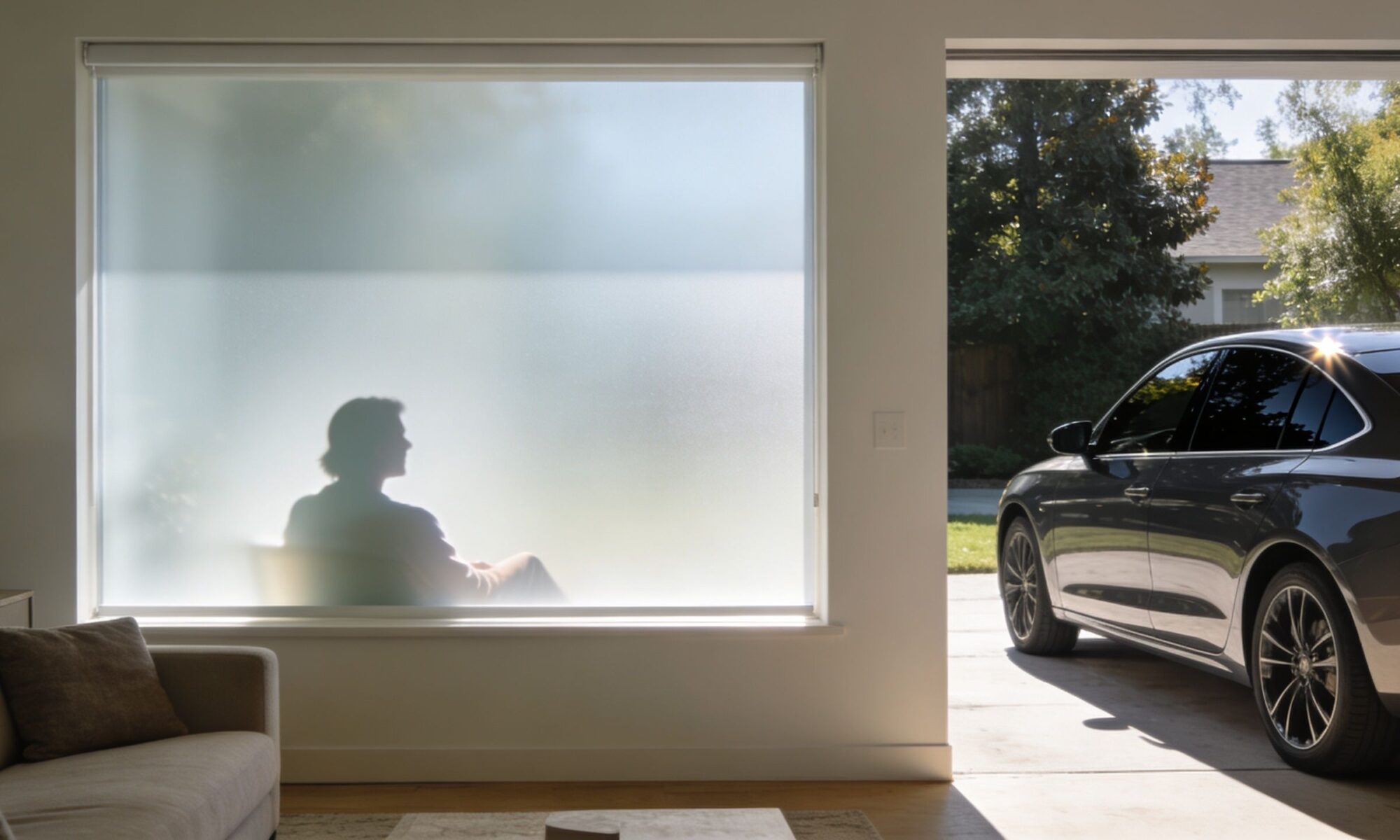
If you searched for residential window film privacy, you’re probably trying to solve a familiar problem. You want light in the space, but you don’t want to feel exposed. In North Metro Atlanta, that concern shows up at home and in the driveway. A front room in Woodstock can feel like a fishbowl by evening, and a parked car in Kennesaw can feel just as exposed by noon.
That overlap is more significant than commonly assumed. The same reasons homeowners install privacy film on house windows, comfort, glare control, UV protection, and a little more separation from the outside world, are the same reasons drivers ask about car window tinting, ceramic window tint, and legal tint limits in Georgia. If you commute through Marietta, Acworth, Canton, or up and down I-575 and I-75, your vehicle deals with the same sun, the same heat load, and the same visibility issues every day.
A lot of people start with the house and then realize the car is the bigger daily problem. You may spend your evenings in a shaded living room, but your vehicle sits in open parking lots, school pickup lines, office lots, and shopping centers. That’s where tint stops being cosmetic and starts being practical.
From Home Privacy to a Cooler Commute in North Atlanta
A homeowner in Cherokee or Cobb County usually starts with one question. How do I keep the space bright without giving up privacy? That’s why residential window film privacy has become a bigger category overall. The global privacy window film market was valued at $4.3 billion in 2024 and is forecasted to reach $7.9 billion by 2033, with North America holding about 34% of market share in 2024, according to privacy window film market data.

That trend makes sense around Woodstock, Acworth, and Kennesaw. People want more control over what comes through the glass. Sometimes that means blocking the neighbor’s line of sight. Sometimes it means cutting harsh sunlight in a bonus room. If your concern starts outdoors, resources on Effective backyard privacy solutions can help you think through fences, screens, and layout changes before you even touch the windows.
Why the same logic applies to your vehicle
Your vehicle is a rolling glass box. It has the same vulnerabilities as a large living room window, just in a harsher environment. Cars sit in direct sun, absorb heat fast, and expose the interior to UV every time they’re parked outside. That’s why drivers who first look into home privacy film often end up asking about auto tint installation next.
A daily commute from Canton to Marietta makes this obvious. The morning glare is one problem. The afternoon cabin heat is another. Then there’s privacy. If valuables are visible through untinted glass, your car advertises what’s inside.
Practical rule: If you care about privacy and comfort in your home, you’ll usually care even more in the vehicle you use every day.
Home film and auto tint solve similar problems
The products aren’t identical, but the decision process is similar. You’re balancing:
- Privacy needs against how much visible light you still want
- Heat reduction against appearance and legal limits
- Clarity against darker glass
- Long-term value against a lower upfront cost
If your focus is still on the house side, home window film installation options are worth reviewing. But for most North Atlanta drivers, the bigger day-to-day payoff comes from tinting the vehicle first, especially if it spends hours outside in Georgia sun.
Understanding Automotive Window Tint Technology
Most drivers shop for tint by shade. That’s understandable, but it’s not enough. Two films can look similar from outside and perform very differently in the car. If you want the best window tint for cars in Georgia heat, you need to know what the numbers and terms mean.
VLT is how dark the film looks
Visible Light Transmission, usually shortened to VLT, tells you how much visible light passes through the glass and film. Lower VLT means a darker appearance. Higher VLT means a lighter appearance.
This is the number Georgia law revolves around. It also affects privacy. Darker isn’t always better, though. A film can look darker and still be mediocre at controlling heat. That’s where people get disappointed. They buy tint that changes the look of the car but doesn’t change the feel of the cabin enough.
UV rejection protects the people and the interior
A good automotive film does more than add shade. It should cut UV exposure and help protect the interior from fading, drying, and discoloration. Residential window film can block up to 99% of harmful UV rays, according to American Window Film’s overview of residential privacy and comfort benefits. The same principle matters in vehicles, especially when a car sits outside at work or during weekend errands.
That matters in practical ways:
- Skin exposure adds up during daily driving
- Dash materials age faster in direct sun
- Seats and trim show wear sooner when UV is left unchecked
Infrared rejection is what helps a car feel cooler
The biggest misunderstanding in auto tint is heat rejection. Drivers often think darker tint automatically means a cooler car. It doesn’t. What matters is how the film handles infrared energy, because that’s a major part of what makes the cabin feel hot.
In plain terms, this is the difference between sunglasses and a heat shield. Sunglasses reduce brightness. A heat shield changes how much heat gets through.
Premium films can reject large amounts of infrared energy. That’s why a lighter ceramic film can outperform a darker basic film in a Canton parking lot. You still get visibility, but you feel less heat loading through the glass.
A smart tint choice starts with performance first, appearance second.
Glare control and daily driving comfort
Glare reduction doesn’t get enough attention until someone drives without it every day. Harsh reflected light off pavement, hoods, and other vehicles creates eye fatigue. A quality tint smooths that out. It doesn’t eliminate sunlight, but it makes the cabin easier to live with.
For daily commuters around Cobb County and Cherokee County, that usually shows up in three places:
- Morning sun coming in low on side glass
- Late afternoon brightness through the rear and quarter windows
- Parking lot heat buildup when the car sits closed up for hours
Why specs matter more than sales talk
When you compare films, ask what the film is designed to do. If the answer is mostly about color, style, or “privacy look,” keep asking questions. Good auto tint should be selected by use case.
If your priority is looks on a weekend car, your choice may be different. If your priority is heat reduction tint for a daily commuter in Marietta or Woodstock, look hard at UV control, infrared rejection, visual clarity, and how the film performs over time.
Choosing the Right Tint for Your Georgia Vehicle
Not every film belongs on every vehicle. The right choice depends on what bothers you most right now. Some drivers hate cabin heat. Others want privacy. Some are dealing with old bubbling tint and need tint replacement more than they need an upgrade.
For Georgia vehicles, the decision usually comes down to whether you want a basic appearance change or a performance film that makes the car more comfortable every day.
The four film categories most drivers will hear about

You’ll usually hear shops talk about dyed, metallic, carbon, and ceramic film. Metallic still exists in the market, but for a lot of modern drivers it’s not the first recommendation because appearance, signal concerns, and preferences have shifted toward carbon and ceramic.
Here’s the practical view.
- Dyed film works for drivers who mainly want a darker look and some glare reduction.
- Metallic film can improve performance, but many buyers now skip it in favor of newer film types.
- Carbon film is a strong middle-ground option for people who want better performance without stepping into premium ceramic pricing.
- Ceramic film is the high-performance choice for heat, UV control, and optical clarity.
Window Tint Comparison Dyed vs. Carbon vs. Ceramic
| Feature | Dyed Film | Carbon Film | Ceramic Film |
|---|---|---|---|
| Primary strength | Appearance and shade | Balanced performance | Highest overall performance |
| Heat reduction | Basic | Better than entry-level film | Strongest option for most drivers |
| UV protection | Good quality-dependent protection | Strong protection | Premium protection |
| Glare reduction | Good | Very good | Very good with better clarity |
| Signal interference | Not typically the concern buyers raise with dyed film | No common concern in normal use | No common concern in normal use |
| Fade and aging | More likely to show age sooner | More stable than basic film | Built for long-term performance |
| Best fit | Budget-minded cosmetic tint | Daily driver upgrade | Georgia heat, long commutes, premium vehicles |
What each option feels like in real use
Dyed film for appearance-first buyers
Dyed film is usually the entry point. It gives the car a darker, cleaner look and helps with glare. If your main goal is privacy on a tighter budget, it may be enough.
The trade-off is performance. Dyed film often satisfies the eye before it satisfies the seat. The car may look cooler without staying cool enough in a July parking lot.
Carbon film for solid everyday value
Carbon film tends to be the sweet spot for drivers who want a real improvement over basic tint. It usually offers better heat control and a more stable finish than entry-level dyed film.
For a commuter driving from Acworth into Marietta every day, carbon can be a sensible upgrade. You get a better daily experience without going all the way into premium ceramic.
Ceramic film for drivers who are done compromising
Ceramic window tint is what most heat-focused customers want once they understand the differences. It’s the category people choose when they say things like:
- “I want the car cooler, not just darker.”
- “I need clear visibility at night.”
- “I’m replacing cheap tint that didn’t hold up.”
Ceramic film is especially popular for SUVs, trucks, and family vehicles that spend long hours outdoors. It also makes sense for drivers who keep their cars a long time and don’t want to redo the job.
Privacy at night is where people get confused
Homeowners often ask whether one-way privacy film works at night. Drivers ask a version of the same question with car tint. The answer is similar. Standard one-way style films struggle once lighting conditions reverse. Newer dual-reflective films maintain better night privacy, and that matters because 70% to 80% of privacy queries focus on all-day privacy without giving up light, as noted in this video discussion of one-way film performance at night.
For vehicles, that doesn’t mean you should chase maximum reflectivity. Safe night driving still depends on visibility from inside the cabin. The practical goal is controlled privacy within Georgia legal limits, not a film that looks impressive in daylight but makes suburban night driving harder.
If you drive dark back roads around Canton or Milton, interior visibility matters just as much as daytime privacy.
What works best for North Metro Atlanta drivers
If someone asks for the most practical recommendation for Kennesaw, Woodstock, Acworth, or surrounding suburbs, the answer usually follows the driving pattern:
- Short local driving and appearance-first goals often point to dyed or carbon.
- Long commutes and strong heat complaints usually point to ceramic.
- Old purple, peeling, or bubbling tint means removal and replacement should come first.
- Large glass areas on SUVs and trucks usually make premium film easier to justify.
One local option in that premium category is The Tint Guy, which offers automotive tint services alongside ceramic-focused upgrades for drivers comparing performance films in North Metro Atlanta.
Georgia Window Tint Laws Explained for Local Drivers
Most problems with car tint don’t start with the film. They start with bad advice. A driver asks how dark they can go, hears three different answers, and ends up more confused than when they started.

For Georgia drivers, legal compliance has to come before aesthetics. That applies whether you drive a sedan in Marietta, an SUV in Woodstock, or a truck in Canton. If you want the clean look of darker glass without creating ticket risk or rework, start with a shop that knows the state rules and measures the result properly. A useful local reference is this guide to Georgia auto window tinting laws.
The part most drivers miss
The law isn’t just about whether the tint looks dark. It’s about whether the finished glass falls within legal limits for the vehicle and the specific window. Factory glass already has some shading on many vehicles. Once film is added, the final result is what matters.
That’s why guessing by appearance doesn’t work. A film percentage that’s legal on one vehicle can land differently on another because the underlying glass isn’t identical.
Why legal tint limits matter in everyday use
A compliant tint job protects you from two common headaches:
- Removal after installation, which means paying to undo a bad decision
- Unwanted attention during traffic stops, even if the rest of the vehicle is fine
There’s also a practical side. The legal target should still match how you drive. If you commute before sunrise, drive wooded roads at night, or back into dim neighborhoods often, the darkest possible legal setup may not be the smartest setup for you.
Windshield tint needs special caution
A lot of “windshield tint” questions are really two different questions. One is about a top strip. The other is about tinting more of the windshield glass. Those aren’t the same thing in terms of legality or visibility.
Professional guidance carries the most weight. Windshield film choices affect glare, daylight comfort, and nighttime sightlines more than most customers expect. If the shop can’t explain the legal and visibility side clearly, keep looking.
Don’t choose a shade because it looked good on someone else’s car. Choose it based on your vehicle, your driving hours, and what Georgia actually allows.
The safest way to buy tint in Georgia
Use this checklist before you book:
- Ask for legal guidance by vehicle type so the recommendation fits your car, truck, or SUV.
- Confirm the final installed result will be compliant instead of relying on the roll label alone.
- Discuss your night driving habits before choosing side and rear glass darkness.
- Bring up old tint early if the vehicle needs tint removal or tint replacement first.
A good installer won’t just ask how dark you want it. They’ll ask how you use the vehicle.
The Real-World Benefits of Professional Ceramic Tint
There’s a big difference between a tinted car and a comfortable car. Drivers in North Atlanta usually notice that after the first hot week. The vehicle may look great from outside, but if the seats still feel baked and the cabin takes too long to settle down, the film isn’t doing enough.

Ceramic tint is where performance starts to feel obvious. It’s the film category people usually appreciate most on the second half of the day, after the car has been parked in direct sun and they open the door expecting the usual blast of heat.
The commute difference is immediate
Take two common North Metro Atlanta scenarios.
In the first, a driver leaves work in Marietta, opens the car after hours in the sun, and spends the first stretch of the drive blasting the A/C while squinting through glare. The cabin is bright, the steering wheel is hot, and the vehicle takes time to become comfortable.
In the second, the same kind of commute happens with a premium ceramic installation. The car still gets warm because no film stops all heat, but the cabin is easier to recover, the sunlight feels less harsh, and the glass isn’t working against you the same way.
That’s why heat reduction tint matters more than appearance once summer starts.
Ceramic earns its price through performance
Premium films like 3M Prestige reject up to 97% of the sun’s infrared light while blocking 99.9% of ultraviolet radiation, according to 3M Prestige technical data. In North Metro Atlanta, that kind of multi-spectrum control matters because the problem isn’t just brightness. It’s heat, UV exposure, and the constant load on the cabin during long sunny stretches.
For drivers comparing film categories, that’s the core ceramic argument. It isn’t about hype. It’s about using a film built to manage more of what makes the car uncomfortable.
Daily benefits drivers actually notice
The strongest reasons to choose ceramic tint are usually practical:
- Cabin comfort improves when the glass lets in less heat energy.
- UV protection tint helps protect interior materials from early wear.
- Glare reduction tint makes long drives less tiring.
- Clearer outward visibility usually feels better than very dark basic film, especially after sunset.
- A more private interior can help keep casual attention off what’s in the car.
A good overview of those performance-focused benefits is this page on ceramic tint benefits.
Ceramic tint is for drivers who are tired of choosing between comfort, visibility, and appearance.
Why it matters more in Georgia than in milder climates
North Atlanta driving puts tint to work. Cars sit outside at schools, office parks, trailheads, grocery lots, and rec fields. Families load kids into hot back seats. Commuters get hit with bright afternoon sun on the way home. Weekend vehicles sit in open driveways.
That’s where ceramic film pays off. Not in a showroom. In repeated daily use.
A quick visual breakdown helps if you’re comparing what “premium” really means in practice:
Professional installation matters as much as film choice
Even high-end film can disappoint if the install is rushed. Dust contamination, poor trimming, edge lift, or defroster damage during removal can turn a premium purchase into a frustrating one. That’s why drivers replacing old bubbling tint should care as much about the prep and install process as the product line itself.
For ceramic tint, workmanship shows in the details. Clean edges. Consistent shrink on rear glass. No trapped debris. No shortcuts around difficult windows.
Cost vs Value The Investment in Quality Window Tinting
A Johns Creek homeowner who pays for privacy film at home usually asks the same thing about the family SUV next. What does good tint cost, and is the upgrade worth it on a vehicle that sits in school pickup lines, office lots, and open driveways all summer?
That is the right question.
Tint pricing is not arbitrary. The quote changes based on the film category, the vehicle, and the condition of the glass before any new film goes on. A two-door sedan with clean factory glass is a simpler job than a three-row SUV with a steep rear window and old purple film baked on from years of Georgia sun.
What actually drives the price
Three things usually move the number the most:
- Film type. Dyed film costs less up front. Ceramic costs more because the material performs better and holds up better.
- Vehicle complexity. Larger vehicles, sharper curves, and harder rear glass take more install time.
- Old tint removal. Removing brittle film and adhesive can be labor-heavy, especially on rear glass with defroster lines.
That last point matters more than people expect. In North Metro Atlanta, I regularly see older vehicles from Alpharetta, Roswell, and Cumming come in with sun-cooked film that looked cheap for a year and bad for the next three. Removal is part of the actual cost if the first job was done with low-grade material.
Low price often means a shorter service life
Cheap tint usually saves money once. Then the trade-offs show up.
The color shifts. The film starts to haze or bubble. The cabin still feels hotter than expected. At that point, the owner is paying for removal, replacement, and another install appointment. That is why the lowest quote is rarely the best value, especially for drivers who keep a vehicle several years.
A quality tint job costs more once. A bad tint job costs less first, then costs more to fix.
Value looks different for different drivers
A commuter driving GA 400 every day will measure value one way. A family with two kids climbing into the back seat after practice in Milton will measure it another way. A homeowner in Sandy Springs who already cares about privacy, glare control, and UV exposure at home usually understands the logic quickly in a vehicle.
The return is practical. Better heat rejection. Less interior fading. More comfort in traffic. More privacy when the car is parked at a trailhead, gym, or shopping center. Those benefits are hard to assign a perfect dollar figure to, but they are easy to notice in daily use.
The longer you keep the vehicle, the more that quality matters.
Questions worth asking before you approve the work
A good estimate should answer more than “how dark is it?” Ask:
- What film am I getting exactly?
- Is this quote for dyed, carbon, or ceramic film?
- Does the price include removal of old tint and adhesive cleanup?
- What warranty covers the film, and what warranty covers the installation?
- Will the film choice fit Georgia law on my specific vehicle?
Those questions usually separate a quick price shopper from a buyer who gets the right setup the first time. In this part of Georgia, where heat, glare, and parked-car exposure are part of normal life, quality tint is less about appearance and more about whether the vehicle stays comfortable and protected year after year.
Frequently Asked Questions About Car Window Tint
A good tint install shouldn’t leave you guessing after you pick up the keys. Most of the common questions are about curing, cleaning, durability, and what’s normal during the first few days.
The questions drivers ask most
| Question | Answer |
|---|---|
| How soon can I roll the windows down? | Follow the installer’s aftercare instructions. Fresh tint needs time to settle and bond, so rolling windows down too early can disrupt the edges. |
| Is haziness or small water pockets normal right after installation? | Yes, some temporary haze or moisture appearance can be normal while the film cures. That early look isn’t the same as failure. Let it finish curing before judging the final result. |
| How do I clean tinted windows? | Use gentle cleaning methods and avoid abrasive tools. A soft microfiber towel and tint-safe cleaner are the safest approach. |
| Will ceramic tint make my windows very dark? | Not necessarily. Ceramic is a performance category, not just a darkness level. You can choose a film for heat and UV control without automatically choosing the darkest look. |
| Does darker tint always block more heat? | No. Film construction matters more than appearance alone. A lighter high-performance film can outperform a darker basic film. |
| What if my old tint is bubbling or turning purple? | That’s usually a sign you need tint removal and replacement, not a patch. Trying to install over failing film creates more problems. |
| Is windshield tint worth it? | It can be, but it needs careful discussion around legal use and visibility. Windshield glass affects driving confidence more than side windows do. |
| How long does tint last? | Longevity depends on film quality, sun exposure, and installation quality. Better films and cleaner installs generally hold up better over time. |
| Can tint help with privacy if I leave items in the car? | It helps reduce casual visibility, but it isn’t a substitute for smart habits. Don’t leave valuables visible if you can avoid it. |
| Should I remove old tint before selling the car? | If the tint is failing, replacement can improve how the vehicle looks. If the film still looks clean and legal, removal may not be necessary. |
A few aftercare habits that prevent problems
The first week matters. Let the film cure, don’t pick at the edges, and don’t treat temporary moisture marks like a defect before the curing window has passed.
Three habits help most:
- Be patient with curing because new film can look slightly imperfect before it settles.
- Clean gently once the installer says it’s ready.
- Call the shop early if something looks wrong instead of waiting for a minor issue to become a bigger one.
When replacement makes more sense than keeping old tint
Some vehicles come in with old film that’s already telling you what to do. If it’s bubbling, peeling, turning purple, or showing adhesive failure, replacement is usually smarter than trying to live with it.
That’s especially true on rear windows with defroster lines. Removal should be handled carefully so the cleanup doesn’t create a new problem.
If your current tint looks bad in daylight, it usually looks worse from inside the car than you’ve gotten used to admitting.
Good tint should make the car easier to live with, not give you one more thing to ignore.
If you’re comparing ceramic window tint, car window tinting, tint removal, or legal tint options for a vehicle in Woodstock, Kennesaw, Acworth, Marietta, or Canton, The Tint Guy is one local resource for reviewing film types, replacement needs, and compliant installation options before you book.