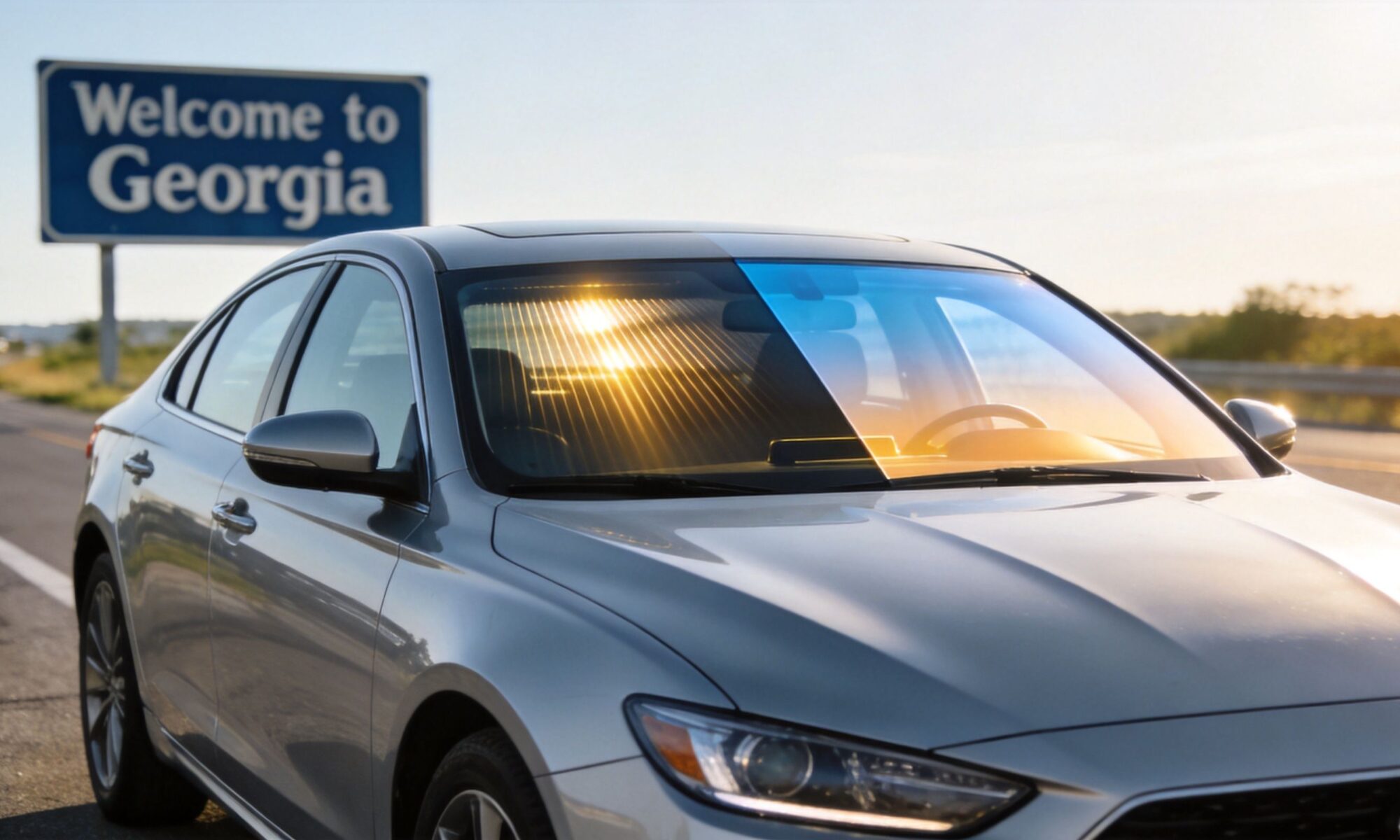
If you drive through Woodstock, Kennesaw, Acworth, Marietta, or Canton in the middle of a Georgia summer, you already know the problem. The steering wheel is hot, the dash feels baked, the windshield throws glare back in your face, and your A/C starts every trip from behind.
That's where solar windshield tint makes sense. Not as a cosmetic add-on, and not as some gimmick sold on hype, but as a practical upgrade for drivers who want less heat, less glare, and better protection for the inside of the vehicle. A properly chosen film can make the cabin more comfortable, help cut the sun load hitting the front seats and dash, and reduce the harsh brightness you deal with on morning and late afternoon commutes.
For North Metro Atlanta drivers, the key is doing it the right way. Windshield tint has legal limits in Georgia. Film type matters. Installation quality matters even more. And not every tint that sounds impressive on a spec sheet will give you the result you want once you're driving on I-575 or heading down toward Marietta in full sun.
Beat the Georgia Heat with Solar Windshield Tint
The usual complaint sounds simple. “My car gets way too hot.” However, the primary issue is broader than cabin comfort.
When the sun hits your windshield for hours, it loads heat into the dashboard, front seats, center console, and steering wheel. Then glare adds another layer of fatigue, especially when you're heading east in the morning or west in the evening. A lot of drivers in Woodstock and Kennesaw first ask about dark tint. What they usually need is better solar control.
What drivers notice first
Drivers first notice a reduction in the intense heat from direct sunlight through the front glass. Next, they find that the cabin feels less stifling upon initial entry. Finally, they experience a decrease in squinting during bright stretches of road.
That's why solar windshield tint has become a serious option for commuters, parents hauling kids around Canton, and anyone spending time in traffic around Marietta or Acworth. The point isn't to make the windshield look dark. The point is to manage the sun more intelligently.
Practical rule: If your main complaint is heat and glare, choose film based on solar performance and clarity, not just on how dark it looks from the outside.
More than a comfort upgrade
This also matters for preservation. Sun exposure is hard on interiors over time. Dash materials dry out. Upholstery fades. Plastic trim doesn't age gracefully when it lives under direct glass exposure every day.
Good solar windshield tint addresses three daily problems at once:
- Heat load: It reduces how much solar energy pushes into the cabin.
- Glare stress: It softens harsh brightness that wears your eyes out.
- Interior wear: It helps protect materials that take the brunt of front-facing sun exposure.
For a Georgia driver, that combination is what makes windshield tint worth considering. Not because it's trendy, but because the front glass is one of the biggest entry points for sun and discomfort in the car.
How Solar Control Film Works to Cool Your Car
Solar control film works like a high-tech filter attached to the glass. It doesn't just “darken” the windshield strip. It targets different parts of the sun's energy differently, which is why one film can perform far better than another even if both look similar.

The three parts of sunlight that matter
When sunlight hits automotive glass, you're dealing with heat, UV exposure, and visible brightness. Premium films are designed to manage all three instead of focusing on just one headline number.
According to 3M Prestige Series performance information, premium solar films can reject up to 60% of total heat, reject 97% of infrared light, and block 99.9% of UV rays. That same source explains why TSER, or Total Solar Energy Rejection, matters more than infrared rejection alone. Infrared accounts for 53% of solar heat, visible light accounts for 44%, and UV accounts for 3%.
Why TSER matters more than flashy IR claims
A lot of marketing in the tint industry leans hard on IR numbers. That's not always wrong, but it can be incomplete.
If a film boasts huge infrared rejection but handles visible light poorly, you may still feel more heat than expected. TSER gives you the broader picture because it measures how well the film rejects the full solar load, not just one slice of it.
That matters when you're comparing windshield strip options, full auto tint packages, or deciding whether a ceramic upgrade is worth it. If you want a better sense of how these films are used in practice on vehicles, this overview of solar control film options is a useful starting point.
What the layers are doing
Modern film stacks use layers that either absorb, reflect, or selectively filter parts of the spectrum. In plain terms:
- UV-blocking layers help protect skin and interior materials.
- Heat-managing layers cut solar energy transfer.
- Glare-control properties help reduce harsh brightness without turning the windshield into a visibility problem.
The best solar windshield tint doesn't rely on darkness alone. It uses film construction to control energy before that heat reaches the cabin.
That's why two products with similar appearance can feel very different in real driving.
The Top Benefits for North Atlanta Drivers
Leave a car in a Woodstock parking lot for an hour in July, then merge onto I-575 into that late-afternoon sun. The first problem is heat. The second is glare. Good solar windshield tint helps with both in a way you notice on real commutes, not just on a spec sheet.

Better comfort on daily drives
For North Atlanta drivers, comfort usually comes down to how fast the cabin settles down after the car has been sitting in open sun. A quality windshield film cuts the harsh, direct heat that pours through the front glass, so the steering wheel, dash, and front seats are less punishing when you first get in. The A/C still matters, but it does not have to fight as hard just to make the cabin tolerable.
That difference stands out in stop-and-go traffic, school pickup lines, and long red lights on Highway 92.
The payoff is practical. You get less heat on your face and hands during the drive, less eye fatigue on bright mornings, and a cabin that feels easier to manage day after day. For drivers who spend serious time on I-575 or I-75, that adds up fast.
Better protection for your interior
Windshield film also helps slow down the wear that Georgia sun causes over time. The Skin Cancer Foundation's guidance on window film and UV protection explains that quality window film can block more than 99 percent of UV radiation, which is one of the main contributors to fading and material breakdown.
That matters most on the surfaces that take direct sun every day:
- Dash panels that dry out, fade, and start to look chalky
- Leather and vinyl seats that lose color and flexibility
- Trim pieces and touch surfaces that age faster under constant sun exposure
If you keep your vehicle for several years, this is one of the benefits that steadily earns its keep.
Less glare during North Georgia commutes
Glare control is a big deal around here, especially during low-angle sun in the morning or late afternoon. Drivers heading south toward Marietta early or north through Cherokee County in the evening know the problem. The light is not just bright. It creates haze across the windshield that makes lane markings, brake lights, and traffic flow harder to read.
A well-chosen solar film can soften that brightness without making the windshield too dark. That trade-off matters in Georgia. The goal is better visual comfort and less squinting while still keeping a clear view in rain, at dusk, and under streetlights.
The real value for Georgia drivers
For many drivers, the biggest benefit is not one dramatic change. It is a group of smaller improvements that make the car easier to live with every week. Lower heat load, less harsh glare, and slower interior fading all work together.
Premium ceramic film usually gives the best result if heat and glare are the main complaints. Basic film can help, but the jump in comfort is smaller, and that matters if your car sits outside all day or you drive heavy miles around North Atlanta. If you want the same heat-load principle explained in a home cooling context, Comfort Experts' guide to HVAC efficiency gives a clear example of how reducing solar gain lowers cooling demand.
Choosing Your Film Ceramic vs Other Tint Types
Not all car window tinting is built the same. If you're comparing options for windshield tint, side glass, or replacing old bubbling film, the material choice changes the result more than drivers typically expect.
The history matters here. According to this history of window tinting, modern window tinting began in 1966 when 3M patented the first solar control window film. Early films were dye-based, and they absorbed solar energy but were prone to fading and discoloration. In the 1990s, hybrid films arrived, and the industry later moved into advanced nano-ceramic films, which deliver stronger heat rejection without the signal interference associated with older metallic films.
What each tint type does well
If your goal is the best window tint for cars in Georgia heat, ceramic usually ends up at the top of the list because it solves the main comfort problem without some of the old trade-offs.
Metallized films can perform well, but signal interference can be a real downside in modern vehicles that rely on phones, GPS, and onboard electronics. Dyed films still have a place as a budget option, but they aren't the film I'd choose for someone who cares most about heat reduction tint and long-term clarity.
Windshield Tint Comparison Ceramic vs. Metallized vs. Dyed Film
| Feature | Ceramic Tint | Metallized Tint | Dyed Tint |
|---|---|---|---|
| Heat rejection | Strong, especially in premium film lines | Good, depending on construction | Basic to moderate |
| Signal interference | No metallic interference | Can interfere with signals | No metallic interference |
| Clarity | Typically very good | Varies | Usually acceptable at first |
| Color stability | Strong long-term performance | Better than older basic films in many cases | More prone to fading over time |
| Appearance | Clean, modern look | Can appear more reflective | Simple, darker look |
| Best fit | Drivers prioritizing comfort and performance | Drivers balancing performance and budget | Budget-focused installs |
Ceramic is the premium choice for a reason
Ceramic window tint is where most informed buyers land once they compare real-world use. It gives you the heat reduction tint people want in Georgia without relying on metal layers that can create headaches with electronics.
That's especially relevant if you use:
- Phone navigation every day
- Bluetooth and streaming
- Dash cams and connected accessories
- Modern vehicles with built-in driver tech
There's also a practical quality difference in aging. Basic dyed film can look fine at install, then drift into discoloration or tired appearance over time. If you're already dealing with tint removal or tint replacement because an older film turned purple or started bubbling, that's often the moment to stop buying twice and move into ceramic.
If you plan to keep the vehicle, premium film usually feels expensive only once. Cheap film keeps charging you later in removal, replacement, and frustration.
What works best in Georgia
For North Metro Atlanta, ceramic window tint is usually the most sensible recommendation for drivers who care about heat, glare, and clean electronics performance. Dyed film can still fit a lower-budget job. Metallized film still has uses. But for a daily commuter in Kennesaw, Woodstock, or Marietta who wants comfort without side effects, ceramic is the modern answer.
Georgia Law and Windshield Tint Safety
Bad advice often starts here. People hear “windshield tint” and assume that means tinting the whole windshield. In Georgia, trouble begins with that assumption.

According to window tinting statistics and legal notes that reference DOT 49 CFR 393.60, federal regulations mandate a minimum parallel luminous transmittance of 70% for most tinted automotive windshields. The same verified data states that Georgia law allows a non-reflective tint strip on the top 6 inches of the windshield, which is where solar control films are legally and safely applied.
What that means in plain English
For most drivers, the safe and legal move is the top windshield strip, sometimes called the visor strip. That upper band is where solar windshield tint makes practical sense under Georgia rules.
What you don't want is a sloppy full-glass application that compromises visibility, creates legal exposure, or causes issues at inspection time and on-road stops. If you're trying to understand the legal side clearly before booking car window tinting, this page on Georgia tint limits helps break it down.
Why professional install matters on the windshield
The windshield is not forgiving. This isn't side glass where a mediocre install might just annoy you cosmetically. On the front glass, film placement, edge finish, optical clarity, and legal coverage all matter.
A proper solar strip should:
- Stay within Georgia's allowed area
- Remain non-reflective
- Avoid distortion in the driver's primary field of view
- Look clean from both inside and outside
That's the difference between a legal, useful glare-control strip and a bad install that causes more problems than it solves.
For drivers who care about vehicle compliance in general, Express Lube inspection clarity is a helpful reminder that visibility and legal standards matter well beyond tint alone.
Safety comes before darkness
A common mistake is chasing the darkest possible look at the windshield. That's backwards. On front glass, clarity and placement matter more than trying to force privacy.
This video gives a useful visual reference for windshield tint considerations:
The best windshield tint job is the one you stop noticing after a day or two, except for the reduction in glare and heat.
That's especially true on night drives, rainy mornings, and low winter sun across open roads in Cherokee and Cobb County.
Installation Cost and Lifetime Warranty
By the time most drivers ask about cost, they're usually weighing one of three situations. They want a fresh install on a newer car, they want to upgrade to ceramic tint, or they need tint removal and replacement because the old film has started failing.

What affects the price
Cost depends on the film line, the amount of glass being covered, the condition of any old tint, and the difficulty of the vehicle. A windshield strip costs less than a full vehicle package. A ceramic upgrade costs more than a basic dyed film. Removal adds labor, especially when old adhesive or bubbling is involved.
The right way to look at it is not “What's the cheapest tint?” It's “What am I buying, and how long do I want it to perform well?”
If you're comparing options, this guide to car tint cost factors gives a practical breakdown of what typically changes the final number.
What a clean installation should include
Good auto tint installation is mostly about process. The shop should prep the glass thoroughly, work in a controlled environment, and cut and fit film cleanly enough that you don't end up staring at contamination, edge lift, or obvious flaws.
A solid install usually means:
- Clean glass prep: Dirt and old residue have to be removed completely.
- Precise fitment: The strip or window pattern needs to match the glass correctly.
- Careful curing guidance: You need clear instructions on what to expect right after install.
- Real warranty support: If the film fails, the warranty should be meaningful.
Why the warranty matters
A lifetime warranty tells you a lot about what the installer and film manufacturer think of the product. It doesn't replace good workmanship, but it does protect you from common failures tied to poor film quality.
That matters when you're choosing between standard vs premium tint options. Cheap film can look like a deal right up until it fades, bubbles, or starts peeling. Then you're paying for tint replacement, and sometimes defroster-safe removal on rear glass too.
For busy drivers in Woodstock, Kennesaw, and Canton, same-day service can be a deciding factor. That's reasonable to ask for. What isn't reasonable is rushing the work so badly that the result has to be redone. Fast is good. Clean is better.
FAQs for North Atlanta Vehicle Owners
Is solar windshield tint legal in Georgia
Yes, in the form of a non-reflective strip on the top 6 inches of the windshield, based on the verified legal guidance cited earlier. Full windshield tinting is where people usually create legal and safety issues.
What's the best window tint for cars in Georgia heat
For most drivers, ceramic window tint is the best fit if heat reduction is the main goal. It gives strong solar control without the signal issues tied to older metallic films. If you're replacing old film, this is usually the upgrade that feels most worthwhile.
Can bubbling or purple tint be fixed
Sometimes. If the issue is localized and minor, an installer can inspect it and tell you whether repair makes sense. In many real cases, tint replacement is the better answer because once film starts failing, patching it rarely gives a clean long-term result.
What is low-angle haze with ceramic tint
This is one of the most misunderstood parts of premium film. According to Tint Academy's explanation of low-angle haze, low-angle haze (LAH) can show up as slight cloudiness at dawn or dusk in high-performance ceramic tints. It's not a defect. It comes from the nanoparticles that reject high levels of infrared heat.
Newer 2025-2026 generation ceramic films have significantly reduced LAH for better clarity, according to that same source. In practical terms, if you commute during sunrise or sunset, ask to see the film in real lighting conditions before you choose.
Slight haze in a high-performing ceramic film can be normal. What matters is whether the film balances clarity, comfort, and glare control well enough for your driving habits.
Will tint hurt my dash cam, phone, or onboard tech
Ceramic film is generally the safer choice when that's a concern because it avoids the metallic construction that can interfere with signals. If you rely heavily on connected tech, bring that up before the install instead of after.
How do I know if I need removal or just replacement
If the film is bubbling, turning purple, peeling, or looking uneven, have it inspected in person. Once film reaches that stage, removal and replacement is often the cleanest path.
If you want a straight answer on solar windshield tint, ceramic window tint, old film removal, or legal tint limits in Georgia, reach out to The Tint Guy. Drivers in Woodstock, Kennesaw, Acworth, Marietta, and Canton can get help choosing the right film, staying legal, and getting a clean install that solves the heat and glare problem.