By the time most drivers in Kennesaw or Woodstock search window tinting and detailing near me, they're already tired of the same routine. The steering wheel is hot, the seats are worse, and the drive home turns into a battle with glare coming off every windshield in front of you. In Georgia, car tint isn't just a style upgrade. It's a comfort upgrade, a visibility upgrade, and in a lot of cases, a sanity upgrade.
The issue is that not all tint is built for Georgia heat, and not every installation solves the same issue. Some drivers want the clean look and basic privacy. Others want the best heat reduction they can get without going too dark. Some need old bubbling film removed and replaced the right way. Those are different jobs, and the right answer depends on how you drive, what you drive, and how long you plan to keep the vehicle.
Your Premier Choice for Car Window Tinting in Kennesaw and Woodstock
A lot of local drivers start with the same question: who can tint my car properly, keep it legal, and make it worth the money?
That usually comes up after a rough week of commuting through Kennesaw, Woodstock, Acworth, or Marietta in full sun. Morning glare on the way east is brutal. Afternoon heat in a dark interior lingers long after the A/C starts running. If your car sits outside at work, you feel it the second you open the door.
The first mistake many people make is shopping tint by darkness alone. Darker doesn't automatically mean better heat control. Cheap film can give you the look without giving you the comfort, and that's where buyers get disappointed. Good car window tinting should solve a real driving problem, not just change the appearance of the glass.
What local drivers usually need
Some want a fresh install on a new truck or sedan. Others come in with old film that's turned purple, bubbled at the edges, or started peeling around the defroster lines. Some ask for windshield tint options that reduce harsh light without creating legal trouble. Those are all normal requests in this area.
A good local shop should help you sort through questions like these:
- Daily commuter need: You spend a lot of time on the road and want less heat and glare.
- Family vehicle concern: You want passengers in the back seat more comfortable on sunny drives.
- Vehicle protection goal: You're trying to keep the dash, seats, and trim in better condition.
- Upgrade situation: You already have old tint, but it doesn't perform like you expected.
- Legal concern: You want the cleanest look possible without crossing Georgia tint limits.
For drivers comparing shops in Kennesaw and Woodstock, it helps to start with a service page that focuses on actual automotive installs, not generic tint talk. A clear overview of professional window tinting near me gives you a better sense of what the process and options should look like.
The right tint job should look clean on day one and still make sense six months later when Georgia summer is doing its worst.
Beat the Georgia Heat with Advanced Heat and UV Protection
Step into a car that has been sitting in a Kennesaw parking lot in July and the problem is obvious fast. The steering wheel is hot, the seats are worse, and the A/C starts the drive already behind.
That is why heat rejection matters more than appearance for a lot of North Georgia drivers. The U.S. Department of Energy notes that window films can reject up to 79% of solar heat in standard applications, which is why the right film can make a noticeable difference in cabin comfort and sun load through the glass, according to its guide to energy efficient window attachments. On a daily driver, that usually shows up in a simple way. The car cools down faster and stays more comfortable while the sun is still hitting the side glass.

Heat reduction you actually notice
Drivers around Woodstock and Kennesaw usually notice good tint in the same three situations. After the car sits outside at work. In stop and go traffic on a bright afternoon. On longer drives where the sun keeps beating through one side of the vehicle.
Good film will not turn a black interior into a refrigerator. Anyone who promises that is overselling it. What it does is cut the harsh radiant heat that wears you out, especially on Georgia roads where the cabin keeps reheating at every light and every errand stop.
That means real day-to-day benefits:
- Parked outside for hours: The cabin is still hot, but it is less punishing when you first get in.
- Commuting in full sun: The A/C does not have to fight as hard to catch up.
- Afternoon driving: The side of your face, arm, and shoulder take less direct heat through the glass.
UV protection matters even if looks are not the priority
A lot of drivers come in asking for darker glass and leave focused on film performance instead. That is usually the better buying decision.
Quality automotive tint is built to reduce UV exposure, which helps protect dashboards, leather, vinyl, trim, and other surfaces that fade or dry out after years of Georgia sun. It also matters for drivers who spend a lot of time on the road and want better protection without making the car too dark. If you want the details on how that works, our page on UV protection for car windows explains what the film is doing beyond changing the look of the vehicle.
Glare reduction is part of comfort
Heat gets the attention first. Glare is what many drivers appreciate by the end of the first week.
Morning sun on I-75, late-day reflection through the driver-side glass, and bright pavement after summer rain all create eye strain. A properly chosen tint softens that harsh light and makes the car easier to drive for long stretches. For families, commuters, and anyone heading between Kennesaw, Woodstock, and the rest of Cobb and Cherokee County every day, that comfort adds up quickly.
In Georgia heat, a tint job should do three things well. Cut heat, block UV, and reduce glare without creating problems you did not ask for.
Choosing Your Film Ceramic vs Standard Window Tint
Once you decide to tint the car, the main decision begins. Do you want a basic film that improves appearance and privacy, or do you want a premium film that performs better in Georgia heat?
That's the difference between standard window tint and ceramic window tint. Both can look good when installed properly. They don't solve the same problem equally well.

What standard film does well
Standard film, usually dyed or carbon-based depending on the product line, is the entry point for many drivers. It gives the vehicle a cleaner look, adds privacy, and cuts some glare. For someone on a tighter budget who mainly wants appearance and a more finished look, standard film can make sense.
Where standard film usually falls short is heat performance. It can help, but it usually won't deliver the same comfort level as a quality ceramic film during a North Georgia summer. That's why many drivers who start with “I just want darker windows” end up asking better questions once they understand the difference.
Why ceramic has become the go-to upgrade
Ceramic film is what I'd recommend to most daily drivers who care about comfort. It's built for performance, not just appearance.
High-performance nano-ceramic tints can reject 50 to 80% of solar heat while maintaining high visible light transmission, which means the film can work hard without needing to go extremely dark, according to this ceramic and regular tint comparison resource. The same heat-performance data cited earlier also explains that a 50% TSER rating means the film blocks half of incoming solar energy, and that can help keep interiors 10 to 15°F lower than untinted vehicles in direct sun.
That combination matters in Georgia because many drivers want real heat control without pushing legal limits just to get relief.
A film that performs well at a lighter shade is usually a smarter buy than a darker film that mainly changes appearance.
Ceramic tint vs standard tint at a glance
| Feature | Standard Film (Carbon/Dyed) | Ceramic Film |
|---|---|---|
| Heat reduction | Basic to moderate | Stronger heat-blocking performance |
| UV protection | Good on quality films | Strong UV-focused performance |
| Darkness required for impact | Often relies more on darker look | Can perform well without going as dark |
| Signal interference | Some film types can create issues | No radio-frequency interference with ceramic-based films |
| Optical clarity | Varies by product | Typically cleaner, more refined view |
| Budget fit | Lower upfront cost | Higher upfront cost, stronger comfort payoff |
| Best fit | Appearance and privacy first | Heat reduction, comfort, and premium daily use |
Which film fits which driver
There isn't one “best window tint for cars” in every situation. There's a better fit for how you use the vehicle.
Consider standard film if:
- You want the look first: Privacy and appearance matter more than top-tier heat control.
- You're working within a tighter budget: You want a clean professional install without moving into premium film pricing.
- The vehicle isn't a daily heat sponge: It's not parked in direct sun all day, every day.
Ceramic usually makes more sense if:
- You commute often: Heat buildup and glare are daily frustrations.
- The car sits outside: Work parking lots and uncovered driveways make heat performance more valuable.
- You plan to keep the vehicle: Better comfort and interior protection matter more over time.
- You use wireless tech constantly: Ceramic avoids the signal-interference issues associated with older metallic film types.
A practical local option for drivers comparing auto tint installation choices around Cobb and Cherokee is The Tint Guy, which offers film options aligned with these common decision points. What matters most is asking the shop to explain film performance accurately, not just show you the darkest sample on the wall.
Understanding Legal Tint Limits in Georgia
A lot of Kennesaw and Woodstock drivers come in asking for the darkest film we can install because their car turns into an oven by mid-afternoon. I get the goal. The problem is that heat relief and legal tint are not the same decision.
Georgia law measures tint by VLT, or visible light transmission. That is the amount of light that passes through the glass and film together. Lower VLT looks darker. Higher VLT lets in more light.
For passenger vehicles in Georgia, front side windows must allow more than 32% of light through, and the rear window and back side windows must also allow more than 32%. The rear window also requires side mirrors if it is tinted. The windshield can only have non-reflective tint on the top 6 inches or above the AS-1 line. Those rules are listed by the Georgia Department of Public Safety.

What that means in plain language
You cannot judge legal tint by eye. Factory glass already has a shade to it on many vehicles, so the film you choose and the glass it goes on create the final reading together. A film that sounds legal on the sample card can still meter too dark once it is installed on the car.
That is why good shops measure the vehicle and recommend film based on the glass you have.
Here is the practical version:
- Front side windows: Must meter above the legal minimum.
- Back side windows and rear glass on passenger vehicles: Need to stay in the same legal range.
- Rear window: Requires working side mirrors if tinted.
- Windshield: Keep tint limited to the allowed top strip unless you are discussing a legal specialty setup.
Windshield tint is where drivers get themselves in trouble fastest. In Georgia heat, a full windshield tint sounds appealing, especially if you spend time on I-75 or park outside all day in Cobb County. But legality is tighter there than on the side glass, and a bad choice on the windshield gets attention quickly.
The smart approach is simple. Pick a film setup that cuts glare and heat without creating a ticket risk every time you pass local law enforcement. That gives you a cooler cabin, a cleaner look, and no guessing about whether the car will pass inspection or draw the wrong kind of attention.
Our Professional Tint Installation and Removal Service
Good film can still look bad if it's installed poorly. Most of the ugly tint you see around town started with one of three problems: dirty glass, bad cutting, or rushed application.
That's why professional auto tint installation matters as much as the film itself.

What a proper installation looks like
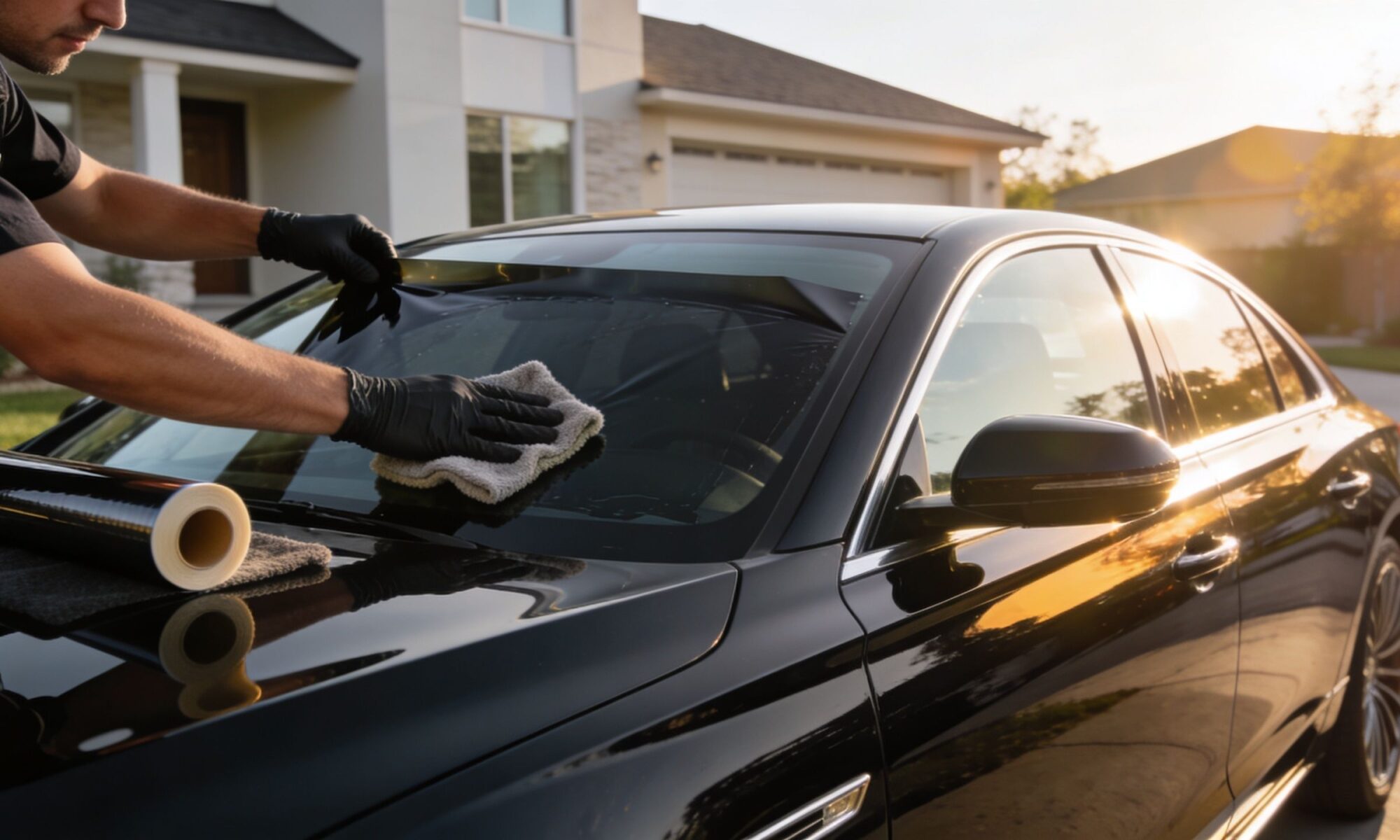
The process starts long before the film touches the glass. Every window has to be cleaned thoroughly, including the edges and seals where dust and debris like to hide. If contamination stays on the glass, it shows up under the film.
Then the film needs to be cut accurately for the vehicle. Clean edges matter. So does shrinking and shaping the film correctly so it lays down smoothly instead of fighting the curve of the glass.
A professional install usually includes these core steps:
Glass prep
Dirt, adhesive residue, oils, and lint have to be removed first. Many cheap jobs fail at this critical step.Film patterning
The film is cut to match the vehicle glass, often using a precise plotting system or careful hand finishing depending on the setup.Application in a controlled workspace
The cleaner the environment, the cleaner the result. Dust in the air becomes debris in the tint.Final squeegee and edge check
Trapped moisture is pushed out and the finish gets tightened up.
Tint removal is its own job
Old film removal isn't just peeling something off a window. If the tint is bubbling, turning purple, or cracking, the adhesive underneath is usually part of the problem too.
A proper tint removal service has to remove both the film and the leftover glue without damaging the glass, defroster lines, or interior surfaces. Then the window has to be cleaned back to a condition that can accept new film. That's the difference between a clean tint replacement and a redo that still looks rough around the edges.
Drivers usually come in for replacement when they notice:
- Bubbling film: Air pockets and lift-off points that get worse over time.
- Purple discoloration: Common with aging lower-grade film.
- Peeling corners: Usually starts at edges, then spreads.
- Hazy visibility: Especially frustrating at night or in rain.
For a quick look at the kind of hands-on work involved in film application, this short install clip gives useful context:
What to expect after the car leaves the shop
Fresh tint needs a curing period. During that time, you may see some temporary moisture pockets or a slightly hazy look. That's normal as the film settles.
What matters is that the shop gives clear aftercare instructions, stands behind the work, and handles any follow-up cleanly if something needs attention. Same-day service can be a real advantage when the schedule allows, but speed should never come at the cost of prep or finish quality.
Frequently Asked Questions About Car Window Tinting
How much does car window tinting cost per vehicle
It depends on the vehicle, the number of windows, the film type, and whether you're removing old tint first. A sedan, truck, SUV, and full windshield setup won't price out the same way.
The biggest cost difference usually comes from standard vs ceramic tint. Standard film lowers the upfront cost. Ceramic costs more, but it's the option most drivers choose when heat reduction is the priority. If you want an exact number, the only honest answer is to quote the vehicle and the film together.
Is ceramic tint worth it in Georgia
For a lot of drivers around Kennesaw and Woodstock, yes. If your car spends time in direct sun, if you commute often, or if you're tired of blasting the A/C just to feel comfortable, ceramic usually makes more sense than going cheap and wishing you hadn't.
If your main goal is appearance and privacy, standard film may still be enough. If your goal is comfort in Georgia heat, ceramic is usually the better fit.
How long does window tint last
That depends on the film quality, how well it was installed, and how the vehicle is cared for. Good film installed on clean glass lasts longer and looks better longer than bargain film installed in a rushed environment.
The bigger issue isn't just lifespan. It's whether the tint keeps looking clean instead of turning hazy, purple, or bubbly before you're ready to replace it.
Can old bubbling tint be replaced
Yes, and it should be removed before it gets worse. Once the film starts failing, visibility drops and the car starts looking neglected fast.
A proper replacement means removing the old film and adhesive completely, then installing fresh film on a clean surface. That gives you a much better result than trying to patch over a bad job.
What should I use to clean tinted windows
Use a soft microfiber towel and a tint-safe cleaner. Stay away from harsh chemicals and rough paper products that can mark the film.
If you want a general example of how service pricing content should educate customers clearly, even outside the tint industry, this breakdown of how much Flagstaff window cleaning costs is a good reference. The lesson is the same. Clear scope matters more than vague estimates.
Is windshield tint legal
A top strip is the usual legal path. Full windshield tint needs careful review before installation because this is the part of the car where legal mistakes happen fastest.
Ask the shop exactly what they're installing, where it sits on the windshield, and how it aligns with Georgia rules.
If you're ready to make your daily drive cooler, cleaner, and easier on the eyes, book a consultation with The Tint Guy. Bring the vehicle, talk through your goals, and get a recommendation based on heat, legality, and how you use the car.