Your car can look spotless on a Sunday morning in Brickell and pick up fresh damage before dinner. One run up I-95, one beachside parking session, one week of construction dust and salt in the air, and the paint starts taking hits you can't polish away. In Miami, that's normal. The sun is relentless, the roads stay busy, and coastal exposure works on your finish every day whether you notice it or not.
That's why paint protection film miami searches keep climbing. This isn't just enthusiast talk anymore. The U.S. PPF market was valued at USD 105.04 million in 2023 and is projected to reach USD 158.21 million by 2030, with Miami among the cities leading demand because of intense UV and salt air, according to Grand View Research's U.S. paint protection film market report.
If you're buying a car to keep for years, or buying one with resale in mind, protection starts before the first wash. That includes inspecting the vehicle's background. If you're shopping pre-owned, choosing the right VIN report helps you catch prior damage or paintwork before you spend money protecting a finish that may already have issues.
Protecting Your Investment in the Sunshine State
Miami is rough on paint in a very specific way. The damage usually doesn't show up all at once. It starts with a tiny chip on the front bumper, then a few marks on the hood, then faint dulling on the horizontal panels that soak up sun every day.
Drive often on I-95, the Palmetto, or any stretch with ongoing construction, and your front end becomes the impact zone. Park near the water in Miami Beach, Key Biscayne, or Coconut Grove, and salt-laden air adds another layer of punishment. Leave the car outside most days, and UV exposure slowly works on the clear coat.
Practical rule: In South Florida, paint damage is usually cumulative, not dramatic. Owners often notice it only after the finish has already lost some crispness.
A lot of owners first look at PPF after they get the car detailed and realize the shine is back, but the chips are still there. That's the key distinction. Correction can improve paint. It can't stop the next hit. Paint protection film is the part that takes the abuse so the factory finish doesn't have to.
For Miami drivers, that's the true value. PPF helps preserve appearance, but it also protects the original paint that matters when you trade in, sell privately, or want the car to age well. On a daily driver, that means fewer ugly scars on the front clip. On an exotic, luxury SUV, or weekend car, it means preserving the finish you paid for in the first place.
What Exactly is Paint Protection Film
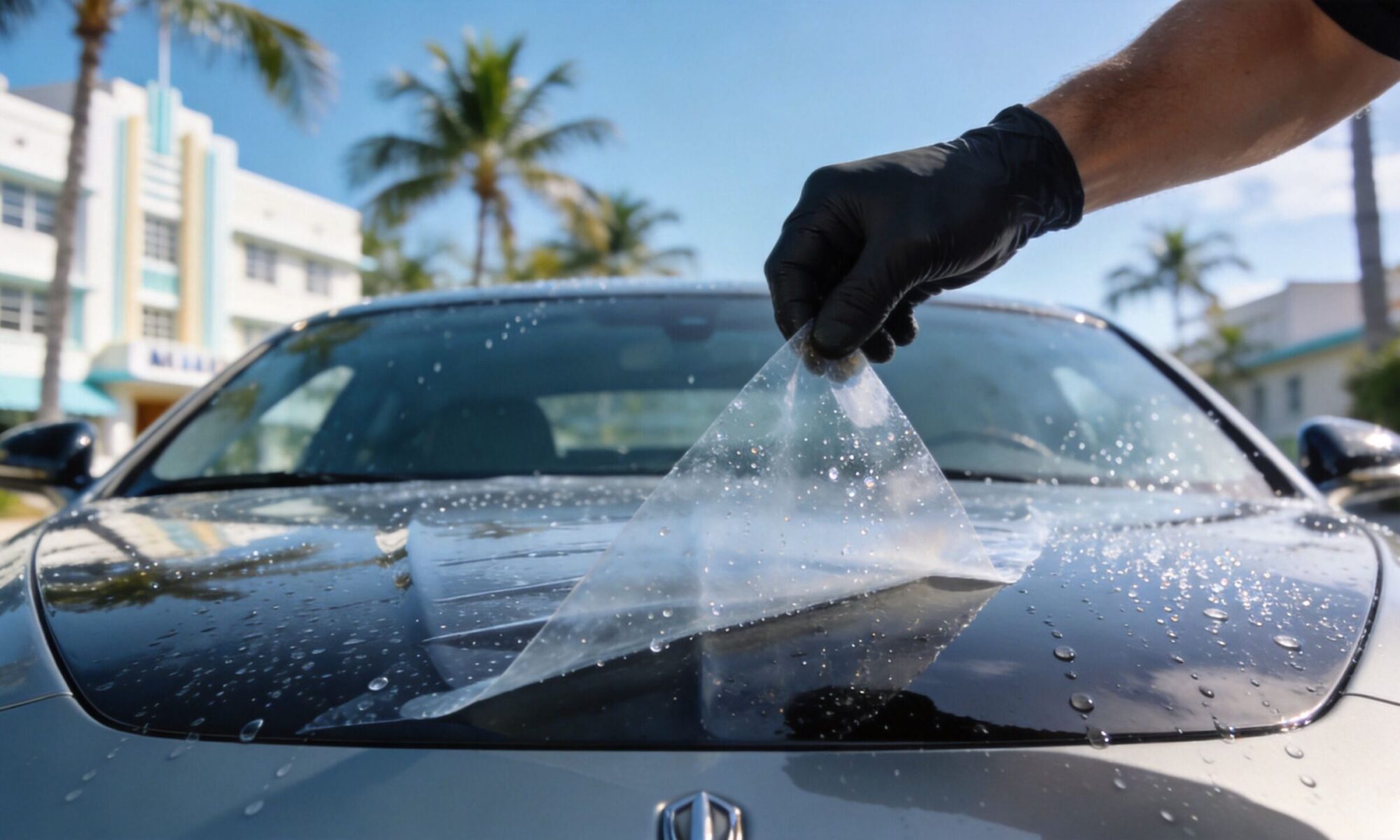
Paint protection film, usually called PPF, is a clear layer installed over painted surfaces to take the hits your paint would otherwise absorb. Think of it as a sacrificial skin. It's there to catch the chip, the scuff, the wash-induced mark, or the bug splatter before your clear coat does.
The material matters. PPF is typically made from elastomeric thermoplastic polyurethane (TPU) around 7 to 8 mils thick, and its self-healing behavior works when gentle heat, like the sun, lets the film's structure reform and reduce minor scratches and swirl marks, as explained in this overview of how paint protection film works and supported by Garage Customs FL's XPEL PPF explanation.

How the film actually protects paint
A good way to understand PPF is to compare it to a screen protector, except much tougher and built for impact, weather, and constant outdoor exposure. Once installed, the film sits on top of the paint and takes the first contact from debris, grime, and light abrasion.
That matters because factory paint is beautiful, but it's not built to shrug off every pebble kicked up on the highway.
Here's what PPF does well:
- Absorbs impact: Small road debris hits the film first instead of directly striking paint.
- Reduces visible wear: Light wash marks and surface scuffs can soften or disappear with heat.
- Creates separation: Bug residue, bird droppings, and grime sit on the film, not directly on clear coat.
Why self-healing makes sense in Florida
South Florida sun is harsh on cars, but this is one area where heat can help you. Minor swirls or light marks in the top layer of quality film can relax out after sitting in the sun or after controlled heat is applied.
That doesn't mean PPF is magic. A deep gouge is still a deep gouge. If a sharp object cuts through the film, the film may need replacement. But for normal wear, especially on a car that gets washed often, self-healing is one of the reasons modern TPU film is in a different category than old-school paint guards.
The best way to think about PPF is simple. It doesn't make your car invincible. It gives damage somewhere else to land.
PPF also isn't the same thing as wax, sealant, or ceramic coating. Those products change surface behavior. PPF changes what physically gets hit first. In Miami, that difference matters.
Why Your Car Needs PPF in Miami
Miami doesn't attack a vehicle from one direction. It attacks from several at once. Roads chip the front end, sun beats on horizontal panels, and coastal air adds contamination that lingers if the car isn't washed often.
That's why paint protection film miami isn't a cosmetic upgrade for most serious owners. It's prevention.
Highway debris and constant impact zones
Front bumpers, hood edges, mirrors, fenders, rocker panels, and behind-the-wheel areas take the most abuse. If you commute daily, those areas get hammered first. Construction debris, loose gravel, and random highway junk don't need to be large to leave a permanent mark.
PPF is typically 6 to 10 mils thick, which is why it can absorb impact from highway debris, and in South Florida's UV and humidity a quality film typically lasts 5 to 8 years, while also helping protect against rock chips and salt air corrosion from areas including Miami Beach and Key Biscayne, according to WhirLocal's Miami PPF market and installer overview.
If you've ever seen a car that looked great from ten feet away but had a sandblasted bumper up close, that's the problem PPF solves.
UV exposure and paint fade
Miami sun is hard on clear coat. Dark colors show it first, but lighter colors aren't immune. The hood, roofline, trunk lid, and upper door sections get repeated exposure, especially if the car lives outside.
A quality film acts as a barrier between the sun and the finish. In practical terms, that means the paint underneath keeps its depth and consistency longer. For owners planning to keep a vehicle for years, that matters as much as chip protection.
Salt air, bugs, and daily contamination
Cars near the water deal with a different kind of wear. Salt in the air settles on paint. So do bug remains, bird droppings, hard water residue, and road film. None of that is good to leave baking on a panel.
PPF helps because the film becomes the exposed surface. You still have to wash the car. You still need maintenance. But you're cleaning contaminants off a protective layer instead of directly off your original finish.
Here's where Miami owners usually see the biggest return:
- Beach-area driving: Salt exposure is part of ownership.
- Highway commuting: Front-end damage adds up quickly.
- Outdoor parking: Sun works on the same panels day after day.
- Luxury or performance vehicles: Paint preservation has resale implications.
If your car spends time on expressways and outside parking lots, the question usually isn't whether the paint will get hit. It's whether you want the film to take that hit first.
Understanding PPF Types and Coverage Options
There isn't one universal PPF package that fits every car or every owner. The right setup depends on how you drive, where you park, and how long you plan to keep the vehicle.

Clear film, matte film, and color PPF
Clear gloss PPF is a popular starting point for many drivers. It keeps the factory look while adding protection. This is the safest choice if your priority is preserving original paint appearance.
Then there's matte or satin PPF, which changes the finish while still protecting the paint. This works well for owners who want a stealth look without repainting the car.
A newer option is color PPF. Advanced PPF can include color-stable pigments integrated into a 7.58 mil film, allowing appearance changes while providing protection, and its multi-layer structure provides over 99% UV energy dissipation, according to Ruby Star Garage's color PPF breakdown. That gives owners a two-in-one solution: style change and physical paint defense.
Coverage choices that make sense in real life
The common packages break down like this:
| Coverage option | Best for | What it usually protects | Trade-off |
|---|---|---|---|
| Partial front | Budget-conscious daily drivers | High-hit leading areas like part of hood, bumper, and mirrors | Lower cost, but visible transition lines may be more noticeable |
| Full front | Most Miami commuters and luxury owners | Full hood, full bumper, fenders, mirrors, and other front impact zones | Better front-end protection, higher upfront spend |
| Full vehicle | Enthusiasts, exotic cars, long-term keepers | Entire painted body | Highest protection, highest cost |
Partial coverage works when budget is tight and the goal is simple: stop the worst damage in the worst areas. Full front is what many experienced owners end up preferring because it protects the panels that usually age fastest. Full body makes the most sense when the finish itself is part of the car's value.
A lot of the same logic applies to marine care. If you already think in terms of protecting exposed surfaces before damage starts, the maintenance mindset behind mastering boat care techniques feels familiar.
After you understand the package differences, it helps to see installation and finish options in motion.
Matching the package to the way you drive
A weekend car that barely sees highway miles needs something different from a black SUV that runs the Palmetto every day. Don't buy coverage based on what sounds impressive. Buy for the panels most likely to get damaged on your routes and in your parking habits.
That usually means:
- Daily commuter: Full front is the sweet spot.
- Lease or shorter ownership horizon: Partial front can still prevent the ugliest chips.
- Collector or high-end vehicle: Full-body coverage is easier to justify.
- Style-first owner: Matte or color PPF can make sense if the installer has real experience with it.
PPF vs Ceramic Coating for the Miami Climate
This comparison confuses a lot of owners because both products protect paint, but they do very different jobs.
PPF is armor. It deals with impact and abrasion.
Ceramic coating is surface management. It helps with gloss, slickness, water behavior, and easier cleaning.

What PPF does that ceramic can't
If a pebble hits your bumper at speed, ceramic coating won't stop it. It isn't built for impact. PPF is.
That's the biggest decision point. If your concern is chipping, scratching, and preserving the physical condition of the paint, film is the correct tool. Miami driving creates too many impact opportunities to treat that as a minor issue.
What ceramic does very well
Ceramic coating shines when the priority is easy washing, gloss, and better resistance to the grime that builds up from rain, road film, and coastal contamination. It helps the car stay cleaner-looking and easier to maintain.
For owners who wash often, that matters. It can make the car more pleasant to live with day to day.
Ceramic coating helps you clean the car. PPF helps you keep from repainting the car.
Which one makes sense for Miami
For many Miami owners, the best answer isn't one or the other. It's using each product where it fits.
A practical approach looks like this:
- Choose PPF first if the car sees heavy highway miles, beach-area parking, or you care strongly about preserving factory paint.
- Choose ceramic alone only if impact protection isn't a major concern and your main goal is easier maintenance.
- Combine both if you want physical protection plus easier washing and a more polished finish.
That combination is especially useful in South Florida because the car deals with both physical threats and constant contamination. Film handles the abuse. Coating helps with upkeep.
A simple way to decide
Ask one question first. What problem are you trying to solve?
If your answer is rock chips, rash on the front end, or preserving a new car's finish, start with film. If your answer is keeping the car glossier and easier to wash, ceramic may be enough. If your answer is both, stack them in that order.
The mistake is expecting ceramic to behave like film. It won't. And the other mistake is expecting film to replace washing and maintenance. It won't do that either.
PPF Cost in Miami and Choosing Your Installer
Cost matters, but cheap pricing is one of the fastest ways to end up paying twice. In Miami, the bigger issue isn't just price. It's inconsistent quoting.
Consumers in Miami often deal with poor cost transparency, with full wrap quotes ranging from $5,000 to $12,000, while national averages for sedan full wraps are $4,000 to $8,000, which is why itemized quotes that spell out coverage, material, and labor are so important, as noted in this guide to paint protection film cost and supported by Garage Customs FL's pricing transparency discussion.
What you're actually paying for
Two quotes can look similar on the surface and produce very different results. Price usually reflects more than film square footage.
A proper quote should account for things like:
- Coverage detail: Partial front, full front, rocker panels, pillars, luggage strip, door cups, and other add-ons
- Film choice: Entry-level film versus premium self-healing film
- Vehicle complexity: Curves, sensors, vents, badges, and tight body lines all affect labor
- Installation quality: Edge wrapping, pattern accuracy, cleanliness, and panel alignment
A low quote can mean less prep, visible edges, rushed install work, or weaker finishing around complex panels. That's where failures usually show up first.
How to spot value instead of just price
A good installer should be able to explain exactly what is included and exactly how the film will be installed. If the answer stays vague, that's a problem.
Use this checklist when comparing shops:
- Ask for itemization: You want line-by-line clarity, not a single lump-sum number.
- Inspect local work: Look at completed vehicles in sunlight, not just edited photos.
- Ask about edge treatment: Wrapped edges usually look better and stay cleaner where possible.
- Check the environment: A clean bay matters because contamination under film is avoidable with proper conditions.
- Verify experience with your vehicle type: Teslas, exotics, trucks, and complex front fascias all install differently.
A strong quote is specific. A weak quote sounds cheap until the car is outside and every trapped speck, lifted edge, or misaligned cut becomes visible.
Questions that reveal installer quality fast
You can learn a lot in five minutes by listening to how a shop answers basic questions. A serious installer talks in details. A weak one talks in generalities.
Ask things like:
- What film brand are you using on my car?
- Will you use pre-cut patterns, bulk install methods, or both where needed?
- Which edges will be wrapped?
- What paint correction or prep is included before install?
- What does the warranty cover, and what is considered install-related versus damage-related?
If the shop can't answer clearly, keep looking.
Warranty Maintenance and Questions to Ask
Once PPF is installed, the job isn't over. In Miami, maintenance is what keeps the film looking clean and helps it age the way it should. Salt, bugs, and grime don't ruin a good film overnight, but letting them sit for too long makes ownership harder than it needs to be.

A simple routine works best. Wash the car regularly, remove bug residue early, and avoid blasting film edges with aggressive pressure. For practical upkeep steps, this guide to paint protection film maintenance is a useful baseline.
What maintenance actually looks like
You don't need a complicated regimen. You need consistency.
- Wash regularly: This matters most for cars parked near the coast or driven daily.
- Clean contamination quickly: Bird droppings, bugs, and sap are easier to remove early.
- Be careful around edges: High-pressure water directed straight at a seam can create problems.
- Use film-safe products: Harsh chemicals are a bad trade for temporary convenience.
What to ask before you book
Warranty language matters. In general, owners should expect clear terms around film defects such as yellowing, bubbling, or cracking, while understanding that impact damage and install abuse are different issues.
Save this list on your phone before calling any shop:
- Which film brand are you installing on my vehicle?
- What warranty comes from the manufacturer, and what warranty comes from your shop?
- How do you prep the paint before installation?
- Are badges, sensors, or trim pieces removed when necessary?
- Will the edges be tucked or wrapped where possible?
- How should I wash the car during the first days after install?
- If one panel gets damaged, can that section be replaced without redoing everything?
The best shop isn't the one that talks fastest. It's the one that answers clearly, shows its work, and tells you how to care for the film after you leave.
PPF in Miami is worth it when the film is good, the install is clean, and the owner treats it like a protective system instead of a set-it-and-forget-it accessory.
If you're in North Metro Atlanta and want the same kind of vehicle-first approach for protection and appearance, The Tint Guy offers professional solutions for drivers who care about long-term results, clean installs, and honest guidance on what makes sense for their car.