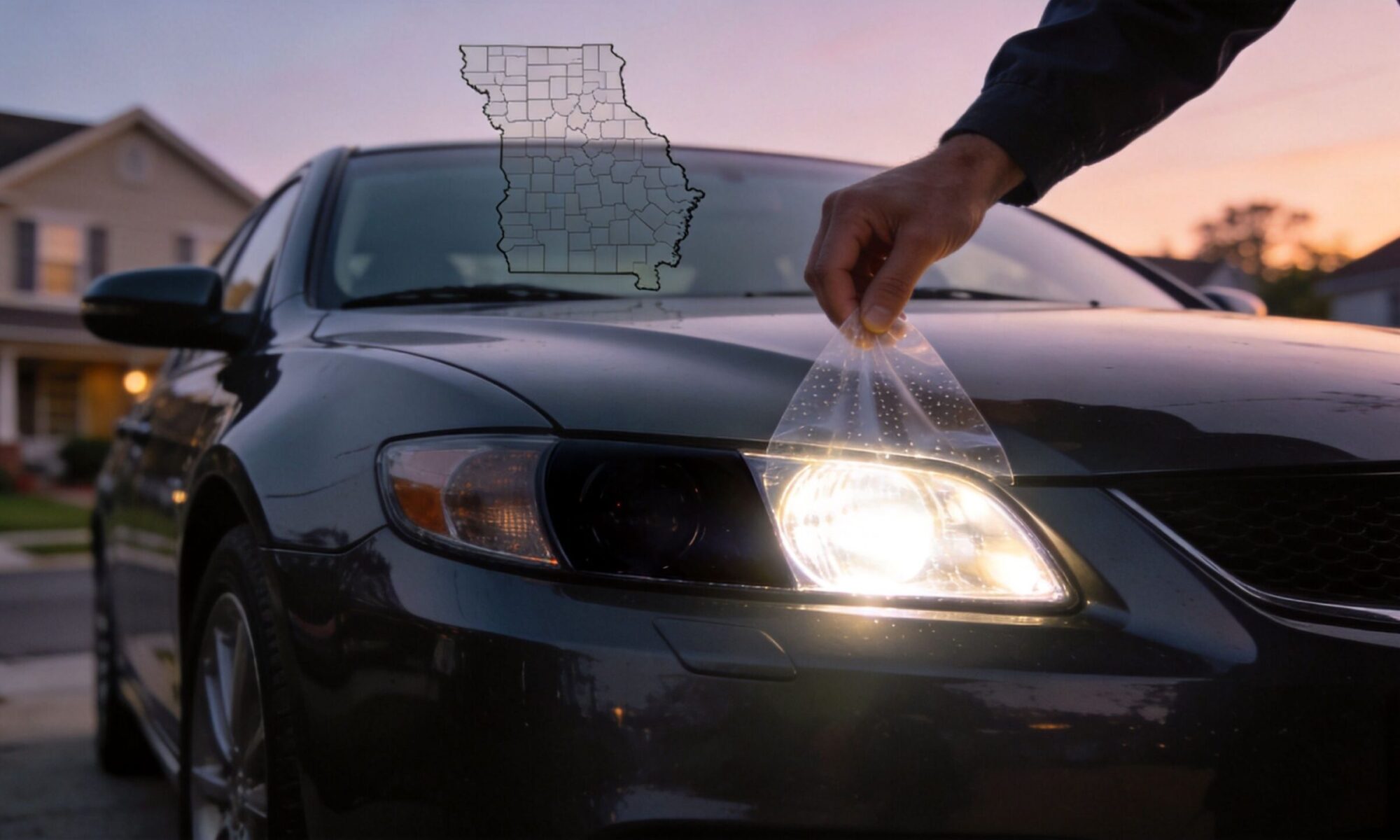
In Georgia, darkening or coloring your headlights isn’t legal, and headlights still need to project white light and remain visible for 500 feet. If you want a cleaner, premium look without the legal risk, the safe move is clear protective film that preserves output instead of smoked tint.
A lot of drivers around Woodstock, Kennesaw, Marietta, and Canton ask the same thing after seeing a smoked front-end look online or in a parking lot at night. They want the style, but they also don’t want a ticket, an inspection problem, or worse, weaker headlights when they’re driving back roads or wet highways after dark.
That’s the main issue with the headlight tint legal question. It isn’t just about appearance. It’s about what still works on the road, what still passes in Georgia, and what gives you protection without creating a problem you’ll have to undo later.
The "Smoked" Headlight Look and Georgia Law
The smoked headlight look appeals to a lot of drivers because it sharpens the front end of the vehicle. On a black truck, gray SUV, or sporty sedan, it can look more aggressive and more custom. That’s why so many Kennesaw car scene builds and Woodstock commuter cars end up considering it.
But in Georgia, the legal answer is much stricter than people expect.
What drivers usually mean by headlight tint
When referring to "headlight tint," individuals often mean one of three things:
- Dark smoke film that visibly darkens the lens
- Colored overlay that shifts the light toward blue or another hue
- Clear protective film that adds protection without making the headlight look darker
Only that last option is the one that stays on the right side of the law in practice.
Georgia follows federal lighting standards closely. If a film darkens output or changes the color of the light, it creates a compliance problem. That means the common smoked look people ask for is exactly the part that causes trouble.
Practical rule: If the lens looks noticeably darker in daylight, it’s usually the wrong direction for a Georgia street vehicle.
The real trade-off
A lot of online advice goes sideways. It treats headlight tint like window tint. It isn’t. Your side windows are about managing heat, glare, privacy, and UV. Your headlights are safety equipment. They exist to help you see and to make sure other drivers see you.
That’s why dark headlight film is a bad bet for daily driving in Acworth, Marietta, or Canton, especially if you commute before sunrise or after dark. Even if you like the look, you’re trading away useful light output for a cosmetic effect that can get expensive fast.
If you’re trying to change the appearance of your front end legally, a better direction is a color-change or styling approach designed around compliant lighting and lens protection, not darkening the actual working headlight surface. For examples of how people approach that look more carefully, see headlight color change options.
What actually works in the real world
Drivers who want a premium finish without problems usually land on one of these choices:
- Clear headlight protection film
- Lens restoration if the headlights are already hazy
- Window tint and windshield strip upgrades elsewhere on the vehicle for a cleaner overall look
That last point matters. A lot of the "finished" look people want from smoked headlights can be achieved more safely through legal ceramic window tint, clean trim, and protected headlights that stay crystal clear.
Why Headlight Performance Is a Safety Priority
Headlights are your car’s eyes on the road. Putting dark film over them is a lot like wearing sunglasses at night. You may still see something, but you’ve reduced the margin that helps you spot debris, lane edges, pedestrians, standing water, and animals early enough to react.

The federal baseline matters
Federal lighting rules under FMVSS 108 are the reason state laws stay so strict. According to AutoZone’s explanation of headlight tint legality, headlights must emit a minimum of 900 lumens, and a 70% VLT tint reduces output by 30%, which can pull a standard 1,200-lumen bulb below that threshold. The same source notes reduced visibility is associated with a 15-20% higher nighttime collision rate.
That’s the safety issue in plain terms. A film that seems "light" to the eye can still cut useful output enough to matter.
Output is only part of the problem
Headlights don’t just need brightness. They also need a usable beam pattern and the correct color. Once you add film that wasn’t designed to preserve optical performance, you can create problems like:
- Dimmer reach down the road
- Uneven beam spread
- Extra glare in the wrong places
- A color shift away from legal white
Those issues show up fast on older lenses, aftermarket housings, and vehicles that already have marginal bulbs. If a driver is also running cloudy lenses or the wrong replacement bulb, the result gets worse.
That’s why it’s smart to confirm your bulb setup before changing anything at the lens. If you’re troubleshooting a popular platform, resources like Honda Accord headlight bulb sizes are useful for checking you’re starting with the right bulb type and not trying to solve a visibility problem with the wrong part.
A headlight modification that looks minor in a garage can become a real visibility problem on a wet Georgia road at night.
Safety shows up where you feel it
Drivers usually notice weak headlights in a few specific moments:
- Back-road driving where there’s no street lighting
- Rainy commutes when lane markings and pavement reflections get harder to read
- Two-lane highways where reaction time matters most
That’s why clear protection makes sense and dark film doesn’t. Protection helps preserve the lens. Dark tint undermines the purpose of the headlight itself.
Georgia Headlight Tint Laws Explained
Pull out of a Kennesaw shopping center after dark with smoked headlights, and the risk is not theoretical. In Cobb, Cherokee, and the rest of North Metro Atlanta, altered front lighting gets attention fast because officers can see it from across an intersection.
What Georgia actually requires
Georgia law does not give headlights the same flexibility drivers get with window film. Headlamps have to project legal white light and remain effective for roadway use. According to Georgia headlight color law guidance, O.C.G.A. § 40-8-20 requires headlights to be visible from 500 feet and ties into federal FMVSS 108 standards for compliant lighting equipment.
In practical terms, that puts smoked headlight film in a bad spot. If the film makes the lamp look darker, dulls the beam, or shifts the color away from white, you are giving an officer and any inspection tech a visible reason to question the setup.
Why drivers get mixed up
A lot of confusion starts with people applying window tint logic to headlights. That does not work. Georgia’s glass rules are one issue. Front lighting is another. If you want a clean breakdown of the difference, our guide to illegal window tint in Georgia helps sort out what is allowed on side glass versus what creates trouble on the front of the vehicle.
Here is the quick comparison that matters.
Georgia Vehicle Tint Laws at a Glance (2026)
| Vehicle Area | Legal VLT% (Visible Light Transmission) | Notes |
|---|---|---|
| Front side windows | 32% | Georgia allows darker film here than on headlights |
| Headlights | Must maintain compliant output | Darkening film is effectively banned under Georgia and federal lighting rules |
| Headlight color | White | Color changes create compliance issues |
What that means for North Atlanta drivers
Around Marietta, Woodstock, and Kennesaw, the practical question is simple. Will the headlights still look factory-correct and perform like they should? If the answer is no, the setup is hard to defend.
That matters even more on daily drivers. Local customers often ask whether a light smoke is “probably fine.” My shop answer is straightforward. If the film is visibly dark on the lens, it is usually the wrong direction for a street-driven vehicle in Georgia.
The safer route is to keep the lens clear, the beam white, and the housing looking close to OEM. That keeps the car cleaner-looking without creating a lighting problem you have to undo later.
Fines and Penalties for Illegal Tints in North Atlanta
The first penalty usually isn’t the worst part. The hassle is.
In North Atlanta, a driver with smoked headlights may get stopped because the lights look visibly dim or altered. From there, the issue often turns into a correction problem, not just a money problem.
What usually happens first
According to YesWrap’s state-by-state summary, jurisdictions like Georgia commonly use fix-it tickets as the first response, requiring removal and proof of correction within 30-60 days. The same source says repeat offenses can bring fines averaging $100-$500, and non-compliance can trigger an automatic failure of the annual safety inspection required in 13 metro Atlanta counties.
That means the true cost isn’t just the citation. It’s the time spent removing the film, scheduling reinspection, and dealing with a preventable problem on a vehicle you need every day.
The local inconvenience is what people remember
For drivers in Woodstock, Marietta, Acworth, and Canton, the common pain points look like this:
- Extra shop time because the tint has to come off before you can move forward
- Rework costs after paying for a look that wasn’t going to last legally
- Inspection delays that create stress around registration and daily driving
- More attention from law enforcement if the front lighting still looks modified afterward
If a modification forces you to undo the job later, it wasn’t a good install decision in the first place.
Repeat problems get expensive fast
The first stop may end with a warning or a correctable citation. But if a driver ignores that or reapplies a dark film later, the process gets less forgiving. That’s why the smarter path is to choose a legal protection product from the start instead of gambling on whether a smoked lens will slide by.
For a street-driven vehicle in Georgia, "I haven’t been stopped yet" is not a compliance strategy.
Legal and Stylish Headlight Protection Alternatives
If the goal is to keep headlights looking clean and premium, the best answer isn’t darker film. It’s clear paint protection film, often called PPF.

What clear PPF does well
Clear headlight PPF works because it protects the lens without trying to reinvent the headlight. It’s there to defend against road rash, bug acids, small debris, and the kind of surface wear that slowly makes lenses look tired.
According to RVinyl’s 2025 headlight tint guide, searches for removable headlight tint have risen 30%, and the strongest legal option is professional-grade PPF with 95%+ VLT, which is fully legal, blocks 99% of UV rays to help prevent yellowing, and can be removed for inspections.
That’s the difference between a protection product and a cosmetic shortcut. One preserves the lens. The other compromises the lamp.
Why clear film looks better over time
A fresh dark overlay can look interesting for a short while. But on a daily driver, it often ages badly. Once dirt builds at the edges, the surface starts to mark up, or the lens underneath begins to haze, the whole front end starts looking cheaper instead of cleaner.
Clear PPF avoids that. The better films used today are designed to stay optically clean while taking abuse that would otherwise hit the headlight itself.
Common advantages include:
- UV defense that helps slow yellowing
- Impact resistance against small road debris
- Cleaner maintenance because the surface is easier to wash
- Removability if the film ever needs replacement
What works versus what doesn’t
A practical shop-level view is simple.
| Option | Street-legal direction in Georgia | Practical result |
|---|---|---|
| Dark smoked headlight film | No | Increased legal risk and reduced output |
| Colored headlight overlay | No | Color compliance problem |
| Clear headlight PPF | Yes | Protection without sacrificing the lamp’s job |
Best shop advice: Protect the lens. Don’t choke the light.
This is also why a lot of drivers pair headlight PPF with ceramic window tint on the rest of the vehicle. They get the upgraded appearance, heat and glare control on the glass, and protected headlights up front without mixing up two very different legal categories.
Professional Headlight PPF Installation Near You
A driver in Kennesaw gets pulled over for a dark front-end mod. Another driver in Marietta leaves with clear headlight protection and never has to second-guess it. Around North Metro Atlanta, that difference usually comes down to choosing a film that protects the lens without changing how the headlight performs.

What a proper install should include
A clean install starts before the film touches the vehicle. The lens has to be inspected for pitting, oxidation, and old residue, because clear film will lock those defects in place if the prep work is rushed. On newer headlights, the goal is protection. On older ones, the lens may need correction first or the finished result will still look tired.
For North Atlanta drivers, a shop should be doing the basics well every time:
- Thorough lens cleaning and surface prep so dust, wax, and fallout are not trapped under the film
- Accurate cutting or plotter patterns that fit the headlight shape without rough exposed edges
- Optically clear PPF made for exterior use, not leftover window film or a dark styling overlay
- Edge finishing that stays neat through heat, washing, and normal road use
- Future serviceability so damaged film can be removed and replaced without harming the lens
Material choice matters here. A headlight lens takes bug acids, UV exposure, rock hits, and heat cycles. The film has to be built for that job.
Why local drivers choose clear PPF
Drivers in Woodstock, Acworth, Canton, and Marietta usually ask the same practical question. What can I put on the headlights that looks clean, protects the lens, and does not create legal trouble later?
Clear PPF is the straightforward answer. It keeps the factory light output intact, helps prevent pitting and haze, and avoids the enforcement problems tied to smoked or colored overlays. For a daily driver, that trade-off makes sense. You keep the front end looking sharp without giving up nighttime visibility or inviting the wrong kind of attention.
If you want to see what a dedicated paint protection film installation service should include, that page lays out the process for exterior protection work in more detail.
Here’s a quick visual reference for how headlight film is installed and finished on a vehicle:
What the best setup usually looks like
For most North Metro Atlanta vehicles, the cleanest plan is to separate appearance upgrades from safety equipment. Glass gets film designed for glass. Headlights get clear protection designed for headlights.
A practical package often includes:
- Ceramic window tint for heat reduction, UV rejection, and glare control
- A compliant windshield strip or other legal glass film choices where appropriate
- Clear headlight PPF for impact protection on one of the most exposed parts of the car
- Tint removal or replacement if older film is faded, bubbling, or poorly installed
Shops that stay organized on service records, customer follow-up, and repeat vehicle care often use tools like Recepta.ai for automotive industry. That kind of consistency matters when you want the right film on the right surface, installed once and installed correctly.
For local drivers, the bottom line is simple. If the goal is legal protection with a clean finish, clear headlight PPF is the safer option to install and the easier one to live with every day.
Frequently Asked Questions About Vehicle Films
A few questions come up all the time from drivers who are trying to balance looks, legality, and long-term vehicle care.
Can I use leftover window tint film on my headlights
No. That’s one of the most common mistakes. Window film is designed for automotive glass, not for headlight lenses that need to maintain optical clarity, exterior durability, and legal light output. Even if it sticks, that doesn’t make it a smart or legal application.
Will headlight PPF turn yellow over time
Older materials had that reputation more often. Modern premium PPF is built for exterior use and is designed to resist weathering much better. The key is using a quality film and having it installed on a clean lens that isn’t already failing.
What’s the difference between headlight PPF and a ceramic coating
PPF is a physical protective film. It absorbs abuse and helps shield the lens surface from chips, pitting, and wear. A ceramic coating is a surface treatment, not a sacrificial impact layer. It can help with cleaning, but it doesn’t do the same protection job as film.
Does illegal headlight tint void a vehicle warranty
It can create warranty headaches if the modification causes a compliance or damage issue. The safest approach is staying with legal protection products and avoiding dark overlays that can reduce output or create removal problems later.
How do shops keep track of legal and service details across vehicles
Good shops rely on repeatable inspection and documentation processes, not guesswork. For a broader look at how service businesses organize customer communication and workflow, tools like Recepta.ai for automotive industry show the kind of operational discipline that helps reduce missed details.
If your goal is protection, use a protection product. If your goal is style, keep it on the parts of the vehicle where style changes don’t interfere with required lighting.
Is clear headlight film worth it if I already have ceramic window tint
Yes, because it solves a different problem. Ceramic tint helps with heat reduction, UV protection, and glare control through the glass. Headlight PPF protects the lenses themselves from aging and road damage. They complement each other well on a vehicle that’s driven every day in Georgia.
If you’re in Woodstock, Kennesaw, Acworth, Marietta, or Canton and want a legal way to protect your headlights while upgrading the rest of your vehicle, The Tint Guy can help you sort out the right combination of headlight PPF, ceramic window tint, tint removal, and replacement options for your car.