You’re probably in the same spot a lot of North Atlanta drivers hit every year. You’re tired of looking at the same factory finish, you’ve been searching for the best vinyl car wrap, and now the algorithm has dumped you into a pile of flashy photos, color charts, and “top wrap brands” lists.
But Georgia drivers usually have a second problem. The car looks fine from the outside. Inside, it’s an oven.
That’s where most wrap articles fail you. They talk style, but they ignore what makes daily driving miserable around Kennesaw, Woodstock, Acworth, Marietta, and Canton. Heat. Sun. Glare. Faded interiors. A steering wheel that feels like a skillet after work.
Your Customization Crossroads Vinyl Wraps vs Window Tints
A lot of drivers start with the same idea. “I want to change the look of my car.” That’s fair. Wraps are popular for a reason, and demand is rising fast. The global automotive wrap films market is projected to expand by USD 15.1 billion from 2024 to 2029 at a 25.7% CAGR, according to Craftsmen Industries’ wrap market recap.
That growth makes sense. Wraps let you change color, add texture, hide boring paint, and turn an ordinary vehicle into something personal. If your goal is visual impact, a wrap deserves a hard look.
But if you’re driving in Georgia every day, the primary question isn’t just what looks best in a parking lot. It’s what solves the problem you deal with every afternoon.
What problem are you actually trying to solve
Some drivers want a matte black truck, a satin gray sedan, or a color-shift weekend toy. That’s a style decision.
Others want relief from brutal cabin heat, less glare on the commute, protection against sun damage, and a little more privacy at stoplights. That’s not style. That’s function.
Practical rule: If your first complaint is about how your car feels, not how it looks, you probably need tint before you need a wrap.
People often waste money. They buy the upgrade that photographs better instead of the one they’ll appreciate every single day.
My blunt advice
If your top priority is appearance, start comparing wraps.
If your top priority is comfort, UV protection, glare reduction, and making the car easier to live with in Georgia, start with window tint. For most daily drivers, that’s the smarter first move.
Understanding the World of Vinyl Car Wraps
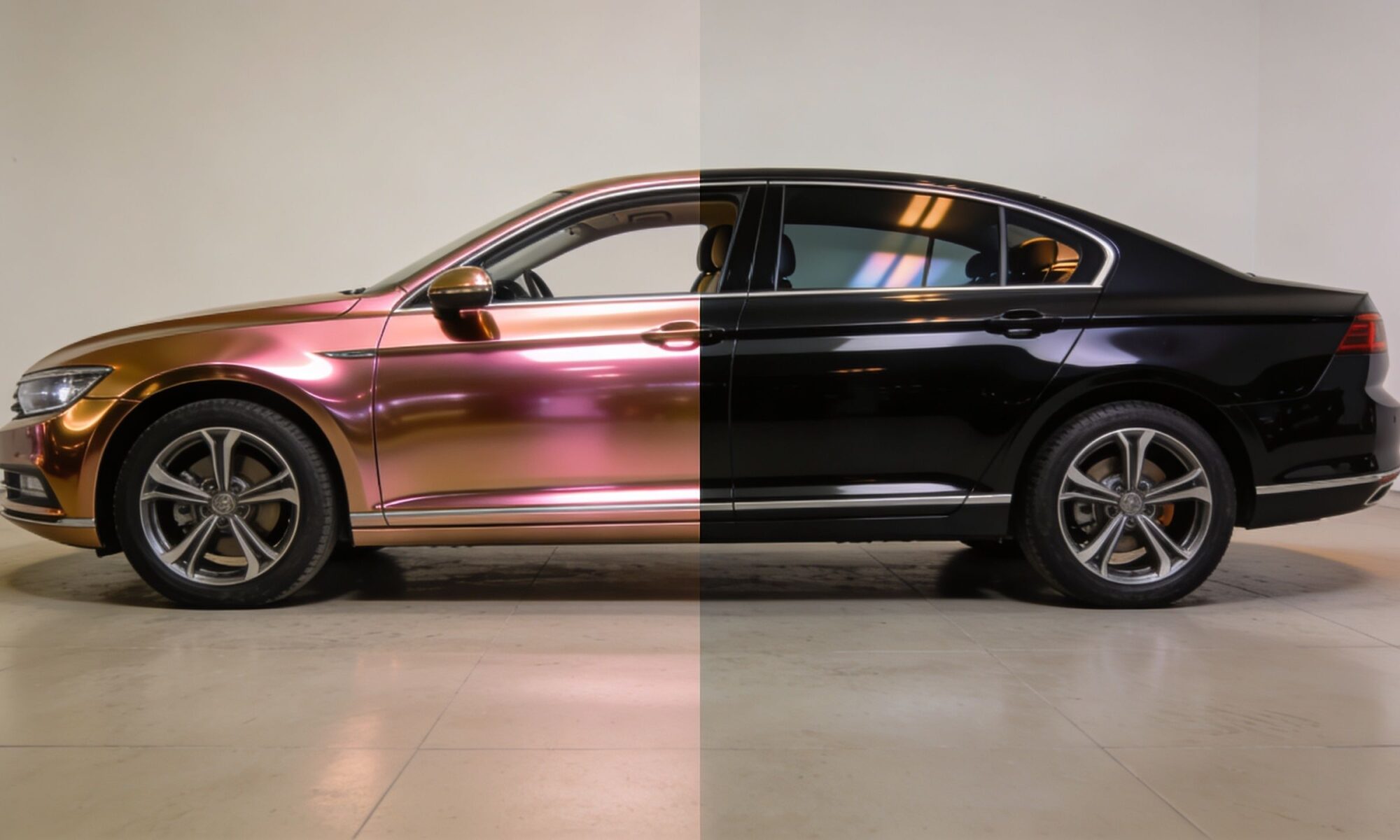
A vinyl wrap covers the painted exterior panels of the vehicle. Its job is visual change. If you want a satin gray SUV, a matte black truck, a color-shift show car, or branded graphics for a work van, a wrap is the right tool.

That distinction matters because Georgia drivers often lump wraps and tint together as if they solve the same problem. They do not. A wrap changes the outside of the car. It does nothing for the heat coming through the glass on a July afternoon in Alpharetta or Marietta.
Cast vinyl is the right answer for real vehicle wraps
For a full wrap, use cast vinyl. That is the standard I would recommend to any customer who wants the film to fit well and last.
Premium cast vinyl is typically 3.0 to 4.5 mils thick and built to conform around curves, recesses, and body lines, according to Elite Wrappers’ guide to vinyl thickness. That matters on bumpers, mirrors, door cups, and tight corners where cheap calendared film fights the installer and fails early.
Professional wrap shops usually stick with proven cast films from 3M, Avery Dennison, Orafol, Hexis, and KPMF. If you are shopping for the best vinyl car wrap, start with film quality and installer skill. Fancy color names mean nothing if the material shrinks, lifts, or looks rough around edges.
What actually makes a wrap worth paying for
The best wrap is not the loudest finish on Instagram. It is the one that lays clean, holds on complex panels, and still looks right months later.
Here is what I tell customers to watch for:
- Conformability: Good film settles into curves and recessed channels without excessive tension.
- Predictable adhesive: Premium pressure-activated adhesive helps the installer position the film cleanly and bond it correctly.
- Finish quality: Gloss, satin, matte, metallic, and chrome change the look, but finish alone does not make a wrap high quality.
- Installer discipline: Prep, panel alignment, edge work, and post-heating decide whether the job lasts.
If you are also sorting out appearance film versus real paint protection, this guide on PPF vs vinyl wrap will clear that up fast.
Where wraps make sense
Wraps are a strong choice for branding and personalization. A company can put logos, contact info, and service areas on the vehicle. A private owner can change the color without committing to a repaint.
They also add a sacrificial layer over the paint. That can help against light surface wear and road grime. It does not turn wrap film into paint protection film, and it does not address the problems Georgia commuters complain about most.
A wrap changes the appearance of the vehicle. It does not reduce cabin heat, cut glare through the side glass, or block the sun from cooking the interior.
That is why the best vinyl car wrap for your car may still be the wrong first upgrade. If your goal is style, wrap it. If your goal is comfort and sun protection, spend your money on tint first.
Why Window Tint is a Georgia Driver's Best Friend
Georgia heat changes the whole conversation. You can love the idea of a wrap and still need tint first.
Most “best vinyl car wrap” articles never deal with the actual daily-use problem. They skip over heat reduction and UV protection, even though those are primary reasons many drivers start modifying their vehicles in the first place. That content gap is exactly what this window tint versus wrap discussion highlights.

Tint fixes daily-driver problems wraps don’t
A wrap doesn’t block sun through the glass. It doesn’t cut windshield glare. It doesn’t help when your seat, console, and steering wheel have been baking all afternoon.
Window tint does.
That’s why I tell drivers to stop treating tint like a cosmetic afterthought. In Georgia, tint is a comfort and protection upgrade. It helps with the things that wear you down over time:
- Cabin heat buildup
- Harsh glare during morning and afternoon drives
- UV exposure through the glass
- Interior fading and sun wear
- Privacy at intersections and parking lots
The functional upgrade beats the visual one for most commuters
If you’re commuting around Cobb County, Cherokee County, or up through North Fulton and Forsyth, you don’t need a cooler-looking dashboard. You need a car that doesn’t punish you when you get back into it.
That’s why ceramic window tint, heat reduction tint, glare reduction tint, and UV protection tint are such practical upgrades for local drivers. A good tint job changes the ownership experience every day, not just the appearance from ten feet away.
If your car sits outside at work, tint pays you back in comfort every single afternoon.
Where tint wins immediately
Wraps are about style and visibility. Tint is about use.
A strong auto tint installation helps when you want:
- Less glare on the road
- A cooler-feeling cabin
- Better privacy without changing the paint
- Protection for seats, trim, and interior materials
That’s the difference between an aesthetic mod and a functional one. Both have value. They just solve different problems, and Georgia drivers usually feel one of those problems a lot more than the other.
Head-to-Head Vinyl Wrap vs Ceramic Window Tint
You pull out of the driveway in July, the sun is already cooking the cabin, and the steering wheel feels like a skillet. That is the moment Georgia drivers figure out what matters more. A different exterior look, or a car that feels better every time you get in.
For most daily drivers, the answer is simple. Wrap the paint for style. Tint the glass for comfort, heat control, and protection.

Comparison of vinyl wrap vs ceramic window tint
| Feature | Vinyl Car Wrap | Ceramic Window Tint |
|---|---|---|
| Purpose | Change the vehicle’s color, finish, or branding | Cut heat, glare, UV exposure, and add privacy |
| Best use case | Drivers focused on appearance or business visibility | Drivers focused on daily comfort and interior protection |
| Material focus | Quality vinyl and clean installation on body panels | Quality ceramic film and clean installation on glass |
| Heat control | Little to no effect on cabin heat | Strong improvement for Georgia driving |
| Glare reduction | No help through the glass | Major help on bright commutes |
| UV and interior protection | Shields painted surfaces, not the cabin | Helps protect seats, dash, trim, and skin from sun exposure |
| Privacy | No change inside the cabin | Improves privacy within legal limits |
| Visual impact | Dramatic transformation | Subtle visual upgrade |
| Advertising value | Strong choice for fleets and branded vehicles | Not built for advertising |
| Daily usefulness | Best for owners who want a new look | Best for owners who want a better driving experience |
Where wraps make sense
Wraps win on appearance. No contest.
If you want matte black, satin gray, a color flip, or a branded work truck that gets attention on the road, a wrap does the job. It can also help cover tired-looking paint and give a vehicle a custom look without repainting it.
That said, a wrap does not solve the problems Georgia drivers complain about most. It does nothing for a blazing cabin, harsh side glare, or a sun-beaten interior.
Where ceramic tint earns its money
Ceramic tint improves the part of the car you use all day. The glass.
That matters more than many drivers expect. The sun comes through the windows, not the doors. If your real complaint is heat, squinting through traffic, faded seats, or kids roasting in the back seat, tint answers the problem directly.
A wrap changes how the car looks in a parking lot. Ceramic tint changes how it feels at 4:30 in the afternoon on GA 400.
Best first upgrade for a North Metro Atlanta daily driver: ceramic window tint.
Cost and value are not the same conversation
A wrap is usually the bigger visual purchase. You are paying for a new exterior personality, more labor, and more material across the body panels. That can be worth it if looks or branding are the goal.
If you are planning a full wrap, sizing also affects cost because larger vehicles need more vinyl. The Carlike Wrap vinyl sizing guide gives a practical reference for how material needs increase from small cars to SUVs and trucks.
Ceramic tint is a different type of buy. It is not about turning heads at a stoplight. It is about making the car easier to live with in Georgia heat. That is why so many “best wrap” articles miss the real decision. These products are not competing for the same job.
Choose wrap if you want style.
Choose ceramic tint if you want relief.
The Ultimate Upgrade Why Ceramic Tint Beats Other Films
If you’ve decided tint is the smarter move, don’t stop at “any tint.” Film type matters.
A lot of old-school car window tinting still revolves around cheaper dyed film or older metallic film. Both can work at a basic level, but if your priority is heat reduction tint for Georgia driving, ceramic is the film worth paying attention to.

Why ceramic is the better film
Ceramic tint uses non-metallic ceramic technology to improve performance without creating the usual tradeoffs that drivers hate. That means you can pursue strong heat rejection and everyday comfort without choosing a film that works against your electronics.
For modern vehicles, that matters. Drivers rely on phones, navigation, wireless features, and in-car tech all day. A premium ceramic film gives you the performance side of tint without turning your glass into a compromise.
Dyed film vs metallic film vs ceramic film
Here’s the practical breakdown.
- Dyed film is usually the entry-level choice. It darkens the glass and improves appearance, but it’s the basic option.
- Metallic film can offer performance benefits, but many drivers don’t want a metal-based product on a modern vehicle.
- Ceramic film is the premium lane. It’s built for drivers who care about heat control, clarity, longevity, and an overall cleaner ownership experience.
That’s why so many shoppers looking for the best window tint for cars eventually land on ceramic. It’s not hype. It’s the option that aligns best with what most Georgia drivers complain about.
What matters more than darkness
A lot of people still shop by shade alone. That’s a mistake.
Darkness changes the look. Film quality changes the result.
Good ceramic tint helps with:
- Heat management: Important when the car sits in open lots all day.
- Glare reduction: Helpful during sunrise, sunset, and wet-road reflections.
- UV protection: Important for both comfort and preserving interior materials.
- Cleaner long-term appearance: Better films tend to age better than bargain products.
The best tint isn’t the darkest one. It’s the one that still looks right and performs right years later.
Why ceramic makes more sense in North Metro Atlanta
This region gets enough sun and heat that weak film gets exposed fast. If you’re in Kennesaw, Woodstock, Marietta, Canton, or Acworth, you want a film that doesn’t just look darker for a while. You want one that keeps doing its job.
That’s why ceramic window tint is usually the right answer for drivers who are upgrading for comfort instead of just style. It’s especially smart for:
- Daily commuters who spend long stretches behind the wheel
- Parents loading kids into hot cars after school or practice
- Truck and SUV owners with large glass areas
- Drivers replacing old bubbling tint that no longer performs well
If your current film is faded, peeling, bubbling, or weak, tint replacement is usually a better move than trying to live with it another summer.
Your Guide to Legal Window Tint in Georgia
A tint job only helps if it’s legal. Otherwise, you’re paying for removal later.
Georgia drivers ask the same question constantly. “How dark can tint be legally?” The smart answer is simple. Don’t guess. Have the install matched to current state rules and the exact vehicle type.
For a straightforward breakdown, read Georgia legal window tint guidelines. It’s easier to check the rule first than fix the mistake later.
What drivers need to pay attention to
The legal side of car window tinting usually comes down to a few practical points:
- Vehicle type matters: Passenger cars and SUVs/trucks can have different rules.
- Glass location matters: Front side windows, rear side windows, rear glass, and windshield areas aren’t always treated the same.
- Reflectivity matters too: It’s not just about darkness.
- The windshield needs special care: Don’t assume a full dark windshield is legal because you saw it online.
Don’t buy tint off appearance alone
A lot of drivers shop by what looks good on someone else’s car in a parking lot. That’s a fast way to end up too dark, too reflective, or both.
A proper installer should help you choose film that fits your goals and stays inside Georgia law. That matters whether you’re booking window tinting in Kennesaw, car window tinting in Woodstock, or trying to fix a bad previous job in Marietta or Canton.
Legal tint should still look sharp. You don’t need to push past the line to get a clean, aggressive look.
If you already have questionable tint
Don’t ignore it if you suspect the current film is illegal, damaged, or poorly installed.
You may need:
- Tint removal if the film is bubbling, purple, or out of spec
- Tint replacement if you want a cleaner appearance and better performance
- A ceramic upgrade if your current tint is mostly cosmetic and doesn’t do enough for heat
That’s the better route than stacking bad decisions on top of old film.
Finding a Trusted Tint Installer in North Metro Atlanta
The film matters. The installer matters just as much.
A lot of problems people blame on “bad tint” are really bad installation. Dust trapped under the film, peeling corners, edge gaps, contamination, haze that never settles, and bubbling that shows up early. Those usually point back to workmanship.
The same gap shows up in wrap content too. A lot of articles mention materials but skip the importance of install quality, even though application quality affects longevity and warranty. That issue is even more critical with tint, where poor application hurts durability and the film’s ability to do its job, as noted in Wrapmate’s discussion of professional installation importance.
What to look for in a real tint shop
If you’re comparing car tint near me, don’t lead with price. Lead with standards.
A reputable installer should offer:
- Clean working conditions: Dirt and debris ruin film appearance fast.
- Experience with ceramic window tint: Not every shop handles premium film equally well.
- Precise cutting methods: Computer-cut patterns help avoid sloppy edges and razor mistakes on the vehicle.
- Clear warranty terms: If the shop gets vague when you ask about coverage, pay attention.
- Help with film selection: A good installer asks how you use the car, where you park, and what problem you’re solving.
Red flags that should stop you cold
Cheap tint work usually looks cheap pretty quickly.
Watch for:
- No discussion of legal tint limits
- No explanation of film options
- No mention of warranty
- A pressure-heavy sales pitch with vague product names
- A shop that can’t explain the difference between dyed, metallic, and ceramic films
If they can’t explain the product, they shouldn’t be installing it.
Local intent matters
A driver looking for same-day tint installation in Woodstock, ceramic tint near Kennesaw, or auto tint installation in Marietta usually isn’t browsing for fun. That person is ready to solve a problem.
The best local installers understand that. They move fast, answer direct questions, and don’t treat tint selection like a guessing game. If you’re actively comparing local options, this page on professional window tinting near me is a useful benchmark for what a service-focused tint shop should cover.
The right shop doesn’t just sell darker glass. They help you choose the right film for heat, glare, privacy, and legality.
My recommendation
If you’re choosing between a flashy wrap purchase and a proper ceramic tint install for a daily driver, start with the installer who can solve your heat and glare problem correctly the first time.
That’s the practical move. It protects the driving experience, not just the photo angle.
Frequently Asked Questions About Car Window Tinting
How much does ceramic window tinting cost in Georgia
It depends on the vehicle, the number of windows, the film line, and whether you’re adding options like windshield tint or replacing old film first. Anyone giving you a “universal” quote without seeing the vehicle or knowing your goals is guessing. Get a direct quote based on your exact car.
How long does window tint last
That depends on the film quality, installation quality, and how the vehicle is used. Premium film installed well lasts much longer than bargain film installed poorly. If you want the best long-term value, ask about warranty coverage and the installer’s process, not just the shade.
Can old bubbling or purple tint be fixed
Usually, bad film needs to be removed and replaced. Once tint starts bubbling, peeling, discoloring, or turning purple, patching it isn’t the right solution. Proper tint removal followed by a clean reinstall gives you a better result.
Is ceramic tint worth it over standard tint
If your main concerns are heat, glare, and long-term performance, yes. If you only want a darker look at the lowest possible cost, standard film may be enough. Most Georgia drivers who spend real time in their vehicles end up appreciating ceramic.
Should I wrap my car first or tint it first
For a daily driver in North Metro Atlanta, tint first. If you still want the visual change after that, look into the best vinyl car wrap for your style goals. Function should come before cosmetics when heat is part of your daily routine.
If you’re in Woodstock, Kennesaw, Acworth, Marietta, Canton, or nearby and you want a car that feels better every day, talk to The Tint Guy. Whether you need ceramic window tint, old tint removal, tint replacement, or help choosing the right legal film for Georgia, they can point you to the right solution without the usual guesswork.