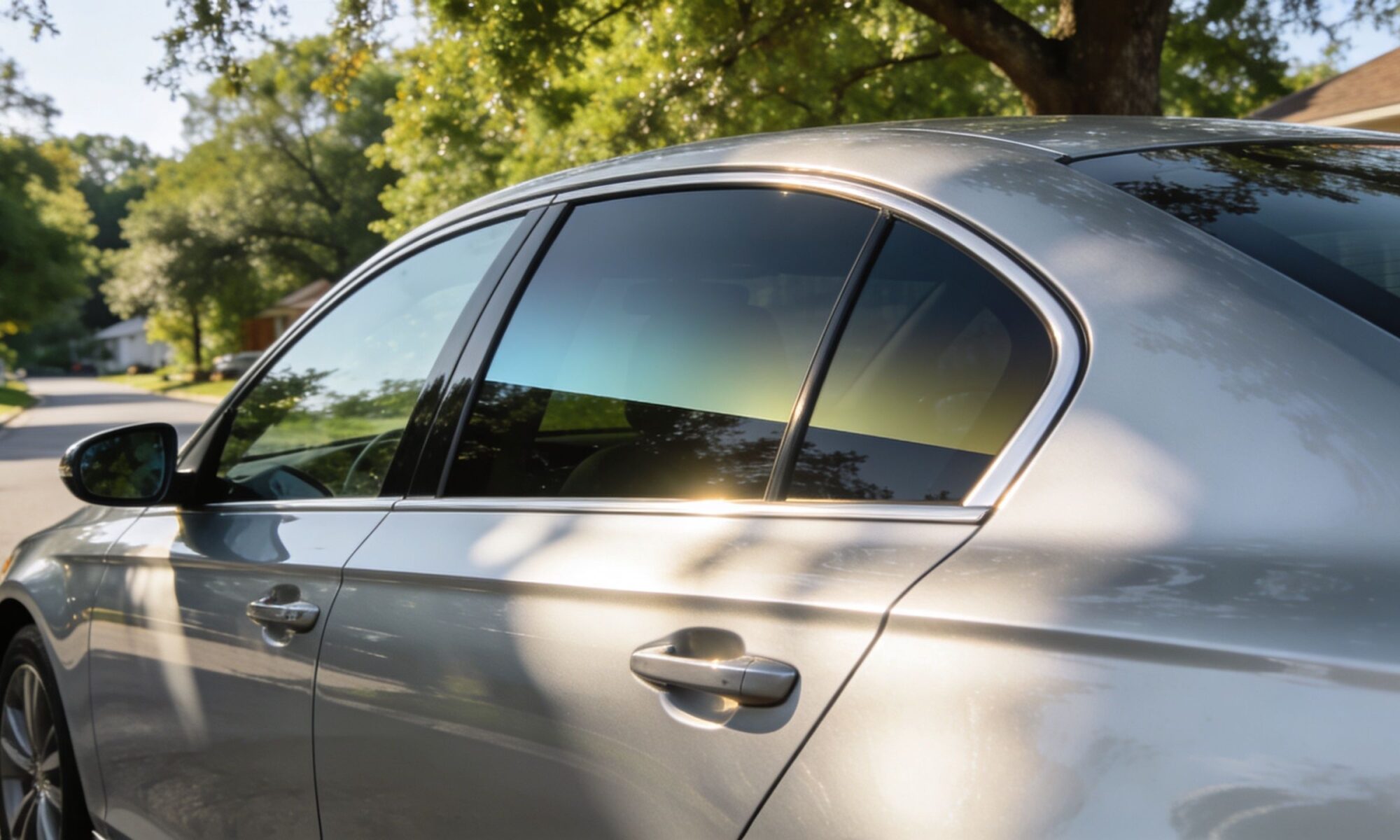
Your car feels the Georgia sun long before the AC catches up. You leave Kennesaw or Woodstock in the afternoon, hit traffic, and the side glass starts baking your arm and shoulder. By the time you get where you're going, the cabin is bright, hot, and harder on your eyes than it needs to be.
That’s why so many drivers searching window tinting durham, car tint near me, or ceramic window tint are really asking a simpler question. What tint works in a hot Southern commute, what stays legal, and what’s worth paying for?
The short answer is this. Not every film performs the same, darker doesn’t automatically mean cooler, and a clean install matters just as much as the product itself. If you're driving around Woodstock, Acworth, Marietta, Canton, or Kennesaw, the best choice usually comes down to your heat problem, your budget, and how long you plan to keep the vehicle.
Beat the Georgia Heat Why North Atlanta Drivers Tint Their Cars
Most drivers don’t start with style. They start with discomfort.
A typical North Atlanta commute gives you the worst combination for interior heat. Long stretches on open roads, slow traffic where your AC has to fight hard, and a lot of direct side-window sun at the exact time you're trying to drive home. That’s when good car window tinting stops feeling optional and starts feeling practical.

What drivers notice first
The first benefit people usually feel is heat reduction. A quality film helps cut the harsh solar load coming through the glass, so the cabin doesn’t spike as fast when the car is parked or sitting in traffic. If you want a deeper look at how that works, this breakdown on whether window tint reduces heat explains the difference between dark film and high-performance film.
The second benefit is glare control. Late-day sun can make a windshield and side glass feel blinding, especially in a lighter interior. Tint won’t replace sunglasses, but it does soften the visual strain and makes daily driving more comfortable.
Then there’s UV protection tint. Drivers usually think about skin and dashboard fade after they’ve already dealt with both. By then, the steering wheel is drying out, the trim is taking a beating, and the seat nearest the window is aging faster than the rest of the cabin.
Practical rule: If the sun bothers you through the side window every day, you’ll notice the value of good tint every day too.
Why this matters more in North Atlanta
North Atlanta drivers rack up real seat time. School runs, office commutes, ball fields, grocery stops, and weekend driving all add up. If your vehicle spends hours parked outside, the sun keeps working even when you’re not in it.
That’s why heat reduction tint and glare reduction tint matter for more than comfort:
- Cabin comfort: Your seats, steering wheel, and console stay more manageable.
- Driver focus: Reduced glare makes bright conditions easier to handle.
- Interior protection: Trim, leather, vinyl, and screens hold up better over time.
- Privacy: Even a moderate shade gives the car a cleaner, more secure look.
A lot of online searches for window tinting durham also reflect comparison shopping. People want to know what works in one hot Southern market versus another. That’s fair. The same basic need shows up everywhere: drivers want cooler cabins, less glare, and a film that won’t turn into a bubbling mess later.
What doesn’t work
The biggest mistake is choosing tint by darkness alone. Dark film can give privacy, but if the film itself is low-grade, it may not deliver the heat control most drivers expect. Another common mistake is chasing the cheapest install. Poor prep, contaminated glass, bad shrinking, and sloppy edges usually show up later, not on day one.
Good tint should solve a driving problem, not create another one.
Choosing Your Film Ceramic vs Carbon and Other Tint Options
Film choice is where most confusion starts. Customers hear terms like dyed, carbon, hybrid, and ceramic, but what they really need is a straight answer about trade-offs.
Here’s the simple version. Dyed film is the budget option. Carbon film is a stronger mid-tier upgrade. Ceramic tint is the premium choice when heat rejection, clarity, and long-term performance matter most.

Window Tint Film Comparison
| Feature | Dyed Film (Standard) | Carbon Film (Premium) | Ceramic Film (Ultimate) |
|---|---|---|---|
| Main benefit | Privacy and appearance | Better heat control with a non-metallic build | Highest overall performance |
| Heat reduction | Basic | Better than dyed | Strongest option for hot climates |
| UV protection | Good on entry-level installs | Strong | Excellent |
| Clarity | Depends heavily on film quality | Usually clean, matte look | Very clear from inside the vehicle |
| Signal interference | Typically not an issue | Non-metallic, so it avoids the signal problems drivers worry about | Doesn’t interfere with electronics like GPS or radio |
| Durability | More likely to fade with age | Better long-term stability | Best long-term durability when professionally installed |
| Best fit | Lowest-budget installs | Drivers wanting a solid upgrade without going top-tier | Drivers prioritizing heat rejection, comfort, and long-term value |
Dyed film works, but it has limits
Dyed tint is still common because it gives the car a darker look and a lower entry price. For some drivers, that’s enough. If the main goal is appearance and a modest improvement in comfort, dyed film can do the job.
The downside shows up later. Dyed film is more likely to fade, discolor, or lose its clean look over time, especially on vehicles that live outside. It’s also the category where bargain installs go wrong fastest.
Carbon is a smart middle ground
Carbon film makes sense for drivers who want a noticeable upgrade but aren’t ready to jump straight to ceramic. It usually gives a richer appearance than basic dyed film, and it tends to hold its color better. It also avoids the concerns people have with metallic films and electronics.
For a lot of daily drivers in Woodstock and Marietta, carbon lands in the sweet spot. It gives meaningful comfort improvement without pushing all the way into premium pricing. This guide on carbon vs ceramic tints is useful if you’re trying to decide between those two specifically.
A better film is easier to live with every single day. You notice that at red lights, in parking lots, and when the sun is low in the sky.
Why ceramic tint leads the pack
If you want the best window tint for cars in a Georgia climate, ceramic is usually the answer.
According to Ceramic Pro Durham’s Ultimate IR data, ceramic window tints achieve up to 99% infrared heat rejection while providing over 99% UV protection, and that performance can reduce interior temperatures by 20 to 30°F in high-solar-load conditions. That’s the kind of difference drivers feel when the car has been parked in open sun.
Ceramic also solves another problem. Many drivers want strong heat control without going extremely dark. Ceramic lets you choose a shade that looks clean and stays within legal limits while still getting premium performance.
What I’d choose for different drivers
Not every car needs the same answer.
- Budget commuter car: A quality dyed or carbon film may be enough if appearance and moderate comfort are the priorities.
- Daily highway driver: Carbon or ceramic usually makes more sense because the extra comfort pays off every day.
- Family SUV: Ceramic is hard to beat if kids, car seats, and long drives are part of the routine.
- Luxury or newer vehicle: Ceramic matches the vehicle better. Cleaner look, stronger performance, and better long-term fit.
- Driver replacing old purple tint: Skip repeating the same mistake. Move up at least one film level.
What to avoid
The wrong way to buy tint is by comparing shade cards only. Shade tells you how dark the glass looks. It doesn’t tell you how well the film handles heat, glare, or long-term wear.
The right way is to ask better questions:
- What type of film is it?
- How does it handle heat in a hot climate?
- Will it interfere with electronics?
- How well does it age?
- Is the installer known for clean edges and clean glass prep?
Those answers matter more than the darkest sample on the board.
How Much Does Car Window Tinting Cost in Kennesaw and Woodstock
Cost is usually the first practical question, and it should be. Good tint is an upgrade, but it’s still a real purchase, and customers deserve a straight explanation of what changes the final number.

A fair quote depends on the vehicle, the film, and whether the glass already has old tint that needs to come off. A compact sedan is one thing. A large truck, tall SUV, or vehicle with tight rear glass curves is another. The labor changes. The film usage changes. The margin for error changes.
What drives the price
A professional auto tint installation quote usually moves based on a few factors:
- Vehicle type: More glass or harder rear windows usually mean more labor.
- Film selection: Standard film and premium ceramic film won’t price the same.
- Old tint removal: Removing peeling, bubbling, or purple film adds time before new film goes on.
- Glass condition: Old adhesive, contamination, and damage can make prep more involved.
- Installer quality: Precision cutting, shrinking, and finishing are part of what you’re paying for.
The benchmark many people look for is a sedan price. In a comparable market, Durham, North Carolina averages around $215 for auto window tinting on a four-door sedan with a standard film. That’s useful as a baseline because it shows how normal market pricing reflects material quality, vehicle size, and installer skill.
Why ceramic costs more
Ceramic film usually carries a higher upfront price because the material itself performs at a different level. It’s built for better heat rejection, strong UV blocking, and a cleaner long-term result. For drivers who spend a lot of time in the car, that upgrade often makes more sense than replacing cheap tint later.
That doesn’t mean ceramic is the right answer for every vehicle. If you’re tinting an older second car or a short-trip commuter, a good standard or carbon film may be the smarter spend.
If the quote seems low enough to make every other shop look expensive, there’s usually a reason.
When removal changes the job
Tint removal and tint replacement are where people get surprised. Old film that’s bubbling or turning purple rarely peels off in a clean sheet. The adhesive can stay behind, and rear windows with defroster lines need careful handling.
That’s why replacement work shouldn’t be treated like a basic install. Done right, it takes patience before the new film ever touches the glass.
If you want to see the process in action, this quick video gives a useful look at professional tint work:
How to compare quotes the right way
Don’t compare shops on one number alone. Ask what film line is being used, whether removal is included, what kind of finish to expect on the edges, and what support you get if there’s a defect.
That’s how you separate a cheap quote from a good value.
Understanding Georgia Window Tint Laws to Stay Legal
The legal side holds greater significance than commonly understood. Drivers often focus on how dark they want the car to look, then ask about the law at the end. That’s backwards. The legal limit should shape the choice from the start.
For North Atlanta drivers, especially anyone searching legal tint limits Georgia or comparing window tinting durham results with local shops, local knowledge is essential.

The main rule most drivers need to know
Georgia allows 32% VLT on front side windows, while North Carolina uses a different standard at 35% according to this discussion of state tint law differences. That small gap is exactly why drivers shouldn’t copy what they saw on a car from another state and assume it’s fine here.
If you're checking your options before booking, this guide to the legal limit for tint is a useful quick reference.
What VLT actually means
VLT stands for visible light transmission. It’s the amount of light that passes through the glass and film together. Lower numbers look darker. Higher numbers look lighter.
That matters because customers often ask for a percentage based on appearance, not realizing the factory glass already affects the final reading. A professional installer should help you choose a film that lands where it needs to land once it’s on the vehicle.
The practical way to think about legality
Instead of memorizing every rule by window, most drivers do better with a common-sense checklist:
- Front side windows matter most: This is the area customers ask about most often, and it’s where legal compliance should be checked carefully.
- Windshield tint is its own category: A full windshield or a strip across the top involves different considerations than side glass.
- Don’t assume darkness equals quality: You can stay legal and still get strong heat reduction if you choose the right film.
- State lines matter: A legal setup in one state may not match another state’s rule.
Local advice: The best-looking tint job is still the wrong job if it puts you outside Georgia law.
Why drivers get tripped up
A lot of online content muddies this topic because it mixes states together, uses vague language, or shows photos that don’t match legal examples. Some cars you see online are darker than what’s appropriate for a street-driven daily in Georgia.
Shops also need to be careful when customers ask for “the darkest legal tint.” That phrase sounds simple, but it depends on the vehicle’s existing glass and how the finished combination reads. Good installers don’t guess.
A better approach for daily drivers
For most North Atlanta commuters, the better question isn’t “How dark can I go?” It’s “How much comfort can I get while staying legal?”
That shift changes the whole decision. Once you focus on heat rejection, UV protection, and glare reduction instead of just darkness, better film options start to make a lot more sense. That’s especially true for drivers considering ceramic window tint, because ceramic gives strong performance without forcing an ultra-dark look.
If you’re replacing old tint
This is the best time to correct a bad setup. If your current tint is too dark, uneven, or aging badly, replacement lets you clean up both the appearance and the legality in one shot.
That’s a much better outcome than trying to live with a tint job you already know isn’t right.
Our Professional Tint Installation and Removal Process
A clean tint job starts long before the film touches the glass. The finished look is often the sole focus, but the quality of the result comes from prep, patterning, shrinking, and cleanup. That’s where a professional install separates itself from a rushed one.
What happens before the film goes on
The first step is always inspection. The installer checks the glass, existing tint if there is any, defroster lines, edge condition, and contamination. If the car has old film, that changes the plan right away.
Then the glass gets cleaned properly. Not “wiped down.” Cleaned. Any dust, residue, old adhesive, or trapped debris becomes a visible flaw once the film is laid down.
A strong installation process usually includes:
- Vehicle check-in with a review of film choice and legal shade considerations.
- Glass prep focused on cleanliness and edge detail.
- Pattern cutting to match the glass accurately.
- Heat shrinking where needed so the film conforms cleanly.
- Final squeegee and edge finish to push out solution and set the film properly.
Why precision matters on rear windows
Rear glass is where poor work shows up fast. Curved back windows require shrinking and controlled handling, especially on vehicles with more aggressive contours. If that step is sloppy, fingers, creases, and edge lift follow.
That’s also why windshield tint and rear-window work shouldn’t be treated like side-window work. They demand more control and a cleaner environment.
Removal is not a side task. If old film and adhesive aren't cleared correctly, the new install starts with a problem built in.
Tint removal and tint replacement
A lot of cars coming in for service already have failing tint. It may be bubbling, turning purple, or peeling at the edges. In those cases, the main job is a two-part process. First remove the failing material safely, then install new film on properly restored glass.
Removal done carelessly can damage defroster lines, leave glue behind, and waste time trying to install over a bad surface. A good shop takes the old layer off completely and gets the glass back to a clean baseline before replacement starts.
What same-day service usually means
Many tint jobs can be finished the same day, especially standard car window installs without major removal issues. But “same day” should still mean careful work, not rushed work. The right timeline depends on the vehicle, the film type, and whether old tint has to be stripped first.
A good customer experience is simple. Drop off the car, let the installer do the prep and fitting correctly, and pick it up with clear instructions for curing and care.
What a finished job should look like
A proper install should look clean from both inside and outside the vehicle. The film should sit neatly near the edges, the rear glass should lay down smoothly, and the overall finish should look intentional, not patched together.
Tiny moisture pockets can be normal during curing. Dirt, hairs, jagged gaps, and obvious contamination are not.
Lifetime Warranty and Long-Term Tint Maintenance
Good tint isn’t just about the day it goes on. It’s about how it holds up after months of parking lots, summer heat, washing, and daily driving. That’s where warranty and maintenance start to matter.
A quality install backed by a lifetime warranty gives customers real peace of mind. If a film bubbles, peels, or fades because of a product or installation issue, you want clear support behind it. Shops that stand behind their work usually do so because they trust both the film line and the installer doing the job.
What long-term value looks like
According to guidance on tint longevity in a climate similar to North Georgia, professionally installed films are expected to last 5 to 10 years, with premium ceramic films often lasting even longer. That’s the difference between buying tint once and living with it, versus replacing a cheap film after it starts looking rough.
That lifespan depends on a few real-world factors:
- Film quality: Better materials resist fading and breakdown more effectively.
- Installer skill: Clean prep and proper shrinking affect how the film ages.
- Vehicle storage: Cars parked outside all day put more stress on any product.
- Care habits: Aggressive cleaning and sharp tools can shorten film life.
How to take care of fresh tint
The first days after installation matter. The film needs time to cure, and that means customers should be patient before rolling windows down or judging the final look too quickly.
A few habits help a lot:
- Leave the windows up at first: Follow the installer’s curing instructions.
- Use soft cleaning materials: Microfiber is safer than rough paper products.
- Choose ammonia-free cleaners: Harsh chemicals can damage film over time.
- Don’t pick at edges: Even a small lifted corner can turn into a bigger issue.
The easiest way to keep tint looking good is simple. Clean it gently and leave the edges alone.
What failure usually looks like
Most bad film tells on itself. It starts turning purple, bubbling, hazing, or lifting near the edges. Sometimes the issue is cheap material. Sometimes it’s poor prep. Sometimes it’s old age.
That’s why a warranty matters. It tells you whether the shop expects the install to last or hopes you never come back.
Get Your Free Tinting Quote from North Atlanta's Trusted Experts
Drivers in Kennesaw, Woodstock, Marietta, Acworth, and Canton usually want the same three things from tint. They want the cabin to feel better, the car to look better, and the install to hold up.
The right answer depends on how you use the vehicle. Some drivers need a solid standard film on a commuter. Others want a ceramic upgrade for better heat reduction, cleaner visibility, and stronger long-term value. If the car already has old bubbling film, removal and replacement should be done correctly before anything new goes on.
The biggest mistake is choosing by darkness or price alone. The better move is choosing a film and installer based on real performance, legal fit, and finish quality. That’s what keeps the job looking right long after the first week.
If you're searching for car window tinting, tint removal, tint replacement, windshield tint, or ceramic window tint in North Atlanta, get a quote based on your actual vehicle and goals. A proper recommendation should account for the film type you want, the condition of your current glass, and what matters most to you on the road.
Whether you're upgrading a daily driver, replacing failing tint, or trying to choose the best window tint for cars in a Georgia summer, a straight conversation with a local tint specialist saves time and usually prevents expensive mistakes.
If you're ready to compare film options, check legal shade choices, or get a clear quote for your car, contact The Tint Guy. They serve North Atlanta drivers with professional auto tinting, ceramic tint upgrades, and tint replacement specific to your driving style.