If you're searching for clear tint front windshield options around Kennesaw, Woodstock, or Marietta, you're probably in one of two situations. Your car turns into an oven every afternoon, or you're tired of driving straight into Georgia glare and wondering if there's a legal way to fix it without putting a dark film across the glass.
There is. But the answer depends on the type of film, the light transmission, and whether the installer understands Georgia law and modern windshield glass. A lot of drivers still think windshield tint means a dark strip at the top. In practice, clear ceramic film changed that conversation.
Decoding Clear Front Windshield Tint
A clear windshield tint isn't really about making the glass look tinted. It's about making the windshield work harder.
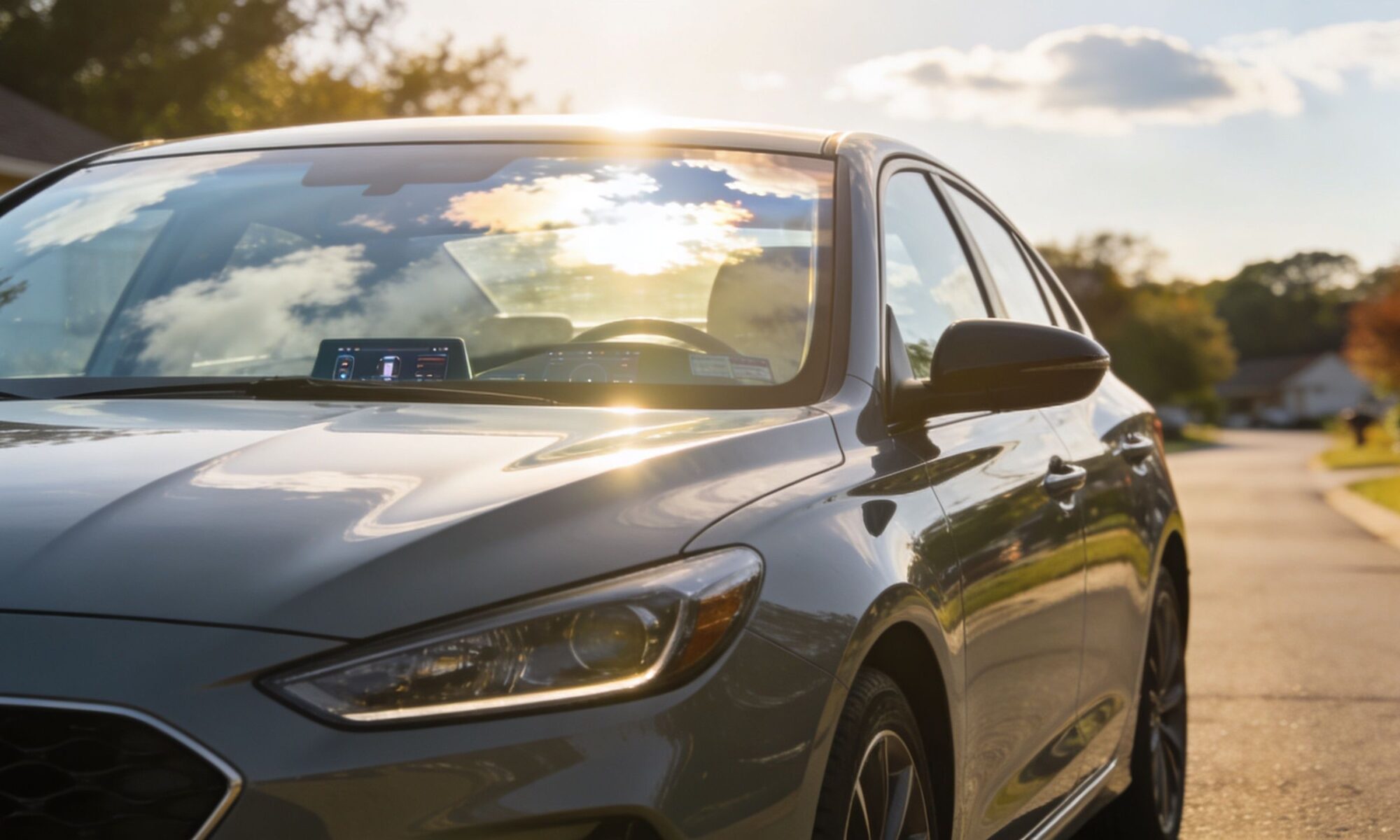
The term 'tint' often brings to mind dark side windows. A clear tint front windshield uses a very light film, often ceramic-based, that stays close to the look of factory glass while still cutting heat, UV exposure, and glare. It functions as high-tech sunglasses for the car; however, its objective is not privacy, but rather comfort and protection without sacrificing visibility.
What clear tint actually means
The key term is Visible Light Transmission, usually shortened to VLT. That number tells you how much visible light passes through the film and glass together.
A film rated at 70% VLT lets 70% of light pass through and blocks 30% of visible light, which is why it has become the common benchmark for windshield protection and legal compliance in most jurisdictions, according to this windshield tint percentage guide. On a windshield, that's the sweet spot for a lot of drivers because it gives performance benefits without creating the dark, closed-in feel people associate with traditional tint.
Why it doesn't look dark
Modern clear films don't rely on darkness to perform. Better films use ceramic technology to target heat and UV instead of only reducing brightness. That matters on a front windshield because the biggest complaint from drivers in North Atlanta usually isn't "I need more privacy." It's "my dash is burning hot" or "the sun coming off I-75 is brutal."
Practical rule: If your main goal is front-seat comfort, eye relief, and interior protection, windshield film should be selected for clarity and heat control first, not for appearance.
How it's different from side and rear window tint
Side and rear glass often gets darker film for privacy and style. A windshield is different. You need clear sightlines in rain, at night, and on roads with uneven lighting. That's why a good windshield film should feel almost invisible when you're driving.
Here’s the simple breakdown:
- Windshield film: Chosen for clarity, heat rejection, UV protection, and legal compliance
- Front door tint: Usually balanced between appearance, privacy, and visibility
- Rear glass tint: More freedom for privacy and darker looks, depending on the vehicle and legal setup
What drivers usually get wrong
The most common mistake is assuming "clear" means "doesn't do much." That's outdated thinking. With today's ceramic films, a windshield can stay visually light while still improving how the cabin feels during a commute from Canton to Marietta or a parked afternoon in Acworth.
The second mistake is assuming every light windshield film is the same. It isn't. Film quality, optical clarity, and installation quality all matter. A cheap film can look light on paper and still create haze, distortion, or early failure.
For daily drivers in Cobb and Cherokee County, that difference shows up fast. The right windshield film feels subtle every time you drive. The wrong one becomes something you notice for all the wrong reasons.
Your Windshield Choices Ceramic vs Standard Films
Windshield film isn't one product category. There are clear differences between ceramic, dyed, and metallized films, and those differences matter more on a windshield than almost anywhere else on the car.

Why ceramic is the real windshield option
For a front windshield, ceramic is usually the film that makes sense. Clear ceramic products such as LLumar AIR80 or SunTek CoolSight use nano-ceramic technology to deliver up to 99.9% UV rejection and up to 90% infrared heat rejection while maintaining around 80% VLT, and they do it without interfering with GPS or radio signals, as explained in this guide to clear front window tint and ceramic film performance.
That combination is the reason ceramic dominates premium windshield installs. You get optical clarity, strong heat control, and no metal signal issues.
Dyed film and metallized film can still show up in broader car window tinting conversations, but for windshields they come with trade-offs that are harder to justify.
What standard films give up
Dyed film is the old-school value choice. It can darken glass and soften glare, but it's not the product most experienced installers want on a windshield. Drivers usually end up unhappy with one of two things: the heat performance isn't impressive, or the film ages in a way that's obvious.
Metallized film has its own problem. It can reflect heat, but the metallic construction can create signal interference. On a modern vehicle loaded with navigation, phones, and wireless tech, that trade-off makes less and less sense.
A windshield is the one piece of glass you look through every minute you're driving. Any haze, reflectivity, or distortion gets old quickly.
Full windshield vs sun strip
A sun strip still has its place. Some drivers only want relief at the top edge where the afternoon sun hits hardest. But a strip only covers a narrow band. It doesn't address the full area where heat enters, and it doesn't protect the entire dashboard and front-seat space the way a full clear ceramic application does.
For North Atlanta commuters, here's the practical difference:
- Sun strip: Helps with high-angle glare
- Full clear ceramic windshield tint: Improves comfort across the entire windshield area
- Darker windshield film: Usually creates more legal and visibility concerns than it's worth
Windshield Tint Film Comparison
| Feature | Clear Ceramic Tint | Standard Dyed Film | Metallized Film |
|---|---|---|---|
| Heat control | Strong performance with a clear look | More basic heat control | Better than dyed in some setups, but less ideal for windshields |
| UV protection | Premium-grade protection | Good basic protection | Good protection |
| Signal interference | None | None | Possible |
| Optical clarity | Best option for windshield use | Varies by product | Can appear more reflective |
| Long-term satisfaction | Usually the best upgrade path | Often chosen for lower upfront cost | Limited appeal on tech-heavy vehicles |
Who should choose what
If you're upgrading from older tint or replacing bubbling film, ceramic is usually the smarter move. It costs more than entry-level film, but windshield work is one area where chasing the cheapest option often backfires.
If you're comparing appearance and protection upgrades together, it can help to think of film the same way you think about paint care. A premium film isn't just cosmetic. It's a performance layer, similar in concept to a liquid polymer shield for vehicles that protects surfaces without changing how the vehicle looks.
For drivers weighing all-film options on the whole vehicle, this side-by-side explanation of ceramic tint vs regular tint is useful because it clarifies where premium film matters most. The windshield is high on that list.
Why Georgia Drivers Need Windshield Heat and UV Protection
A clear windshield film makes the biggest difference in the situations North Atlanta drivers deal with every week. Park in an open lot in Marietta. Sit in traffic through Woodstock in summer. Head west in the late afternoon with the sun low and direct. That's where the value stops being theoretical.

Heat reduction that you actually feel
Infrared heat is what makes the cabin feel punishing, even when the glass looks clear. Nano-ceramic windshield film can scatter up to 90% of IR wavelengths, which can reduce cabin temperatures by 10 to 15°F in direct sun and cut air conditioning load by up to 20%, according to this breakdown of clear ceramic windshield tint benefits and IR rejection.
That matters on a real commute. If you drive from Kennesaw to Canton or cross Cobb County during peak heat, the cabin doesn't feel as overwhelmed when the windshield isn't feeding heat straight into the dash and front seats.
UV protection isn't just about the interior
Drivers usually notice the dashboard first. It stays in better shape when the windshield blocks more harmful UV exposure. But the bigger day-to-day benefit is personal. Your hands, arms, and face spend a lot of time near front glass, especially if you drive long distances for work or spend a lot of time on the road.
A good windshield film helps with both:
- Interior preservation: Dash materials, trim, and other cabin surfaces get less direct UV abuse
- Driver comfort: You don't feel as cooked sitting in sunlight for a long red light or slow traffic stretch
- Long-haul usability: The cabin feels easier to manage over repeated summer drives
Glare reduction helps with fatigue
Not every windshield complaint is heat. Some are visibility complaints that show up at very specific times of day. Early morning driving east and late afternoon driving west can be exhausting, especially on open roads around Acworth and Woodstock where sunlight comes in low.
Clear ceramic film helps soften that harshness without making the windshield feel dark. That balance is the reason many drivers prefer it over trying to solve everything with sunglasses alone or a top strip only.
The best windshield tint doesn't call attention to itself. You notice that the steering wheel isn't scorching, the dash isn't blasting heat, and your eyes aren't working as hard.
A better fit for daily commuters and EV owners
The value is especially easy to understand if your vehicle spends a lot of time in stop-and-go traffic, school pickup lines, jobsite travel, or outdoor parking. Heat load builds quickly through the windshield because it's the largest piece of forward-facing glass you have.
For EV drivers, the comfort benefit can matter even more because cabin cooling directly affects efficiency. For gas vehicles, less strain on the AC is more pleasant in daily use. Either way, the windshield becomes a functional upgrade instead of a cosmetic add-on.
If you're looking deeper into how side and windshield films help block solar exposure inside the cabin, this guide on UV protection for car windows covers the broader protection angle well.
Navigating Georgia's Windshield Tint Laws Legally
Georgia drivers usually ask the legal question before anything else, and that's the right instinct. Windshield tint law gets oversimplified all the time. Some people think any full windshield film is illegal. Others assume that if a film looks clear, it's automatically fine. Neither shortcut is reliable.

The rule most drivers know
Most drivers have heard the standard version of the law. Georgia generally allows a non-reflective strip near the top of the windshield, typically tied to the AS-1 line area. That's why sun strips are so common.
Where confusion starts is full-glass coverage. People often assume the answer is automatically no, but the issue is more nuanced when you're dealing with very light ceramic film.
The misunderstood exception for clear film
Premium clear ceramic films with 70% VLT or higher can be legally applied to the full windshield in Georgia because they don't materially obscure the driver's vision and stay within acceptable light transmission, according to this explanation of legal and effective windshield tint compliance.
That distinction matters. A darker windshield film and a compliant clear ceramic windshield aren't treated the same way in practice. One creates obvious visibility and enforcement concerns. The other is designed specifically to preserve visibility while adding heat and UV protection.
What that means in real-world shop terms
If a driver in Marietta asks whether full windshield tint is legal, the honest answer isn't yes or no without context. The right answer is this:
- Dark windshield tint: risky and often not worth it
- Top strip: common and straightforward
- Full clear ceramic film at compliant VLT: the option that fits drivers who want full coverage without stepping into obvious legal trouble
That still doesn't mean you should buy film based on a vague label or online listing. "Clear" is not a legal standard by itself. The film has to meet the transmission requirement and be installed correctly on the vehicle.
Local reality: The safest path is choosing a film that is clearly within compliant light transmission, then having the installer explain exactly what is going on the windshield before the job starts.
Why enforcement confusion happens
A lot of bad information comes from drivers mixing up side-window laws, windshield strip rules, and full-glass ceramic applications. Then budget shops make it worse by using loose language like "legal enough" or "looks clear." That's not how you want to approach windshield glass.
An installer should be able to explain the difference between:
- A cosmetic darkening film
- A sun strip at the top
- A high-VLT clear ceramic windshield film
If they can't explain that cleanly, keep looking.
For a broader look at state compliance across vehicle glass, this resource on the legal limit for tint is worth reviewing before you book anything.
A short visual explainer can also help if you're trying to understand how shops and drivers talk through windshield legality in practice.
The practical takeaway for Cobb and Cherokee drivers
If you live in Kennesaw, Woodstock, Acworth, or Canton, the goal isn't to push the line. It's to solve heat and glare while staying on the right side of visibility and compliance. For most drivers, that points straight to high-VLT ceramic film, not darker windshield tint experiments.
The legal answer is less about "Can I tint the windshield?" and more about "What exact film is going on it?" That's the question that protects you.
The Professional Installation and Lifetime Care Process
Windshield tinting looks simple until you watch a full install on modern glass. Then it becomes obvious why cheap installs fail.

Why windshield installs are harder than side windows
Side glass is usually more forgiving. Windshields are larger, more exposed, and often sharply curved. On newer SUVs, trucks, and cars with steep glass, the film has to shrink and settle precisely.
Clear ceramic windshield films are thicker and behave differently during install. Without precise heat-gun work, they can create distortion, fail early, or lose performance. Poor application on modern curved windshields can lead to a 20% to 30% loss in heat rejection performance, according to this guide on front windshield tinting and curved-glass installation challenges.
What a proper install usually looks like
A professional install follows a clean sequence. It isn't just "spray and stick."
- Glass prep comes first. The windshield has to be cleaned beyond what most drivers think of as clean. Dust, oils, haze, and tiny contaminants all matter on clear film.
- The film is test-fitted and shaped; the installer works the sheet to the windshield's curve before final placement.
- Heat shrinking does the heavy lifting. This step is what separates skilled windshield work from generic tinting.
- Final application requires precision. Clear film shows mistakes quickly, especially in direct light and at night.
What bad installs usually look like
The obvious failures are bubbles, peeling edges, and fingers in the film. The less obvious failures are the ones drivers hate most because they show up later:
- Low-angle haze: You notice it when sunrise or headlights hit the glass
- Optical distortion: Straight lines don't look quite straight
- Poor edge finish: The film looks rough from outside the vehicle
- Premature failure: The product doesn't hold the way it should
A windshield film can be technically installed and still be poorly installed. The difference shows up in clarity, not just whether the film sticks.
The cure time matters
After installation, the film needs time to settle and cure. During that period, a little moisture haze can be normal. The film hasn't failed. It's stabilizing.
The best thing a driver can do is leave it alone and follow the shop's care instructions. Don't scrub the inside glass immediately. Don't assume every temporary look during curing is a defect. Good installers should explain what normal curing looks like and what would count as a problem.
Long-term care and replacement
Once cured, windshield film is low-maintenance. Use sensible glass-cleaning methods and avoid aggressive tools that can catch edges or scratch interior film surfaces.
If your vehicle already has old film that has turned ugly, removal and replacement should be treated as one job, not two separate shortcuts. A windshield with aging film often needs careful cleanup before a new ceramic film goes on. That's especially true when an earlier install used lower-grade material.
This is one area where professional standards matter in the same way they matter in mechanical work. If you want a good example of why certification and skill level matter in automotive service generally, Express Lube ASE certified experts offer a useful parallel. Training doesn't guarantee perfection, but it usually separates repeatable workmanship from guesswork.
Windshield Tint Cost and Frequently Asked Questions
Drivers usually ask about cost last, but they should think about it earlier. Not because the windshield is the most expensive piece of tint on the car, but because it's the one area where quality matters most per square inch.
There isn't a single universal price for a clear tint front windshield job in Kennesaw, Woodstock, or Marietta. Cost depends on the film line, the vehicle's windshield shape, the condition of the glass, whether old tint needs to be removed, and whether you're choosing an entry-level option or a premium ceramic product.
What affects the price most
A basic quote usually changes based on a few real factors:
- Film type: Ceramic windshield film costs more than lower-tier options because the product itself is more advanced.
- Vehicle shape: Some windshields are straightforward. Others take more time because of steep curvature or tricky sensor areas.
- Removal work: Old adhesive, bubbling film, or contamination can add labor.
- Installer quality: Experienced shops charge for cleaner results, better handling of curved glass, and stronger warranty support.
That last point matters more than people expect. On side windows, a bargain job may still feel acceptable for a while. On a windshield, flaws are right in front of your face every time you drive.
Is clear ceramic worth paying more for
For most daily commuters, yes.
The windshield takes direct sun, constant visual attention, and the most scrutiny from the driver. If you're going to spend more on one piece of glass, this is the one that makes sense. A cheap film can end up costing more if you hate the clarity, need tint removal, or have to replace a failed install.
FAQ for North Atlanta drivers
How long does windshield tint last
A quality ceramic windshield film should last well when it's installed correctly and cared for properly. Longevity depends on product quality, installation quality, and whether the vehicle spends most of its life outside. In practice, the strongest indicator isn't a marketing claim. It's whether the film stays optically clean and edge-stable over time.
Can old or bubbling windshield tint be removed
Yes. Old windshield film can be removed and replaced, but removal needs to be done carefully. Adhesive residue and contamination on the inside of the glass can affect the next install if the prep isn't thorough. If your current film is purple, bubbling, or hazy, replacement is usually a better plan than trying to live with it.
Does clear windshield tint affect night driving
A properly chosen high-VLT ceramic film should preserve visibility far better than darker windshield tint. That doesn't mean every film feels identical. Product quality matters, and so does your sensitivity to low-light driving. Drivers who spend a lot of time on dim roads should stay with compliant, high-clarity film and avoid the temptation to go darker just for appearance.
Will it affect GPS, radio, or phone signal
Signal interference is one reason ceramic is preferred for windshield use. Metallized products are the category more likely to create that kind of annoyance. With ceramic, that's generally not the reason drivers run into trouble.
What about heads-up displays and modern driver-assist systems
Compatibility comes down to the film and the install quality. A well-installed clear ceramic film is usually the better fit for vehicles with modern electronics because it prioritizes clarity and avoids metal content. On vehicles with HUDs or windshield-mounted sensors, it's smart to tell the installer exactly what the car has before the work begins.
Is a sun strip enough
Sometimes. If your only complaint is high-angle glare at certain hours, a strip may solve the problem. If your real complaint is that the whole front cabin gets hot and bright, a strip won't do what a full clear ceramic windshield application can do.
Is windshield tint a good idea for EVs
Yes, especially if cabin comfort and efficiency matter to you. EV owners tend to notice thermal load quickly because climate control affects usable range and cabin feel. A clear ceramic windshield film supports comfort without changing the look of the glass much.
What if my current tint is old and mismatched
Then it's usually a good time to think in terms of tint replacement, not just windshield tint by itself. A clean ceramic windshield paired with faded side film can make the rest of the car look older. Many drivers in Woodstock and Acworth end up upgrading older standard tint at the same time so the vehicle looks consistent and performs better overall.
What should you ask before booking
A good shop should be able to answer these clearly:
- What film line is going on the windshield
- What VLT the film is rated for
- Whether the install is intended to remain Georgia compliant
- How curing works and what to expect afterward
- What the warranty covers
- How they handle tint removal if your old film has failed
If those answers feel vague, keep shopping. Windshield work isn't where you want uncertainty.
Final buying advice
If you're comparing shops for car window tinting, auto tint installation, tint removal, or an upgrade to ceramic window tint in Kennesaw, Woodstock, Marietta, Canton, or Acworth, treat the windshield as its own category. Don't shop it the same way you'd shop rear door privacy film.
Choose clarity over darkness. Choose ceramic over outdated film types. Choose an installer who can explain the legal side without hand-waving. That's what usually delivers a windshield tint you enjoy living with instead of second-guessing every time the sun hits the glass.
If you're ready to upgrade your windshield or replace old film with a cleaner ceramic setup, The Tint Guy serves North Metro Atlanta drivers looking for professional installation, practical guidance on Georgia tint limits, and the kind of clear answers that make booking easier.