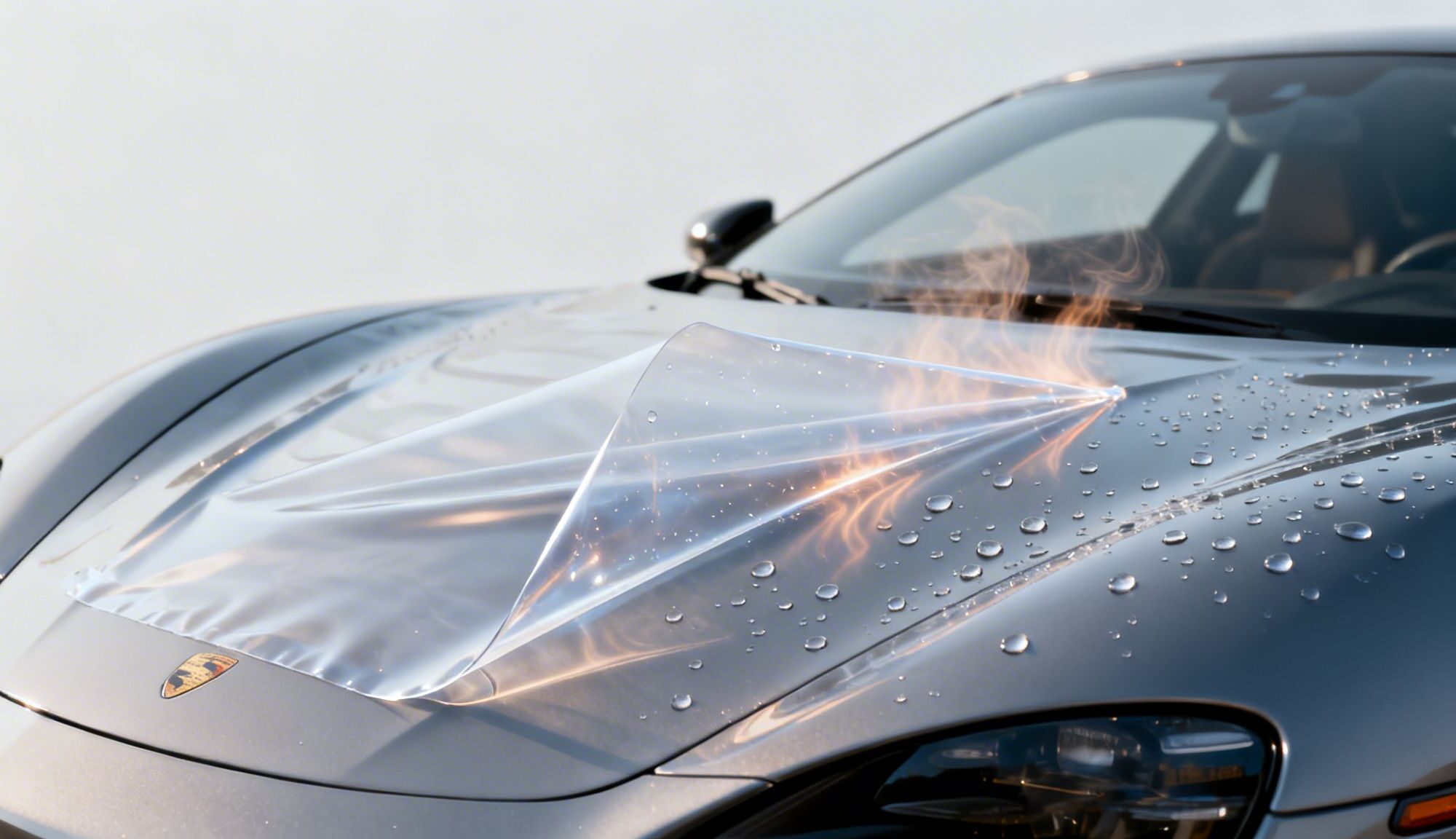
Ever thought about what it would be like to have an invisible, self-healing skin for your car’s paint? That’s pretty much the best way to describe thermoplastic polyurethane (TPU) film. In the automotive world, we just call it Paint Protection Film, or PPF. This isn't some run-of-the-mill car accessory; it's a high-tech barrier engineered to take the daily beating your vehicle puts up with.
What Is This Invisible Shield for Your Car?
Think of thermoplastic polyurethane film as a personal bodyguard for your vehicle's paint job. It's a remarkably clear, tough, and flexible material that we apply directly over your car's, truck's, or SUV's painted surfaces. Its main purpose is to serve as a physical shield, defending that factory finish from all the hazards of the open road.
For car owners in Woodstock and Alpharetta who want to keep their vehicle looking like it just rolled off the showroom floor, PPF made from TPU is a true game-changer. It provides that critical first line of defense against the common threats that can quickly chip away at your car's value and appearance.
The First Line of Defense Against Road Damage
The biggest and most immediate benefit of this film is its power to absorb impacts. While waxes or ceramic coatings are great for chemical resistance, a thermoplastic polyurethane film delivers real physical protection. This is absolutely essential for stopping damage from things like:
- Rock Chips: Those small stones and bits of gravel kicked up on highways like I-575 can easily chip your paint. PPF absorbs that impact, leaving the paint untouched.
- Light Scratches: An accidental key drag or branches on a tight back road can all cause surface scratches that this film simply shrugs off.
- Bug Splatter: The acidic nature of bug guts can actually etch into your clear coat over time. PPF puts a barrier between them and your paint that's easy to clean.
- Environmental Contaminants: Bird droppings, tree sap, and road chemicals are stopped in their tracks before they can cause any permanent harm to the paint below.
The core idea behind a thermoplastic polyurethane film is for it to be a sacrificial layer. It takes the hit so your car’s original paint doesn't have to, preserving both its look and its resale value.
It's no surprise that the demand for these protective films is growing like crazy in the car world. The global market for TPU films was valued at around USD 443 million in 2025 and is set to climb much higher, all thanks to the need for lightweight, durable, and self-healing materials for our vehicles. You can read more about this market growth.
At The Tin Guy, we specialize in applying this advanced thermoplastic polyurethane film to protect your investment. We know that for drivers all over North Metro Atlanta, keeping a vehicle looking brand new is a huge priority, and our professional automotive PPF installation is the best way to do it.
The Science Behind a Self-Healing Film
Ever wonder how a paint protection film can just erase a scratch? It seems like magic, but it’s actually some seriously clever science packed into a thin layer of thermoplastic polyurethane film. This isn't a trick; it's advanced polymer chemistry going to work right on your car's body panels.
At a microscopic level, the film is made of a flexible, interlocking web of hard and soft polymer chains. Think of it like a high-tech, invisible chainmail for your paint. The "hard" parts of the chain provide the toughness, making the film strong enough to stand up to flying rocks and road debris. The "soft" parts give it that incredible elasticity, letting it stretch on impact and snap right back into place.
The Self-Healing Process Explained
The "self-healing" trick is easily the most impressive quality of a thermoplastic polyurethane film. When your car gets a light scratch or a swirl mark, the damage is almost always just on the surface of the film itself—your actual paint is perfectly safe underneath. The polymer network has been disturbed, but it hasn't been broken.
This is where a little bit of energy saves the day. Applying some gentle heat, whether from the sun, a splash of warm water, or an installer's heat gun, gets those polymer chains moving. This energy gives the flexible "soft" parts just enough mobility to flow back into their original, smooth formation. The scratch literally disappears.
The self-healing process is essentially the thermoplastic polyurethane film resetting its own molecular structure. The polymer network is engineered to always "remember" its original smooth state and will return to it when given a small amount of thermal energy.
For anyone driving around Georgia cities like Canton or Marietta, this means the film is constantly doing its job. The simple heat from a sunny day is often all it takes to make minor scuffs and swirl marks vanish on their own, keeping your ride looking flawless.
Built-In Defense Mechanisms
Beyond just healing itself, a thermoplastic polyurethane film is packed with other protective features. Top-tier manufacturers infuse the raw material with special additives that guard your paint against a whole host of environmental threats.
Here's what else is working to protect your vehicle's finish:
- UV Inhibitors: These compounds are blended directly into the film's chemistry. They work like a powerful, invisible sunscreen for your paint, absorbing and scattering harmful UV radiation before it can cause your clear coat to fade or oxidize.
- Anti-Stain Chemistry: The topcoat of a quality PPF is engineered to be non-porous. This creates a powerful barrier that resists chemical etching from acidic things like bird droppings, bug guts, and tree sap, stopping them from permanently damaging the surface.
This concept map helps visualize how a thermoplastic polyurethane film brings together its physical structure and chemical properties to shield your vehicle.

As you can see, the film’s power comes from combining its physical toughness with its chemical resilience. Understanding the science behind it makes it clear why PPF is such a smart move for any car owner. If you want to dive even deeper, check out our guide on self-healing paint protection film. At The Tin Guy, we only use premium films that take full advantage of this technology to give your investment the best protection possible.
Real-World Benefits of Installing PPF on Your Car
So, we've talked about the science behind thermoplastic polyurethane film. But what does all that complex engineering actually mean for your car on a day-to-day basis? It's simple: real-world protection that you can see and feel, keeping your car looking like it just left the showroom.
For drivers here in North Metro Atlanta, installing Paint Protection Film (PPF) is one of the best moves you can make to protect your car. Think of it as an invisible, full-time bodyguard for your factory paint job.
Serious Scratch and Chip Defense
Let's be honest, every time you hit the road, your car is in a battle. A high-quality thermoplastic polyurethane film is that sacrificial layer that takes the hits so your paint doesn't have to.
Your daily drive is full of hazards. Whether you're cruising down I-75 in Marietta or squeezing into a tight spot at a Roswell shopping center, the threats are everywhere. PPF is built to handle it.
- Rock Chips: We’ve all been there. A truck kicks up a spray of gravel, and suddenly your front end is dotted with ugly chips. PPF’s flexible material absorbs that impact, stopping the rock before it can damage the paint.
- Minor Scratches: A jacket zipper leaning against the door or even overgrown bushes on a narrow road can leave frustrating scuffs. The film takes the brunt of this abuse, leaving the paint underneath completely untouched.
- Road Debris: At highway speeds, things like sand, salt, and other grime act like sandpaper against your finish. PPF creates a tough shield that stands up to this constant abrasion.
Effortless Self-Healing Technology
This is where modern PPF truly shines. One of the most incredible features is its ability to literally heal itself from minor damage. The thermoplastic polyurethane film is engineered with a polymer structure that can reflow and smooth itself out after a light scratch.
What does this mean for you? Those annoying swirl marks from car washes or light scuffs from daily use will simply vanish with a bit of warmth. The heat from the Georgia sun on a summer afternoon is usually enough to trigger the self-healing topcoat, restoring a perfect, high-gloss finish. Your car stays looking freshly detailed, week after week.
Superior Stain and UV Resistance
Your car's brilliant color is under constant attack from the environment. A premium thermoplastic polyurethane film is your best defense against the elements that want to fade and stain your paint.
- Stain Prevention: The film’s top layer is non-porous, creating a barrier against acidic stuff like bird droppings, bug guts, and tree sap that can permanently etch your clear coat.
- UV Blocking: PPF contains UV inhibitors that block over 99% of damaging ultraviolet rays. It’s like applying a powerful, permanent sunscreen to your car, preventing the sun from oxidizing and fading your paint over time.
This kind of protection is a must-have for car owners in sunny spots like Alpharetta and Woodstock, where intense UV exposure is a year-round reality.
The global market for thermoplastic polyurethane films is booming, and it’s no surprise why. The automotive industry is driving this trend, demanding lightweight, durable materials that protect against heat and UV damage. This market, valued at USD 391.8 million globally in 2025, reflects a huge demand for better protection. For folks across North Atlanta, this technology directly translates to preventing paint fade and preserving a car's finish. It's why searches for terms like "best paint protection film Alpharetta" are on the rise, and why people trust expert installers like The Tin Guy. You can see more on these market trends from Cognitive Market Research.
Preserving Your Automotive Investment
At the end of the day, installing PPF is about protecting your car’s value. A vehicle with perfect, original factory paint will always command a higher price at resale or trade-in compared to one that's covered in road rash.
By keeping your car in that pristine, showroom condition, PPF helps you get the most money back when it's time to sell or upgrade. It’s not just another expense—it's a smart decision to protect the asset you've worked so hard to own.
Comparing PPF to Other Automotive Protection
When you’re deciding how to protect your car's paint, the options can feel overwhelming. It's easy to get lost in the sea of Paint Protection Film (PPF), vinyl wraps, and ceramic coatings. Each one has a different job, so figuring out their core purpose is the key to making the right call for your car and your wallet.
This breakdown will help drivers in Kennesaw and Holly Springs see exactly where thermoplastic polyurethane film fits into a complete protection plan. We'll put it head-to-head with other popular choices to show why it's the ultimate defense against physical damage.
PPF vs. Vinyl Wraps
At first glance, PPF and vinyl wraps can seem like the same thing—they're both films applied to your car's exterior. The truth is, they serve fundamentally different purposes. A vinyl wrap is all about aesthetics. It’s made to change your car’s color or give it a new finish, like matte or satin. While it offers a tiny bit of protection from light scuffs, it was never designed to take a real hit.
A thermoplastic polyurethane film, on the other hand, is pure, dedicated armor. It’s thicker, stronger, and engineered from the ground up to absorb the impact from rock chips and road debris.
- Durability: A high-quality vinyl wrap might look good for 3-5 years before it starts to fade or peel. A professional-grade PPF, however, is built to last 10 years or more, giving you long-term peace of mind.
- Self-Healing: This is where PPF truly shines. Minor scratches and swirls on a vinyl wrap are there to stay. With PPF, those same light marks literally vanish with a little heat from the sun or a heat gun, keeping your finish looking perfect.
Early breakthroughs in TPU focused on elasticity and toughness, creating films that could stretch 500-600% without tearing. This incredible flexibility is what lets our installers wrap the film flawlessly around every curve of your vehicle. It’s this durability and chemical resistance that gives a thermoplastic polyurethane film its impressive 10+ year lifespan, blowing past vinyl's typical 5-year limit.
PPF vs. Ceramic Coatings
This is where most of the confusion happens. A ceramic coating is a liquid polymer that chemically bonds to your car’s clear coat. It creates an ultra-slick, super-glossy layer of protection that is incredible at repelling water, dirt, and grime. This makes your car way easier to clean and gives it that deep, wet-looking shine everyone loves.
But a ceramic coating is not armor. While it’s great against chemicals and UV rays, its hardness is microscopic and won't do much to stop a rock chip. It’s a thin, slick layer built for gloss and easy maintenance, not for absorbing impacts.
Key Takeaway: A ceramic coating makes your paint look incredible and stay clean, but a thermoplastic polyurethane film is what actually saves your paint from physical damage. They play two different, but perfectly complementary, roles.
For many car enthusiasts, the best solution is to use them together. We install PPF on high-impact areas like the bumper and hood, then apply a ceramic coating over the entire car—including the film. This gives you the absolute best of both worlds: serious impact resistance from the PPF and the slick, self-cleaning surface from the coating.
If you're still weighing your options, be sure to check out our guide on paint protection film vs. ceramic coating for an even more detailed comparison.
To help you visualize the differences, we’ve put together a simple chart comparing the big three in automotive protection.
| Feature | Thermoplastic Polyurethane Film (PPF) | Vinyl Wrap | Ceramic Coating |
|---|---|---|---|
| Primary Purpose | Impact & scratch protection | Color change & aesthetics | Gloss, UV protection, easy cleaning |
| Thickness | 6-10 mils | 3-4 mils | Microscopic (nanometers) |
| Self-Healing | Yes (with heat) | No | No (some minor scratch filling) |
| Impact Resistance | Excellent | Very Low | Minimal |
| Lifespan | 10+ years | 3-5 years | 2-5 years |
| Cost | High | Medium | Low to Medium |
| UV Protection | Good to Excellent | Fair | Excellent |
| Chemical Resistance | Excellent | Poor | Excellent |
Each option has its place, but when it comes to true, physical protection that lasts, nothing beats a quality TPU-based PPF.
Beyond the robust protection offered by PPF, car owners often explore other film-based applications for aesthetic customization, such as various types of custom car stickers.
Our Flawless PPF Installation Process
You can have the best thermoplastic polyurethane film on the market, but if it's not applied correctly, you're just not getting the protection you paid for. At The Tin Guy, we’ve always believed that a perfect installation is just as critical as the film itself. It's the difference between an invisible shield and a shoddy job riddled with flaws.
Getting that seamless, factory-finish look is all about precision and a process we've perfected over years of experience. For our clients in Cumming and Milton, we want to pull back the curtain and show you exactly what goes into a paint protection film installation that truly stands the test of time.

Step 1: The Deep Clean and Prep
You simply can't apply a perfect film over an imperfect surface. Before any film touches your car, we put it through a meticulous deep-cleaning and decontamination stage to create a truly pristine canvas for the thermoplastic polyurethane film.
This isn't just a quick wash. It’s a multi-step ritual:
- Detailed Hand Wash: We start by carefully washing every panel, nook, and cranny to get rid of all the surface-level dirt and road grime.
- Clay Bar Decontamination: Next, we use a special clay bar across the paint. This is a crucial step that gently pulls out embedded contaminants from the tiny pores in your clear coat, leaving the surface glass-smooth.
- Final Surface Wipe-Down: Right before application, we give the panels a final cleaning with a specific solution that removes any lingering oils or residues. This ensures the film's adhesive gets the strongest possible bond.
Step 2: Computer-Cut Precision
Some installers still use the old-school method of laying film on the car and trimming it with a blade. That's a huge risk for accidental cuts and imperfect lines. We threw that method out years ago.
Instead, we rely on advanced software and a digital plotter to pre-cut every single piece of thermoplastic polyurethane film to your vehicle’s exact measurements.
Our system accesses a massive database of vehicle patterns, letting us cut film that perfectly matches every curve and edge of your car's specific make, model, and year. A blade never, ever comes near your paint.
This high-tech approach guarantees full, edge-to-edge coverage that looks like it came straight from the factory.
Step 3: The Art of Application
With the vehicle prepped and the patterns perfectly cut, our certified installers get to work. This is where hands-on skill and technique are everything. We use a special slip solution that lets us float the film over the panel, sliding it into the perfect position.
Using professional-grade squeegees and a steady hand, our technicians methodically press the film down, forcing out the slip solution from underneath. This process eliminates any chance of air bubbles or water pockets getting trapped. We wrap edges and navigate complex curves with meticulous care, making the film look like a seamless part of your car’s body.
Step 4: Curing and Final Inspection
After the film is perfectly positioned, it needs to cure. During this phase, any microscopic moisture left under the film evaporates, allowing the adhesive to create its final, rock-solid bond with the paint.
But we're not done yet. Before we hand you the keys, your vehicle undergoes a rigorous quality assurance inspection. We examine every single inch of the install under specialized lighting, checking for any imperfections. Only when it meets our sky-high standards is the job officially complete, leaving you with a flawless finish that will protect your investment for years.
Maintaining Your Car's Paint Protection Film
So you've just protected your ride with a high-tech thermoplastic polyurethane film. That's a great move. Now, the key is making that flawless, glossy look last for years, and thankfully, it’s easier than you might think.
A little bit of proper care goes a long way. It keeps the film looking its best and ensures those incredible self-healing and protective features are always ready for action.

First things first: after we finish the installation, give the film about a week before you wash the car. This waiting period is critical—it lets the adhesive fully cure and lock onto your paint without any soapy interference.
PPF Maintenance Do's
Following a few simple rules will keep your thermoplastic polyurethane film looking brand new. These aren't complicated steps, but they make a world of difference in the film's performance and longevity.
- Hand Wash When You Can: Nothing beats a classic two-bucket hand wash with a clean microfiber mitt. It’s the gentlest way to clean and avoids dragging grit across the surface that could cause swirls.
- Stick to pH-Neutral Soaps: Always grab a quality, pH-neutral car soap. Aggressive, acidic, or high-alkaline detergents will eat away at the film's topcoat over time, killing its shine and water-repelling properties.
- Wash from the Top Down: Start with the roof and work your way to the bottom. The lower parts of your car are always the dirtiest, so you want to wash them last to avoid spreading that grime everywhere.
- Dry with Fresh Microfiber: Use a soft, dedicated microfiber drying towel to gently pat the car dry. Never use an old bath towel or a rough rag—that’s a recipe for micro-scratches.
PPF Maintenance Don'ts
Knowing what not to do is just as important. Avoid these common pitfalls, and you’ll prevent any accidental damage to your paint protection film.
- Avoid Abrasive Products: Never, ever use polishes or waxes that have abrasive compounds. Stay away from harsh solvents like Naphtha or Kerosene, too. They will haze, cloud, or even damage the film’s topcoat.
- Go Easy with Pressure Washers: You can use a pressure washer, but you have to be careful. Always keep the nozzle at least 36 inches from the car's surface. Most importantly, never aim the jet of water directly at the film's edges, as the pressure can lift the film right off.
- Watch Out for Harsh Chemicals: Bug and tar removers, degreasers, and other heavy-duty cleaners can be trouble. Only use products that are specifically labeled "PPF-safe."
A truly amazing feature of thermoplastic polyurethane film is its ability to self-heal. Minor swirls or light scratches will often vanish on their own with a little help from engine heat or a sunny day. To speed things up, you can even pour warm (not boiling!) water over the spot and watch the magic happen.
By following this simple advice, you'll have no trouble keeping your investment protected and looking sharp long after you leave our shops in Woodstock or Alpharetta. For an even deeper dive, check out our guide on paint protection film maintenance that covers long-term care in more detail.
Common Questions About Thermoplastic Polyurethane Film
When you're thinking about protecting your car's paint, it’s only natural to have a few questions. We get it. Investing in something like thermoplastic polyurethane film—what we in the industry call Paint Protection Film or PPF—is a big decision. Over the years, we've heard just about every question in the book, so we've put together some answers to the most common ones we hear from drivers right here in our shops.
How Much Does PPF Installation Cost?
This is usually the first question on everyone's mind, and the honest answer is: it depends. The final price tag is shaped by a few key things.
First is the size of your vehicle—a full-size SUV will naturally require more film and time than a compact sports car. The second is how much of the car you want to protect. Some owners just want to cover high-impact zones like the front bumper, hood, and mirrors, while others opt for a full-body wrap for total peace of mind. The specific film you choose and the complexity of your car’s body lines also factor in. Here at The Tin Guy, we’ll walk you through the options and give you a detailed quote tailored to your car and your goals.
Can PPF Be Removed Without Harming My Paint?
Absolutely, and this is one of the biggest selling points of a quality PPF. A professionally installed thermoplastic polyurethane film is designed to be removed safely, leaving your factory paint completely unharmed.
The specialized adhesive creates a strong bond that holds up to the elements, but it's engineered to release cleanly when a trained technician applies gentle heat. When the film comes off, you're left with the pristine, untouched paint that was preserved underneath. It's a huge win for maintaining your car's long-term resale value.
Is PPF the Same Thing as Automotive Window Tint?
We hear this one a lot! While they're both protective films for vehicles, they are entirely different products designed for different jobs.
Thermoplastic polyurethane film (PPF) is a thick, tough, and transparent layer applied to your car’s painted surfaces. Its one and only job is to shield the paint from physical damage like rock chips, scratches, and swirl marks.
Automotive window tint, on the other hand, is a much thinner film that goes on the inside of your car's windows. Its purpose is to:
- Block heat and reduce glare
- Filter out damaging UV rays
- Add privacy to your car, truck, or SUV
Think of it this way: PPF is body armor for your paint, while window tint is like sunglasses for your car's interior and its occupants.
How Long Will PPF Last On My Car?
When you invest in a premium thermoplastic polyurethane film and have it installed by professionals, you’re getting a solution built for the long haul. With just basic, proper care, you can fully expect your PPF to last for 10 years or more.
Modern films come packed with UV inhibitors that stop them from yellowing or cracking over time. Plus, their self-healing top coats work to keep the surface looking glossy and free of minor scratches, ensuring your car looks its best year after year.
Ready to give your vehicle the ultimate defense against the hazards of the road? The expert installers at The Tin Guy are here to help you choose the perfect PPF package for your ride. Stop by one of our shops in North Metro Atlanta for a free consultation and see what real protection looks like.