You're probably feeling it every afternoon. The steering wheel is hot, the seat holds heat, sunlight cuts across the dash, and the drive through Woodstock, Kennesaw, or Canton gets more tiring than it should be. A lot of people start with a broad search like Tint Windows in Huntsville AL, then realize what they ultimately need is clear guidance for North Georgia roads, North Georgia heat, and Georgia law.
That distinction matters. Drivers around North Atlanta often run into conflicting tint advice online, especially when Alabama rules get mixed into Georgia searches. If your car is registered and driven here, the only rules that matter are Georgia's. The right film also depends on how you use the vehicle. A daily commuter, a family SUV, and a weekend performance car don't need the exact same setup.
Your Guide to Professional Window Tinting in North Georgia
A common situation goes like this. Someone spends a week searching shops, sees different percentages on different websites, and hears one friend say “go as dark as possible” while another says “don't tint the front windows at all.” By the time they're ready to book, they're less certain than when they started.
That confusion gets worse in North Atlanta because many searches pull in content from nearby states. Someone looking up Tint Windows in Huntsville AL may still be trying to solve a very local problem in Woodstock, Georgia, Kennesaw, Georgia, or Canton, Georgia. The need is simple. Keep the cabin cooler, cut the glare, protect the interior, and stay legal.
What drivers in Woodstock, Kennesaw, and Canton usually want
Most drivers aren't chasing tint for looks alone. They want practical relief during everyday driving:
- Less cabin heat: The car feels more manageable after it's been parked in the sun.
- Reduced glare: Afternoon light is harder on your eyes than one might expect until the film is installed.
- Interior protection: Dash panels, leather, trim, and screens all take abuse from repeated sun exposure.
- A cleaner finish: Good tint changes the whole look of a vehicle without making it flashy.
Practical rule: The best tint job is the one that fits your driving habits, your vehicle, and Georgia law all at once.
What actually makes a tint job worth it
Film quality matters. Installation quality matters just as much. A low-grade film can look acceptable on day one and disappoint later with fading, adhesive issues, or poor heat performance. A rushed install can leave contamination, edges that don't sit right, or a finish that never quite looks factory.
That's why the true decision isn't just “Do I tint my windows?” It's which film gives you the right balance of comfort, appearance, durability, and legal compliance for North Georgia driving.
Beyond Style The Core Benefits of Automotive Window Tint

A professional tint job should do more than make the car look sharper. It should make the car easier to live with every day. That's the difference between buying by price and buying by performance.
The biggest gain most drivers notice first is comfort. Sunlight doesn't just brighten the cabin. It loads the interior with heat, especially through side glass. Better films slow that heat build-up and make the cabin easier to cool down after the car has been parked.
Heat control that you can feel on the road
Heat rejection is where premium film starts separating itself from entry-level products. According to 3M Ceramic IR performance benchmarks, 3M's Ceramic IR Series film rejects up to 95% of infrared heat and 99.9% of UV rays, achieving a Total Solar Energy Rejection (TSER) of up to 63% and a Glare Reduction of up to 93%, with an SPF rating exceeding 1000.
That matters in a daily driver because you don't experience tint as a spec sheet. You experience it when your arm isn't cooking against the glass and when the cabin stops feeling like a greenhouse during stop-and-go traffic.
Tint works like sunscreen for your car
UV protection is one of the most overlooked reasons to tint a vehicle. Good film acts a lot like high-SPF sunscreen, except it's protecting both people and the interior materials every time the car is in daylight.
Here's what that protection helps with:
- Seats and trim: Leather, vinyl, and plastic hold up better when they aren't getting baked every day.
- Dash surfaces: Repeated sun exposure is hard on dashboards, especially in vehicles parked outdoors.
- Skin exposure during commuting: Side-window sun adds up over time on longer drives.
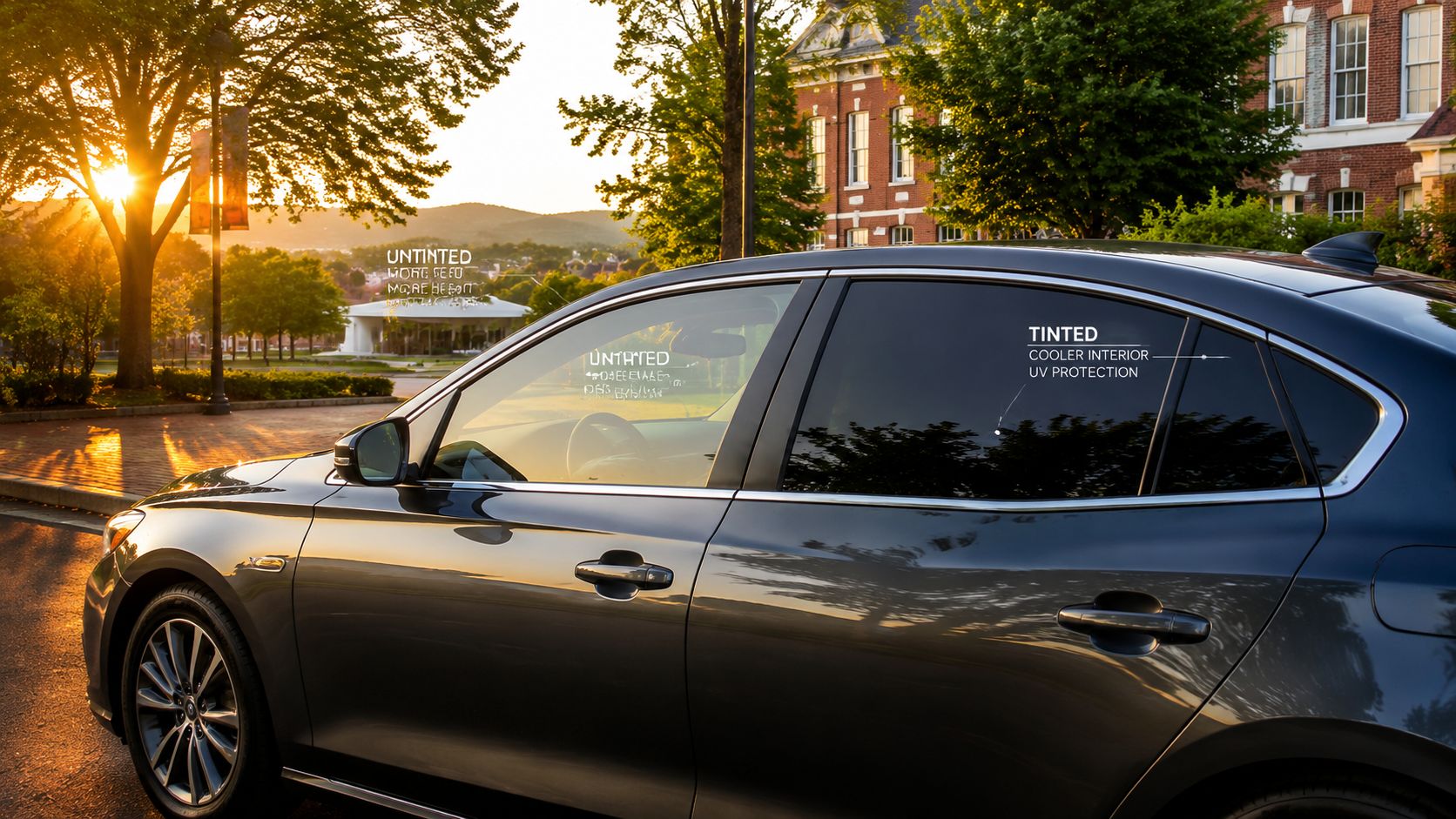
A quick visual helps explain what quality film is doing in real use:
Safer visibility in harsh light
Glare reduction isn't just a comfort feature. It lowers eye strain during early morning and late afternoon driving, and it can make long commutes feel less draining. The best result is balanced. You want enough visible light for a clear, confident view, but not so much harsh brightness that every drive feels fatiguing.
Good tint should disappear when you're driving. You notice the comfort, not the film itself.
Choosing Your Film Ceramic vs Carbon and Dyed Tints
When people compare tint options, they usually start with darkness. That's the wrong place to start. Film type affects how the tint performs, how long it lasts, and whether you'll be happy with it a few years from now.

Dyed film
Dyed tint is the budget entry point. It darkens the glass and improves privacy, but it's the option most likely to disappoint over time. It works for drivers who want basic appearance improvement and the lowest upfront spend, but it's usually not the strongest long-term value.
According to a nano-ceramic tint technical guide, premium nano-ceramic window tint utilizes particles of titanium dioxide and aluminum oxide (20–50 nanometers in diameter) to reject 90% to 96% of infrared radiation, maintaining 99%+ UV-A and UV-B blocking for 15+ years, unlike dyed films which degrade and turn purple within 2–4 years. That purple fade is exactly why many dyed jobs end up being removed and redone.
Carbon film
Carbon tint sits in the middle for many drivers. It gives a richer, more stable look than dyed film and doesn't carry the same reputation for fading. It's a solid fit for someone who wants an upgrade in both appearance and performance without jumping straight to the highest-end option.
If you're comparing mid-tier and premium film and want a cleaner technical breakdown, this guide on carbon vs ceramic tint options is useful.
Ceramic film
Ceramic is the premium choice because it solves the biggest complaints drivers have with cheaper products. It's built for heat control, UV protection, and long-term stability. It also avoids the signal problems that metallic-style products can create, which matters if you rely on phone service, GPS, or in-car electronics.
A simple way to think about the three options:
| Film type | Best for | Main trade-off |
|---|---|---|
| Dyed | Lowest upfront cost | More likely to fade and age poorly |
| Carbon | Better balance of value and appearance | Doesn't match ceramic for top-end performance |
| Ceramic | Maximum comfort and long-term value | Highest initial investment |
There's a similar pattern in other forms of vehicle protection. Drivers who already research paint, surface durability, and long-term appearance often also find ceramic coating services helpful for understanding how premium materials differ from lower-tier alternatives.
If you plan to keep the vehicle, the cheapest tint often becomes the most expensive one.
Navigating Georgia Window Tint Laws for a Legal Ride
North Atlanta drivers require clarity. Georgia rules get mixed up with Alabama rules all the time, especially when search results overlap. If your car is being tinted for use in Woodstock, Kennesaw, or Canton, you need to follow Georgia law.

What the legal limit means in practice
According to Georgia passenger vehicle tint requirements, the legal limit for window tint on front side windows is strictly 32% Visible Light Transmission (VLT), meaning 32% of light must enter the vehicle, and any tint darker than this is illegal for passenger cars on all windows including rear side and rear windows.
That percentage matters because factory glass already has some shading in many vehicles. Film and glass work together. If someone installs film without measuring the final result, the vehicle can end up darker than intended.
Reflectivity rules matter too
Georgia doesn't just regulate darkness. It also regulates how reflective the film can appear. That means a film can still be a problem even if the darkness seems acceptable.
Key points to keep in mind:
- Front side windows: They must stay within Georgia's legal VLT standard for passenger cars.
- Rear side and rear windows: Passenger-car rules still matter, so don't assume another state's SUV rules apply here.
- Reflective appearance: Avoid mirrored or flashy films that draw attention.
- Windshield area: Ask for a legal setup rather than guessing based on photos online.
For a broader legal reference, this Car owners' guide to tinting laws is a helpful supplement. For Georgia-specific details, this page on Georgia auto window tinting laws is the one to review before booking.
Alabama and Georgia aren't interchangeable. A legal setup in one state can be illegal in the other.
How Much Does Professional Car Tinting Cost in North Atlanta
Price gets easier to understand when you connect it to film type instead of treating every tint quote like it should land in the same range. Different films use different materials, carry different warranties, and perform differently in the heat. That's why the spread can be wide.
According to window tint pricing by film type, dyed window tint ranges from $50 to $200, carbon tint typically runs from $250 to $600, and premium ceramic tint ranges from $500 to $800 for full vehicle application.
What changes the quote
The film itself is the first variable, but it's not the only one. Vehicle shape, window count, glass complexity, and the installer's process all affect final pricing. A clean install on a modern vehicle takes prep, precision cutting, proper shrinking, and time for finish work.
Here's the practical way to look at it:
- Dyed tint: Lower cost, more budget-friendly, but usually the least compelling long-term choice.
- Carbon tint: A middle tier that makes sense for drivers who want a stronger look and better durability.
- Ceramic tint: Highest upfront cost, but usually the best fit for drivers who care most about comfort and longevity.
Cost versus value
Cheap tint isn't always cheap if it has to be removed early or if the cabin still runs hot enough that you regret the decision. Better film costs more because it does more. Better shops also charge for cleaner installs and fewer headaches.
If you want a fuller pricing breakdown before getting quotes, this guide on how much car tint costs is worth reviewing.
Book Your Professional Tint Installation with The Tint Guy
A good tint job should look clean on day one and still look right long after the install. That usually comes down to two decisions. Choose a film that matches how you drive, and choose an installer who treats legal compliance and finish quality as absolute requirements.
For most North Atlanta drivers, ceramic is the strongest all-around answer when comfort and durability matter most. Carbon still has a place for value-focused buyers who want a meaningful step up from entry-level film. Dyed film can serve a narrow budget, but it's rarely the option experienced owners feel best about later.
What to expect from a professional shop

A professional installer should help you choose legal film for Georgia, explain the trade-offs clearly, and install it without cutting corners. That includes talking through visible light transmission, film appearance, and how the finished setup will read on your specific vehicle.
According to Georgia reflectivity rules for window tint, Georgia law permits a maximum reflectivity of 20% on any window tint, and metallic, mirrored, or highly reflective films are explicitly prohibited regardless of VLT compliance, ensuring that tint must remain non-reflective for safety and visibility. That's one more reason it pays to work with a shop that understands Georgia standards instead of relying on generic internet advice.
Who this fits best
This kind of service makes the most sense for:
- Daily commuters: Drivers who spend a lot of time in sun and traffic.
- Families with SUVs or sedans: People who want a more comfortable cabin for passengers.
- Owners keeping their vehicles long term: Buyers who care about durability and interior preservation.
- Drivers replacing old film: Anyone tired of faded, peeling, or outdated tint.
If you've been searching for Tint Windows in Huntsville AL but your vehicle is in Woodstock, Kennesaw, or Canton, the right move is to book with a shop that works with Georgia law every day and can match the film to the way you use your car.
If you want a clean, legal, professional install in North Metro Atlanta, contact The Tint Guy for a no-obligation quote. They handle automotive tint for cars, trucks, SUVs, Teslas, and more across Woodstock, Kennesaw, Canton, and surrounding areas, with guidance on film choice, legal compliance, tint removal, and premium options built for long-term comfort.