Think of UV-blocking car window tint as a high-tech sunscreen for your vehicle. It’s a specialized film we apply to the windows of your car, truck, or SUV that’s engineered to block up to 99.9% of harmful ultraviolet (UV) radiation. This powerful shield not only safeguards your skin but also prevents your car's interior from fading, cracking, and deteriorating under the relentless sun.
Your Shield Against Sun Damage In North Atlanta
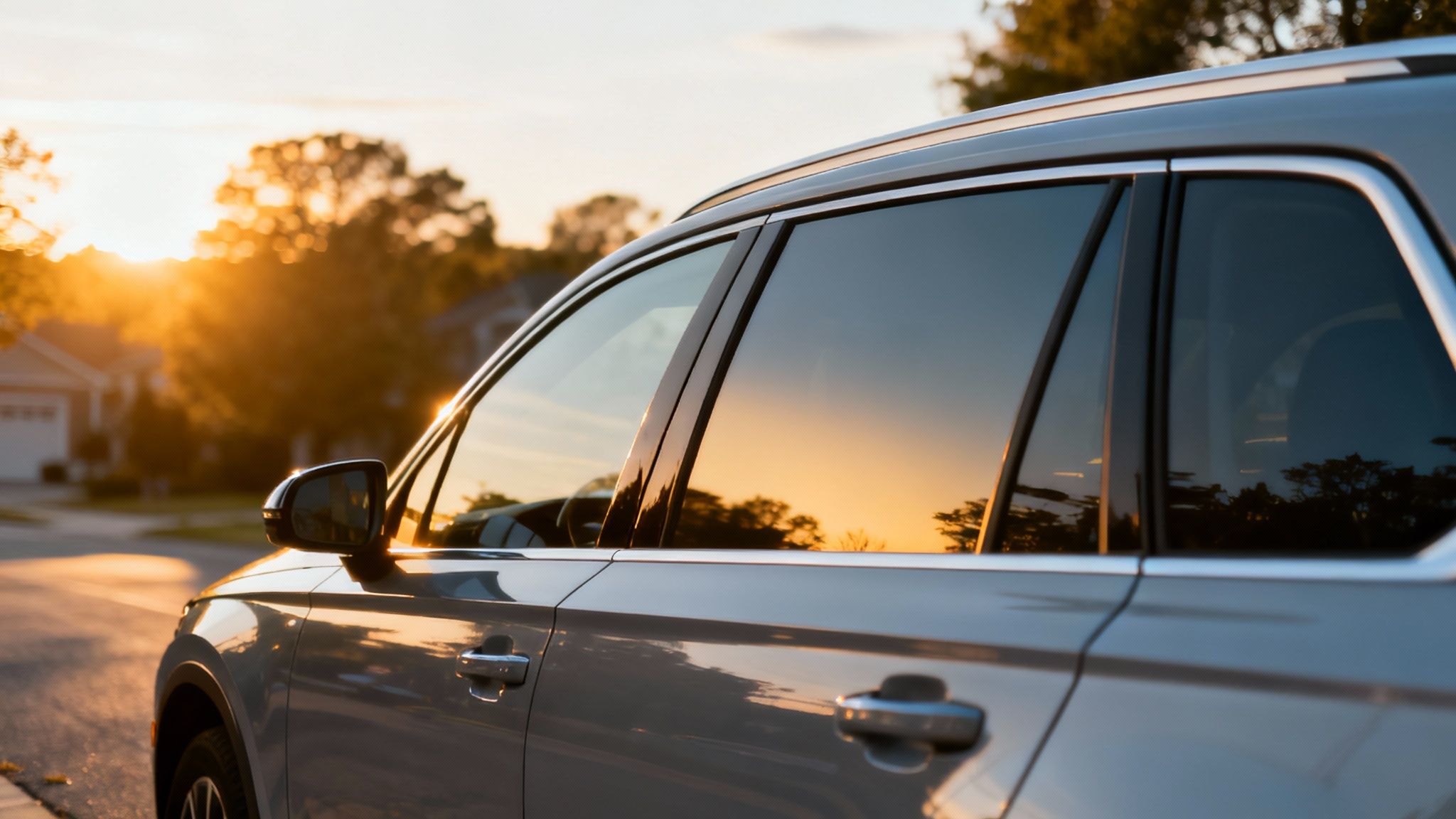
Anyone who drives around North Atlanta knows how intense the Georgia sun can be. Your car's glass can act like a magnifying lens, concentrating those damaging UV rays directly onto you, your family, and your vehicle’s interior. This is exactly why professional automotive window tinting is less of a simple upgrade and more of an essential layer of protection for your daily drive.
Modern UV-blocking car window tint is so much more than just a cosmetic touch. It’s an advanced piece of technology designed to fight the invisible threat of ultraviolet radiation. We're not just talking about keeping your car cool—we're talking about creating a safer, more comfortable space inside your car, truck, or SUV.
The Growing Demand for Protection
It's no surprise that more and more drivers are seeking this kind of protection. The global market for automotive tinting film hit USD 7.59 billion in 2024 and is expected to climb steadily through 2030. This boom is all thanks to drivers who get it—they understand how important it is to shield themselves from the sun, especially as more cars hit the road every year.
Windshields, in particular, make up a huge piece of this market, which tells you just how much drivers prioritize clear, protected vision. You can explore more data on the automotive tinting film market to see why it's such a fast-growing industry.
Your Local Automotive Tint Experts
Here at The Tint Guy, providing this critical protection for vehicles is our exclusive focus. With our two shops in Marietta and Kennesaw, we’re dedicated to installing the highest quality automotive tint films for our fellow North Atlanta drivers. We live here, we drive here, and we know exactly what it takes to defend your car against the local climate.
In this guide, we'll walk you through the technology, the real-world benefits, and all the car tint film options available so you can make a smart, informed decision for your vehicle.
How UV Blocking Tint Technology Works
To really get how UV-blocking car window tint works, you first have to know what it’s up against. The sun bombards us with Ultraviolet (UV) radiation, a type of invisible electromagnetic energy. You can't see it, but you've definitely felt its effects—it’s what causes sunburn and, over time, absolutely wrecks your car’s interior materials.
Automotive window tint is essentially a high-tech, multi-layered film designed to manage the sun’s energy. While each layer has a job to do, the core technology boils down to two main strategies: absorbing harmful UV rays or reflecting them away before they ever get through your car's glass. Think of it as a sophisticated filter custom-engineered for your car, truck, or SUV.
Absorption vs. Reflection
The way a tint blocks UV rays comes down to how it's made. Different types of automotive films use different materials and technologies to get the job done.
- Absorption (Dyed Films): Your more basic automotive films, like dyed tints, have absorptive particles mixed right into their layers. These particles act like a sponge, soaking up UV radiation. That energy gets converted into a tiny, manageable amount of heat that then just dissipates away from the glass.
- Reflection (Ceramic & Metalized Films): This is where things get more advanced. These films use microscopic particles to literally bounce solar energy away. Metalized films use tiny metallic particles, while the real performers—ceramic films—are embedded with non-metallic, non-conductive ceramic particles. This reflective strategy is way more effective at rejecting both heat and UV rays.
At The Tint Guy, we specialize in premium automotive films like ceramic tints from industry leaders such as 3M and Llumar. They give you the best of both worlds—powerful protection without the signal interference you can get from older metalized tints. To see how these different technologies stack up, it helps to understand the full range of automotive window tint films out there today.
The Power of Spectrally Selective Films
The most advanced automotive window film technology, which you'll find in high-end ceramic tints, is called spectrally selective. It sounds complicated, but the idea is actually pretty simple. The film is engineered to be smart about what it lets through and what it blocks.
This technology precisely targets and blocks specific wavelengths of light—namely harmful UV and heat-producing infrared (IR) rays—while allowing a high percentage of visible light to pass.
What does that mean for you? It means you get maximum protection from the sun's worst rays without making your windows super dark. Your view stays crisp and clear, but your cabin stays dramatically cooler and safer. A car tint doesn't have to be dark to be effective; even a nearly clear ceramic film can block over 99% of UV radiation.
For a deeper dive into how these different films compare, you can learn more about the specifics of window film options and their benefits. This is the level of performance that makes a professional automotive tint installation in Marietta or Kennesaw a true upgrade for your vehicle.
Comparing Your Automotive Tint Options
Picking the right UV-blocking car window tint can feel a bit overwhelming, especially with all the different technologies out there promising the best performance. For drivers here in North Atlanta, where the sun and heat are no joke, making a smart choice is crucial. Let's break down the most common car tint options to help you figure out what's best for you.
The infographic below really nails the fundamental difference between how a basic film handles the sun versus a more advanced one.
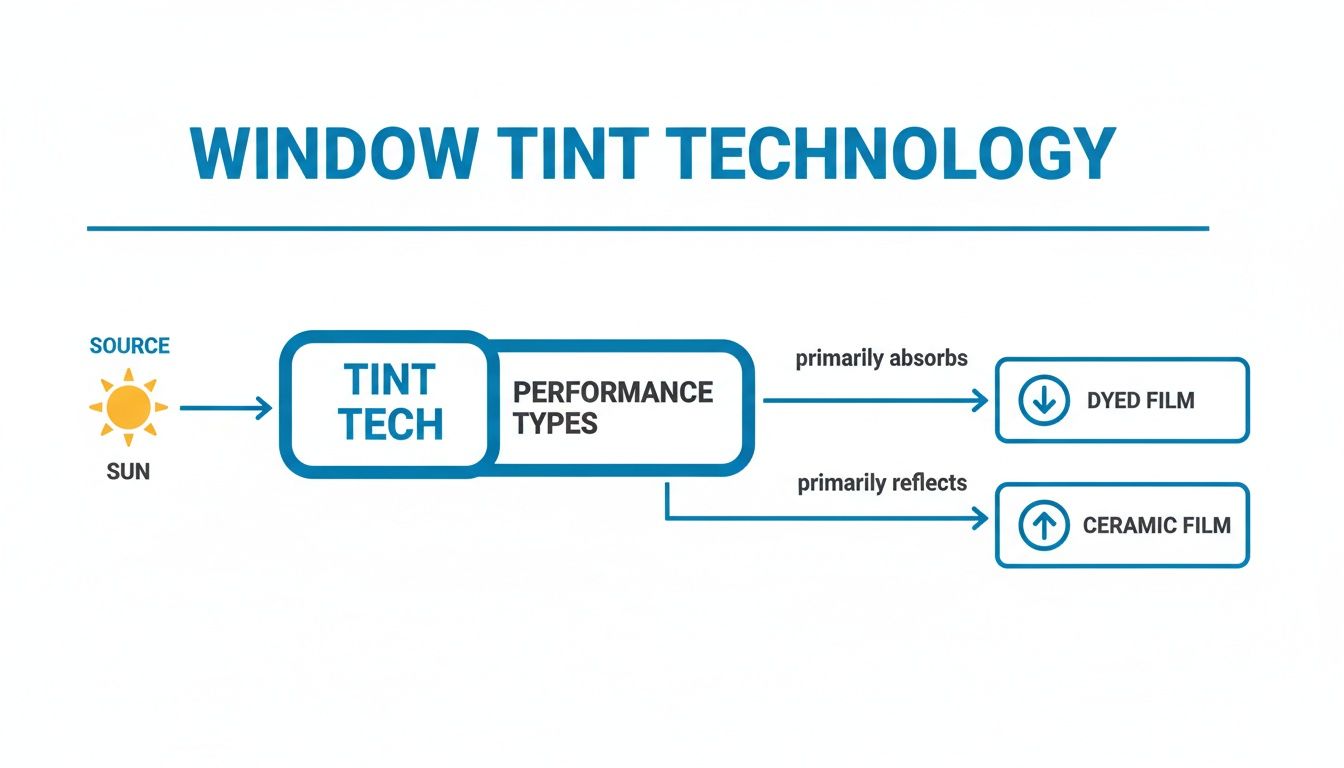
As you can see, dyed films basically just soak up solar energy like a sponge. In contrast, advanced ceramic films actively bounce that energy away, which makes a massive difference in heat rejection for your car, truck, or SUV.
To make this even clearer, let's put the most common film types side-by-side to see how they stack up in the real world.
Automotive Tint Film Technology Comparison
| Film Type | UV Blocking | Heat Rejection | Glare Reduction | Signal Interference |
|---|---|---|---|---|
| Dyed Film | Good | Fair | Good | None |
| Metalized Film | Excellent | Good | Excellent | High Potential |
| Carbon Film | Excellent | Very Good | Excellent | None |
| Ceramic Film | Superior | Superior | Superior | None |
This table gives you a quick snapshot, but the story behind each technology is what really matters. Each one has its place, but as you can see, performance—and potential drawbacks—can vary quite a bit.
Let's dive a little deeper into what these films are all about.
Dyed Window Tint Film
Dyed window tint is your entry-level, most budget-friendly option for cars. It's essentially a layer of dye that absorbs solar heat and UV rays, giving you that dark, private look.
It does a decent job blocking some UV radiation, but its method of soaking up heat just isn't as effective as other technologies. The biggest issue with dyed films is that they're prone to fading over time, often turning a purplish or brownish color, and they'll likely need to be replaced much sooner than more advanced films.
Metalized Window Tint Film
Metalized films are a definite step up in performance. They're made with microscopic metallic particles that literally reflect the sun's energy away from your vehicle before it has a chance to heat up the interior. This makes them great for both heat rejection and UV protection.
There's one major catch, though: those same metallic particles can mess with electronic signals. We're talking about your GPS, satellite radio, and even cell phone reception. For today's connected cars, that's often a deal-breaker.
Carbon Window Tint Film
Carbon window tint is where you get a serious performance boost without the signal interference problem. This film uses tiny carbon particles infused into the layers to block a huge amount of infrared light—the kind of light that’s primarily responsible for heat.
This film delivers excellent UV protection and won't fade over time like a dyed film, keeping its rich, matte-black look for years. For a lot of drivers, carbon film hits that sweet spot of strong performance, great looks, and long-term durability.
Ceramic Window Tint Film
At the very top of the ladder, you'll find ceramic window tint. This is the most advanced automotive film technology on the market today. It uses non-conductive, non-metallic ceramic particles to block an incredible amount of solar energy.
Ceramic tint offers the absolute highest levels of heat rejection, glare reduction, and UV protection—all with zero signal interference. It gives you a crystal-clear view looking out while keeping your car's interior dramatically cooler and safer from sun damage.
The demand for this technology is exploding for good reason. Modern ceramic tints block up to 99% of harmful UV rays. It’s a huge technological leap, and it's a major reason the tinted glass film market is projected to hit $10.89 billion by 2032. This growth is being driven by drivers who want superior protection and comfort. If you want to dig in, you can discover more insights about the expanding market for advanced automotive films. This technology isn't just a luxury; it’s a practical investment in protecting both your skin and your vehicle's interior.
The Key Benefits Beyond UV Protection
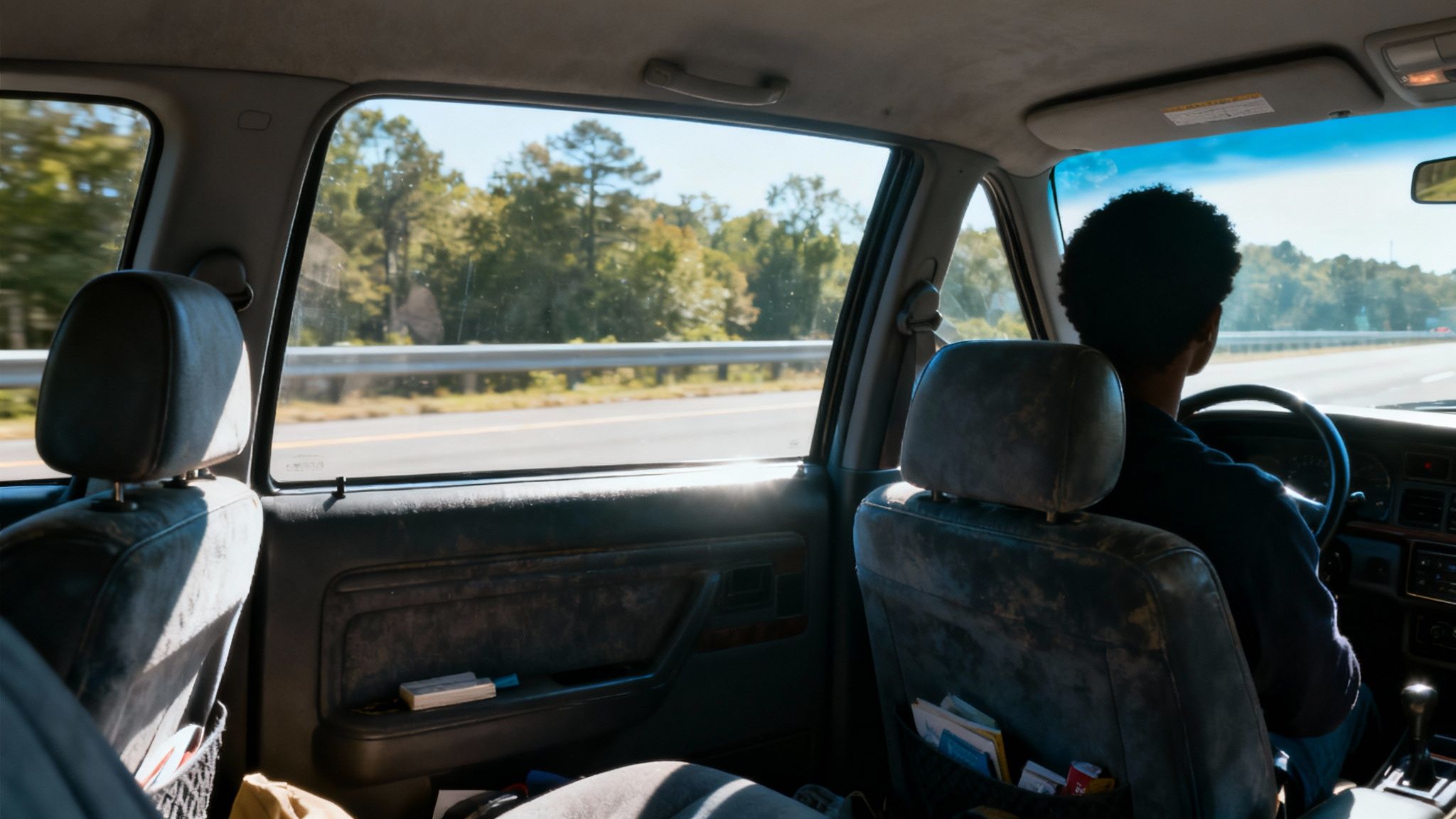
While blocking 99.9% of UV rays is the headline feature, the real story is that professional car window tint completely changes how it feels to be in your car. A quality film installation goes way beyond just one benefit—it makes every single drive in your car, truck, or SUV more comfortable, private, and secure.
One of the first things you'll notice is the incredible heat rejection. We all know that feeling of opening your car door on a hot Georgia day and getting hit with a wave of heat. A top-tier window tint acts like a shield, blocking the sun's infrared rays, which are what really make your car feel like an oven.
This keeps your cabin cooler, which means your AC doesn't have to blast on high just to keep up. That leads to better fuel efficiency and less wear and tear on your vehicle's systems. It’s a win-win.
Enhanced Comfort and Safety on the Road
Another huge plus is how much it cuts down on sun glare. Whether you're driving into the sunrise on your morning commute or heading home as the sun sets, that blinding glare isn't just annoying—it's dangerous.
UV-blocking window film is like putting a premium pair of sunglasses on your car. It cuts down on that harsh, distracting light from the sun and even helps with bright headlights at night. Less squinting means less eye strain and a clearer view of the road ahead, making your drive safer for you and everyone around you.
There's a lot more to it, and it's worth exploring the 6 Key Car Window Tinting Benefits that really transform your vehicle.
Privacy and Added Security
Let's be honest, we all appreciate a little privacy. Professional car window tint keeps prying eyes out, giving you peace of mind whether you're leaving valuables in your car or just don't want the world looking in.
But there's a safety aspect, too. The film itself actually adds a layer of strength to your windows. In the unfortunate event of an accident or a break-in, the tint helps hold the shattered glass together, preventing dangerous shards from flying into the car. It’s an extra layer of protection you hope you'll never need, but you'll be glad it's there if you do.
The global automotive window film market is projected to reach $5.71 billion by 2032, and that growth is all about the benefits we're talking about: UV protection, superior heat rejection, and enhanced safety. Premium films can slash glare by up to 80% and have been shown to help vehicles retain 5-10% higher resale value simply by protecting the interior from sun damage.
Here at The Tint Guy, we've been helping drivers in Marietta and Kennesaw experience these benefits for years. You can learn more about the benefits of automotive window tint and see for yourself how a professional job makes all the difference.
Navigating Georgia's Car Window Tint Laws
Picking out a high-performance UV-blocking car window tint is a great move for your car, but it's only half the battle. You have to make sure your choice is legal here in Georgia.
The state has some very specific rules about how dark your tint can be, and they're not just for show—they exist for the safety of drivers and law enforcement. Sticking to these laws helps you dodge a potential ticket and keeps your car street-legal, plain and simple.
It all comes down to a measurement called Visible Light Transmission (VLT). That’s just a fancy term for the percentage of visible light that can pass through your window and the film. The lower the VLT number, the darker the tint.
Georgia Tint Laws For Sedans And Coupes
If you drive a standard passenger car, the rules are pretty straightforward. The key is knowing the limits for the different windows on your vehicle.
- Front Side Windows: Must let more than 32% of light in.
- Rear Side Windows: Must let more than 32% of light in.
- Rear Windshield: Must let more than 32% of light in.
Georgia Tint Laws For Trucks And SUVs
For multi-purpose vehicles like trucks, SUVs, and vans, Georgia law offers a bit more leeway for the windows behind the driver. This is great for adding extra privacy and heat rejection where you often need it most.
- Front Side Windows: Must let more than 32% of light in.
- Rear Side & Back Windows: Can be tinted to any darkness.
No matter what you drive, the front windshield is off-limits for tinting except for a non-reflective strip at the top. This "visor strip" can only cover the top six inches of the glass.
Why Professional Installation Guarantees Compliance
This is where trusting an expert like The Tint Guy makes all the difference. We don't just stick film on glass; we make absolutely sure every car, truck, and SUV rolling out of our Marietta and Kennesaw shops is 100% compliant with Georgia’s regulations.
We use precise VLT meters to confirm legality and only install films that meet state standards. You get the look and performance you want without ever having to worry if you're on the right side of the law.
You can dive deeper into the specifics in our detailed guide on Georgia's auto window tinting laws. When you trust our team, you drive away with peace of mind, knowing your new tint is perfect and perfectly legal.
Why Professional Installation Is Non-Negotiable
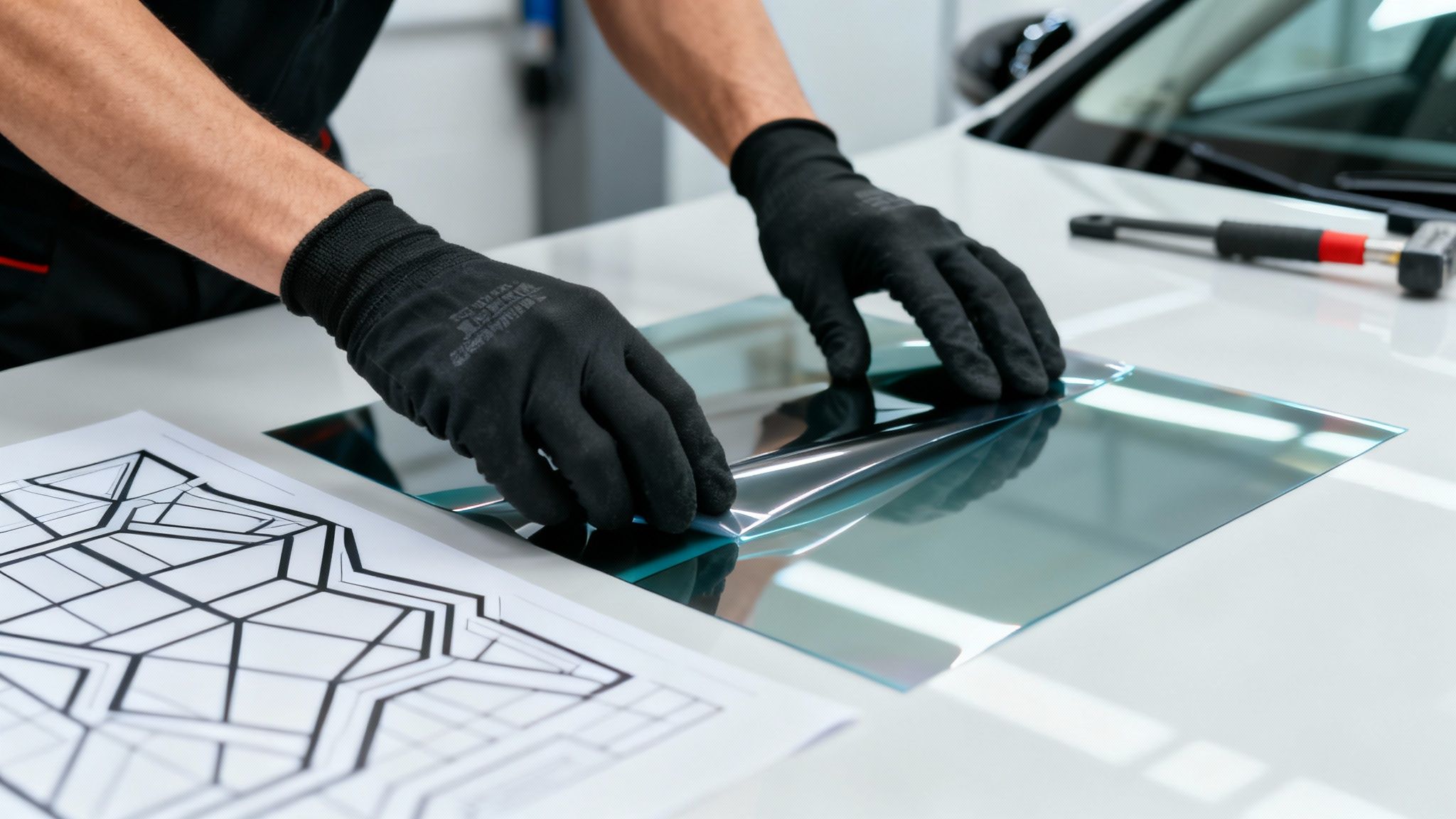
The advanced technology in a high-quality UV-blocking car window tint is incredible, but honestly, it’s only as good as the hands that install it. Picking up a DIY tint kit might look like a great way to save a few bucks, but it almost always ends in frustration and a result that compromises both the film's performance and your car's look.
A quick search online will show you countless cautionary tales of DIY jobs gone wrong. These common mistakes don't just look terrible; they mean the film isn't doing its real job of protecting you and your car's interior. A professional automotive tint installer has the specific tools, the training, and—just as importantly—the right environment to sidestep these exact issues.
The Pitfalls of DIY Tinting
Trying to apply window film yourself often turns into a lesson in frustration, leaving behind unsightly errors that are nearly impossible to fix without ripping it all off and starting over.
- Bubbling and Peeling: This is the classic sign of a DIY job. Trapped air and water pockets create ugly bubbles under the film, while peeling edges show the film never properly adhered in the first place.
- Creases and Contamination: It's surprisingly easy to crease the film without the proper technique, leaving permanent marks. Worse yet are the tiny specs of dust, hair, or debris that get trapped underneath, creating noticeable imperfections that you can't unsee.
- Imperfect Fit: Let’s be real: hand-cutting film to fit the complex curves of modern car windows is incredibly difficult. This almost always leads to uneven gaps along the edges, giving the whole job an unprofessional, sloppy finish.
The Tint Guy's Meticulous Process
At The Tint Guy, we simply eliminate every one of these risks. Our whole approach to automotive tinting is built on precision and decades of hands-on experience, guaranteeing a flawless finish every single time for our customers in Marietta and Kennesaw.
We don't just apply film; we execute a meticulous, multi-step process designed for perfection. Our investment in technology and a controlled environment guarantees a result that a DIY kit can never replicate.
Our process starts with precision computer-cut patterns made specifically for your vehicle’s make and model. This isn't guesswork; it ensures every piece of film fits perfectly, right to the edge. From there, we perform a thorough glass preparation in a clean, controlled shop to eliminate any chance of contamination.
This professional difference is exactly why we can confidently offer a lifetime warranty on our automotive tint installation. You get genuine peace of mind knowing your investment is protected and will deliver the full benefits of UV protection and heat rejection for as long as you own your car.
Frequently Asked Questions About UV Blocking Tint
We get it—you’ve got questions, and you want straight answers before making a choice for your vehicle. Here are some of the most common things we discuss with drivers who stop by our Marietta and Kennesaw shops.
How Long Does Professional Car Window Tint Last?
A high-quality, professionally installed car tint is a long-term investment. The ceramic and carbon films we use here at The Tint Guy are engineered to last for years without bubbling, peeling, or turning that ugly purple color you sometimes see on the road.
Better yet, the premium automotive films we install from top brands like 3M and Llumar are backed by a manufacturer's lifetime warranty. This protects your investment for as long as you own your car, truck, or SUV—a true testament to the film's durability and the quality of our work.
Can I Get UV Blocking Tint On My Front Windshield?
Yes, you absolutely can, but there are some specific rules to follow. Georgia law permits a non-reflective tint strip, often called a "visor strip," across the top six inches of the front windshield to cut down on glare.
But for total protection, we recommend a virtually clear ceramic film that can be applied to the entire windshield. This film is a game-changer, blocking over 99% of UV rays and a huge amount of heat without impacting your visibility one bit. It’s the ultimate defense against the sun, and our team can walk you through the best legal options for your vehicle.
How Do I Care For My New Window Tint?
Taking care of your new car tint is surprisingly simple. The most important thing is to give the film's adhesive time to fully cure, so we recommend keeping your windows rolled up for about 3-5 days after installation.
When it's time to clean them, just grab a soft microfiber cloth and an ammonia-free cleaner. That last part is crucial—ammonia-based products can break down the film over time and could even void your warranty. We make sure every customer leaves with a full set of care instructions to keep their tint looking flawless for years to come.
Ready to protect your vehicle with the best UV blocking car window tint in North Atlanta? The experts at The Tint Guy are here to help you choose the perfect film for your car, truck, or SUV. Schedule your professional tint installation today!