
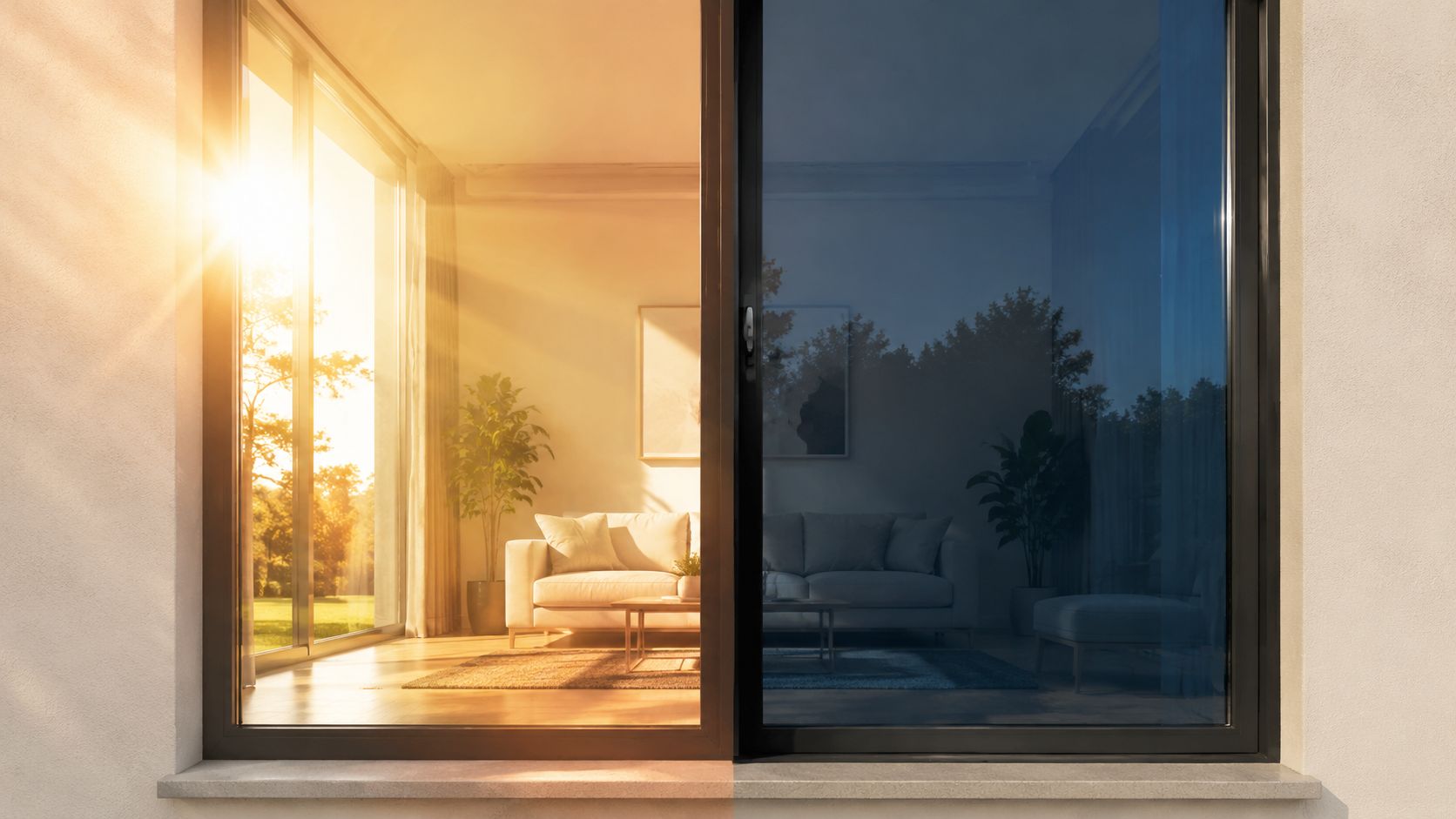
If you live in Woodstock, Kennesaw, or Canton, you already know the feeling. Your car sits outside for a bit, you open the door, and the cabin hits you with that trapped summer heat that makes the steering wheel hard to touch and the first few minutes of driving miserable.
Most drivers start by asking how dark the tint should be. That's understandable, because darkness is what you can see. But the more useful question is what the film does with heat. That's where solar heat gain coefficient, or SHGC, matters.
If you've ever wondered what is Solar Heat Gain Coefficient, the short answer is this: it tells you how much of the sun's heat gets through the glass and into the space behind it. In a house, that means a room. In your vehicle, that means the cabin where you sit, commute, and leave your interior baking in the Georgia sun.
For car owners around North Metro Atlanta, this isn't just a technical rating on a spec sheet. It's the difference between a cabin that cools down faster and one that seems to hold heat all day. Once you understand SHGC, window tint specs stop looking like alphabet soup and start making practical sense.
Introduction
In North Georgia, heat inside a parked vehicle builds fast. You feel it on the seat, the dash, the wheel, and even the air coming back out of the vents when the A/C first kicks on. That discomfort pushes a lot of people to look at tint, but many still choose film based only on appearance.
That's where confusion starts. A tint can look dark and still not be the strongest option for heat control. Another film can look lighter than expected yet do a much better job reducing solar heat entering the glass. The key metric behind that difference is SHGC.
Think of SHGC as a heat-entry rating. It helps answer a simple customer question: “How much of the sun's heat is getting through my windows?” For anyone shopping for car window tint in Woodstock, Kennesaw, or Canton, that answer matters more than looks alone.
A lot of customers hear terms like ceramic, infrared rejection, and heat blocking, but don't get a clean explanation of how they connect. SHGC helps tie those ideas together in one number. Once that number makes sense, it becomes much easier to compare films and choose the right tint for daily driving in Georgia.
Practical rule: If your main complaint is cabin heat, focus on the film's heat-control performance first and its appearance second.
Understanding Solar Heat Gain Coefficient
Solar Heat Gain Coefficient is a standardized fraction from 0 to 1 that measures how much solar radiation enters through a window, door, or skylight as explained by Cardinal's SHGC glossary. For a simple example from that same reference, an SHGC of 0.30 means 30% of available solar heat can pass through, while 0.27 means 27% passes and 73% is blocked.

Think of SHGC as a gatekeeper
The easiest way to understand SHGC is to picture your glass as a gate at the entrance to your vehicle. Sunlight hits the window. The gate then allows some heat through and keeps some out.
A higher SHGC means the gate stays open wider. More solar heat gets in. A lower SHGC means the gate stays tighter. Less solar heat reaches the cabin.
That matters because when people ask whether tint “really reduces heat,” they're usually asking about this gatekeeping function, not just whether the glass looks darker from outside.
What the number means in plain language
SHGC isn't a mystery scale. It runs from 0 to 1, and lower is better when your goal is keeping a vehicle cooler in warm weather.
Here's a simple way to read it:
- Closer to 1 means more solar heat gets through
- Closer to 0 means less solar heat gets through
- A lower SHGC usually means less solar-driven interior heat gain
- A higher SHGC can be useful where people want more passive solar warmth
For a Georgia driver, that last point is the important one. In a hot parking lot or during an afternoon commute, you usually don't want the glass helping solar heat into the cabin.
Lower SHGC means the film and glass combination is doing a better job limiting the sun's heat before it turns your interior into a heat trap.
Where people get mixed up
Many people assume “dark tint equals cool cabin.” Sometimes that's true. Sometimes it isn't. Darkness affects visible light. SHGC deals with solar heat.
That's why two films can look similar from outside but feel very different in use. One may let more heat through even if it appears dark. Another may look relatively clean and still reduce heat more effectively.
So when someone asks, what is solar heat gain coefficient, the practical answer is this: it's one of the clearest ways to judge whether a tint setup is built for comfort, especially in the hot, bright conditions drivers deal with around Canton, Kennesaw, and Woodstock.
SHGC vs Other Window Performance Metrics
Once you start comparing films, the spec sheet gets crowded fast. You'll see terms like SHGC, VLT, U-Factor, and R-Value. They sound related because they all deal with window performance, but they don't measure the same thing.
That's why people sometimes buy a film expecting one result and get another. They looked at the wrong metric.

SHGC measures solar heat
According to Vinyltek's explanation of SHGC, SHGC is a dimensionless value from 0 to 1 that measures how much of the sun's energy striking a window is admitted indoors as heat, including energy transmitted directly and heat absorbed by glazing and later released inward. In practical use, a lower SHGC means lower solar-driven interior heat gain and reduced cooling load.
For automotive tint, that's the number many comfort-focused drivers care about most. It tells you how much solar heat is still making it into the cabin after sunlight hits the glass.
If you want a deeper plain-English look at that everyday question, this guide on whether window tint reduces heat connects the metric to what drivers feel in the seat.
VLT tells you how dark or light the film looks
Visible Light Transmission, usually called VLT, is about visible light, not heat. It answers this question: how much visible light passes through the glass and film?
That's why VLT affects appearance, brightness, and in many cases legal compliance. A lower VLT usually looks darker. A higher VLT usually looks lighter. But VLT doesn't automatically tell you how strong the film is at controlling solar heat.
Customers often get surprised. They expect the darkest-looking film to be the coolest. In reality, film technology matters. A lighter premium film can sometimes manage heat better than a darker basic film.
U-Factor and R-Value belong in the conversation, but not for the same reason
U-Factor is about non-solar heat transfer through a window. Think insulation. It's more about how easily heat moves through the material itself.
R-Value is the flip side in everyday language. It refers to resistance to heat flow. Higher resistance means better insulating performance.
These ratings are more familiar in residential and commercial glazing conversations than in auto tint shopping, but they help explain why not every “heat” number means the same thing.
A simple comparison
| Metric | What it tells you | Why it matters to a car owner |
|---|---|---|
| SHGC | How much solar heat gets through | Helps explain cabin heat from sun exposure |
| VLT | How much visible light gets through | Affects darkness, appearance, and legal limits |
| U-Factor | How easily non-solar heat transfers | More relevant to insulation performance |
| R-Value | Resistance to heat flow | Useful as an insulation concept |
Don't compare films by one number alone. A good tint choice usually balances heat control, visibility, appearance, and legal use.
The common mistake on spec sheets
People often shop by what's easiest to notice. If they care about style, they focus on VLT. If they hear marketing around “heat rejection,” they may latch onto a single claim without asking how the whole glass-and-film setup performs.
A better approach is to read the sheet like a team of measurements. SHGC answers the heat-gain question. VLT answers the light question. U-Factor and R-Value help complete the thermal picture in broader glazing discussions.
For drivers in North Georgia, SHGC and VLT usually do the heavy lifting in the decision. One tells you how the cabin may feel. The other tells you how the tint will look and whether it fits your preferences and legal limits.
How Window Tints Control SHGC
Window tint changes SHGC by changing what happens when sunlight hits the glass. Some of that energy gets transmitted through. Some gets reflected away. Some gets absorbed by the film and glass, then released in different directions.
That's why film construction matters. Two products may both be called “window tint,” but they can handle solar energy very differently.

Dyed, metallic, and ceramic films work differently
Dyed film is often the basic entry point. It can improve appearance, reduce glare, and absorb some solar energy. But in many cases, its strength is more about looks and modest comfort improvement than premium heat management.
Metallic film uses metal content to reflect heat. It can improve solar control, but some drivers avoid it because reflective films can create a different look than they want and may interfere with signals in some vehicles.
Ceramic film is where the conversation usually shifts for people who care most about comfort. These films are engineered for stronger heat control while maintaining a cleaner appearance than older reflective styles.
Why premium films can feel cooler without looking much darker
This is the part that surprises people. The film doesn't have to look almost black to lower heat gain in a meaningful way.
Modern ceramic technology is designed to target solar energy more selectively. In practical terms, that lets a film reduce heat without relying only on visible darkness. So a driver can keep a more open look through the windows and still improve comfort.
That's one reason customers comparing “ceramic tint vs regular tint” often notice the difference most on hot afternoons, stop-and-go traffic, and long commutes home.
The cabin effect matters in vehicles
Cars aren't houses. They have lots of glass, a smaller enclosed space, dark interior materials, and dashboards that soak up heat fast. Once solar energy gets through the glass, interior surfaces warm up and radiate heat back into the cabin.
That means controlling the heat before it enters is a big part of the battle.
If you're comparing film types for that purpose, solar window film options are worth reviewing because they show how the category is built around heat management rather than looks alone.
A film lowers SHGC by reducing the portion of solar energy that makes it through the glass and into the interior as heat.
What installers look at beyond darkness
A good installer won't choose film by shade alone. They'll look at:
- Your driving pattern. Daily commuter, weekend driver, or work truck.
- Where the vehicle sits. Garage kept, driveway parked, or out in open lots.
- Your comfort goal. Cooler cabin, glare reduction, privacy, or a mix.
- Your tolerance for a darker look. Some drivers want maximum visibility with strong heat control.
- Your vehicle electronics. Signal-sensitive vehicles may steer the choice away from certain film types.
Here's a short visual explanation of how film interacts with solar energy and glass in real-world use.
The big takeaway is simple. Window tint doesn't lower SHGC by magic. It does it through material design. Better film construction gives the installer more control over heat gain, appearance, and daily usability.
Choosing the Right Tint for North Georgia
North Georgia drivers don't need a theory lesson when they step into a hot car in July. They need a film choice that matches a climate where cooling matters most for much of the year. For drivers in Woodstock, Kennesaw, and Canton, that usually points toward lower SHGC as a priority.
The reason is straightforward. In a cooling-focused climate, you want glass that lets in less solar heat, not more. For southern cooling-dominated regions, windows with SHGC below 0.27 are identified as especially effective, and windows with SHGC values below 0.40 are generally recommended when air-conditioning is a concern according to Cundall's SHGC overview.

What that means for local drivers
If your vehicle spends time in school pickup lines, grocery store parking lots, office lots, or driveway sun, low SHGC becomes more than a technical preference. It becomes a comfort decision you'll notice every day.
A good local example is the short errand pattern many drivers have around North Metro Atlanta. You park, go inside, come back out, then repeat that cycle throughout the week. The cabin keeps reheating. Tint with stronger solar control helps reduce how aggressively the interior loads up with heat during each stop.
That doesn't mean every driver needs the same film. The right choice depends on how much you value visibility, privacy, heat reduction, and budget. But for this region, the direction is usually clear: if heat is the complaint, don't choose film based on looks alone.
If you're reading labels, know what to scan for
For residential and commercial glazing, people often use NFRC labels to compare performance. In that setting, SHGC is one of the core ratings used to test and label window performance. That same mindset helps when evaluating tint products for vehicles too, even though the product format differs.
What matters is learning to ask the right question:
- How well does this film reduce solar heat gain?
- Does it do that while keeping the appearance I want?
- Will it still work for my daily driving needs in Georgia?
That's a much better buying process than asking only, “How dark can I go?”
Balancing legal appearance and heat performance
A lot of drivers think there's a tradeoff they can't escape. Either the tint is dark enough to block heat, or it's legal and comfortable to see through but weak on performance. In many cases, that's outdated thinking.
Modern ceramic films changed that conversation. They can give you stronger heat management while keeping a lighter, cleaner look than older films that relied more heavily on visible darkness.
That's why low SHGC matters so much in the buying process. It helps separate appearance from thermal performance. A film can stay visually moderate and still be the smarter choice for a Georgia summer commute.
If you want comfort without making the car feel cave-dark, ask about film performance first and shade level second.
Woodstock, Kennesaw, and Canton use cases
Different local drivers tend to prioritize different things.
Woodstock commuters
Many Woodstock drivers spend a lot of time in mixed traffic, errands, and school or work runs. They usually want a film that cuts down cabin heat during repeated stops but still feels easy to live with day to day. A lighter ceramic option often fits that goal well.
Kennesaw daily drivers
Kennesaw traffic and parking exposure can make afternoon heat especially annoying. Drivers here often ask for the sweet spot between visibility and strong solar control. In such situations, SHGC becomes a better guide than appearance alone.
Canton truck and SUV owners
Canton drivers with larger vehicles often have more glass area and higher cabin volume. That can make heat buildup feel more persistent. For these vehicles, premium heat-reducing film is often easier to appreciate because the difference shows up in overall cabin comfort, not just on the side windows.
How to think about cost without chasing the cheapest film
The least expensive film can still improve appearance. It may also reduce some glare. But if your main complaint is heat, low price and low SHGC don't always travel together.
Ceramic tint often costs more because the material is engineered for stronger solar control and a different level of performance. That extra cost isn't just about branding. It's tied to what the film is designed to do.
For drivers who care about heat management first, this breakdown of ceramic tint benefits is useful because it frames the upgrade around real-world comfort rather than just premium positioning.
A simple decision filter
If you're shopping for car tint in North Georgia, this checklist helps:
- Start with heat complaints. If the cabin gets brutally hot, prioritize low SHGC.
- Decide how dark you want the vehicle to look. That's mostly a VLT conversation.
- Ask what film technology you're getting. Dyed, metallic, and ceramic don't perform the same way.
- Think about your parking reality. Full sun exposure changes what you'll notice most.
- Use legality as a boundary, not the whole strategy. Legal tint can still be a strong heat-control solution.
One practical option for local drivers is a professional ceramic film package from a specialty shop such as The Tint Guy, where the product choice can be matched to the vehicle, driving habits, and desired appearance instead of defaulting to a one-size-fits-all shade.
Your Partner for a Cooler Drive
When people ask what is Solar Heat Gain Coefficient, they're usually not trying to become window engineers. They just want to know which tint will make the car feel cooler and more comfortable. SHGC helps answer that because it gives you a direct way to think about solar heat entering the glass.
For drivers in Woodstock, Kennesaw, and Canton, the practical lesson is simple. In a hot, cooling-focused climate, lower SHGC is usually the direction you want to go. That's why premium ceramic tint is such a common recommendation when cabin heat is the main complaint.
The smart choice isn't only about style. It's about making the vehicle easier to live with. Better heat control can make the first minutes of every drive more comfortable, help the interior feel less punishing after parking, and support the A/C instead of forcing it to fight solar gain alone.
A lot of customers also appreciate learning adjacent comfort topics once they start thinking about heat management. For example, RV owners comparing cabin cooling upgrades may find this resource on sizing RV AC units helpful because it shows how comfort depends on matching equipment and heat load, not just installing something stronger.
Good tint selection starts with one honest question: are you buying for looks, or are you buying to control heat?
If your goal is a cooler drive, clearer decision-making beats guesswork every time. Ask about SHGC. Ask how the film handles solar heat. Ask what technology is inside the product. Those questions usually lead you to a much better result than just pointing at the darkest sample on the wall.
If you want help choosing the right film for your vehicle in Woodstock, Kennesaw, or Canton, contact The Tint Guy for a consultation. A professional installer can match your tint to your heat concerns, visibility preferences, and vehicle type so you get a setup that looks right and feels better on the road.