If you're looking at a sun-blasted room in North Georgia and thinking, “I can probably handle this myself,” that's a normal place to start. Homeowners in Woodstock, Kennesaw, and Canton often arrive at the same question when afternoon light turns one side of the house into a hot spot, glare hits every screen, and privacy starts to matter more than it did when you moved in.
Window film can help. The bigger question is whether home window tinting do it yourself is a smart weekend project or a frustrating lesson in trapped dust, crooked cuts, and wasted material. For flat residential glass, DIY can work in the right setting. For automotive glass, the same confidence usually runs into a completely different level of difficulty.
The Allure of DIY Window Tinting in the Georgia Heat
By late afternoon in a North Georgia summer, the problem usually shows itself fast. One upstairs room feels ten degrees hotter than the rest of the house, glare washes out the TV, and the windows on the west side start turning that space into a heat sink. That is the moment many homeowners start looking at film instead of blinds, replacement windows, or heavier treatments.
Residential window film earns that attention for a reason. The U.S. Department of Energy points out that window attachments and treatments can cut unwanted solar heat gain, which is why film often enters the conversation before a full window replacement does (U.S. Department of Energy guidance on window attachments and energy savings). Film can be a smart fix for the right window and the right goal, especially if the main complaint is heat, glare, or daytime privacy rather than a failed window unit.
Some homeowners want to keep natural light and cut glare. Others care more about privacy or reducing the heat load on a bedroom or bonus room that gets hammered every afternoon. If you're comparing approaches, this overview of high-performance window films and drapes is useful because it puts film in the right context. It is one tool, not a cure-all.
Why DIY sounds reasonable at first
For flat residential glass, DIY is a fair question. The surface is usually easier to reach, the film does not have to conform to compound curves, and the consequences of a small flaw are lower than they are on a car you drive every day.
That said, "manageable" and "easy" are not the same thing.
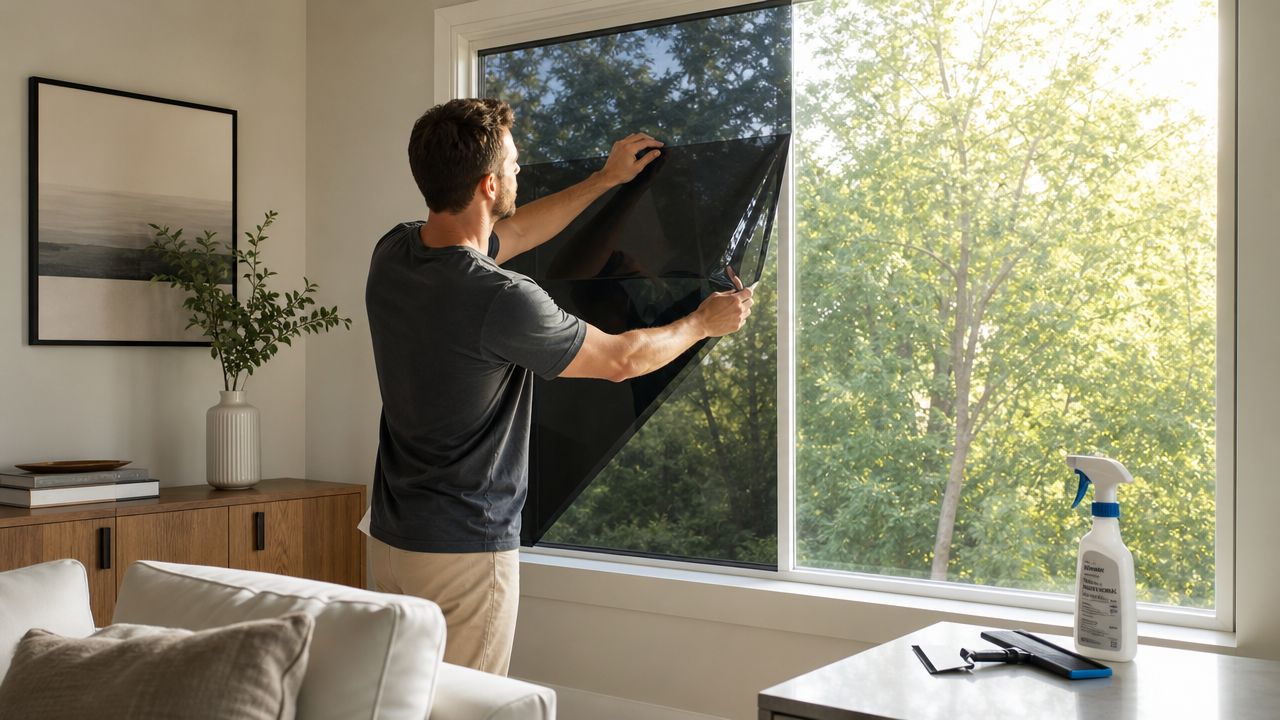
A decent home install still depends on clean glass, accurate trimming, controlled slip solution, and patient squeegee work. Dust, pet hair, dried cleaner residue, and slightly crooked edges show up fast once the sun hits the window. I have seen plenty of homeowners do a respectable job on a laundry room or side window. I have also seen large living room panes end up with fingers, haze, and light gaps that become impossible to ignore.
Practical rule: DIY home film works best on small, flat, low-visibility windows where a minor flaw will not bother you every day. Large panes in bright, main living areas leave much less room for error.
Why homeowners often misread the car comparison
DIY confidence can get expensive. A homeowner gets through one or two house windows and starts thinking the car should be similar. It is not. Automotive glass adds curvature, tighter margins, dot-matrix edges, electronics, seals, and much less forgiveness if contamination gets under the film.
That distinction is important because the same hand skills that produce an acceptable result on house glass often fall short on a vehicle. If you're also considering heat rejection and UV protection for your vehicle, this guide on adding a layer of sun safety with window films gives the right starting point. The comfort goals overlap. The installation standard for a clean automotive finish is much higher, especially if you want a result that looks right, lasts, and does not leave you second-guessing the job every time the sun hits the side glass.
Choosing Your Film and Gathering Supplies
A lot of DIY tint jobs are decided before the liner ever comes off. The film choice has to match the room, the glass, and your tolerance for visible flaws. Homeowners usually get into trouble in one of two places. They buy film based on price alone, or they treat the tool list like an optional add-on.

Pick the film for the result you actually want
Different films solve different problems, and some create side effects people do not expect until the job is finished.
- Reflective film is a practical choice for strong sun exposure and daytime privacy. It can cut glare and solar heat well, but the exterior look is more noticeable and nighttime privacy is limited once lights are on inside.
- Decorative or frosted film works well for bathrooms, sidelights, and entry glass. It is more about privacy and appearance than heat control.
- Security film is thicker and tougher to work with. It is used to help hold shattered glass together, but that extra thickness also makes trimming and edge finishing less forgiving.
- Solar control film in higher-grade lines can improve comfort without the mirror look, but the price climbs fast compared with basic DIY rolls.
The product label matters too. Some store films are made for temporary privacy or appearance, not long-term heat rejection. If you are comparing retail options, this breakdown of home window tint options from Walmart gives a useful look at how big the quality spread can be between rolls that seem similar on the shelf.
Measure glass carefully, then buy extra
Film waste is part of DIY. A bad first cut, a piece that folds onto itself, or one speck trapped in the wrong spot can force a full recut. On larger windows, that gets expensive quickly.
Measure the visible glass, not just the frame opening. Then add enough material for practice cuts and trimming margin. If you are estimating several rooms at once, a simple guide to room sizing for furniture planning can help with the square-foot math before you order.
I tell homeowners to buy with mistakes in mind. One extra roll is cheaper than stopping mid-project with one window left and no matching film available.
Gather tools that give you control
The supply list is not complicated, but every item has a job. Skipping one usually shows up on the glass.
A solid DIY kit includes:
- Window film, with extra material for errors
- Spray bottle for your slip solution
- Squeegee or hard card to remove water and air pockets
- Sharp utility knife with fresh blades
- Microfiber cloths that do not shed lint
- Straightedge and tape measure for cleaner cuts
- Glass scraper, only if the glass surface allows it
- Lint-free paper towels or detailing towels for edge cleanup
- Bright side lighting so you can see dust, gaps, and fingers before they dry in place
Fresh blades matter more than many DIYers expect. A dull blade drags, snags the edge, and leaves cuts that look ragged once sunlight hits them.
Tool cost changes the math
The roll of film is only part of the budget. Spray bottles, blades, squeegees, trimming tools, and extra material for mistakes can narrow the savings fast. The tougher the film, the less room you have to improvise with cheap tools.
That cost gap is one reason home and automotive tint should not be lumped together. If a homeowner struggles to get clean edges on flat residential glass with full access and plenty of working room, automotive film on curved glass is a different standard altogether. On a car, the tolerances are tighter, the visibility is harsher, and a small mistake follows you every time you drive. In North Atlanta, vehicle tint is one of those jobs where professional installation usually saves money, frustration, and a redo later.
Your Step-by-Step Guide to Applying Window Film
Saturday afternoon looks like the right time to tackle a window. The glass is accessible, the kit is open, and the film seems forgiving until the backing comes off and every speck in the room suddenly matters. That is the point where DIY tinting stops being a product purchase and becomes an installation job.

Surface prep decides everything
Clean glass is rarely clean enough on the first pass. Film shows residue that plain glass hides, especially along the edges and lower corners where dust, paint particles, and old cleaner buildup collect. If that contamination stays on the window, it gets trapped under the film and shows up as bubbles, lift points, or small raised defects, a problem noted in Tint City DIY home window tinting guide.
The order matters here. Clean the frame and gasket area first so you are not pulling debris back onto the wet glass later. Then clean the pane itself, wipe it dry, and inspect it from more than one angle. Side light will expose lint and streaking that front-facing light misses.
On a house window, you at least have room to work. That is one reason homeowners are often surprised by how demanding automotive tint is. If dust control and edge prep are difficult on flat residential glass, curved auto glass with tighter seals leaves even less margin.
Cut with margin, then trim with control
Start with the film slightly oversized. That gives you room to position it cleanly before making final cuts. Pre-cutting to the exact finished size sounds efficient, but it often leaves a short corner or an uneven gap that catches the eye every time sunlight hits the glass.
Wet the glass, wet the adhesive side, and place the film from the top down. Keep the liner management clean so the adhesive does not brush against dirty hands, trim, or the floor on the way in.
For final trimming, use a fresh blade and leave a narrow, consistent gap around the perimeter so the film is not forced into the frame. 3M's installation guidance for flat glass film shows the same basic principle professionals follow. Controlled edge spacing and careful trimming prevent bunching and reduce the chance of corners lifting later.
Homeowners usually focus on the center of the pane. Installers look at the edge first, because that is where a DIY job gives itself away.
Squeegee pressure matters more than people think
Once the film is sitting where it belongs, lock the center first and work outward in overlapping passes. The goal is to move water and air out evenly without dragging the film out of alignment.
Too little pressure leaves moisture pockets behind. Too much pressure, especially near a dry edge, can crease the film or shift the line you just trimmed. I tell people to watch the water line as they squeegee. If it is not moving decisively toward the edge, the pass is too light. If the film starts stretching or bunching, back off.
This demonstration helps if you want to see the hand motion and pacing before trying it yourself:
Let it cure before judging the result
Freshly installed film often looks worse before it looks better. A little haze or small water pockets can be part of the normal drying process, especially on thicker residential films. Solar Gard's care guidance advises giving the film time to dry and avoiding disturbance during the curing period.
Leave it alone while it sets. Pressing on the film, cleaning it too soon, or moving operable windows before the adhesive has settled can turn a decent install into an edge-lift problem.
That waiting period teaches an honest lesson about tinting. Residential film gives you some forgiveness because the glass is flatter and access is better. Car tint does not. On a vehicle, the same small trimming error, contamination speck, or pressure mistake sits at eye level every day, which is why North Atlanta drivers usually get better results and fewer headaches by having automotive tint installed professionally.
Troubleshooting Common DIY Tinting Mistakes
A DIY tint job rarely fails in dramatic fashion. It usually fails in familiar, smaller ways that stay visible every time light hits the glass. Once that happens, the question becomes whether the problem will cure out or whether the film needs to come off and be redone.

Bubbles that stay and bubbles that don't
Some moisture pockets can lessen during curing. Actual contamination bubbles won't. If a speck of dust, lint, or grit is under the film, the film forms a permanent tent over it.
That difference matters because people often keep pressing on contamination bubbles, hoping they'll flatten. They won't. Pressing harder usually just distorts the area around the defect.
If the bubble has a visible center point, it's usually contamination. If it looks like a soft pocket of moisture, it may settle during cure.
Edge lift, fingers, and curling corners
Edges fail for predictable reasons. The glass edge wasn't fully cleaned. The film was trimmed poorly. The installer left too much moisture near the border. On operable windows, those weak edges get exposed every time the sash moves.
Common edge-related problems include:
- Fingers that look like narrow ridges reaching inward from the side
- Lifted corners where the film never bonded properly
- Uneven reveal lines that make the job look amateur even if the center is acceptable
These issues are especially frustrating because they draw the eye immediately. On large front-facing windows, the edge line is what is often noticed first from both inside and outside.
Creases and knife damage
A crease is often permanent. Once film folds onto itself or gets sharply bent during handling, the mark usually remains visible after installation. That's one reason larger pieces become much harder for first-time installers. The film doesn't have to be dropped to be damaged. One awkward repositioning can do it.
Knife mistakes are worse because they can damage more than the film. A rushed trim can score a gasket, mark the frame, or leave ragged edges that never look clean.
Here's the hard truth. A lot of DIY errors are technically fixable only by removing the film and starting over. That's why hidden costs matter more than the advertised price of a single roll.
The True Cost of DIY vs Professional Window Tinting
Saturday starts with a $90 roll of film and a basic tool kit. By Sunday afternoon, one pane is done, another has dust under the film, and a third piece is in the trash because it creased during positioning. That is usually where the actual cost shows up. Not in the box price, but in the redo.
Homeowners often start by comparing material prices. Fair enough. The better comparison is total out-of-pocket cost, time, and how much imperfection you can tolerate on glass you look through every day.
DIY can save money on a small, low-visibility window if the glass is simple and the first install goes well. The math changes on larger panes, decorative glass, or rooms where every edge line is easy to see. Basic installation guidance from Lowe's also makes clear that tools, careful prep, trimming, and the chance of wasting film all affect the final cost, especially on bigger windows or awkward layouts (Lowe's window film installation guidance).
| Factor | DIY Project | Professional Installation |
|---|---|---|
| Upfront material cost | Lower at purchase | Higher because labor and setup are included |
| Tool purchases | Often separate | Included |
| Risk of wasted film | Higher on first attempts | Lower with experienced handling and cutting |
| Finish quality | Varies with prep, trimming, and patience | More consistent across the whole pane |
| Time required | You handle measuring, prep, install, cleanup, and rework | The crew handles the full job |
| Warranty coverage | Limited product coverage, little to no install protection | Often includes workmanship coverage |
| Stress | You own every mistake | The installer owns the result |
There is also a hidden cost that DIY articles tend to soften. Your time has value. If a first attempt takes half a day, a second attempt takes another roll, and the final result still has a few flaws, the "savings" start looking thin.
That trade-off matters even more if you're also considering tint for a vehicle. House glass gives you flat, stationary surfaces and room to work. Car glass does not. Tight edges, curved rear windows, heat shrinking, and Georgia tint law leave far less margin for error. If you want a clean result without trial and error, working with a professional window tinting team near you is usually the lower-risk call.
A simple test helps make the decision. If one speck, one uneven edge, or one corner that starts to peel would bother you every time the sun hits it, paying for skilled installation is often the cheaper choice in the long run.
Why Your Car Deserves a Professional Tint in North Atlanta
Saturday afternoon in North Atlanta usually starts the same way. The car is parked in the driveway, the glass is hot, a DIY kit looks manageable, and the first door window gives you a little confidence. Then you get to the rear glass, the film starts creasing, one edge won't sit down cleanly, and the job turns from a money-saver into a redo.

Automotive tint is a different trade
House windows give you room to work. Car windows take that room away. You are dealing with tighter seals, more delicate trim, shrinking film on curved glass, and cuts that have to look clean from both inside and outside the vehicle.
Rear windows are where DIY jobs usually show their limits. Defroster lines catch contamination. Curved glass forces the installer to shape the film correctly before it ever goes inside the car. Tight interiors make basic positioning harder than homeowners expect, especially on sedans, coupes, and newer SUVs with steep rear glass. I have seen plenty of people handle a flat residential pane reasonably well and still struggle badly on a vehicle back window.
Then there is the finish. On a car, small flaws stay in your line of sight every day. A rough edge, trapped speck, light gap, or peeling corner is hard to ignore when it is six inches from your shoulder.
Legal compliance and finish quality both matter
Georgia drivers also have to think about more than appearance. Film choice affects visibility, comfort, and whether the car stays within state tint rules. A professional installer is not guessing through that decision. The job includes matching the right film to the vehicle, the driver's priorities, and the legal limit.
Local experience matters here. North Atlanta heat puts real demand on window film, and different vehicles respond differently during installation. Shops that tint cars in Woodstock, Kennesaw, and Canton every week know what tends to work well on daily drivers, trucks, SUVs, and enthusiast vehicles because they see those results over time, not just on install day.
If you are comparing options, this guide to professional window tinting services near you is a practical place to start.
Residential DIY can be a useful project. Automotive tint is precision work with less margin for error.
For a vehicle, you are paying for more than film. You are paying for clean prep, accurate patterning, proper shrinking, careful interior handling, legal shade guidance, and warranty support if something goes wrong later. That is why professional automotive tinting usually gives North Atlanta drivers better results and fewer regrets than a DIY attempt.