You walk out of a store in Woodstock, Kennesaw, or Canton, open your car door, and get hit with that blast of trapped heat that makes the steering wheel untouchable and the seat feel like it's been sitting under a broiler. The air conditioner starts working hard before you've even backed out of the parking spot, and for the first several minutes of the drive, it still feels like the cabin is fighting the sun.
That's the moment many start looking into IR blocking window film.
The problem is that the tint market in North Georgia is full of big promises, vague “heat rejection” claims, and spec sheets that don't explain the true meaning of the numbers. A film can sound impressive on paper and still leave you disappointed if you expected one metric to tell the whole story. The biggest source of confusion is the difference between infrared rejection and total heat rejection, and that's where smart buyers usually separate good tint from expensive marketing.
Why Your Car Feels Like an Oven in the Georgia Sun
A parked car in the Georgia sun doesn't just get warm. It stores heat in the glass, the dash, the seats, the center console, and every dark surface inside the cabin. When you climb in after lunch or after work, you're not dealing with one hot object. You're surrounded by surfaces that have been soaking up solar energy for hours.
That's why the cabin can still feel brutal even after the A/C kicks on.

What North Georgia drivers deal with every summer
In Woodstock and Canton, a lot of daily driving means a mix of school pickup lines, shopping center parking lots, and commuter stops where the car sits exposed. In Kennesaw, the same issue shows up during workday parking and long stretches of stop-and-go traffic where the sun stays on one side of the vehicle the whole time.
The result is familiar:
- Painful touch points. Steering wheels, buckles, and leather seats get uncomfortable fast.
- Slow comfort recovery. The A/C cools the air, but the cabin materials keep radiating heat back at you.
- Passenger complaints. Kids in the rear seat feel the sun through the side glass long before they understand why.
Practical rule: If the cabin feels hot even when the air coming from the vents is cold, solar load through the glass is usually part of the problem.
Why tint matters more than darkness alone
A lot of drivers still think darker tint automatically means better heat control. That isn't how premium film works. Modern IR blocking window film is designed to target the heat-carrying part of sunlight without forcing you into the darkest possible shade.
That matters in Georgia, where legal compliance and usable visibility both count. The best automotive films aren't just about making the car look sharper. They're about making the cabin more livable when the vehicle sits in direct sun, then making your first ten minutes of driving a lot less miserable.
Understanding Infrared Light and How Film Blocks It
A car can have dark glass and still feel hot. It can also have a lighter shade and stay noticeably more comfortable. The difference usually comes down to what the film is blocking, not how dark it looks.

The part of sunlight you feel
For window film, sunlight is usually broken into three bands.
UV damages skin and interior materials.
Visible light affects brightness and how dark the tint appears.
Infrared light carries a large share of the radiant heat you feel through the glass.
That last point is where a lot of tint marketing gets sloppy. “IR blocking” sounds simple, but it does not tell you the full heat story by itself.
What IR-blocking film is actually doing
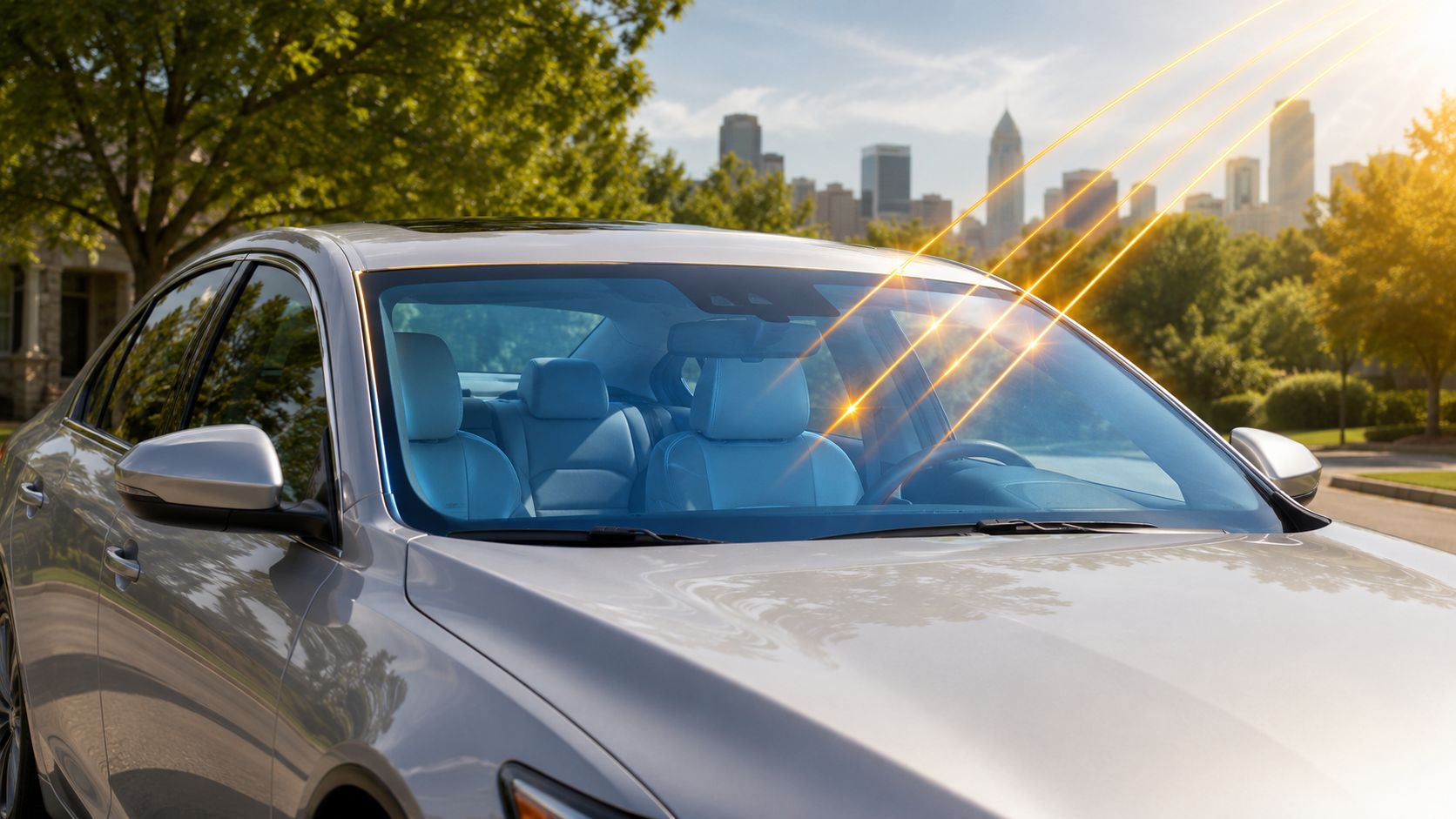
Premium film is built to reduce how much infrared energy passes through the glass. In real terms, that means less heat beating on your arm through the side window, less heat soaking into the seats and dash, and less strain on the A/C during the first part of the drive.
The better ceramic and nano-ceramic films do this with non-metallic construction. That matters because older metallic films could create trade-offs with electronics and signal performance. Modern premium films are chosen in part because they improve heat control without creating those common headaches.
From the installer side, this is also why two films with the same shade can perform very differently. Visible light transmission tells you how light or dark the film looks. It does not tell you how well the film handles solar heat.
Why IR rejection claims can be misleading
This is the part many car owners never get explained clearly.
A film can post a very high infrared rejection number and still deliver only modest real-world heat reduction if that claim is based on a narrow slice of the infrared spectrum or on lab conditions that do not reflect the whole solar load hitting the car. That does not make the spec fake. It means the number is incomplete.
The more useful question is broader: how much total solar energy does the film reject once you account for infrared, visible light, and ultraviolet together? That is why IR rejection should be read alongside TSER, not by itself.
Good film reduces solar energy entering the cabin. It does not simply make the glass darker.
What it does not do
IR-blocking film lowers solar gain. It does not turn the cabin into a refrigerator.
If the car has been sealed in a hot parking lot for hours, the interior will still be hot when you open the door. The practical difference is that quality film slows how aggressively the sun loads the cabin through the glass and makes the vehicle recover faster once the A/C is running. In Georgia sun, that difference is easy to feel.
The Real Benefits Beyond Just Heat Reduction
A black interior parked in Georgia sun can feel punishing before you even touch the wheel. Good film helps with that, but the value of a premium install shows up in more places than cabin temperature alone.
Interior protection matters every day
Sun exposure ages a vehicle from the inside out. Dashboards dry out, leather loses oils, plastic trim fades, and screens spend years baking behind the glass. The Skin Cancer Foundation notes that window film can block up to 99% of UV radiation, which is why UV rejection matters for the car as much as it does for the people in it.
That benefit is easy to underestimate because it happens slowly. Owners usually notice it later, when one door panel looks chalky, the top of the rear seat has faded, or the dash starts showing heat wear earlier than it should.
Comfort improves in ways buyers actually notice
The first thing drivers feel is less radiant heat on the skin. Your arm and face do not get blasted through the side glass the same way during a long afternoon drive. That is a different kind of comfort than a sales sheet claiming high IR rejection in a lab.
This is also where buyers need realistic expectations. A quality film can reduce how aggressively the cabin heats up and help the A/C pull the interior down faster once you start driving, but it will not keep a sealed car cold after hours in an open lot. In practice, premium film makes the cabin less harsh, shortens the recovery time, and keeps the sun from beating on passengers through the glass the whole trip.
Lower solar load helps the vehicle work less
Reducing solar energy through the glass also reduces how hard the climate system has to fight. The U.S. Department of Energy explains that efficient window films reduce heat gain and improve comfort, which is the same basic principle at work in a vehicle cabin, even though the installation and glass are different. See the DOE overview of energy efficient window attachments.
For gas vehicles, that can mean the A/C cycles less aggressively in traffic. For EVs, it can mean less battery energy spent on cabin cooling in hot weather. It is not magic. It is load reduction.
Glare and day-to-day usability count too
Drivers often shop for heat rejection and end up appreciating glare control just as much. Bright late-day sun is less fatiguing with a well-chosen film, especially on side glass. Rear passengers notice the difference too, particularly in SUVs and trucks with larger glass areas.
Film choice still matters here. Some owners comparing nano carbon tint options are mainly focused on appearance and glare, while others want the best heat management they can get from a premium ceramic product. Those are different buying priorities, and the right answer depends on how the vehicle is used.
A good tint job earns its keep in three places. When you first open the door, while you are driving, and years later when the interior still looks like it has been cared for.
Ceramic vs Nano Ceramic A Comparison of Film Technologies
A lot of film gets sold under the word "ceramic," and that is where buyers get tripped up. In practice, there is a real difference between carbon film, conventional ceramic film, and the better nano ceramic lines, especially if heat control is the reason you are tinting the car.
Metalized films were the old answer for heat rejection. They still have a place on some budgets, but signal interference is a real drawback in modern vehicles with phones, GPS, satellite radio, and driver-assistance tech. Carbon films avoid that problem and usually give a nicer, non-faded look than entry-level dyed film. If you want a clearer sense of where nano carbon tint fits in the lineup, it helps to treat it as a solid mid-tier option rather than a substitute for premium ceramic.
Premium ceramic and nano ceramic films are built for owners who care about cabin comfort, electronics compatibility, and long-term stability. The important distinction is not the label by itself. It is how the film performs on the glass, how clear it stays, and whether the specs reflect real solar control instead of one isolated infrared claim.
IR Blocking Film Technology Comparison
| Film Type | Heat-Control Profile | Signal Interference | Durability | Cost |
|---|---|---|---|---|
| Metalized film | Can reduce heat, but performance depends heavily on product and shade | Possible | Varies by product | Lower |
| Carbon film | Better comfort and glare control than basic dyed films, but usually below premium ceramic for full heat management | No metal-related interference | Varies by product | Mid-range |
| Ceramic film | Strong overall solar control with good clarity and electronics compatibility | Minimal to none | Long-lasting | Premium |
| Nano-ceramic and dedicated IR-focused film | Top-tier performance in many product lines, especially for owners trying to cut cabin heat without going very dark | Maintains signal compatibility for electronic devices | Long-lasting, depending on brand and installation quality | Highest |
What usually works best for Georgia drivers
For Georgia vehicles that sit outside, I usually steer serious heat-control buyers toward better ceramic lines first, then narrow it down by shade, glass type, and budget. A lighter premium film can outperform a darker cheaper film where comfort is concerned, which surprises a lot of people.
That is also why category names alone are not enough.
Ask what the film is made of, whether it contains metal, how it will affect signals, and what the shop can show you for total solar performance. A premium nano ceramic film often earns its higher price, but only if the product data is honest and the installation is clean. Buyers who focus only on a headline IR number often miss the bigger picture. The next step is reading the spec sheet the right way.
Reading the Specs TSER vs IR Rejection Claims
Most window tint marketing often goes sideways under these conditions.
A shop may advertise a film with an eye-catching IR rejection number, and the number might be technically true under a specific test. That still doesn't tell you the full story about how much overall solar heat the car will reject once the film is on the glass.

Why the headline number can mislead buyers
Infrared radiation is a major source of solar heat gain, but the more complete metric for heat control is TSER, or Total Solar Energy Rejected. The industry also uses SHGC. If you want a better understanding of that side of the equation, this breakdown of solar heat gain coefficient is worth reading.
The key point is this: IR rejection tells you how much infrared is blocked. TSER tells you how much total solar energy is rejected across UV, visible light, and infrared.
Those aren't the same thing.
The number that matters for real-world comfort
According to window film guidance on infrared radiation and TSER, top-tier films may claim 96% IR heat rejection, but actual real-world heat reduction benefit measured by TSER is often around 70%. The same source explains that modern window films typically fall in the 91% to 93% range for infrared rejection, depending on shade and glass type.
That doesn't mean IR numbers are useless. They matter because infrared is the part of sunlight people feel strongly as heat. It does mean you shouldn't buy film based on one oversized claim printed in bold on a brochure.
How to read a spec sheet like a smart buyer
When comparing automotive films, use this filter:
- Look for TSER first. That gives you a broader picture of overall heat rejection.
- Use IR rejection as supporting information. It helps explain comfort, but it isn't the whole result.
- Check visible light transmission. A lighter film can still perform well if the technology is strong.
- Ask how the film was tested. Narrow-band IR claims can sound bigger than full-spectrum performance.
A film with a huge IR claim and vague total solar data is a marketing product first and a decision tool second.
This is the part most competitors skip because it complicates the sale. But for a car owner spending real money on premium tint in Woodstock, Kennesaw, or Canton, this is exactly the information that keeps you from paying top dollar for a spec sheet that only looks impressive.
Georgia Tint Laws and Finding a Trusted Installer
You park outside for a couple of hours, come back to a cabin that feels baked, and decide darker tint must be the answer. In Georgia, that quick decision is where people get into trouble. Shade, heat control, and legal compliance overlap, but they are not the same thing.

The Georgia rules that matter most
Start with the law before you choose a shade. This Georgia legal tint limits guide is a good reference point, especially if you are comparing options for a sedan versus an SUV or truck.
The practical rule is simple. Front side windows have to stay within Georgia limits, and the rest of the allowance depends on the vehicle type. Sedans are more restricted across all side and rear glass. SUVs, trucks, and vans usually have more flexibility on the rear half of the vehicle.
Reflectivity matters too. A film can look clean and still perform well without pushing into a mirrored appearance that attracts attention for the wrong reasons. Some color choices can also create compliance problems. Red, amber, metallic, and mirrored films are identified as non-compliant in this overview of Georgia tint restrictions.
Drivers with qualifying medical needs may be able to use a darker film through a physician-supported exemption filed with the state, as explained in this summary of Georgia medical tint exemptions.
What to look for in Woodstock, Kennesaw, and Canton
A good shop does more than ask how dark you want the glass. They should ask where the vehicle spends its day, whether glare or cabin heat is the bigger complaint, and what level of visibility you want at night. That conversation matters because a legal, lighter ceramic film can make more sense than a darker, cheaper film with a flashy IR claim and average real heat performance.
I would also pay attention to how the shop explains the numbers. If they only sell you on infrared rejection and avoid discussing overall solar performance, that is a red flag. Georgia drivers need realistic expectations. The best result is usually a film that stays legal, keeps the cabin more comfortable, and does not create visibility issues after sunset.
Here is what separates a reliable installer from a volume shop:
- A controlled install environment. Dust and contamination show up fast on large side glass and back windows.
- Clear product explanations. You should hear what the film is, how it performs, and where it sits in the lineup.
- Experience with premium ceramic films. Better films are less forgiving of sloppy prep and poor shrinking technique.
- Confidence on legal fitment. The installer should know what works on your vehicle type without guessing.
- A warranty you can use. Ask who handles defects, how claims work, and whether labor is covered.
This short video is useful if you're trying to match product choice with legal compliance before booking an install.
The installer worth hiring is usually the one who explains the trade-offs clearly, keeps you legal, and does not hide behind oversized IR numbers.
Frequently Asked Questions About Window Film
Is ceramic tint the same as regular tint
No. Regular tint can improve appearance and add some shade, but it often doesn't deliver the same level of heat control as a premium ceramic or nano-ceramic film. If your priority is cabin comfort in Georgia sun, the material technology matters more than the darkness alone.
Does IR blocking film also block UV
Yes, but those are different benefits. Infrared control is mainly about reducing the feeling of heat. UV control is about protecting skin and slowing interior fading and cracking. Buyers often mix those together, but they solve different problems.
If a film says it blocks very high IR, is that enough to choose it
Not by itself. High IR rejection can sound impressive, but it doesn't replace TSER as the better indicator of overall heat rejection. If a spec sheet pushes a huge IR number and avoids discussing total solar performance, ask more questions before you buy.
Can I get strong heat reduction without going very dark
Usually, yes. That's one of the biggest advantages of advanced ceramic and IR-focused film. A lighter, legal shade can still deliver meaningful comfort if the film technology is strong. That's often the right answer for drivers who want a clean look without sacrificing visibility.
Is professional installation worth it for premium film
Yes. Premium film is expensive enough that a bad install turns into a frustrating waste fast. Clean edges, accurate shrink work, proper curing, and legal shade selection all matter. The best film in the world won't perform or look right if the installation is sloppy.
If you're comparing options for car window tint in Woodstock, Kennesaw, or Canton, The Tint Guy is a strong place to start. They focus on automotive tinting, understand Georgia legal limits, and help drivers choose premium film based on real goals like heat reduction, UV protection, glare control, interior preservation, and long-term value instead of generic sales talk.