You hear it before you process it. A sharp smack on the windshield somewhere between an on-ramp and the next exit, usually when traffic is moving fast enough that you can't even spot what hit you. Then your eyes go straight to the glass, looking for the white star, the crescent chip, or the crack starting to crawl.
That moment is why so many drivers in North Metro Atlanta start looking into paint protection film on windshield surfaces in the first place. The roads around Woodstock, Kennesaw, and Canton give you plenty of chances to catch loose gravel, construction debris, and truck-thrown road junk. If you drive I-75, I-575, Highway 92, or spend time behind work trucks, the risk feels very real because it is.
It often starts with one simple question. Is windshield film worth it, or is it just another upsell? The honest answer is that it can be a smart product, but only if you understand what it is, what it isn't, and where the trade-offs show up in daily driving. On a windshield, protection, clarity, lifespan, and install quality all matter at the same time. If one is off, the whole experience suffers.
That Heart-Stopping Smack on the Highway
If you commute from Canton into Cobb, or cut through Kennesaw toward Atlanta, you've probably had it happen. A dump truck changes lanes. A lifted pickup kicks something up. You hear that hard impact on the windshield and immediately wonder whether you're looking at a harmless mark or the start of a replacement job.
That anxiety isn't just about the chip itself. It's about timing, inconvenience, and whether the glass you have now is the glass you want to keep. A lot of owners would rather preserve the original windshield as long as possible than deal with damage after the fact.
For drivers around Woodstock, this usually becomes a practical conversation, not a cosmetic one. The windshield is your main field of view. It also takes constant abuse from speed, weather, wipers, and debris. Once the glass gets chipped or pitted enough, every sunrise and every night drive reminds you.
Why drivers start looking for a sacrificial layer
The appeal of a protective film is simple. Instead of letting the outer glass take every hit directly, you add a purpose-built layer designed to take abuse first. That makes sense for people who:
- Drive a lot of highway miles between Woodstock, Kennesaw, and Canton
- Follow commercial traffic often, especially on construction-heavy routes
- Own vehicles with camera systems in the windshield area
- Care about preserving factory glass rather than waiting for the first bad strike
A windshield chip rarely feels expensive when it happens. It feels expensive later, when it spreads.
That's why this product keeps coming up in enthusiast and installer conversations. It promises protection, but the key question is whether that protection comes with compromises you'll notice every day. On a hood or bumper, a minor optical issue may be acceptable. On a windshield, it isn't.
What Exactly Is Windshield Protection Film
Windshield protection film is best understood as a glass-specific impact film, not standard paint protection film and not ordinary glass treatment. The easiest analogy is a screen protector for a phone, except engineered for exterior automotive glass, road impact, and constant exposure to weather and wiper use.
It sits on the outside of the windshield and is designed to absorb and disperse impact from road debris. One manufacturer states that windshield protection film can make a windshield 6 times less likely to break while also blocking 99.9% of harmful UV rays in its windshield protection film overview.

Why it isn't regular PPF
A lot of owners get tripped up on this point. They hear “paint protection film on windshield” and assume it's the same material used on painted panels. It isn't.
Neutral manufacturer guidance says standard PPF should not be used on windshields because it can create visible haze and is softer, which makes it more prone to abrasion from wiper action. Purpose-built windshield films are engineered for glass and prioritize optical clarity and impact resistance, as explained in this comparison of PPF vs windshield protection film.
That distinction matters. Paint film is great on painted surfaces because it's built around paint protection needs. Windshield film has to perform in a much more demanding visual environment. You're not glancing at it. You're looking through it every second you drive.
What the material is trying to do
Most quality windshield films use optically clear urethane-based construction meant to flex under impact rather than let the full force transfer straight into the glass. The basic idea is simple:
- Take the first hit so the glass doesn't have to
- Reduce chip and pitting formation from repeated road wear
- Hold shattered glass together better in an accident scenario
- Limit UV exposure passing through the windshield surface
If you want a deeper installer-focused explanation of how these systems are used against debris damage, this guide to windshield protection from rocks is a useful next read.
Practical rule: If a shop talks about windshield film like it's the same product they put on a hood, ask more questions.
A proper windshield product is a specialized category. That's the first thing to understand before you decide whether it belongs on your vehicle.
Weighing the Pros and Cons for Your Vehicle
This decision gets clearer when you stop treating it like a yes-or-no accessory question. It's really a trade. You're adding a sacrificial layer to protect a very expensive, very important piece of glass, and in return you accept maintenance, eventual replacement, and the possibility of minor visual compromise.
For some drivers, that trade makes complete sense. For others, it won't.
Where windshield film earns its keep
The biggest upside is preserving the windshield you already have. That matters even more on newer vehicles where the windshield ties into cameras, sensors, and overall fitment expectations. The film is there to take abuse first, especially from the everyday impacts that don't look dramatic but add up over time.
Practical benefits include:
- Rock chip defense: The film is built to absorb strikes from gravel and similar debris before they mark the glass directly.
- Glass preservation: It can help reduce pitting, which is one of the most annoying forms of windshield wear because it slowly ruins visibility.
- UV blocking: Some windshield-specific products also help cut UV exposure reaching the interior.
- Added safety behavior: Some products are positioned to help hold shattered glass together in an accident.
Where the trade-offs show up
This is the part many sales pages rush past. Windshield film is not a forever layer, and it is not invisible in every condition.
You also can't shortcut this by using standard paint film. As covered in the earlier section, guidance from a manufacturer comparison says ordinary PPF shouldn't be used on windshields because it can haze and abrade more easily under wiper use.
Here's the simplest side-by-side view.
Windshield Protection Options Compared
| Feature | Windshield Protection Film | Ceramic Coating (Glass) | No Protection |
|---|---|---|---|
| Primary job | Impact absorption and sacrificial protection | Water behavior and easier cleaning | None |
| Rock chip resistance | Yes, this is the main reason to install it | No meaningful impact barrier | None |
| Optical trade-off | Possible, depends on film and install quality | Usually minimal | None from added product |
| Wear over time | Yes, it's a consumable layer | Yes, but in a different way | Glass takes all wear directly |
| Wiper interaction | Important, because the film surface sees constant contact | Important for coating longevity | Wipers contact bare glass |
| Replacement planning | Required eventually | Reapplication may be needed | Windshield repair or replacement happens only after damage |
For some owners, the choice sits between windshield film and doing nothing. For others, it sits between windshield film and a simpler glass coating that improves cleaning and hydrophobics but doesn't offer impact protection.
If you're already weighing broader film decisions on the vehicle, this paint protection film pros and cons guide helps frame the maintenance side of film ownership.
If your main concern is impact from road debris, ceramic coating on glass won't do the same job. It's a different tool.
Clarity Safety and ADAS Camera Compatibility
A rock-chip barrier only makes sense if the windshield still feels right from the driver's seat. That is where windshield film gets more complicated than standard PPF. On paint, a small texture issue is cosmetic. On a windshield, the same issue sits in your field of view every mile.

Enthusiast reports note that even premium windshield protection films may show glue lines, light haze, or other clarity limitations in real use, according to this owner discussion about real-world windshield film clarity. That matches what experienced installers see in the bay and what picky owners notice on the road. High-end film can look very good, but it rarely disappears completely under every lighting condition.
What optical clarity really means in use
Windshields expose every compromise. Early morning sun, oncoming headlights, rain at night, and the sweep of the wipers all make minor flaws easier to spot.
The usual complaints are familiar:
- Light haze in bright sun or low-angle light
- Subtle distortion if the film was stretched or laid unevenly
- Visible edges, especially near the perimeter or if you know where to look
- Surface wear over time from dirty blades, dry wiping, or road grit
That does not automatically mean the film or the installer failed. It means the standard is much higher here than anywhere else on the car.
Thickness, protection, and what you actually see
Manufacturers offer windshield films in different thicknesses because they are balancing impact absorption against optical cleanliness. Thicker material generally gives the glass more sacrificial protection, but every added layer has to stay clear enough for daily driving. That trade-off matters more on a commuter that sees dawn and night driving than on a weekend car that rarely leaves the garage.
Lifespan ties into that same balancing act. As the surface takes wiper contact and road wear, clarity can change before the film is physically failing, which is why owners should understand how long windshield protection film typically lasts in real use before they commit.
The right question is not whether the film protects the glass. It is whether the level of protection justifies the optical compromise for the way you drive.
ADAS and camera concerns
ADAS adds another layer of scrutiny. Lane assist cameras, rain sensors, forward collision systems, and other windshield-mounted hardware depend on a clean, consistent view through the glass. A windshield film made for automotive use can work on these vehicles, but the install has to be precise around the camera and sensor zones.
In practice, I would ask fewer marketing questions and more shop-floor questions:
- How many ADAS-equipped vehicles like mine have you done with windshield film?
- Do you pattern and position the film to keep the camera area clean and distortion-free?
- What do you do if the owner notices glare, edge visibility, or a visual defect in the sightline?
Good shops answer directly. They will also tell you that some owners are more sensitive to windshield changes than others. That honesty matters, because safety systems and driver comfort depend on what you see through the finished glass.
Installation Cost and Expected Lifespan
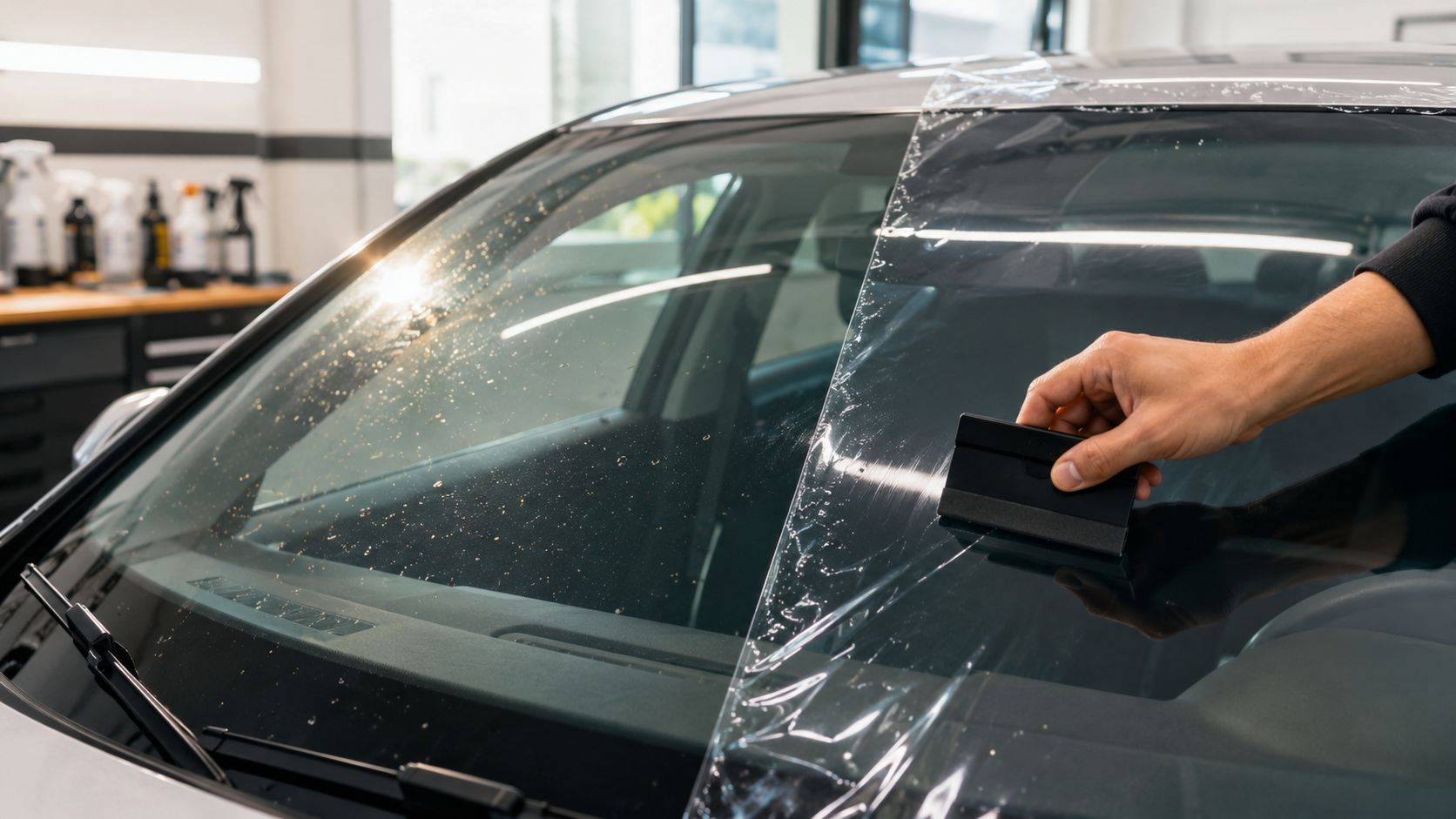
Windshield film is not a DIY-friendly product. The install is too sensitive, the viewing area is too important, and contamination that looks tiny in the bay can look huge from the driver's seat.

One independent industry discussion explicitly calls windshield protection film “temporary,” and installer-facing content shows that installation depends on careful squeegeeing, edge handling, and contamination control in this industry discussion of windshield film installation and service life. That's the right mindset. This is a sacrificial product, not a permanent modification.
Why installation quality changes everything
A hood or fender can hide a little dust nib or a slightly imperfect edge better than a windshield can. On a windshield, flaws show up in your line of sight and in changing light.
A quality installation depends on:
- Clean glass preparation: Any contamination left behind has nowhere to hide.
- Controlled handling: The film can't be rushed across a large curved glass surface.
- Proper edge work: Poor edges become visible early and can affect long-term durability.
- Final inspection from the driver's seat: Looking at the outside only isn't enough.
That's why professional installation matters more here than on many other film jobs.
What lifespan really means
Think of windshield protection film like a wearable performance part. It's there to take punishment. Over time, wipers, dust, road grit, weather, and washing all work on that outer surface. The better you maintain it, the better it tends to hold up, but eventual replacement is part of the ownership model.
If you want a broader overview of how sacrificial films age and why replacement planning matters, this paint protection film lifespan guide gives helpful context.
Maintenance habits matter more than people think:
- Replace bad wiper blades early
- Keep the windshield clean instead of grinding dust under the wipers
- Use sensible cleaners and soft wash methods
- Inspect the film if you drive heavy highway miles
Here's a look at the install process in action and why careful technique matters.
A shop may quote this work differently depending on the vehicle, glass shape, and film chosen, so the useful question isn't “what's the cheapest windshield film?” It's “who installs this cleanly, and what are they telling me about realistic upkeep?”
Find Expert Installation in Woodstock Kennesaw and Canton
You hear a sharp crack on I-575, glance up, and hope the mark in your line of sight is only on the film. That moment is exactly why shop selection matters in Woodstock, Kennesaw, and Canton. Windshield film is a specialized install on a surface you look through every second you drive, so the standard should be higher than it is for a hood or fender.
For drivers in Woodstock, GA, the smartest move is to choose a shop that talks plainly about the trade-offs. A good installer will explain what the film can protect against, what it cannot do, how the surface may wear over time, and what level of optical clarity you should realistically expect on your specific vehicle.
That same standard applies in Kennesaw and Canton, where a lot of vehicles see regular highway use, construction zones, and long commutes. The key question is not just who offers paint protection film on windshield glass. It is who has enough product knowledge and install discipline to tell you whether it makes sense for your driving habits, tolerance for maintenance, and expectations from the driver's seat.
What to ask a local shop
A worthwhile conversation usually starts with a few direct questions:
- Which windshield-specific film are you installing? Glass film should be purpose-built for this job, not adapted from body-film inventory.
- How do you inspect clarity after installation? The installer should discuss indoor and outdoor checks, including what the film looks like in direct sun and at night.
- What is your replacement plan? Windshield film is a wear item, so the answer should include how they handle future removal and reinstallation.
- Have you worked on camera-equipped windshields like mine before? Shops should be comfortable around modern glass layouts and sensor areas.
Those answers tell you more than a sales pitch ever will. In my experience, the better shops are careful with their wording. They do not promise a perfect, permanent barrier. They explain the likely result, the maintenance burden, and the situations where they would advise skipping the film.
Local fit matters more than marketing
For owners in Woodstock, Kennesaw, and Canton, this product makes the most sense on vehicles that spend serious time at highway speed and pick up enough road exposure to justify a sacrificial layer on the glass.
If you are comparing local options, The Tint Guy is one shop in North Metro Atlanta that offers paint protection film services and can help you decide whether windshield-specific protection fits your vehicle and usage. The value in that conversation is a straight recommendation, clear install expectations, and workmanship that treats the windshield like the precision surface it is.
If you're in Woodstock, Kennesaw, or Canton and want an honest recommendation on windshield protection, contact The Tint Guy. A good consultation should cover film choice, visibility trade-offs, installation process, and whether this product makes sense for the way you drive.