You're probably standing in the aisle, looking at a box that says privacy film, daytime privacy, easy install, and wondering if this is the simple fix. You want neighbors to stop seeing in. You want less glare. You want the room to feel more comfortable. And you'd prefer not to turn it into a full renovation project.
That's why searches for privacy window tint home depot are so common. Big-box film is easy to find, easy to buy, and easy to imagine working exactly the way the package suggests. The problem is that privacy film isn't one thing, and the word “privacy” hides a lot of trade-offs.
A bathroom window needs something different than a front living room. A street-facing office window needs something different than a sidelighted entry door. And if you're comparing home film to vehicle tint, the gap gets even wider because car tint adds legal and visibility considerations that don't apply to a house.
Your Guide to Home Window Privacy Film
A homeowner usually starts in a familiar place. They notice a clear line of sight from the driveway, the next house over, or the sidewalk, and they want that view blocked fast. Home Depot makes that first step easy because the shelf gives the impression that privacy film is a straightforward pick, cut, spray, and stick project.
That appeal is real. For the right window, retail film can solve a small problem quickly. A sidelight by the front door, a glass cabinet panel, or a bathroom window where full obscuring is acceptable can all be reasonable DIY candidates.
But the questions extend beyond whether film sticks to glass. They relate to its practical effectiveness in daily life. Will it still give privacy after dark? Will it look clean from the outside? Will bubbles, edge lift, or trapped dust make the window look worse than it did before?
Practical rule: If your privacy need is important enough that failure would bother you every night, don't choose film based on packaging alone.
There's also a big difference between decorative film, privacy film, solar-control film, and professional-grade architectural film. Retail options are useful, but they're not interchangeable with higher-end materials or installer-selected systems. If you want a broader foundation on film types, this guide on window film types and benefits is a solid starting point.
A good decision starts with one question: what kind of privacy are you trying to create?
- Constant obscurity: You don't care about the view out. You just want the glass hidden.
- Daylight privacy: You want to see out during the day and reduce visibility from outside.
- Comfort plus privacy: You also want glare control, UV reduction, and better heat performance.
Those are different goals. The right product depends on which one matters most.
What Is Privacy Window Tint and How Does It Work
Privacy window tint is a category, not a single product. At retail level, you'll usually see reflective film, frosted film, and some decorative variants that soften visibility without acting like a true privacy barrier.

Reflective film
Reflective film is the one most shoppers think of first. It creates that mirrored or one-way look from the brighter side of the glass. In daylight, if the outside is brighter than the room, the exterior can look reflective and make it harder for people to see in.
That's why retail listings often lean hard on phrases like daytime privacy and easy installation. Home Depot category pages emphasize those ideas, but a lot of shoppers are trying to answer a different question: whether DIY privacy film will block outside views in real-world conditions. The key limitation is that reflective or one-way films lose privacy at night when interior lights are on, which makes privacy performance conditional, not absolute, as noted on Home Depot's window film category pages.
Frosted film
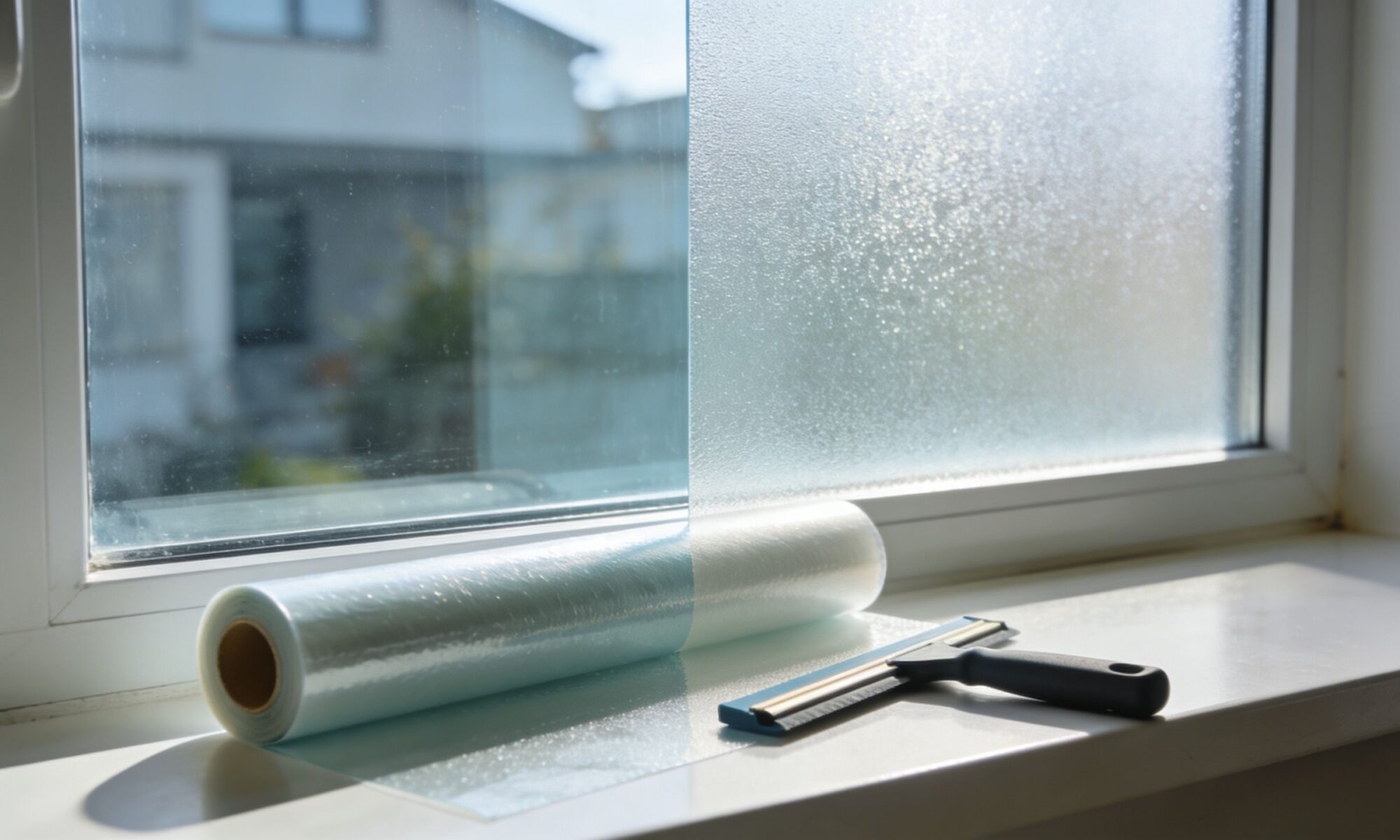
Frosted film works differently. Instead of acting like a mirror, it diffuses light. Think of the difference between a clear window and a shower door. You still get daylight, but you don't keep a clear view through the glass.
This is the option that makes sense when the job is simple: block sight lines, keep brightness, and stop worrying about time of day. Bathrooms, entry glass, office sidelights, and interior partition glass are common fits.
Decorative and patterned film
Decorative films sit between the two. Some add texture, patterns, stripes, or partial obscuring. They can improve privacy, but they're usually chosen as much for appearance as performance.
A simple way to break the category down is this:
| Film type | Best for | Main trade-off |
|---|---|---|
| Reflective | Daytime outward view with daytime privacy | Privacy changes with lighting |
| Frosted | Consistent obscuring | No clear view through glass |
| Decorative | Style plus light privacy | Performance varies by pattern |
The packaging may say privacy. The real question is what kind of privacy, and when.
Exploring DIY Privacy Film Kits at Home Depot
You buy a box that says privacy, put it on the window that afternoon, and the room looks better right away. Then the true test starts. How it looks after dark, how clean the edges stay, and whether the film effectively fits the job matter more than the packaging.

If you search privacy window tint home depot, you will see a broad retail mix: frosted films for obscuring views, one-way films aimed at daytime privacy, whiteout films for stronger concealment, and decorative films that put appearance ahead of maximum coverage. Home Depot's window film category pages show that clearly.
That variety helps, but it also creates confusion. Shoppers often compare these products as if they differ only in shade or pattern. In practice, they solve different problems, and some of those problems change with lighting conditions.
What retail kits do well
Big-box film has a real place.
For a small bathroom window, a garage door lite, or a sidelight next to the front door, a DIY kit can be a reasonable fix. You can buy it the same day, test a finish without a major commitment, and get acceptable privacy if your expectations are realistic.
Retail packaging also gives you a useful first filter. Frosted and whiteout products are generally the safer choice if the goal is consistent obscuring. Decorative films can soften visibility while adding a design element. One-way films appeal to people who want to keep an outward view during the day, but that is also where the biggest misunderstanding starts.
A store-bought film can solve a simple privacy problem. It rarely solves every privacy problem.
Where DIY usually goes wrong
Installation is where many retail jobs start to look retail.
Dust, pet hair, lint, paint specks, and hard-water residue show up fast once film goes on glass. Static-cling film gives you some room to reposition, but it also highlights every prep mistake. Adhesive film holds more firmly, yet bad trimming, trapped debris, and uneven shrinking are hard to hide once the film sets.
The trouble spots are predictable:
- Glass prep: Any contamination left on the pane can stay visible under the film.
- Edge work: Crooked or loose cuts stand out from both sides of the glass.
- Slip solution control: Too much moisture slows bonding. Too little makes placement and squeegeeing harder.
- Surface size: Small panes are manageable. Large panes expose every error.
Homeowners also mix up film types with the glass itself. This comparison of window film versus tinted glass explains the difference and helps set expectations before you buy material.
A quick visual walkthrough helps set expectations before you start:
Best use cases for DIY kits
DIY privacy film makes the most sense where the window is small, the stakes are low, and a good-enough finish is acceptable.
- Bathroom windows: Frosted film is usually a practical fit.
- Garage side doors: Obscuring film can block a direct sight line without a major spend.
- Rental properties: Removable film works for temporary privacy.
- Interior glass: Office doors, pantry glass, and partition windows are often forgiving applications.
For large front windows, street-facing rooms, and any space where you want privacy without guessing how the film will behave in different lighting, retail kits are often a trial run rather than a final answer. That is the fundamental trade-off. DIY film is easy to access, but privacy performance, finish quality, and long-term appearance are less predictable than many buyers expect.
DIY Installation Versus Professional Tinting Services
A lot of people compare DIY and professional tinting only on purchase price. That's too narrow. The better comparison is finish quality, material quality, performance confidence, and whether the film does what you think it does once the sun goes down.
The biggest misunderstanding
One-way or reflective film does not provide the same privacy all day and night. It works because of a light differential. It gives daytime privacy when the outside is brighter, and the effect reverses at night when interior lights are on. A detailed technical explanation from Window Film Depot's privacy film guide states that achieving see-through home privacy day and night with a single passive film is not scientifically possible.
That's the part retail packaging often leaves fuzzy.
If you want clear outward visibility and guaranteed round-the-clock privacy from one passive mirror film, that product doesn't exist.
The practical comparison
Here's how the decision usually looks in the field.
| Factor | DIY Film from Retailer | Professional Installation |
|---|---|---|
| Material selection | Limited to shelf stock | Matched to the actual glass and privacy goal |
| Installation finish | Depends on homeowner prep and trimming | Cleaner edges and more controlled application |
| Privacy expectations | Often shaped by packaging language | Usually discussed before installation |
| Nighttime performance | Common source of disappointment with reflective products | Better product matching and fewer assumption gaps |
| Durability | Varies by product and install quality | Typically stronger long-term fit and finish |
| Support after install | Product-return mindset | Installer accountability and guidance |
Where pros separate themselves
The biggest value isn't just cleaner installation. It's correct specification.
A professional doesn't look at a window and ask only, “Which film is dark enough?” They ask what room it is, how the light changes, whether the owner needs a view out, whether the glass faces traffic, whether the concern is neighbors, glare, heat, or all three. That changes the answer.
In practice, professional-grade recommendations usually sort into categories like these:
- Frosted or obscuring film: Best when constant privacy matters more than visibility.
- Reflective or solar-control film: Better for certain daylight applications where outside brightness supports the effect.
- Layered privacy strategy: Film plus shades, blinds, or lighting control when one product won't solve every condition.
Where DIY still makes sense
DIY isn't a bad choice just because it isn't the best choice in every case. For a low-risk window, a homeowner with steady hands can get a decent result.
It becomes the wrong choice when the project has no margin for error. Primary living spaces, street-facing glass, large panes, and windows where night privacy matters usually deserve more than a package claim and a utility knife.
Understanding Window Film Performance and Legalities
A lot of homeowners buy privacy film expecting the same result at noon and at night. That is the mistake that causes the most disappointment.

Performance isn't just about darkness
A darker-looking film does not automatically give better privacy, better heat rejection, or better comfort. Different films solve different problems. Some are built to cut glare and solar gain. Some are built to obscure the view. Some mainly change appearance.
Home Depot product listings can be useful here if you read them carefully. The Gila Black Privacy Film product listing describes UV reduction, glare control, and solar performance. That matters because a performance film should be judged on more than how dark it looks on the roll.
The practical point is simple. A decorative privacy film, a reflective privacy film, and a higher-performance solar film are not interchangeable, even if all three are sold as privacy products.
Reflective privacy works only under the right lighting
This is the part retail packaging often fails to explain clearly enough. One-way or mirror-style privacy film depends on the brighter side staying brighter. During the day, that often means people outside have a harder time seeing in. At night, when interior lights are on and it is dark outside, the effect can reverse.
If constant privacy matters, reflective film is usually the wrong standalone answer. Frosted or obscuring film gives up the clear view out, but it gives more reliable privacy because it diffuses light instead of depending on outdoor brightness.
That trade-off is why professional recommendations tend to start with the room's use, not just the product label. A front office, bathroom, garage window, and street-facing living room do not need the same film.
Legal and application limits matter
Residential film gives you more flexibility than automotive tint, but there are still limits. Some glass types are more sensitive to heat absorption. Some films can change exterior reflectivity enough to create HOA or appearance concerns. Lease terms can also restrict what a homeowner or tenant is allowed to put on the glass.
Vehicles are stricter. Georgia sets legal limits for automotive window tint, and the film still has to preserve safe visibility. That is one reason I treat store-bought home privacy film and car tint as two separate decisions. For drivers comparing options, a professional window tinting service near you is the safer route than guessing from a retail box.
The short version is this. Retail privacy film can work well if you understand its limits. It does not create 24/7 one-way privacy, and no honest installer should promise that.
Professional Car Tinting in Woodstock Kennesaw and Canton
The same shoppers who look up privacy film for the house often start asking a second question a week later. If tint helps with glare, comfort, and privacy at home, what's the right move for the car?
For drivers in Woodstock, Georgia, Kennesaw, Georgia, and Canton, Georgia, the answer usually isn't a DIY auto kit. Automotive glass has curves, defroster lines, legal limits, and visibility demands that make professional installation the safer path.

What drivers in these areas usually want
Most car owners aren't looking for “dark windows” in the abstract. They want a cabin that feels less harsh in summer, better glare control during the afternoon commute, and protection for interior materials that spend all day in Georgia sun.
That usually points to a short list of priorities:
- Heat control: Important for long drives, parked vehicles, and black interiors.
- UV protection: Helpful for both occupants and interior surfaces.
- Glare reduction: Especially useful for early morning and late afternoon driving.
- Clean finish: Auto tint looks bad fast if edges, contamination, or shrink quality are off.
Why professional automotive tint is different
House glass is flat and forgiving compared to car glass. Rear windshields, side windows with seals, and modern vehicle electronics change the install process. Material choice also matters more because poor optical clarity is a real safety issue in a vehicle.
If you're searching for car window tinting Woodstock, ceramic tint Kennesaw, or a professional tint installer in Canton, the smart move is to ask practical questions instead of chasing the darkest-looking option:
- What film type fits the vehicle and driving habits
- Will the install comply with Georgia law
- How clear is the film from the driver's seat
- What support exists if there's an issue later
For local drivers comparing options, this page on professional window tinting near me is a useful next step.
Where ceramic tint usually stands out
Ceramic film is popular for a reason. Drivers often choose it when they care about heat rejection and a more premium result without the overly reflective look some people don't want on a daily driver.
It's also a strong fit for people who spend a lot of time in traffic, commute through North Metro Atlanta, or who want the vehicle to stay more comfortable without turning the cabin into a cave. Whether the car is a commuter sedan, truck, SUV, or enthusiast build, the right film should support visibility first and appearance second.
Making the Right Choice for Your Privacy Needs
If you came here looking for a simple yes or no on privacy window tint home depot, the honest answer is this: it depends on the window, the goal, and how much compromise you can accept.
Retail privacy film can be a smart choice for small projects, simple obscuring jobs, and homeowners who understand the limits. Frosted film is often the safer pick when you want straightforward privacy and don't need to see through the glass. Reflective film can be useful in the right daylight conditions, but it's the wrong product to buy if you expect constant privacy from outside views.
For bigger home windows, highly visible rooms, or any area where finish quality and predictable performance matter, professional installation usually gives the better outcome. The same logic applies even more strongly to cars, where legal compliance, visibility, and material quality aren't optional.
The best tint job isn't the one with the most appealing box. It's the one matched to the actual way the glass is used.
If you want a professional opinion before you buy the wrong film, The Tint Guy helps North Metro Atlanta drivers and property owners choose the right tint for the job. Reach out if you need expert guidance on automotive tinting in Woodstock, Kennesaw, or Canton, or if you want a high-performance privacy and heat-control solution that won't leave you guessing after installation.