You notice it one morning pulling out of the driveway. The car still looks good, but the headlights don't. They're starting to lose that clean, sharp look they had when the vehicle was newer. A little haze. A few tiny pits. Maybe some sanding marks from a past restoration. Around North Metro Atlanta, that usually starts with sun exposure, then gets worse with road grit, bug residue, and debris from everyday highway driving.
That's why paint protection film headlights have become such a practical upgrade. This isn't a cosmetic add-on for show cars. It's a way to protect one of the most exposed parts of the vehicle before the damage gets expensive, obvious, or unsafe.
Why Your Modern Headlights Need Protection
Modern headlights take abuse fast in this part of Georgia. Daily runs through Woodstock, Kennesaw, Acworth, Marietta, and Canton put the front of the car in direct sun for long stretches, then add construction dust, grit, and small impacts from traffic on I-575 and GA-400. Headlights sit right in that blast zone.
Years ago, glass lenses handled abuse differently. Most modern vehicles use polycarbonate lenses, and they're lighter and easier to shape, but they're also more vulnerable to surface wear and UV breakdown. Once that outer layer starts degrading, the headlights can look tired long before the rest of the vehicle does.
What drivers usually see first
It usually starts small:
- Light hazing: The lens loses that crisp, clear surface.
- Fine pitting: Tiny impact marks build up across the front.
- Yellowing at the edges: Sun exposure often shows up there first.
- Reduced cleanability: Dirt and bug residue stop wiping off easily.
A lot of drivers wait until the problem is visible from a few feet away. By then, they're choosing between restoration work, living with poor-looking lights, or replacing assemblies that cost far more than expected.
Headlight damage is easier to prevent than to reverse. Once the lens surface is compromised, every mile adds more wear.
This is the fundamental value of headlight PPF. It changes the job from repair to prevention. Instead of polishing away oxidation every so often, you put a sacrificial layer over the lens and let that layer take the punishment.
For local commuters, that matters for more than appearance. Clear headlights help the vehicle look newer, but they also help preserve light performance and avoid the neglected look that drags down resale. If you plan to keep the vehicle for a while, protecting the headlights early usually makes more sense than restoring them later.
What Is Headlight Paint Protection Film
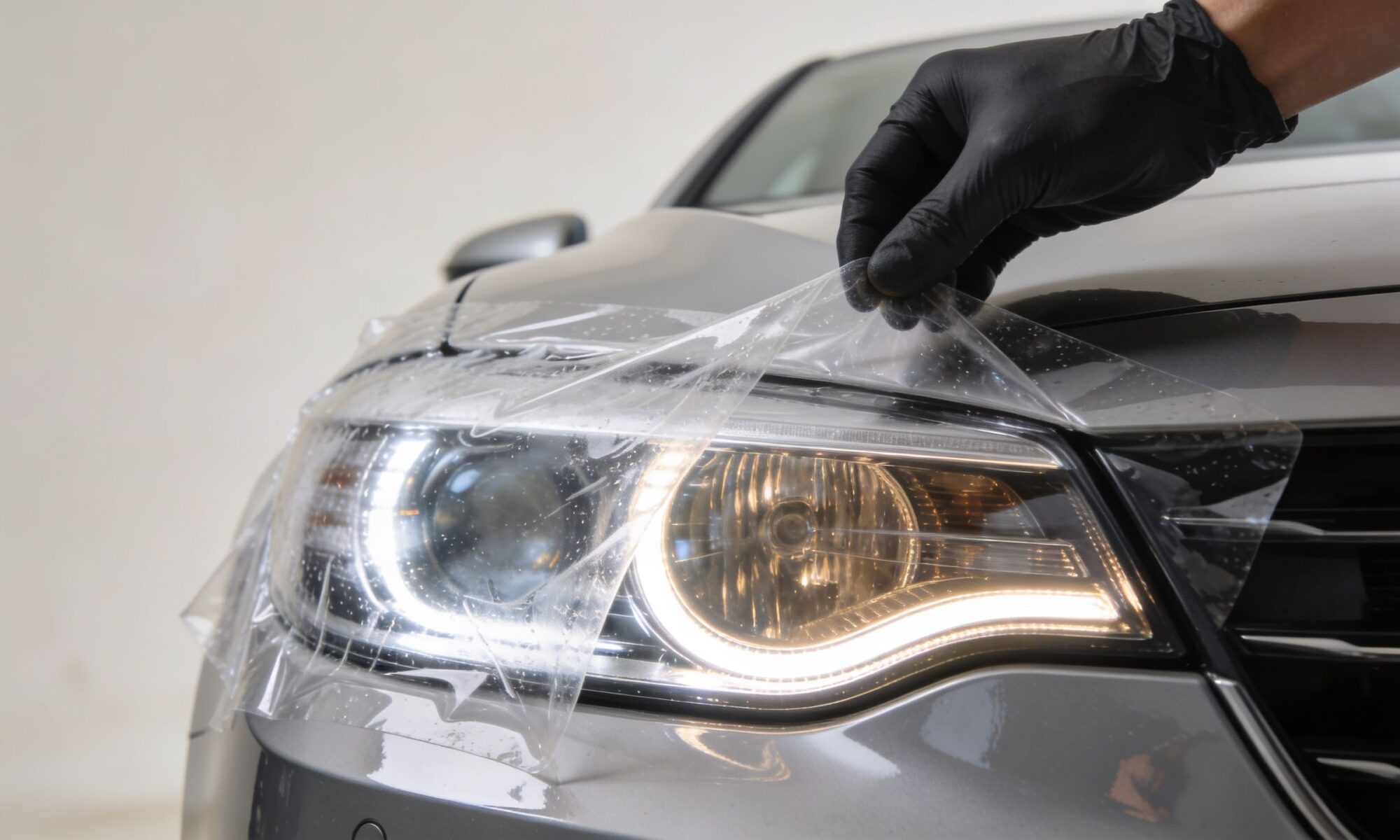
Headlight paint protection film is a clear protective layer applied directly to the headlight lens. The easiest way to think about it is a high-end screen protector for your car's eyes, except tougher, more flexible, and built for sun, impact, and weather instead of pockets and fingerprints.

What it's made from
Headlight protection film is primarily made from thermoplastic polyurethane, or TPU, a material engineered to resist stone chips, road salt, and environmental contaminants, while staying optically clear and removable without residue, as explained in this overview of headlight protection film materials and performance.
That material matters. TPU has enough flexibility to wrap the curves and corners of modern headlight shapes, but enough toughness to absorb routine wear that would otherwise hit the lens itself. Cheap films can look acceptable at first and fail early. Better films conform cleanly and stay stable.
What a quality film should do
A proper headlight film should do four things at once:
- Stay clear: It shouldn't create a cloudy look.
- Take abuse: Road debris should hit the film first, not the lens.
- Conform well: Tight curves and edges need a smooth fit.
- Remove cleanly: If the film ever needs replacement, it shouldn't leave a mess behind.
That last point gets overlooked. Headlights are not a part you want coated with something permanent and questionable. Good film is meant to protect the surface, not become the problem later.
Why optical clarity matters
A lot of people hear “film” and worry about reduced light output. That concern is fair, because not every product on the market is equal. Premium headlight PPF is designed to be optically clear and nearly invisible when installed correctly.
Installer's rule: If a clear headlight film changes the appearance of the beam or makes the lens look dull in daylight, something is wrong with the product, the install, or both.
That's why headlight PPF is different from generic overlays or novelty films. The goal isn't to make the headlight look covered. The goal is to make it look untouched while it takes the wear the lens would otherwise absorb.
The Core Benefits of Protecting Your Headlights
The strongest reason to install headlight film is simple. It protects against the three problems that ruin headlights in Georgia: sun damage, impact wear, and surface scratching.
High-quality headlight PPF can last 5 to 10 years, with warranties often covering that full period, and many films use self-healing properties that recover from surface scratches with heat while protecting against UV rays, gravel, and road salt, according to this breakdown of headlight PPF lifespan and durability.

UV defense in Georgia sun
North Atlanta sun is hard on polycarbonate. The damage isn't dramatic at first. It's gradual, and that's why drivers often miss it until the headlights already look aged. A quality film acts like a barrier between the lens and the exposure that causes that breakdown.
If you park outside at work, outside at home, or spend a lot of time commuting, the lens surface gets cooked every week. Film gives that exposure somewhere else to land.
Protection from grit and road hits
This is the everyday benefit most drivers feel the fastest. Headlights sit low and forward, which means they take direct hits from whatever comes off the road. That includes sand, salt residue, pebbles, tire spray, and all the junk that gets kicked up in traffic.
For a practical maintenance mindset, general preventative maintenance tips are worth reviewing. Headlight film fits the same logic. Protect wear-prone components before they need corrective work.
Self-healing keeps them looking cleaner
Self-healing film isn't magic, but it is useful. Minor surface marring can relax out with heat, which helps the headlights keep a cleaner appearance over time. On a daily driver, that means you don't see every wash mark and little scuff building up on the lens itself.
A protected lens usually ages more gracefully than a bare one. The difference shows up slowly, then all at once.
That matters when the rest of the vehicle is still in good shape. Clean headlights keep the front end looking newer, and they avoid the contrast you get when paint is glossy but the lights are pitted and tired.
Headlight PPF vs Tint and Ceramic Coatings
Most confusion comes from treating all headlight products as if they do the same job. They don't. PPF, tint, and ceramic coatings solve different problems, and choosing the wrong one usually leads to disappointment.

What each option is really for
Here's the practical way to separate them.
| Option | Main job | Where it helps | Where it falls short |
|---|---|---|---|
| Headlight PPF | Physical protection | Chips, pitting, UV exposure, surface wear | Higher upfront cost than simple cosmetic options |
| Headlight tint | Styling | Smoked or altered look | Not the strongest choice if protection is the goal |
| Ceramic coating | Surface behavior | Easier cleaning, slick finish, some UV help | Very limited defense against impact damage |
If your priority is preserving the lens, PPF is the one built for that. If your priority is appearance only, tint may get you the look you want, but you should be honest about the trade-off. If your goal is easier maintenance, ceramic coating has a place, but it won't stop the sort of pitting that highway commuters deal with.
Where tinted films fit
Some TPU films are available in smoked versions. Products such as STEK DYNOsmoke fall in the 30 to 50 percent light transmittance range for aesthetic use, and TPU's self-healing matrix can restore over 95 percent clarity by filling micro-scratches, helping prevent the 50 to 70 percent transmittance drop seen in unprotected lenses over 3 to 5 years in sunny climates like Atlanta, as described in this guide to TPU headlight film and smoked variants.
That doesn't mean every smoked setup is a smart one. Aesthetic films need careful product selection and careful installation. If a driver wants darker headlights, legality and beam performance need to stay part of the conversation.
Where ceramic coating makes sense
Ceramic coatings work well for slickness and easier washing. They can be useful on headlights that already have film, and some drivers use them when they want a lower-commitment option. If you're comparing protective strategies more broadly, this article on maximizing your car's ceramic coating durability gives helpful maintenance context.
For direct comparison, this overview of paint protection film vs ceramic coating is useful because it separates impact protection from surface enhancement. Those are not the same category.
If you drive a lot of highway miles, coating alone usually isn't enough for headlights. It can help the surface stay cleaner, but it won't absorb the hit.
The practical choice
For North Metro Atlanta commuters, the decision usually comes down to use case:
- Choose PPF if you want the lens physically protected.
- Choose tint if the visual style matters more than maximum defense.
- Choose ceramic coating if your main goal is easier cleaning and added surface behavior.
Most regret comes from hiring a product for the wrong job.
Analyzing the Cost and Return on Investment
Headlight PPF starts making sense to people who aren't shopping for cosmetic upgrades. The numbers are easier to justify when you compare them with the alternatives.
Professional installation in Atlanta markets typically runs $300 to $600 for a solution that lasts 5 to 7 years, while DIY kits cost $50 to $100 and often fail within 1 to 2 years. For luxury vehicles, headlight PPF can deliver 3.2x ROI by helping avoid a $1,200+ OEM headlight replacement, based on this analysis of headlight PPF cost and value.
Where the money goes
Headlight film isn't just material cost. You're paying for:
- Surface prep: Contamination and old oxidation have to be addressed first.
- Pattern fitment or bulk precision: Headlights are curved, tight, and unforgiving.
- Edge finishing: Bad edges fail early.
- Film quality: Better material generally lasts longer and looks cleaner.
If you want a broader picture of pricing factors, this page on paint protection film cost helps explain why install pricing varies by vehicle and coverage area.
When the ROI is obvious
The return is easiest to see in a few situations:
- Newer vehicles with expensive lights: Replacing modern assemblies hurts.
- Luxury or specialty models: The ROI case is strongest here.
- Daily commuters: More road exposure means more opportunity for damage.
- Long-term owners: The longer you keep the vehicle, the more preventive work pays off.
For some drivers, a cheap restoration kit feels like the smart answer. Sometimes it is, especially if the goal is short-term improvement before a sale. But if you're keeping the car and want to stop doing the same fix over and over, a professional film install usually pencils out better.
The cheapest option today often becomes the recurring expense tomorrow.
DIY Dangers vs Professional Installation Guarantees
Headlight PPF looks simple in short videos. In person, it's one of those jobs that exposes every shortcut. Curves fight you. Moisture behaves differently at every edge. Dust shows up under bright light. And once you trap contamination or stretch film the wrong way, the headlight tells on you immediately.

What goes wrong with DIY installs
The common failures are predictable:
- Bubbles and silvering: Usually from poor prep or poor squeegee control.
- Dirty edges: Tiny debris at the perimeter leads to lifting later.
- Misaligned patterns: The film leaves exposed areas right where damage starts.
- Knife risk: One slip on a lens can leave a permanent mark.
- Optical distortion: Stretch and contamination can change how the headlight looks.
The legal and safety side matters too. Improper installation can create glare issues or reduce performance in ways drivers don't notice until someone else sees it on the road.
A 2026 IIHS study cited in this guide to headlight film legality and installation risk found that improperly installed PPF can increase glare complaints by 8 percent, and it also notes that aftermarket films can create inspection and compliance issues where reduced light output is illegal.
What professional installation changes
A proper install starts before the film touches the lens. Surface prep, lens condition, product choice, and edge strategy all matter. The goal isn't just getting film onto the headlight. It's getting a clean, stable result that stays that way.
If you want to see how a dedicated shop approaches that process, this overview of paint protection film installation shows what professional prep and application are supposed to look like.
Here's a look at the process in action:
Why warranties and film choice matter
Not every shop uses the same film, and not every film belongs on headlights. Product choice affects clarity, removability, long-term appearance, and compliance. Professional installers also tend to spot pre-existing lens issues that a DIY kit won't fix.
One local option is The Tint Guy, which installs headlight-specific paint protection film as part of its PPF services. The key point isn't branding. It's that headlight work should be done by someone using film meant for that surface, with an installation process that protects clarity rather than compromising it.
A bad install doesn't just look bad. It can become a safety problem, a legal problem, or both.
Book Your Headlight Protection in North Metro Atlanta
If you drive around Woodstock, Kennesaw, Marietta, Acworth, or Canton, your headlights already deal with the mix that wears them down fastest. Sun, highway grit, construction debris, and everyday commuter miles all hit the same vulnerable surface.
Paint protection film headlights make the most sense before the lenses start showing damage. On a new vehicle, the job is preservation. On an older vehicle with decent lenses, the job is stopping the next round of decline. Either way, professional installation matters because clarity, fit, and compliance all depend on getting the details right.
Drivers who are already planning broader vehicle protection often pair headlight PPF with ceramic window tint at the same visit. That combination handles two different problems at once. Exterior lens protection and interior heat and UV control.
If you want a quote, have questions about film options, or need help deciding whether your headlights should be restored first or protected as-is, talk with a local installer who works on North Atlanta vehicles every day.
If you're ready to protect your headlights before Georgia sun and road debris do permanent damage, contact The Tint Guy for a quote or appointment in North Metro Atlanta.