You're probably searching privacy window film installation near me because you're tired of the same two problems every North Georgia driver brings up. Too much visibility into the car in parking lots, and too much sun coming through the glass on the drive home. If you spend any time on I-575, Highway 92, or moving between Woodstock, Kennesaw, and Canton during late afternoon, you already know how harsh that light can feel through untreated windows.
For drivers here, privacy tint usually starts as a comfort decision and turns into a practicality decision fast. You want a cleaner look. You also want less of your interior on display when the car is parked at the grocery store, the gym, or outside work. And if you've ever had a child seat, laptop bag, tools, or shopping bags visible through clear glass, you know privacy matters for more than appearance.
Why North Georgia Drivers Seek Automotive Privacy Film
A lot of customers come in with the same story. They bought a vehicle with factory rear glass, or no useful tint at all, and after a few weeks of driving around Woodstock or Kennesaw they realize the cabin feels exposed. Not just hot. Exposed.

Georgia drivers deal with bright sun, reflective pavement, busy parking lots, and a lot of time spent in traffic. Good automotive tint helps with privacy, glare, and interior comfort in one upgrade. If you want a broader breakdown of comfort and protection benefits, this guide to the benefits of automotive window tint is a useful starting point.
The local reality in Woodstock, Kennesaw, and Canton
In North Metro Atlanta, privacy tint isn't just about making a car look darker. It helps when you're stopped at a light with your vehicle sitting fully exposed to the cars beside you. It helps when your truck or SUV is parked at a trailhead, school lot, shopping center, or job site with valuables inside.
Drivers usually want one of three outcomes:
- Less visibility into the cabin: Enough shade to make the interior harder to inspect from outside.
- Less glare on the road: Especially during sunrise and late afternoon.
- A more comfortable interior: So the vehicle doesn't feel like it's storing every bit of heat.
Good privacy tint should solve a daily annoyance, not just change the color of the glass.
Why this search matters
When people type privacy window film installation near me, they're often comparing shops quickly and getting incomplete answers. One place talks only about darkness. Another pushes whatever film they stock. What actually matters is matching the film to how you use the car in Woodstock, Kennesaw, or Canton.
A commuter sedan has different needs than a family SUV. A work truck parked outdoors all day has different needs than a garage-kept weekend car. Privacy is part of the decision, but it only works well when the film also fits your driving habits, glass layout, and expectations after dark.
Choosing Your Film Type for Automotive Privacy
Privacy tint gets oversimplified all the time. Darker doesn't automatically mean better, and “privacy” can mean two completely different things depending on when and how you use the vehicle.
If you're comparing options, start with film construction first. Then think about how you want the car to behave in daylight, at night, and when it's parked.
For a useful overview of material categories and use cases, review window film types and benefits.
Dyed, carbon, and ceramic films
These are the three categories most drivers ask about in an auto tint shop.
| Automotive Window Film Comparison | |||
|---|---|---|---|
| Film Type | Primary Benefit | Heat Rejection | Privacy Level |
| Dyed | Lower-cost appearance upgrade and darker look | Basic | Good when selected darker |
| Carbon | Dark finish with better long-term appearance | Better than entry-level film | Good |
| Ceramic | Strong heat control and premium overall performance | Highest of these three categories | Good, depending on shade |
Dyed film is the budget-minded choice. It can give a car the darker look many people want, but it usually isn't the best answer if your main complaint is cabin heat during a Georgia summer.
Carbon film is a solid middle-ground option for a lot of daily drivers. It gives a clean dark appearance and tends to be the choice for people who want privacy plus a more durable finish than basic entry-level film.
Ceramic film is what I usually discuss with drivers who care about comfort as much as appearance. It's not “privacy film” in a separate category. It's a premium tint construction that can still deliver privacy depending on the shade you choose, while also addressing the heat issue that pushes many Georgia drivers to tint in the first place.
Daytime privacy versus true all-hours privacy
Where many individuals receive poor advice.
One-way daytime privacy usually means a film that looks more reflective or darker from the outside when the light is stronger outdoors than inside the vehicle. That can work well in daylight. But buyers often need guidance on whether they want one-way daytime privacy or true 24/7 privacy. Many reflective privacy films lose their effect at night when interior lights are on, which matters for vehicle owners who need consistent privacy after dark, as noted by Noble Window Film's discussion of privacy film limitations.
What actually works for cars
For most vehicles, your practical choices look like this:
- Standard dark automotive tint: Best for everyday privacy, cleaner styling, and balanced visibility.
- Reflective-style privacy look: Stronger daytime effect from certain angles, but less reliable at night.
- Opaque or frosted-style materials: These are only for specific automotive uses such as partition glass or specialty applications. They are not for normal side-window driving visibility.
If you want to see out clearly and still make it harder to see in, standard automotive tint is the real answer. If you want complete obscurity, that stops being normal road-use side-window tint.
How to choose based on your actual goal
Ask yourself these questions before you choose the film:
Do you care more about heat or appearance?
If heat is your first complaint, ceramic deserves a close look.Is your car parked in public a lot?
Then consistent exterior appearance and good privacy matter more than chasing the darkest possible setup.Do you expect nighttime one-way privacy?
That expectation causes disappointment. Interior light changes everything.Are you driving a family vehicle or a personal commuter?
Parents often prioritize rear-seat comfort and privacy. Commuters often prioritize glare control and front-window balance.
The best tint choice for a Woodstock commuter may be different from what works for a Canton contractor's truck or a Kennesaw family SUV. The right film is the one that solves your daily use case without creating a visibility problem you'll regret later.
What to Expect During a Professional Tint Installation
A proper tint job looks simple when it's finished. It isn't simple while it's being done. Clean glass, controlled handling, and exact trimming are what separate a professional install from the kind of job that starts peeling at the edges or shows every speck of debris trapped underneath.

Prep comes before film
The first step is always cleaning. Not a quick wipe. A real cleaning process that removes lint, dust, residue, and the kind of contamination homeowners don't notice until it's locked under film.
That part is similar to what customers appreciate in a good professional auto detailing experience. The final result depends on the prep work nobody sees.
The fit and application process
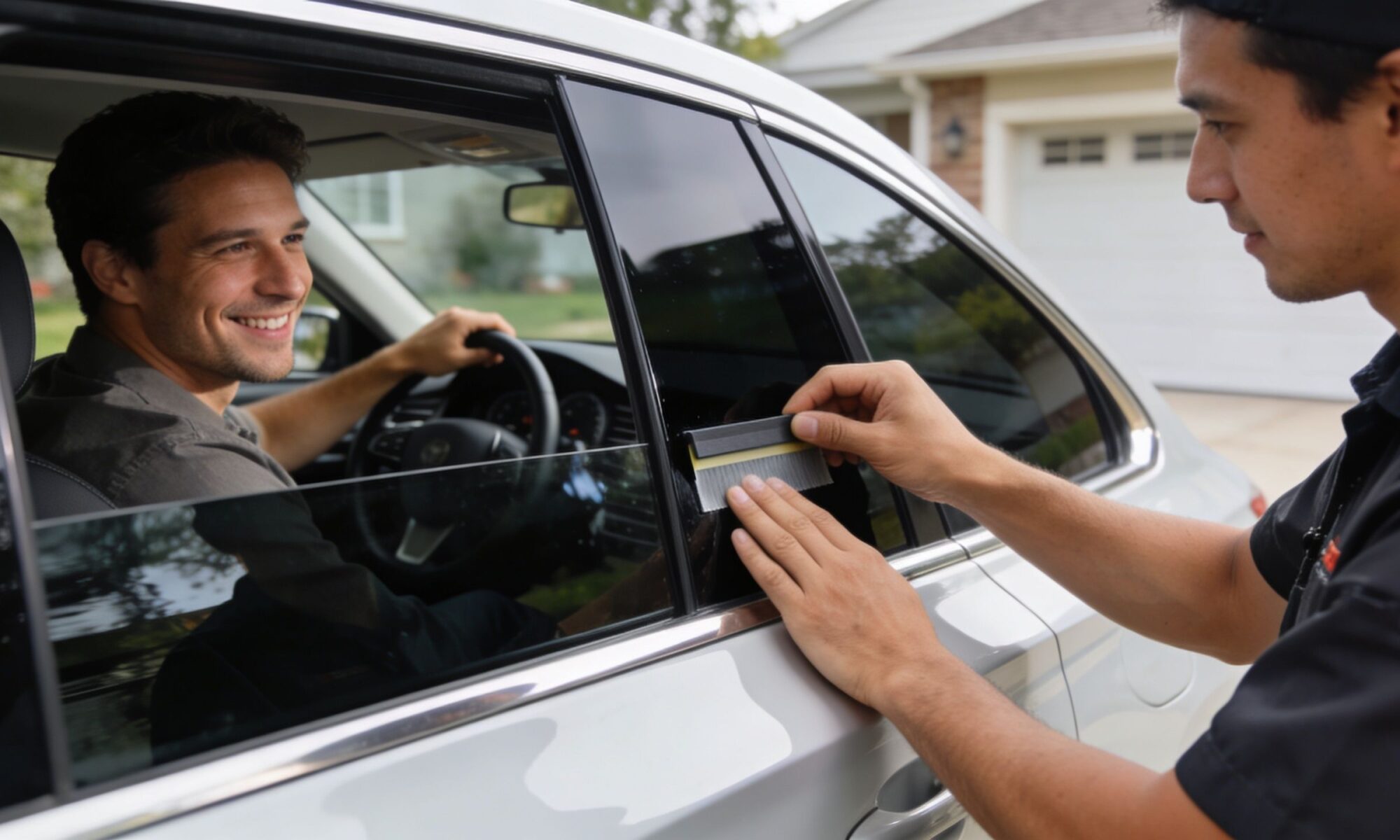
Professional installers cut film with slight overage, then use a wet application so the film can slide into final position. That process lets the installer squeegee from the center outward, remove water and air, and trim edges precisely, following 3M installation guidance for window film.
That matters because automotive glass doesn't forgive sloppy work. If the alignment is off, the edge line will show it. If debris gets under the film, you'll see it every time the sun hits the glass.
A normal professional process usually includes:
- Glass inspection: Existing damage, old adhesive, and contamination get identified first.
- Film patterning and cutting: The film gets sized to the specific window shape.
- Wet mounting: The installer positions the film while the surface is workable.
- Squeegee-out and edge finishing: Moisture and air are pushed out for a clean bond.
Practical rule: The install should look controlled and methodical. If a shop rushes prep, the film usually tells on them later.
A quick visual walkthrough helps if you've never watched the process closely:
Why DIY usually falls short
Most DIY tint problems come from three places. Contaminated glass, poor handling, and bad edge control.
On a vehicle, those mistakes show up fast. You see fingers in the film, dirt trapped under the surface, light gaps at the edges, and corners that start lifting long before they should. A shop that does automotive tint every day knows how to work around seals, curves, and tight edges without making the finished job look hacked together.
How to Choose a Trusted Installer in North Metro Atlanta
If you're looking for privacy window film installation near me in Woodstock, Kennesaw, or Canton, don't start with price alone. Start with whether the shop can produce a clean, durable result on your type of vehicle.
A bad tint job costs more in the long run because removal and reinstallation are harder than doing it right the first time.
What to look for in a real shop

The window film industry is supported by established organizations like the International Window Film Association, which provides educational resources and standards. Choosing an installer who follows those professional benchmarks helps you get a more durable application, as outlined by the IWFA industry organization.
Here's what I'd tell any local driver to check before booking:
- Look at finished work, not just marketing photos: Ask to see close-up images of edges and corners.
- Ask what film lines they install: A serious shop should be able to explain the difference between dyed, carbon, and ceramic without talking in circles.
- Check whether they serve your area regularly: Woodstock, Kennesaw, and Canton drivers benefit from working with installers who know the local demand and common vehicle types in Cherokee and Cobb counties.
- Read reviews for repeat complaints: If multiple customers mention dust, peeling, haze, or long cure issues, pay attention.
The questions that separate good shops from average ones
You don't need a technical interrogation. A few direct questions will tell you plenty.
Ask these:
- What film do you recommend for privacy without sacrificing too much nighttime visibility?
- How do you handle edge finishing on frameless or tight-seal windows?
- What does your warranty cover if the film bubbles, peels, or changes appearance?
- Do you install the same film on every vehicle, or do you recommend by use case?
A shop that answers clearly usually has real process behind the answer. A shop that dodges specifics usually doesn't.
Local fit matters
A North Metro shop sees the same patterns every week. Family SUVs needing rear-seat comfort. Commuter sedans that sit in exposed office lots. Trucks used for work in Canton and Woodstock. That local experience matters because recommendation quality improves when the installer understands how people use their vehicles around here.
If you're comparing local providers, this page on professional window tinting near you is one example of the kind of service information you should expect a shop to provide. The Tint Guy is one local option serving North Metro Atlanta drivers looking for auto tint installation.
A trustworthy installer doesn't just ask how dark you want it. They ask how you drive, where you park, and what bothers you most about the current glass.
Costs, Warranty, and Maintenance for Your Car Tint
Automotive tint pricing depends on the vehicle, the film type, and the difficulty of the install. A compact sedan with straightforward side glass is one kind of job. A large SUV with more glass area and tighter rear-window work is another.
What changes the price
For car tint, the main cost drivers are usually:
- Film type: Dyed film is usually the entry tier. Carbon and ceramic move up from there.
- Vehicle size: More glass and larger windows generally mean more labor and material.
- Glass complexity: Rear windows, steep curves, and tight seals take more care.
- Old tint removal: Removing failing film and old adhesive adds time before the new work even starts.
For general window tinting, Angi reports that professional installation in the U.S. typically averages about $612, with a range of roughly $316 to $941, and generally runs about $5 to $20 per square foot including materials and labor. Angi also notes privacy-oriented options around $7 to $12 per square foot and an estimated ROI of 30% to 80% for home window tinting, although those figures are from the residential side of the category, not car tint pricing, in their window tinting cost guide. For vehicles, pricing is usually quoted by the car and film package rather than by square foot.
What a lifetime warranty usually means
A solid tint warranty typically covers film failure. That often includes problems like bubbling, peeling, or abnormal color change under normal use.
It usually does not mean every scratch, every nick, or damage caused by sharp objects, seatbelt impact, or rough cleaning. Always ask what is covered by the film manufacturer and what is covered by the installer's workmanship warranty.
How to keep your tint looking right
Once the film is installed, maintenance is simple if you don't overcomplicate it.
- Wait before dropping the windows: Give the film time to cure based on the installer's instructions.
- Use mild cleaners: Avoid ammonia-based glass cleaners.
- Choose soft towels: A clean microfiber towel is safer than anything abrasive.
- Don't pick at the edges: If you notice a concern, let the shop inspect it instead of trying to fix it yourself.
Most tint lasts well when the installation is clean and the owner doesn't attack it with harsh chemicals or careless scraping.
Frequently Asked Automotive Tinting Questions
How dark can my window tint legally be in Georgia
Georgia tint law matters, and the legal answer depends on which window you're tinting and what vehicle you drive. Because laws can change and enforcement details matter, the smart move is to ask the shop for the current legal limits for passenger vehicles in Georgia before you choose your shade.
If a shop can't explain legal options clearly, keep looking.
How long does a professional car tint installation take
Most standard vehicle tint jobs are done the same day. The exact time depends on the vehicle, the number of windows, whether old film has to be removed, and how busy the schedule is.
A full vehicle with old tint removal takes longer than a straightforward new install. If timing matters, ask whether the shop books by appointment block or by drop-off queue.
Can I roll down my windows right after installation
Usually, no. The film needs time to settle and cure.
Your installer should tell you exactly how long to wait based on the film and current conditions. Follow that instruction. Rolling windows down too early is one of the easiest ways to create edge problems on fresh tint.
Will privacy tint give me full privacy at night
Not in the way many people assume. Standard automotive tint makes it harder to see in, but it does not create guaranteed one-way privacy after dark.
If the interior is lit and the outside is dark, visibility changes. That's why choosing the right balance of shade, film type, and expectations matters more than just asking for “the darkest privacy tint.”
If you're in Woodstock, Kennesaw, or Canton and want straight answers about automotive privacy tint, The Tint Guy is a practical place to start. Reach out with your vehicle type, what level of privacy you want, and whether heat reduction or appearance matters more. That makes it easier to recommend a film that fits how you drive in North Georgia.