
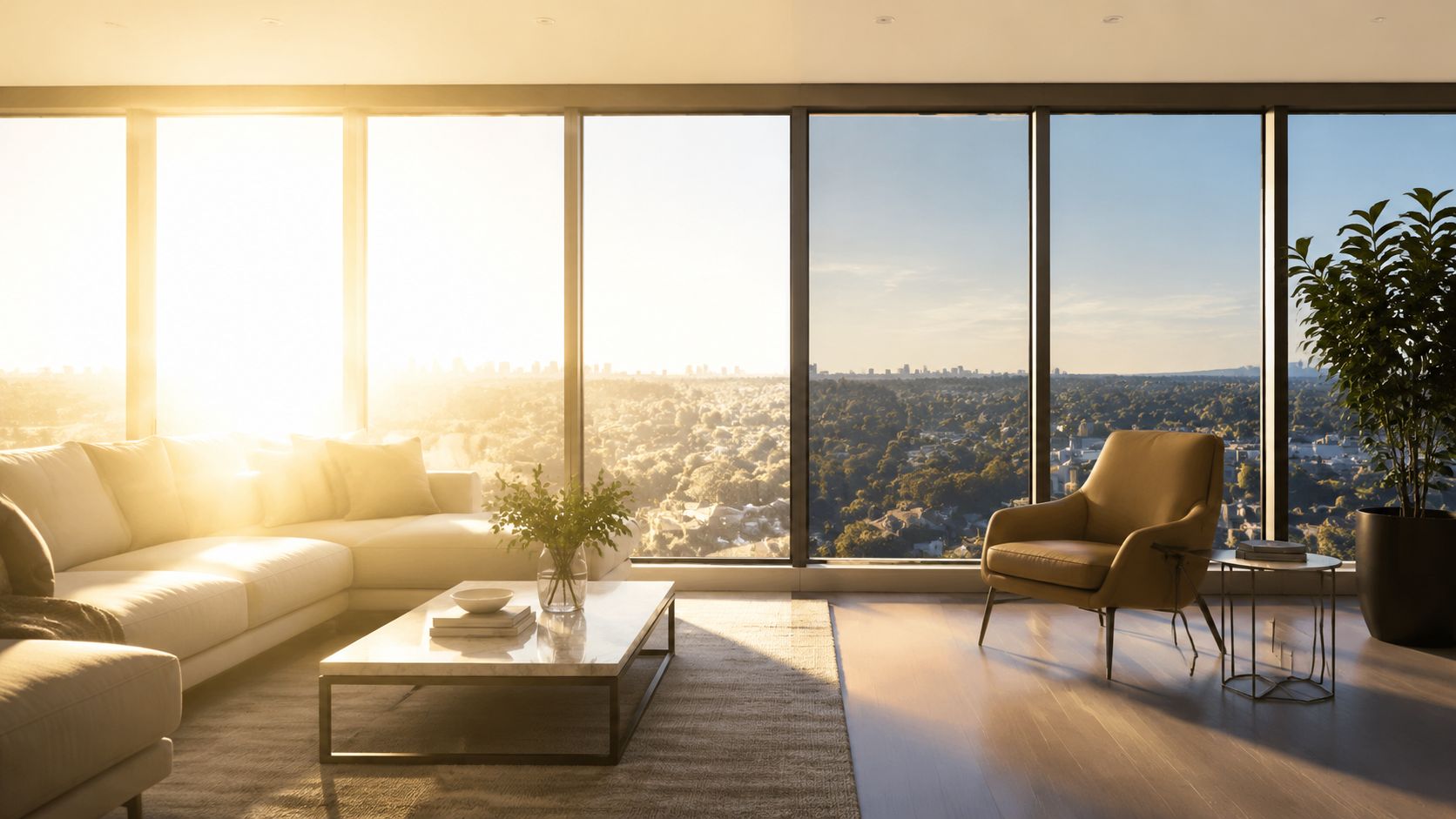
That late afternoon sun is probably why you're here. One room in the house gets hotter than the rest, the TV turns into a mirror by dinner, or your office screen washes out right when you need to focus. In North Atlanta, that happens in newer homes with big windows, older houses with west-facing glass, storefronts with full front exposure, and office suites that look great on a tour but feel different at 3 p.m.
Homeowners often start by searching indoor window tinting near me because blinds and curtains only solve part of the problem. They block the view, darken the room, and still leave heat trapped near the glass. A properly selected interior film changes the glass itself. That's the part many homeowners in this area don't realize until they see it in person.
Your Guide to a More Comfortable North Atlanta Property
A common North Atlanta problem looks the same in Canton, Alpharetta, Roswell, and Johns Creek. The house is comfortable in the morning. By mid-afternoon, one side starts heating up. The family room feels warmer than the thermostat says. You close the blinds to cut glare, then lose the natural light you wanted those windows for in the first place.
Commercial spaces run into the same issue for a different reason. A front office with open glass looks sharp, but employees end up shifting desks away from the windows, clients squint through meetings, and the HVAC has to keep fighting solar load that keeps coming through the glass.

What homeowners usually notice first
The first complaint usually isn't energy use. It's comfort.
- Glare on screens: TVs, laptops, and phones become harder to use in bright rooms.
- Hot spots near windows: The room may be usable, but seats near the glass aren't.
- Fading concerns: Floors, furniture, rugs, and finishes take the sun every day.
- Privacy trade-offs: People close blinds for privacy, then live in a darker room.
Why film solves a different problem than shades
Shades manage light after it enters the room. Film helps manage sunlight at the glass. That difference matters in Georgia homes where sunlight can be the main driver behind heat buildup and visual discomfort.
Practical rule: If you love the room but hate the time of day it becomes uncomfortable, film is usually a better first fix than heavier window coverings.
A lot of local shoppers also assume tint means dark glass and a commercial look. That's outdated thinking. Modern flat-glass film can be subtle, clear-looking from inside, and built around comfort instead of appearance alone. The right product doesn't just make windows darker. It makes the room easier to live in.
What Is Indoor Window Film
Indoor window film is a thin polyester-based layer applied to the interior side of flat glass in homes and commercial buildings. The easiest way to think about it is sunglasses for the building, but that only gets part of the picture. Good film isn't just about dimming light. It's a performance layer that helps control glare, solar heat, UV exposure, and daytime privacy depending on the product chosen.
It's different from automotive tint
A common misunderstanding is the difference between automotive tint and residential or commercial window film. They are related categories, but they aren't interchangeable. Car tint is designed around vehicle glass, curved shapes, and automotive legal requirements. Building film is designed for flat glass, room comfort, glass compatibility, and longer-span interior use.
That distinction matters because a product that works well on a truck door glass doesn't automatically belong on a double-pane living room window.
For a plain-language overview of the main categories, Window Film 101 and its common types and benefits is a useful primer before comparing products.
What the performance terms actually mean
When I'm talking with a homeowner, I don't start with shade cards. I start with the numbers that affect how the room will feel.
According to this guide to window film technical specifications, the key metrics are Visible Light Transmittance (VLT), Total Solar Energy Rejection (TSER), ultraviolet rejection, and sometimes U-value or emissivity for energy modeling. In practical terms, lower VLT generally means more glare control and more privacy, but also less daylight. TSER matters because it reflects how well a film rejects total solar load, including the heat that makes a room uncomfortable.
Darker doesn't automatically mean better. A film can look fairly light and still perform well if the product is designed for solar control rather than simple shading.
Why this matters in real rooms
A nursery, kitchen, street-facing bathroom, conference room, and home office don't all need the same film. The best choice depends on what you're trying to fix.
- If glare is the problem, VLT becomes a major decision point.
- If the room runs hot, solar-control performance matters more than appearance.
- If you want privacy, you need to think about both daytime visibility and nighttime lighting conditions.
That's why indoor film should be chosen room by room, not by picking the darkest sample on a board.
The Real Benefits of Residential and Commercial Tinting
A lot of North Atlanta property owners start this conversation after the same kind of afternoon. One room in the house is too bright to work in, the lobby feels hotter than the thermostat says it should, or the west side of the building turns uncomfortable by 3 p.m. Film helps because it addresses the glass itself, which is often where the problem starts.

Heat control you notice in daily use
Comfort is usually the first change people notice. 3M reports that certain home window films can reject up to 78% of the sun's heat entering through windows. In practical terms, that can make a sun-struck bonus room in Woodstock, a storefront in Kennesaw, or an office with afternoon exposure in Canton feel usable again.
Commercial spaces often feel this even more than homes. Large panes of glass can create hot zones near the windows and cooler areas farther inside, which leads to thermostat battles and underused square footage. Film does not replace HVAC, but it can reduce how hard those perimeter areas are to manage.
Here's a quick visual explanation before comparing room uses.
Better glare control, with trade-offs that matter
Glare reduction sounds minor until you deal with it every day. It affects TVs, computer screens, reception desks, conference tables, and home offices. A well-chosen film can cut that harsh reflection without forcing you to keep the blinds closed all day.
The trade-off is simple. More glare control often means lower visible light transmission. That can be a great fit for a media room or street-facing office, but it may feel too dark in a kitchen or a room that already gets limited daylight. That is why film choice should match the room, not just the window.
Interior protection and daytime privacy
Sun coming through untreated glass is hard on interiors. Floors, fabrics, artwork, wood finishes, and merchandise displays all take that exposure day after day. Film helps slow that wear while also blocking the UV that contributes to fading.
Privacy is another common reason people call. Daytime privacy films can make a front room, waiting area, or conference room feel less exposed from the street. At night, the lighting balance flips, so no film should be sold as full privacy in every condition. Frosted and decorative products solve a different problem than solar films, and that distinction matters.
In homes, one of the most useful improvements is being able to leave natural light in the room without feeling like you need the blinds shut. In commercial spaces, it often means the seats near the glass become practical again.
Good tinting solves different problems in different places
A west-facing living room and a retail storefront do not need the same film. Neither does a sedan used for commuting around Canton and a glass-heavy office in Kennesaw. The same principle applies across automotive and indoor work in North Metro Atlanta. You get the best result by matching the film to the exposure, privacy needs, and how much light you want to keep.
If you want to compare higher-performance options before you choose, this breakdown of ceramic tint vs regular tint is a useful next step.
Choosing Your Film Type from Standard to Ceramic
Not all window films solve the same problem. Many projects succeed or fail depending on this understanding. A homeowner asks for “tint,” but what they want may be glare control with daylight preserved, or privacy without a mirrored look, or strong heat rejection on a double-pane window that needs the right absorption profile.
What changes as you move up the product ladder
Basic films can still be useful. They usually make sense when the main goal is appearance, simple glare control, or a more budget-conscious installation. But if the room has serious sun exposure, lower-end film often leaves people wanting more.
Carbon and other upgraded products usually improve stability and appearance. Premium options move the conversation from “how dark is it?” to “how well does it perform without making the room feel closed in?”
This comparison of ceramic tint vs regular tint is a helpful starting point if you're deciding whether premium film is worth it for your specific project.
Window Film Type Comparison
| Film Type | Heat Rejection | UV Block | Clarity / Low Reflectivity | Cost |
|---|---|---|---|---|
| Standard dyed film | Basic to moderate | Good for general protection | Lower clarity than premium options, can darken the look more | Lower |
| Carbon film | Better than basic film for many applications | Strong everyday protection | Usually a cleaner, less shiny appearance | Mid-range |
| Ceramic or spectrally selective film | Strong solar control for comfort-focused installs | Strong UV-focused performance | Best fit when you want a more natural look and usable daylight | Premium |
Why ceramic gets recommended so often indoors
For many residential and commercial jobs, ceramic is where performance and aesthetics meet. Manufacturer documentation for advanced 3M films notes that premium products are designed to increase indoor comfort, reduce energy costs, and reduce harmful solar effects. The same product category is widely favored when people want serious heat and UV rejection without the older mirrored appearance.
That matters in homes where people don't want the glass to look obviously tinted from the curb. It also matters in offices that want to preserve a polished exterior without adding harsh reflectivity.
Field note: If a customer says, “I want the room cooler, but I don't want it to feel dark,” I usually start the discussion with ceramic or spectrally selective film.
Trade-offs that matter more than brand names
A film choice should come from room use, not hype. Here's how I frame it:
- Home office: Prioritize glare control and clear screen visibility.
- Living room with a view: Keep reflectivity low so the glass doesn't dominate the space.
- Street-facing bedroom or bath area: Privacy may matter more than maximum daylight.
- Retail storefront or office lobby: Balance appearance, comfort, and visibility from both sides.
The room tells you what to buy. That's more reliable than shopping by darkness alone.
Tinting Solutions Across North Metro Atlanta
North Metro Atlanta isn't one market in practice. Different properties have different glass problems. A Johns Creek home office with open backyard exposure has different needs than a Marietta storefront, and both are different from a Roswell waiting room or an Alpharetta living room with big rear windows.
What local building patterns usually need
In many residential neighborhoods, the issue is directional sun. West-facing family rooms and upstairs bedrooms are common trouble spots. Homeowners often want relief from glare and overheating without giving the house a mirrored or commercial look.
Commercial projects tend to come down to larger glass areas and repeated daily exposure. Front entrances, conference rooms, and perimeter offices can become visually uncomfortable long before the rest of the building does. In those spaces, residential privacy film principles often overlap with glare control and solar management, especially on street-facing glass.

The room-by-room approach works better
A big gap in most local search results is practical guidance. A lot of pages talk about benefits in general terms, but not about room use. The smarter way to plan an indoor tinting project is to decide where film helps most and where a lighter touch is better.
According to this Tampa market analysis of homeowner search intent around room-by-room decisions, many pages miss practical questions like how tint affects visible light, screen use, houseplants, and nighttime ambiance. That lines up with what property owners ask once they move past “how dark is it?”
Automotive tinting in Woodstock, Kennesaw, and Canton
This article is about indoor window tinting, but there's another local need that comes up often. In Woodstock, Kennesaw, and Canton, Georgia, people searching for tint services are often looking for both property film and car window tinting from the same local shop.
Automotive tinting is a separate service category, but the goals feel familiar. Drivers want less glare, better cabin comfort, interior protection, and a cleaner look. In those three cities, local demand is especially tied to daily commuting, school pickup traffic, and long parked hours in open lots where the sun punishes the interior.
For vehicles, Georgia tint compliance matters, especially around Visible Light Transmission limits. Any installer handling automotive work in Woodstock, Kennesaw, or Canton should be discussing legal film choices first, not after the job is finished.
Installation Process Cost and Warranty
By the time film goes on the glass, the hard part should already be done. The installer should have checked the window type, the room's sun exposure, and the film's absorption level so the product fits the glass instead of just fitting the opening.
Installation day is usually quiet and fairly quick for standard windows. The crew measures each pane, confirms the glass type, cleans the surface in detail, trims the film, applies it to the interior side, and works out the solution so the adhesive lays flat. A few small moisture pockets or a light haze right after install can be normal during curing.
Pricing varies more than homeowners expect. Square footage matters, but so do film grade, window height, ladder work, custom shapes, skylights, divided panes, and oversized glass that takes two people to handle cleanly. In North Atlanta homes, a basic set of reachable standard windows prices very differently than a two-story great room with west-facing picture glass.
A simple way to budget is by job difficulty:
- Standard flat windows: Usually the most straightforward to price and install.
- Large, tall, or specialty windows: More labor, more setup time, and more risk during handling.
- Higher-performance films: Ceramic and other premium options cost more up front, especially when the goal is heat control without making the room much darker.
Commercial pricing follows the same pattern, but access and scheduling often matter more. Office storefronts, interior glass partitions, and retail front windows may need after-hours work so the space stays usable during business hours. Residential clients usually care more about room comfort and appearance. Commercial clients often focus on glare reduction, tenant comfort, and keeping front-facing glass consistent across the property.
The same local shop may also price automotive tinting separately for Woodstock, Kennesaw, and Canton. Car film is a different product category with different labor patterns and legal limits, so it should never be bundled into an indoor quote without being broken out clearly.
Warranty language deserves a close read. A useful residential or commercial film warranty should spell out coverage for peeling, bubbling, cracking, adhesive failure, or discoloration, and it should explain what voids that coverage. Glass compatibility matters here. Long coverage sounds good on paper, but it does not help if the wrong film was installed on the wrong glass.
Ask direct questions before you approve the work. Who is confirming the glass type? What curing time should you expect? What cleaner is safe after install? If you want a practical reference on how improper cleaning can damage film, this article from Professional Window Cleaning is useful.
A solid quote should read like a scope of work, not a vague allowance. It should list the film being installed, identify any windows that need special handling, and explain the warranty in plain language.
Frequently Asked Questions About Indoor Tinting
Common Questions
| Question | Answer |
|---|---|
| Will indoor window film make my house too dark? | Not if the film is selected for the room. Some films are focused on glare and solar control while keeping a more natural light level. |
| Is film safe for newer windows? | It can be, but only when the film is matched correctly to the glass type. This guidance on home window tinting and glass compatibility explains that safety depends on matching the film's solar absorption rate to single-pane, double-pane, or low-e glass to avoid thermal stress. |
| How do I clean tinted windows? | Use a soft, non-abrasive approach after the film has cured. If you want a helpful explanation of what can damage film, this article on Professional Window Cleaning and scratched tinted windows is worth reading. |
| Does indoor film give privacy at night? | Not always. Many privacy-style films help more during the day than at night because interior lights can reverse the effect. |
| Should every room get the same film? | Usually no. A kitchen, media room, front office, and bathroom often need different light and privacy levels. |
A good indoor tinting job isn't just about putting film on glass. It's about matching the right film to the room, the window type, and the way you use the space.
If you're comparing options for indoor window tinting near me in North Metro Atlanta, The Tint Guy handles residential window film, commercial window film, and automotive tinting for local drivers in Woodstock, Kennesaw, and Canton. A useful next step is getting the glass evaluated room by room, so you can choose film based on comfort, privacy, glare, and compatibility instead of guessing from a sample card.